
Zinc benefits are real, but they are often oversold. Zinc is an essential mineral that helps support normal immune function, wound healing, growth and development, and your sense of taste and smell. The biggest benefits from zinc supplements usually show up when someone is not getting enough zinc, has a zinc deficiency, or has a specific medical reason to use it, according to the NIH Office of Dietary Supplements.
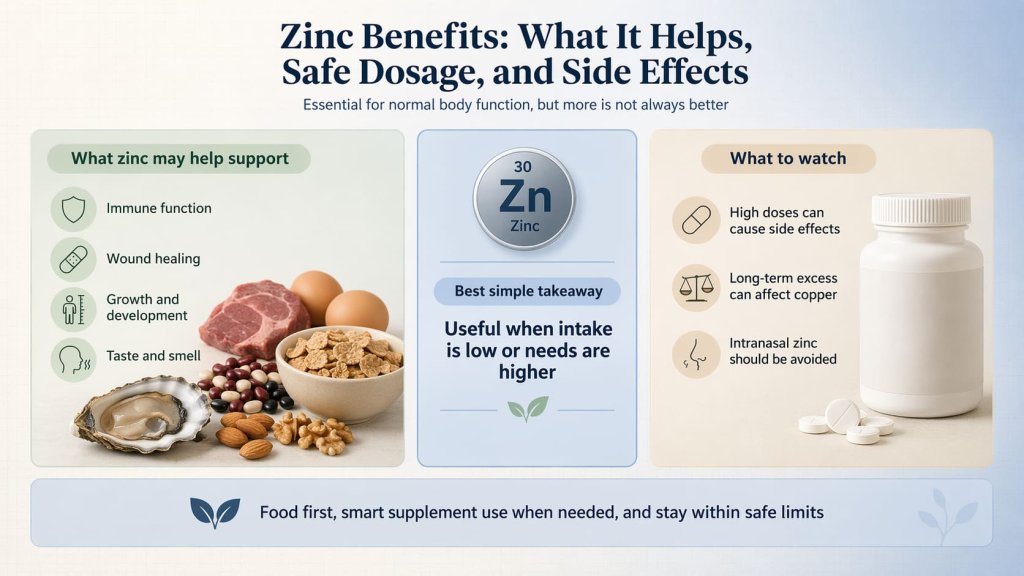
That is why understanding zinc matters. It is easy to assume that more zinc automatically means better immunity, but that is not how it works. For most people, the goal is getting enough zinc safely, ideally from food first, and using supplements carefully when they are actually needed.
What zinc does in the body
According to the NIH Office of Dietary Supplements consumer fact sheet, zinc is found in cells throughout the body and helps the immune system fight bacteria and viruses. It also helps your body make DNA and proteins, supports normal growth during pregnancy through adolescence, helps wounds heal, and plays an important role in normal taste.
In practical terms, zinc is not a performance-booster nutrient for most healthy people. It is a basic nutrient your body needs to function normally every day. When zinc intake is low, problems can show up in growth, healing, infection risk, and taste or smell.
Signs you may not be getting enough zinc
Low zinc can show up differently by age. Common signs can include loss of taste or smell, slow wound healing, frequent infections, diarrhea, poor appetite, delayed growth in children, and hair loss in older children. These signs are not specific to zinc, so they are a reason to talk with a healthcare professional, not to self-diagnose, based on the NIH Office of Dietary Supplements.
Evidence-backed zinc benefits
Zinc benefits for immune function
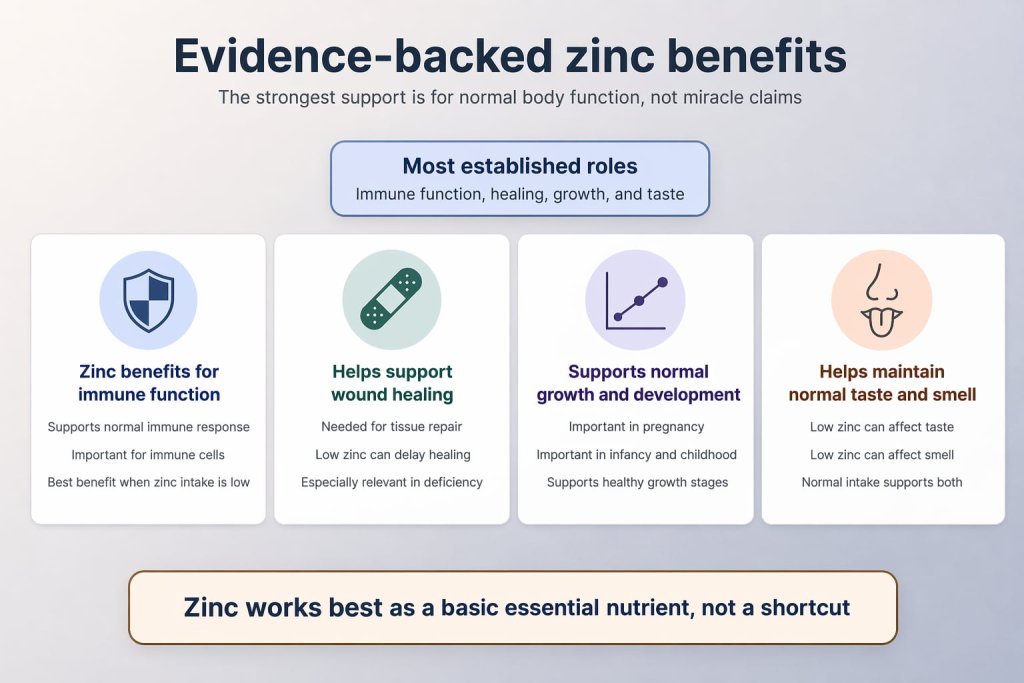
One of the clearest zinc benefits is supporting normal immune function. Zinc is essential for immune cells and normal immune response. That does not mean high-dose zinc will make you immune to illness, but it does mean low zinc status can make it harder for the body to work as it should.
Helps support wound healing
Zinc also helps wounds heal. This is one reason zinc deficiency can matter more in older adults or in people with digestive disorders that reduce absorption. When zinc status is poor, healing can be delayed.
Supports normal growth and development
Zinc is especially important during pregnancy, infancy, childhood, and adolescence. These are high-demand stages, so getting enough zinc matters for growth and development. In lower-income settings where deficiency is more common, inadequate zinc can contribute to poorer maternal and child outcomes.
Helps maintain normal taste and smell
Loss of taste or smell can have many causes, but zinc deficiency is one of them. NIH notes that zinc deficiency at any age can affect taste and smell, and in older adults it may also delay wound healing and contribute to thinking or memory problems.
Zinc benefits in specific situations
Zinc and the common cold
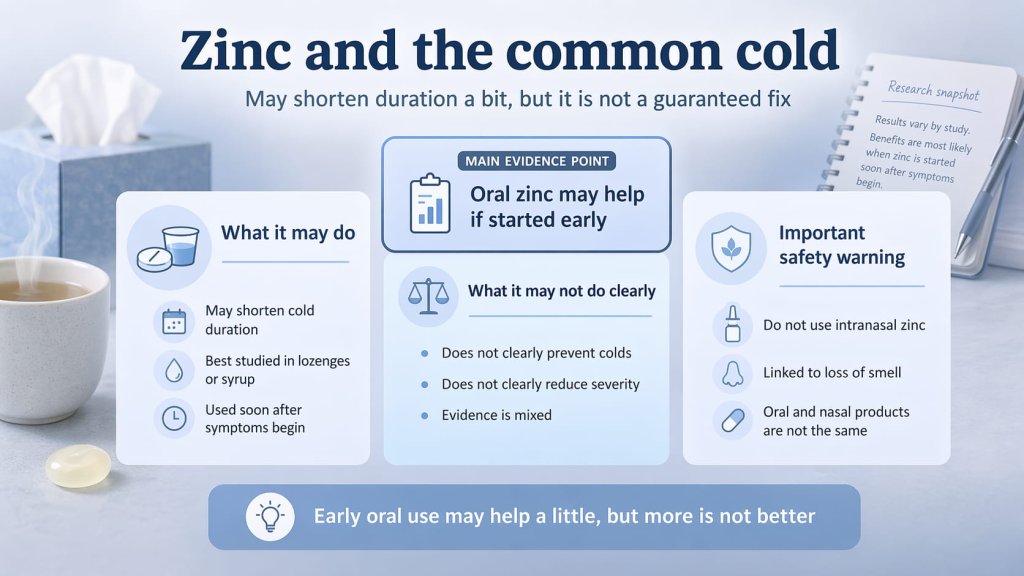
This is where many people hear about zinc first. Based on the NIH Office of Dietary Supplements health professional fact sheet, zinc lozenges or syrup taken shortly after cold symptoms start may shorten how long a cold lasts, but they do not clearly make symptoms less severe. NIH also notes that a 2024 Cochrane review found zinc may reduce symptom duration by about 2 days in people who already have a cold, while making little to no difference in preventing colds.
That means zinc is not a guaranteed cold fix. The evidence is mixed, and the benefit appears to be about shortening duration, not reliably preventing illness. If someone uses zinc for a cold, the evidence is mainly for oral products started early, not for routine long-term use.
Childhood diarrhea
In global child health, zinc has a well-established role. The World Health Organization guidance on zinc supplementation for diarrhea recommends 20 mg per day for 10 to 14 days for children age 6 months and older, and 10 mg per day for infants under 6 months. This recommendation is especially relevant in places where zinc deficiency and childhood diarrheal illness are common.
For a general wellness article, the key point is that this is a targeted medical and public health use of zinc, not proof that all healthy adults need extra zinc every day.
Age-related macular degeneration
Zinc is also part of the AREDS2 supplement formula used for certain people with age-related macular degeneration. The National Eye Institute AREDS2 page explains that AREDS2 supplements can help slow vision loss in people with intermediate AMD or late AMD in one eye. This is a very specific use case and should not be confused with zinc prevents vision loss in everyone.
Who may benefit most from zinc
Most people in the United States get enough zinc from food, according to NIH. But some groups are more likely to have low zinc intake or poor zinc status, including:
- People with gastrointestinal disorders or a history of bariatric surgery
- People following vegetarian or vegan diets
- Pregnant or breastfeeding women
- Older infants who are exclusively breastfed beyond 6 months
- Children with sickle cell disease
- People with alcohol use disorder
Vegetarian and vegan diets deserve a special mention. NIH notes that plant-based diets can be lower in absorbable zinc because phytates in legumes and whole grains can bind zinc and reduce absorption. Soaking beans, grains, and seeds before cooking, or using fermented foods, may help improve zinc availability.
Globally, zinc deficiency is still a meaningful issue. NIH cites an estimate that about 17% of the world’s population is likely to have zinc deficiency.
Best food sources of zinc
Food is usually the best starting point. Good zinc sources include:
- Oysters
- Meat
- Fish and shellfish
- Poultry
- Fortified breakfast cereals
- Beans
- Nuts
- Whole grains
- Eggs
- Dairy products
Animal foods generally provide more bioavailable zinc than plant foods. That is one reason people on fully plant-based diets sometimes need to pay closer attention to intake.
How much zinc do you need?
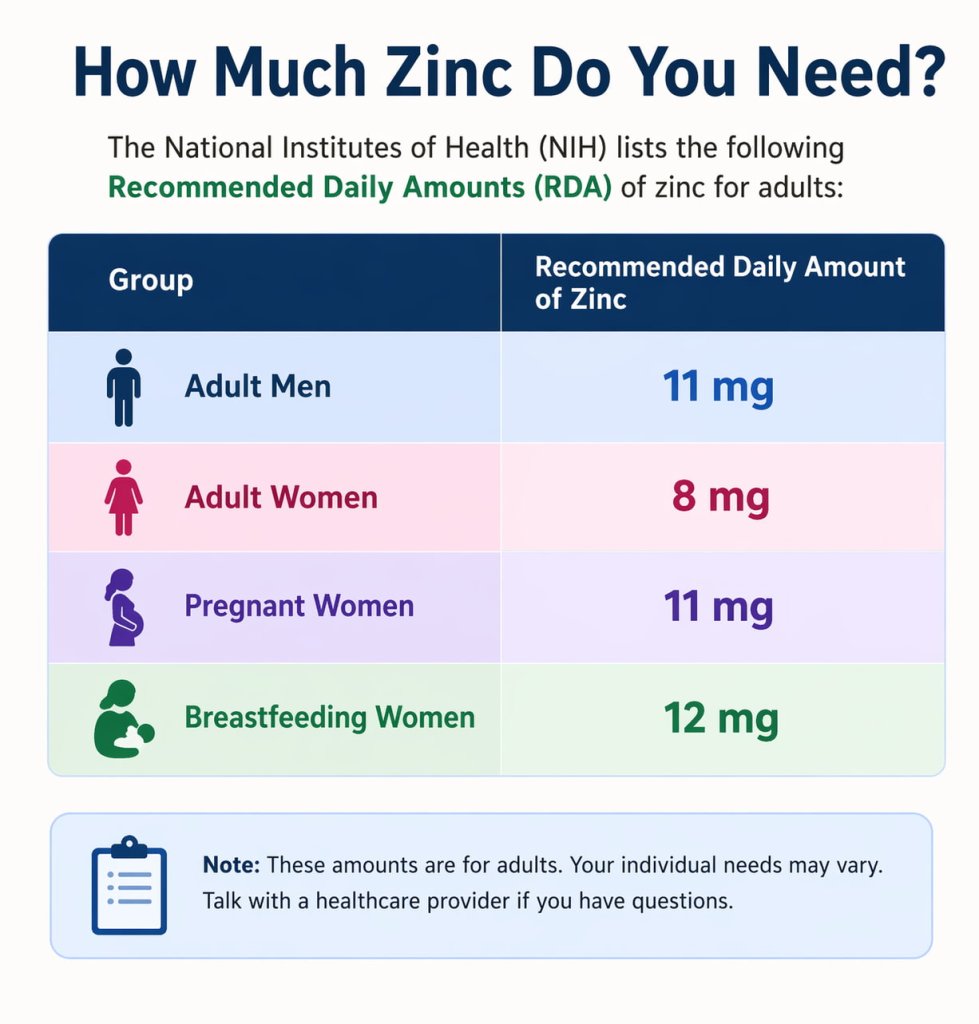
NIH lists these recommended daily amounts for adults:
- Adult men: 11 mg
- Adult women: 8 mg
- Pregnant women: 11 mg
- Breastfeeding women: 12 mg
These numbers are much lower than the doses found in some supplements and cold products. That is why it is important to check the label instead of assuming a product is providing a normal daily amount.
How to read a zinc label
A quick way to judge a zinc product is to look at the milligrams and the percent Daily Value, not just the front-label claims. The FDA Nutrition Facts label guidance sets the Daily Value for zinc at 11 mg. As a general guide, 5% Daily Value or less is low and 20% Daily Value or more is high. That helps explain why some products provide a modest amount of zinc while others deliver a much larger dose per serving.
Should you take a zinc supplement?
Zinc supplements can be useful, but they are not automatically a good idea for everyone. NIH says zinc supplements come in several forms, including zinc sulfate, zinc acetate, and zinc gluconate, and it is not clear that one form is broadly best for everyone.
A supplement may make sense if:
- Your diet is consistently low in zinc-rich foods
- You are in a higher-risk group for zinc inadequacy
- A clinician has identified low zinc status or suspects deficiency
- You are using an oral zinc product short term for a cold and understand the limits of the evidence
A supplement may be less necessary if you already eat enough zinc-rich foods and do not have a reason to think your intake is low. More is not always better with zinc.
Side effects, risks, and interactions
Too much zinc can cause problems. NIH says high intakes can lead to nausea, dizziness, headaches, stomach upset, vomiting, and loss of appetite. The adult tolerable upper intake level is 40 mg per day from all sources unless a clinician tells you otherwise.
NIH also warns that taking 50 mg or more for weeks can interfere with copper absorption, lower HDL cholesterol, and reduce immune function. This is one of the most important safety points for anyone using a separate zinc supplement on top of a multivitamin or cold remedy.
Zinc can also interact with medications. NIH lists interactions with quinolone antibiotics, tetracycline antibiotics, penicillamine, and some diuretics. If you take any of these, it is smart to ask a clinician or pharmacist before adding zinc.
If a clinician or pharmacist says zinc is appropriate, timing still matters. According to the NIH Office of Dietary Supplements health professional fact sheet, zinc can interfere with quinolone and tetracycline antibiotics if they are taken at the same time, so those medicines are usually taken at least 2 hours before or 4 to 6 hours after zinc. Zinc can also reduce the absorption and action of penicillamine, so those are generally taken at least 1 hour apart. That does not replace individualized medical advice, but it explains why zinc should not be added casually on top of prescription medicines.
One zinc warning that matters a lot
The National Center for Complementary and Integrative Health warns that intranasal zinc should not be used. Zinc products used inside the nose have been linked to anosmia, which is loss of smell, and that loss may be severe or long-lasting.
That warning applies even if a product is marketed as a quick cold remedy. Oral zinc and intranasal zinc are not the same from a safety standpoint.
Who should be extra careful with zinc
Before using a zinc supplement, be more cautious if any of these apply to you:
- You already take a multivitamin or mineral supplement
- You use cold remedies that may also contain zinc
- You take antibiotics, penicillamine, or diuretics
- You are pregnant or breastfeeding and are considering doses above standard prenatal amounts
- You want to give zinc to a child using an adult product or adult dose
- You plan to use zinc daily for weeks instead of short term
Frequently asked questions
What are the main zinc benefits?
The best-established zinc benefits are supporting normal immune function, wound healing, growth and development, and normal taste and smell. These are basic body functions, not flashy claims.
Does zinc help with colds?
It may help shorten a cold if an oral zinc product is started soon after symptoms begin, but it does not clearly prevent colds and does not reliably reduce symptom severity. Intranasal zinc should not be used.
Is it better to get zinc from food or supplements?
For most people, food is the better starting point. Supplements can help in certain situations, especially when intake is low or deficiency risk is higher.
How much zinc is too much?
For adults, the upper intake level is 40 mg per day from all sources. Long-term use of 50 mg or more can cause problems, including copper deficiency and lower HDL cholesterol.
Safety box
Zinc can be helpful, but high-dose or long-term self-supplementation is not risk-free. Avoid intranasal zinc, be careful with stacked products that contain zinc, and talk with a clinician or pharmacist if you take antibiotics, penicillamine, or diuretics. Children should not use adult doses unless a healthcare professional advises it.
Conclusion
Zinc is important, but the real story is simpler than the marketing. The strongest zinc benefits are supporting normal immune function, healing, growth, and taste or smell. Zinc supplements may also help in a few specific situations, such as shortening a cold a bit when started early, or as part of AREDS2 for certain people with AMD. The smartest approach is to focus on adequate intake, use supplements with a reason, and stay within safe limits.
If you are considering a zinc supplement, start by checking your diet, your total daily intake, and whether you actually fall into a higher-risk group. That usually leads to a better decision than chasing a high-dose product.
This content is for informational purposes only and not medical advice.
References
- NIH Office of Dietary Supplements — Zinc Consumer Fact Sheet
- NIH Office of Dietary Supplements — Zinc Health Professional Fact Sheet
- National Center for Complementary and Integrative Health — The Common Cold and Complementary Health Approaches
- World Health Organization — Zinc supplementation in the management of diarrhoea
- National Eye Institute — AREDS 2 Supplements for Age-Related Macular Degeneration (AMD)
- U.S. Food and Drug Administration — How to Understand and Use the Nutrition Facts Label