
Rhomboid muscle pain relief exercises can help reduce upper-back tension by improving shoulder-blade movement, gently stretching tight tissue, and building the muscles that support posture. The key is to start with controlled, low-pain movements and progress gradually.
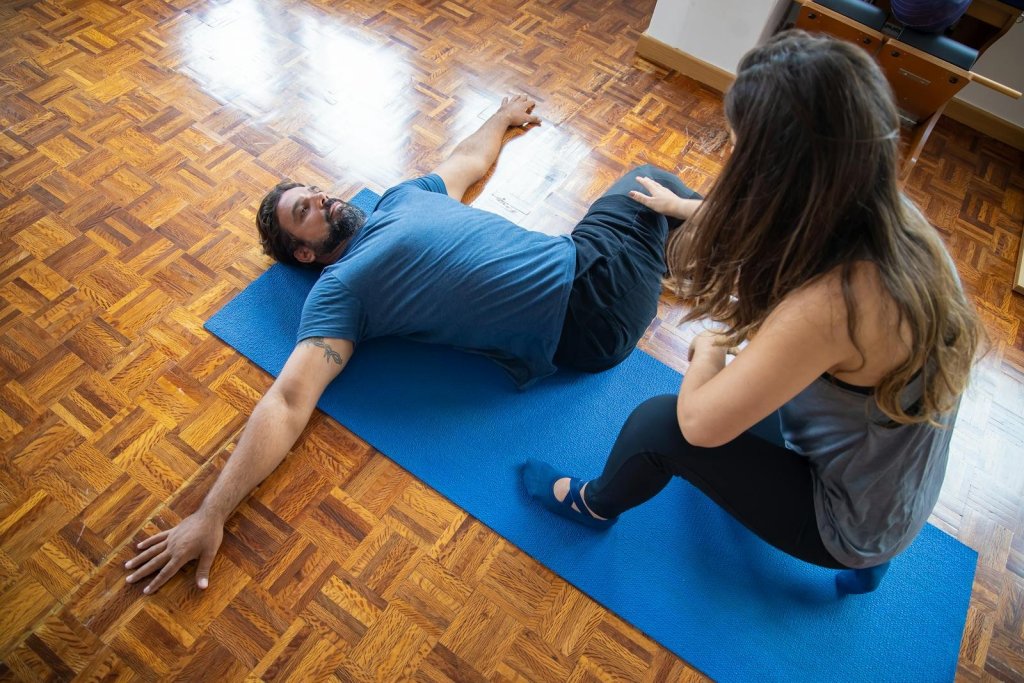
Understanding this matters because the rhomboids help connect your shoulder blades to your spine and support scapular control during daily movement. When that area gets irritated, simple tasks like sitting, reaching, and lifting can feel worse than they should. Cleveland Clinic notes that the rhomboids connect the shoulder blades to the spine, which is why posture, shoulder mechanics, and upper-back exercise all matter here.
For most people, a smart plan includes gentle stretching, scapular retraction work, light rowing patterns, thoracic mobility, and posture-support drills. Programs from My Health Alberta and AAOS use exactly that kind of mix.
What Is the Rhomboid Muscle?
The rhomboids are two upper-back muscles, the rhomboid major and rhomboid minor. They sit between your spine and shoulder blades and help pull the shoulder blades back and support shoulder-girdle stability.
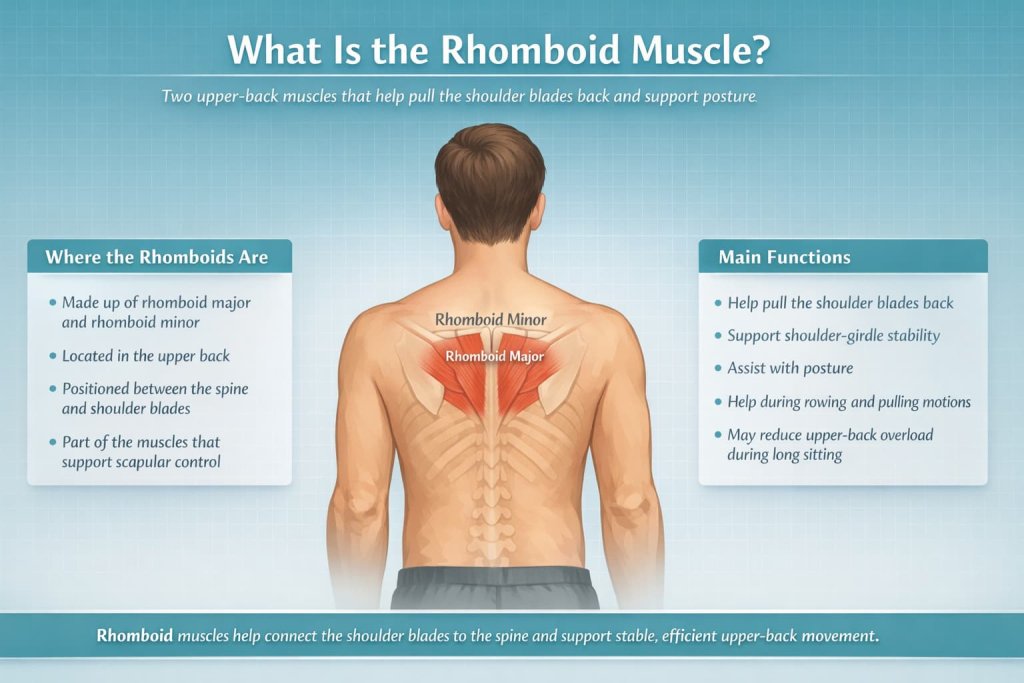
That makes them important for posture, rowing motions, and keeping the upper back from feeling overworked during long periods of sitting. According to Cleveland Clinic, these muscles play an important role in linking the shoulder blades to the spine.
Common Signs of Rhomboid Area Tension
Rhomboid area tension often shows up as discomfort between the shoulder blades, especially after long sitting, repeated pulling, or upper-body workouts. Since this area works with the neck, shoulders, and thoracic spine, the discomfort may also affect nearby muscles.
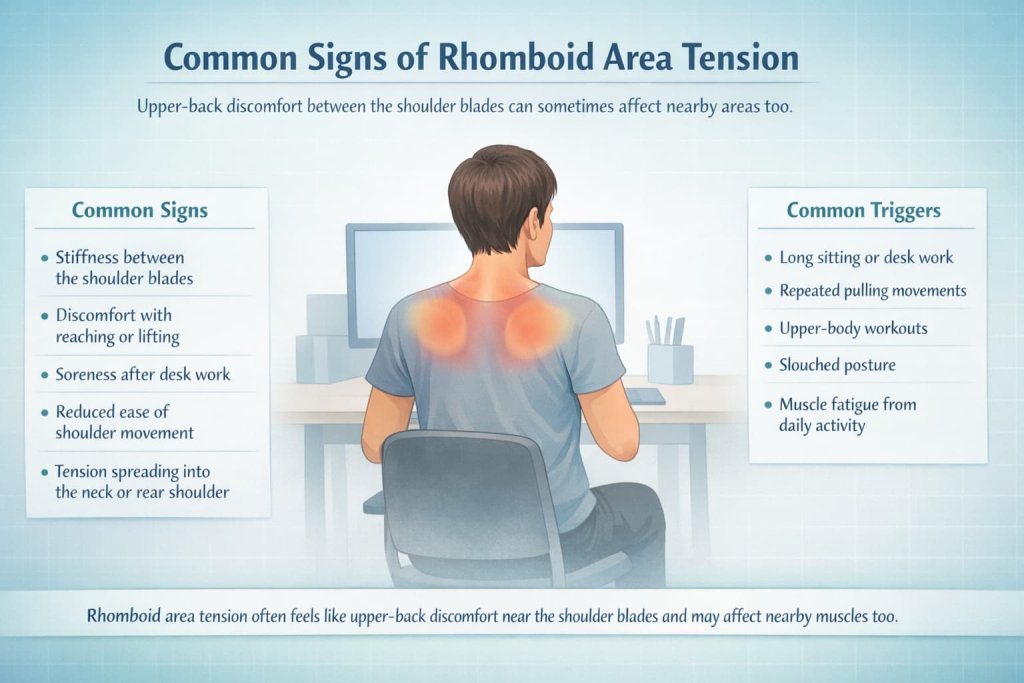
Common signs may include:
- tension spreading into the neck or rear shoulder
- stiffness between the shoulder blades
- discomfort with reaching or lifting
- soreness after desk work
- reduced ease of shoulder movement
Before You Start Rhomboid Muscle Pain Relief Exercises
Start slowly. Keep the movements smooth. Mild stretching or muscle effort is usually acceptable, but sharp, spreading, or worsening pain is a sign to stop and get guidance. NHS inform advises building gradually and avoiding exercises that make pain worse overall, and My Health Alberta gives similar advice for rhomboid rehab.
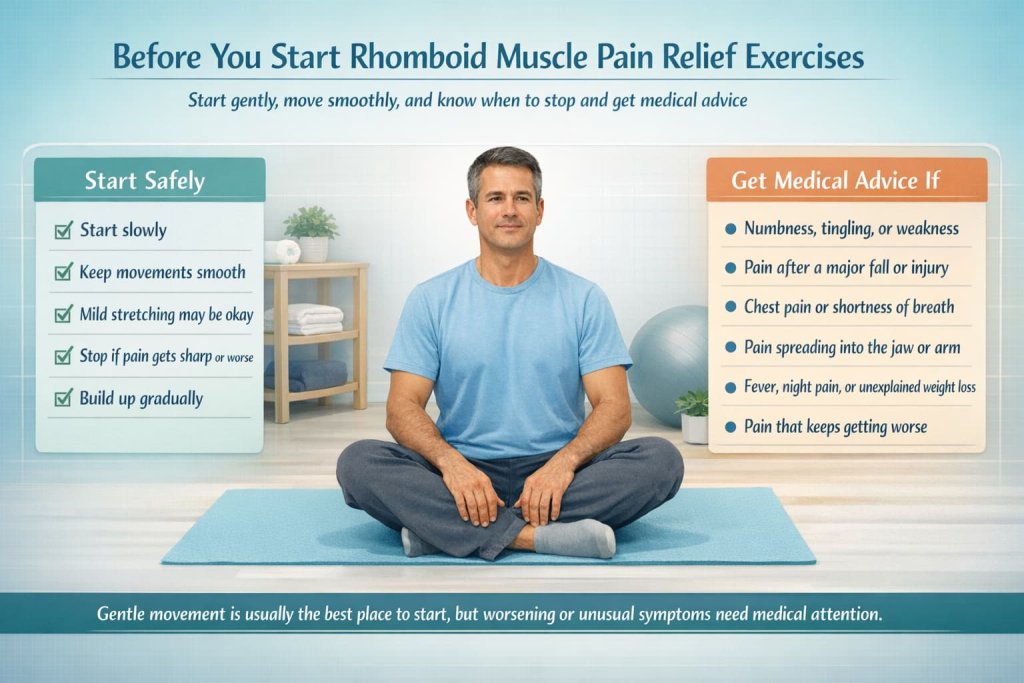
You should get medical advice promptly if you have:
- numbness, tingling, or weakness
- pain after a major fall or injury
- chest pain, shortness of breath, or pain spreading into the jaw or arm
- fever, unexplained weight loss, or night pain
- pain that keeps getting worse instead of improving
10 Best Rhomboid Muscle Pain Relief Exercises to Ease Upper Back Tension
Relieve upper back tension with these simple rhomboid muscle pain relief exercises that support better posture and shoulder blade movement. This routine includes gentle stretches and strengthening drills to help reduce stiffness, improve mobility, and ease daily discomfort.
1. Rhomboid Stretch
How to do it:
- Stand or sit tall.
- Bring your arms forward and clasp your hands together.
- Gently reach your hands away from your body.
- Let your upper back round slightly until you feel a stretch between the shoulder blades.
- Hold for 15 to 30 seconds.
- Repeat 2 to 4 times.
Why it works:
This stretch helps open the space between the shoulder blades and can reduce the “knotted” feeling many people notice in the rhomboid area. It is one of the core drills in the rhomboid strain rehab page from My Health Alberta.
Muscles worked:
Rhomboids, middle trapezius, upper back soft tissues.
Trainer Tip:
Do not force the stretch by yanking your shoulders forward. A gentle reach is enough.
2. Shoulder Rolls
How to do it:
- Sit or stand with your chin slightly tucked.
- Roll your shoulders up, back, down, and forward in a smooth circle.
- Repeat 2 to 4 times.
- Reverse the direction and repeat.
Why it works:
Shoulder rolls add light motion around the shoulder blades and can help reduce stiffness from long periods of sitting. My Health Alberta includes shoulder-blade exercise patterns like this for upper-back comfort.
Muscles worked:
Upper trapezius, middle trapezius, rhomboids, rotator cuff support muscles.
Trainer Tip:
Keep the motion easy and relaxed. This is a mobility drill, not a strength exercise.
3. Scapular Squeeze
How to do it:
- Sit or stand tall with your arms by your sides.
- Gently draw your shoulder blades back and slightly down.
- Hold for 3 to 5 seconds.
- Relax and repeat 8 to 12 times.
Why it works:
Scapular squeezes teach shoulder-blade control without needing heavy resistance. That makes them a simple starting point when the upper back feels irritated.
Muscles worked:
Rhomboids, middle trapezius, lower trapezius.
Trainer Tip:
Do not shrug. Think “back and down,” not “up toward the ears.”
4. Resistance Band Row
How to do it:
- Anchor a light resistance band at chest height.
- Hold one end in each hand.
- Step back until the band has light tension.
- Pull your elbows back close to your sides.
- Squeeze your shoulder blades together at the end.
- Return slowly.
- Do 8 to 12 reps.
Why it works:
Rows strengthen the muscles that retract and stabilize the shoulder blades. My Health Alberta lists resisted rows in rhomboid and upper-back rehab, and AAOS includes standing row patterns in shoulder-conditioning work.
Muscles worked:
Rhomboids, middle trapezius, posterior deltoids, latissimus dorsi, biceps.
Trainer Tip:
Use a light band first. The squeeze at the end should feel deliberate, not jerky.
5. Wall Push-Up Plus
How to do it:
- Stand facing a wall with your hands on the wall at shoulder height.
- Perform a small wall push-up.
- At the top, gently press through your hands to move your shoulder blades around your rib cage.
- Return to neutral.
- Do 8 to 12 reps.
Why it works:
This drill helps restore scapular control and brings in the serratus anterior, which works with the rhomboids and traps to improve shoulder-blade mechanics. Research available through PubMed Central supports this broader approach to pain and posture.
Muscles worked:
Serratus anterior, rhomboids, trapezius, chest, triceps.
Trainer Tip:
Keep the movement small and smooth. Do not let your lower back arch.
6. Doorway Chest Stretch
How to do it:
- Stand in a doorway.
- Place your forearms or hands on the door frame.
- Step one foot forward.
- Lean gently until you feel a stretch across the chest and front of the shoulders.
- Hold for 15 to 30 seconds.
- Repeat 2 to 4 times.
Why it works:
Tight chest muscles can pull the shoulders forward and increase stress on the upper back. Opening the front of the body can make it easier for the rhomboids to do their job.
Muscles worked:
Pectoralis major, pectoralis minor, front shoulder tissues.
Trainer Tip:
Keep the stretch mild. You should feel it in the chest, not as a pinch in the shoulder joint.
7. Thoracic Extension Over a Chair
How to do it:
- Sit in a stable chair with a backrest around mid-back height.
- Place your hands behind your head.
- Gently lean your upper back over the chair back.
- Pause briefly, then return.
- Repeat 5 to 8 controlled reps.
Why it works:
Upper-back stiffness can change how the shoulder blades move. Thoracic extension helps restore movement in the mid-back so the rhomboids and surrounding muscles do not have to compensate as much. Thoracic-spine exercise guidance from Cambridge University Hospitals NHS Foundation Trust supports this type of mobility work.
Muscles worked:
Thoracic extensors, rhomboids indirectly, middle and lower trapezius.
Trainer Tip:
Move from the upper back, not the lower back. Keep your neck relaxed.
8. Open Book Stretch
How to do it:
- Lie on your side with your hips and knees bent.
- Reach both arms straight out in front of you.
- Slowly rotate the top arm open toward the other side.
- Follow your hand with your eyes if comfortable.
- Return slowly.
- Do 5 to 8 reps per side.
Why it works:
This drill improves thoracic rotation and can ease stiffness that contributes to upper-back tightness, especially after desk work.
Muscles worked:
Thoracic rotators, chest, upper back support muscles.
Trainer Tip:
Keep your knees stacked so the twist comes from the upper back, not the hips.
9. Prone T Raise
How to do it:
- Lie face down on a mat or bench.
- Extend your arms out to the sides like a “T.”
- Keep your thumbs pointed up.
- Lift your arms slightly by squeezing your shoulder blades together.
- Lower with control.
- Do 6 to 10 reps.
Why it works:
AAOS includes bent-over horizontal abduction and scapular retraction patterns because they strengthen the muscles that support scapular positioning. This is a stronger progression, so it fits best after pain has calmed down.
Muscles worked:
Rhomboids, middle trapezius, lower trapezius, rear deltoids.
Trainer Tip:
Lift only as high as you can without shrugging or neck strain.
10. Chin Tuck
How to do it:
- Sit or stand tall.
- Gently draw your head straight back, as if making a “double chin.”
- Hold for 3 to 5 seconds.
- Relax and repeat 8 to 10 times.
Why it works:
Neck position affects upper-back loading. Research in PubMed Central suggests scapular and postural exercise can help improve pain and alignment in people with forward-head posture, so adding chin tucks makes sense in a complete routine.
Muscles worked:
Deep neck flexors, postural support muscles of the neck and upper back.
Trainer Tip:
Slide the head back level. Do not tip your chin up or down.
Why Rhomboid Muscle Pain Relief Exercises Work
The best rhomboid muscle pain relief exercises do more than stretch one sore spot. They usually help by:
- reducing stiffness in the upper back and chest
- improving shoulder-blade control
- building tolerance to light pulling and posture work
- lowering the overload created by slumped sitting or repetitive reaching
This matches what rehab programs and scapular-stabilization research tend to show. Better movement control around the shoulder blades often helps pain and function, as reflected in guidance from AAOS.
How Often to Do These Exercises
A practical starting point is 3 to 5 days per week for gentle mobility and 2 to 3 days per week for light strengthening, depending on your comfort level. For general health, the CDC recommends adults get at least 150 minutes of moderate physical activity per week plus muscle-strengthening work on 2 or more days per week.
A simple approach:
- mobility drills: 1 to 2 rounds daily
- strengthening drills: 1 to 3 sets of 8 to 12 reps
- stretches: hold 15 to 30 seconds, repeat 2 to 4 times
Those ranges align well with official rehab pages from My Health Alberta.
Mistakes That Can Make Rhomboid Pain Worse
Going too hard too soon
Jumping into heavy rows, hard stretching, or high-rep upper-back work can flare symptoms.
Shrugging during retraction
Many people try to squeeze the shoulder blades but end up lifting the shoulders toward the ears instead.
Ignoring thoracic mobility
If the upper back stays stiff, the shoulder blades often move poorly.
Training only the sore spot
The rhomboids work with the traps, serratus anterior, rotator cuff, and thoracic spine. A broader approach usually works better.
When to See a Professional
Get assessed by a qualified clinician if:
- symptoms last more than a couple of weeks
- pain keeps returning
- you have radiating pain, numbness, or weakness
- you cannot tell whether the pain is coming from the neck, shoulder, or upper back
- breathing, chest symptoms, or systemic symptoms are involved
That matters because pain between the shoulder blades is not always just a rhomboid issue.
FAQ About Rhomboid Muscle Pain Relief Exercises
Can exercise really help rhomboid muscle pain?
Yes, in many cases it can help, especially when the problem is related to muscle strain, stiffness, posture load, or poor scapular control. Gentle stretching and light strengthening are common parts of rehab guidance from My Health Alberta.
What is the best exercise for rhomboid pain relief?
There is no single best exercise for everyone, but a good starting combo is a rhomboid stretch, scapular squeeze, band row, and thoracic mobility drill. That combination covers both relief and support.
Should I stretch or strengthen the rhomboids?
Usually both. Stretching may help reduce tightness, while strengthening helps the area tolerate daily activity better. That is why most rehab plans combine the two, including the approach used by My Health Alberta.
How long does it take to feel better?
Mild muscle irritation may improve within days to a couple of weeks, but timelines vary. Pain that persists, worsens, or includes nerve symptoms should be evaluated.
Can poor posture cause rhomboid pain?
It can contribute. Long periods of rounded-shoulder sitting can overload the upper back. Research in PubMed Central suggests that improving movement and alignment can help reduce pain in some people.
Are rows good for rhomboid pain?
Light, well-controlled rows often are, especially once very irritated symptoms settle down. Heavy or sloppy rows are a different story, so start easy.
Should I use heat or massage too?
Some people find heat or gentle self-massage helpful for short-term comfort, but exercise is usually more useful for long-term movement and support. Seek medical advice if you are unsure what is causing the pain.
Conclusion
Rhomboid muscle pain relief exercises work best when you keep them simple, controlled, and consistent. Start with gentle stretches and shoulder-blade drills, then build toward light strengthening as symptoms settle. The goal is not to force the pain away. It is to improve movement, reduce tension, and help your upper back handle daily life better.