
A medium apple has about 95 calories. That is the most widely used estimate for a raw apple with skin weighing about 182 grams. Apples are also naturally low in fat, provide fiber, and contain vitamin C and potassium, which is why they are a popular snack for weight management and everyday healthy eating. According to USDA FoodData Central, apples provide about 52 calories per 100 grams, and a medium apple comes out to about 95 calories.
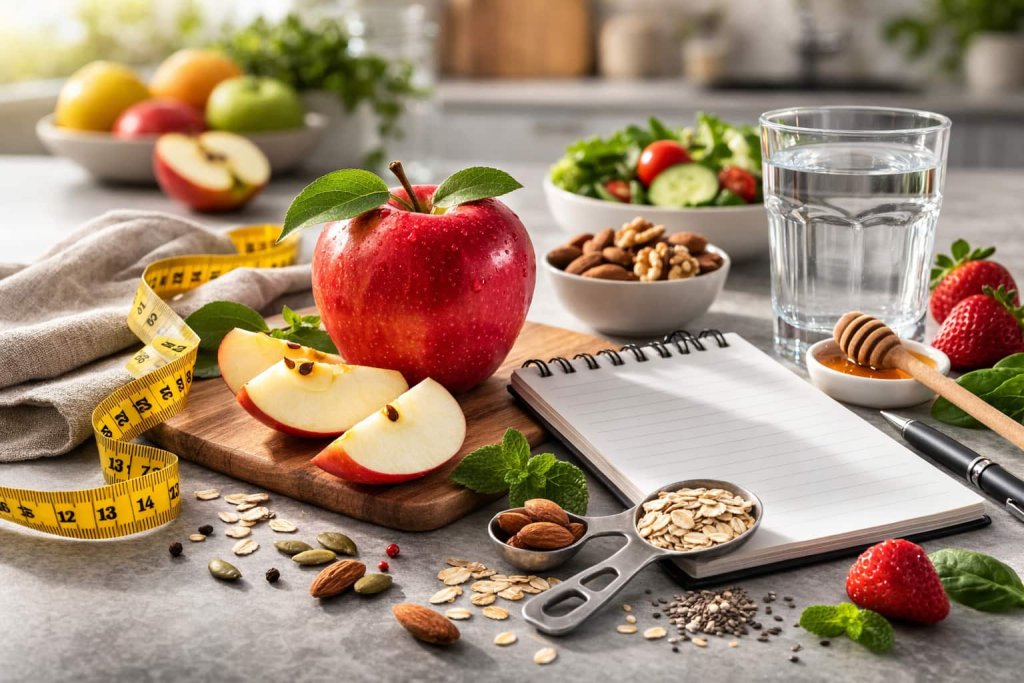
If you are trying to count calories, compare fruit servings, or choose between whole apples, applesauce, and juice, the most important thing to know is that the calorie total depends mainly on size and form. A small apple has fewer calories than a large one, and apple juice is less filling than a whole apple even when calories are similar. Research indexed by PubMed found that whole apple increased satiety more than applesauce or apple juice.
Apple Calories by Size
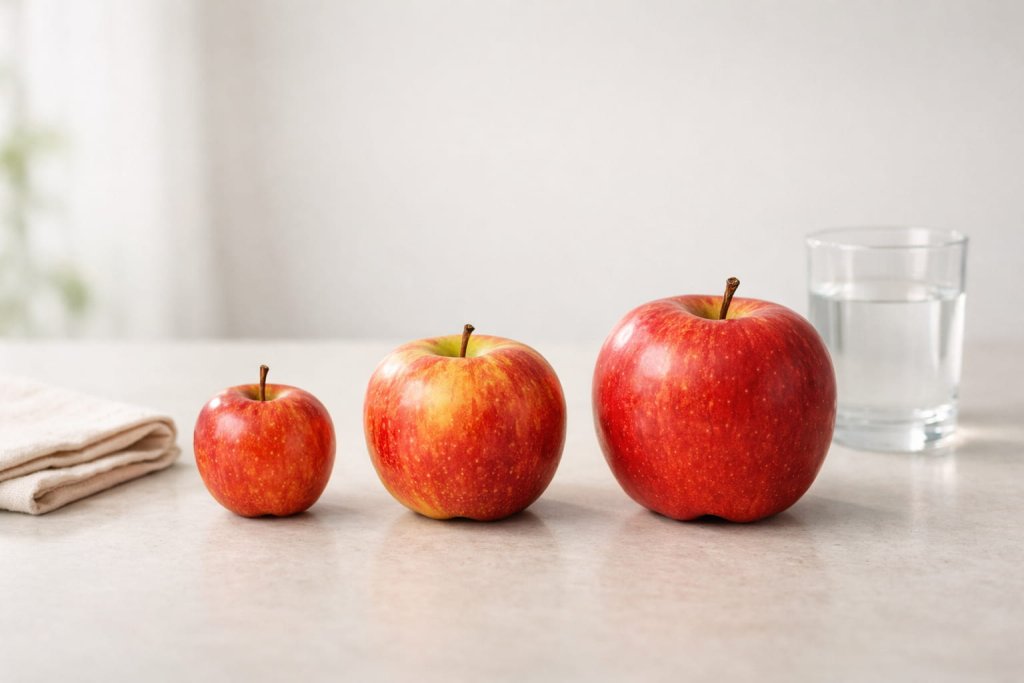
Here is the quick answer most readers want.
| Apple size | Typical weight | Approximate calories |
|---|---|---|
| Small apple | about 149 g | about 77 calories |
| Medium apple | about 182 g | about 95 calories |
| Large apple | about 223 g | about 116 calories |
| 100 grams apple | 100 g | about 52 calories |
These estimates are consistent with USDA-based nutrition data for raw apples with skin.
Nutrition Profile Table for a Medium Apple
Below is a practical nutrition profile for 1 medium raw apple with skin.
| Nutrient | Amount in 1 medium apple |
|---|---|
| Calories | 95 |
| Carbohydrates | 25 g |
| Fiber | 4.4 g |
| Total sugars | 18.9 g |
| Protein | 0.5 g |
| Total fat | 0.3 g |
| Vitamin C | about 8.4 mg |
| Potassium | about 195 mg |
| Sodium | about 2 mg |
This profile is based on USDA values for raw apple with skin. FDA Daily Value guidance can help readers interpret what those numbers mean on labels, such as fiber and potassium targets.
Are Apple Calories Mostly Carbs?
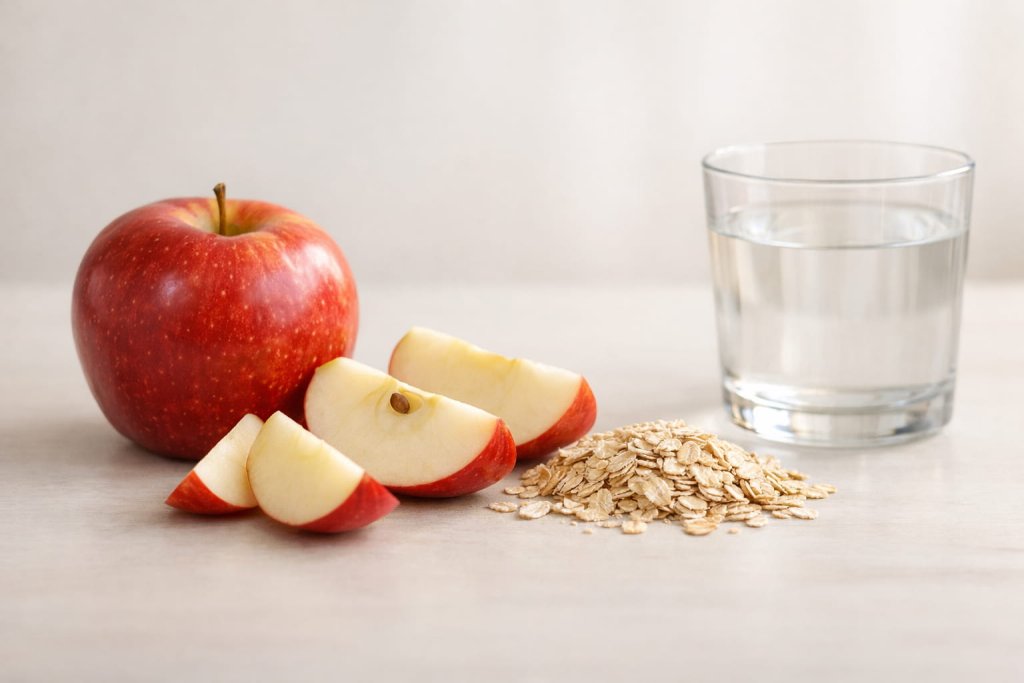
Yes. Most calories in an apple come from carbohydrates, including naturally occurring fruit sugars and fiber. Apples contain very little fat and only a small amount of protein. That is normal for fresh fruit. A medium apple has about 25 grams of carbs, nearly 19 grams of naturally occurring sugar, and more than 4 grams of fiber. The fiber is one reason whole apples are often more satisfying than juice.
Apple With Skin vs Without Skin
A whole apple with the peel is usually the better choice if you want the full fiber content. The calorie difference between peeled and unpeeled apple is not huge, but the peel contributes fiber and some beneficial plant compounds. Harvard T.H. Chan School of Public Health notes that apples provide fiber and vitamin C, while its fiber guidance explains that fruits with edible skins can help increase fiber intake.
In practical terms, removing the peel may slightly lower calories, but it also makes the apple less filling for many people. For most readers, eating the apple with skin is the simplest option unless texture or digestion is a concern.
Whole Apple vs Applesauce vs Apple Juice
This is where many people get confused. All three come from apples, but they are not equally filling.
| Apple form | Typical serving | Approximate calories |
|---|---|---|
| Whole apple, medium | 1 medium | 95 |
| Unsweetened applesauce | 1/2 cup | 60 |
| 100% apple juice | 4 oz | about 48–60 |
| 100% apple juice | 8 oz | about 96–120 |
USDA-based applesauce labels show about 60 calories per 1/2 cup for unsweetened applesauce. Research on apple form and satiety found that whole apple was more filling than applesauce or juice, and USDA product data also supports the lower-calorie estimate for unsweetened applesauce.
Is an Apple a Good Low-Calorie Snack?
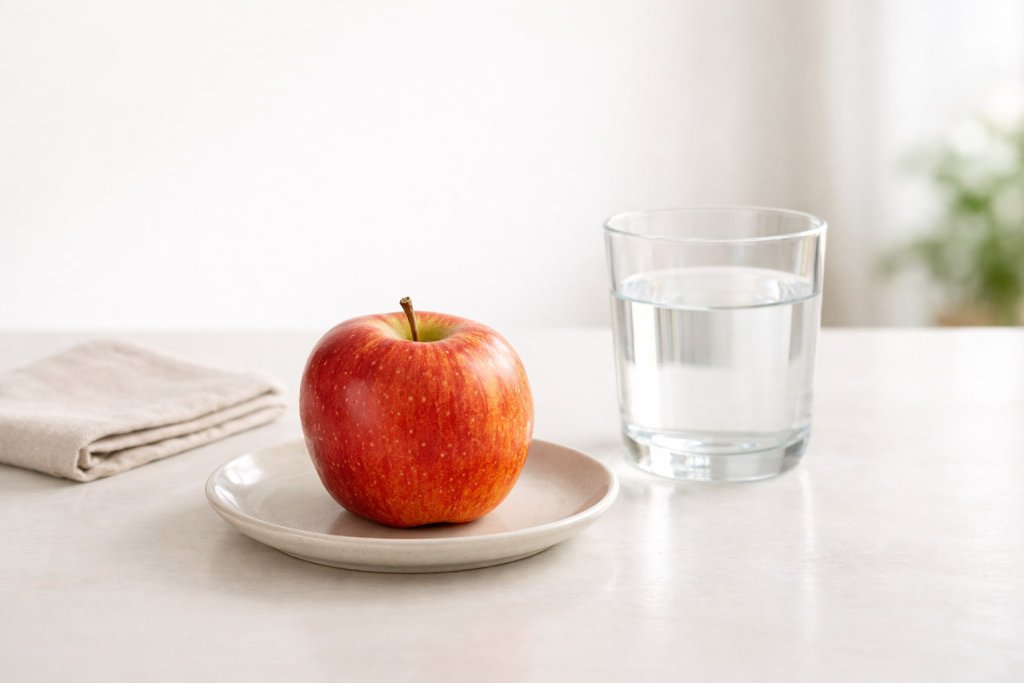
Yes. A medium apple at about 95 calories is a reasonable low-calorie snack for many people, especially compared with highly processed snack foods. It also gives you fiber and volume from water, which can help with fullness. Harvard’s nutrition overview lists apples as a source of fiber and vitamin C, and broader fruit guidance notes that fruit intake can support overall diet quality.
That does not mean apples are “magic” for weight loss. Portion awareness still matters, and calories can add up if apples are paired with high-calorie toppings. But on their own, apples are a nutrient-dense, portable snack that fits easily into many eating patterns.
How Many Calories Are in Different Types of Apples?
For most common varieties, the calorie difference is small unless the apple size changes a lot. A Granny Smith, Fuji, Gala, or Honeycrisp apple can all be close in calories when the weight is similar. What usually changes the number most is how large the apple is, not the variety name. USDA FoodData Central lists several apple varieties with skin, showing that raw apples remain in a similar calorie range per 100 grams.
How to Read Apple Nutrition on a Label
Fresh apples usually do not come with a Nutrition Facts label, but packaged apple slices, applesauce cups, and juice do. The FDA explains that the label shows serving size, calories, total carbohydrate, fiber, sugars, and key nutrients such as potassium. For packaged apple products, always check:
- serving size
- calories per serving
- added sugars
- fiber
- whether the product is juice, puree, or whole fruit pieces
This matters because sweetened applesauce or juice blends can have more calories and sugar than plain whole apple.
Common Questions
How many calories are in a small apple?
A small apple has about 77 calories, though the exact amount depends on weight.
How many calories are in a medium apple?
A medium apple has about 95 calories.
How many calories are in a large apple?
A large apple has about 116 calories, sometimes a little more depending on the exact size.
How many calories are in apple slices?
Apple slices have the same calories as the amount of apple used. If the slices equal one medium apple, they are still about 95 calories.
Is apple juice lower in calories than a whole apple?
Not always. A small serving of juice may be lower, but an 8-ounce glass can be similar to or higher than a medium apple and is usually less filling.
Are apples high in sugar?
Apples contain naturally occurring sugar, but they also provide fiber and water. That makes them different from many sugary processed snacks or sweet drinks.
How many calories are in an apple with skin?
A medium apple with skin has about 95 calories.
How many calories are in an apple without skin?
It is usually a little lower than an apple with skin, but the bigger difference is reduced fiber.
Does apple color change the calories?
Not by much. Red, green, and yellow apples are usually similar in calories when they weigh about the same.
Is a medium apple under 100 calories?
Yes. A medium apple is about 95 calories.
Is applesauce lower in calories than an apple?
Unsweetened applesauce can be lower per serving, but it is often less filling than a whole apple.
Can apples fit into a weight-loss diet?
Yes. Apples can fit into many calorie-conscious eating plans because they are relatively low in calories and provide fiber.
Conclusion
A good rule of thumb is simple: one medium apple has about 95 calories. Apples are mostly carbohydrate, but they also provide fiber, vitamin C, and potassium in a convenient whole-food package. If you want the most filling option, whole apple usually beats applesauce and juice.
For everyday tracking, use this shortcut:
- small apple: about 77 calories
- medium apple: about 95 calories
- large apple: about 116 calories