
The health benefits of protein go far beyond muscle. Protein helps build and maintain muscle, bone, skin, connective tissue, internal organs, and blood, and it also supports wound healing and immune function. Understanding protein matters because the amount you eat, the sources you choose, and how you spread it across the day can affect fullness, heart-health food choices, and healthy aging. The current federal nutrition guidance is the 2025–2030 edition of the Dietary Guidelines for Americans.
What protein does in your body
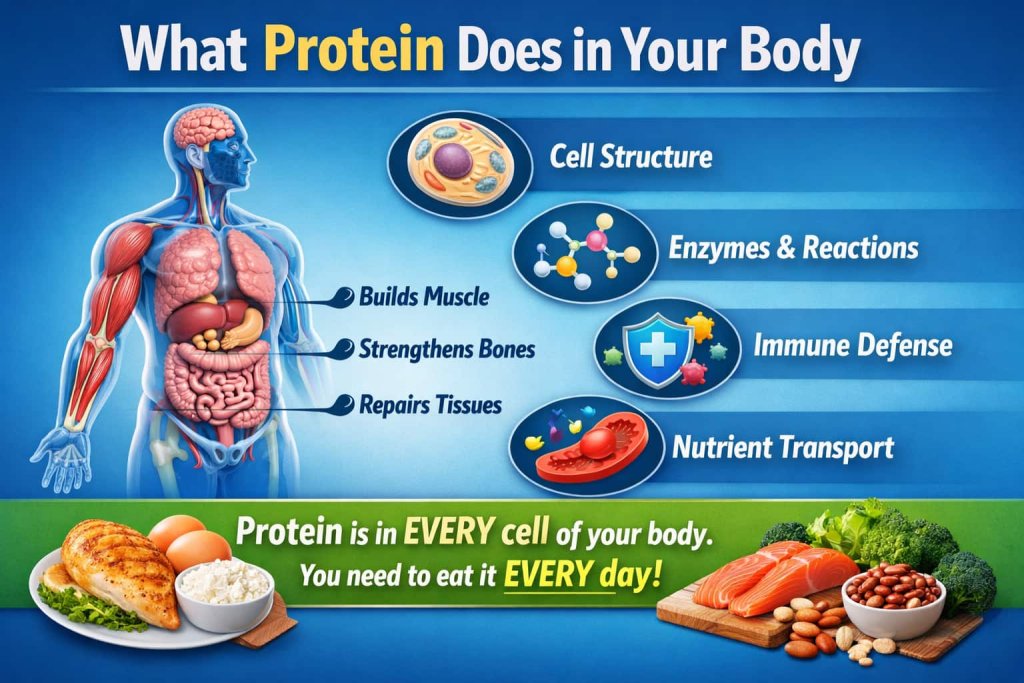
According to MedlinePlus Genetics, proteins are large, complex molecules that do most of the work in cells and are required for the structure, function, and regulation of the body’s tissues and organs. In simple terms, protein is one of the body’s core building materials, but it also acts in signaling, transport, enzymes, and immune defense.
MedlinePlus notes that protein is in every cell in the body, helps build and maintain bones, muscles, and skin, and needs to be eaten every day because the body does not store it the way it stores fat or carbohydrate.
Health Benefits of Protein
Protein is involved in far more than muscle-building. As MedlinePlus Genetics explains, proteins do most of the work inside cells and are required for the structure, function, and regulation of the body’s tissues and organs. The National Institute of Diabetes and Digestive and Kidney Diseases notes that protein helps build and maintain muscle, bone, skin, connective tissue, internal organs, and blood, and also supports the body during recovery and immune defense. That is why adequate protein matters for everyday strength, repair, appetite control, and healthy aging. It is also why “more” is not automatically better for everyone, especially for people who need individualized medical nutrition advice.
1. Protein helps build and maintain muscle

One of the clearest health benefits of protein is muscle support. When you eat protein, your body breaks it down into amino acids. As MedlinePlus explains, amino acids are the molecules that combine to form proteins, and the body uses them to grow, repair body tissue, and carry out many other functions. This is the basic reason protein matters for maintaining muscle tissue, not only after exercise, but also during normal day-to-day life.
Muscle health is not just about sports performance. It affects how well you move, carry, lift, climb stairs, and stay physically independent over time. NIDDK notes that protein helps build and maintain muscle, which is especially relevant during periods of growth, after illness, and with aging. In practical terms, this is why regularly including protein foods such as eggs, fish, yogurt, beans, lentils, tofu, or lean poultry in meals can support your body’s ongoing maintenance needs.
2. Protein supports tissue repair and wound healing
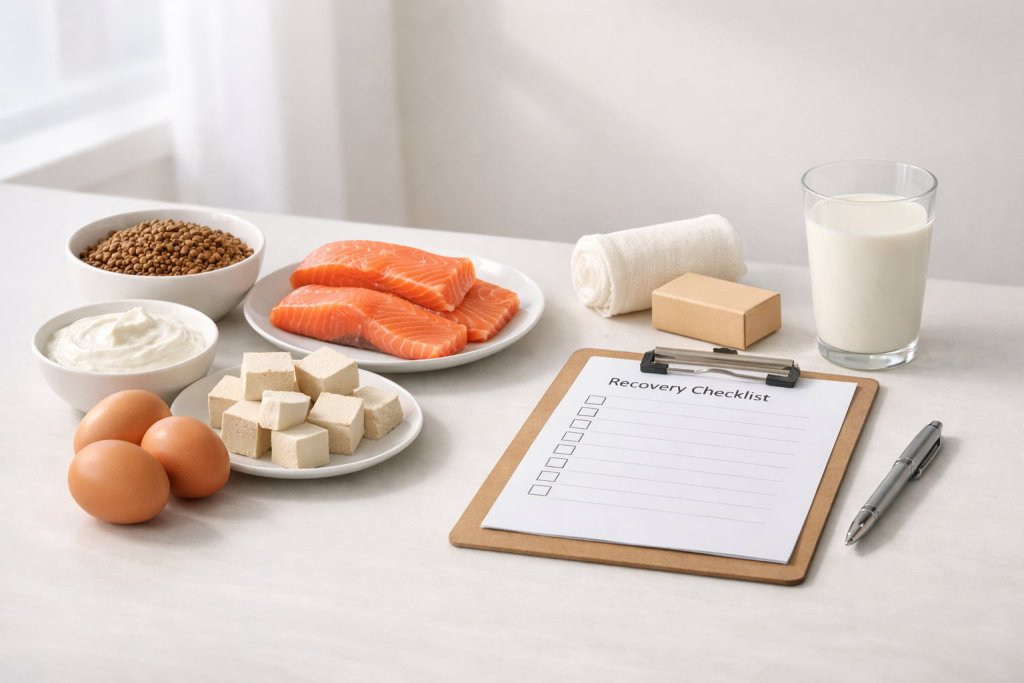
Protein is also essential for tissue repair. NIDDK explains that protein helps maintain skin and connective tissue and supports wound recovery. That makes adequate intake especially important when the body is under extra stress, such as after injury, surgery, infection, or another physically demanding recovery period.
This does not mean protein works like a shortcut or replaces medical care. It means the body needs enough protein available to support normal rebuilding processes while tissues recover. In real life, that usually points back to consistent, balanced meals rather than relying on one large serving or a supplement alone.
3. Protein supports immune function
Protein also plays a direct role in immune function. MedlinePlus Genetics notes that some proteins act as antibodies, which bind to foreign particles such as viruses and bacteria to help protect the body. That means protein is part of the body’s defense system, not just part of muscle or skin.
This is one reason overall protein intake matters during regular daily life, not only during training or weight-loss efforts. A balanced eating pattern that includes enough protein helps support normal body processes, including the function of immune cells and the production of important proteins the body uses every day.
4. Protein helps build and maintain bones

Bone health is another important but often overlooked benefit of protein. According to MedlinePlus, the body needs protein from food to build and maintain bones, muscles, and skin. That matters because bones are living tissues that are constantly being maintained throughout life.
Protein is not the only nutrient involved in bone health, but it is a meaningful part of the overall picture. In other words, bone support is not only about calcium-rich foods. A nutritious eating pattern that also includes enough protein helps support the body structures bones depend on over time.
Protein may help with fullness and weight control
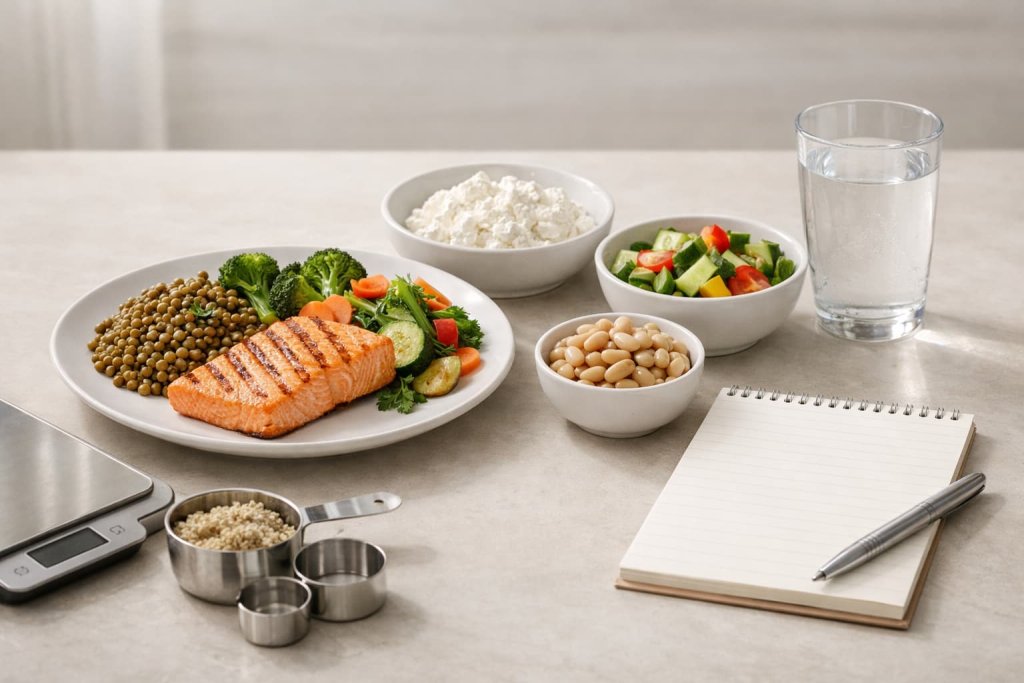
Protein may also help with appetite control. MedlinePlus notes that protein can help with weight control because it helps you feel full and satisfied from meals. That does not make protein a magic solution for weight loss, but it does explain why meals built around protein are often more satisfying than meals centered mostly on refined snacks or sweets.
Protein quality matters here too. The American Heart Association recommends choosing healthy protein sources mostly from plants, eating fish and seafood regularly, choosing fat-free or low-fat dairy in place of full-fat versions, and choosing lean, unprocessed meat or poultry if you eat them. So for weight control, the best approach is usually not simply “eat more protein.” It is building satisfying meals around healthier protein choices such as beans, lentils, tofu, yogurt, eggs, fish, nuts, and seeds.
Protein supports healthy aging

Protein becomes even more important with age because maintaining muscle can become harder over time. The National Institute on Aging advises older adults to get enough protein throughout the day to help maintain muscle. Rather than thinking about protein only at dinner, older adults may benefit from including protein foods more evenly across breakfast, lunch, dinner, and snacks.
Older-adult guidance from the Office of Disease Prevention and Health Promotion also notes that protein can help prevent muscle loss as you age and encourages a variety of protein choices, including seafood, fortified soy foods, low-fat dairy, beans, peas, and lentils. That makes healthy aging a good reason to focus not just on protein amount, but also on protein variety and meal quality.
How much protein do you need?
For healthy adults, MedlinePlus says protein should generally provide 10% to 35% of total daily calories, and 1 gram of protein provides 4 calories. Needs vary based on age, activity level, health status, and calorie intake. That is why there is no single best number that fits everyone.
Another useful way to think about protein is body weight. The National Academies set the adult baseline at 0.8 grams of protein per kilogram of body weight per day, which is meant to cover the needs of most healthy adults. That works out to about 54 grams per day for a 150-pound person and about 65 grams per day for a 180-pound person. This is a helpful starting point, but needs can vary with age, health status, and activity level.
MedlinePlus also notes that most Americans already eat enough protein. For many people, the bigger issue is not simply eating more protein, but choosing healthier protein sources and spreading protein intake across meals instead of relying on one large serving late in the day.
Current intake data help explain why. The Centers for Disease Control and Prevention reports that average protein intake among U.S. adults is 16.0% of calories for men and 15.7% for women, which falls within the general 10% to 35% guideline. In practice, that means the bigger nutrition question for many people is often protein quality and meal balance, not simply eating as much protein as possible.
Quick protein examples from everyday foods
The table below uses MedlinePlus examples to show how quickly protein can add up in normal meals.
| Food amount | Approximate protein |
|---|---|
| 1 ounce meat, fish, or poultry | 7 grams |
| 1 large egg | 7 grams |
| 1/4 cup tofu | 7 grams |
| 1/2 cup cooked beans or lentils | 7 grams |
These examples are useful because they show that protein is not limited to meat. Beans, lentils, tofu, eggs, dairy, fish, poultry, nuts, and seeds can all contribute.
Best foods to get the health benefits of protein
The American Heart Association recommends choosing protein mostly from plant sources, eating fish and seafood regularly, choosing fat-free or low-fat dairy instead of full-fat versions, and selecting lean, unprocessed meat or poultry if you eat them.
Good protein choices include:
- Beans, peas, and lentils
- Tofu, tempeh, and other soy foods
- Nuts and seeds
- Fish and seafood
- Eggs
- Low-fat dairy or fortified soy alternatives
- Lean, unprocessed poultry and meat
Plant protein sources are especially helpful because the American Heart Association notes that they provide protein plus fiber and other nutrients, and they do not contain saturated fat in the same way many animal foods do.
Animal protein vs. plant protein
Animal proteins are considered complete proteins because they provide all the essential amino acids the body cannot make on its own. Many plant proteins are lower in one or more essential amino acids, but MedlinePlus explains that eating a variety of plant proteins across the day can still provide what your body needs. You do not need to combine every plant protein perfectly at the same meal.
That means a healthy pattern can include either animal protein, plant protein, or a mix of both. In practice, a balanced approach often works best: beans at one meal, yogurt or fortified soy at another, fish or eggs later, and nuts or seeds in snacks or side dishes.
Who should pay extra attention to protein intake?
Children, teens, and pregnancy
Protein deserves extra attention during periods of growth and development. MedlinePlus notes that protein is especially important for children, teens, and pregnant women because the body is actively building new tissue. That does not mean everyone in these groups needs a high-protein diet, but it does mean regular meals and snacks should include reliable protein sources such as eggs, dairy or fortified soy foods, beans, lentils, tofu, fish, poultry, nuts, and seeds.
Older adults
Older adults may need to be more intentional about protein because maintaining muscle gets harder with age. The National Institute on Aging recommends getting protein throughout the day rather than treating it as an afterthought at only one meal.
People recovering from illness, injury, or surgery
Because protein helps repair tissues and heal wounds, intake becomes especially important during recovery. This does not mean self-prescribing a very high-protein diet, but it does mean protein should not be neglected when healing is the goal.
People with chronic kidney disease
More protein is not always better. The National Institute of Diabetes and Digestive and Kidney Diseases notes that some people with chronic kidney disease may need moderate amounts of protein so waste does not build up in the blood, while too little protein can lead to malnutrition. If you have kidney disease, protein intake should be individualized with a clinician or dietitian.
Do you need protein powder?
Usually, no. Since MedlinePlus says most Americans already get enough protein, powders are often a convenience product rather than a necessity. Whole foods also bring along other nutrients, such as fiber, vitamins, minerals, or healthy fats, depending on the food.
If you do use a supplement, treat it carefully. The FDA states that it does not approve dietary supplements before they are marketed. That is one reason food-first is the safer default for most people.
Simple ways to get more protein from real food
A practical way to improve protein intake is to spread it through the day instead of saving almost all of it for dinner. This can help older adults maintain muscle and can make meals more satisfying overall.
Easy ideas include:
- Add eggs, Greek yogurt, cottage cheese, or fortified soy yogurt at breakfast
- Put beans, lentils, tofu, chicken, tuna, or salmon into salads and grain bowls
- Snack on nuts, roasted chickpeas, or edamame
- Choose low-fat dairy or fortified soy milk with meals
- Build dinners around fish, beans, tofu, or lean poultry instead of heavily processed meat
Signs you may not be getting enough protein overall
True protein deficiency is uncommon in the United States, but poor overall intake can still show up in practical ways. MedlinePlus lists signs of undernutrition such as fatigue and weakness, unintentional weight loss, slow healing, frequent infections, and swelling in the legs, feet, or belly. These signs are not specific to protein alone, but they are a good reason to speak with a clinician or registered dietitian if you are eating very little, losing weight without trying, or struggling to meet your nutrition needs.
Frequently asked questions about the health benefits of protein
Is protein good for weight loss?
Protein may help because it can increase fullness and satisfaction from meals. But weight loss still depends on your overall eating pattern, portions, and daily energy balance.
Is plant protein as good as animal protein?
Yes, plant protein can absolutely be part of a healthy diet. MedlinePlus says different plant proteins across the day can supply the amino acids your body needs, and the American Heart Association recommends choosing protein mostly from plant sources for better overall heart-health food quality.
Do I need to eat protein at every meal?
You do not need a perfect protein source at every meal, but regular intake across the day can be helpful. The National Institute on Aging specifically advises older adults to get enough protein throughout the day to help maintain muscle.
Can too much protein be harmful?
For some people, yes. People with chronic kidney disease may need a moderate protein intake rather than a high-protein approach, so it is best to get personalized advice if you have a kidney condition.
Bottom line on the health benefits of protein
Protein helps your body do far more than build muscle. It supports tissue repair, immune function, bones, fullness, and healthy aging. The smartest approach is usually not chasing the highest possible protein number, but getting enough protein from a variety of nutrient-dense foods and choosing heart-healthier sources more often. If your goal is better energy, better meals, or better long-term health, start by making sure every day includes a few solid protein choices from real food.
Sources/References
- Dietary Guidelines for Americans — Current guidance homepage
- MedlinePlus Genetics — What are proteins and what do they do?
- MedlinePlus — Dietary Proteins
- National Institute of Diabetes and Digestive and Kidney Diseases — Healthy Eating for Adults with Chronic Kidney Disease
- National Institute on Aging — Healthy Meal Planning: Tips for Older Adults
- National Academies — Dietary Reference Intakes for Energy, Carbohydrate, Fiber, Fat, Fatty Acids, Cholesterol, Protein, and Amino Acids
- Centers for Disease Control and Prevention — Diet and Nutrition FastStats
- American Heart Association — Picking Healthy Proteins
- FDA — Questions and Answers on Dietary Supplements