
A whole medium avocado has about 240 calories, while 1/3 of a medium avocado has about 80 calories. The exact number depends on the avocado’s size and how much of the edible flesh you eat. Understanding avocado calories matters because avocado is more calorie-dense than most fruits, but it also provides fiber, potassium, and mostly unsaturated fat that can fit well into a balanced eating pattern. Harvard T.H. Chan School of Public Health and the California Avocado Commission both offer practical serving-size guidance.
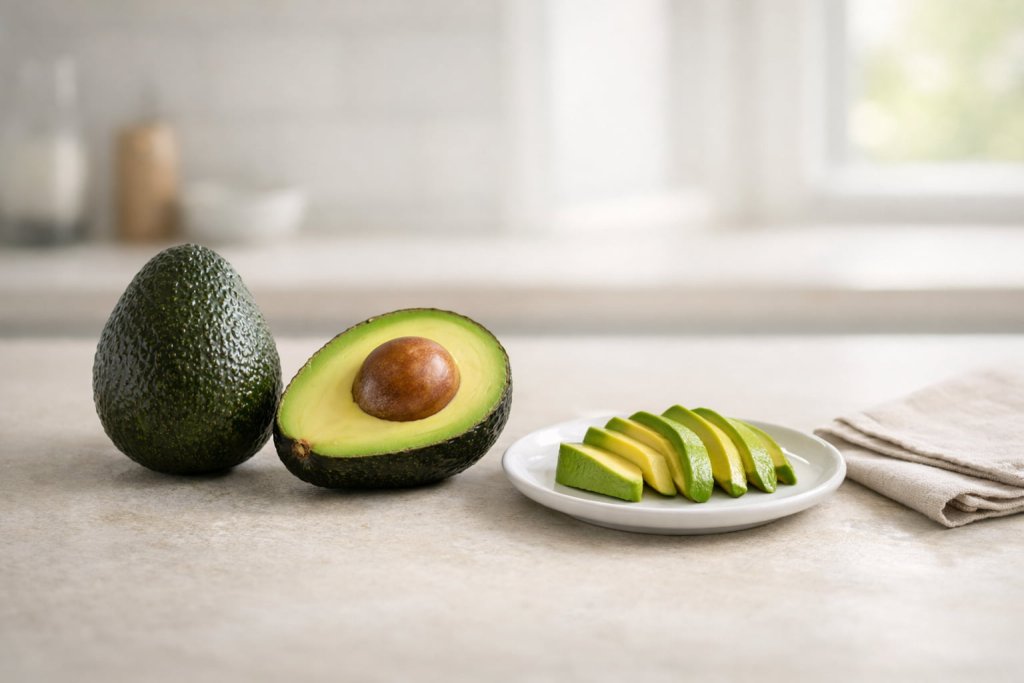
How many calories are in an avocado?
A simple way to think about it is this:
- 1/3 of a medium avocado (50 g): about 80 calories
- 1/2 of a medium avocado: about 120 calories
- 1 whole medium avocado: about 240 calories
- 100 grams of avocado: about 160 calories
The most practical official serving reference is 1/3 of a medium avocado, which the California Avocado Commission lists as 80 calories. Harvard notes that a whole medium avocado contains about 240 calories.
Avocado nutrition profile
Here is a cleaner nutrition profile table with fewer columns so it fits better on WordPress.
Nutrition Profile Table
| Serving size | Calories | Fiber | Fat | Potassium |
|---|---|---|---|---|
| 1/3 medium avocado (50 g) | 80 | 3 g | 7 g | 250 mg |
| 1/2 medium avocado | 120 | 5 g | 11 g | About 375 mg |
| 1 whole medium avocado | 240 | 10 g | 22 g | About 750 mg |
| 100 g avocado | 160 | 6.7 g | 14.7 g | 485 mg |
Avocado also provides small amounts of protein and carbohydrates, but this simplified table keeps the most useful nutrition facts easy to read on smaller screens.
Why avocado calories are higher than many other fruits
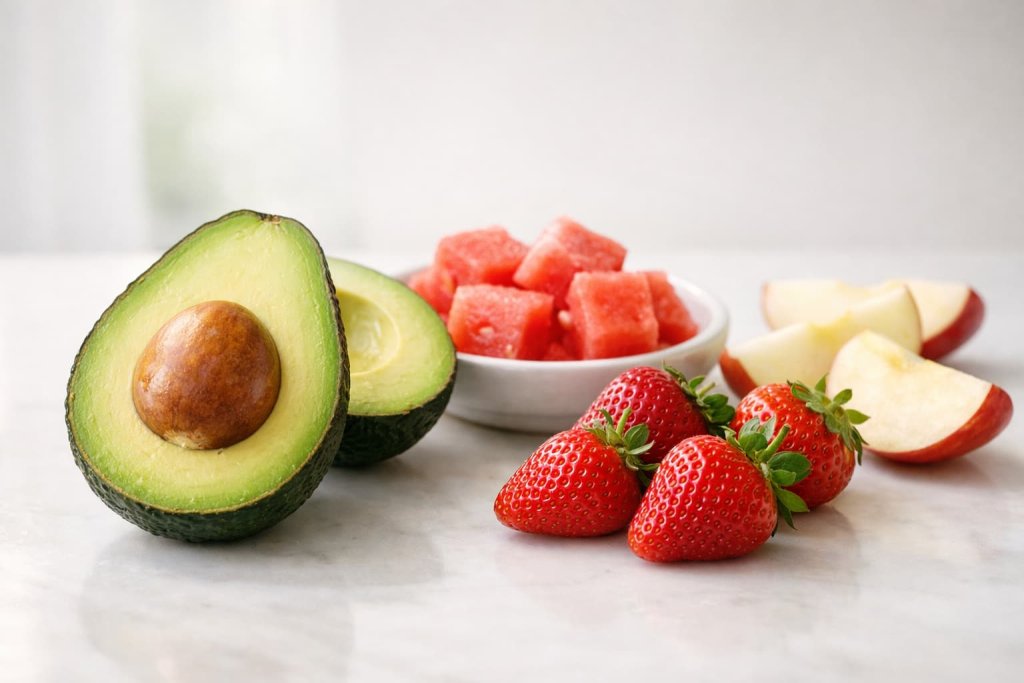
Avocado has more calories than fruits like strawberries, watermelon, or apples because most of its calories come from fat rather than mainly from carbohydrate. That does not make it unhealthy. In fact, the California Avocado Commission explains that more than 75% of avocado fat is unsaturated, and Harvard notes that avocado is especially rich in monounsaturated fat, the main type also associated with olive oil.
This matters because calorie count is only one part of the picture. Avocado also provides fiber and useful micronutrients, which can make it more filling and nutritionally valuable than many low-calorie foods. The U.S. Food and Drug Administration identifies dietary fiber and potassium as nutrients most people should get more of.
Is avocado good for weight management?
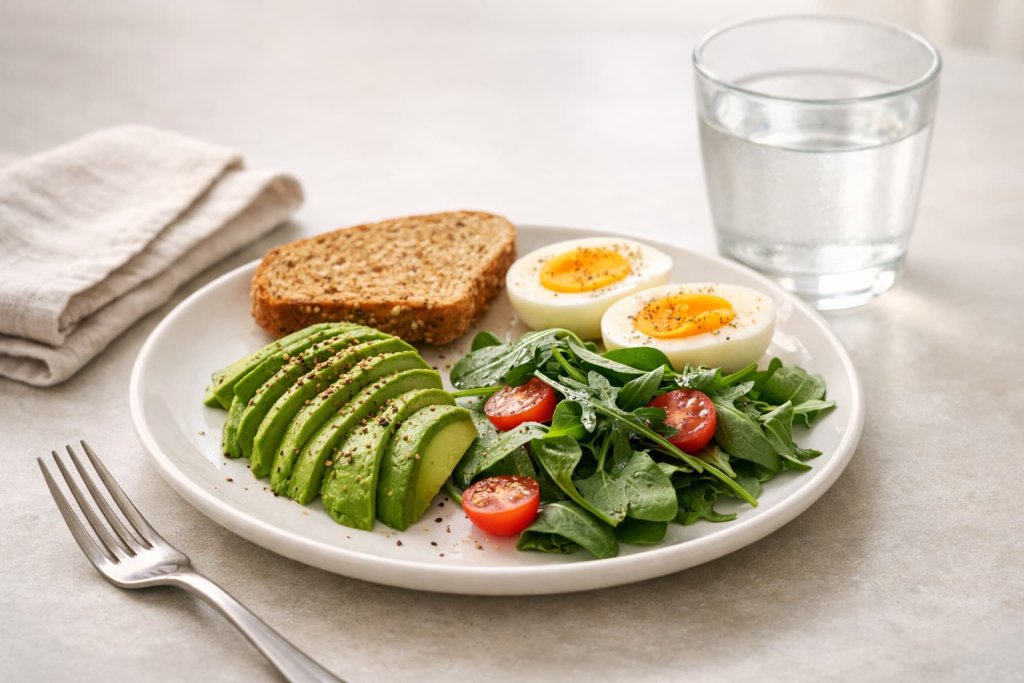
Avocado can fit into a weight-loss or weight-maintenance plan, but portion size matters. Because it is calorie-dense, eating large amounts without adjusting the rest of your meals can raise total calorie intake quickly. At the same time, avocado offers fiber and fat, two nutrients that may help a meal feel more satisfying. The California Avocado Commission lists 3 grams of fiber in a 50-gram serving.
A good practical approach is to use:
- 1/4 to 1/3 avocado on toast, in salads, or with eggs
- 1/2 avocado as part of a full meal
- A whole avocado when it is replacing other ingredients, not just adding extra calories on top
Key nutrients in avocado
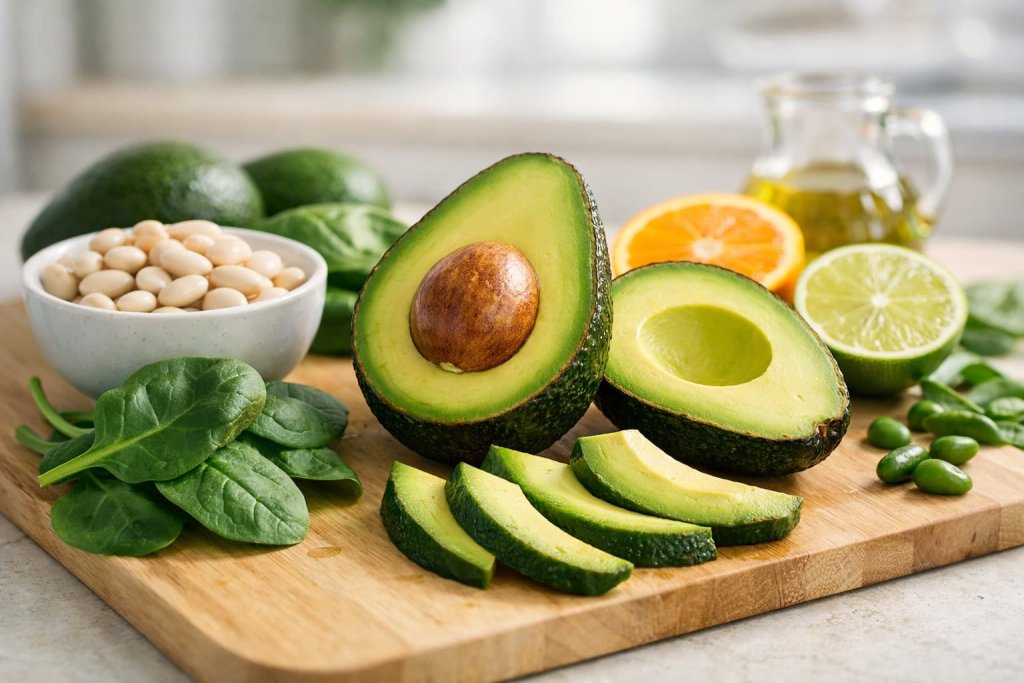
Fiber
A 50-gram serving of avocado provides 3 grams of fiber, which is about 11% of the Daily Value. The FDA uses 28 grams as the Daily Value for fiber and considers foods with 20% Daily Value or more high in a nutrient. That means avocado contributes meaningful fiber, though it is not an extremely high-fiber food per small serving.
Potassium
A 50-gram serving provides 250 mg of potassium, about 6% of the Daily Value. Potassium is one of the nutrients the FDA highlights as one people often need more of.
Healthy fats
Avocado is known for its fat content, especially monounsaturated fat. The California Avocado Commission lists 5 grams of monounsaturated fat in a 50-gram serving, and Harvard notes that a whole medium avocado contains 22 grams of total fat, including 15 grams of monounsaturated fat.
Folate and vitamin K
The California Avocado Commission lists 45 mcg folate and 11 mcg vitamin K per 50-gram serving. These nutrients are part of why avocado is often described as nutrient-dense, not just calorie-dense.
How avocado calories compare by serving size
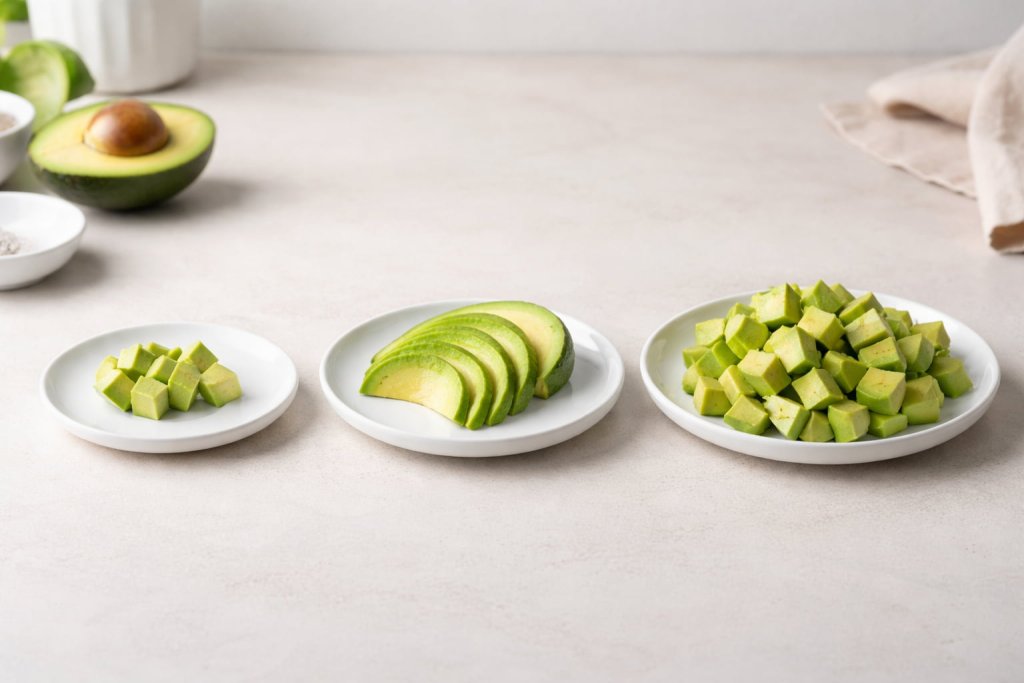
Many people underestimate avocado calories because the fruit feels light and fresh. These quick comparisons can help:
| Amount eaten | Approximate calories |
|---|---|
| 2 tablespoons mashed avocado | 50–60 |
| 1/4 medium avocado | About 60 |
| 1/3 medium avocado | 80 |
| 1/2 medium avocado | About 120 |
| 1 whole medium avocado | About 240 |
The 1/4 and 1/2 estimates are practical calculations based on the official 1/3 medium = 80 calories serving and Harvard’s whole medium = 240 calories estimate.
What changes the calorie count in an avocado?
Size
Not all avocados are the same size. A small avocado has fewer calories than a large one. That is why calorie counts can look different across websites, apps, and labels.
Variety
Hass avocados are the most common in many stores, but different avocado varieties can vary slightly in edible portion and nutrient profile.
Edible portion
The pit and peel are not eaten, so the real calorie count depends on how much flesh you actually scoop out.
Best ways to enjoy avocado without overdoing calories
You do not need to avoid avocado to manage calories. The better strategy is to use it intentionally.
Good options include:
- spread 1/4 to 1/3 avocado on whole-grain toast
- add a few slices to a salad instead of a heavier dressing
- pair avocado with eggs, beans, or grilled chicken for a more satisfying meal
- use mashed avocado in place of some mayonnaise or butter in certain recipes
This works especially well because avocado can add creaminess and flavor while also contributing fiber and unsaturated fat. Harvard notes that avocado fits well into eating patterns such as the Mediterranean and DASH diets.
Is avocado keto-friendly or low carb?
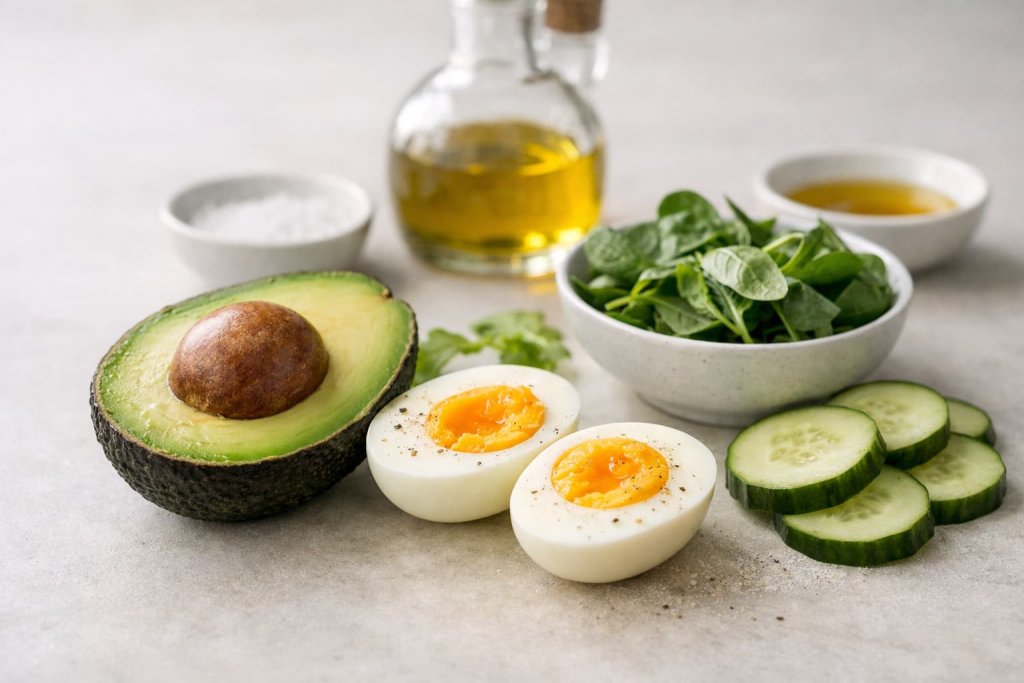
Avocado is often used in lower-carb eating patterns because its total carbohydrate is modest relative to its fiber. The California Avocado Commission lists 4 grams of carbohydrate and 3 grams of fiber per 50-gram serving, so the digestible carbohydrate load is fairly low for that portion.
That does not mean you need a special diet to eat avocado. It simply means avocado can fit into many eating styles, from balanced everyday meals to lower-carb meal plans.
Who should be a little more careful with avocado?
Avocado is a nutritious food for most people, but a few readers may want to pay closer attention to portion size:
- people actively tracking calories for weight loss
- people adding avocado to meals that already contain several other high-fat foods
- anyone who assumes “healthy” means “unlimited”
Also, because avocado contains vitamin K, people taking blood-thinning medication may need consistent vitamin K intake rather than large swings in intake. That is a general food-consistency issue, not a reason most people need to avoid avocado.
FAQs
Is a whole avocado too much?
Not necessarily. A whole medium avocado is about 240 calories. That can be reasonable in a meal, especially if it replaces less nutritious toppings or fats. But for many people, 1/3 to 1/2 avocado is a more practical everyday portion.
Is avocado more fattening than fruit?
Avocado is higher in calories than most fruit, but “fattening” depends on your total eating pattern. Portion size and overall calorie balance matter more than any one food.
Is avocado a good snack?
Yes, especially when paired with foods like eggs, whole-grain toast, beans, or vegetables. Its fiber and fat can help make a snack more satisfying.
How many calories are in half an avocado?
Half of a medium avocado has about 120 calories, based on the common estimate of 240 calories for a whole medium avocado.
How many calories are in one small avocado?
It varies by size, but it is usually less than 240 calories if the edible portion is smaller than a medium avocado. Checking weight gives the most accurate answer.
How many calories are in 1/3 of an avocado?
About 80 calories for 1/3 of a medium avocado (50 g).
Does avocado have protein?
Yes, but not a large amount. Harvard lists about 3 grams of protein in a whole medium avocado.
Is avocado high in carbs?
Not compared with many other foods. A 50-gram serving has 4 grams of carbohydrate and 3 grams of fiber.
Is avocado high in potassium?
It is a useful source. A 50-gram serving provides 250 mg potassium, and the FDA encourages people to get more potassium from foods.
Can I eat avocado every day?
For most people, avocado can fit into a healthy daily eating pattern. The main thing to watch is portion size, since calories can add up quickly.
Conclusion
Avocado is not a low-calorie fruit, but it is a nutrient-dense one. A practical number to remember is 80 calories for 1/3 of a medium avocado and about 240 calories for a whole medium avocado. That gives you an easy way to enjoy avocado while keeping portions realistic. When you use it with awareness, avocado can be a smart addition to meals, snacks, and weight-conscious eating plans.