
The safest way to increase protein intake is to add protein-rich foods gradually across your meals and snacks, not to overload one meal or rely only on supplements. That approach helps you meet your needs more comfortably, supports fullness, and makes it easier to keep the rest of your diet balanced.
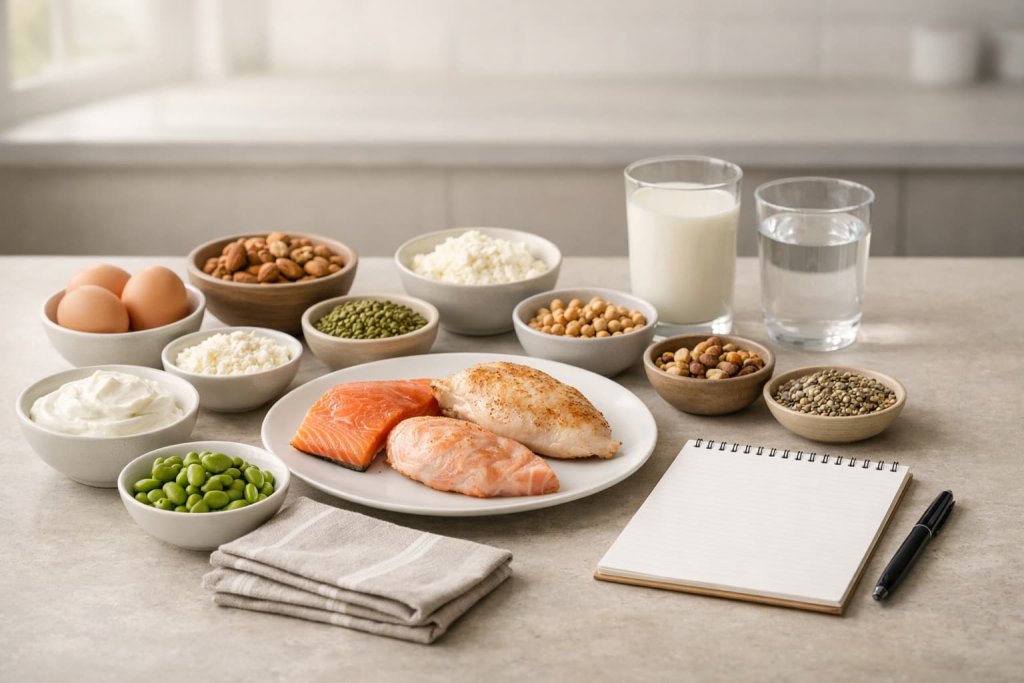
Understanding how to increase protein intake matters because your ideal amount depends on your body size, activity level, age, and health history. For most people, the best plan is simple: know your target, build meals around quality protein foods, read labels correctly, and be careful with very high-protein eating if you have kidney disease or another condition that affects your diet. According to the NIH Office of Dietary Supplements, the general adult recommended dietary allowance is 0.8 grams of protein per kilogram of body weight per day.
How Much Protein Do You Need Each Day?
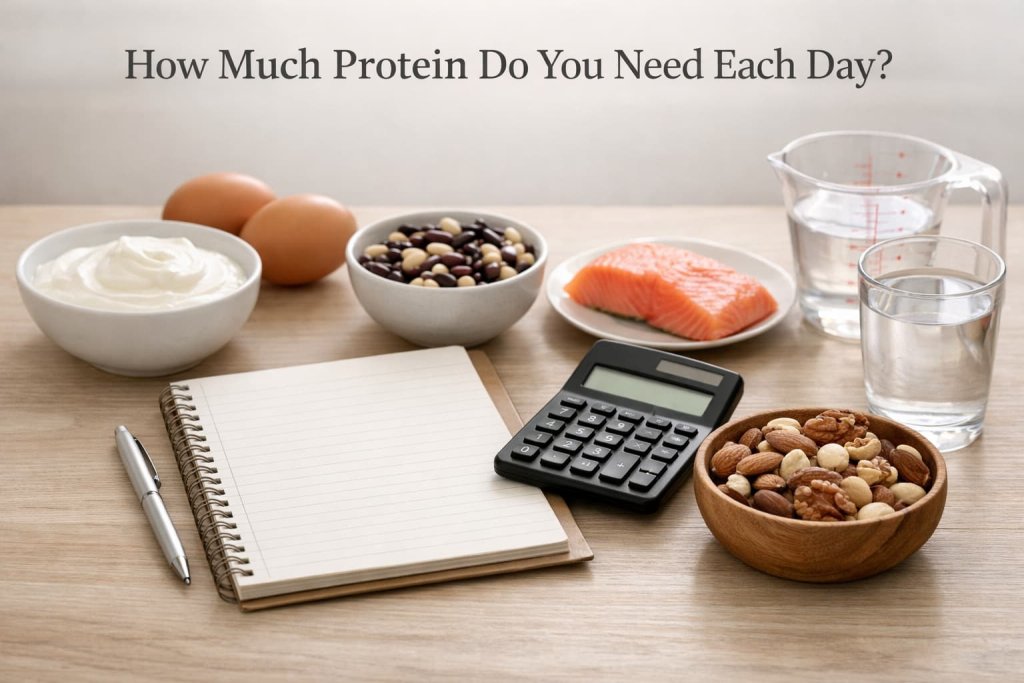
For generally healthy adults, the standard baseline is 0.8 grams per kilogram of body weight per day. That is enough to meet the needs of nearly all healthy adults, but it is a minimum target for basic adequacy, not always the most practical target for every goal. The U.S. Food and Drug Administration also uses a Daily Value of 50 grams of protein per day on Nutrition Facts labels, but that number is only a label reference based on a 2,000-calorie diet and is not a personalized goal.
A quick way to estimate your baseline need is:
- Body weight in kilograms × 0.8 = grams of protein per day
Examples:
- 60 kg: about 48 grams per day
- 70 kg: about 56 grams per day
- 80 kg: about 64 grams per day
That said, some people may benefit from more than the baseline amount.
When Protein Needs May Be Higher
Protein needs are often higher for people who exercise regularly, older adults trying to maintain muscle, and people eating in a calorie deficit for weight loss. The International Society of Sports Nutrition reports that healthy exercising adults often benefit from around 1.4 to 2.0 grams per kilogram per day, depending on training type and goals.
The National Institute on Aging also notes that older adults should aim to get enough protein throughout the day to help maintain muscle, with practical guidance to include foods like seafood, dairy, fortified soy products, beans, peas, and lentils in meals.
Why Spreading Protein Across the Day Works Better
One of the easiest mistakes is eating very little protein at breakfast and lunch, then trying to make up for it with a huge dinner. A steadier pattern usually works better in real life because it makes meals more satisfying and helps you reach your total without feeling overly full at night.
A practical target for many adults is to include a meaningful source of protein at:
- breakfast
- lunch
- dinner
- one or two snacks if needed
This does not mean every meal has to look like a bodybuilder meal. It means each meal should contain a clear protein source instead of leaving protein to chance.
Best Foods to Add When You Want to Increase Protein Intake
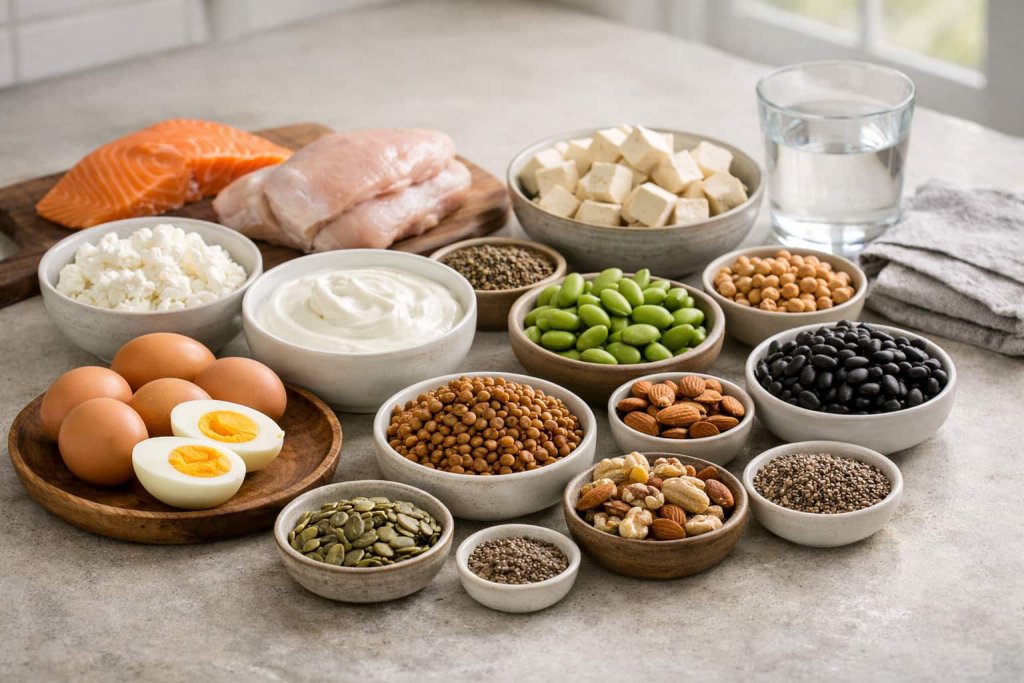
The most effective approach is to build around whole or minimally processed protein foods first. The American Heart Association recommends choosing mostly plant protein sources, eating fish and seafood regularly, choosing low-fat or fat-free dairy in place of full-fat versions when appropriate, and choosing lean, minimally processed meat or poultry if you eat them.
High-Protein Foods That Are Easy to Use Daily
Animal-Based Options
- eggs
- Greek yogurt
- cottage cheese
- milk
- chicken breast
- turkey
- fish
- tuna
- salmon
- lean beef
Plant-Based Options
- lentils
- beans
- chickpeas
- edamame
- tofu
- tempeh
- soy milk
- nuts
- seeds
- nut butter
The American Heart Association also highlights legumes, nuts, lentils, and chickpeas as useful protein choices that bring fiber along with protein, which can help with fullness and overall diet quality.
Simple Ways to Increase Protein Intake at Each Meal
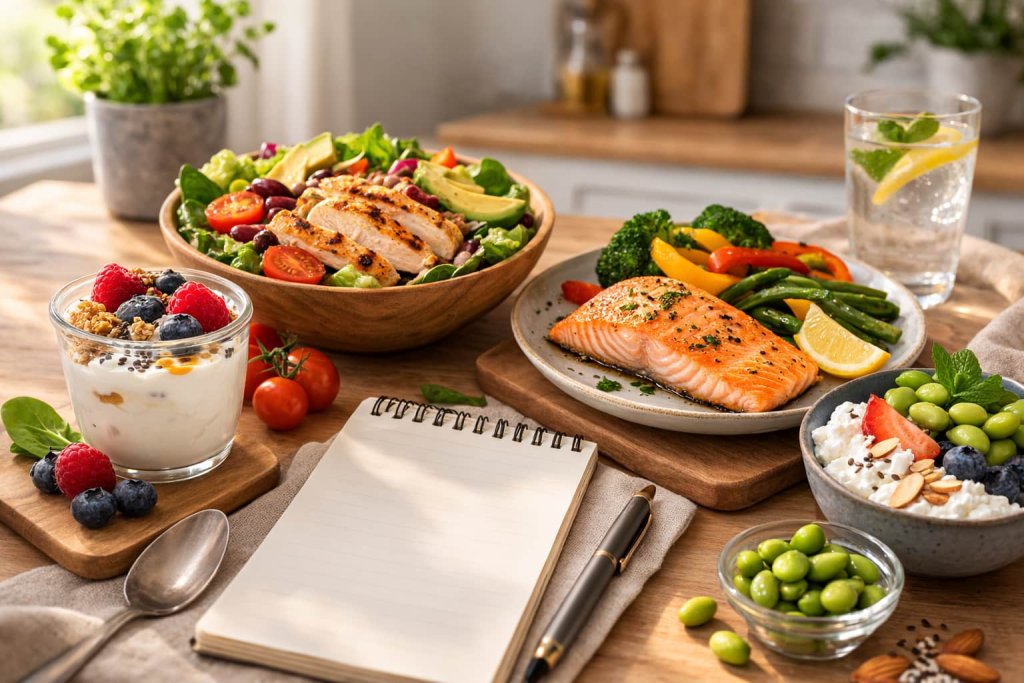
Start With Breakfast
Breakfast is where many people fall short. Replacing a low-protein breakfast with a more balanced one can make a big difference.
Better breakfast ideas:
- Greek yogurt with berries and chia seeds
- eggs with whole-grain toast
- cottage cheese with fruit
- oatmeal made with milk or fortified soy milk plus nuts or seeds
- tofu scramble with vegetables
Easy Breakfast Upgrade Examples
- Add Greek yogurt instead of a pastry
- Add an egg to toast or oats on the side
- Use milk or soy milk instead of water in oatmeal
- Stir nut butter into oats or spread it on toast
Build Lunch Around a Clear Protein Source
A salad or sandwich is not always high in protein unless you intentionally add it.
Easy lunch ideas:
- chicken or tuna salad
- lentil soup with whole-grain toast
- bean bowl with rice and vegetables
- tofu grain bowl
- cottage cheese or yogurt on the side with fruit
Smart Lunch Upgrades
- Add beans, tofu, chicken, tuna, or eggs to salads
- Choose Greek yogurt instead of a low-protein side
- Use edamame or chickpeas in grain bowls
- Add extra turkey or chicken to sandwiches
Make Dinner More Balanced, Not Just Meat-Heavy
Dinner is a good place to include protein, but it should still be balanced with vegetables, whole grains, beans, or other fiber-rich foods.
Good dinner combinations:
- salmon, vegetables, and potatoes
- chicken stir-fry with vegetables and rice
- tofu with broccoli and quinoa
- lentil curry with vegetables
- bean chili with a side salad
Use Protein-Rich Snacks When Needed
Snacks can help close the gap if meals are falling short.
Useful options:
- Greek yogurt
- cottage cheese
- hard-boiled eggs
- edamame
- roasted chickpeas
- hummus with vegetables
- nuts or seeds
- peanut butter with apple slices
- cheese with fruit or whole-grain crackers
These choices are usually more filling than snacks built mostly from refined carbs.
How to Use MyPlate to Make Protein Intake Easier
The MyPlate guidance is useful because it shows what counts as a protein foods ounce-equivalent. According to MyPlate, 1 egg, 1 tablespoon peanut butter, 1/4 cup cooked beans, peas, or lentils, or 1/2 ounce nuts or seeds each count as about 1 ounce-equivalent of protein foods.
That helps you build protein into ordinary meals without guessing. For example:
- add 2 eggs at breakfast
- add 1/2 cup beans to a lunch bowl
- add peanut butter to toast or fruit
- add nuts or seeds to yogurt or oatmeal
How to Read Food Labels for Protein
Packaged foods can help, but labels should be used carefully. The FDA explains that the Nutrition Facts label lists protein in grams per serving, which lets you compare similar foods quickly. The FDA also notes that the Daily Value on labels is a reference amount, not a custom target.
What to Check on the Label
- grams of protein per serving
- serving size
- added sugars
- saturated fat
- sodium
- ingredient quality
A packaged food with more protein is not always the better choice if it is also very high in sodium, added sugar, or saturated fat.
Are Protein Powders Necessary?
Usually, no. Food first is the strongest approach for most people because it gives you protein plus other nutrients. The NIH Office of Dietary Supplements notes that exercise and sports supplements are widely marketed, but they are not necessary for most people who can meet their needs through food.
Protein powders can be convenient when:
- you are busy and need a quick option
- your appetite is low
- you are trying to meet higher training-related needs
- a clinician or dietitian has recommended them
They should not replace the habit of building real meals.
Plant Protein vs Animal Protein: Which Is Better?
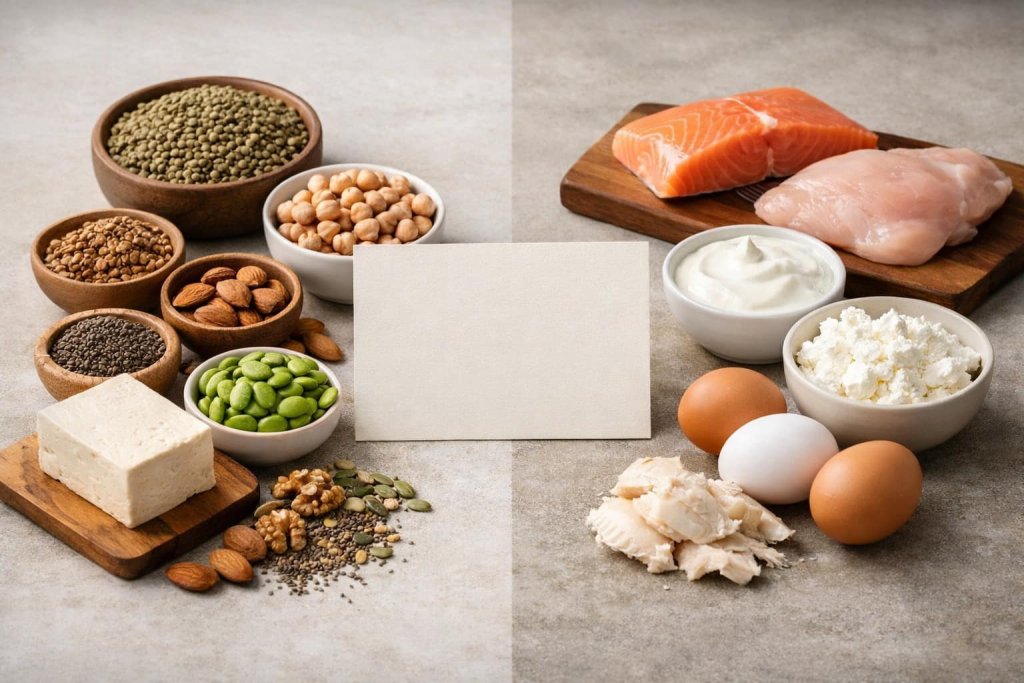
Both can help you meet protein needs, but the healthiest overall pattern usually includes a mix, with an emphasis on plant proteins and other minimally processed options. The American Heart Association recommends leaning toward plant proteins more often and limiting heavily processed meats.
Plant Protein Advantages
- often higher in fiber
- can support fullness
- often lower in saturated fat
- helpful for overall heart-healthy eating
Animal Protein Advantages
- often very concentrated
- easy to use in smaller portions
- dairy, eggs, fish, and lean meats can fit well in balanced diets
The best choice is usually not all-or-nothing. A practical pattern might include beans and lentils several times a week, seafood regularly, dairy or fortified soy foods if tolerated, and lean meat or poultry in reasonable portions.
Common Mistakes When Trying to Eat More Protein
Relying Too Much on Processed Meats
Bacon, sausage, deli meat, and similar foods may contain protein, but they are not the best everyday protein strategy. The American Heart Association advises choosing lean and minimally processed options more often.
Ignoring the Rest of the Meal
Protein matters, but meals still need produce, fiber, and overall balance. A high-protein meal that is low in vegetables and very high in sodium or saturated fat is not a great long-term strategy.
Drinking Protein Instead of Eating Meals
Protein shakes can help in a pinch, but liquid calories are not always as satisfying as whole foods.
Making Very Large Jumps Too Fast
If your current intake is low, increase gradually. That can feel more comfortable and makes the habit easier to maintain.
Safety Box: Who Should Be Careful With Higher-Protein Eating?
Higher-protein eating is not automatically right for everyone.
According to the National Institute of Diabetes and Digestive and Kidney Diseases, people with chronic kidney disease may need to adjust the amount of protein they eat, and the right amount can change over time. NIDDK also notes that too much protein can increase waste buildup in some kidney conditions and make the kidneys work harder.
You should be especially careful if you:
- have chronic kidney disease
- are on dialysis
- have been told to follow a special medical diet
- have trouble chewing, swallowing, or digesting certain foods
- want to use large amounts of supplements
If any of those apply to you, get individualized advice from your doctor or a registered dietitian before making major changes.
A Practical One-Day Example of How to Increase Protein Intake
Here is a simple food-first example:
Breakfast
Greek yogurt with berries and chia seeds, plus one boiled egg
Lunch
Chicken and bean salad with vegetables and whole-grain bread
Snack
Cottage cheese with fruit or edamame
Dinner
Salmon, roasted vegetables, and brown rice
This pattern spreads protein across the day and keeps meals balanced.
How to Increase Protein Intake for Weight Loss
If your goal is weight loss, increasing protein can help make meals more filling and may help you maintain muscle while eating fewer calories, especially when combined with resistance training. The most effective approach is not to eat unlimited protein. It is to replace low-satiety foods with meals and snacks that combine protein, fiber, and reasonable portions. Guidance for active adults from the International Society of Sports Nutrition supports the idea that protein needs can be higher during training or calorie restriction, depending on the situation.
Good examples:
- Greek yogurt instead of sugary snack foods
- eggs or cottage cheese instead of a low-protein breakfast
- beans, tofu, chicken, or fish added to meals that were mostly starch before
FAQ
What Is the Easiest Way to Increase Protein Intake?
The easiest way is to add one clear protein source to every meal and choose one protein-rich snack each day. Breakfast is often the simplest place to improve.
Is It Better to Eat Protein All at Once or Spread Out?
For most people, spreading protein across the day is more practical and easier to maintain than eating most of it at one meal.
Can You Increase Protein Intake Without Eating More Meat?
Yes. Beans, lentils, tofu, tempeh, edamame, Greek yogurt, cottage cheese, milk, soy milk, nuts, and seeds can all help increase protein intake.
Is 50 Grams of Protein Enough?
It may be enough for some smaller, less active adults, but 50 grams is the FDA Daily Value used on labels, not a personalized target. Your needs may be higher or lower.
Do Older Adults Need More Protein?
Older adults often need to pay closer attention to protein intake and meal quality to help maintain muscle and function. The National Institute on Aging recommends getting enough protein throughout the day from foods such as seafood, dairy, fortified soy products, beans, peas, and lentils.
How Can I Increase Protein Intake Without Supplements?
Use food-first options such as eggs, Greek yogurt, cottage cheese, beans, lentils, tofu, edamame, fish, chicken, milk, and nuts. Most people can improve protein intake substantially through meals and snacks alone.
What Meal Is Usually Lowest in Protein?
Breakfast is often the lowest-protein meal, especially when it is based on toast, cereal, or pastries without a strong protein source.
Are Plant Proteins Enough on Their Own?
Yes. You can meet protein needs with plant foods, especially when your diet includes a variety of legumes, soy foods, nuts, seeds, and whole grains.
Should I Eat More Protein If I Work Out?
Possibly. People who exercise regularly often benefit from more protein than the basic adult RDA, especially if they do strength training or are trying to maintain muscle while losing weight.
Can Too Much Protein Be Harmful?
For some people, yes. People with kidney disease or certain medical conditions may need tailored protein advice, so higher-protein eating should not be treated as universal.
Are High-Protein Packaged Foods Always Healthy?
No. Some are useful, but others may also be high in sodium, saturated fat, or added sugar. Always read the full Nutrition Facts label.
What Is One Simple Change I Can Make Today?
Add a real protein source to breakfast. That one change can make it much easier to reach your daily intake target.
Conclusion
Learning how to increase protein intake safely is mostly about better meal structure, not extremes. Start with your likely needs, add protein to breakfast, build meals around quality sources, use snacks strategically, and keep your overall diet balanced. If you have kidney disease or another condition that affects your diet, get personalized guidance before going higher.
This content is for informational purposes only and not medical advice.