
Chicken breast is relatively low in calories for the amount of protein it provides. A plain, skinless chicken breast has about 120 calories per 100 grams raw and about 165 calories per 100 grams cooked, although the exact number changes based on portion size, whether the skin is eaten, and how it is cooked. According to USDA FoodData Central, raw and cooked entries are listed separately, which is important because cooking changes the meat’s water content and weight.

That matters because chicken breast is one of the most common protein foods in everyday meal plans. It can fit well into a healthy eating pattern, but calories can rise quickly when you add skin, breading, butter, oil, or creamy sauces. The American Heart Association recommends choosing lean protein options such as skinless poultry when possible.
How Many Calories in Chicken Breast by Serving Size
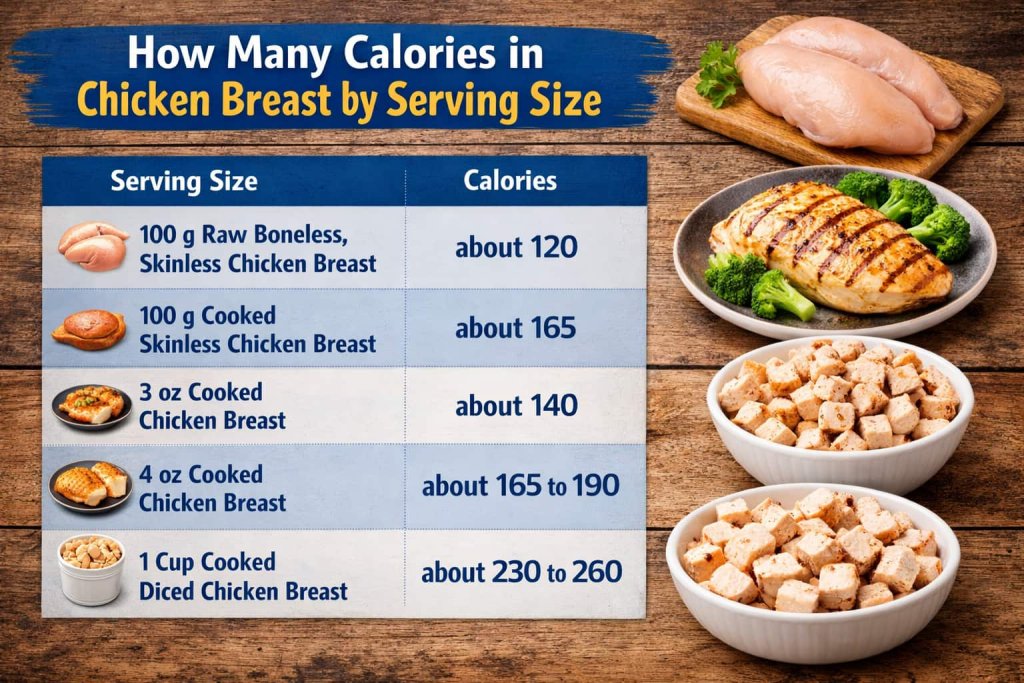
For plain, skinless chicken breast, these are practical calorie estimates:
| Serving size | Calories |
|---|---|
| 100 g raw boneless, skinless chicken breast | about 120 |
| 100 g cooked skinless chicken breast | about 165 |
| 3 oz cooked chicken breast | about 140 |
| 4 oz cooked chicken breast | about 165 to 190 |
| 1 cup cooked diced chicken breast | about 230 to 260 |
These estimates work best for plain chicken breast without heavy added fat or breading. Cooked chicken is more calorie-dense by weight because it loses water during cooking, so 100 grams cooked is not the same as 100 grams raw.
If you do not weigh your food, a 3-ounce cooked portion is roughly the size of the palm of your hand or a deck of cards. A larger chicken breast filet can easily be 5 to 8 ounces cooked, which means the calorie total may be much higher than many people expect.
Skinless vs Skin-On Chicken Breast
If you are trying to keep calories lower, skinless chicken breast is usually the better reference point. Leaving the skin on adds extra fat and increases the calorie count. That is why nutrition databases and food-tracking tools list separate entries for skinless and skin-on chicken.
For everyday tracking, it is best to use:
- skinless entries for plain trimmed chicken breast
- skin-on entries only when the skin is actually eaten
This small detail can make a noticeable difference if you are tracking calories closely.
Nutrition Profile of Chicken Breast
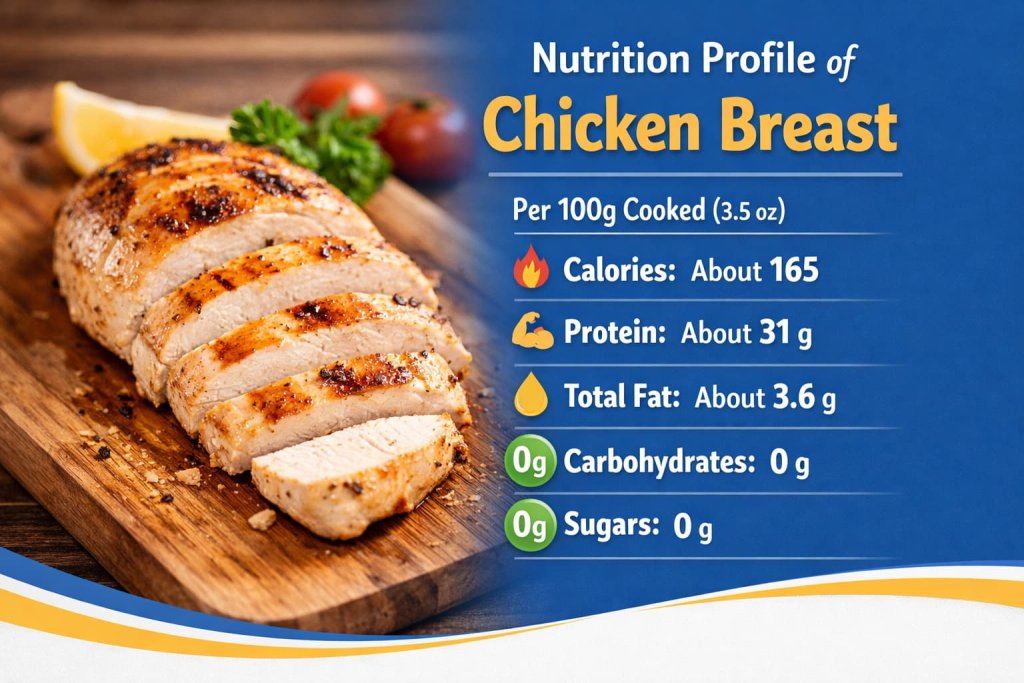
A plain skinless chicken breast is best known for being high in protein and naturally free of carbohydrates. Using USDA reference values for 100 grams cooked, the nutrition profile looks like this:
| Nutrient | Amount per 100 g cooked |
|---|---|
| Calories | about 165 |
| Protein | about 31 g |
| Total fat | about 3.6 g |
| Carbohydrates | 0 g |
| Sugars | 0 g |
This is one reason chicken breast is often used in balanced meals built around protein, satiety, and moderate calories. A review available through the National Institutes of Health notes that chicken can provide roughly 23 to 31 grams of protein per 100 grams, depending on the cut and preparation.
Why Chicken Breast Calories Change
Raw vs cooked weight
One of the biggest reasons people get confused is that raw and cooked weights are different. When chicken cooks, it loses water, so the same piece of chicken weighs less afterward. That makes the calories appear higher per 100 grams in cooked chicken even when nothing extra was added.
Boneless vs bone-in chicken breast
Another reason calorie tracking gets confusing is that bone-in chicken breast does not equal the same amount of edible meat as boneless chicken breast. If you weigh chicken with the bone still attached, part of that weight is not actually eaten. For the most accurate calorie estimate, use the weight of the edible meat portion and match it to the correct USDA entry, such as raw boneless skinless chicken breast or cooked skinless chicken breast.
This is especially helpful when you buy family packs, split chicken breasts, or restaurant chicken with the bone still in. In those cases, the package weight may look larger than the amount of meat you actually eat.
Skin, oil, breading, and sauces
Plain chicken breast is lean, but the final calorie total can rise quickly when it is prepared with:
- skin left on
- frying oil
- breading or batter
- butter
- creamy sauces
- sweet glazes or marinades
That is why two chicken breast meals can look similar but have very different calorie totals.
Is Chicken Breast Good for Weight Management?
Chicken breast can be a good choice for weight management because it gives you a lot of protein for a relatively moderate calorie cost. Protein can help make meals more filling, which may make it easier to stay satisfied between meals. That said, chicken breast does not cause weight loss on its own. What matters most is your overall eating pattern, portion sizes, and how the chicken is prepared.
A simple example makes this clear. A plain grilled chicken breast with vegetables and a whole grain side can fit easily into a calorie-aware meal. The same chicken breast breaded and fried, or covered in a rich sauce, can have a much higher calorie total.
Key Nutrients in Chicken Breast
Chicken breast is not only about protein. It also provides nutrients that support normal body function, especially B vitamins and minerals involved in energy metabolism and tissue maintenance. The MyPlate guidance includes lean poultry as part of a healthy protein-food pattern.
The most practical takeaways are:
- high protein with no carbohydrate in plain meat-only portions
- relatively low fat when skinless
- flexible for many meal patterns
- easy to portion around a 3-ounce cooked serving benchmark
Who Should Be a Little More Careful
Chicken breast is a healthy choice for many people, but a few groups may need to pay closer attention.
People with chronic kidney disease
Some people with chronic kidney disease may need to eat moderate rather than high amounts of protein, depending on their kidney function and care plan. The National Institute of Diabetes and Digestive and Kidney Diseases explains that protein needs may need to be adjusted in chronic kidney disease.
People watching sodium
Plain chicken breast is very different from:
- pre-seasoned chicken
- deli chicken
- breaded frozen chicken
- heavily marinated or brined chicken
Those products can contain much more sodium than plain fresh chicken. This matters for people with high blood pressure, kidney concerns, or anyone trying to limit sodium intake.
This also applies to many products marketed as healthy, such as grilled chicken strips, frozen chicken portions, or pre-cooked refrigerated chicken breast. Even when the protein source is chicken breast, the sodium and ingredient list can be very different from plain fresh chicken.
People relying on restaurant portions
Restaurant chicken dishes can be much larger than a standard 3-ounce serving and may come with added oils, cheese, sauces, or breading. That means the calorie total can be far higher than the plain chicken-breast numbers listed in a nutrition database.
Chicken Breast Food Safety
Chicken breast also needs proper handling in the kitchen. The Centers for Disease Control and Prevention says raw chicken does not need to be washed before cooking. Washing it can spread germs around the sink, counter, and nearby foods.
The U.S. Food and Drug Administration says poultry should be cooked to a safe internal temperature of 165°F (74°C), measured with a food thermometer. Keep raw chicken separate from foods that will be eaten raw, wash hands after handling it, and avoid undercooking.
Best Ways to Keep Chicken Breast Lower in Calories
If your goal is to keep chicken breast lighter, these cooking methods usually work best:
- bake it
- grill it
- roast it
- poach it
- air fry it with minimal oil
Try seasoning with herbs, spices, lemon, garlic, pepper, or a small amount of olive oil instead of heavy breading or rich sauces.
How Cooking Method Changes Chicken Breast Calories
A plain chicken breast stays relatively moderate in calories when it is grilled, baked, roasted, poached, or air fried with little added oil. Calories usually rise when chicken is:
- cooked with a lot of oil or butter
- breaded or battered
- deep-fried
- covered in creamy, cheesy, or sugary sauces
That means two chicken breast meals can look similar but have very different calorie totals. A plain grilled breast and a crispy fried chicken breast are not nutritionally the same, even if the portion size looks similar.
Frequently Asked Questions
How many calories are in a cooked chicken breast?
A plain cooked skinless chicken breast has about 165 calories per 100 grams. A smaller 3-ounce cooked portion has about 140 calories. The number goes up if the portion is larger or if oil, breading, skin, or sauces are added.
Is chicken breast high in protein?
Yes. Plain skinless chicken breast is considered a high-protein food. A cooked 100-gram serving provides about 31 grams of protein, which is one reason chicken breast is common in muscle-building, weight-management, and higher-protein meal plans.
Why does cooked chicken breast have more calories per 100 grams than raw chicken breast?
Cooked chicken breast usually shows more calories per 100 grams because it loses water during cooking. The chicken did not suddenly gain calories on its own. It simply became more concentrated after moisture cooked off. That is why raw and cooked database entries should not be used interchangeably.
Does frying chicken breast add a lot of calories?
It can. Frying, breading, butter, and creamy sauces can raise the calorie total well above plain grilled or baked chicken breast.
The Bottom Line on How Many Calories Chicken Breast Has
Chicken breast is one of the most practical lean-protein options because it gives you high protein with relatively moderate calories when it is plain and skinless. For most people, the easiest numbers to remember are about 120 calories per 100 grams raw and about 165 calories per 100 grams cooked. Keep an eye on portion size, edible meat weight, and cooking method, and the calorie count makes much more sense.
Sources and References
- USDA FoodData Central — FoodData Central
- American Heart Association — Picking Healthy Proteins
- National Institutes of Health — Poultry Consumption and Human Cardiometabolic Health
- MyPlate — MyPlate
- National Institute of Diabetes and Digestive and Kidney Diseases — Healthy Eating for Adults with Chronic Kidney Disease
- Centers for Disease Control and Prevention — Chicken and Food Poisoning
- U.S. Food and Drug Administration — Safe Food Handling