
How much protein is in chicken wings? A USDA household-measure entry shows that 1 raw chicken wing’s edible meat only provides 3.73 grams of protein. That number is for 1 wing, bone and skin removed, so it is not the same as one full cooked bone-in wing from a restaurant or takeout order. That difference matters because wings vary a lot once you factor in bone, skin, cooking method, sauce, and breading.
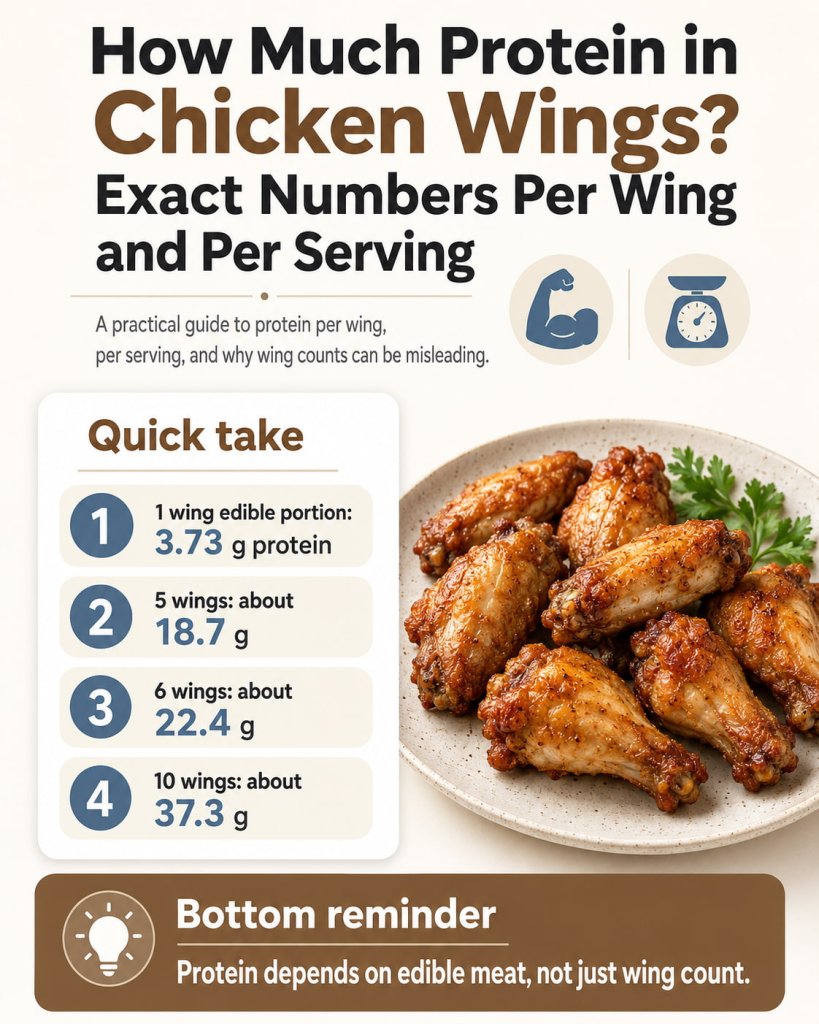
Understanding that distinction helps you get a much more accurate answer. If you are estimating protein for meal planning, macro tracking, or comparing wings with other meats, the edible portion matters more than the wing count alone.
Quick answer on how much protein is in chicken wings
The clearest USDA-based baseline is this: 1 raw chicken wing edible portion has 3.73 grams of protein and about 21 calories. That serving refers to the edible meat from 1 wing, bone and skin removed, not the whole bone-in wing on your plate.
If you are asking about cooked restaurant wings, there is no single universal number. Protein can vary depending on whether the wings are plain, grilled, fried, breaded, sauced, or counted by whole wing versus individual pieces.
How much protein is in 1 chicken wing?
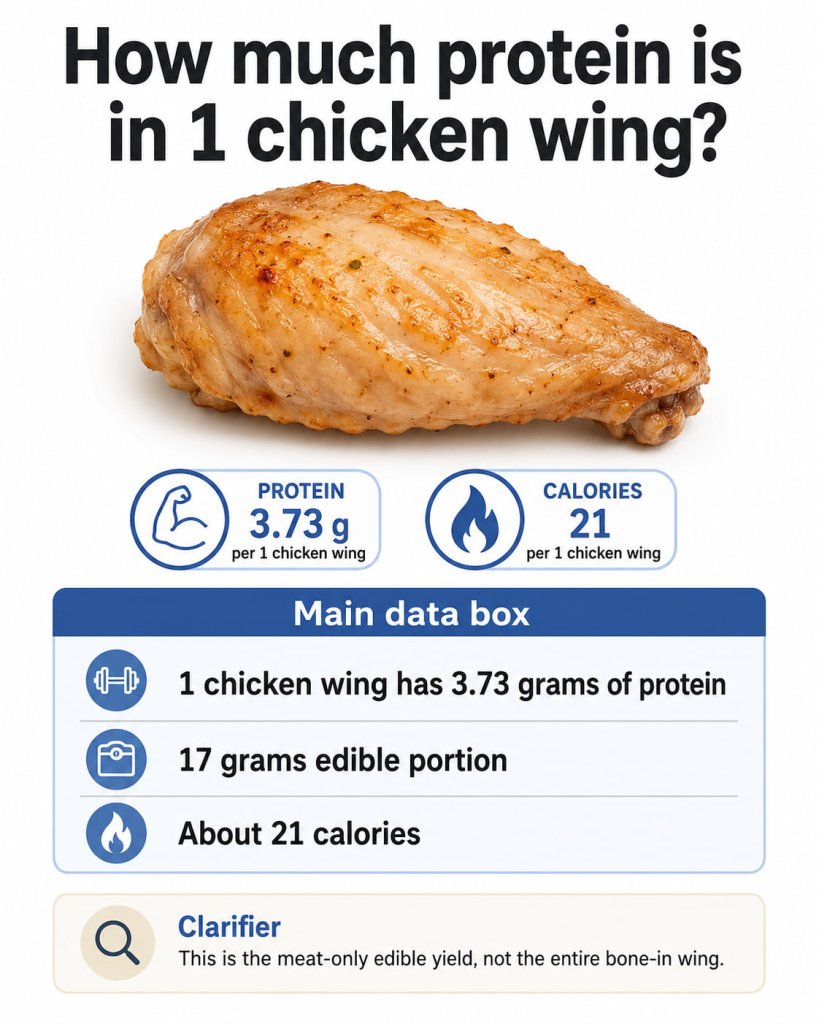
Using the USDA household measure for the edible portion, 1 chicken wing has 3.73 grams of protein. Again, this is the meat-only edible yield, not the entire bone-in wing.
That same USDA entry shows the edible portion weighs 17 grams and has 21 calories, which is why a whole wing can look much larger than the protein number suggests. A lot of wing weight is bone, and cooked wings may also include skin, sauce, or breading.
What counts as one wing?
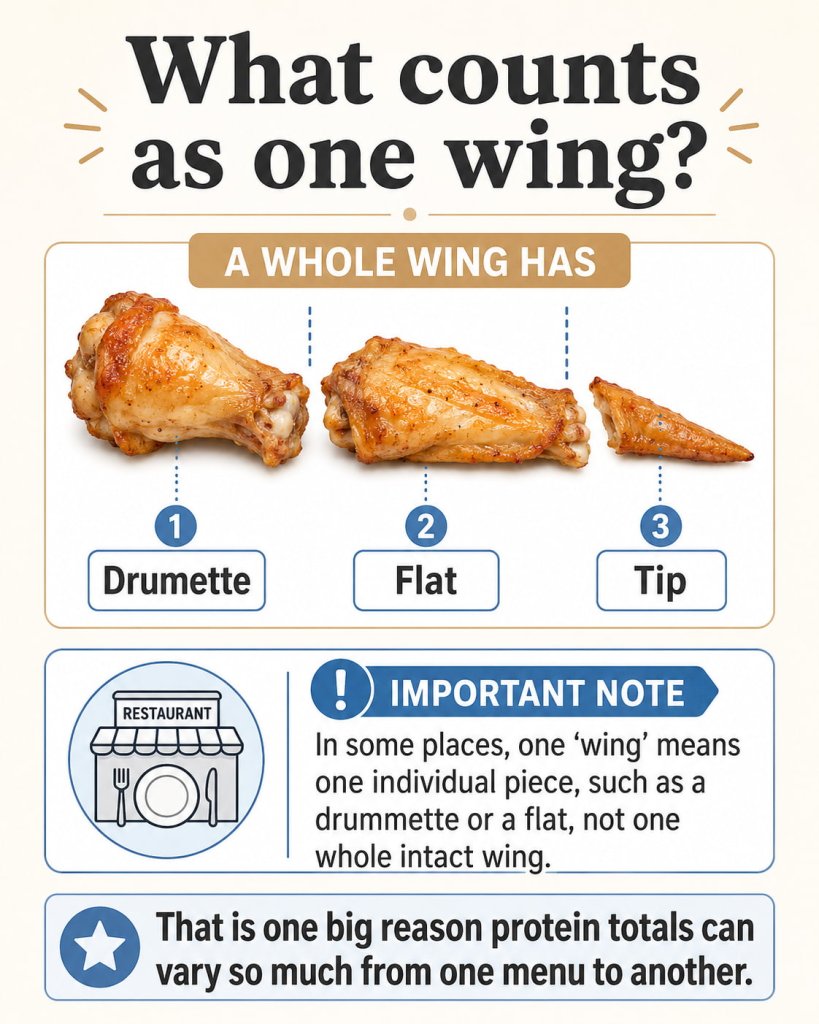
This is worth clarifying because many restaurant orders do not use “wing” the same way. In some places, one “wing” means one individual piece, such as a drummette or a flat, not one whole intact wing. A whole wing has three parts: the drumette, the flat, and the tip, and the tip has very little edible meat. That is one big reason protein totals can vary so much from one menu to another even when the wing count looks the same.
How much protein is in 5, 6, 8, or 10 chicken wings?
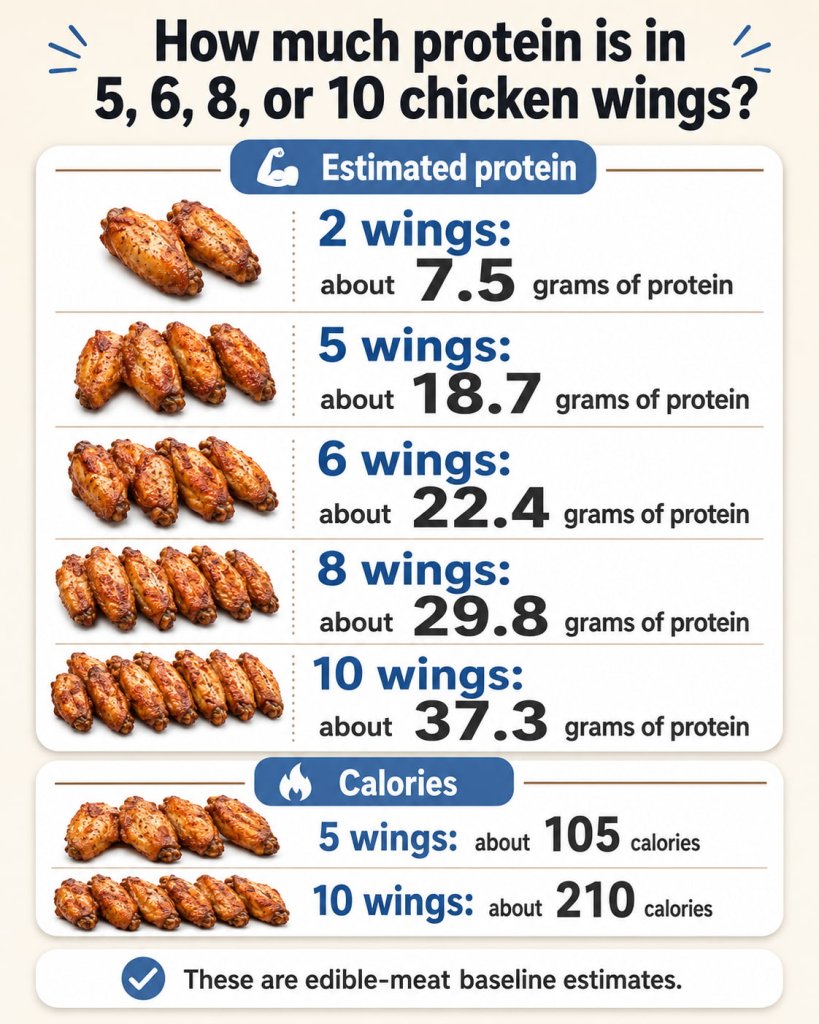
These estimates are calculated from the USDA figure of 3.73 grams of protein per raw edible wing meat portion. They work best as a meat-only baseline, not as a guaranteed number for restaurant wings.
- 2 wings: about 7.5 grams of protein
- 5 wings: about 18.7 grams of protein
- 6 wings: about 22.4 grams of protein
- 8 wings: about 29.8 grams of protein
- 10 wings: about 37.3 grams of protein
For calories, the same USDA edible-wing entry works out to about 105 calories for 5 wings and 210 calories for 10 wings before sauce, frying, or breading.
Why chicken wing protein numbers vary so much
The biggest reason is simple: a wing is not all edible meat. USDA’s direct per-wing entry is specifically for bone and skin removed, which means the number applies to the edible portion, not the full wing in your hand.
Preparation is another major reason. Wings can be grilled, baked, fried, breaded, dry-rubbed, or coated in sauce, and each version changes the final nutrition profile. Protein often stays fairly solid, but calories, carbs, and sodium can rise quickly with breading and sauce.
Serving language also causes confusion. Some restaurants count a “wing” as a whole wing, while others count one piece, such as a flat or drummette. That is why two orders with the same listed wing count can still have different protein totals.
Are chicken wings a good source of protein?
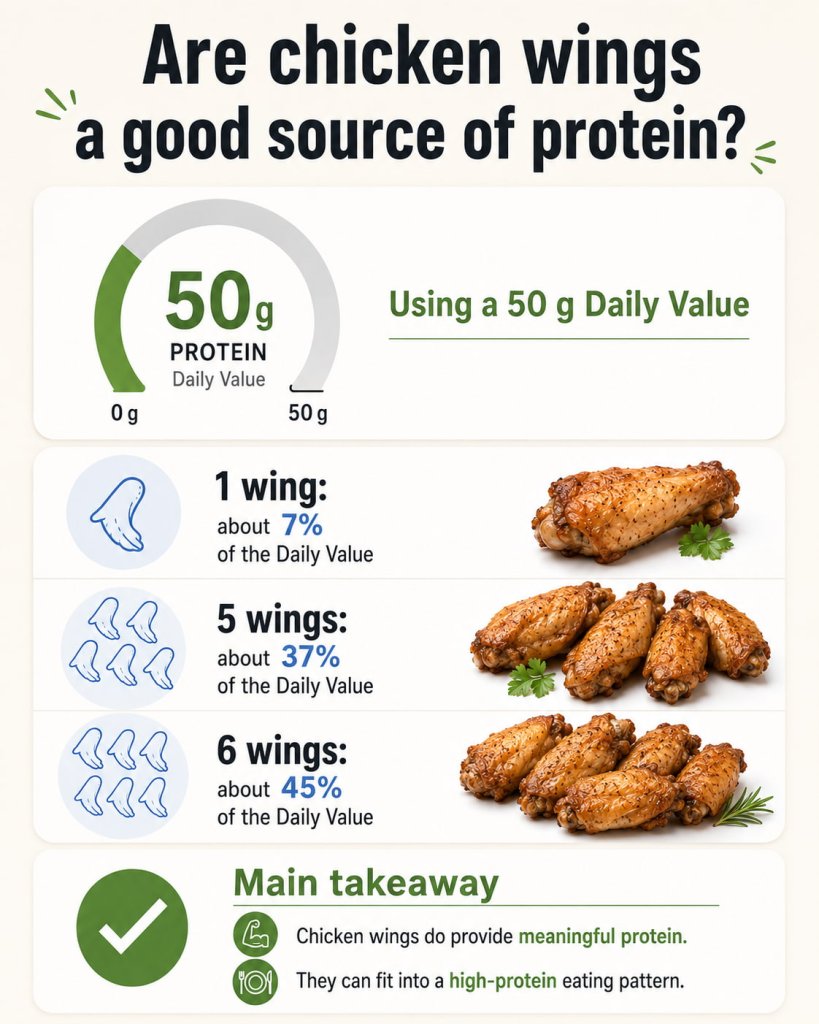
Yes, chicken wings do provide meaningful protein. Using the FDA’s current Daily Value of 50 grams of protein, one USDA edible wing portion at 3.73 grams provides about 7% of the Daily Value. Five edible wing portions provide about 37%, and six provide about 45%.
That means wings can fit into a high-protein eating pattern, but they are less straightforward to estimate than cuts like chicken breast because the protein is tied to the edible portion, not the full bone-in weight.
High protein does not always mean lean protein
Chicken wings can absolutely help you reach your protein goal, but they are usually not the most efficient protein choice once skin, frying, breading, or sauce are part of the meal. Meat-only estimates make wings look more protein-dense than a typical restaurant order usually is.
In practical terms, wings can be a solid protein food, but plain baked or grilled wings are usually a better pick than breaded or heavily sauced wings if you want more protein for fewer extra calories and carbs.
How much protein is in 100 grams of chicken wing meat?
Based on the USDA edible-wing household measure, 17 grams of edible raw wing meat provides 3.73 grams of protein. Calculated from that figure, 100 grams of edible raw wing meat provides about 21.9 grams of protein.
That is a useful comparison because weight-based numbers are usually more accurate than “per wing” estimates, especially for foods with bones.
What that looks like in a real serving
Using that same edible-meat calculation, 3 ounces (85 grams) of edible wing meat works out to about 18.6 grams of protein, and 4 ounces (113 grams) works out to about 24.7 grams of protein. This is often more useful than counting wings because it lets you compare wings with other protein foods on equal terms.
If you are tracking macros closely, weighing the edible meat gives you a much more reliable number than relying on piece count alone.
Chicken wings and calories: what to know
Protein is only part of the picture. USDA’s edible raw wing measure shows 3.73 grams of protein and 21 calories per wing edible portion, but that figure does not reflect the full reality of many restaurant or takeout wings.
Once wings are fried, breaded, or coated in sauce, calories and carbs can increase quickly. The protein may still be there, but the overall meal can look very different nutritionally from plain wing meat.
This does not make wings a bad food choice. It just means that a “high-protein” wing order is not always a lean or lower-calorie option.
Best way to track how much protein is in chicken wings
If you want the most accurate answer, use one of these methods:
- At home: weigh the edible meat after removing the bones, then compare by grams rather than by wing count.
- Packaged wings: use the Nutrition Facts label, which lists protein directly.
- Restaurant wings: check the restaurant’s official nutrition information when available, because wing size, sauce, and breading can all change the final number.
For most people, edible meat weight is the most reliable way to track protein in wings.
FAQ
How much protein is in 6 chicken wings?
Using the USDA edible-wing figure, 6 wings provide about 22.4 grams of protein. That is a calculated estimate based on 3.73 grams per edible wing, so actual cooked restaurant wings may differ.
How much protein is in 10 chicken wings?
Using the same USDA baseline, 10 wings provide about 37.3 grams of protein before frying, sauce, or breading is factored in.
Are chicken wings high in protein?
They can be. Even one USDA edible wing portion provides about 7% of the Daily Value for protein, and a larger serving can add up quickly. The main catch is that wings are harder to estimate by piece count because of bone and preparation differences.
Why do different websites show different protein amounts for chicken wings?
Because they may be counting different things: raw vs. cooked, meat only vs. meat and skin, whole wing vs. wing piece, or plain vs. sauced vs. breaded. Different assumptions can all lead to different numbers.
Final answer
If you want the most dependable baseline answer to how much protein is in chicken wings: 1 raw chicken wing edible meat portion contains 3.73 grams of protein. That works out to about 18.7 grams in 5 wings, 22.4 grams in 6 wings, and 37.3 grams in 10 wings.
Just remember that cooked bone-in wings from restaurants can vary a lot depending on size, skin, sauce, breading, and whether the menu is counting whole wings or individual pieces. If you want the most accurate number, compare wings by edible meat weight in grams, not by wing count alone.
References
- USDA National Agricultural Library — Nutrients: Protein (g)
- USDA National Agricultural Library — USDA National Nutrient Database for Standard Reference: Total Kcal
- U.S. Food and Drug Administration — Daily Value on the Nutrition and Supplement Facts Labels
- U.S. Food and Drug Administration — How to Understand and Use the Nutrition Facts Label