
The best high protein low fat foods include skinless chicken breast, turkey breast, white fish, tuna in water, shrimp, egg whites, nonfat Greek yogurt, low-fat cottage cheese, lentils, split peas, beans, and seitan. These foods help you build meals with more protein while keeping total fat and saturated fat lower.
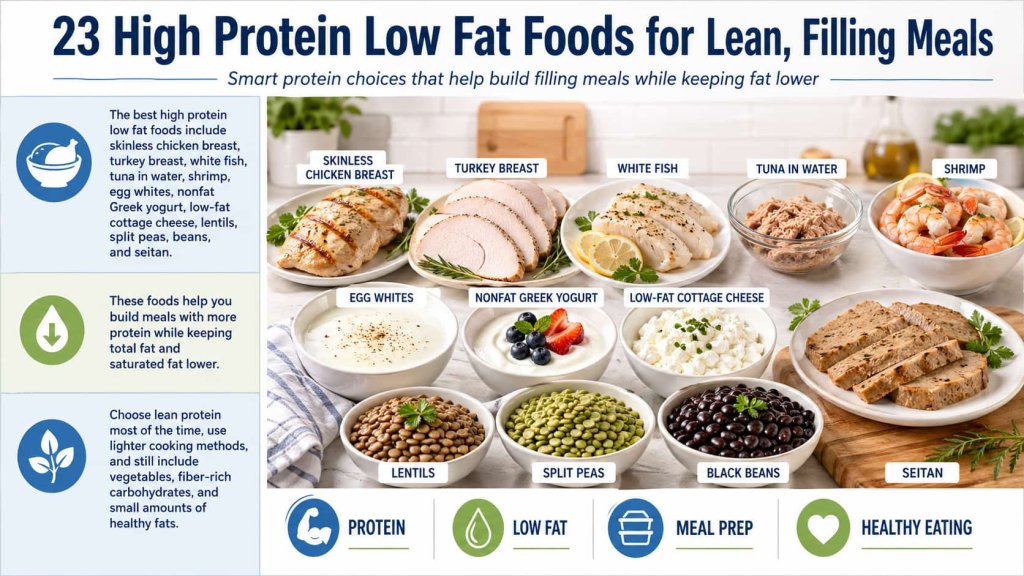
High protein low fat foods are useful when you want meals that feel filling, support muscle maintenance, and fit into a balanced eating pattern. The goal is not to remove all fat from your diet. The goal is to choose lean protein most of the time, use lighter cooking methods, and still include vegetables, fiber-rich carbohydrates, and small amounts of healthy fats.
The current Dietary Guidelines for Americans encourage a variety of protein foods, including seafood, lean meats, poultry, eggs, beans, peas, lentils, soy foods, nuts, and seeds.
What Counts as High Protein Low Fat Food?
A high protein low fat food gives you a meaningful amount of protein with relatively little total fat per serving.
For packaged food labels, federal food-labeling rules define “low fat” as generally 3 grams or less of fat per reference amount customarily consumed, according to the Electronic Code of Federal Regulations. That is a strict label definition, not a rule every whole food will meet in every serving size.
For everyday meal planning, it is more practical to think this way:
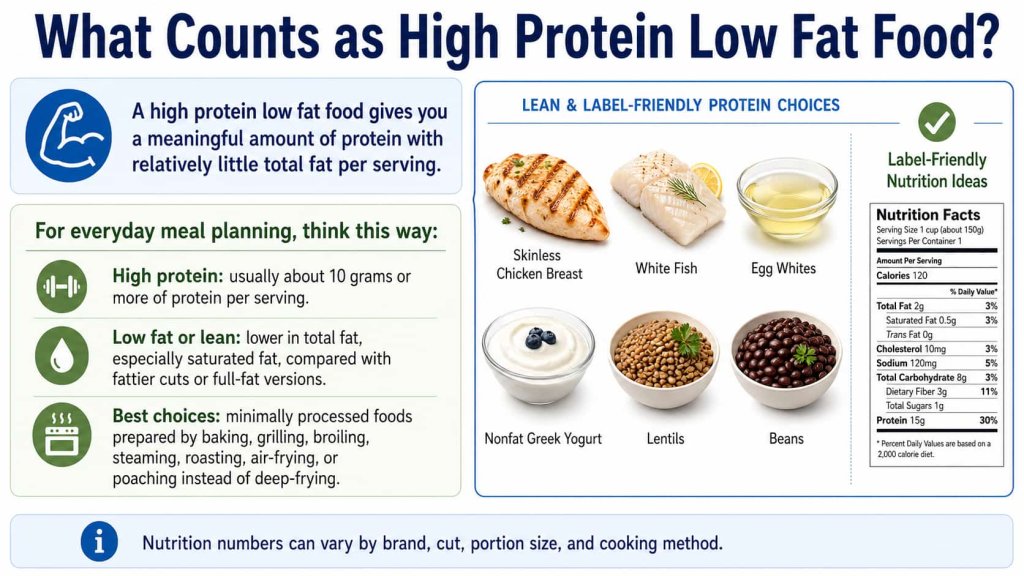
- High protein: usually about 10 grams or more of protein per serving.
- Low fat or lean: lower in total fat, especially saturated fat, compared with fattier cuts or full-fat versions.
- Best choices: minimally processed foods prepared by baking, grilling, broiling, steaming, roasting, air-frying, or poaching instead of deep-frying.
Nutrition numbers can vary by brand, cut, portion size, and cooking method. The protein and fat estimates below are based on typical values from USDA FoodData Central, the USDA’s food-composition database.
23 High Protein Low Fat Foods at a Glance
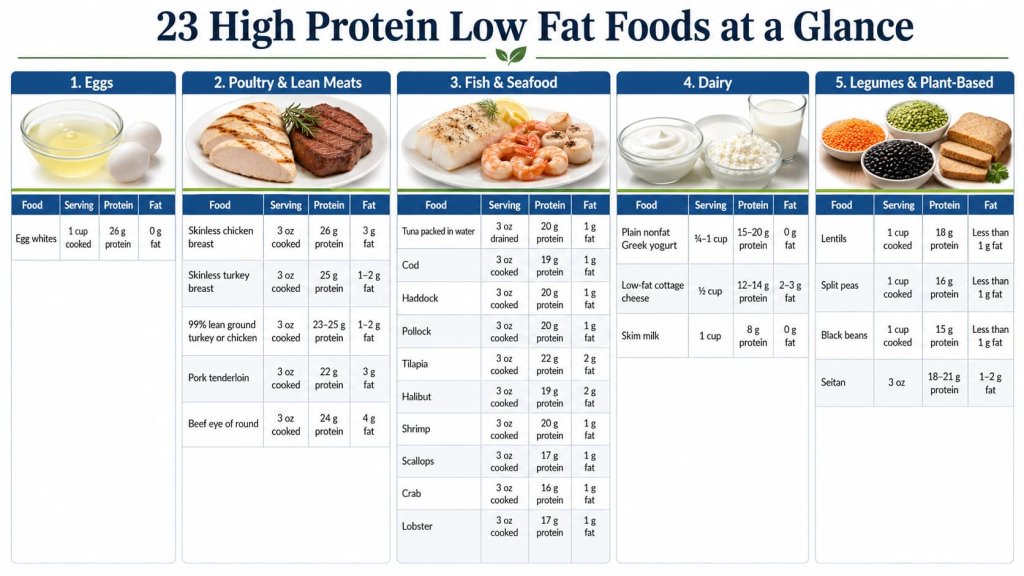
| # | Food | Serving Size | Approx. Protein | Approx. Fat | Best Use |
|---|---|---|---|---|---|
| 1 | Egg whites | 1 cup cooked | 26 g | 0 g | Scrambles, wraps, omelets |
| 2 | Skinless chicken breast | 3 oz cooked | 26 g | 3 g | Meal prep, salads, bowls |
| 3 | Skinless turkey breast | 3 oz cooked | 25 g | 1–2 g | Sandwiches, wraps, plates |
| 4 | 99% lean ground turkey or chicken | 3 oz cooked | 23–25 g | 1–2 g | Tacos, pasta, rice bowls |
| 5 | Pork tenderloin | 3 oz cooked | 22 g | 3 g | Roasted dinners, stir-fries |
| 6 | Beef eye of round | 3 oz cooked | 24 g | 4 g | Lean steak plates |
| 7 | Tuna packed in water | 3 oz drained | 20 g | 1 g | Salads, sandwiches, bowls |
| 8 | Cod | 3 oz cooked | 19 g | 1 g | Fish tacos, baked fish |
| 9 | Haddock | 3 oz cooked | 20 g | 1 g | Baked or broiled meals |
| 10 | Pollock | 3 oz cooked | 20 g | 1 g | Fish fillets, bowls |
| 11 | Tilapia | 3 oz cooked | 22 g | 2 g | Quick skillet meals |
| 12 | Halibut | 3 oz cooked | 19 g | 2 g | Grilled or baked fish |
| 13 | Shrimp | 3 oz cooked | 20 g | 1 g | Stir-fries, salads, tacos |
| 14 | Scallops | 3 oz cooked | 17 g | 1 g | Sautéed seafood meals |
| 15 | Crab | 3 oz cooked | 16 g | 1 g | Salads, seafood bowls |
| 16 | Lobster | 3 oz cooked | 17 g | 1 g | Lean seafood plates |
| 17 | Plain nonfat Greek yogurt | ¾–1 cup | 15–20 g | 0 g | Breakfast, snacks, sauces |
| 18 | Low-fat cottage cheese | ½ cup | 12–14 g | 2–3 g | Snacks, bowls, toast |
| 19 | Skim milk | 1 cup | 8 g | 0 g | Smoothies, cereal, drinks |
| 20 | Lentils | 1 cup cooked | 18 g | Less than 1 g | Soups, bowls, salads |
| 21 | Split peas | 1 cup cooked | 16 g | Less than 1 g | Soups, stews, purees |
| 22 | Black beans | 1 cup cooked | 15 g | Less than 1 g | Tacos, bowls, chili |
| 23 | Seitan | 3 oz | 18–21 g | 1–2 g | Stir-fries, wraps, meatless meals |
1. Egg Whites
Egg whites are one of the leanest protein foods. They contain protein with almost no fat, making them useful for people who want a high-protein breakfast without adding much saturated fat.
Use egg whites in scrambles, omelets, breakfast wraps, oatmeal, fried rice, or high-protein pancakes. For better flavor and nutrition, combine egg whites with vegetables, herbs, salsa, or one whole egg.
2. Skinless Chicken Breast
Skinless chicken breast is a classic high protein low fat food because it is lean, affordable, and easy to meal prep.
A cooked 3-ounce serving gives about 26 grams of protein with around 3 grams of fat. It works well in salads, soups, wraps, rice bowls, pasta dishes, and sheet-pan meals.
To keep it lean, avoid frying it in heavy breading. Bake, grill, roast, air-fry, or poach it instead.
3. Skinless Turkey Breast
Turkey breast is another lean poultry option. It is especially useful if you want a lower-fat protein for sandwiches, wraps, grain bowls, or dinner plates.
Choose skinless turkey breast when possible. If buying deli turkey, check the sodium level because processed deli meats can be high in sodium.
4. 99% Lean Ground Turkey or Chicken
Very lean ground turkey or chicken is helpful when you want the texture of ground meat without as much fat as regular ground beef or higher-fat poultry.
Use it for tacos, lettuce wraps, chili, pasta sauce, stuffed peppers, burger patties, and meal-prep bowls.
Choose 99% lean if your main goal is low fat. Ground poultry labeled 93% lean or 85% lean contains more fat.
5. Pork Tenderloin
Pork tenderloin is much leaner than many other pork cuts. It is tender, versatile, and works well with roasted vegetables, potatoes, rice, or salads.
Good cooking methods include roasting, grilling, slicing for stir-fries, or baking with herbs and spices. Trim visible fat before cooking if needed.
6. Beef Eye of Round
Beef eye of round is one of the leaner beef cuts. It provides high-quality protein, iron, zinc, and vitamin B12, but portion size and preparation still matter.
Use lean beef as one part of the plate, not the whole plate. Pair it with vegetables and a fiber-rich carbohydrate such as beans, potatoes, brown rice, or whole grains.
7. Tuna Packed in Water
Tuna packed in water is high in protein and very low in fat. It is convenient because it requires no cooking and can be added quickly to salads, sandwiches, wraps, and bowls.
Choose tuna packed in water rather than oil if you want the lowest-fat option. Also pay attention to mercury guidance, especially if you are pregnant, breastfeeding, or feeding children.
The FDA’s advice about eating fish says adults should eat seafood as part of a healthy pattern, and people who are pregnant or breastfeeding should choose lower-mercury seafood options and consume 8 to 12 ounces per week from those choices.
8. Cod
Cod is a mild white fish with plenty of protein and very little fat. It is a strong choice if you want a lean seafood option that works with many flavors.
Try cod baked with lemon and herbs, broiled with garlic, added to fish tacos, or served with roasted vegetables. Avoid deep-fried cod if your goal is low fat.
9. Haddock
Haddock is another lean white fish. It has a mild flavor and cooks quickly, making it a good option for busy weeknights.
Bake or broil haddock with spices, lemon, and a light coating of olive oil spray instead of heavy butter or cream sauce.
10. Pollock
Pollock is often affordable and easy to find frozen. It is lean, mild, and works well in fish bowls, wraps, and baked fillets.
Check the label when buying frozen fish products. Plain fillets are usually much leaner than breaded fish sticks or fried fish patties.
11. Tilapia
Tilapia is a lean fish with a mild taste and a firm texture. It is simple to pan-cook, bake, or air-fry.
For a balanced plate, serve tilapia with vegetables and a high-fiber side such as beans, quinoa, brown rice, corn tortillas, or roasted potatoes.
12. Halibut
Halibut is a lean, firm white fish that feels more substantial than some lighter fish. It is high in protein and naturally low in fat.
Because halibut can dry out, cook it gently and avoid overcooking. A small amount of olive oil, citrus, herbs, or salsa can add flavor without turning the meal into a high-fat dish.
13. Shrimp
Shrimp is high in protein and low in fat. It also cooks very quickly, which makes it useful for fast meals.
Healthy ways to use shrimp include shrimp stir-fry with vegetables, shrimp tacos with cabbage slaw, shrimp salad, shrimp with rice and vegetables, or shrimp skewers.
Watch the sodium if you buy pre-seasoned, frozen, or packaged shrimp.
14. Scallops
Scallops are lean, tender, and naturally low in fat. They are often served in butter-heavy restaurant dishes, but they can be kept lean at home.
Sear scallops in a nonstick pan with minimal oil, then serve them with vegetables, salad, or a simple grain bowl.
15. Crab
Crab is a lean seafood protein with very little fat. It works well in salads, lettuce cups, seafood bowls, and light crab cakes.
To keep crab low fat, avoid heavy mayonnaise-based salads or deep-fried crab cakes. Use Greek yogurt, mustard, herbs, lemon juice, or vinegar-based dressings instead.
16. Lobster
Lobster meat is lean and high in protein. The main issue is usually what gets served with it. Large amounts of melted butter can turn a lean protein into a much higher-fat meal.
For a lighter option, season lobster with lemon, herbs, garlic, or a small measured amount of butter rather than dipping every bite heavily.
17. Plain Nonfat Greek Yogurt
Plain nonfat Greek yogurt is one of the easiest high protein low fat foods to add to your day. It works as breakfast, a snack, or a base for sauces and dips.
Use it in smoothies, yogurt bowls, ranch-style dips, tzatziki, overnight oats, high-protein parfaits, and creamy dressings.
Choose plain yogurt most often. Flavored yogurts can contain added sugar.
18. Low-Fat Cottage Cheese
Low-fat cottage cheese is rich in protein and usually lower in fat than regular cottage cheese. It is also convenient because it requires no cooking.
Try it with fruit, tomatoes and pepper, whole-grain toast, baked potatoes, scrambled eggs, smoothies, or salad bowls.
If you are watching sodium, compare labels. Cottage cheese can vary a lot by brand.
19. Skim Milk
Skim milk provides protein with no fat. It also gives calcium, vitamin D when fortified, and other nutrients.
It can be useful in smoothies, oatmeal, cereal, or as a simple drink with meals. If you do not tolerate dairy, look for unsweetened fortified soy milk, which is closer to dairy milk in protein than many almond, oat, or rice drinks.
20. Lentils
Lentils are one of the best plant-based high protein low fat foods. They provide protein, fiber, complex carbohydrates, iron, potassium, and other nutrients.
Unlike meat, lentils also bring a lot of fiber to the meal. That makes them especially useful for soups, stews, salads, curries, and meal-prep bowls.
21. Split Peas
Split peas are high in plant protein, very low in fat, and rich in fiber. They are best known for split pea soup, but they can also be used in thick stews, purees, and plant-based bowls.
For a lower-fat version of split pea soup, use vegetables, herbs, and lean protein instead of fatty sausage or ham hocks.
22. Black Beans
Black beans are not as protein-dense as chicken or fish, but they are still a strong plant-based option because they provide protein with fiber and very little fat.
Use black beans in tacos, burrito bowls, chili, soups, salads, egg scrambles, and veggie burgers.
Choose low-sodium canned beans when possible, or rinse regular canned beans to reduce some sodium.
23. Seitan
Seitan is a very high-protein, low-fat plant-based food made from wheat gluten. It has a chewy texture and works well in stir-fries, wraps, sandwiches, and bowls.
Seitan is not suitable for people with celiac disease, wheat allergy, or gluten sensitivity. It can also be high in sodium if packaged or pre-seasoned, so read the label.
Best High Protein Low Fat Foods by Category
Best Animal-Based Options
The leanest animal-based picks include egg whites, skinless chicken breast, skinless turkey breast, tuna in water, cod, haddock, pollock, shrimp, scallops, crab, lobster, nonfat Greek yogurt, low-fat cottage cheese, and skim milk.
These foods are especially useful when you want a lot of protein without much added fat.
Best Plant-Based Options
The best plant-based high protein low fat foods include lentils, split peas, black beans, seitan, and some soy foods, depending on the product.
Beans, peas, and lentils contain more carbohydrates than meat or fish, but they also provide fiber. That makes them filling and useful for balanced meals.
Best Budget-Friendly Options
If cost matters, start with eggs or egg whites, canned tuna in water, frozen white fish, chicken breast bought in bulk, lentils, split peas, black beans, nonfat Greek yogurt tubs, and skim milk.
Dry beans, lentils, and split peas are usually cheaper per serving than many animal proteins.
Foods That Are High Protein but Not Low Fat
Some foods are healthy and high in protein, but they are not truly low fat.
Examples include:
- Salmon
- Sardines
- Mackerel
- Whole eggs
- Nuts
- Seeds
- Peanut butter
- Full-fat cheese
- Full-fat yogurt
- Regular ground beef
- Chicken thighs with skin
These foods can still fit into a healthy diet. The point is that they are better described as high protein with healthy fats or higher-fat protein foods, not low-fat protein foods.
For example, salmon is not low fat, but much of its fat comes from beneficial omega-3 fats. Nuts and seeds are also nutrient-dense, but their calories add up quickly because fat is calorie-dense.
How Much Protein Do You Need?
Protein needs vary based on body size, age, activity level, health status, and goals. MedlinePlus explains that healthy adults generally get protein within a range of 10% to 35% of total daily calories.
A simple way to build meals is to include a protein source at each meal, then adjust the amount based on your hunger, activity, and health needs.
For many people, a balanced plate can look like this:
- ¼ plate lean protein
- ¼ plate high-fiber carbohydrate
- ½ plate vegetables or fruit
- A small amount of healthy fat
That structure gives you protein without turning the whole meal into only meat, dairy, or protein powder.
How to Cook High Protein Low Fat Foods Without Adding Too Much Fat
A food can start lean and become high fat depending on how it is cooked.
Better cooking methods include:
- Baking
- Broiling
- Grilling
- Roasting
- Poaching
- Steaming
- Air-frying
- Stir-frying with a small amount of oil
Limit methods that add a lot of fat, such as deep-frying, pan-frying in heavy oil, using cream sauces, or adding large amounts of butter, cheese, or mayonnaise.
Flavor boosters that keep meals lighter include:
- Lemon juice
- Vinegar
- Salsa
- Mustard
- Garlic
- Onion
- Fresh herbs
- Spices
- Hot sauce
- Low-sugar marinades
- Greek yogurt-based sauces
Food Safety Tips for Meat, Poultry, and Seafood
High protein foods need safe handling and cooking.
FoodSafety.gov recommends using a food thermometer and cooking foods to safe internal temperatures, including 165°F for poultry, 160°F for ground meats, and 145°F for fish or whole cuts of beef, pork, veal, and lamb with proper rest time where required.
Basic safety tips:
- Keep raw meat, poultry, and seafood separate from ready-to-eat foods.
- Wash hands, cutting boards, and utensils after contact with raw proteins.
- Refrigerate leftovers promptly.
- Reheat leftovers thoroughly.
- Do not rely only on color to judge doneness.
Who Should Be Careful With a High Protein Diet?
High protein low fat foods can be part of a healthy diet for many people, but not everyone should increase protein without guidance.
Be careful and ask a health professional or registered dietitian if you:
- Have chronic kidney disease.
- Are on dialysis.
- Have been told to limit protein.
- Are pregnant or breastfeeding and eat a lot of seafood.
- Have food allergies or intolerances.
- Have a history of disordered eating.
- Follow a very restrictive diet.
The National Institute of Diabetes and Digestive and Kidney Diseases explains that people with chronic kidney disease may need individualized nutrition guidance because protein needs can change as kidney disease progresses.
Easy High Protein Low Fat Meal Ideas
Breakfast Ideas
- Egg white scramble with spinach, peppers, and salsa
- Nonfat Greek yogurt with berries and high-fiber cereal
- Cottage cheese bowl with fruit
- Smoothie with skim milk, Greek yogurt, and frozen berries
- Egg white breakfast wrap with vegetables
Lunch Ideas
- Grilled chicken salad with beans and vegetables
- Tuna in water on whole-grain toast with tomato
- Turkey breast wrap with lettuce and mustard
- Lentil soup with a side salad
- Shrimp bowl with rice, cabbage, and salsa
Dinner Ideas
- Baked cod with roasted vegetables and potatoes
- Turkey chili with beans
- Pork tenderloin with green beans and brown rice
- Grilled tilapia tacos with cabbage slaw
- Seitan stir-fry with vegetables
Snack Ideas
- Nonfat Greek yogurt
- Low-fat cottage cheese
- Skim milk smoothie
- Tuna cucumber bites
- Lentil or bean dip with vegetables
How to Choose the Best High Protein Low Fat Foods at the Store
Use these quick shopping tips:
- Choose skinless poultry.
- Pick fish and shellfish without breading.
- Choose tuna packed in water.
- Look for nonfat or low-fat dairy.
- Compare sodium on deli meats, cottage cheese, canned seafood, and packaged seitan.
- Choose lean ground meat, such as 93% lean or higher.
- Choose beans and lentils with no salt added or reduced sodium when possible.
- Avoid assuming “high protein” on a label means healthy.
A protein bar, shake, or frozen meal may be high in protein but also high in added sugar, saturated fat, sodium, or calories. Read the full Nutrition Facts label, not only the front of the package.
FAQ About 23 High Protein Low Fat Foods
What food is highest in protein and lowest in fat?
Egg whites, tuna in water, white fish, shrimp, skinless chicken breast, turkey breast, and nonfat Greek yogurt are among the highest-protein, lowest-fat choices.
Are eggs high protein and low fat?
Whole eggs contain protein, but they also contain fat from the yolk. Egg whites are the lower-fat option because they provide protein with almost no fat.
Is chicken breast better than chicken thighs for low fat meals?
Chicken breast is usually leaner, especially when skinless. Chicken thighs can still fit into a balanced diet, but they contain more fat than skinless chicken breast.
Are beans high protein low fat foods?
Yes, many beans are low in fat and provide plant-based protein. They also contain carbohydrates and fiber, so they are different from lean meat or fish but still valuable for balanced meals.
Is Greek yogurt high protein and low fat?
Plain nonfat Greek yogurt is high in protein and contains no fat. Low-fat Greek yogurt also works, but it contains a small amount of fat.
Is salmon a high protein low fat food?
Salmon is high in protein, but it is not low fat. However, it contains healthy fats, including omega-3 fats, so it can still be a nutritious choice.
Can you lose weight eating high protein low fat foods?
High protein low fat foods may help with weight management because they can make meals more filling while keeping calories moderate. Weight loss still depends on your overall calorie intake, food quality, activity level, sleep, consistency, and health status.
Conclusion
High protein low fat foods make it easier to build filling meals without relying on heavy sauces, fried foods, or fatty cuts of meat. Start with lean poultry, white fish, shellfish, egg whites, nonfat Greek yogurt, low-fat cottage cheese, lentils, beans, split peas, and seitan. Then build the rest of your plate with vegetables, fiber-rich carbohydrates, and small amounts of healthy fats.
Use this list as a flexible starting point. Choose the foods you enjoy, prepare them simply, and rotate animal and plant proteins for better variety.
This content is for informational purposes only and is not medical advice.
References
- Dietary Guidelines for Americans — Current Dietary Guidelines
- USDA FoodData Central — Food Composition Database
- Electronic Code of Federal Regulations — 21 CFR 101.62 Nutrient Content Claims for Fat
- MedlinePlus — Protein in Diet
- FDA — Advice About Eating Fish
- FoodSafety.gov — Safe Minimum Internal Temperatures
- NIDDK — Healthy Eating for Adults With Chronic Kidney Disease