
The pelvic tilt exercise is a simple core move that helps you learn to gently tighten your abdominal muscles and control the position of your pelvis and lower back. That matters because better core control can support posture, improve body awareness, and make other exercises feel more stable. Trusted sources such as Mayo Clinic and ACE describe pelvic tilts as a beginner-friendly exercise done on your back with bent knees, using a gentle abdominal contraction to flatten the low back toward the floor.
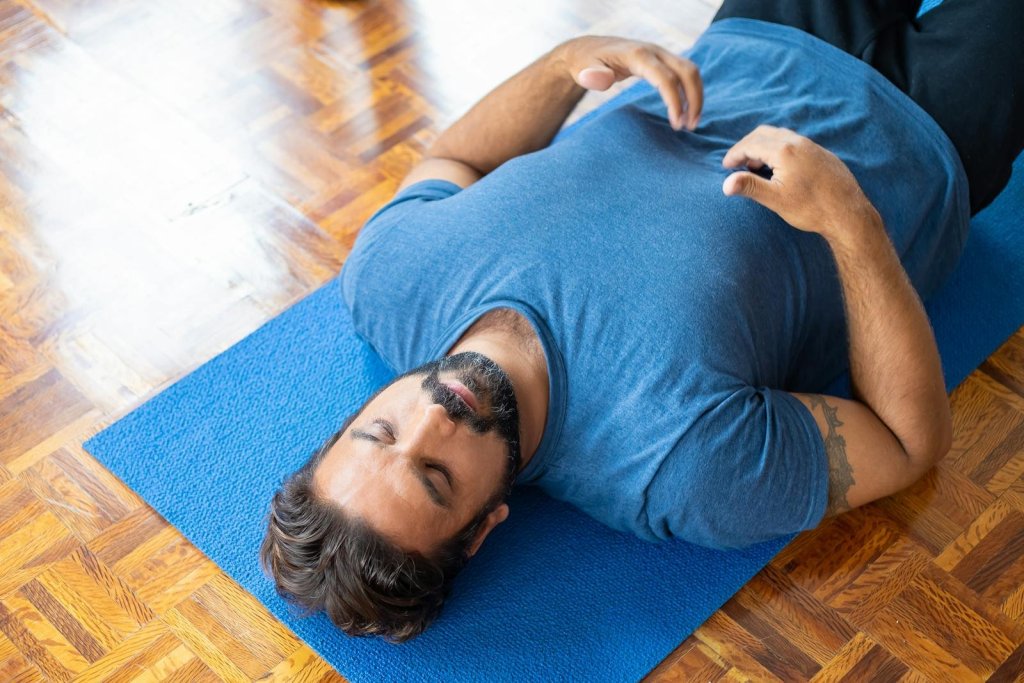
Pelvic tilts are worth understanding because they are low-impact, easy to scale, and commonly used in general core and back-exercise programs. They are not a cure for back pain, but they can be a useful starting exercise for people who want a gentle way to practice core engagement, pelvic control, and low-back movement. Cambridge University Hospitals and Mayo Clinic both support gradual, controlled movement rather than forcing range or pushing through pain.
What Is the Pelvic Tilt Exercise?
The pelvic tilt exercise is usually performed lying on your back with your knees bent and feet flat on the floor. From there, you gently tighten your abdominal muscles so your lower back presses into the mat. The goal is not to lift your hips high, but to create a small, controlled movement of the pelvis and lumbar spine. ACE specifically cues people to flatten the low back into the floor and avoid trying to lift the tailbone off the mat.
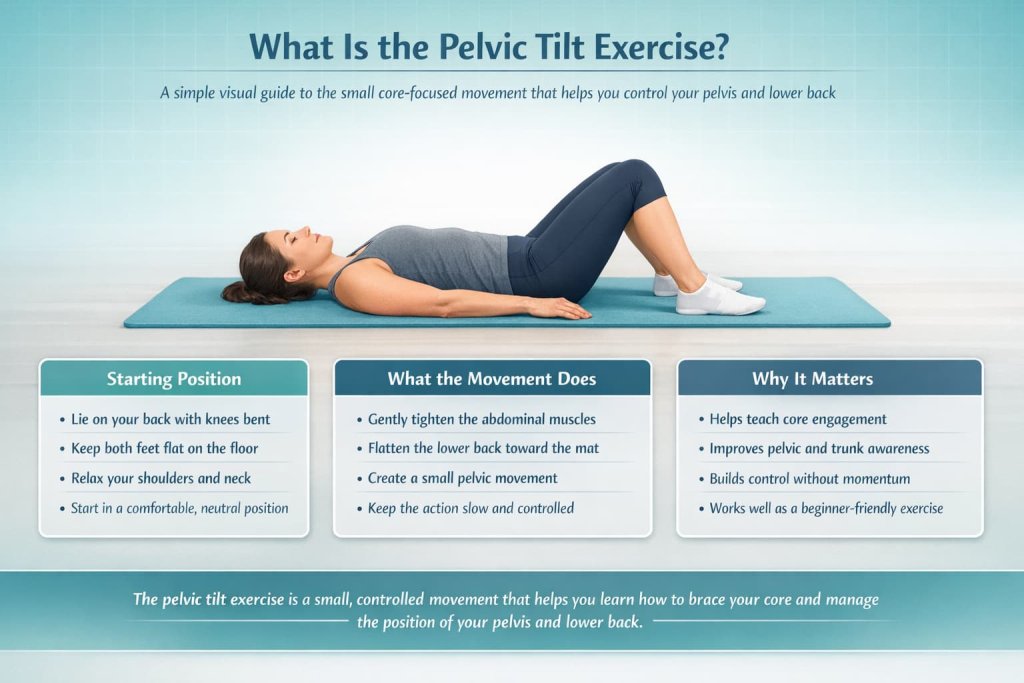
This small movement may not look dramatic, but it teaches an important skill: how to control your trunk and pelvis without using momentum. Mayo Clinic presents it as an abdominal-strengthening exercise, and ACE includes it in its abdominal exercise library for beginners.
How to Do the Pelvic Tilt Exercise
Basic Pelvic Tilt
- Lie on your back with your knees bent and both feet flat on the floor.
- Keep your feet about hip-width apart.
- Relax your shoulders and neck.
- Gently tighten your abdominal muscles.
- Flatten your lower back into the floor by slightly tipping your pelvis.
- Hold the position briefly without lifting your hips high.
- Relax and return to your starting position.
- Repeat with slow, controlled reps.
Trainer Tip:
Think about making the movement small and smooth. The goal is control, not force.
These cues closely match the guidance from Mayo Clinic and ACE. Mayo Clinic says to hold for up to 10 seconds, while ACE recommends a brief hold with a gentle contraction.
Muscles Worked in the Pelvic Tilt Exercise
The pelvic tilt exercise mainly works the abdominal muscles, especially the muscles that help brace the trunk and control pelvic position. Mayo Clinic explicitly describes it as a way to strengthen the abdominal muscles.
Depending on how you perform it, the exercise may also involve:
- Deep core stabilizers
- Lower abdominal muscles
- Muscles around the pelvis
- Glutes lightly, in some variations
- Lower-back and pelvic stabilizers working together for control
This is one reason pelvic tilts are often used as a teaching exercise before harder movements like bridges, dead bugs, or more advanced core drills. Mayo Clinic also notes that strong core muscles include the abdominals, back muscles, and muscles around the pelvis.
Pelvic Tilt Exercise Variations
Pelvic tilts can be adapted to fit different needs and comfort levels.
1. Standing Pelvic Tilt
Why it works:
It gives you support from the wall and may feel easier for people who do not want to get on the floor.
Muscles worked:
Abdominals, muscles around the pelvis, postural stabilizers.
How to do it:
- Stand with your back against a wall.
- Keep your knees soft and feet about shoulder-width apart.
- Gently press the small of your back toward the wall.
- Hold for a few seconds.
- Relax and repeat.
Trainer Tip:
Use the wall as feedback. You only need a small movement.
Mayo Clinic includes a standing pelvic tilt as a lower-back stretch option during pregnancy.
2. Seated Pelvic Tilt
Why it works:
It can be a practical variation for people who want a chair-based option.
Muscles worked:
Abdominals, pelvic stabilizers, postural muscles.
How to do it:
- Sit tall near the front of a chair.
- Place both feet flat on the floor.
- Gently rock your pelvis to flatten your lower back slightly.
- Return to neutral.
- Repeat slowly.
Trainer Tip:
Keep the movement small and avoid leaning far backward.
ACE notes that pelvic tilts can also be performed seated or in other supported positions during prenatal exercise modifications.
Pelvic Tilt Exercise Benefits
A well-taught pelvic tilt exercise can offer several practical benefits.
First, it can help you learn gentle core activation. Mayo Clinic says the exercise strengthens the abdominal muscles, which is one reason it often appears early in beginner core routines.
Second, it can improve awareness of spinal and pelvic position. That is useful for people who struggle to tell the difference between an arched lower back and a flatter, braced position. ACE focuses on controlled movement and alignment rather than speed.
Third, pelvic tilts are low impact. Because the exercise is done in a supported position on the floor, it often feels more approachable than standing exercises for beginners, older adults, or people easing back into activity. This is one reason hospital and pregnancy-exercise resources frequently include it as a gentle option.
Common Pelvic Tilt Exercise Mistakes
A pelvic tilt exercise only works well if the movement stays controlled. These are the most common mistakes.
Lifting the hips too much
This turns the move into something closer to a mini bridge. ACE specifically says to avoid trying to lift the hips or tailbone off the mat.
Moving too fast
Fast reps usually reduce body awareness. A slow pace makes it easier to feel your abdominal muscles working and notice what your pelvis is doing.
Holding your breath
Breathing normally helps keep the movement gentle. ACE cues an exhale during the contraction phase.
Forcing through pain
The movement should feel controlled, not sharp or aggravating. General hospital and exercise guidance supports building up gradually and avoiding painful motion, which is reflected in Mayo Clinic guidance.
How Many Reps and Sets Should You Do?
A practical starting point is:
- 1 to 2 sets
- 5 to 10 controlled reps
- Brief holds, or up to 10 seconds if comfortable
Mayo Clinic says to repeat five times and work up to 10 to 20 repetitions, holding for up to 10 seconds in postpartum guidance. That does not mean everyone needs that much right away. For beginners, controlled quality matters more than high reps.
Who May Benefit Most From Pelvic Tilt Exercise?
Pelvic tilts are often helpful for:
- Beginners learning core engagement
- People returning to exercise after inactivity
- Those who want a gentle lower-back and pelvic control exercise
- People who prefer low-impact floor-based movement
- Some prenatal or postpartum routines when approved by a qualified clinician
Mayo Clinic includes pelvic tilts in exercise guidance after pregnancy, which supports their role as a gentle, accessible option in appropriate settings.
Who Should Be Careful Before Starting?
The pelvic tilt exercise is generally gentle, but some people should use extra caution. Get medical guidance before starting if you have:
- severe or worsening back pain
- numbness, tingling, or radiating symptoms
- recent spinal, hip, or abdominal surgery
- symptoms that increase during the movement
- pregnancy-related concerns that need individualized advice
This article is about general exercise education, not diagnosis or treatment. If a movement makes symptoms worse, stop and get advice from a qualified healthcare professional. That cautious approach is consistent with hospital-based exercise guidance and Mayo Clinic exercise safety messaging.
Are Pelvic Tilt Exercises Good for Lower Back Support?
Pelvic tilts can be a useful exercise for lower-back support because they teach gentle abdominal bracing and pelvic control. They are commonly included in back-mobility and beginner back-exercise resources. But the realistic takeaway is this: they may help as part of a broader exercise plan, not as a stand-alone fix for every case of low-back pain. Hospital guidance and clinical exercise resources present them as one gentle option within a larger movement program.
Pelvic Tilt Exercise vs Bridge
These two exercises are related, but they are not the same.
A pelvic tilt is smaller and more focused on learning to flatten the lower back and control the pelvis. A bridge adds a bigger hip-lifting movement and usually demands more glute and trunk strength. That is why many beginners learn pelvic tilts first, then progress to bridges later. ACE specifically tells you not to turn it into a hip-lifting exercise.
FAQ About Pelvic Tilt Exercise
Is pelvic tilt exercise good for beginners?
Yes. It is one of the simplest core-control exercises because it is low impact and done in a supported position on the floor. Mayo Clinic and ACE both present it as a basic exercise.
How long should I hold a pelvic tilt?
Mayo Clinic says to hold for up to 10 seconds. Many people can start with shorter holds and build up gradually.
Should my hips lift during a pelvic tilt exercise?
No. A small amount of natural movement is fine, but the goal is not to lift into a bridge. ACE says to avoid trying to lift the hips or tailbone off the mat.
Can I do pelvic tilt exercise every day?
Many people can do gentle pelvic tilts daily, especially when using low volume and good control. Still, frequency should match your comfort, recovery, and any advice from your clinician.
Can pelvic tilt exercise replace other core exercises?
Not usually. It is best used as a foundation exercise. As your control improves, you may also benefit from other core exercises that challenge stability and strength in different ways. Mayo Clinic shows that a well-rounded routine includes more than one movement pattern.
Is standing pelvic tilt exercise easier than floor pelvic tilts?
For some people, yes. The wall gives feedback and support, which can make it easier to understand the movement. Mayo Clinic includes a standing version in pregnancy exercise guidance.
Conclusion
The pelvic tilt exercise is a small movement, but it can be a valuable one. It helps you practice abdominal bracing, pelvic control, and lower-back positioning in a simple, low-impact way. For many beginners, that makes it a smart starting point before moving on to more challenging core exercises. Focus on slow reps, gentle control, and steady breathing. Then build from there.