
If you’re looking for deep core exercises that actually strengthen your abs from the inside out, the key is to train the muscles you can’t see—the ones responsible for posture, stability, and spinal support. The deep core includes the transverse abdominis, pelvic floor, multifidus, and diaphragm, and these muscles work together to protect your spine and improve balance.
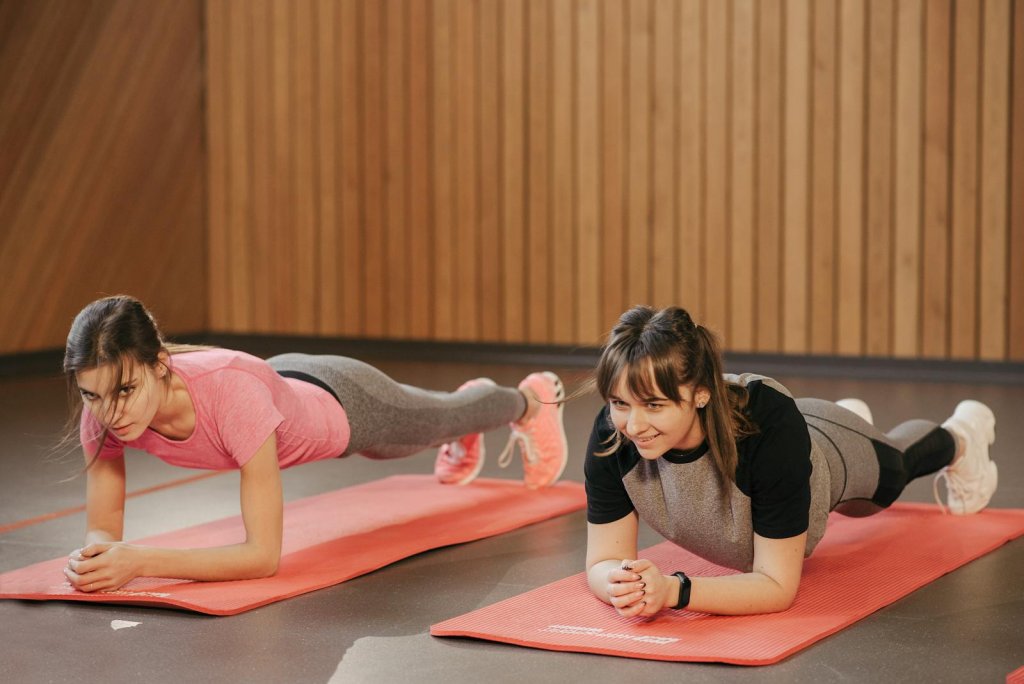
Understanding how the deep core works is essential because these inner muscles influence your posture, back comfort, daily movement, and athletic performance. The good news: with the right exercises, you can strengthen your deep core safely at home.
This guide covers the best activation drills, stability exercises, and progressions—plus sets, reps, precautions, and FAQs.
Why Deep Core Exercises Matter
Deep core training supports your body in ways traditional ab workouts cannot. Instead of just working the surface-level abs, these exercises target the stabilizers responsible for alignment, balance, and pressure control inside your trunk.
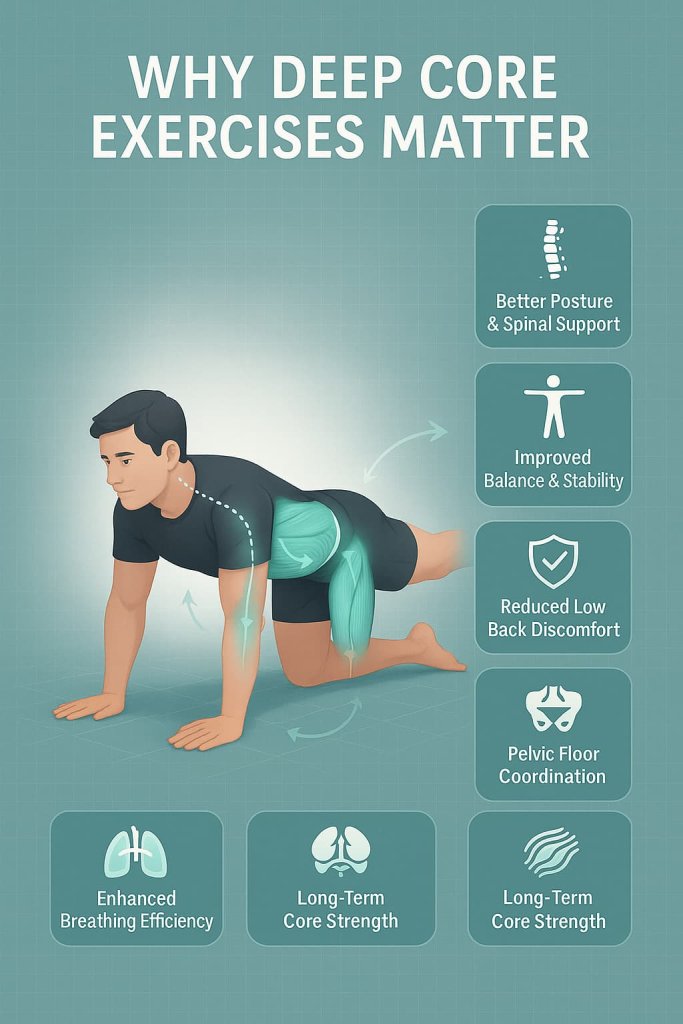
Research shows that deep core strengthening may:
- Support better posture and spinal stability
- Improve balance and functional movement
- Reduce low back discomfort in many adults
- Improve pelvic floor coordination
- Enhance breathing efficiency
- Improve overall core activation and long-term strength
This combination leads to better performance during workouts, daily tasks, and athletic activities.
How to Activate the Deep Core (Before You Start)
Before performing deep core exercises, you must learn how to correctly activate these inner muscles.
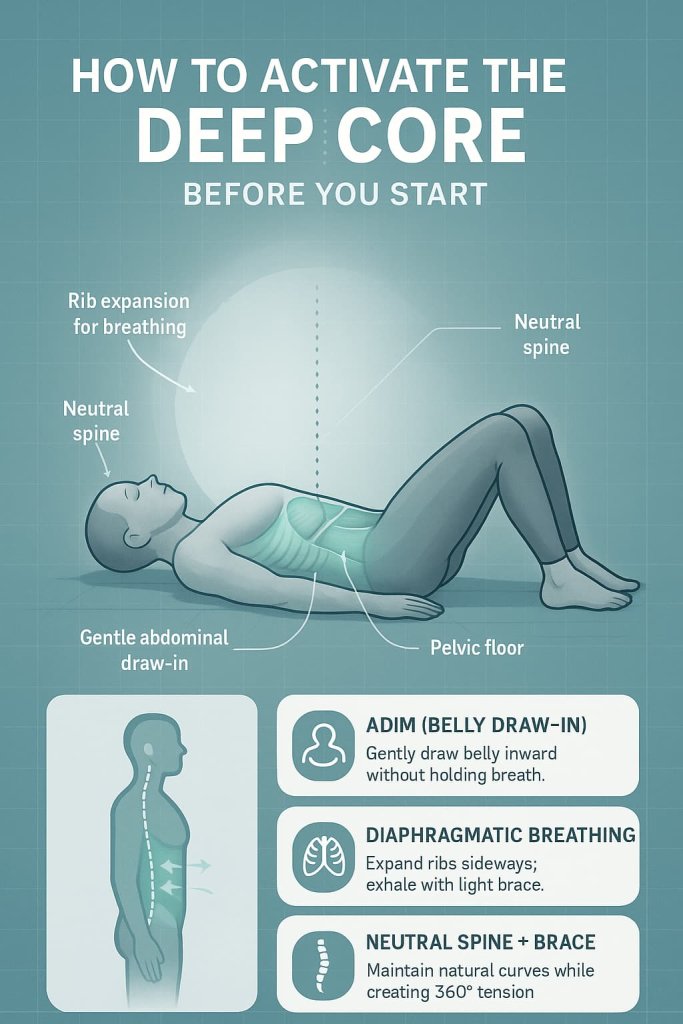
Use these three cues:
- Abdominal Drawing-In Maneuver (ADIM)
- Gently draw your lower belly inward without sucking in or holding your breath.
- Diaphragmatic Breathing
- Inhale to expand your ribcage sideways; exhale while lightly bracing the trunk.
- Neutral Spine + Brace
- Maintain a natural curve in your spine while gently tightening the trunk muscles.
You’ll use these cues in every exercise below.
18 Best Deep Core Exercises
These exercises target the deep stabilizing muscles that support your spine, improve posture, and enhance total-body strength. Each move builds real core stability from the inside out—without stressing your lower back.
Level 1 — Deep Core Activation Drills
1. Diaphragmatic Breathing
Why it works:
This exercise teaches you to activate the diaphragm correctly so it coordinates with the pelvic floor and transverse abdominis. It improves pressure control, posture, and deep stability.
Muscles worked:
Diaphragm, pelvic floor, transverse abdominis.
How to do it:
- Lie on your back with knees bent and feet flat.
- Place one hand on your chest and the other on your ribs.
- Inhale through your nose and gently expand your ribs outward and sideways.
- Exhale slowly through pursed lips while lightly bracing your lower belly.
- Continue for 6–10 slow breaths.
Trainer Tip:
Your chest should NOT rise. The breath should expand your ribs, not your shoulders.
2. Abdominal Draw-In Maneuver (ADIM)
Why it works:
ADIM isolates the transverse abdominis—the deepest core muscle—and helps you learn proper bracing before harder exercises.
Muscles worked:
Transverse abdominis, pelvic floor.
How to do it:
- Lie on your back with knees bent.
- Inhale gently, then as you exhale, draw your lower belly slightly inward.
- Maintain a natural curve in your lower back.
- Hold the contraction 5–10 seconds while breathing normally.
- Relax and repeat.
Trainer Tip:
You should feel a gentle inward tension—not a strong “suck in.”
3. Heel Slides
Why it works:
This adds controlled limb movement to deepen TrA activation without straining the spine.
Muscles worked:
TrA, pelvic floor, lower abs.
How to do it:
- Start in ADIM position.
- Brace lightly as you inhale.
- Slowly slide one heel forward along the floor.
- Stop before your low back lifts or pelvis rotates.
- Return and switch sides.
Trainer Tip:
If your hips shift, shorten the slide distance.
4. Supine Marching
Why it works:
This improves deep core stability while lifting and lowering your legs against gravity.
Muscles worked:
TrA, hip flexors, pelvic stabilizers.
How to do it:
- Lie on back with knees bent.
- Exhale and brace your deep core.
- Lift one knee to tabletop.
- Slowly lower it back down.
- Alternate sides with slow control.
Trainer Tip:
If your pelvis rocks, reduce your range of motion.
5. 90/90 Dead Bug Breathing
Why it works:
Combines deep core bracing, breathing control, and anti-extension training in one movement.
Muscles worked:
TrA, obliques, diaphragm.
How to do it:
- Start with legs in tabletop (90/90).
- Exhale to engage your deep core.
- Extend one arm or one leg while keeping ribs down.
- Return and alternate.
Trainer Tip:
Keep your lower back anchored—do not let it lift off the floor.
Level 2 — Mat-Based Stability Exercises
6. Standard Dead Bug
Why it works:
This is one of the most effective core stability drills because it challenges coordination without stressing the spine.
Muscles worked:
TrA, obliques, rectus abdominis, hip flexors.
How to do it:
- Start in 90/90 with arms extended upward.
- Brace on the exhale.
- Lower opposite arm and leg toward the floor.
- Keep your spine still throughout.
Trainer Tip:
Move at half-speed to maximize deep engagement.
7. Bird Dog
Why it works:
Improves spinal stability and activates multifidus—crucial for low back support.
Muscles worked:
Multifidus, glutes, TrA, shoulders.
How to do it:
- Begin on hands and knees.
- Extend opposite arm and leg.
- Hold briefly.
- Return with control.
Trainer Tip:
Keep your hips square—avoid dropping or rotating.
8. Side-Lying Leg Lift with TrA Activation
Why it works:
Targets deep lateral core muscles and strengthens hip stabilizers for better alignment.
Muscles worked:
Obliques, TrA, hip abductors.
How to do it:
- Lie on your side with legs stacked.
- Brace your core lightly.
- Lift the top leg without rolling backward.
- Lower slowly.
Trainer Tip:
Keep a small “lift” under your bottom waist for deeper core activation.
9. Glute Bridge with March
Why it works:
Builds pelvic stability by combining glute strength with deep core bracing.
Muscles worked:
Glutes, TrA, hamstrings.
How to do it:
- Lift hips into a bridge.
- Maintain level hips.
- Slowly lift one knee toward chest.
- Alternate sides.
Trainer Tip:
If hips wobble, return to regular bridges until stable.
10. Quadruped Tucks
Why it works:
Trains deep core bracing while gently mobilizing pelvis and spine.
Muscles worked:
TrA, pelvic floor, lumbar stabilizers.
How to do it:
- Start on hands and knees.
- Exhale and tuck pelvis, rounding slightly.
- Inhale to return to neutral.
- Repeat with slow control.
Trainer Tip:
Focus on core—not arms or shoulders—during the movement.
Level 3 — Planks & Anti-Movement Deep Core Exercises
11. Modified Forearm Plank
Why it works:
A beginner-friendly plank variation that strengthens deep stabilizers without overloading spine or shoulders.
Muscles worked:
TrA, obliques, shoulders.
How to do it:
- Kneel with forearms on floor.
- Shift weight forward into a straight line from knees to shoulders.
- Brace and breathe.
Trainer Tip:
If your hips sag, shorten your hold time.
12. Full Forearm Plank
Why it works:
Enhances anti-extension strength and builds core endurance.
Muscles worked:
TrA, rectus abdominis, glutes, shoulders.
How to do it:
- From forearms, lift onto toes.
- Keep ribs down and glutes lightly squeezed.
- Hold with steady breaths.
Trainer Tip:
Quality beats duration—stop when your form changes.
13. Side Plank (Beginner to Full)
Why it works:
Targets the lateral deep core muscles responsible for hip and spine alignment.
Muscles worked:
Obliques, TrA, quadratus lumborum (QL).
How to do it:
- Begin with knees bent for beginner version.
- Lift hips and hold.
- Progress to legs fully extended.
Trainer Tip:
Stack ribs over hips—not twisting forward or backward.
14. Bear Hold
Why it works:
Creates intense deep core activation by requiring stability with limbs close to the body.
Muscles worked:
TrA, rectus abdominis, shoulders, quads.
How to do it:
- Start on hands and knees.
- Lift knees 1–2 inches off floor.
- Hold while breathing slowly.
Trainer Tip:
Keep spine flat—avoid rounding your upper back.
15. Pallof Press
Why it works:
Strengthens anti-rotation control, a key element of deep core stability.
Muscles worked:
TrA, obliques, shoulders.
How to do it:
- Use a band or cable at chest height.
- Stand sideways to anchor.
- Press arms straight out, resisting rotation.
- Return with control.
Trainer Tip:
Bring feet closer for harder difficulty; wider stance for easier.
Level 4 — Advanced Deep Core Progressions
16. Hollow Body Hold
Why it works:
Develops maximum tension in the deep core while strengthening the entire anterior chain.
Muscles worked:
TrA, rectus abdominis, hip flexors.
How to do it:
- Lie on your back.
- Lift shoulders and legs slightly off floor.
- Keep low back gently pressed into mat.
- Hold with controlled breathing.
Trainer Tip:
Begin with a tucked version if your low back lifts.
17. Pilates Hundred (Modified)
Why it works:
Combines breath control, endurance, and deep core activation through rhythmic arm pulses.
Muscles worked:
TrA, obliques, pelvic floor.
How to do it:
- Bring legs to tabletop.
- Lift head and shoulders slightly.
- Pump arms up and down while breathing in for 5 counts, out for 5.
- Continue for 50–100 pulses.
Trainer Tip:
Keep head/neck supported if you feel strain.
18. Dead Bug with Band Resistance
Why it works:
Adds anti-extension resistance, increasing deep core activation significantly.
Muscles worked:
TrA, obliques, hip flexors, shoulders.
How to do it:
- Anchor a band overhead and hold the ends.
- Engage core and extend opposite arm/leg slowly.
- Maintain rib-down position throughout.
Trainer Tip:
If ribs flare upward, reduce range of motion.
How Often Should You Do Deep Core Exercises?
Follow evidence-based guidelines:
- 2–3 deep core sessions per week
- 8–12 reps or 20–40 second holds per exercise
- 1–3 sets for beginners
- 2–4 sets for intermediate
- Progress by adding time, slower reps, or resistance
These recommendations are aligned with ACSM and NASM strength training guidelines.
Common Mistakes to Avoid
- Holding your breath instead of breathing with control
- Flattening or arching your low back excessively
- Moving too fast
- Training only the visible abs, ignoring the deep stabilizers
- Pushing through pain or fatigue that affects form
Who Should Avoid Certain Deep Core Exercises?
Use caution or get medical clearance if you have:
- Recent spinal injury or surgery
- Severe low back pain
- Pelvic floor dysfunction (including postpartum)
- Hernia or abdominal surgery
- Conditions requiring pressure control (hypertension, pregnancy)
Always modify or eliminate any exercise that causes pain or pressure.
FAQ — Deep Core Exercises
1. Are deep core exercises the same as ab exercises?
No. Ab exercises work surface muscles. Deep core exercises strengthen the inner stabilizers for posture and spinal support.
2. How long does it take to strengthen the deep core?
Most people feel improved stability in 3–6 weeks with consistent training.
3. Can beginners do deep core training?
Yes—start with Level 1 activation exercises and progress slowly.
4. Do deep core exercises reduce belly fat?
They improve stability and posture but don’t directly burn fat. Fat loss requires overall exercise and nutrition changes.
5. Are deep core exercises safe for back pain?
Many can help support the spine, but always get professional guidance if you have pain or a medical condition.
6. Should I feel my deep core muscles “burn”?
You should feel gentle tension—not sharp pain or strain.
7. Is breathing important during deep core training?
Yes. Breathing is essential for pressure control, pelvic floor function, and TrA activation.
Conclusion
Deep core exercises strengthen the muscles that support your posture, stability, and long-term spinal health. By progressing from gentle activation to anti-movement and advanced stability work, you’ll build a stronger, more resilient midsection from the inside out. Consistency is key—practice deep core training 2–3 times per week for lasting results.
If you’re ready to improve stability and build a stronger base, start incorporating these deep core exercises into your weekly routine today.
This content is for informational purposes only and not medical advice.
References
- Hlaing SS et al. (2021) — Core Stabilization Exercise Prescription for Subacute Nonspecific Low Back Pain
BMC Musculoskeletal Disorders
https://bmcmusculoskeletdisord.biomedcentral.com/articles/10.1186/s12891-021-04858-6 - Smrcina Z et al. (2022) — Evidence for Core Stability Exercise in Nonspecific Low Back Pain: Systematic Review & Meta-Analysis
Journal of Sport Rehabilitation (PMC)
https://www.ncbi.nlm.nih.gov/pmc/articles/PMC9340836/ - Dimitrijević V et al. (2025) — Pain and Disability Therapy with Stabilization Exercises in Chronic Low Back Pain
Healthcare (MDPI)
https://www.mdpi.com/2227-9032/13/9/960 - Short S et al. (2025) — A Critical Review of Trunk and Hip Exercise Prescription
International Journal of Sports Physical Therapy
https://ijspt.scholasticahq.com/article/129972-a-critical-review-of-trunk-and-hip-exercise-prescription-applying-evidence-for-a-modern-approach - George SZ et al. (2021) — Interventions for the Management of Acute and Chronic Low Back Pain: Clinical Practice Guidelines
Journal of Orthopaedic & Sports Physical Therapy
https://www.jospt.org/doi/10.2519/jospt.2021.0304 - American College of Sports Medicine (2009) — Progression Models in Resistance Training for Healthy Adults (Position Stand)
ACSM / Medicine & Science in Sports & Exercise
https://pubmed.ncbi.nlm.nih.gov/19204579/ - Physio-Pedia — Transversus Abdominis
Overview of TrA anatomy, function, and abdominal draw-in maneuver
https://www.physio-pedia.com/Transversus_Abdominis - Kang MH et al. (2020) — Effects of the Abdominal Draw-In Maneuver on Transversus Abdominis and Internal Oblique Activity
Isokinetics and Exercise Science
https://journals.sagepub.com/doi/abs/10.3233/IES-192134