
Yes, plain peanut butter can be a good choice for many people with diabetes when you keep the portion moderate and choose a jar with little or no added sugar. It provides protein and mostly unsaturated fat, which can help make meals and snacks more satisfying. The catch is that peanut butter is also calorie-dense, and the bread, crackers, jam, or other foods eaten with it often affect blood sugar more than the peanut butter itself. The American Diabetes Association includes peanut butter among protein-rich foods for diabetes, and its fats guidance supports choosing more unsaturated fats overall.
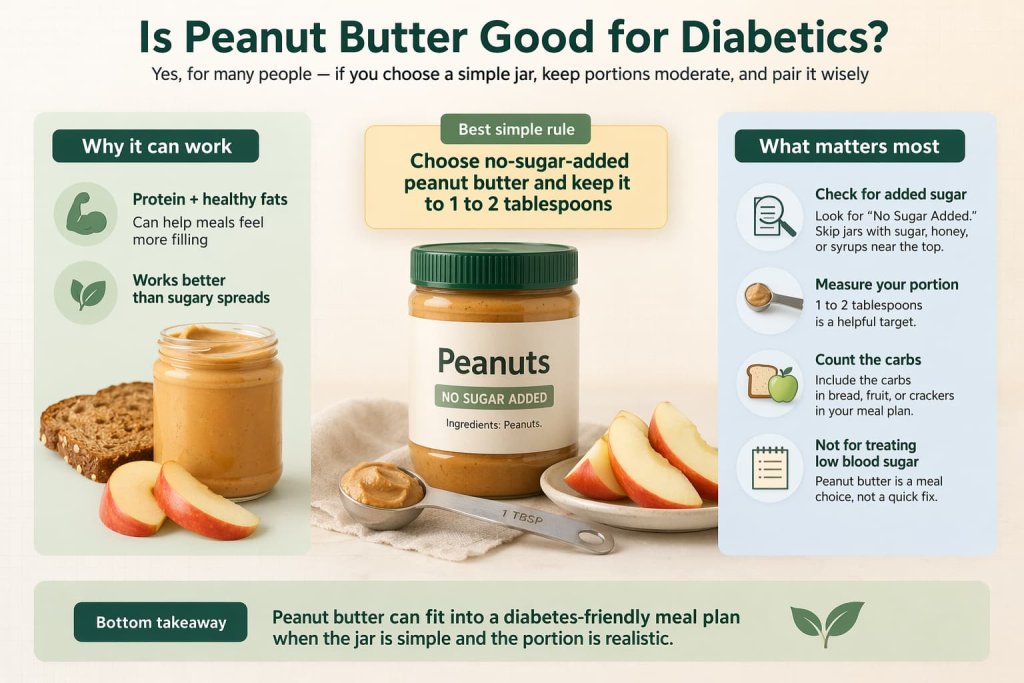
Understanding this matters because diabetes meal planning is not just about avoiding sugar. It is also about choosing foods that fit your carb goals, support heart health, and help with fullness so you can eat in a way that feels realistic long term. Guidance from the National Institute of Diabetes and Digestive and Kidney Diseases and the CDC both emphasize balanced meals, portion awareness, and keeping an eye on carbohydrate foods.
Why peanut butter can fit into a diabetes-friendly diet
Peanut butter can work well for many people with diabetes because it combines protein with mostly unsaturated fat. That combination can make meals and snacks more filling than sugary spreads or refined snack foods.
That does not mean peanut butter is a special blood sugar food or a cure for diabetes. It simply means it can fit into a healthy eating pattern. The main blood sugar impact still comes from total carbohydrate intake and overall meal balance. In real life, that means peanut butter usually works best when paired with higher-fiber carb choices and sensible portions.
What the research says about peanut butter and blood sugar
The research is encouraging, but it is not strong enough to claim that peanut butter directly lowers blood sugar on its own. A systematic review and meta-analysis of randomized trials found that peanuts or tree nuts significantly lowered fasting insulin and HOMA-IR, a marker of insulin resistance, but did not show a clear effect on fasting glucose or HbA1c. That is an important distinction. Peanut butter may support a better overall eating pattern, but it should not be described as a stand-alone fix for diabetes.
A randomized trial in adults with type 2 diabetes also found that a peanut-enriched ADA meal plan improved the nutrient profile of the diet and was compatible with weight management over 24 weeks. The practical takeaway is that peanut butter can work when it replaces less helpful foods inside a structured eating plan, not when it is simply added on top of an already high-calorie diet.
Best type of peanut butter for diabetics
The best choice is usually a simple peanut butter with a short ingredient list. Many people do well with products made from just peanuts, or peanuts plus a little salt. The CDC’s guidance on hidden sugars notes that nut butters can contain added sugars for flavor or texture, and the ADA specifically points readers toward no-sugar-added peanut butter in snack ideas.
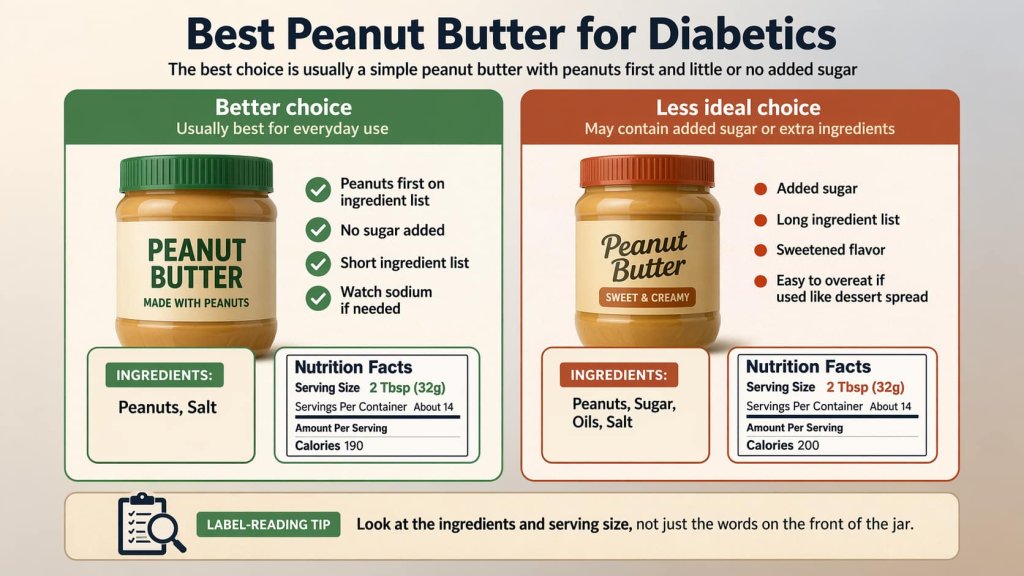
When you compare jars, check both the ingredient list and the Nutrition Facts label:
- Look for peanuts as the main ingredient.
- Choose no-sugar-added or very low-added-sugar options when possible.
- Compare sodium if you are also watching blood pressure.
- Pay attention to the serving size before judging the carbs or calories.
The FDA’s guide to the Nutrition Facts label and its page on added sugars can help you compare products more accurately.
How much peanut butter is a healthy portion?
Portion size is where many healthy foods become less healthy. Peanut butter is nutrient-dense, but it is also easy to overeat. MedlinePlus advises limiting peanut butter to about 1 to 2 tablespoons at a time because it is high in calories, and a USDA Foods peanut butter fact sheet lists 2 tablespoons as one serving, with about 200 calories, 7 grams of protein, 16 grams of fat, and 8 grams of carbohydrate on that label.
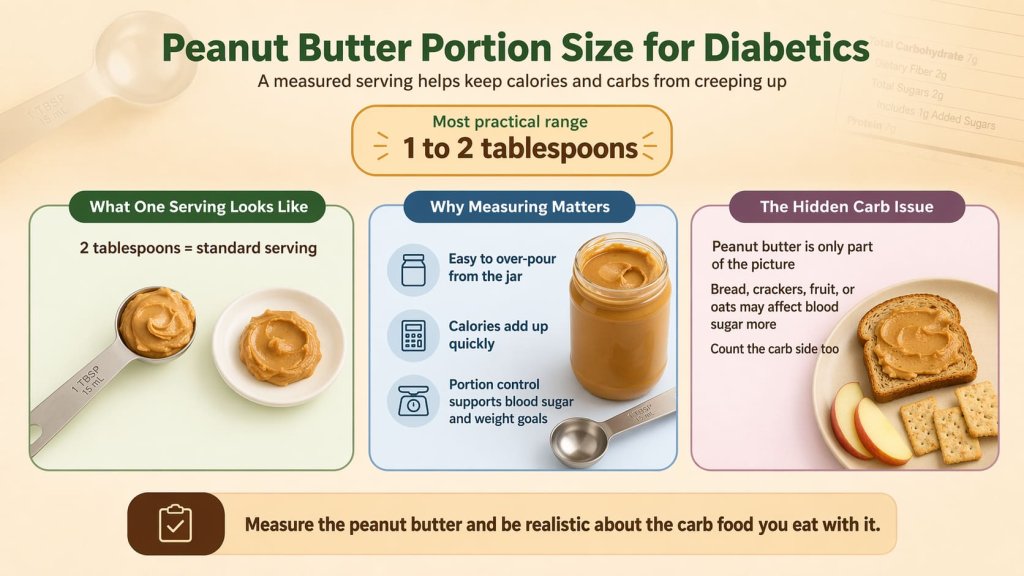
For many people with diabetes, a practical rule is to measure peanut butter instead of eyeballing it. A spoonful straight from the jar can easily become more than one serving. That matters for weight goals, and weight management can be part of diabetes care for many adults.
It also helps to think about peanut butter separately from the carb food you eat with it. The CDC’s carb-counting guidance explains that 1 carbohydrate serving is about 15 grams of carbs, and that serving can be smaller than people expect.
In practice, peanut butter is often only part of the blood sugar picture. The bigger effect may come from two slices of bread, a large piece of fruit, sweetened oatmeal, or a pile of crackers. That is why measuring the peanut butter and being realistic about the carb side matters.
Best ways to eat peanut butter if you have diabetes
How you eat peanut butter matters as much as the peanut butter itself. The ADA even gives no-sugar-added peanut butter with apple slices as a snack example. In general, peanut butter works best when it is used to support a balanced snack or meal, not a high-sugar one.
Good ways to use peanut butter include:
- 1 to 2 tablespoons with apple slices
- A thin layer on whole-grain toast, while counting the bread as your carb food
- Mixed into plain oatmeal in a measured amount
- Paired with celery or another nonstarchy vegetable if you want fewer carbs
- Added to a balanced snack instead of candy, chocolate spread, frosting, or dessert toppings
The key idea is simple: peanut butter usually works better when it replaces a more sugary spread or snack, not when it is piled onto a high-sugar meal.
A practical way to judge whether peanut butter works well for you is to look at your own glucose response. The American Diabetes Association’s carb-counting guidance explains that tracking what you eat along with your blood sugar before and about 2 to 3 hours after meals can show how different meals affect you.
The CDC’s blood sugar target guidance says a typical goal for many nonpregnant adults is less than 180 mg/dL two hours after the start of a meal, though your personal target may be different. This matters because two people can eat the same peanut butter snack and get different results depending on the portion, the carb they pair it with, their activity, and their medication.
When peanut butter may not be the best choice
Peanut butter is not the best food to treat low blood sugar. The ADA says foods with chocolate or peanut butter are not ideal for hypoglycemia because fat, fiber, and protein slow how quickly glucose rises. Fast-acting carbohydrates work better when blood sugar is low.
If your blood sugar is actually low, use fast-acting carbohydrate instead of peanut butter. Current ADA and CDC guidance on treating low blood sugar support the 15-15 rule: take 15 grams of fast-acting carbs, wait 15 minutes, and recheck.
Examples include 4 glucose tablets, 4 ounces of juice or regular soda, or 1 tablespoon of sugar or honey. If your reading is still below 70 mg/dL, repeat. Once your blood sugar is back up, have a balanced snack or meal if your next meal is not soon.
It may also need more caution if you have kidney disease and have been told to watch potassium or phosphorus. The National Kidney Foundation says most people with chronic kidney disease do not need to routinely avoid nuts and seeds, but those with higher potassium or phosphorus levels may need individualized portion advice from a kidney dietitian.
And of course, anyone with a peanut allergy should avoid peanut butter completely.
Is natural peanut butter better for diabetes?
Usually, yes. “Natural” is not automatically healthier, but many natural peanut butters have simpler ingredient lists and less added sugar. The real test is the label, not the marketing on the front of the jar. If one jar says “natural” but still includes added sweeteners, it is not necessarily the better option.
A jar that contains only peanuts, or peanuts and salt, is often the easiest choice for someone trying to keep added sugar lower. Separation in natural peanut butter is normal and does not mean the product is poor quality.
Is peanut butter good for type 2 diabetes?
For many people, yes. Peanut butter can fit well into a type 2 diabetes eating plan because it can help make meals more filling and may improve diet quality when used in place of more refined or sugary foods. The strongest evidence is not that it dramatically lowers A1C, but that it can be part of a better overall pattern of eating.
This matters even more because heart health is a major issue in diabetes. The CDC’s diabetes and heart disease guidance notes that people with diabetes have twice the risk for heart disease. That makes it even more important to choose foods with a better fat profile and less added sugar, not just foods that seem low in carbs.
Quick checklist: how to choose peanut butter if you have diabetes
Use this simple checklist at the store:
- Pick a jar with peanuts first on the ingredient list.
- Prefer no-sugar-added or lower-added-sugar varieties.
- Keep your portion to about 1 to 2 tablespoons unless your care team suggests otherwise.
- Count the carbs from the bread, fruit, crackers, or oats you eat with it.
- Do not use peanut butter to treat a low blood sugar episode.
- Ask your clinician or dietitian if you also have kidney disease or another condition that changes your diet.
FAQ
Does peanut butter raise blood sugar?
Peanut butter itself contains some carbohydrate, but the bigger blood sugar effect often comes from the foods eaten with it, such as bread, crackers, jam, or sweet snacks. Portion size still matters, and the overall meal pattern matters even more.
Can people with diabetes eat peanut butter every day?
Some people can, but “every day” only works if the portion fits their calorie, carb, and heart-health goals. A measured serving can fit into a healthy pattern, but a large daily portion may make weight management harder.
What is the healthiest peanut butter for diabetics?
Usually, the healthiest option is a simple peanut butter with peanuts as the main ingredient and little or no added sugar. Comparing labels is more useful than trusting front-of-package buzzwords.
Is peanut butter and bread okay for diabetics?
It can be, but the bread counts as a carbohydrate food and should be factored into the meal. A measured amount of peanut butter on whole-grain bread is usually a better choice than a thick peanut butter sandwich on refined white bread with jam.
Conclusion
Peanut butter can be good for diabetics, but the smartest answer is yes, with conditions. Choose a plain or no-sugar-added version, keep the serving measured, and use it as part of a balanced meal or snack rather than as a shortcut or “superfood.” That is the most accurate, practical, and useful way to think about it.
If you want peanut butter to work for you, start by reading the label, measuring your portion, and pairing it with a higher-fiber food that fits your meal plan. If you are unsure how it fits with your medications, carb goals, or kidney concerns, talk with your diabetes care team or a registered dietitian for personalized advice.
This content is for informational purposes only and not medical advice.
References
- American Diabetes Association — Carb Counting and Diabetes
- CDC — Treatment of Low Blood Sugar
- FDA — How to Understand and Use the Nutrition Facts Label
- FDA — Added Sugars on the Nutrition Facts Label
- National Kidney Foundation — Nuts and Seeds
- PubMed — A Randomized Controlled Trial to Evaluate the Effect of Incorporating Peanuts Into an American Diabetes Association Meal Plan
- PMC — The Effect of Nuts on Markers of Glycemic Control: A Systematic Review and Meta-Analysis of Randomized Controlled Trials
- USDA Foods — Peanut Butter, Smooth Food Fact Sheet