
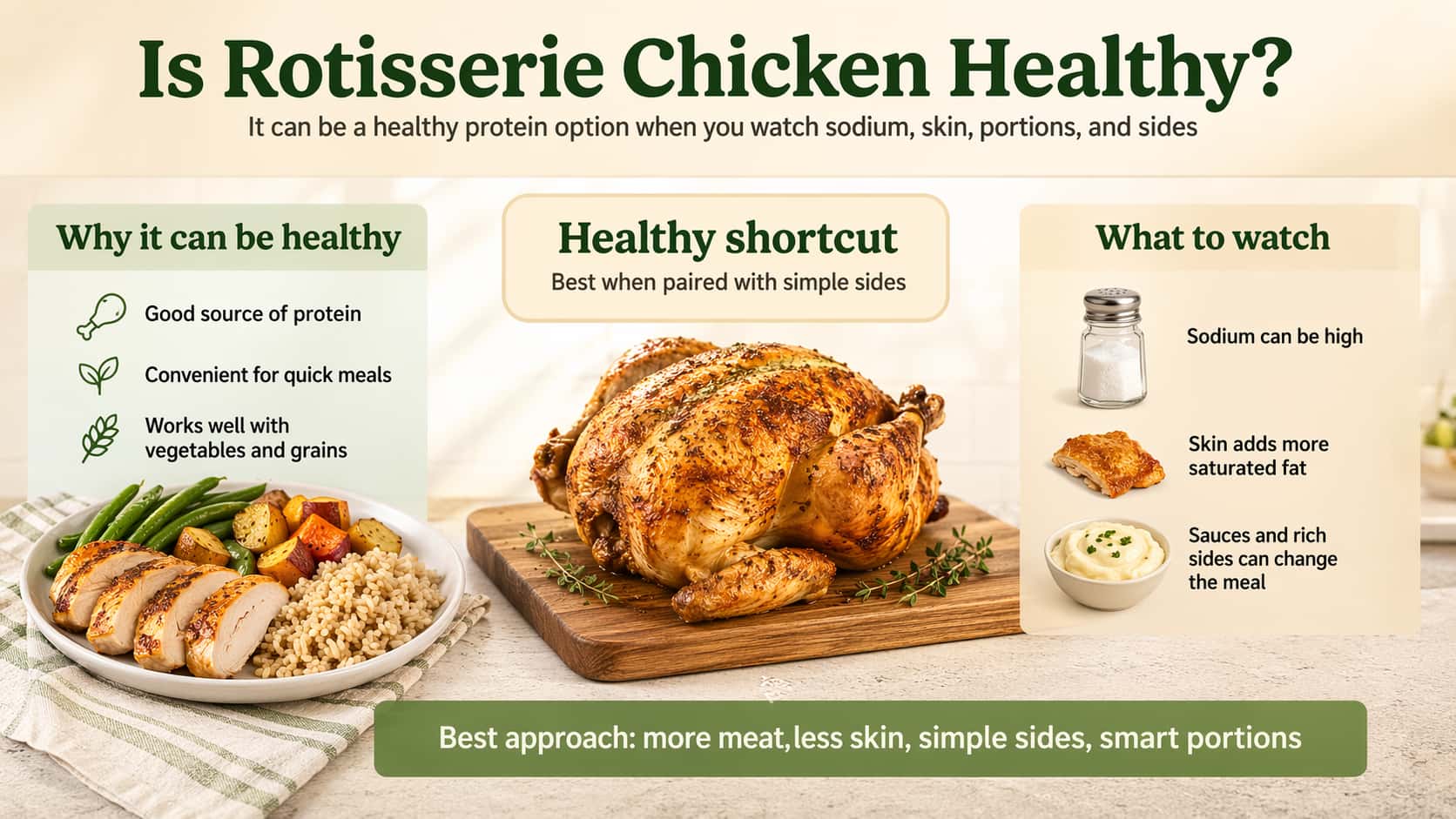
Yes, rotisserie chicken can be healthy. It is a convenient protein food that can fit into a balanced meal, but the answer depends on how much skin, sodium, and rich sides come with it. USDA FoodData Central lists separate rotisserie chicken entries for breast meat only and breast meat with skin, and MyPlate recommends choosing protein foods while limiting saturated fat and sodium.
Understanding this matters because rotisserie chicken often gets treated as either a perfect health food or something to avoid completely. In reality, it is usually a healthy shortcut when you choose the plainer parts and build a sensible meal around it. The main things to watch are sodium, skin, sauces, and sides.
Quick Answer: When Rotisserie Chicken Is a Healthy Choice
Rotisserie chicken is usually a smart option when you:
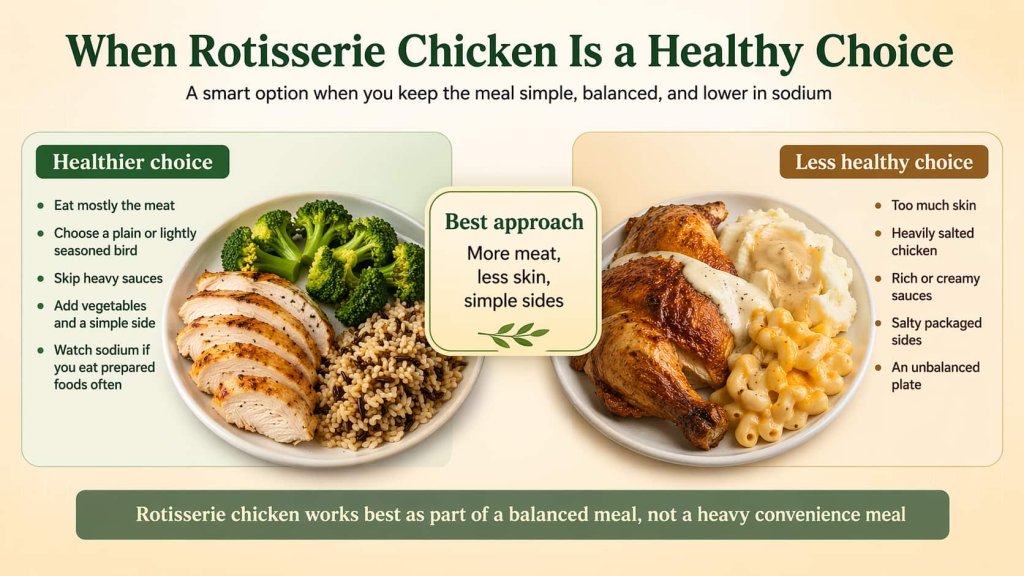
- Eat mostly the meat instead of a lot of the skin
- Choose a plain or lightly seasoned bird when possible
- Skip heavy sauces
- Pair it with vegetables, beans, potatoes, rice, or another simple side
- Keep an eye on sodium if you eat prepared foods often
It becomes a less healthy meal when the chicken is heavily salted and the plate also includes rich, salty sides.
Why Rotisserie Chicken Can Be Healthy
One big reason rotisserie chicken gets recommended so often is convenience. A ready-to-eat chicken can make it much easier to put together a meal at home instead of relying on more heavily processed takeout or fast food. MyPlate encourages building meals with protein foods and produce, which is exactly where rotisserie chicken works best.
It can also be a practical way to eat more simply on busy days. Using the chicken in a salad, grain bowl, soup, or wrap with vegetables is usually a better move than turning it into a meal built around buttery rolls, creamy sides, and salty sauces. That is why rotisserie chicken is often healthiest as one part of the meal, not the whole meal.
What Makes Rotisserie Chicken Less Healthy?
Sodium Is Usually the Biggest Issue
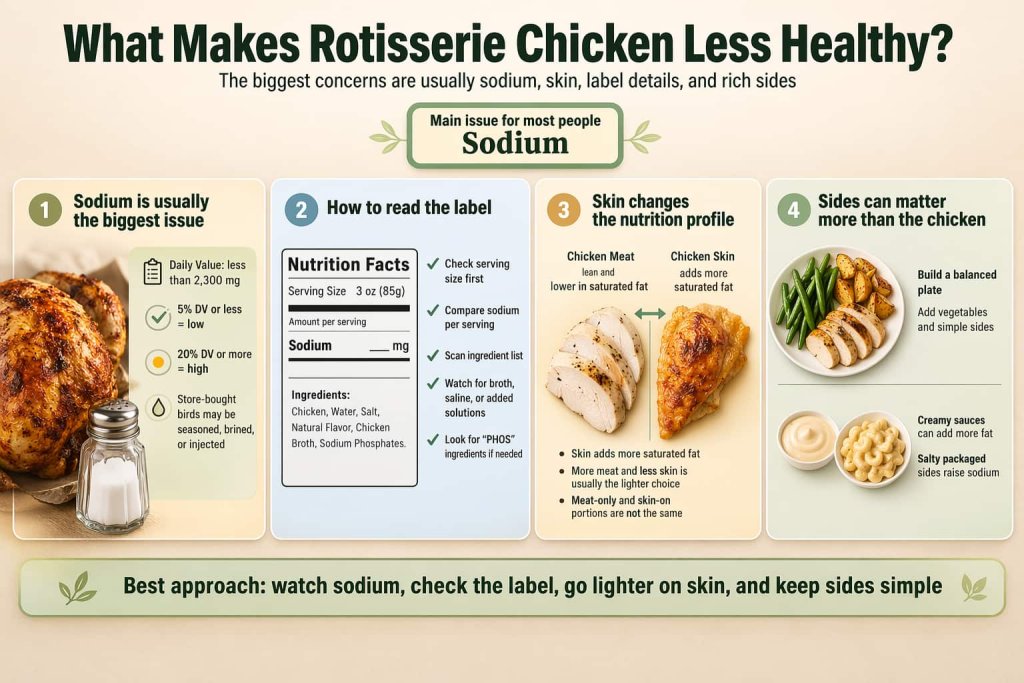
For most people, the biggest nutrition concern with rotisserie chicken is sodium, not the chicken itself. FDA sodium guidance says the Daily Value for sodium is less than 2,300 mg per day, and 5% Daily Value or less is considered low while 20% Daily Value or more is considered high. The American Heart Association recommends no more than 2,300 mg a day and says an ideal goal for most adults is 1,500 mg a day.
This matters because store-bought rotisserie chickens are often seasoned, brined, or injected with salt-containing solutions. A bird that tastes normal can still contribute a lot of sodium to your day, especially if you also eat soup, bread, deli meat, cheese, chips, or restaurant food. The American Heart Association notes that more than 70% of the sodium Americans eat comes from packaged, prepared, and restaurant foods.
How to Read the Label Before You Buy
When a Nutrition Facts label is available, check serving size first. A rotisserie chicken package may contain more than one serving, so the sodium listed for one serving may look reasonable even if you end up eating much more. FDA label guidance says 5% Daily Value or less of sodium per serving is low, while 20% Daily Value or more is high.
It also helps to scan the ingredient list. Some prepared chickens are made with added salt solutions, broth, or saline to improve flavor and moisture. FDA also notes that some meat and poultry products have added sodium from ingredients used to retain moisture or enhance flavor. If you have chronic kidney disease or have been told to watch phosphorus, the National Institute of Diabetes and Digestive and Kidney Diseases advises checking ingredient lists for added phosphorus or words with “PHOS,” such as disodium phosphate or monosodium phosphate.
The Skin Changes the Nutrition Profile
The skin is another important factor. FDA Daily Value guidance sets the Daily Value for saturated fat at 20 grams per day, so eating the skin makes it easier to use up more of that daily limit than eating mostly meat. USDA’s separate entries for rotisserie chicken with skin and meat only are a good reminder that rotisserie chicken is not one identical food in every serving.
That does not mean you can never eat the skin. It just means that if you are trying to make rotisserie chicken the healthier choice, more meat and less skin is usually the better direction.
Sauces and Sides Can Matter More Than the Chicken
Sometimes the chicken is not the real problem. The bigger issue is what comes with it. Mac and cheese, creamy salads, buttery rolls, gravy, and salty packaged sides can turn a reasonable protein choice into a much heavier meal. MyPlate’s general advice is to make half your plate fruits and vegetables and choose foods with less saturated fat and sodium, which is a useful rule here too.
Healthiest Ways to Eat Rotisserie Chicken
If you want the healthiest version of rotisserie chicken, keep it simple:
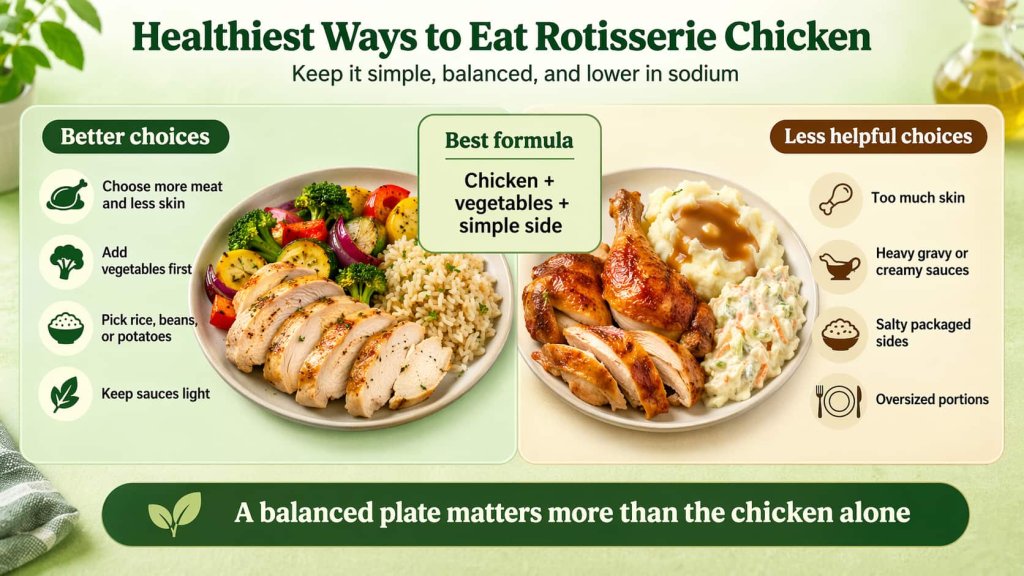
- Choose more meat and less skin
- Go easy on salty seasoning packets, gravy, and creamy sauces
- Add vegetables first
- Round out the meal with beans, potatoes, brown rice, or another simple side
- Compare labels when a Nutrition Facts panel is available
- Pick a plain bird over heavily flavored options when possible
A plain portion of chicken plus vegetables is very different from eating large amounts of skin with rich sides.
What Counts as a Reasonable Portion?
A simple way to keep rotisserie chicken healthy is to treat it like a normal protein serving, not the whole meal. The Dietary Guidelines for Americans, 2020–2025 counts 1 ounce of poultry as 1 ounce-equivalent of protein foods, so a 3-ounce portion of chicken equals 3 ounce-equivalents. That makes it easier to keep portions realistic, especially since it is easy to eat much more when you are pulling meat straight from the container. Building the rest of the plate with vegetables, fruit, and a simple side helps keep the meal balanced.
Who Should Be More Careful With Rotisserie Chicken?
People with high blood pressure, heart disease, chronic kidney disease, or a sodium-restricted diet should be more careful. The Centers for Disease Control and Prevention says too much sodium can increase blood pressure and raise the risk of heart disease and stroke. NIDDK advises adults with chronic kidney disease to choose and prepare foods with less salt and sodium, limit prepared and packaged foods, and choose unprocessed meats instead of processed meats.
If that sounds like you, rotisserie chicken is not always off-limits, but it is worth reading the label when available, comparing brands, and keeping the rest of the day’s meals lower in sodium.
Is Rotisserie Chicken Healthy Every Day?
It can fit into a healthy routine, but it should not be your only protein choice. MyPlate recommends varying your protein routine, which helps you get a wider mix of nutrients and keeps meals from becoming repetitive. Rotisserie chicken can be part of that mix, alongside foods like beans, lentils, seafood, eggs, tofu, yogurt, nuts, and seeds.
A simple way to think about it is this: rotisserie chicken is a useful convenience food, not a free pass to ignore the rest of the meal.
Food Safety and Leftovers
Rotisserie chicken is only healthy if you store it safely. USDA Food Safety and Inspection Service says cooked perishable foods should be refrigerated within 2 hours, or within 1 hour if the temperature is above 90°F. Leftovers should generally be used within 3 to 4 days, and reheated leftovers should reach 165°F.
That means a store-bought chicken is best treated like any other cooked poultry: carve it, refrigerate it promptly, and do not let it sit out all evening.
For safer leftovers, do not leave the whole chicken packed in a large hot container for too long once you get home. The USDA safe handling take-out foods guidance recommends refrigerating or freezing leftovers in shallow containers so they cool more quickly. Dividing the chicken into smaller portions also makes it easier to use within the recommended storage window and reheat only what you need.
FAQs
Is rotisserie chicken healthier without the skin?
Usually, yes. Eating the meat without much skin is generally the leaner option and helps reduce saturated fat compared with eating a lot of skin.
Is rotisserie chicken okay for people with high blood pressure?
It can be, but sodium is the key issue. Check the label if available, compare brands, and keep the rest of the meal lower in sodium.
Is rotisserie chicken processed?
It is less processed than many deli meats or frozen ready meals, but many store-bought rotisserie chickens are still seasoned or brined, which can raise sodium.
Conclusion
Rotisserie chicken can absolutely be a healthy choice. The healthiest version is usually plain chicken meat, less skin, fewer salty extras, and a meal built around vegetables and simple sides. The biggest thing to watch is sodium, especially if you have high blood pressure or kidney concerns. Use it as a convenient shortcut, build a balanced plate around it, and it can be a very practical part of healthy eating.
References
- USDA FoodData Central — Rotisserie chicken search
- FDA — Daily Value on the Nutrition and Supplement Facts Labels
- American Heart Association — How Much Sodium Should I Eat Per Day?
- NIDDK — Healthy Eating for Adults with Chronic Kidney Disease
- Dietary Guidelines for Americans — Dietary Guidelines for Americans, 2020–2025
- CDC — About Sodium and Health
- USDA FSIS — Leftovers and Food Safety