
Tai Chi walking is a beginner-friendly practice that combines slow, controlled steps with deliberate weight shifting, upright posture, relaxed breathing, and focused attention. You can begin at home with a clear floor, comfortable clothing, and five minutes of practice.
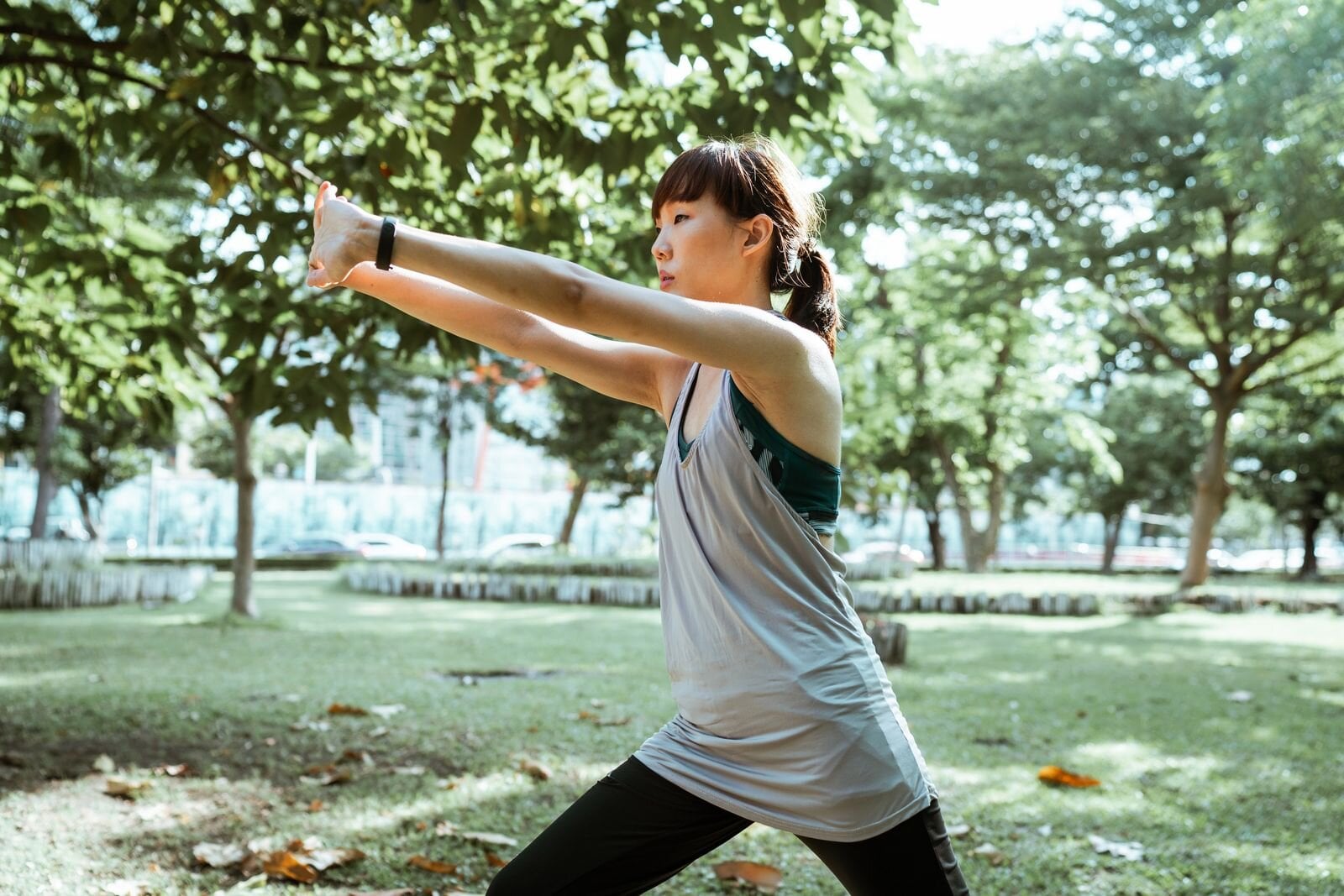
The most important rule is simple: shift your weight before moving the other foot. Once the moving foot feels light, place it gently, transfer your weight gradually, and repeat.
Tai Chi walking can help you learn the footwork used in longer Tai Chi routines. It may also support balance, coordination, body awareness, and confidence with movement. However, research showing health benefits usually examines complete Tai Chi programs practiced for several weeks or months—not a brief walking drill by itself.
What Is Tai Chi Walking?
The National Center for Complementary and Integrative Health describes Tai Chi as a practice involving slow, gentle movements, physical postures, focused attention, and controlled breathing. Tai Chi walking applies these principles specifically to stepping and transferring weight from one leg to the other.
It is not simply regular walking performed at a slower speed. During Tai Chi walking, you deliberately notice:
- Which leg is supporting your body
- When the opposite foot becomes light enough to move
- How the heel and the rest of the foot contact the floor
- How gradually your weight moves into the new step
- Whether your spine remains upright
- Whether your knees stay comfortably aligned with your feet
- Whether you are breathing naturally
Tai Chi practitioners sometimes describe the supporting leg as full or substantial and the moving leg as empty or insubstantial. Beginners do not need to memorize these terms. Simply remember:
Shift, lighten, place, and transfer.
Tai Chi styles use somewhat different stepping techniques. This guide uses a simple forward pattern in which the heel touches lightly before the rest of the foot. It is intended as a basic practice drill rather than a substitute for instruction in a specific Tai Chi style.
Tai Chi Walking vs. Regular Walking
Both activities involve moving from one foot to the other, but their immediate purposes are different.
| Feature | Regular Walking | Tai Chi Walking |
|---|---|---|
| Pace | Natural and continuous | Intentionally slow and controlled |
| Weight transfer | Usually automatic | Deliberately noticed before every step |
| Foot placement | Based on habit and speed | Gentle and carefully positioned |
| Step length | Varies with pace | Usually short and comfortable |
| Posture | Often receives little attention | Upright, centered, and relaxed |
| Mental focus | May be directed elsewhere | Focused on balance, breathing, and body position |
| Main goal | Transportation, recreation, or aerobic activity | Movement control, balance practice, and Tai Chi technique |
Tai Chi walking is generally slower and less aerobically demanding than brisk walking. It is better viewed as a mindful movement and balance practice than as a direct replacement for a cardiovascular walking workout.
What You Need Before You Start
No specialized equipment is required. Prepare the following:
- A flat, nonslip surface
- A clear path with no loose rugs, cords, pets, or other obstacles
- Good lighting
- Comfortable clothing that does not restrict your movement
- Flat, stable, nonslip shoes or a safe indoor surface for barefoot practice
- A wall, countertop, or sturdy chair nearby when balance is uncertain
Avoid using a rolling or lightweight chair for support.
The Tai Chi for Health Institute’s beginner walking guidance recommends starting with forward walking, short sessions, a clear practice area, and support nearby when needed. It also advises using smaller steps and a higher stance when joint stiffness or discomfort is a concern.
Tai Chi Walking for Beginners: 7 Easy Steps
Practice the footwork without coordinated arm movements at first. Let your arms hang comfortably or place your hands lightly on your hips. Arm patterns can be added after the stepping technique feels stable.
1. Prepare a Safe Practice Area
Choose a quiet area where you can take several short steps in a straight line. Approximately 10 to 15 feet of space is helpful, but a shorter path can still work.
Remove anything that could catch your foot or make the floor slippery. Place a wall, countertop, or sturdy chair beside you rather than directly in front of you.
Stand still for a moment before beginning. Do not start while feeling dizzy or lightheaded.
2. Set Your Starting Posture
Stand with your feet approximately hip- to shoulder-width apart.
Use the following posture cues:
- Keep both feet comfortably planted.
- Point the toes generally forward or slightly outward.
- Soften the knees without lowering into a deep squat.
- Keep the pelvis in a comfortable, neutral position.
- Lengthen the spine without making it rigid.
- Relax the shoulders and jaw.
- Keep your head balanced over your trunk.
- Look forward rather than continuously looking at your feet.
Your weight should initially feel evenly distributed between both legs.
Avoid forcing yourself into a traditional-looking stance. A higher, more natural stance is usually more appropriate for a beginner.
3. Shift Your Weight Onto One Leg
Slowly move your weight toward your right leg.
Think about moving your pelvis over the supporting foot rather than leaning your shoulders to the side. Your head and trunk should remain upright.
Continue until the left foot feels light. You do not need to force a mathematically perfect 100% transfer. The practical test is whether you can lift the left foot easily without pushing off the floor or suddenly losing your balance.
Pause briefly. Then return to the center and practice the same movement toward the left leg.
Repeat this side-to-side weight shift several times before taking your first step.
4. Make the Other Foot Light
Shift onto your right leg again. Allow the left heel or the entire left foot to lift slightly.
This is your “empty” foot—the foot that is ready to move.
If lifting it requires effort, you may still have too much weight on it. Shift a little more toward the supporting leg while keeping your body upright.
Use a fingertip on the wall or chair when necessary. The support should help you feel secure, not pull your body into a leaning position.
5. Place the Heel Gently Forward
Move the light left foot a short distance forward. Avoid reaching for a long step.
Touch the heel down gently. At this moment, most of your weight should remain on the rear leg. The front foot has contacted the floor, but you have not committed your body weight to it yet.
Keep the feet separated from side to side rather than placing one directly in front of the other like a tightrope. A small amount of width usually provides better stability.
The front toes should point in a comfortable direction. Do not twist the foot or knee into a rigid angle.
6. Lower the Foot and Transfer Your Weight
Gradually lower the rest of the front foot until it is comfortably in contact with the floor.
Begin moving your body weight from the rear leg toward the front leg. Make the transfer smooth rather than dropping or lunging forward.
As you transfer:
- Keep your trunk upright.
- Allow the hips to move forward with the body.
- Keep the front knee centered in the same general direction as the toes.
- Avoid allowing the knee to collapse inward.
- Keep the step shallow enough to remain comfortable.
- Stop the transfer if you feel joint pain or instability.
Finish with the front leg supporting most of your weight. The rear foot should now feel lighter.
7. Repeat With Natural Breathing and Awareness
Once the rear foot feels light, bring it forward for the next step.
Repeat the same sequence:
- Settle onto the supporting leg.
- Make the other foot light.
- Move the light foot forward.
- Touch the heel down gently.
- Lower the rest of the foot.
- Transfer your weight gradually.
Breathe naturally throughout the movement. Do not hold your breath or force every inhalation and exhalation to match a particular part of the step.
Keep your eyes forward and notice how each step feels. The movement should be slow and continuous but not so slow that you become tense.
When you reach the end of your practice space, stop in a stable stance. Turn using several small, controlled steps rather than twisting quickly on a planted knee. Beginners should master forward walking before adding backward or sideways steps.
Potential Benefits of Tai Chi Walking for Beginners
It Practices Controlled Weight Shifting
Every step requires you to balance on one leg long enough to move the other foot. Practicing this slowly gives you time to notice whether you are leaning, rushing, or moving the foot before it is properly unweighted.
This may help beginners improve movement control and become more aware of how their feet, knees, hips, and trunk work together.
It May Support Balance
The strongest evidence concerns complete, structured Tai Chi programs, particularly among older adults.
The NCCIH evidence summary reports that a 2019 review found Tai Chi may reduce the rate of falls among community-dwelling older adults by approximately 19% and may reduce the number of people who experience a fall by approximately 20%. Other types of balance and functional exercise were also helpful.
In addition, a 2023 systematic review and meta-analysis found that Tai Chi was associated with a lower risk of falls and improvements in several balance measures. The analysis included 24 randomized controlled trials involving older adults.
These findings do not prove that a short Tai Chi walking drill will prevent falls. The studies generally used longer, structured programs that included multiple Tai Chi movements, regular instruction, and repeated practice.
It Develops Coordination and Body Awareness
Tai Chi walking requires you to coordinate the supporting leg, moving foot, hips, trunk, eyes, and breathing. Moving slowly can make it easier to identify habits such as looking down, leaning forward, taking oversized steps, or allowing a knee to collapse inward.
It Provides Gentle, Adaptable Movement
The stance can be made higher or lower, and the steps can be shortened to match your current mobility. You can also practice beside a wall or sturdy chair.
Although the movement is gentle, the supporting leg may still work noticeably. Mild muscular effort is expected, but sharp pain or increasing joint pain is not.
It Encourages Focused Attention
Tai Chi walking directs attention toward sensations such as foot pressure, posture, breathing, and balance. Some people experience this as a form of moving meditation.
It is reasonable to use the practice as a calm, focused activity, but it should not be presented as a guaranteed way to eliminate stress, anxiety, sleep problems, or other health concerns.
A Simple 5-Minute Beginner Routine
Use this short routine to practice the technique without becoming overwhelmed.
| Time | Activity |
|---|---|
| First minute | Stand comfortably, relax your shoulders, and take several natural breaths |
| Second minute | Practice shifting from side to side without stepping |
| Third minute | Practice making one foot light, touching it forward, and returning to the starting position |
| Fourth minute | Take several complete forward Tai Chi steps |
| Fifth minute | Continue slowly, then finish in a balanced stance and notice how your body feels |
The number of steps is not important. Focus on control rather than distance.
Stop earlier if your balance becomes less steady as you fatigue. A shorter session performed with good control is more useful than a longer session performed while straining.
Common Tai Chi Walking Mistakes
| Common Mistake | How to Correct It |
|---|---|
| Moving the foot before shifting your weight | Pause and test whether the moving foot can lift easily |
| Taking an overly long step | Shorten the step until you can remain upright and controlled |
| Walking on a tightrope-like line | Keep a small, comfortable distance between the feet |
| Leaning forward to reach the next step | Keep your head, ribs, and pelvis stacked over your base |
| Watching your feet throughout the practice | Look forward and use brief downward glances only when necessary |
| Bending the knees too deeply | Use a higher stance with only a gentle knee bend |
| Allowing the knee to fall inward | Keep the knee following the same general direction as the foot |
| Rushing from step to step | Pause long enough to feel each weight transfer |
| Holding your breath | Let your breathing continue naturally |
| Adding complicated arm movements too soon | Learn the stepping pattern first |
You should feel controlled muscular effort in the supporting leg, not sharp pain, pinching, or increasing joint discomfort.
How Often Should Beginners Practice?
A practical starting schedule is:
- First week: About five minutes, three to five days
- Second week: Approximately seven to 10 minutes, if comfortable
- After that: Gradually work toward 10 to 15 minutes
This is a conservative practice suggestion, not a medical prescription. You may need shorter sessions when you are deconditioned, recovering from inactivity, or managing mobility limitations.
Consistency matters more than performing a long session. Practice the same basic forward pattern until you can transfer your weight without leaning or rushing.
A Harvard Health review updated in April 2026 notes that many beginner Tai Chi programs studied in research last at least 12 weeks and combine regular instruction with home practice. Therefore, meaningful improvements should be expected gradually rather than after one or two sessions.
How to Modify Tai Chi Walking
For Limited Balance
- Practice beside a wall or stable countertop.
- Use one or two fingertips for light support.
- Shorten each step.
- Keep your knees only slightly bent.
- Pause after every step.
- Have another person nearby when necessary.
- Avoid backward walking until forward stepping feels secure.
People who have experienced falls, frequent near-falls, or unexplained balance loss may benefit from guidance from a physical therapist or appropriately experienced instructor.
For Knee, Hip, or Back Discomfort
- Use a higher stance.
- Reduce the step length.
- Keep the feet a comfortable distance apart.
- Avoid forcing the toes into a particular angle.
- Practice fewer repetitions at a time.
- Check that you are not leaning or dropping suddenly into the front leg.
Tai Chi walking should not require a deep knee bend. Stop if a movement causes sharp pain or makes existing joint symptoms progressively worse.
For Limited Standing Tolerance
You can practice parts of the pattern while seated:
- Sit upright in a stable chair.
- Shift your weight gently from one sitting bone to the other.
- Alternate lifting one heel or foot at a time.
- Coordinate the movement with relaxed breathing.
Seated practice can develop awareness of weight shifting, but it is not equivalent to standing Tai Chi walking and does not create the same balance challenge.
Does Tai Chi Walking Count as Exercise?
Tai Chi walking counts as physical movement and can contribute to balance and multicomponent activity. However, a short, slow beginner session may not provide enough cardiovascular or muscle-strengthening work to meet all weekly exercise needs.
The CDC classifies Tai Chi as a multicomponent physical activity because it may involve more than one fitness component. The CDC also advises older adults to include aerobic, muscle-strengthening, and balance activities each week rather than relying on only one type of exercise.
For a more complete routine, Tai Chi walking can be combined with activities such as brisk walking, cycling, swimming, and appropriately selected strength exercises.
When to Seek Professional Guidance
Tai Chi is generally considered a safe practice, although temporary muscular or joint discomfort can occur. A safety analysis cited by NCCIH found that Tai Chi did not produce more adverse events than active or inactive comparison activities in randomized trials.
Talk with a healthcare professional before beginning when you have:
- A recent operation or significant injury
- A medical condition that substantially limits movement
- Severe or unexplained dizziness
- Repeated falls or near-falls
- A condition in which falling could cause serious harm
- Medication side effects that make you faint or lightheaded
- Significant joint instability or acute joint inflammation
- Instructions to limit weight-bearing activity
Stop practicing and seek appropriate medical guidance if you develop sharp pain, chest discomfort, faintness, unusual shortness of breath, or worsening dizziness.
Frequently Asked Questions
Is Tai Chi walking suitable for complete beginners?
Yes. Forward Tai Chi walking is one of the simpler ways to practice Tai Chi weight transfer without memorizing a long sequence of movements. Start with short steps, a high stance, and support nearby.
How long should a beginner practice Tai Chi walking?
Begin with approximately five minutes. Gradually increase toward 10 to 15 minutes when you can maintain steady posture and controlled weight shifts without pain or excessive fatigue.
Can I practice Tai Chi walking every day?
Many people can practice a short, gentle session daily. Reduce the duration or take a rest day if you develop persistent muscular soreness, joint discomfort, or increasing fatigue.
Do I need special Tai Chi shoes?
No. Choose flat, stable, comfortable footwear with a nonslip sole. Barefoot practice may be appropriate on a clean, secure indoor surface, but shoes may be safer when you need additional support or foot protection.
Should the heel always touch the floor first?
The simple forward drill in this guide uses a gentle heel-first placement. However, footwork varies among Tai Chi styles and movements. Follow the method taught by your instructor when learning a specific form.
Is Tai Chi walking good for balance?
It directly practices controlled weight transfer and brief single-leg support, which are relevant to balance. Research also supports balance benefits from complete Tai Chi programs, especially in older adults. A short walking drill alone should not be treated as a guaranteed fall-prevention program.
Can Tai Chi walking help with weight loss?
Tai Chi walking adds physical activity, but a short, slow session generally has limited calorie expenditure. It may support a broader weight-management plan, but it should not replace an appropriate eating pattern, aerobic activity, strength training, sleep, and individualized medical guidance when needed.
Conclusion
Tai Chi walking for beginners starts with one essential skill: transferring your weight before moving the opposite foot. Clear a safe path, keep a sturdy support nearby, and practice the sequence shift, lighten, place, and transfer for about five minutes.
Move slowly enough to stay aware, but not so slowly that you become tense. With consistent practice, you can gradually improve the smoothness of your steps and prepare yourself for a complete beginner Tai Chi routine.
References
- National Center for Complementary and Integrative Health: Tai Chi—What You Need to Know
- PubMed: Tai Chi for Fall Prevention and Balance Improvement in Older Adults
- Tai Chi for Health Institute: Tai Chi Walking Guide
- CDC: What Counts as Physical Activity for Older Adults
- CDC: Compendium of Effective Fall-Prevention Interventions
- Harvard Health: The Health Benefits of Tai Chi