
A Tai Chi workout for beginners can be practiced at home in about 15 minutes using 10 slow, controlled movements, no special equipment, and only a small amount of space. Start with comfortable stances, natural breathing, and small weight shifts. A sturdy chair can provide extra balance support.
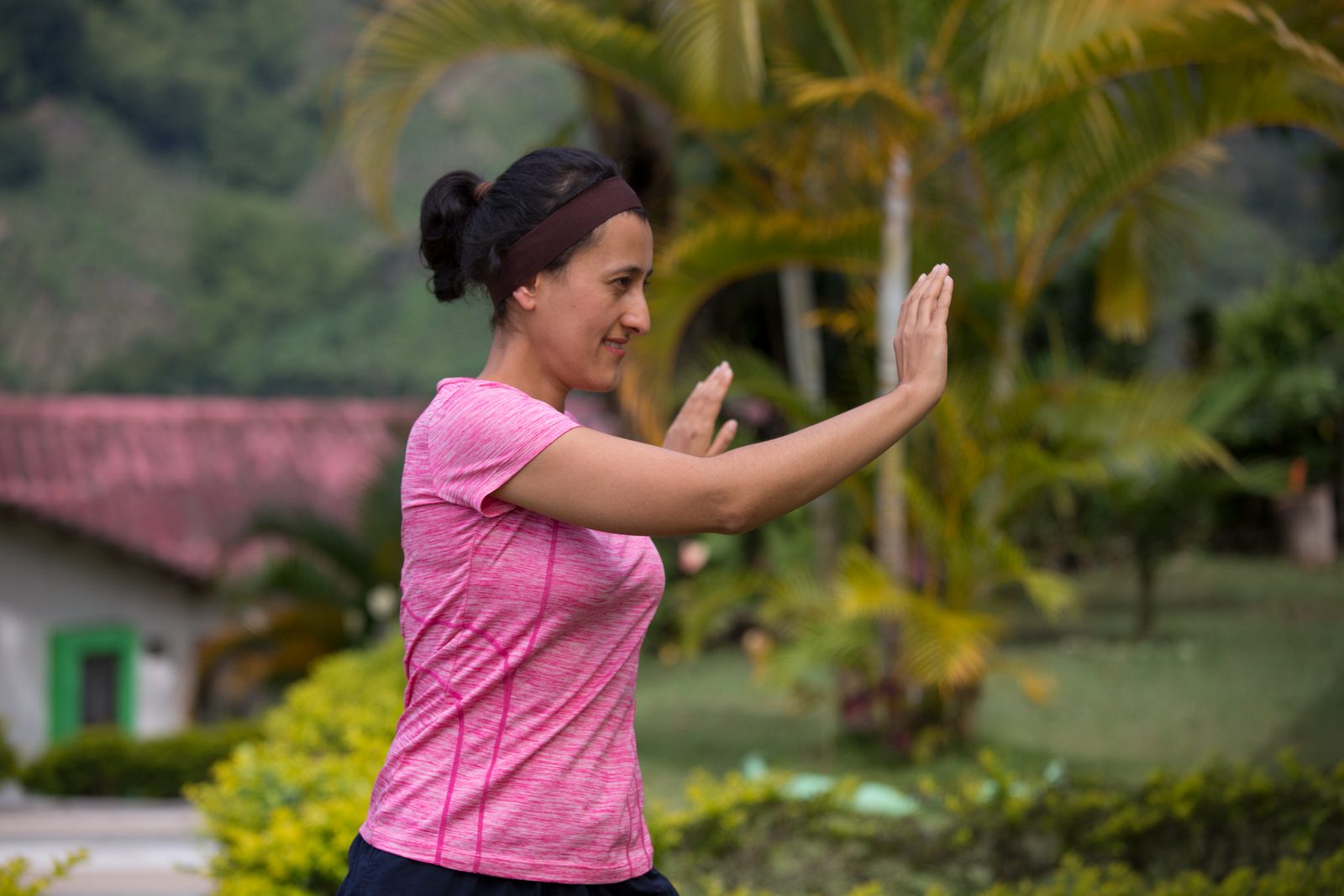
Tai Chi combines gentle physical postures, focused attention, slow movement, and controlled breathing. The practice can be adapted to different fitness and mobility levels, making it approachable for many beginners. The National Center for Complementary and Integrative Health explains that Tai Chi is now commonly used for health promotion and rehabilitation, although it originated as a Chinese martial art.
This routine follows the movement order of a modified Yang-style 10-form sequence. The instructions below are simplified for home practice and may differ from how a particular Tai Chi school teaches each movement.
| Workout detail | Beginner recommendation |
|---|---|
| Workout time | About 15 minutes |
| Equipment | None; sturdy chair optional |
| Space needed | Enough room to extend your arms and take a small step |
| Starting frequency | About three days per week |
| Intensity | Easy and controlled |
| Main focus | Posture, balance, coordination, breathing, and smooth movement |
Is Tai Chi Good for Beginners?
Tai Chi can be a good beginner activity because the movements are slow, adjustable, and generally low impact. You control the size of every step, arm movement, and knee bend.
However, slow does not always mean easy. Shifting your weight, standing briefly on one leg, and coordinating your hands and feet may feel challenging at first. Use a chair or wall for support until you become more confident.
Tai Chi may be especially appealing if you want to:
- Add gentle movement to your day
- Practice balance and coordination
- Exercise without jumping or running
- Learn a calming mind-body activity
- Build confidence before trying more demanding workouts
- Move in a small indoor space
You do not need to memorize all 10 movements during your first session. Learning two or three at a time is often more manageable.
What You Need for an At-Home Tai Chi Workout
Tai Chi does not require exercise machines, weights, or a large workout area. Before beginning, prepare a safe practice space.
Choose a Safe Surface
Practice on a level, uncluttered floor. Remove loose rugs, cords, small furniture, and other objects that could cause you to trip.
Avoid practicing on a slick floor while wearing socks. Use flat, supportive shoes or practice barefoot only when the surface provides secure traction and doing so feels comfortable.
Wear Comfortable Clothing
Choose clothing that allows you to:
- Raise and circle your arms
- Bend your knees slightly
- Turn your torso comfortably
- Take small steps in different directions
Your clothing does not need to be specifically designed for Tai Chi.
Keep Support Nearby
Place a sturdy chair beside you when you are learning. The chair should not have wheels or move when you touch it.
Use one or two fingertips for light support when possible. Hold more firmly when necessary, especially during one-leg movements.
How to Prepare for Your Beginner Tai Chi Workout
Good Tai Chi practice is not about making the largest movements possible. Focus on control, comfort, and steady transitions.
Establish a Relaxed Posture
Stand with your feet approximately hip-width apart. Point your toes mostly forward and distribute your weight evenly between both feet.
Then:
- Lengthen your spine without becoming rigid.
- Keep your head upright and your chin level.
- Relax your jaw, neck, and shoulders.
- Let your arms hang naturally.
- Keep your knees soft rather than locked.
- Look forward instead of staring continuously at your feet.
You should feel stable, not stiff.
Breathe Naturally
Breathe quietly through your nose when comfortable. Allow your abdomen and lower ribs to expand without forcing an unusually deep breath.
Some Tai Chi instruction coordinates specific movements with inhaling and exhaling. As a beginner, it is more important to breathe continuously and avoid holding your breath.
Shift Your Weight Slowly
Weight shifting is central to Tai Chi. Before practicing the full routine, try this simple drill:
- Stand with your feet a little wider than hip-width.
- Shift your weight slowly toward your right foot.
- Keep both feet on the floor.
- Return to the center.
- Shift toward your left foot.
- Continue for 30 to 60 seconds.
Keep your knees pointing in the same general direction as your toes. Do not let a knee collapse sharply inward.
Use a Comfortable Range
Your movements can be small. You do not need deep stances, high kicks, or large steps to begin learning Tai Chi.
A smaller movement performed with control is more useful than a larger movement that causes pain or instability.
Tai Chi Workout for Beginners: 10 Easy Moves at Home
A 2024 JMIR Aging study used input from Tai Chi instructors, researchers, health professionals, and people with osteoarthritis to develop a modified Yang-style 10-form program. The panel selected movements considered appropriate, practical, and suitable for unsupervised home delivery. The routine below uses that recognized movement order but provides simplified instructions for general beginners.
Movement names and techniques can vary among Tai Chi styles and instructors. Treat the following steps as an introduction rather than a substitute for personalized instruction.
1. Commencement
Commencement establishes your posture, breathing, and pace.
How to Do It
- Stand with your feet approximately hip-width apart.
- Let your arms rest at your sides with your palms facing backward or inward.
- Soften your knees and relax your shoulders.
- Slowly raise both arms in front of you until your hands reach approximately chest or shoulder height.
- Keep your elbows slightly bent and your wrists relaxed.
- Turn your palms downward.
- Slowly lower your hands while allowing your knees to bend slightly.
- Return to your starting position.
Repeat four to six times.
Beginner Modification
Raise your hands only as high as comfortable. Reduce the knee bend or perform the arm movement while seated when standing is difficult.
Form Tip
Imagine that your arms are floating upward and gently settling downward. Avoid lifting your shoulders toward your ears.
2. Repulse Monkey
Repulse Monkey combines alternating hand movements with a backward weight shift. Traditional versions may include repeated backward steps, but beginners can use toe taps.
How to Do It
- Begin in a comfortable standing position with both hands in front of your torso.
- Shift your weight gently toward your right foot.
- Turn your upper body slightly to the right as your right hand floats beside your shoulder.
- Keep your left hand extended comfortably in front of you.
- Tap your left foot a short distance behind you.
- Press your right palm forward while drawing your left hand toward your side.
- Return your feet and hands toward the center.
- Repeat in the opposite direction.
Perform three repetitions on each side.
Beginner Modification
Keep most of your weight on the front foot and use only a light backward toe tap. Hold a chair with one hand and practice the stepping pattern without the arm movements when necessary.
Form Tip
Do not rush the backward step. Place the foot first, make sure you feel stable, and then shift your weight.
3. Brush Knee
Brush Knee coordinates a forward weight shift with one hand moving near the knee and the opposite hand pressing forward.
How to Do It
- Shift your weight gently toward your right foot.
- Bring your right hand near your shoulder with your palm facing forward.
- Allow your left hand to rest in front of your torso.
- Step or tap your left foot slightly forward.
- Shift some weight toward the left foot.
- Sweep your left hand past the outside of your left knee.
- At the same time, press your right palm forward at approximately chest height.
- Return to the center and repeat on the other side.
Perform three repetitions on each side.
Beginner Modification
Use a small forward toe tap without transferring all your weight. You can also keep both feet planted and practice only the upper-body pattern.
Form Tip
Keep your front knee tracking in the same direction as your toes. Avoid pushing it far beyond a comfortable position.
4. Part the Wild Horse’s Mane
This movement uses a smooth diagonal step while the hands separate in opposite directions.
How to Do It
- Shift your weight toward your right foot.
- Bring your hands near your right side as though holding a large ball.
- Place your right hand above your left hand without pressing them together.
- Step or tap your left foot diagonally forward.
- Shift your weight gradually toward the left leg.
- Let your left hand glide forward and upward to about chest height.
- Allow your right hand to lower toward your right hip.
- Return to the center and repeat on the other side.
Perform three repetitions on each side.
Beginner Modification
Use a narrow stance and a small diagonal toe tap. Keep your hands below shoulder height if lifting them higher is uncomfortable.
Form Tip
Your hands should separate smoothly rather than snap apart. Let your torso turn slightly with the movement.
5. Cloud Hands
Cloud Hands uses continuous circular arm movements while shifting from side to side.
How to Do It
- Stand with your feet slightly wider than hip-width.
- Bring your right hand in front of your chest with the palm facing inward.
- Hold your left hand lower, near your abdomen.
- Shift your weight slowly toward your right leg.
- Move your right hand across your field of view while the left hand follows below it.
- Turn your torso slightly without twisting your planted knees.
- Change the height of your hands as you shift toward the left.
- Continue alternating in a smooth circular pattern.
Complete four to six passes in each direction.
Beginner Modification
Keep both feet planted and make the hand circles smaller. Hold the back of a chair lightly with one hand while the other hand practices the cloud pattern.
Form Tip
Allow your waist and torso to guide the movement. Avoid waving only your arms while the rest of your body remains rigid.
6. Golden Rooster Stands on One Leg
Golden Rooster gently challenges balance by shifting your weight and lifting one knee.
How to Do It
- Stand tall with your feet under your hips.
- Shift your weight gradually onto your left foot.
- Raise your right heel while keeping your right toes on the floor.
- If you feel stable, lift your right knee a few inches.
- Float your right hand upward while allowing your left hand to lower.
- Pause for one or two seconds.
- Lower your foot and return to the center.
- Repeat on the opposite side.
Perform three repetitions on each side.
Beginner Modification
Keep the toes of the lifting foot on the floor. You can also hold a chair with one hand throughout the movement.
Form Tip
Do not focus on lifting your knee high. A low, controlled lift is enough to practice balance.
7. Cross Hands and Kick
This movement combines crossing and opening the arms with a controlled leg extension. Beginners should use a low heel tap instead of a forceful kick.
How to Do It
- Stand with your knees soft and your weight centered.
- Cross your wrists gently in front of your chest.
- Shift your weight onto your left foot.
- Open your arms outward while lifting your right heel.
- Extend your right foot slightly forward and touch the floor with your heel.
- Bring your foot back under you.
- Cross your hands again.
- Repeat with the left foot.
Perform three heel taps on each side.
Beginner Modification
Keep the moving foot close to the floor and maintain contact with a chair. You may also practice the arm movement without lifting either foot.
Form Tip
Avoid snapping or locking your knee. Think of slowly placing your heel forward rather than kicking an object.
8. Stroke Peacock’s Tail
Stroke Peacock’s Tail is a flowing combination commonly taught through ward-off, roll-back, press, and push actions. Some schools use a different English name for this sequence.
How to Do It
- Step or tap your left foot slightly forward.
- Form a rounded shape with your arms as though holding a large ball.
- Shift forward gently while allowing your front arm to rise in a rounded ward-off motion.
- Shift your weight backward and sweep both hands diagonally toward your side.
- Bring your forearms closer together and shift forward in a gentle pressing motion.
- Draw your hands back toward your chest.
- Turn your palms forward and slowly push them away.
- Return to the center and practice the pattern on the other side.
Perform two or three repetitions on each side.
Beginner Modification
Keep both feet planted and practice the four arm actions without stepping. Make the weight shift small and stay close to a chair.
Form Tip
Pause briefly between the four parts while learning. Gradually make the movement more continuous as your coordination improves.
9. Embrace the Tiger
Embrace the Tiger brings the movement back toward your center and encourages a stable, rounded posture.
How to Do It
- Return your feet to a comfortable stance.
- Open your arms gradually to the sides.
- Keep your elbows soft and your shoulders relaxed.
- Circle your arms inward as though embracing a large ball.
- Bring your hands toward the center of your chest without pressing them against your body.
- Shift your weight evenly between both feet.
- Turn your palms downward.
- Begin lowering your hands slowly.
Repeat two or three times.
Beginner Modification
Perform the movement while seated with both feet supported. Keep your arms lower if you have shoulder discomfort.
Form Tip
Maintain space between your arms and torso. Avoid collapsing your chest or rounding your shoulders sharply forward.
10. Closing
Closing allows your breathing and posture to settle before you finish.
How to Do It
- Stand with your weight evenly distributed.
- Float your hands upward to approximately chest height.
- Turn your palms downward.
- Slowly lower your hands toward your sides.
- Allow your knees to straighten comfortably without locking.
- Relax your shoulders and take two or three natural breaths.
- Notice your posture and balance before walking away.
Beginner Modification
Complete the movement while seated or while standing with one hand near a chair.
Form Tip
Do not finish abruptly. Give yourself several seconds to become completely still.
15-Minute Tai Chi Workout Plan for Beginners
You can practice the movements individually or connect them into one continuous routine.
| Time | Activity |
|---|---|
| 0–2 minutes | Relaxed breathing, shoulder circles, wrist movements, and gentle side-to-side weight shifts |
| 2–4 minutes | Commencement and Repulse Monkey |
| 4–6 minutes | Brush Knee and Part the Wild Horse’s Mane |
| 6–8 minutes | Cloud Hands |
| 8–10 minutes | Golden Rooster and Cross Hands and Kick |
| 10–12 minutes | Stroke Peacock’s Tail |
| 12–14 minutes | Embrace the Tiger and repeat your most comfortable movement |
| 14–15 minutes | Closing and relaxed breathing |
Move continuously but do not hurry. It is acceptable for your first sessions to take longer because you pause to review each step.
Easier First-Week Option
During your first week, practice only:
- Commencement
- Brush Knee
- Cloud Hands
- Closing
Spend approximately two minutes on each movement. Add the remaining exercises gradually as the basic posture and weight shifts become more familiar.
Benefits of a Beginner Tai Chi Workout
Tai Chi research includes different styles, session lengths, populations, and health conditions. Results from one program should not be treated as a guarantee that every beginner will experience the same outcome.
May Support Balance and Stability
Tai Chi repeatedly asks you to shift your weight, control your center of mass, coordinate your limbs, and stabilize yourself during small steps.
A research review summarized by NCCIH found that Tai Chi may reduce the rate of falls by approximately 19% and the number of older adults experiencing a fall by approximately 20% compared with control activities not expected to prevent falls. The certainty of evidence differed between these findings, and the results apply specifically to the older populations studied.
Tai Chi cannot prevent every fall. Home safety, vision, medication effects, footwear, muscle strength, and medical conditions can also affect fall risk.
Provides Gentle, Low-Impact Movement
Tai Chi movements are normally performed without jumping. You can shorten your steps, reduce your knee bend, and lower your arms based on your ability.
This makes the activity adaptable, but it does not mean every movement is automatically comfortable for every joint. Deep stances and repeated weight shifting can still irritate sensitive knees, hips, feet, or ankles when the range is too large.
May Help Some People With Knee Osteoarthritis
A randomized clinical trial published online in October 2025 and in the January 2026 issue of JAMA Internal Medicine studied 178 adults with knee osteoarthritis. Participants assigned to a 12-week online Yang-style Tai Chi program reported greater improvements in walking-related knee pain and physical function than participants receiving online education alone. About 73% of the Tai Chi group achieved a clinically important pain improvement, compared with 47% of the control group. No serious adverse events associated with the program were reported.
These findings apply to people meeting the trial’s knee osteoarthritis criteria. The intervention also included educational resources and app-based adherence support, so the results should not be interpreted as proof that a brief general routine will produce the same outcome.
Develops Coordination and Body Awareness
Tai Chi requires you to notice:
- Where your weight is positioned
- How your knees track over your feet
- Whether your shoulders are tense
- How your hands and feet move together
- How quickly you transition between positions
This attention can help you move more deliberately during practice.
Can Encourage Focused, Relaxed Movement
Tai Chi includes focused attention and controlled breathing in addition to physical movement. Many beginners find that slowing down and concentrating on one movement at a time creates a calmer exercise experience.
Tai Chi should not replace professional mental health care, but it can be used as a gentle mind-body activity within a broader wellness routine.
How Often Should Beginners Practice Tai Chi?
A practical starting schedule is 10 to 15 minutes, three days per week. Consistency is more important than completing long sessions before you understand the movements.
Use this gradual progression:
| Practice period | Suggested approach |
|---|---|
| Weeks 1–2 | Practice 10–15 minutes, two or three days per week |
| Weeks 3–4 | Practice 15–20 minutes, three days per week |
| Weeks 5–6 | Practice 20–30 minutes, three or four days per week if comfortable |
| After week 6 | Continue your preferred schedule or join a qualified beginner class |
The researched modified 10-form program progressed from approximately 30–40-minute sessions to 40–45-minute sessions. Participants were asked to practice three times per week for 12 weeks. That was a structured research program, not a minimum requirement for every beginner.
You can also practice one movement for several minutes on days when you do not have time for the complete routine.
Does Tai Chi Meet Weekly Exercise Recommendations?
Tai Chi is physical activity, but whether a session counts as moderate-intensity aerobic exercise depends on the style, pace, stance depth, duration, and your fitness level.
According to CDC physical activity guidance updated December, 2025, adults should generally aim for at least 150 minutes of moderate-intensity aerobic activity each week and muscle-strengthening activity on at least two days. Adults aged 65 and older should also include activities that improve balance.
A short beginner Tai Chi routine can contribute movement and balance practice, but it may not provide enough aerobic or strengthening activity to meet every recommendation. Consider combining it with appropriate activities such as walking and strength training.
Beginner Tai Chi Mistakes to Avoid
Bending the Knees Too Deeply
Deep stances are not required for beginner practice. Use a shallow knee bend that you can maintain without pain or shaking.
Twisting Over a Planted Foot
Allow your feet, knees, hips, and torso to turn together. Avoid rotating your upper body aggressively while your knee and foot remain fixed in the opposite direction.
Locking the Knees
Keep a slight softness in your knees. Do not force them backward when you stand tall.
Holding Your Breath
Complex hand-and-foot coordination may cause you to hold your breath without noticing. Pause, return to a comfortable stance, and restart with natural breathing.
Moving Too Quickly
Tai Chi movements lose control when rushed. Slow down enough to feel where your weight is positioned before taking the next step.
Chasing Perfect Hand Positions
Exact hand angles vary among styles and teachers. First develop stable posture, comfortable weight shifting, and continuous breathing.
Practicing Without Support When You Need It
A chair is a useful training tool, not a sign of failure. Use support until you can perform the movement safely and consistently.
How to Modify Tai Chi for Balance or Joint Problems
| Concern | Modification |
|---|---|
| Limited balance | Stand beside a wall or chair and replace steps with toe taps |
| Knee discomfort | Use a narrower stance, reduce knee bending, and keep more weight centered |
| Hip stiffness | Shorten every step and reduce torso rotation |
| Foot or ankle sensitivity | Keep both feet planted during arm patterns |
| Shoulder discomfort | Keep your hands below shoulder height and make smaller circles |
| Low endurance | Practice fewer movements or alternate standing and seated exercises |
| Difficulty coordinating arms and legs | Learn the foot pattern first, then add the hands |
| Limited standing tolerance | Practice adapted arm movements and gentle seated weight shifts |
Do not force a movement through sharp, increasing, or unfamiliar pain. A qualified Tai Chi instructor, physical therapist, or other appropriate healthcare professional can help identify safer modifications.
When to Seek Professional Guidance
Tai Chi is generally considered a low-risk practice when it is performed appropriately, although temporary aches and musculoskeletal discomfort can occur.
Speak with an appropriate healthcare professional before beginning or modifying exercise when you have:
- A recent operation, fracture, or acute injury
- Frequent falls or severe balance problems
- Unexplained dizziness or fainting
- Significant joint swelling or rapidly increasing pain
- A chronic condition that limits physical activity
- Instructions to restrict weight-bearing movement
- Pregnancy-related exercise concerns
Stop the session if you experience chest pain, faintness, severe shortness of breath, sudden weakness, or new severe pain. Seek prompt medical care when symptoms may be urgent.
There is no single US national licensing standard for Tai Chi instructors. When choosing an instructor, ask about their training, teaching experience, beginner classes, and ability to work with your specific mobility needs.
Frequently Asked Questions
Can a Complete Beginner Do Tai Chi at Home?
Yes. Begin with a small number of basic movements and use a stable chair for balance. Learning from a qualified instructor—either in person or through well-designed video instruction—can help you understand alignment and transitions more clearly.
Is 10 or 15 Minutes of Tai Chi Enough?
Ten or 15 minutes is enough to learn movements, practice balance, and establish a consistent habit. Many clinical studies use longer sessions over several weeks or months, so a brief routine should not be expected to reproduce every research outcome.
How Many Days per Week Should a Beginner Practice Tai Chi?
Three days per week is a reasonable starting goal. You can practice more frequently when the sessions are comfortable and you recover without increasing pain or fatigue.
Can You Practice Tai Chi Every Day?
Many people can perform gentle Tai Chi daily. Keep some sessions short, avoid repeatedly forcing deep positions, and reduce your practice when you feel unusually sore, tired, or unstable.
Can Tai Chi Be Done While Seated?
Many Tai Chi-inspired arm movements, breathing exercises, and torso movements can be adapted to a seated position. However, a seated routine does not reproduce all the stepping and weight-shifting elements of standing Tai Chi. Use a stable chair and seek qualified instruction when you have significant mobility limitations.
Does Tai Chi Count as Cardio?
Tai Chi is physical activity, but its cardiovascular intensity varies. A slow introductory session may be light activity, while longer sessions with continuous movement and deeper stances may be more demanding. Do not assume that every Tai Chi workout fulfills the full weekly aerobic exercise recommendation.
What Is the Difference Between Tai Chi and Qigong?
Both practices can combine movement, breathing, and focused attention. Tai Chi commonly uses linked, choreographed forms that developed from martial arts. Qigong is a broader category and often uses simpler, repetitive movements, standing postures, or breathing exercises. The practices overlap, and some Tai Chi sessions include qigong during the warm-up or cool-down.
Conclusion
A Tai Chi workout for beginners does not need to be long or complicated. Start with relaxed posture, natural breathing, shallow knee bends, and small weight shifts. Learn Commencement, Brush Knee, Cloud Hands, and Closing first, then add the other movements gradually.
Practice for 10 to 15 minutes about three days per week. Keep a sturdy chair nearby, move within a comfortable range, and prioritize stability over large or impressive-looking movements. With regular practice, the sequence can become smoother, more coordinated, and easier to remember.
References
- National Center for Complementary and Integrative Health: Tai Chi—What You Need to Know
- JMIR Aging: Development of a 12-Week Unsupervised Online Tai Chi Program
- JAMA Internal Medicine: Online Unsupervised Tai Chi Intervention for Knee Pain and Function
- Centers for Disease Control and Prevention: Adding Physical Activity as an Adult
- Centers for Disease Control and Prevention: Physical Activity for Older Adults