
The safest way to handle a pimple is not to pop it. There is no completely risk-free home method because squeezing can push oil, bacteria, pus, and dead skin cells deeper into the skin, increasing inflammation and the risk of infection, dark marks, and permanent scarring.
If a pimple has already opened or begins draining naturally, you can reduce the risk of complications by washing your hands, gently cleaning the area, blotting away fluid without force, and covering the spot with a hydrocolloid patch.
The American Academy of Dermatology’s pimple-popping guidance recommends leaving extractions to a dermatologist, who can use sterile instruments and proper technique.
Should You Pop a Pimple?
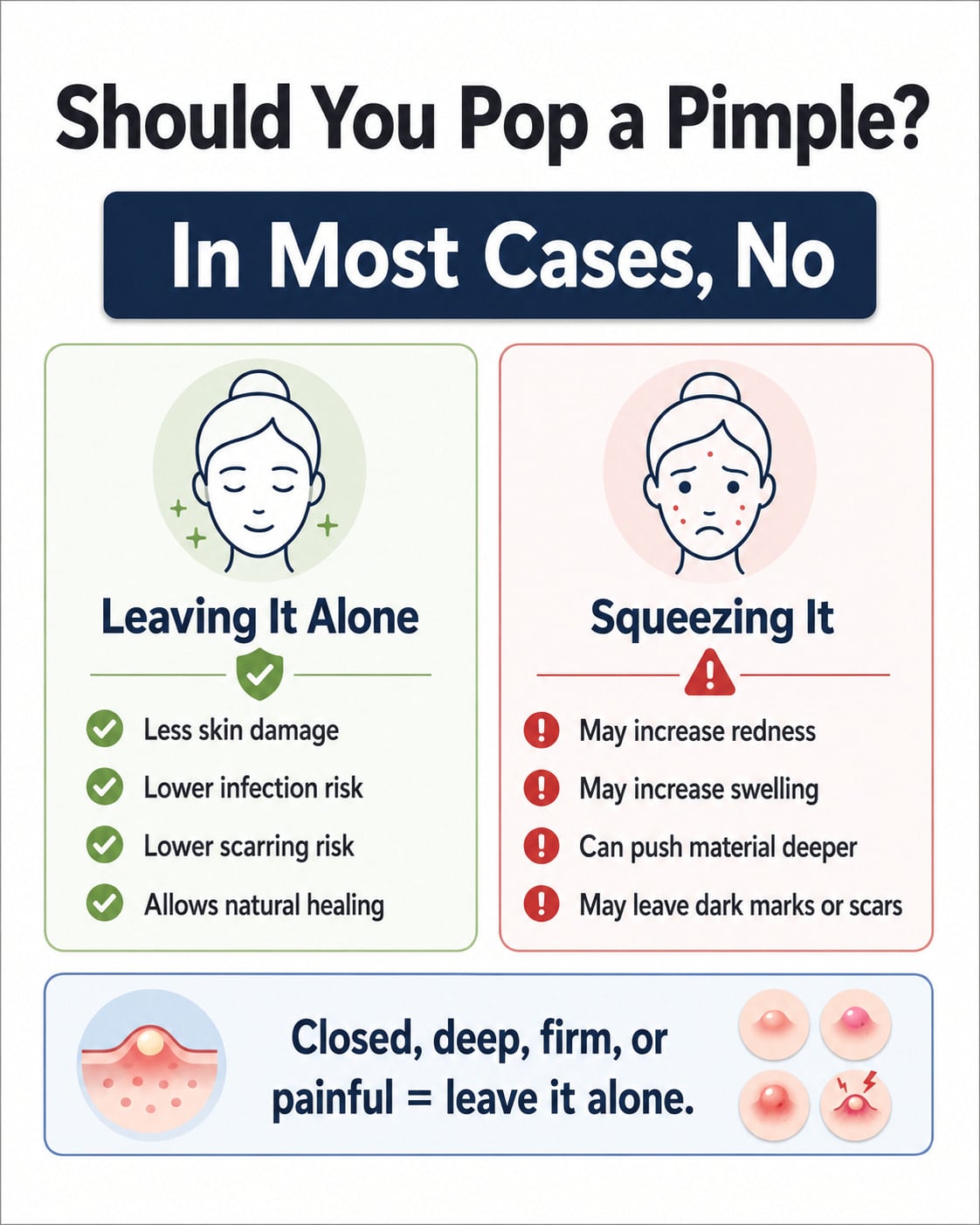
In most cases, no. Popping may make a pimple look flatter temporarily, but it can also damage the pore and surrounding skin.
When you squeeze a pimple, some of its contents may come out while the rest moves deeper into the tissue. This can make the area:
- Redder and more swollen
- More painful
- Slower to heal
- More likely to become infected
- More likely to leave a dark mark or scar
Picking, scratching, and squeezing increase inflammation, which is one reason these behaviors are associated with acne scarring.
A dermatologist may perform acne extraction for certain stubborn blackheads or whiteheads. Deep nodules and cysts require different professional procedures and should never be drained at home.
A Simple Rule to Follow
Leave the pimple alone when it is closed, deep, firm, painful, or difficult to drain.
When a pimple has already opened, stop thinking of it as something that needs to be “emptied.” Treat it like a small skin wound instead: clean it, protect it, and allow it to heal.
Know What Type of Pimple You Have
Not every acne bump should be handled in the same way. Identifying the type of pimple can help you avoid making it worse.
| Type of acne | What it looks or feels like | What to do |
|---|---|---|
| Blackhead | A small dark spot in an open pore | Do not dig it out or scrub it. Consider salicylic acid or adapalene. |
| Whitehead | A closed, white or skin-colored bump | Do not puncture it. The closed surface usually requires damaging pressure to open. |
| Papule | A red, firm, inflamed bump without visible pus | Do not squeeze. Use an appropriate acne product on intact skin. |
| Pustule | A red bump with a white or yellow center | It may look ready to pop, but squeezing can still push material deeper and worsen inflammation. |
| Blind pimple | A tender lump beneath the skin without a visible head | Do not squeeze or puncture it. Use a warm compress and consider professional care if severe. |
| Nodule or cyst | A large, deep, painful lump | Never attempt to drain it at home. These lesions have a higher risk of infection and scarring. |
The dark material in a blackhead is not trapped dirt. Scrubbing will not remove the underlying clog and may further irritate acne-prone skin. AAD guidance also advises against popping pustules and recommends professional care for deep cysts and nodules.
Make Sure It Is Actually Acne
Avoid popping any bump when you are unsure what it is. Cold sores, boils, styes, ingrown hairs, folliculitis, skin cysts, and other conditions may resemble pimples but require different care.
Seek medical advice for a recurring bump, a cluster of painful blisters, a lump near the eye, or a lesion that continues growing or does not heal.
Which Pimples Should Never Be Popped?
Do not attempt to pop a pimple that is:
- Deep, hard, or very painful
- A cyst, nodule, or blind pimple
- Red and swollen without a surface opening
- Close to the eye or on the eyelid
- Already bleeding, crusted, or repeatedly picked
- Surrounded by increasing warmth, redness, or swelling
- Producing a large amount of pus
- Located inside the nose
- A recurring bump in the same location
- Something you cannot confidently identify as acne
You should also avoid manipulating pimples between the bridge of the nose and the corners of the mouth. This area is sometimes called the facial “danger triangle.” Serious complications are rare, but infections in this region have a possible route to deeper structures behind the eyes. Do not panic over an ordinary pimple, but seek prompt care if redness spreads or you develop severe swelling, fever, eye pain, vision changes, or other worsening symptoms.
How to Pop a Pimple Safely—or Reduce the Risk
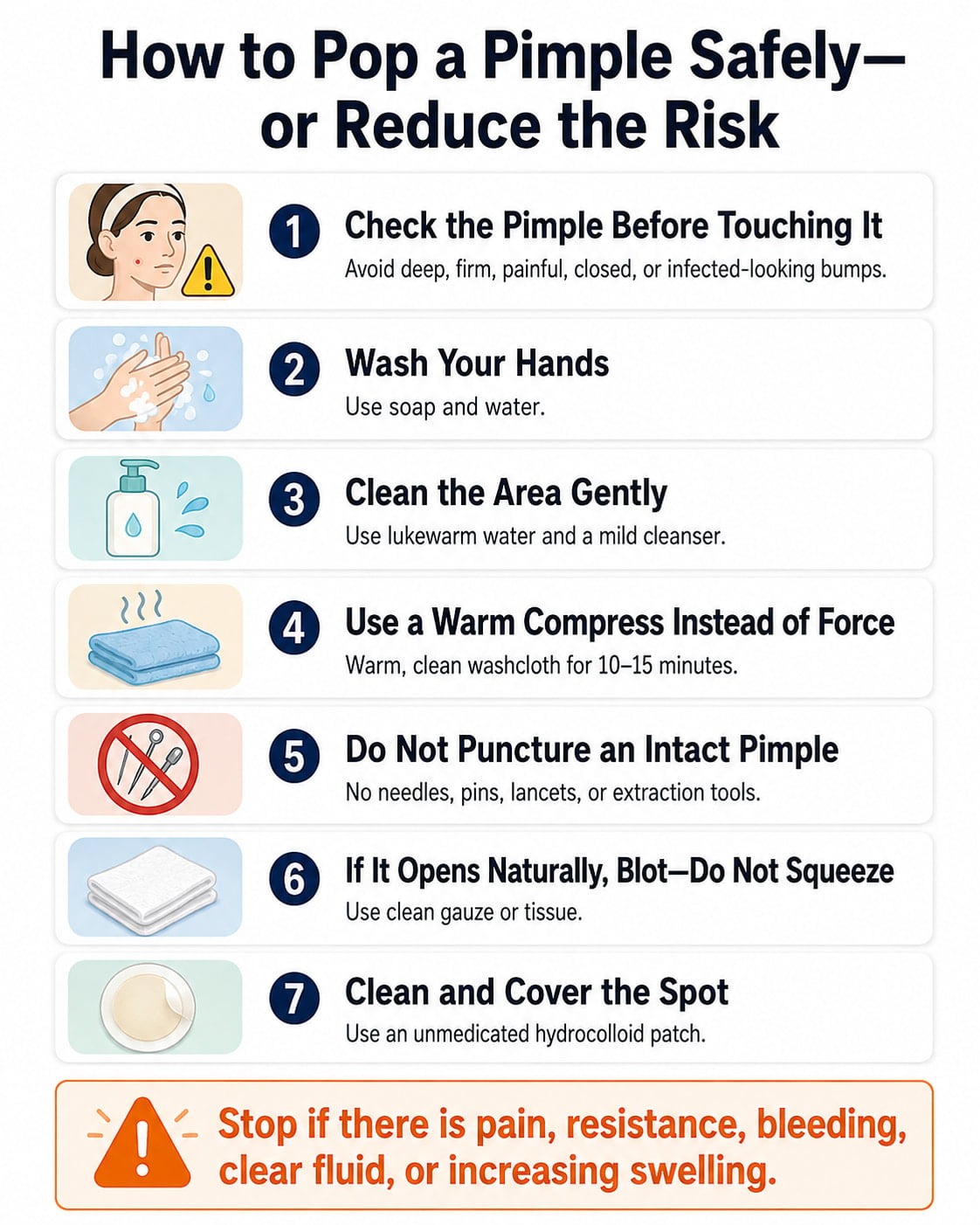
There is no technique that makes popping completely safe. The following steps are intended for a pimple that has already opened or begun releasing fluid naturally, not for puncturing or forcefully extracting an intact blemish.
Step 1: Check the Pimple Before Touching It
Look at the spot in good lighting without pressing it.
Do not proceed if it:
- Has no visible surface opening
- Feels deep or firm
- Requires pressure to release anything
- Is extremely painful
- Is near your eye
- Shows possible signs of infection
A visible white center does not guarantee that a pimple is safe or ready to drain.
Step 2: Wash Your Hands
Wash your hands with soap and water before touching your face. Clean beneath your nails as well.
Do not rely on clean-looking hands. Touching a broken pimple can transfer additional bacteria into the damaged skin.
Step 3: Clean the Area Gently
Use lukewarm water and a mild, fragrance-free cleanser. Pat the area dry with a clean towel or gauze.
Do not scrub the pimple. Scrubbing irritates acne-prone skin and can worsen inflammation.
Step 4: Use a Warm Compress Instead of Force
Place a clean, comfortably warm, damp washcloth over the pimple for 10 to 15 minutes. Do not use water hot enough to burn or sting.
For a deep, painful pimple, the AAD recommends a warm compress for 10 to 15 minutes, up to three times daily. Use a clean washcloth each time and continue resisting the urge to squeeze. The purpose is to encourage natural healing—not to soften the skin for puncturing.
Step 5: Do Not Puncture an Intact Pimple
Do not use:
- A needle or pin
- A lancet
- Tweezers
- A comedone extractor
- Fingernails
- Two cotton swabs to force out the contents
Even when a tool is wiped with alcohol, home extraction can damage the pore, push debris deeper, or introduce bacteria.
Step 6: If It Opens Naturally, Blot—Do Not Squeeze
If fluid begins coming out without force, use clean gauze or tissue to blot it gently.
Do not keep pressing in an attempt to remove everything. A pimple does not need to be completely emptied to heal.
Stop immediately if you notice:
- Increasing pain
- Strong resistance
- Bleeding
- Clear fluid
- Increasing swelling
- No drainage
Blood or clear fluid usually means you are injuring surrounding tissue rather than removing acne material.
Step 7: Clean and Cover the Spot
Gently rinse or cleanse the area again. Pat it completely dry and apply an unmedicated hydrocolloid pimple patch.
Hydrocolloid can absorb drainage, protect the spot from touching, and support healing. It tends to work best on pimples that are open or releasing fluid, rather than deep, fully closed blemishes.
What to Do After Popping a Pimple
Proper aftercare is more important than trying to remove additional material.
If the Pimple Is Bleeding
Place clean gauze over the area and hold gentle, steady pressure until the bleeding stops.
Do not repeatedly remove the gauze to check the spot, and do not squeeze around it. Continued manipulation can restart bleeding and cause additional skin damage.
Seek medical care if the bleeding is heavy or does not stop with steady pressure.
Clean the Skin Gently
Wash the spot with mild soap or cleanser and water. Pat it dry.
Avoid aggressive rubbing, facial brushes, washcloth scrubbing, or peeling away loose skin.
Keep It Protected
Apply an unmedicated hydrocolloid patch to clean, dry skin. Leave it on for the time stated on the product label, often several hours or overnight.
Replace the patch if it becomes saturated, loose, or dirty. Do not place a new patch over wet, oily, or unclean skin.
Leave Any Crust or Scab Alone
Do not peel a crust from a healing pimple. Removing it can reopen the wound and increase inflammation, bleeding, discoloration, and scarring.
Avoid Acne Medication on Raw Skin
Do not place benzoyl peroxide, salicylic acid, adapalene, retinol, or exfoliating acids directly on an open or bleeding pimple.
Many OTC benzoyl peroxide and salicylic acid product labels warn against applying the medication to broken or damaged skin. Wait until the surface has closed, and then follow the specific product directions.
What Should You Put on a Popped Pimple?
1. An Unmedicated Hydrocolloid Patch
This is usually the most convenient option for a recently opened pimple.
A hydrocolloid patch may:
- Absorb fluid
- Reduce touching and picking
- Protect the spot from makeup and dirt
- Maintain a moist healing environment
A patch cannot remove a deep clog or manage widespread acne. It is a protective tool, not a complete acne treatment.
2. Plain Petroleum Jelly When a Patch Is Unsuitable
A very small amount of plain petroleum jelly may be used as a minor-wound alternative after the area has been gently cleaned.
The AAD’s wound-care guidance recommends keeping minor wounds clean and moist with petroleum jelly. Routine antibacterial ointment is not necessary when the area is cleaned daily.
Use petroleum jelly from a clean squeeze tube rather than repeatedly dipping your fingers into a jar.
3. Acne Treatment After the Skin Has Closed
Once the surface is no longer open, raw, or bleeding, an appropriate acne ingredient may help manage the remaining blemish or prevent future breakouts.
Options include:
- Benzoyl peroxide: Reduces acne-related bacteria and inflammation.
- Salicylic acid: Helps unclog pores and exfoliate accumulated skin cells.
- Adapalene: Helps prevent clogged pores and is generally used regularly across acne-prone areas.
- Azelaic acid: Supports acne management and may help with discoloration after a blemish clears.
The AAD’s updated acne treatment guidelines recommend benzoyl peroxide and topical retinoids and also support salicylic acid and azelaic acid for appropriate patients.
Follow the product label. Using more than directed will not make the pimple disappear faster and may cause irritation.
4. Sunscreen After the Skin Closes
Once the broken skin has healed enough to tolerate sunscreen, apply a broad-spectrum, water-resistant sunscreen with SPF 30 or higher.
Sun exposure can make post-acne discoloration more noticeable and persistent. Choose a noncomedogenic product labeled “won’t clog pores.”
What Not to Put on a Popped Pimple
Avoid the following on raw or broken skin:
- Rubbing alcohol
- Hydrogen peroxide
- Iodine
- Toothpaste
- Lemon juice
- Apple cider vinegar
- Baking soda
- Essential oils
- Facial scrubs
- Chemical peels
- Undiluted acne acids
- Benzoyl peroxide or salicylic acid unless the label permits use on broken skin
- Hydrocortisone unless a healthcare professional recommends it
Hydrogen peroxide, rubbing alcohol, and iodine can dry or irritate healing skin. Toothpaste is formulated for teeth, not facial skin, and can make a pimple redder and more irritated.
Avoid applying heavy makeup over an actively draining spot. When you resume makeup, select noncomedogenic products and remove them gently before bed.
Risks of Popping Pimples
Increased Inflammation
Squeezing can push material deeper into the skin. The result may be a pimple that is larger, redder, and more painful than it was before.
Infection
Breaking the skin creates an opening through which bacteria may enter. Infection may cause worsening pain, warmth, swelling, redness, or continued drainage.
Dark Marks
Inflammation can leave a flat red, purple, gray, or brown mark after the pimple heals. These marks are not always permanent scars, but they may take weeks or months to fade.
Post-inflammatory hyperpigmentation can be more noticeable or persistent in darker skin tones. Picking and squeezing increase inflammation and therefore increase the likelihood of discoloration.
Permanent Acne Scars
Deep acne already has a higher risk of scarring. Squeezing, scratching, or repeatedly reopening a lesion can further damage the skin and increase that risk.
Delayed Healing
A pimple that might have settled on its own can take longer to heal when it is repeatedly touched. Peeling scabs, squeezing remaining bumps, and applying harsh products can restart inflammation.
Safer Alternatives to Popping a Pimple
Apply a Warm Compress
Use a clean, warm, damp washcloth for 10 to 15 minutes. Repeat up to three times daily for a deep, painful pimple.
Use a fresh, clean cloth each time.
Apply a Hydrocolloid Patch
A patch can protect the pimple from unconscious touching. It may also absorb fluid when the spot is close to the surface or has already opened.
Use Benzoyl Peroxide on Intact Skin
Benzoyl peroxide may help reduce acne-related bacteria and inflammation. For sensitive or irritation-prone skin, the AAD suggests beginning with a 2.5% product rather than automatically choosing a stronger concentration.
Start slowly, follow the label, and remember that benzoyl peroxide can bleach hair, towels, pillowcases, and clothing.
Current Benzoyl Peroxide Safety Note
On March, 2025, the FDA reported testing 95 benzoyl peroxide acne products for benzene. More than 90% had undetectable or extremely low levels, while a limited number were recalled at the retail level. The FDA described the additional cancer risk from the detected exposure as very low.
The AAD currently recommends storing benzoyl peroxide products according to package directions, generally at room temperature or cooler, replacing them every 10 to 12 weeks, and discarding products exposed to temperatures above approximately 78°F.
Use Salicylic Acid on Intact Skin
Salicylic acid helps unclog pores and can be useful for blackheads, whiteheads, and some mild pimples.
Begin cautiously if your skin is sensitive or if you already use another drying acne treatment.
Consider Adapalene for Recurring Acne
Adapalene is an OTC topical retinoid that helps prevent clogged pores. It is usually applied consistently to acne-prone skin rather than used only as an emergency spot treatment.
Topical retinoids can irritate the skin when first introduced. Follow the label and use sunscreen.
Ask About Azelaic Acid
Azelaic acid may help manage acne while also supporting improvement in discoloration left after pimples heal. It may be an option for people who cannot tolerate some other acne ingredients.
Pregnancy and Breastfeeding Precautions
Most experts recommend stopping adapalene and other topical retinoids during pregnancy. The AAD advises pregnant patients to consult an obstetrician or dermatologist before using benzoyl peroxide or salicylic acid, even though limited use may be considered appropriate in some cases.
See a Dermatologist for a Painful Cyst or Nodule
A dermatologist may use a corticosteroid injection to reduce the size, inflammation, and pain of an individual large cyst or nodule. Professional extraction may also be used for stubborn blackheads and whiteheads that do not respond to acne treatment.
How to Tell if a Popped Pimple Is Infected
A recently manipulated pimple may be temporarily red or tender. Infection is more concerning when symptoms become progressively worse instead of gradually improving.
Watch for:
- Increasing pain
- Spreading redness or discoloration
- Increasing warmth or swelling
- A pimple that becomes unusually large
- Continued bleeding or pus
- Yellow, green, or foul-smelling drainage
- Fever, chills, or fatigue
- Swelling near the eye
- A spot that does not begin healing
- Red or dark streaks extending from the area
Seek medical care promptly for severe pain, rapidly spreading redness, facial or eye swelling, vision problems, fever, or a pimple near the eye that is getting worse. The Cleveland Clinic’s infected-pimple guidance also recommends evaluation for significant swelling or a lesion that does not respond to normal acne care.
When to See a Dermatologist
Consider making an appointment when:
- You have deep, painful nodules or cysts.
- Acne is leaving scars or persistent dark marks.
- A pimple repeatedly returns in the same location.
- You cannot tell whether a bump is acne.
- Your acne is widespread or worsening.
- An OTC routine has not improved your acne after six to eight weeks.
- You regularly pick or squeeze your skin and find it difficult to stop.
- Acne is affecting your confidence or emotional well-being.
- You have signs of infection.
You do not need to wait until acne becomes severe. Early treatment can help control inflammation and reduce the likelihood of new marks and scars.
Frequently Asked Questions
Is It Ever Completely Safe to Pop a Pimple?
No. Any attempt to squeeze or puncture a pimple can damage the skin, increase inflammation, and introduce bacteria.
The lowest-risk option is to leave it alone, use an appropriate acne treatment, and allow it to heal. When a pimple has already opened, clean and cover it rather than continuing to squeeze.
What Type of Pimple Is Most Dangerous to Pop?
Deep cysts, nodules, blind pimples, and lesions near the eye should never be popped. They are located deeper in the skin, may require significant force to drain, and have a greater risk of infection and scarring.
What Should I Put on a Pimple After Popping It?
Gently wash the area, pat it dry, and apply an unmedicated hydrocolloid patch. A small amount of plain petroleum jelly may be used as an alternative after cleaning.
Do not apply strong acne medication directly to raw, open, or bleeding skin.
Can I Put a Hydrocolloid Patch on a Popped Pimple?
Yes. A hydrocolloid patch is most useful when the area has been cleaned, is completely dry, and is releasing a small amount of fluid.
Change it according to the product directions or when it becomes saturated or loose.
Why Did My Pimple Bleed After I Popped It?
Bleeding means the pressure damaged small blood vessels in or around the pimple. It does not mean that more acne material needs to be removed.
Stop squeezing and hold clean gauze over the area with gentle pressure until the bleeding stops.
Should I Keep Squeezing Until Only Clear Fluid Comes Out?
No. Clear fluid, blood, resistance, or increasing pain is a signal to stop. Continuing to squeeze injures healthy tissue and increases the risk of discoloration, infection, and scarring.
How Long Does a Popped Pimple Take to Heal?
A small, uncomplicated spot may begin closing within a few days, but healing time varies with the depth of the pimple and the amount of skin damage.
Seek medical advice if pain, redness, warmth, swelling, or drainage continues to increase or the spot does not begin improving.
Conclusion
Knowing how to pop a pimple safely starts with recognizing that not popping it is the safest choice. Avoid needles, extraction tools, fingernails, and force—especially for deep, painful, closed, or infected-looking pimples.
When a pimple has already opened, wash your hands, clean the skin gently, blot rather than squeeze, and protect the area with a hydrocolloid patch. Use proven acne ingredients only on intact skin, and consult a dermatologist for recurring, painful, or scarring acne.
This content is for informational purposes only and not medical advice.
References
- American Academy of Dermatology: Pimple popping—why only a dermatologist should do it
- American Academy of Dermatology: Tips to treat a deep, painful pimple
- American Academy of Dermatology: Proper wound-care tips
- Cleveland Clinic: How hydrocolloid pimple patches work
- Cleveland Clinic: Infected pimple symptoms and treatment
- U.S. Food and Drug Administration: Benzoyl peroxide product testing and recalls