
The benefits of broccoli sprouts include fiber and a concentrated source of glucoraphanin, a plant compound that can form sulforaphane. Early human research suggests possible effects on inflammation, bowel habits, and blood sugar, but stronger evidence is needed to confirm lasting health benefits.
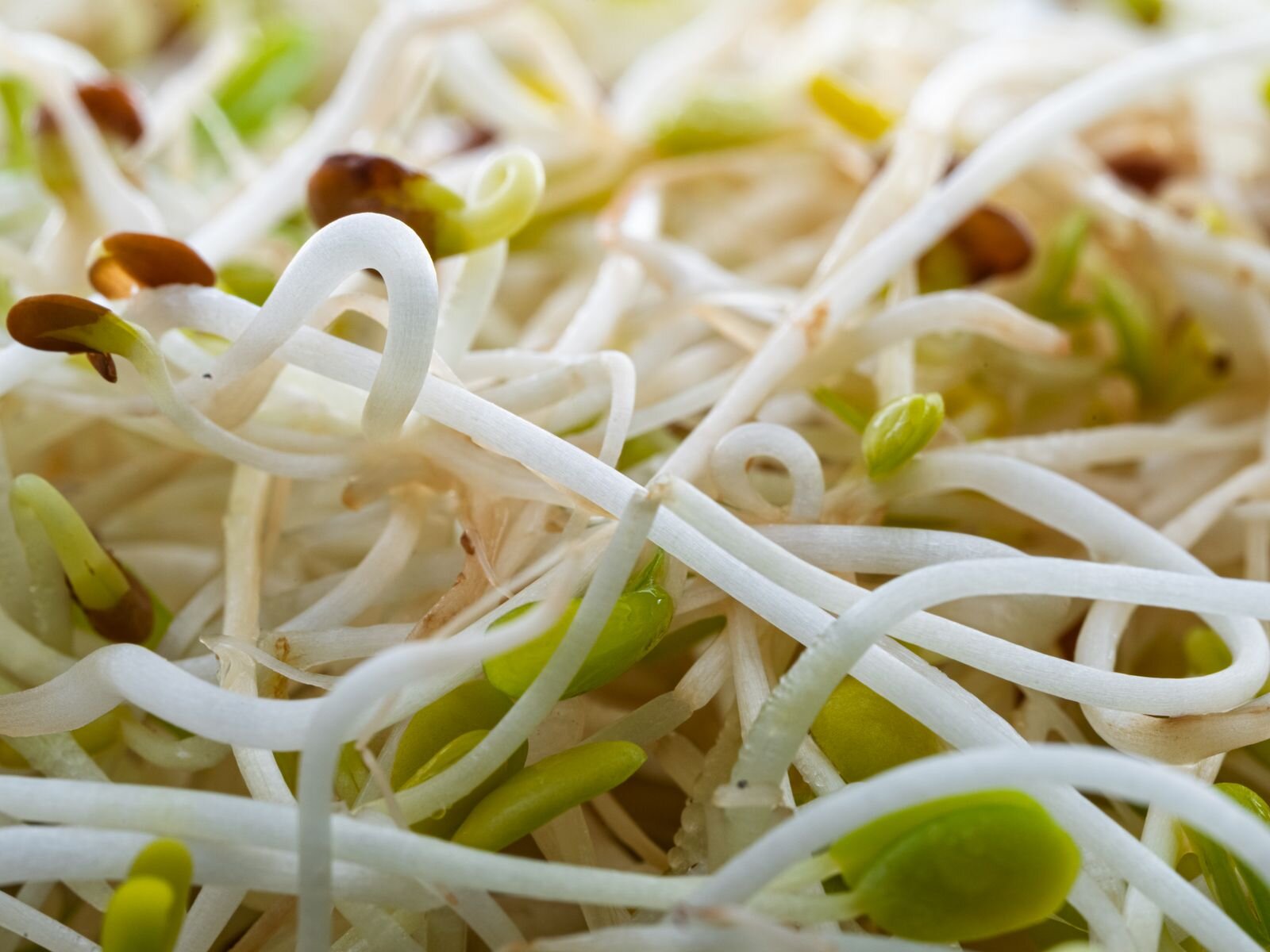
Understanding the research helps you decide how sprouts fit into your meals without expecting more than they can deliver. Preparation matters, too: raw sprouts can carry harmful bacteria, and cooking them thoroughly is the safer choice.
What Are Broccoli Sprouts?
Broccoli sprouts are young seedlings grown from broccoli seeds. They have thin stems, small green leaves, and a mildly peppery flavor.
They differ from mature broccoli florets and from broccoli microgreens, which are harvested later. Nutrition figures for these foods are not interchangeable.
Broccoli sprouts attract particular interest because they contain glucoraphanin, a precursor to sulforaphane. When the plant tissue is broken during chewing or chopping, an enzyme called myrosinase can help convert glucoraphanin into sulforaphane. Certain gut bacteria can also contribute to that conversion.
Broccoli Sprouts Nutrition Facts
Broccoli sprouts can add fiber and small amounts of protein to a meal with relatively few calories.
For example, one producer’s nutrition information lists the following amounts:
| Nutrient | Per 3 oz, approximately 84 g |
|---|---|
| Calories | 35 |
| Carbohydrates | 5 g |
| Fiber | 4 g |
| Protein | 2 g |
| Fat | 0.5 g |
| Sodium | 25 mg |
Source: Eatmore Sprouts & Greens. These are product-specific label values, not a universal nutrient profile.
A small garnish provides less than the amounts shown above. Check the serving weight and ingredient list, particularly when buying a blend containing several kinds of sprouts.
Avoid assuming that broccoli sprouts have exactly the same vitamin and mineral content as mature broccoli. Variety, growing conditions, and harvest age affect their composition.
Potential Benefits of Broccoli Sprouts: What Research Shows
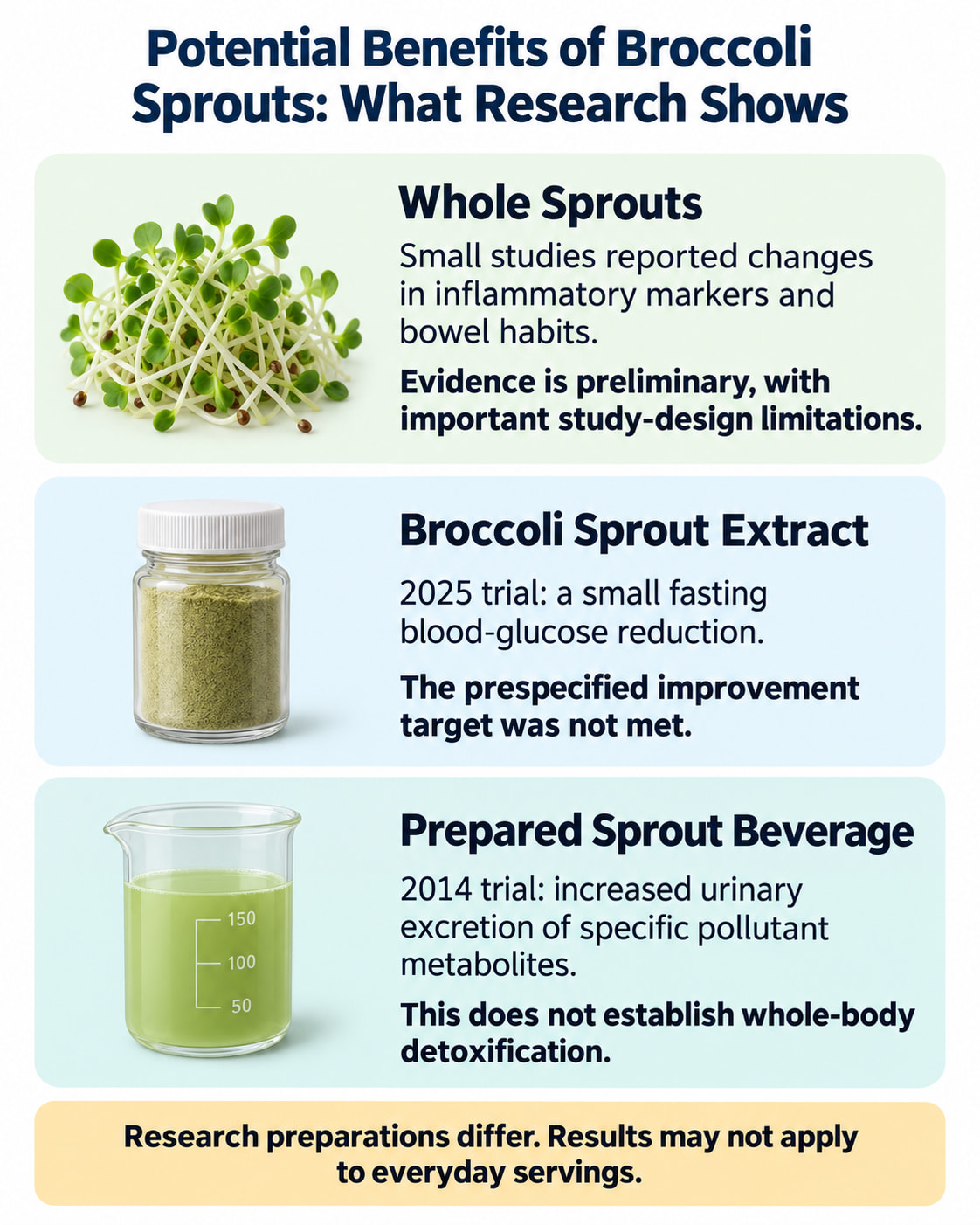
The evidence is easier to understand when you distinguish whole sprouts from extracts, powders, and prepared beverages. A concentrated research product may deliver a very different amount of plant compounds from a handful of sprouts.
1. Provide a Concentrated Source of Sulforaphane Precursors
In a foundational 1997 PNAS study, Fahey and colleagues found that three-day-old sprouts of certain broccoli and cauliflower varieties contained 10–100 times higher glucoraphanin concentrations than corresponding mature plants.
That comparison applies to a specific plant compound. It does not mean sprouts contain 100 times more of every nutrient or provide 100 times greater health benefits.
Sulforaphane is studied partly because it can activate cellular defense pathways involved in responding to oxidative stress. However, a biological mechanism alone does not establish that eating sprouts prevents disease.
2. May Influence Some Inflammatory Markers
A 2019 study in Clinical Nutrition followed 40 adults with overweight who ate 30 grams of broccoli sprouts daily for 10 weeks. Levels of two inflammatory markers, IL-6 and C-reactive protein, decreased.
The study had no separate control group, which limits how confidently the changes can be attributed to sprouts. The sprouts were also specially grown to enhance their plant-compound content.
These findings support further research. They do not establish that ordinary retail sprouts reliably reduce symptoms or improve long-term health.
3. May Support Bowel Regularity
A small controlled study reported improvements in constipation scores among participants eating broccoli sprouts.
The 2018 study included 48 people assigned to broccoli or alfalfa sprouts. Those eating 20 grams of broccoli sprouts daily for four weeks reported lower constipation scores compared with their own starting scores.
The results were preliminary and did not establish clear superiority over alfalfa sprouts. Broccoli sprouts should therefore be viewed as one possible source of dietary fiber, without relying on them to resolve persistent constipation.
4. Broccoli Sprout Extract May Have a Small Effect on Blood Sugar
A 2025 randomized trial found a small reduction in fasting blood glucose among adults with prediabetes taking broccoli sprout extract.
Of 89 participants enrolled, 74 completed follow-up. After 12 weeks, the average difference compared with placebo was approximately 0.2 mmol/L, or 3.6 mg/dL.
The result did not reach the study’s prespecified target of a 0.3 mmol/L reduction. Some exploratory subgroups appeared to respond more strongly, but those findings require confirmation.
This was a concentrated extract study. It does not establish that eating a particular amount of fresh sprouts prevents diabetes or replaces a clinician’s blood-sugar management plan.
5. May Affect the Processing of Certain Pollutants
A 2014 randomized trial published in Cancer Prevention Research tested a prepared broccoli sprout beverage for 12 weeks.
Compared with placebo, the beverage increased urinary excretion of metabolites associated with:
- Benzene by 61%.
- Acrolein by 23%.
These results concern specific biomarkers of pollutant processing. They do not mean participants removed 61% of all toxins from their bodies.
The study also did not establish that the beverage prevented pollution-related illness. Claims that broccoli sprouts provide a whole-body “detox” go beyond the evidence.
What Broccoli Sprouts Have Not Been Proven to Do
Research interest should not be confused with established health outcomes.
The National Cancer Institute’s overview describes mixed human findings for cruciferous vegetables and cancer risk. Laboratory research on sulforaphane does not prove that broccoli sprouts prevent cancer in people.
Stomach-health claims also need context. A 2009 study involving people with Helicobacter pylori found reductions in some bacterial-colonization and inflammation markers during sprout consumption. Those markers returned toward previous levels after consumption stopped.
Broccoli sprouts should not be used to manage an H. pylori infection without medical care. More generally, research does not justify promises of rapid weight loss, guaranteed disease prevention, or broad detoxification.
Risks of Broccoli Sprouts
Raw Sprouts Can Carry Harmful Bacteria
The FDA explains that sprouting conditions also favor bacterial growth. Warmth and moisture help seeds germinate, but they can also allow Salmonella, E. coli, and Listeria to multiply.
Contamination may begin with the seed. As a result:
- Washing cannot eliminate the risk.
- Homegrown sprouts can also be contaminated.
- Clean equipment and an organic label do not guarantee safety.
Some People Should Avoid Raw or Lightly Cooked Sprouts
CDC guidance identifies these groups as being at greater risk of serious foodborne illness:
- Pregnant people.
- Children younger than 5.
- Adults 65 or older.
- People with weakened immune systems.
For these groups, avoid raw or lightly cooked sprouts. The CDC lists sprouts cooked until steaming hot as the safer option.
Concentrated Supplements Need Separate Consideration
Broccoli sprout supplements can differ substantially from fresh food and from the preparations tested in studies. Gastrointestinal side effects, including nausea, loose stools, and reflux, occurred in the 2025 extract trial.
Formulation also affects absorption. A small 2026 study found that adding myrosinase-containing mustard seed powder to broccoli seed extract approximately doubled sulforaphane bioavailability. It measured absorption after a single dose, not long-term health benefits.
NCCIH advises that supplements can interact with medications and may not have adequate safety testing during pregnancy, breastfeeding, or childhood. Discuss a concentrated product with a healthcare professional if these concerns apply to you.
How to Eat Broccoli Sprouts More Safely
Use broccoli sprouts as an ingredient in ordinary meals. Examples include:
- Cooking them into a vegetable stir-fry.
- Adding them to soup early enough to cook thoroughly.
- Cooking them with vegetables for a grain bowl.
- Including them in an omelet and cooking everything fully.
Heat sprouts until steaming hot throughout. Briefly warming them or adding them to a finished hot dish may not cook them sufficiently.
Keep these handling habits in mind:
- Buy sprouts that are refrigerated.
- Store them at 40°F (4°C) or below.
- Follow the package’s storage and use instructions.
- Keep them separate from raw meat, poultry, and seafood.
- Use clean hands, utensils, and preparation surfaces.
- When rinsing is appropriate, use running water rather than soap or detergent.
Cooking can alter myrosinase activity and the availability of some plant compounds. Food-safety guidance should still guide preparation, particularly for people at higher risk.
When to Seek Medical Help
After eating sprouts or another potentially contaminated food, seek medical care for severe symptoms. The CDC advises seeing a doctor for:
- Bloody diarrhea.
- Diarrhea lasting more than three days.
- Fever above 102°F.
- Vomiting that prevents you from keeping liquids down.
- Signs of dehydration, such as little urination, a dry mouth, or dizziness when standing.
If you are pregnant and develop fever with flu-like symptoms, contact your healthcare professional promptly.
Frequently Asked Questions
Can You Eat Broccoli Sprouts Every Day?
They can be included regularly as part of a varied diet if prepared safely. There is no established daily amount proven to deliver the benefits discussed in research, and eating more is not necessarily better.
Are Broccoli Sprouts Healthier Than Mature Broccoli?
They can contain more glucoraphanin per gram, depending on the variety and growing conditions. That does not establish overall nutritional superiority. Mature broccoli remains a useful vegetable, and there is no need to replace it with sprouts.
Does Cooking Destroy All the Benefits of Broccoli Sprouts?
Cooking changes some compounds and can reduce myrosinase activity, but it does not remove all nutritional value. Thorough cooking lowers the microbial risk, which is especially important for higher-risk groups.
Can You Put Raw Broccoli Sprouts in a Smoothie?
Blending does not kill harmful bacteria. A smoothie containing raw sprouts carries the same underlying food-safety concern, so people at higher risk should avoid it.
Are Homegrown Broccoli Sprouts Safer?
Not necessarily. Seeds can carry contamination before sprouting begins, and bacteria can multiply even when your containers and equipment are clean.
Are Broccoli Sprout Supplements Better Than Fresh Sprouts?
There is no established general advantage. Supplements vary in their ingredients, dose, and absorption, and research findings from one formulation may not apply to another. They also do not provide the same food experience or necessarily the same fiber as whole sprouts.
Conclusion
The benefits of broccoli sprouts include fiber and concentrated plant compounds that have attracted promising research. Evidence for specific health outcomes remains limited, especially when applying extract studies to everyday servings.
If you enjoy sprouts, try them thoroughly cooked in a meal and keep a variety of vegetables in your diet. Use safe preparation and realistic expectations to guide your choice.
This content is for informational purposes only and not medical advice.
References
- Eatmore Sprouts & Greens. Broccoli sprouts nutrition information.
- Fahey JW, Zhang Y, Talalay P. PNAS, 1997. Broccoli sprouts as a concentrated source of protective-enzyme inducers.
- López-Chillón MT, et al. Clinical Nutrition, 2019. Broccoli sprouts and inflammatory markers in adults with overweight.
- Yanaka A. Journal of Clinical Biochemistry and Nutrition, 2018. Broccoli sprouts and bowel habits.
- Dwibedi C, et al. Nature Microbiology, 2025. Broccoli sprout extract and fasting blood glucose in prediabetes.
- Egner PA, et al. Cancer Prevention Research, 2014. Broccoli sprout beverage and airborne-pollutant metabolism.
- National Cancer Institute. Cruciferous vegetables and cancer prevention.
- Mastaloudis A, et al. Scientific Reports, 2026. Myrosinase and sulforaphane bioavailability.
- FDA. Selecting and serving produce safely.
- NCCIH. Dietary and herbal supplements.