
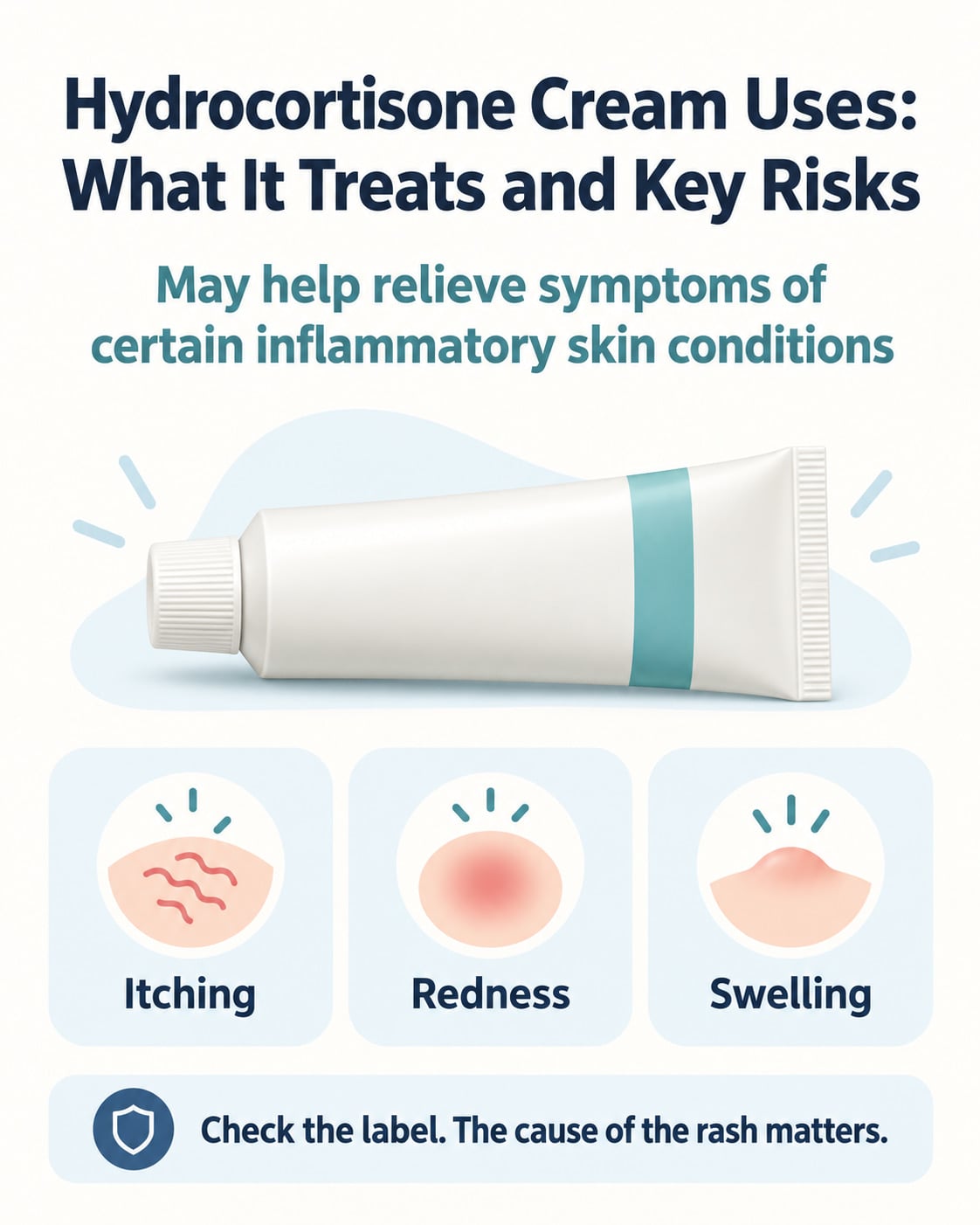
Common hydrocortisone cream uses include temporary relief of itching and inflammation associated with eczema, contact dermatitis, insect bites, and certain other minor skin rashes. This steroid medicine can help calm irritated skin, but choosing it depends on what is causing your symptoms.
Some rashes, particularly fungal infections, can worsen with hydrocortisone. Before using it, check the product’s Drug Facts label, confirm that it is appropriate for the affected area, and understand when to stop and seek advice.
What Is Hydrocortisone Cream?
Hydrocortisone is a topical corticosteroid: a medicine applied to the skin to reduce inflammation. It can ease redness, swelling, and itching in conditions that respond to steroids.
Plain hydrocortisone is generally considered a mild topical steroid. In the United States, available strengths include:
| Strength | Typical availability | What to know |
|---|---|---|
| 0.5% | Over the counter | Follow the specific product’s labeled uses and warnings. |
| 1% | Over the counter; prescription products also exist | A common OTC option for temporary itch relief. |
| 2.5% | Prescription | Contains more hydrocortisone; use according to the prescriber’s instructions. |
A higher concentration does not automatically make a product appropriate for your rash. Creams containing additional medicines also have different instructions, so read the full ingredient list.
Common Hydrocortisone Cream Uses
US OTC labels list several situations in which hydrocortisone may provide temporary relief. The following uses appear in hydrocortisone Drug Facts published on DailyMed, including a label updated August, 2026.
| Condition or trigger | How hydrocortisone may help |
|---|---|
| Eczema | Ease itching associated with inflamed, irritated skin. |
| Contact irritation or allergy | Reduce itching from minor reactions to soaps, detergents, cosmetics, or jewelry. |
| Insect bites | Relieve localized itching and irritation. |
| Poison ivy, poison oak, or poison sumac | Ease itching associated with the resulting rash. |
| Seborrheic dermatitis or psoriasis | Provide temporary relief of associated itching when appropriate for the individual condition. |
| External genital or anal itching | Offer temporary relief with products labeled for that purpose, subject to additional precautions. |
For contact dermatitis, identifying and avoiding the trigger matters. If a watchband repeatedly causes irritation, for example, applying cream while continuing to wear it leaves the trigger in place.
For recurring eczema, psoriasis, or seborrheic dermatitis, a clinician can help establish an ongoing care plan. A condition appearing on an OTC label does not mean repeated self-directed use is appropriate for every flare.
When Hydrocortisone Cream Is Not Appropriate
Fungal Infections and Undiagnosed Rashes
Do not use OTC steroid creams for ringworm or a rash that could be fungal. This includes athlete’s foot and jock itch.
The CDC’s ringworm guidance, updated February, 2026, explains that steroids can allow the infection to spread and change its appearance, making diagnosis harder. Less itching does not necessarily mean the infection is improving.
If you do not know what is causing a rash, seek professional advice before applying hydrocortisone. Adding an antifungal to a steroid does not make every combination appropriate for self-use.
Acne, Rosacea, and Certain Infections
Hydrocortisone is not a routine acne product. It can cause acne-like bumps or a rash around the mouth called perioral dermatitis.
Avoid self-directed use on rosacea, cold sores, chickenpox, shingles, or suspected bacterial skin infections. These conditions need an approach suited to their cause.
Wounds and Sensitive Areas
Do not apply hydrocortisone to cuts or wounds. Keep ordinary skin cream out of the eyes and mouth.
Ask a pharmacist or clinician before applying it to your face, eyelids, groin, or genitals. Skin in some of these areas absorbs steroid medicine more readily, increasing the chance of unwanted effects.
Genital itching accompanied by vaginal discharge needs medical advice. Do not insert ordinary external-use cream into the vagina or rectum.
How to Use Hydrocortisone Cream Safely
Once a product is appropriate for your condition, follow its label or your prescription instructions.
- Check the strength and ingredients. Confirm that you have the intended product and that its label covers your use.
- Wash your hands. Apply only to the affected skin area.
- Use a thin, even layer. Gently rub it in; a thick coating is unnecessary.
- Wash your hands afterward, unless your hands are the area being managed.
- Leave the area uncovered unless your clinician specifically directs otherwise. Tight coverings can increase absorption.
How Often Should You Apply It?
Application frequency varies. For example, the reviewed US 1% OTC label permits application no more than 3–4 times daily for its general skin uses in adults and children age 2 and older.
That is a label maximum, not a requirement to apply it four times each day. Follow the instructions for your exact product and any advice from your clinician.
How Long Should You Use It?
For OTC self-care, stop and ask a doctor if symptoms worsen, persist beyond seven days, or clear and return within a few days. Do not keep switching to another hydrocortisone product to extend use.
Prescription schedules can differ. If you have been using a prescribed steroid for a long time, ask your prescriber about stopping or changing it.
Hydrocortisone Cream Side Effects and Risks
Skin Irritation and Changes
Possible effects include burning, dryness, irritation, acne-like bumps, and changes in skin color. Longer or inappropriate use may also contribute to skin thinning, visible small blood vessels, or stretch marks.
Tell your clinician if the cream causes persistent irritation, a new rash, or worsening symptoms. The active medicine or another ingredient may be responsible.
Greater Absorption With Excessive Use
More medicine may enter the body when topical steroids are used over large areas, for prolonged periods, or under tight coverings. Children are particularly susceptible because they have more skin surface area relative to body weight.
Rare systemic effects can include suppression of the body’s normal cortisol production. These risks depend on the medicine, amount, application site, and duration; they should not be assumed to occur with every brief course.
Topical Steroid Withdrawal
Topical steroid withdrawal can involve marked burning, stinging, and skin inflammation after stopping a topical steroid.
The MHRA’s May 2024 safety review estimates these reactions are rare, although their exact frequency is uncertain. Reports generally followed prolonged use of moderate or stronger steroids, often for six months or more.
This is not an expected outcome of a brief OTC hydrocortisone course. A returning rash also does not automatically establish withdrawal; the original condition may have flared again.
Precautions for Children, Pregnancy, and Breastfeeding
Children and Diaper Rash
US OTC labels reviewed here require a doctor’s advice for children under 2. External anal itching in children under 12 also requires medical advice.
Do not start hydrocortisone for diaper rash without professional guidance. A diaper can act as a covering that increases absorption, and the rash’s cause matters.
Pregnancy and Breastfeeding
Check with a pharmacist or clinician about the specific product, body area, and duration.
MotherToBaby’s March 2026 evidence summary reports that studies of topical corticosteroids have not found an increased chance of birth defects. This does not mean every preparation or pattern of use has been equally studied.
During breastfeeding, prevent your baby’s skin or mouth from contacting medicated skin. If hydrocortisone is specifically recommended for the nipple or breast, follow instructions for gently removing it before feeding.
When to Seek Medical Help
Do not wait for the seven-day OTC limit if a rash becomes concerning. The American Academy of Dermatology’s rash guidance recommends assessment for warning signs such as:
- Rapid spreading or involvement of much of the body.
- Significant pain, blisters, open sores, or fever.
- Pus, crusting, warmth, swelling, or other infection signs.
- A rash involving the eyes, lips, mouth, or genital skin.
Seek emergency care for trouble breathing or swallowing, or sudden swelling of the lips, tongue, or throat.
Frequently Asked Questions About Hydrocortisone Cream Uses
Can You Use Hydrocortisone Cream on Your Face?
Sometimes a clinician recommends it for a specific facial condition. Do not start it on your face or eyelids without advice, and keep it out of your eyes. The correct diagnosis and duration are especially important in these areas.
Can Hydrocortisone Cream Help Acne?
It is not recommended for routine acne self-care. Although it suppresses inflammation, it can also cause acne-like breakouts and perioral dermatitis. Ask a pharmacist or dermatologist about an option intended for acne.
Can You Use Hydrocortisone Cream Every Day?
A short course may involve daily application according to the label. Ongoing daily use requires professional guidance. For OTC products, worsening symptoms, persistence beyond seven days, or quick recurrence are reasons to stop and seek advice.
Can Children Use Hydrocortisone Cream?
Some US OTC products permit certain uses from age 2, but age alone does not determine suitability. Follow the product’s restrictions, and get advice for infants, diaper rash, sensitive areas, or uncertain diagnoses.
Does Hydrocortisone Cream Help Ringworm or Yeast Infections?
Plain hydrocortisone does not eliminate fungi. It can worsen ringworm and disguise its appearance. Do not assume that genital itching is simply irritation, especially when discharge is present; the underlying cause needs attention.
Can Hydrocortisone Cream Be Used for Hemorrhoid Itching?
Some products are labeled for temporary external anal itch relief. Check that your product specifically permits this use, and follow its directions. Ordinary external-use skin cream should not be inserted into the rectum. Rectal bleeding needs medical advice.
Conclusion
Hydrocortisone cream may provide useful short-term relief when the skin condition and product are a suitable match. Check the Drug Facts label before applying it, and ask a pharmacist or clinician if you are unsure about the rash, application area, or duration.
This content is for informational purposes only and not medical advice.
References
- DailyMed. Hydrocortisone 0.5% OTC Drug Facts.
- DailyMed. Hydrocortisone 1% OTC Drug Facts.
- DailyMed. Hydrocortisone Cream USP 1% and 2.5% prescribing information.
- MedlinePlus. Hydrocortisone Topical.
- NHS. Hydrocortisone for Skin.
- American Academy of Dermatology. Contact Dermatitis Overview.
- CDC. Treatment of Ringworm.
- MHRA. Topical Steroid Safety and Withdrawal Reactions.
- MotherToBaby. Topical Corticosteroids.
- LactMed. Hydrocortisone, Topical.
- American Academy of Dermatology. Rash 101 in Adults: When to Seek Medical Treatment.