
The dumbbell chest fly primarily works your chest muscles as you lower your arms out to the sides and bring them together above your chest, keeping a slight bend in your elbows. Good form depends on controlling the weights and using a comfortable shoulder range of motion.
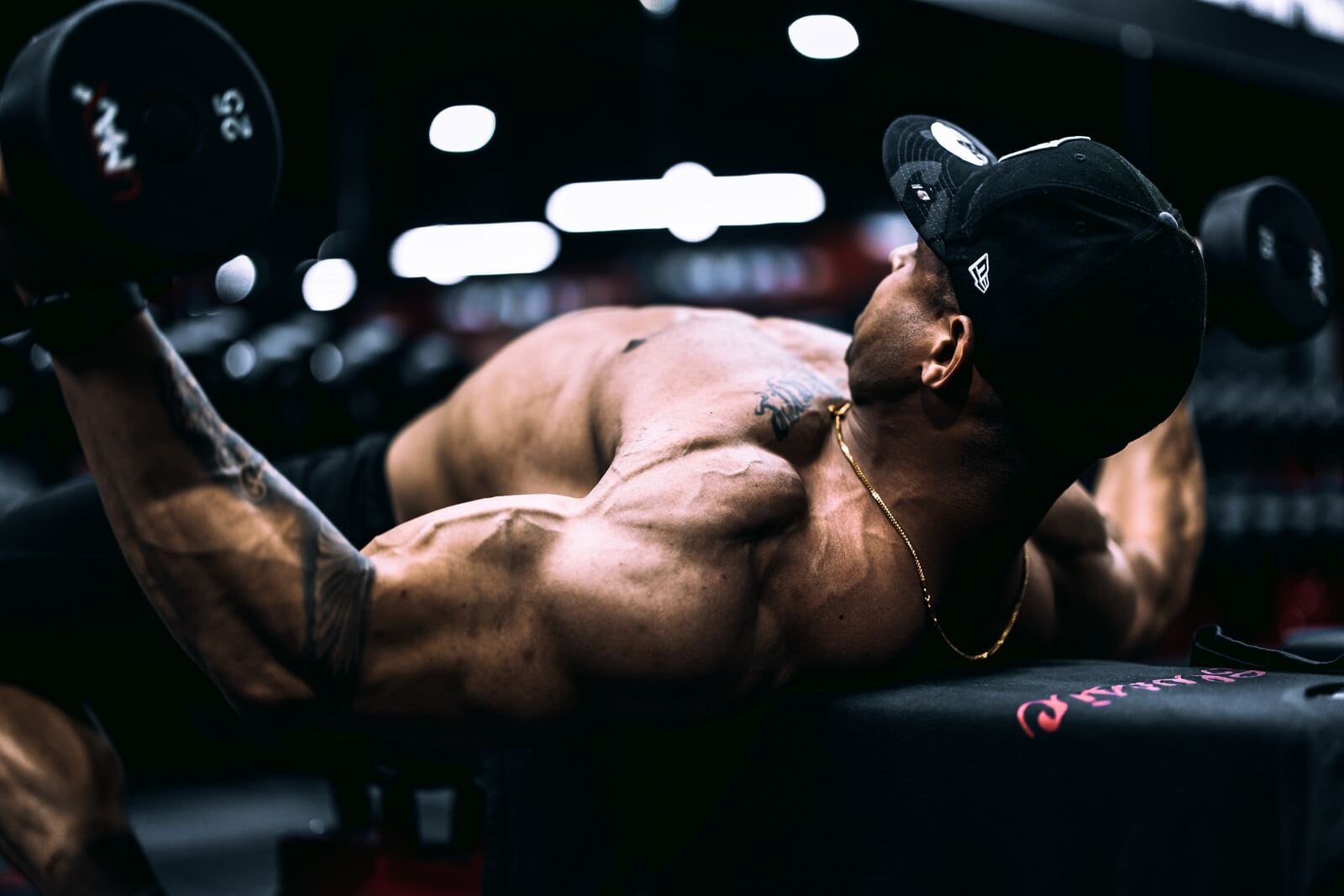
This exercise can complement chest presses in your strength routine. Start light, learn the movement, and increase the challenge gradually. You do not need a deep stretch or heavy dumbbells to make it worthwhile.
Dumbbell Chest Fly Muscles Worked
The main movement is shoulder horizontal adduction: bringing your upper arms across the front of your body. Your chest muscles provide much of that effort.
| Muscle | Role during a dumbbell chest fly |
|---|---|
| Pectoralis major | The main chest muscle that brings the upper arms together |
| Anterior deltoids | The front shoulder muscles that assist the movement |
| Biceps and triceps | Help maintain the elbow position and stabilize the arms |
The fly is often called an isolation exercise because most movement occurs at the shoulder joint. Your elbows remain slightly bent instead of repeatedly bending and straightening as they do during a chest press.
How to Do a Dumbbell Chest Fly With Proper Form
You need two light dumbbells and a stable flat exercise bench. The American Council on Exercise’s lying chest fly guide emphasizes supported feet, steady shoulder positioning, slightly bent elbows, and controlled movement.
- Set up securely. Lie on your back with your feet on the floor or a stable raised support. Keep your head, shoulders, and buttocks on the bench, with a natural lower-back curve.
- Position your shoulders. Gently draw your shoulder blades back and down against the bench. Avoid shrugging.
- Hold the weights above your chest. Face your palms toward each other. Keep your wrists straight and a slight bend in both elbows.
- Open your arms slowly. Inhale while lowering the dumbbells outward in a wide arc. Maintain approximately the same elbow bend.
- Limit the depth. As a conservative starting cue, stop when your upper arms are approximately level with your torso, or earlier if needed for comfort. Do not force the stretch.
- Bring your arms together. Exhale and follow the same arc upward. Finish above your chest without knocking the dumbbells together.
Think of bringing your upper arms toward each other, as though hugging a large barrel. If the movement becomes a press, the weight may be too challenging for your current fly technique.
When finishing, bring the weights above your chest and bend your elbows to bring them close to your body. Avoid trying to sit up while holding the weights out to the sides. Ask a qualified trainer to demonstrate setup and finishing if these transitions feel awkward.
Dumbbell Chest Fly Benefits and How It Compares With a Press
Dumbbell flies provide another way to challenge the chest and practice controlling each arm independently. They can add useful variety when you already perform pressing exercises.
The main practical differences are:
| Feature | Dumbbell chest fly | Chest press |
|---|---|---|
| Elbow movement | Slight bend stays relatively constant | Elbows bend and straighten |
| Weight selection | Usually requires lighter weights | Usually allows heavier weights |
| Common role | Additional chest work | A main pressing exercise |
Flies often feel hardest near the bottom because the weights are farther horizontally from the shoulders. The external leverage decreases as the dumbbells return above you, so the top can feel easier.
A 2020 study comparing barbell bench presses with dumbbell flies tested 17 resistance-trained men using six-repetition-maximum loads. The bench press produced higher average chest, front shoulder, and triceps activation, while flies produced higher biceps activation.
However, the study measured electrical muscle activity during exercise. It did not measure long-term muscle growth or establish that one movement is best for everyone.
If improving your press is the priority, a practical approach is to perform presses first and add flies afterward if they suit your goals and shoulders.
Dumbbell Chest Fly Sets, Reps, and Weight Selection
There is no universal starting weight. Choose dumbbells based on your ability to control the full repetition, including the bottom position and the transition back upward.
In guidance updated January, 2026, Mayo Clinic recommends beginning with a weight you can manage for 12–15 repetitions and increasing gradually while preserving technique.
A Practical Starting Example
The following is an example for someone learning the exercise, rather than a proven ideal prescription for chest flies.
| Variable | Starting approach |
|---|---|
| Preparation | Warm up with easy movement, then rehearse the fly with very light weights |
| Working set | Start with 1 set of 12–15 controlled repetitions |
| Effort | Finish while you could still complete a few more good repetitions |
| Additional sets | Add a second set once technique and recovery are consistent |
| Rest if doing multiple sets | Start with about 1–2 minutes; take longer if needed to regain control |
How to Progress and Fit Flies Into Your Week
When you can complete the top of your chosen repetition range consistently with good control, try the smallest available weight increase. Return to fewer repetitions if necessary. If the next dumbbell is too heavy, keep practicing with the current weight.
The ACSM resistance-training guidance released in March 2026 emphasizes regular training of all major muscle groups at least twice weekly and notes that reaching muscular failure is not necessary.
That does not mean you must perform chest flies twice a week. Presses and other chest exercises also contribute to your training. For a simple beginner schedule, use nonconsecutive chest-training days and add flies to one or both sessions as tolerated.
Consider your whole routine before adding more sets. Someone already doing several challenging pressing sets may need little additional fly work.
Common Dumbbell Chest Fly Mistakes
| Mistake | What to do instead |
|---|---|
| Using your usual pressing weight | Choose a lighter load that you can control through the arc |
| Locking the elbows straight | Maintain a soft bend |
| Bending the elbows more as you lift | Reduce the load and preserve the fly movement |
| Chasing a deep stretch | Use a comfortable range and stop before shoulder discomfort |
| Dropping or bouncing the weights | Lower deliberately and reverse direction smoothly |
| Shrugging or lifting the shoulders off the bench | Reset your shoulder position and end the set if control slips |
A useful checkpoint is whether your last repetition resembles your first. Large changes in depth, elbow angle, or speed suggest that the set has gone beyond what you can currently control.
Dumbbell Chest Fly Variations and Alternatives
Dumbbell Floor Fly
Lie on the floor with your knees bent and feet planted. Perform the same opening-and-closing arc, stopping when your upper arms gently reach the floor, or earlier if needed.
The floor limits how far your upper arms can descend. Avoid bouncing off it. This option needs no bench, but a shorter range does not guarantee that it will feel comfortable for every shoulder.
Incline Dumbbell Fly
An incline bench changes your torso position and the angle of the movement. Start with a modest incline and light weights while learning the variation.
Continue to use a controlled arc and comfortable depth. There is no established single bench angle that guarantees the best chest growth from flies.
Machine Fly or Chest Press
A machine fly offers a guided movement path. Adjust the seat and starting position to fit your body rather than allowing the handles to pull your arms too far backward.
A chest press is another option if you prefer a movement with more elbow bending. Choose exercises you can perform comfortably; equipment alone does not determine suitability.
Safety Tips and When to Seek Help
Muscular effort and a mild chest stretch can occur during a fly. Sharp pain, shoulder pinching, or sudden weakness are reasons to stop.
If you have an existing shoulder or chest injury, recent surgery, or recurring pain, ask a qualified healthcare professional about exercise suitability before continuing.
Seek prompt medical evaluation for a sudden pop or ripping sensation accompanied by pain, weakness, bruising, or a change in chest shape. The American Academy of Orthopaedic Surgeons identifies these as possible signs of a pectoralis tendon tear.
Frequently Asked Questions
Are Dumbbell Chest Flies Good for Beginners?
They can be introduced with light weights and instruction, but the long arm position requires control. Learn the setup and use a comfortable range before adding load.
How Low Should You Lower the Dumbbells?
Use your upper arms as the checkpoint. Start by stopping around torso level, or sooner if necessary. Your shoulders should not feel forced backward or pinched.
Should the Dumbbells Touch at the Top?
They do not need to touch. Bring them above your chest under control and avoid clashing them together. Touching the weights is not a requirement for an effective repetition.
Why Do I Feel Chest Flies in My Shoulders?
The front shoulder muscles assist the movement, so some effort there is expected. Pain is different. Stop if it hurts, and seek assessment for recurring symptoms rather than repeatedly testing a painful movement.
Can Dumbbell Flies Replace Chest Presses?
They can provide chest work, but they use a different movement and loading pattern. If your goal includes pressing strength, keep an appropriate press in your routine.
Do Chest Flies Target the Inner Chest?
There is no separate “inner chest” muscle to isolate. Flies involve the pectoralis major, and squeezing the weights together does not establish that a specific inner region will grow more.
Conclusion
The dumbbell chest fly can be a useful addition to chest training when you use manageable weights and consistent technique. Start with a light practice set, keep a slight elbow bend, and let comfort and control guide your range. Build gradually as the movement becomes familiar.
References
- American Council on Exercise: Lying Chest Fly
- Solstad et al.: A Comparison of Muscle Activation Between Barbell Bench Press and Dumbbell Flyes in Resistance-Trained Males—2020
- Mayo Clinic: Weight Training—Do’s and Don’ts of Proper Technique—January 2026
- American College of Sports Medicine: Updated Resistance Training Guidelines—March 2026
- American Academy of Orthopaedic Surgeons: Pectoralis Tendon Tear
- PureGym: Dumbbell Chest Fly Guide and Variations