
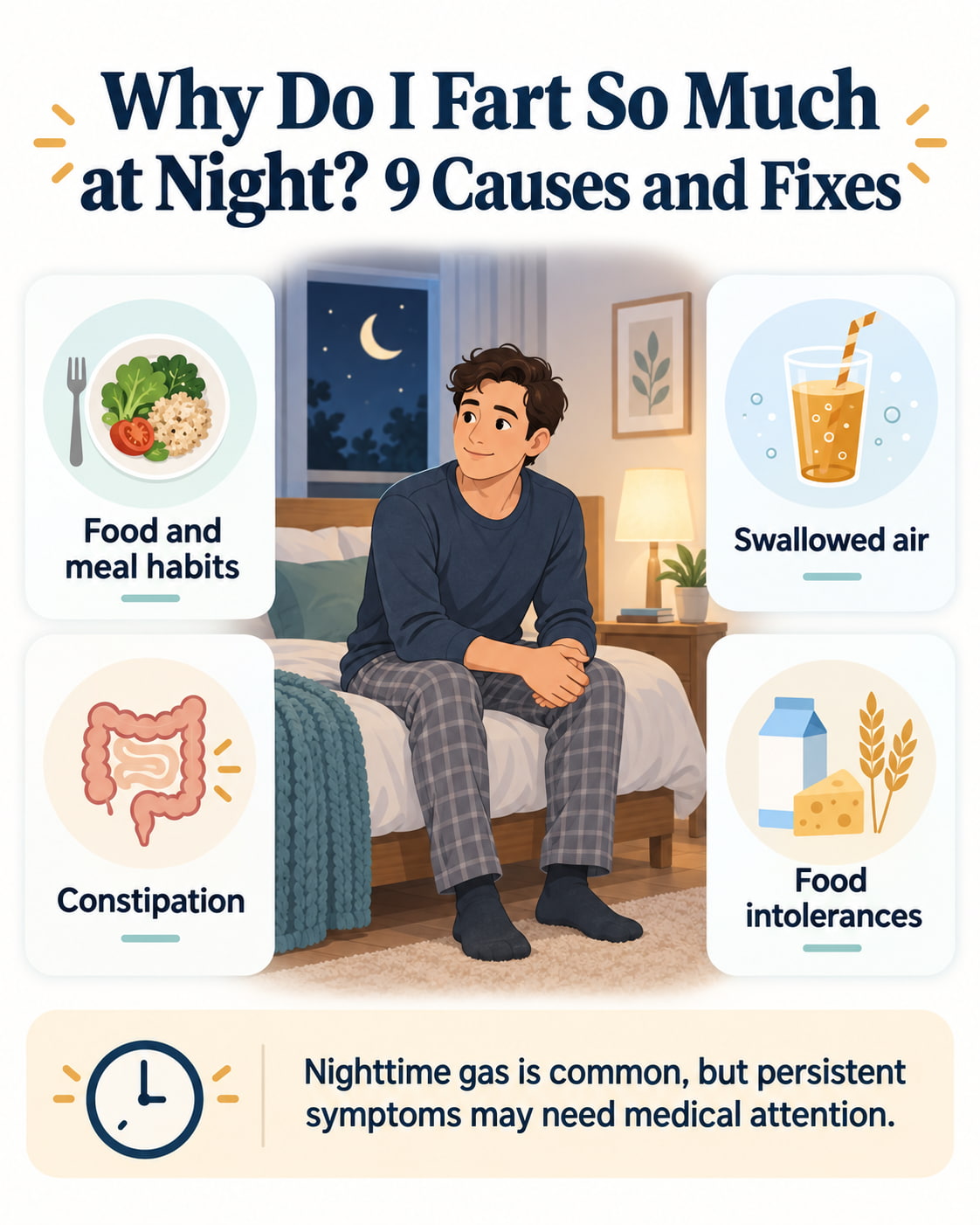
If you’re wondering, “Why do I fart so much at night?” possible contributors include fermentable foods, large evening meals, swallowed air, constipation, and food intolerances. Medications and digestive conditions can also play a role. The time of day alone does not identify the cause.
The goal is to reduce discomfort—not eliminate normal gas. Looking at your meals, drinks, and bowel habits is a useful starting point. Persistent symptoms, especially those accompanied by pain or other changes, deserve medical attention.
Why Do I Fart So Much at Night?
Intestinal gas mainly comes from swallowed air and gases produced when bacteria in your colon break down carbohydrates that were not fully digested earlier. These processes are normal, although certain foods and habits can increase gas symptoms.
An evening increase is not just something people imagine. A study published in JAMA Network Open on May, 2026, involving 6,416 participants in Australia, found that app-recorded gas passages peaked between 6 p.m. and 10 p.m. However, it relied on self-report and could not measure gas passed during sleep. It also did not establish which foods or habits caused the evening peak.
That distinction matters: passing more gas in the evening is not the same as producing more gas while asleep. The study’s findings cannot establish what happens during sleep.
Also, flatulence and bloating are different. Flatulence means passing gas; bloating is a feeling of abdominal fullness or swelling. They can occur together, but feeling bloated does not tell you how frequently you are passing gas.
Is Farting at Night Normal?
Passing gas is normal, and frequency varies. According to NIDDK’s summary of research on gas symptoms, people pass gas an average of 8–14 times daily, while up to 25 times a day can still fall within normal variation. These are daily estimates—not nighttime limits or diagnostic cutoffs.
A change from your usual pattern, persistent discomfort, or interference with daily life matters more than reaching a particular number.
9 Causes of Nighttime Gas and What May Help
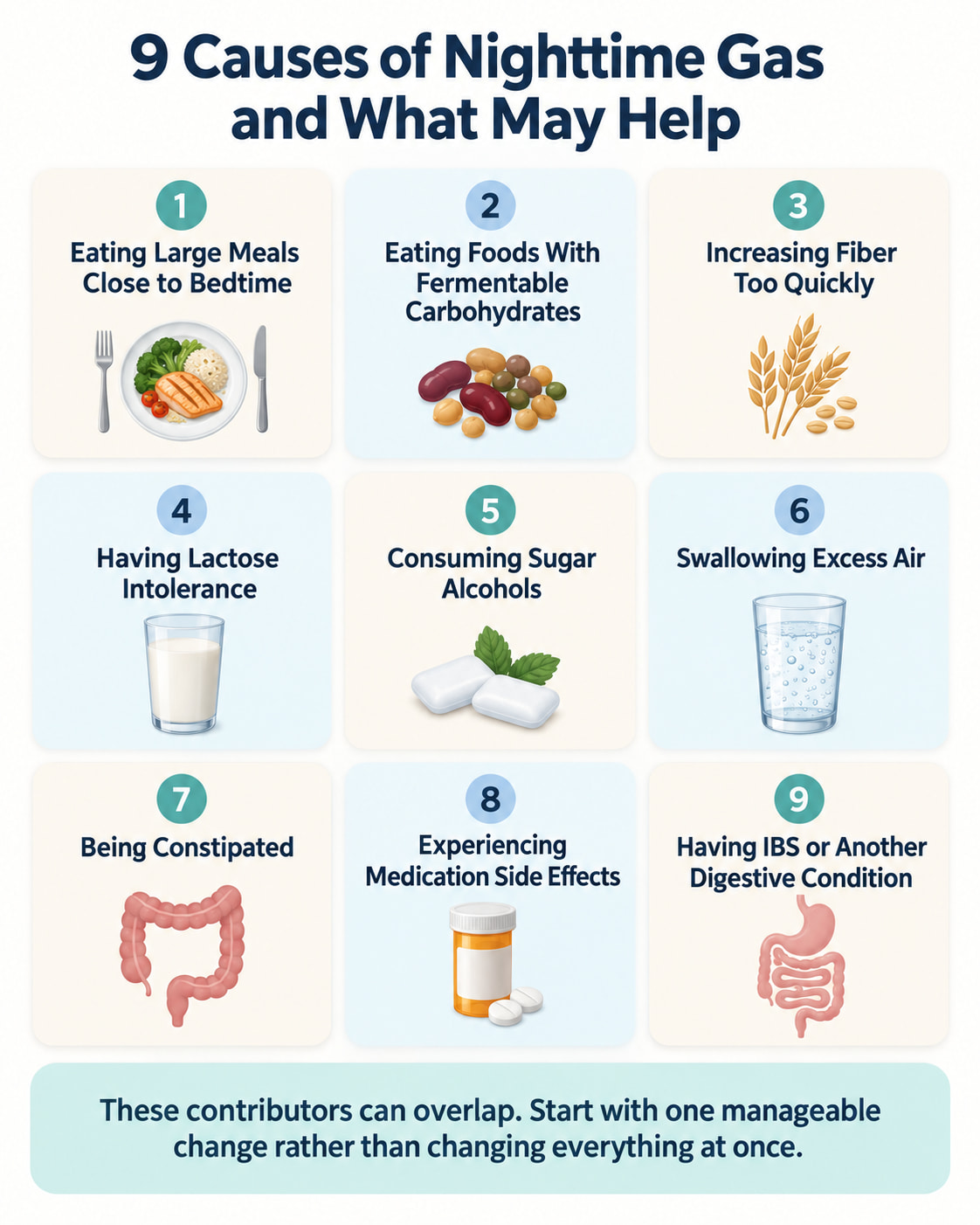
These contributors can overlap. Use them to identify a reasonable starting point, rather than assuming you need to change everything.
1. Eating Large Meals Close to Bedtime
A large late dinner can contribute to fullness and bloating around bedtime. NHS guidance advises avoiding large meals late at night when bloating is a problem. However, that does not establish a universal dinner-to-bed interval that prevents farting.
What may help: Try a smaller evening meal instead of eating your largest meal shortly before bed. When practical, distribute food more evenly across the day. Start with portion size rather than skipping dinner or imposing a strict nighttime fasting rule. Smaller, more frequent meals are among NIDDK’s suggested approaches to troublesome gas.
2. Eating Foods With Fermentable Carbohydrates
Some carbohydrates reach the colon without being fully digested. Bacteria break them down and produce gas.
Potential contributors include beans, lentils, broccoli, cauliflower, apples, pears, and whole-wheat products. These foods do not affect everyone equally, and being associated with gas does not mean a food needs to disappear from your diet.
What may help: Reduce the portion of one suspected food rather than eliminating several food groups. For example, try a smaller serving of beans while keeping the rest of the meal similar. This makes the change easier to evaluate.
3. Increasing Fiber Too Quickly
Adding several high-fiber foods at once can bring on gas, particularly if your previous diet contained little fiber. This can happen when you suddenly increase beans, bran cereal, whole grains, or fiber supplements.
Fiber can support bowel regularity, so the answer is not necessarily to avoid it. The amount and speed of the increase matter.
What may help: Add fiber gradually. For people with IBS, NIDDK suggests increasing intake slowly—by about 2–3 grams a day—to help limit gas and bloating. Follow supplement directions and discuss persistent symptoms with a clinician or dietitian.
4. Having Lactose Intolerance
Lactose is the natural sugar in milk. When your small intestine does not make enough lactase to digest it, undigested lactose can reach the colon and contribute to gas, bloating, abdominal discomfort, or diarrhea.
Symptoms may develop within a few hours of consuming lactose. An evening glass of milk, ice cream, or a milk-based shake may therefore be worth noting in your symptom diary.
What may help: Consider lactose-free versions of your usual dairy foods. NIDDK’s dietary guidance for lactose intolerance explains that many people can tolerate some lactose and do not need to avoid all dairy. Lactase products may help some people; a pharmacist can explain appropriate use.
Lactose intolerance is different from a milk allergy. Do not use a lactose-free product as a workaround for a diagnosed milk allergy.
5. Consuming Sugar Alcohols
Some sugar-free candies, gums, and other products contain sweeteners such as sorbitol, mannitol, xylitol, or maltitol. These can contribute to gas in susceptible people.
What may help: Check ingredient labels, particularly on products you consume regularly in the evening. Reduce one suspected product and observe whether your symptoms change. “Sugar-free” does not necessarily mean easier to digest, and there is no need to assume every sweetener affects you the same way.
For example, make a note of sugar-free gum or candy eaten after dinner rather than looking only at the dinner itself.
6. Swallowing Excess Air
Eating quickly, chewing gum, drinking carbonated beverages, and talking while eating can increase swallowed air. These habits may contribute to gas symptoms even when your food choices have not changed.
What may help: Sit down to eat, slow your pace, and avoid talking with food in your mouth. Try still water instead of fizzy drinks, and reduce gum or straw use when these appear to aggravate symptoms. These are practical ways to reduce air swallowing without restricting nutritious foods.
7. Being Constipated
Constipation can accompany troublesome gas and bloating. When both are present, focusing only on gas-producing foods may miss an important part of the problem.
What may help: Support regular bowel habits with adequate fluids, gradually adjusted fiber, and regular physical activity. Give yourself time to use the bathroom, and respond when you feel the urge to have a bowel movement.
If constipation persists, ask a clinician or pharmacist about appropriate options. Adding more and more fiber or repeatedly trying different laxatives is not a substitute for evaluating an ongoing problem.
8. Experiencing Medication Side Effects
Excessive gas can be a side effect of some medicines. NHS guidance lists certain laxatives, nonsteroidal anti-inflammatory drugs such as ibuprofen, antifungal medicines, and statins among possible contributors.
What may help: Note whether symptoms began after starting a medicine or changing a dose. Bring your medication and supplement list to a pharmacist or prescriber.
Do not stop a prescribed medicine, change its dose, or move it to a different time without professional advice. A medication review can help clarify whether it is relevant.
9. Having IBS or Another Digestive Condition
Irritable bowel syndrome can involve abdominal pain, bloating, and changes in bowel habits. Some people with IBS feel discomfort from amounts of gas that would not bother someone else. Gas alone, however, does not establish an IBS diagnosis.
Other conditions, including celiac disease, can produce overlapping digestive symptoms. Persistent gas with recurring pain or altered bowel habits is a reason to seek assessment—not diagnose yourself from a food list.
What may help: A clinician may recommend individualized dietary changes. For selected people with IBS, a low-FODMAP diet may be considered. It involves temporarily adjusting certain fermentable carbohydrates, followed by food reintroduction—not permanent avoidance of every listed food. Dietitian oversight is preferable.
If celiac disease is being considered, speak with a clinician before starting a gluten-free diet, because removing gluten can affect test results.
How to Find Your Nighttime Gas Triggers
NIDDK recommends a food-and-symptom diary to help identify possible dietary contributors. A brief record is often more useful than trying to remember everything after a particularly uncomfortable evening.
Use a simple format like this:
| What to record | Example entry |
|---|---|
| Food, drinks, and approximate portions | Dinner, dessert, sparkling water, evening snacks |
| Timing | When you ate and when symptoms became noticeable |
| The main symptom | Frequent gas, odor, bloating, or abdominal discomfort |
| Bowel habits and other changes | Constipation, diarrhea, or a newly started medicine |
Choose one manageable change, such as replacing sparkling water or reducing a suspected food portion, while keeping other habits reasonably similar. This approach makes your observations easier to interpret.
A diary can suggest a pattern; it cannot confirm an intolerance or digestive diagnosis. Bring it to an appointment when symptoms persist or the pattern remains unclear.
Do Gas Remedies Help?
The appropriate option depends on what is contributing to your symptoms. A product aimed at one cause may not address another.
Simethicone: This over-the-counter ingredient is used for gas-related symptoms, but NHS guidance notes uncertainty about how well it works. Do not expect it to reliably prevent nighttime farting. Ask a pharmacist about suitability, especially with combination products containing additional medicines.
Lactase: Lactase products may help people who have difficulty digesting lactose. They are not an all-purpose solution for gas from unrelated foods or constipation.
Probiotics: A 2023 American Gastroenterological Association clinical practice update advises against using probiotics for abdominal bloating and distention. That recommendation concerns those symptoms; it does not mean every probiotic has the same effects in every digestive condition.
When to See a Doctor
Arrange an appointment if gas remains troublesome despite reasonable changes, repeatedly disrupts your sleep, or occurs with persistent abdominal discomfort, recurring constipation or diarrhea, unexplained weight loss, or blood in your stool.
Seek more immediate help for the following:
- Urgent assessment: Significant bloating with vomiting, fever, or an inability to pass stool or gas.
- Emergency care: A swollen abdomen with sudden, severe abdominal pain, or vomiting blood.
These warning signs are reflected in NHS guidance on bloating and urgent symptoms. Do not assume they are ordinary trapped gas.
Frequently Asked Questions
Is It Normal to Fart While Sleeping?
Gas can pass during sleep. However, the 2026 study of daily flatulence could not quantify sleeping episodes, so its evening peak should not be interpreted as evidence that everyone passes more gas while asleep.
Why Do My Farts Smell Worse at Night?
Gas odor can come from sulfur-containing compounds. Smell alone cannot identify the cause, and stronger odor does not necessarily tell you how much gas you are producing. Note accompanying symptoms and repeatable food patterns rather than assuming the hour explains the smell.
Can Constipation Cause Nighttime Gas?
Constipation can accompany gas and bloating at any time. When these symptoms occur together, addressing bowel regularity may be more useful than focusing only on gas remedies. Persistent constipation should be discussed with a healthcare professional.
Can Eating Dinner Earlier Reduce Gas?
It may help to avoid a large meal immediately before bed, particularly when bloating is the main problem. There is no universal meal cutoff that guarantees less gas. Portion size and the foods you tolerate remain important considerations.
Should I Stop Eating Dairy if I Am Gassy at Night?
Not automatically. Dairy is a relevant suspect when symptoms repeatedly follow lactose-containing foods. Many people with lactose intolerance can tolerate some lactose or use lactose-free dairy. Avoiding all dairy without suitable replacements can make calcium and vitamin D intake harder to maintain.
Do Probiotics Help With Nighttime Gas?
Do not assume they will help. AGA guidance specifically advises against probiotics for abdominal bloating and distention. Discuss persistent symptoms and the suspected cause before adding supplements rather than using them as a default response to evening gas.
Conclusion
Nighttime gas can have several contributors, so start with one practical change instead of a long list of restrictions. Review evening portions, fizzy drinks, possible food triggers, and bowel habits.
Keep a simple symptom record and use it to guide your next step. If the problem persists, bring that record to a clinician or dietitian rather than continuing to remove foods without a clear reason.
This content is for informational purposes only and not medical advice.
References
- National Institute of Diabetes and Digestive and Kidney Diseases (NIDDK). Symptoms & Causes of Gas in the Digestive Tract; Eating, Diet, & Nutrition for Gas; Gas Management Options.
- Brindal E, Baird D. Regular Flatulence Patterns Among Community-Dwelling Individuals in Australia. JAMA Network Open.
- NIDDK. Lactose Intolerance: Symptoms and Causes; Lactose Intolerance: Dietary Guidance.
- Moshiree B, Drossman D, Shaukat A. AGA Clinical Practice Update on Evaluation and Management of Belching, Abdominal Bloating, and Distention.
- NHS. Farting: Flatulence; & Bloating.
- NHS. About Simeticone, Also Called Simethicone.
- MedlinePlus. Gas—Flatulence.