
To support weight loss motivation, set realistic goals, choose manageable daily actions, and plan how you will restart after setbacks. You do not need constant enthusiasm or a perfect record. The CDC’s guidance on losing weight emphasizes achievable goals, support, and regular progress reviews—not simply trying harder.

A practical plan gives you something to return to when life becomes busy or discouraging. Start with one or two changes, notice what helps, and adjust what does not.
These strategies are intended for adults for whom weight loss is an appropriate health goal. When that is unclear, a healthcare professional can help you assess your needs.
Why Weight Loss Motivation Can Be Hard to Maintain
Weight management involves more than determination. Sleep, medicines, medical conditions, genetics, and your surroundings can affect your weight. Access to affordable food, safe places to exercise, and time to prepare meals also matters, according to the National Institute of Diabetes and Digestive and Kidney Diseases, or NIDDK.
Before labeling yourself unmotivated, examine the problem. Is your plan too time-consuming? Are you expecting rapid results? Does it depend on resources you do not have?
For example, repeatedly missing an evening workout may be a scheduling problem—not evidence that you lack commitment. The useful question is: “What would make the next action more workable?”
15 Practical Ways to Maintain Weight Loss Motivation
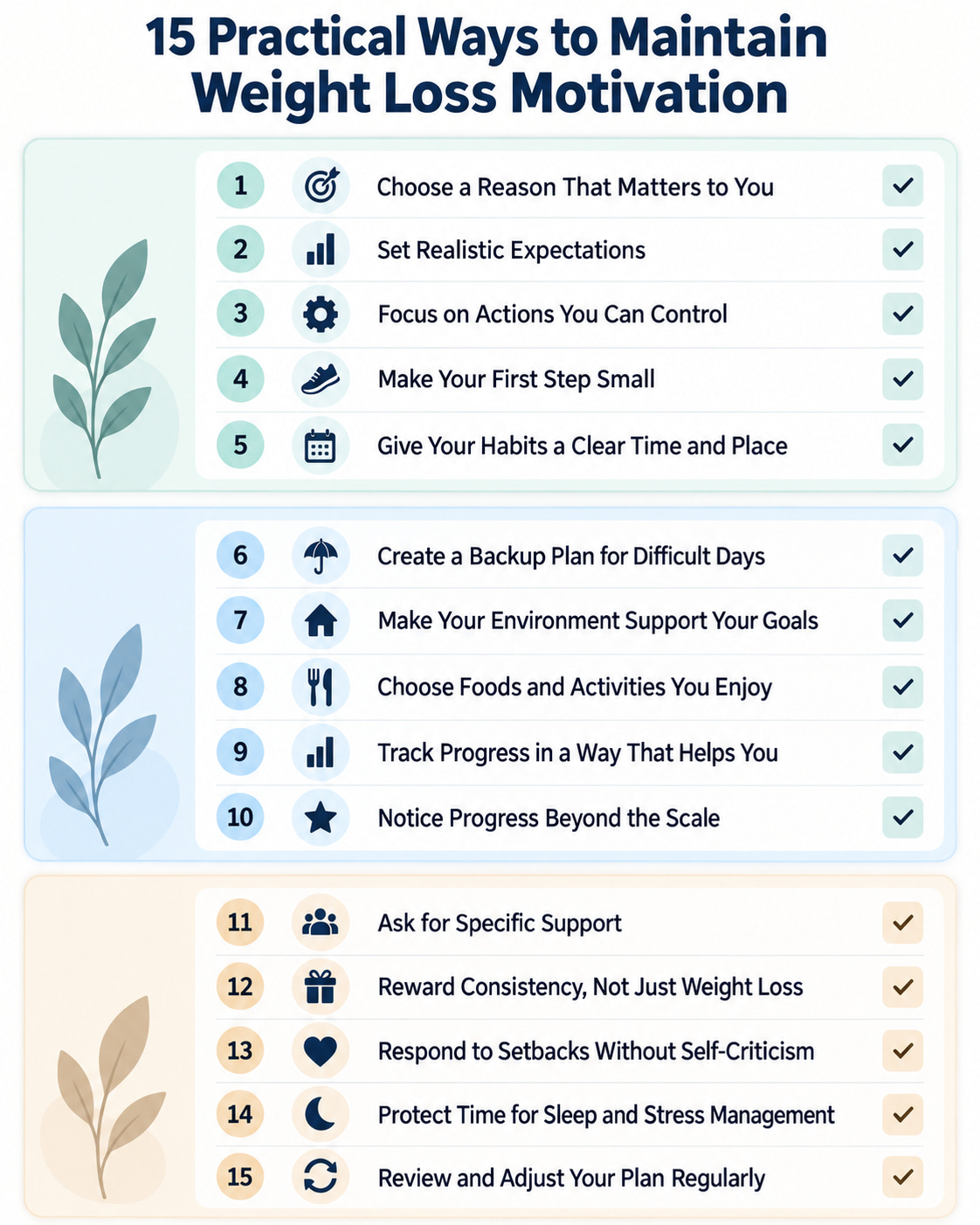
You do not need to apply all 15 strategies at once. Begin with the ones that address your biggest obstacle.
1. Choose a Reason That Matters to You
Write down why this goal matters in your own life. CDC guidance recommends identifying personal reasons for change and keeping them somewhere visible.
Try connecting your goal to an experience rather than only a number:
“I want to build enough stamina to enjoy outings with my family.”
Then identify a related action, such as practicing a comfortable walking routine. This makes your reason something you can act on—not just a distant outcome.
Your reason does not need to impress anyone else. Avoid making another person’s approval the condition for feeling successful.
2. Set Realistic Expectations
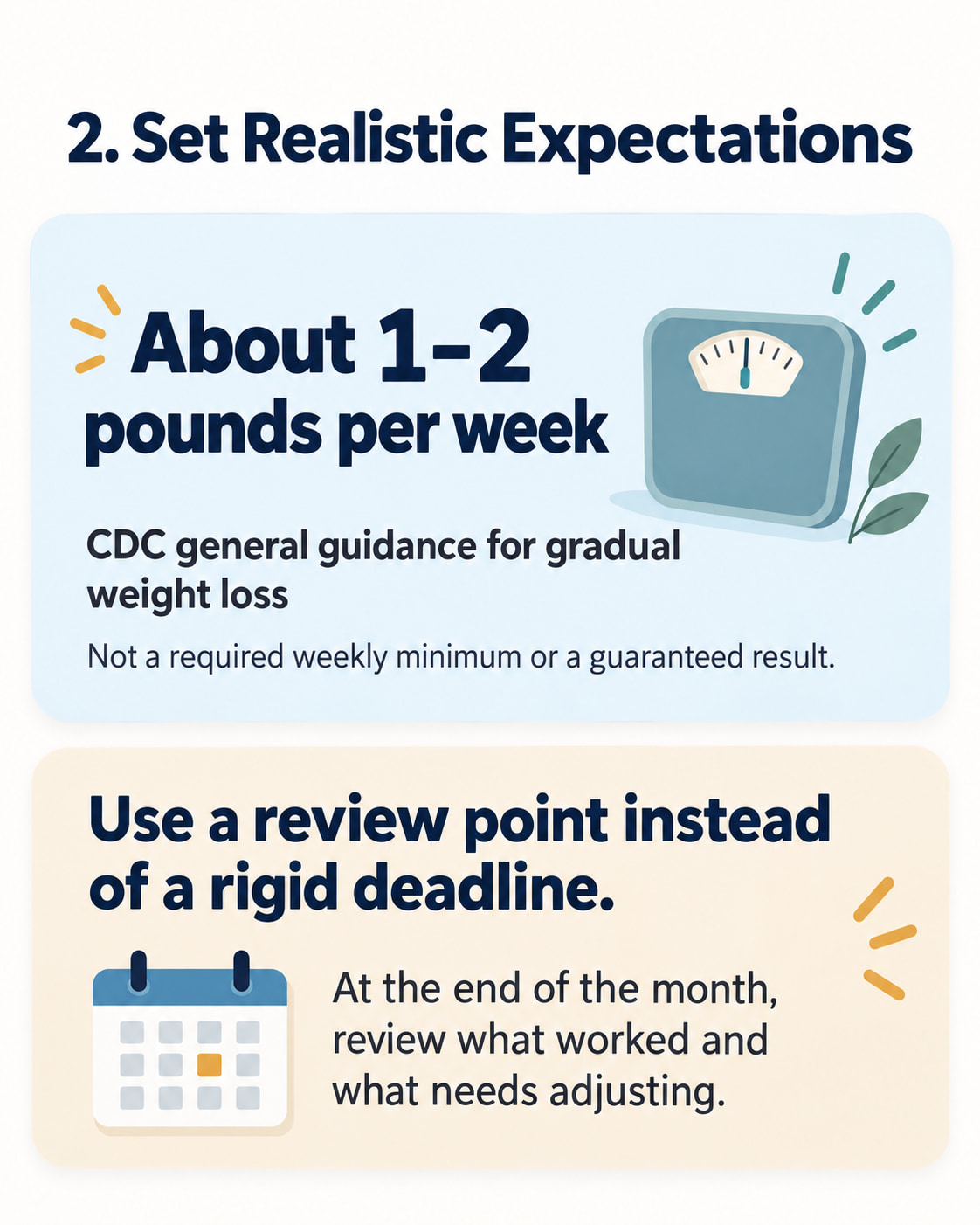
In its guidance dated January, 2025, the CDC describes gradual weight loss of about 1–2 pounds per week as more likely to be maintained than faster loss. This is general guidance, not a required weekly minimum or a promise that your weight will follow that pattern.
Instead of choosing a deadline based on a friend’s results or a social media transformation, set a review point.
For example: “At the end of this month, I will review how consistently I followed my plan and whether it needs adjusting.”
3. Focus on Actions You Can Control
Turn broad intentions into specific behaviors. NIDDK guidance identifies clear goals and progress monitoring as useful components of structured weight-management support.
Here are illustrative alternatives:
| Broad intention | Action-focused goal |
|---|---|
| “I need to eat better.” | “I will prepare lunch for three workdays.” |
| “I should exercise more.” | “I will take a comfortable walk after lunch on Monday and Thursday.” |
| “I need a better routine.” | “I will choose tomorrow’s breakfast before going to bed.” |
Choose a goal you can record without guessing. You either prepared lunch or you did not. That information gives you a clear starting point for your next decision.
4. Make Your First Step Small
The NIDDK’s guidance on changing habits recommends beginning with small changes rather than attempting a complete lifestyle overhaul.
For example, your starting action might be preparing one easy meal or taking a five-minute walk that suits your abilities.
A small starting step is not the same as a complete weight-loss plan. Its purpose is to give you something manageable to practice. Once it fits comfortably into your routine, consider a gradual adjustment.
Ask: “What can I realistically repeat this week?”
5. Give Your Habits a Clear Time and Place
Put your chosen action into your schedule. NIDDK guidance uses goals tied to particular times and days rather than vague intentions to become more active.
Compare these two plans:
“I will prepare some meals this week.”
“On Tuesday after dinner, I will pack Wednesday’s lunch.”
Include the location when useful. For movement, that might mean a safe indoor route, a community facility, or an accessible space at home.
Treat the appointment as adjustable—not disposable. When your schedule changes, choose another realistic opportunity.
6. Create a Backup Plan for Difficult Days
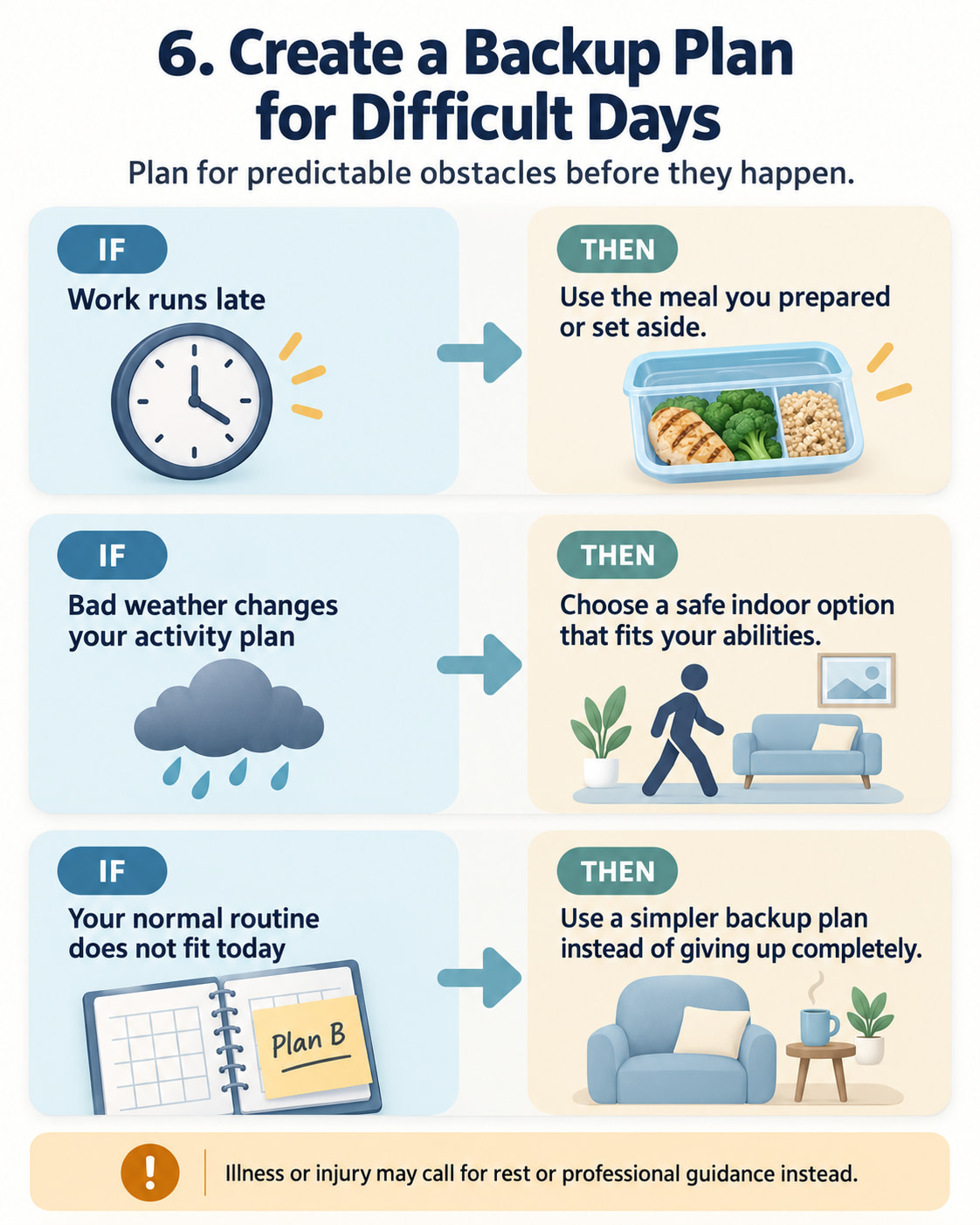
Plan for predictable obstacles before they happen. NIDDK recommends anticipating barriers such as bad weather and limited time.
Use a simple “if–then” statement:
“If I work late and cannot cook, then I will use the meal I set aside in the freezer.”
For activity, a backup might be a shorter, comfortable session instead of your usual routine. Illness or injury may call for rest or professional guidance rather than a substitute workout.
The purpose is flexibility. A backup plan should not become another rule you punish yourself for missing.
7. Make Your Environment Support Your Goals
Look for practical obstacles around you. Food access, workplace facilities, and safe places to move can influence your choices.
For example, place a clean lunch container beside the food you plan to pack. Keep ingredients for a simple meal together. Put comfortable exercise clothes somewhere easy to reach.
Choose one change that removes a preparation step.
Not every barrier is yours to solve alone. A reminder cannot create childcare, affordable groceries, or a safe neighborhood. Where possible, ask for practical support rather than blaming yourself for those limitations.
8. Choose Foods and Activities You Enjoy
Build your eating plan around your health needs, cultural foods, budget, and preferences. NIDDK recommends plans tailored to the person rather than assuming one approach suits everyone.
You might adapt a familiar recipe instead of replacing your usual meals with unfamiliar “diet food.”
Apply the same principle to movement. NIDDK notes that enjoyable activities are easier to continue. Walking, dancing, swimming, and adapted activities are possible options, depending on your abilities and access.
Try asking: “Would I still find something worthwhile about this activity even without a scale change?”
9. Track Progress in a Way That Helps You
Use tracking to identify patterns, not to grade your character. NIDDK recommends recording behavior and progress to help you evaluate your plan.
A simple note might record the action you completed, what made it easier, and what got in the way. You do not need an elaborate spreadsheet.
When using weight measurements, consider the record over time rather than treating one number as the whole result.
If tracking becomes obsessive or leads to severe restriction, punishment, or intense distress, seek professional guidance. Fixation on weight and controlling food intake can be a warning sign of an eating disorder.
10. Notice Progress Beyond the Scale
Physical activity can support health even without weight loss. It may improve sleep, strength, and everyday function, so body weight should not be your only measure of whether a routine is worthwhile.
Record changes you actually notice. Perhaps a familiar walk feels more comfortable, carrying groceries feels easier, or you have learned several meals you enjoy preparing.
Keep observations specific: “I completed my usual route with fewer breaks” is more useful than “I should be fitter by now.”
Health measurements such as blood pressure may also provide useful information when reviewed with your healthcare professional.
11. Ask for Specific Support
Support can come from friends, family, peers, or health professionals. It does not have to involve publicly sharing your weight.
Make your request concrete:
“Could you help with dinner preparation on the evenings when I exercise?”
Or: “Would you join me for a walk and help me keep the conversation focused on how we feel rather than how we look?”
You can also set boundaries. For example: “Encouragement helps me, but comments about my body or portions do not.”
Choose support that respects your privacy and decisions.
12. Reward Consistency, Not Just Weight Loss
Recognize the actions you practiced rather than waiting for a particular scale result. NIDDK includes nonfood rewards among its suggestions for maintaining an activity plan.
For example, after completing the meal-planning sessions you scheduled, mark the achievement with an enjoyable outing, time with a hobby, or another personally meaningful activity.
Rewards do not need to cost money. They also do not need to depend on a perfect streak.
Keep basic needs separate from rewards: you do not need to earn food, rest, or kindness toward yourself.
13. Respond to Setbacks Without Self-Criticism
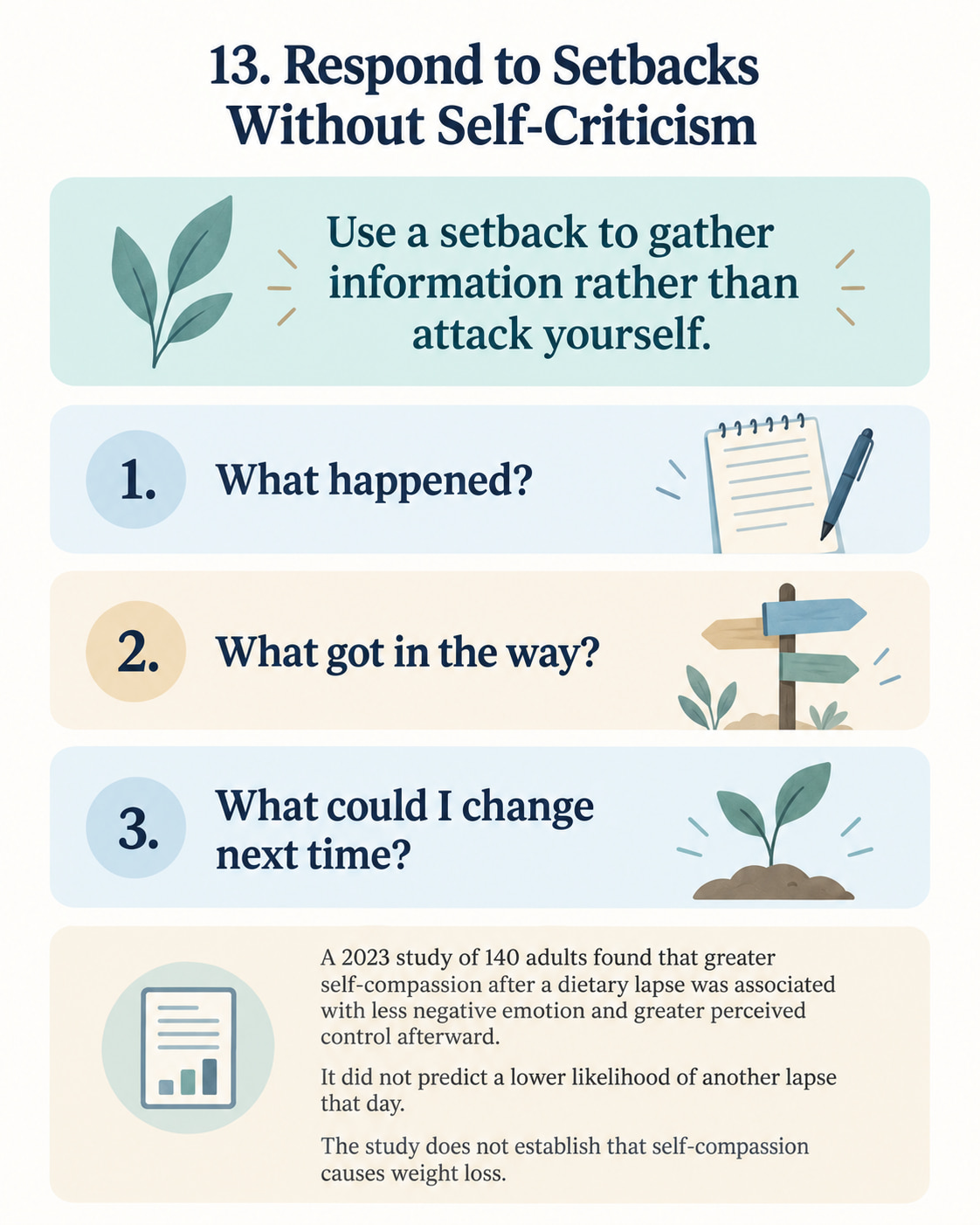
Use a setback to gather information rather than attack yourself.
A 2023 study of 140 adults participating in behavioral weight-loss treatment found that greater self-compassion after a dietary lapse was associated with less negative emotion and greater perceived control afterward. However, it did not predict a lower likelihood of another lapse that day. The findings do not establish that self-compassion causes weight loss.
Try a neutral response:
“That did not go as planned. What was happening, and what could I change next time?”
For example, investigate whether you lacked a suitable meal, felt overwhelmed, or followed rules that were difficult to sustain. You can acknowledge a problem without turning it into a judgment about your worth.
14. Protect Time for Sleep and Stress Management
Include sleep in your plan rather than treating it as optional. CDC guidance recommends at least seven hours for adults ages 18–60, with age-specific recommendations for older adults. Sleep quality matters too.
Choose a practical adjustment, such as a more consistent bedtime or turning off electronic devices before bed.
For stressful days, decide on a brief pause you find helpful: calling someone supportive, sitting quietly, or stepping outside when safe. Stress and sleep are relevant to weight management, but neither should be presented as a guaranteed weight-loss solution.
Persistent sleep problems deserve a discussion with a healthcare professional.
15. Review and Adjust Your Plan Regularly
NIDDK recommends reviewing goals, addressing obstacles, and adjusting routines as circumstances change.
Set aside a brief weekly review. Ask:
“What worked? What got in the way? What is one change I will test next week?”
For example, suppose you repeatedly miss a morning workout because your shift starts early. Test a shorter session at another time rather than making the morning rule stricter.
When something works, you do not always need to make it harder immediately. You can continue practicing a manageable routine while deciding what comes next.
What to Do When Weight Loss Motivation Disappears
Start by identifying the immediate obstacle rather than announcing a complete restart. NIDDK advises regrouping after setbacks and returning to helpful routines.
Use this three-line reset:
- What happened? “My work hours changed, and my previous plan no longer fits.”
- What needs changing? “I need a simpler lunch option.”
- What is my next action? “Tonight, I will set aside what I need for tomorrow’s lunch.”
Keep the response proportional. Do not use fasting, excessive exercise, or other compensatory behaviors to punish yourself for eating. When those behaviors become part of a pattern, professional support is important.
When to Get Professional Support
Speak with a healthcare professional when you are unsure whether weight loss is appropriate, your plan is not meeting your needs, or you suspect a medicine or health condition is affecting your weight. A clinician can review these factors and discuss suitable support, including a referral to a registered dietitian.
Also seek help for recurrent loss-of-control eating, severe restriction, vomiting, laxative misuse, compulsive exercise, or weight-related distress that interferes with daily life. The National Institute of Mental Health’s eating-disorder guidance explains that eating disorders can occur at any body weight.
These concerns call for care—not stronger motivation slogans.
Frequently Asked Questions
How Do I Start Losing Weight When I Have No Motivation?
Begin by identifying one obstacle and choosing one manageable action. That might mean arranging professional guidance, planning a meal, or scheduling suitable movement. Starting with a doable goal is consistent with NIDDK’s guidance; you do not need to begin with a demanding routine.
How Can I Stay Motivated When the Scale Is Not Changing?
Review your habits and progress over time, including changes in strength, stamina, or sleep. After weight loss, your body generally needs fewer calories at its lower weight, so an existing plan may need reassessment. Discuss persistent concerns rather than automatically making your eating plan more restrictive.
Do I Need to Count Calories to Stay Accountable?
No—you can track specific behaviors such as meal preparation, activity, and sleep. However, tracking habits is not a guarantee of weight loss; food intake and energy use still matter. A suitable monitoring method should help you understand your routine without creating excessive distress.
How Do I Restart After Getting Off Track?
Identify what disrupted your plan, then resume a manageable action at the next suitable opportunity. There is no need to wait until Monday. NIDDK recommends returning to your routine after setbacks and using the experience to plan differently next time.
Can I Work Toward Weight Loss Without Disliking My Body?
Yes. Respecting yourself and choosing an appropriate health goal are not opposites. You can focus on care, comfort, and function without using shame as encouragement. Try setting a boundary around appearance-based comments and choosing goals that describe what you want to do—not what you believe is wrong with you.
How Do I Stay Motivated After Reaching My Goal?
Shift your attention toward maintaining supportive routines rather than continuing to lose weight indefinitely. NIDDK recommends an eating plan appropriate for your new weight, ongoing activity, monitoring, and continued support. Review the plan with your healthcare professional as your needs change.
Conclusion
Weight loss motivation does not have to mean feeling determined every day. Give yourself a clear next action, room to adjust, and support when you need it.
Choose one strategy today. Write down what you will do, when you will do it, and what your backup plan will be. Let your next review guide the next step—not a demand for perfection.
This content is for informational purposes only and not medical advice.
References
- Centers for Disease Control and Prevention. Steps for Losing Weight.
- National Institute of Diabetes and Digestive and Kidney Diseases. Eating & Physical Activity to Lose or Maintain Weight.
- National Institute of Diabetes and Digestive and Kidney Diseases. Staying Active at Any Size.
- Hagerman CJ, et al. The Role of Self-Compassion and Its Individual Components in Adaptive Responses to Dietary Lapses.
- Centers for Disease Control and Prevention. Benefits of Physical Activity.
- Centers for Disease Control and Prevention. About Sleep.
- National Institute of Mental Health. Eating Disorders: What You Need to Know.