
Stress reduction techniques such as gentle breathing, muscle relaxation, movement, and practical changes to daily demands may help you feel calmer and manage everyday pressure. Supportive habits such as adequate sleep, regular activity, and social connection can also play a role in managing stress.
You do not need to try everything at once. Start with one technique that feels manageable, then consider whether you also need practical help with whatever is causing the stress.
What Are Stress Reduction Techniques?
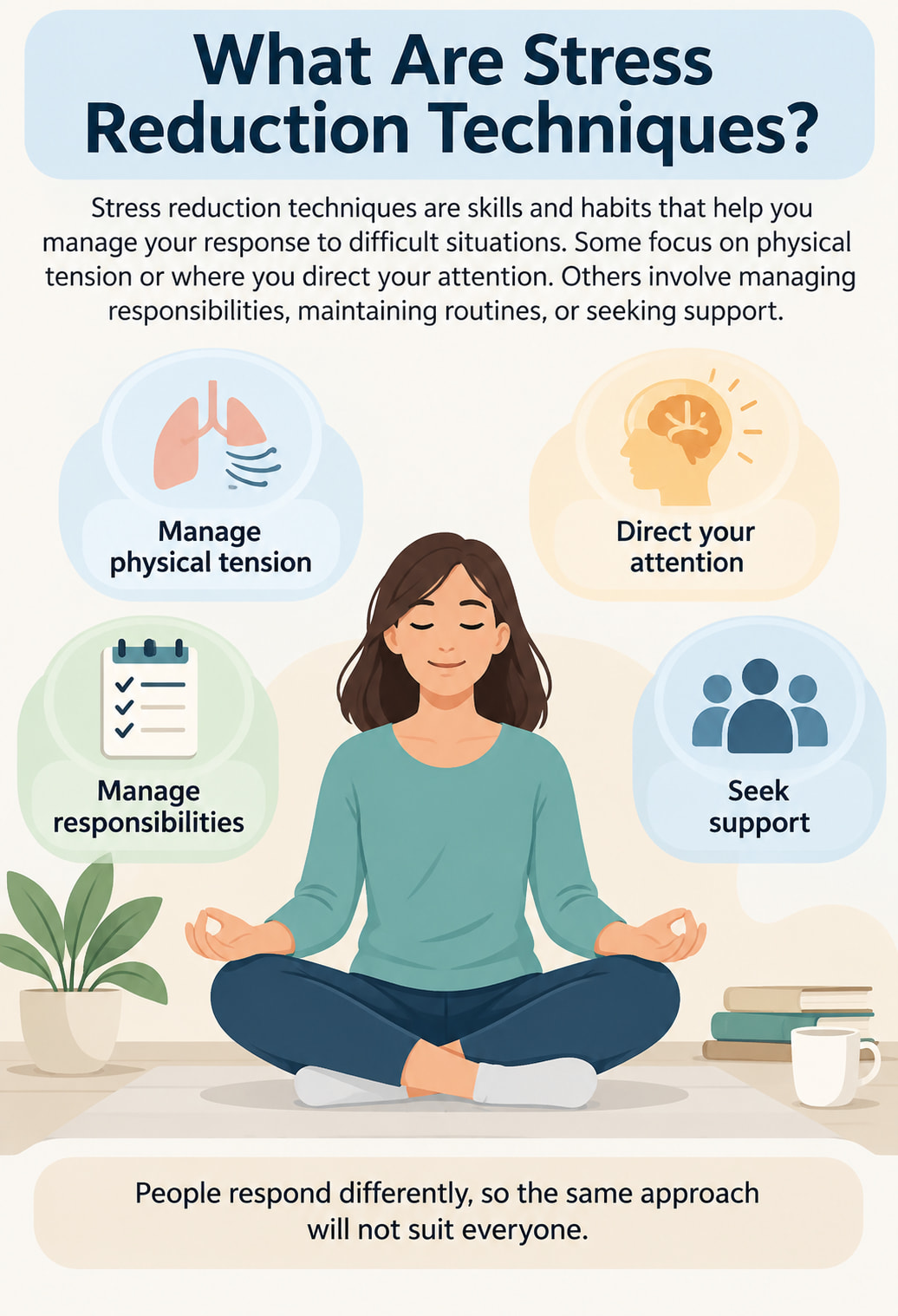
Stress reduction techniques are skills and habits that help you manage your response to difficult situations. Some focus on physical tension or where you direct your attention. Others involve managing responsibilities, maintaining routines, or seeking support. People respond differently, so the same approach will not suit everyone.
For example, a breathing exercise might be worth trying before a difficult conversation. An unrealistic workload, however, may also require clearer priorities or a changed deadline. Relaxation and practical problem-solving serve different purposes.
12 Simple Stress Reduction Techniques to Try
The first five techniques are exercises you can practice in the moment. The remaining options focus on everyday habits and practical coping.
1. Practice Slow, Comfortable Breathing
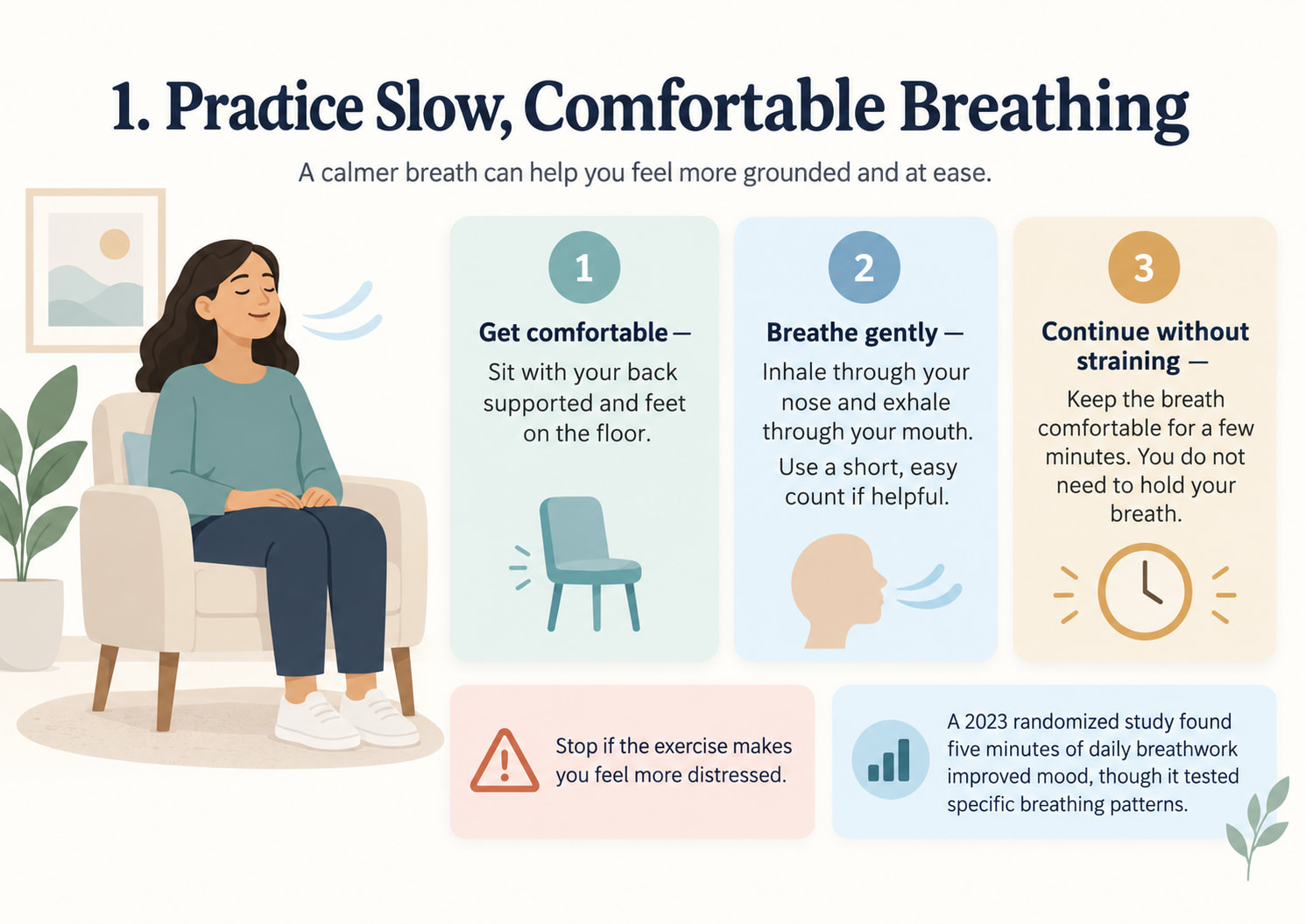
Focus on making your breathing gentle rather than taking the biggest breath possible. NHS breathing guidance recommends breathing regularly without forcing it.
- Get comfortable. Sit with your back supported and your feet resting on the floor.
- Breathe gently. Inhale through your nose and exhale through your mouth. An optional count from one to five can guide each phase, but use a shorter count if that feels easier.
- Continue without straining. The NHS exercise recommends at least five minutes, practiced regularly. You do not need to hold your breath.
Stop if the exercise makes you feel more distressed. Do not force yourself to complete a breathing pattern that feels uncomfortable.
In a 2023 randomized study, participants practiced structured breathwork or mindfulness for five minutes daily over a month. Breathwork, especially an exhale-focused technique, produced greater mood improvements than mindfulness. However, the study tested specific breathing patterns—not the exact beginner exercise above.
2. Release Tension With Progressive Muscle Relaxation
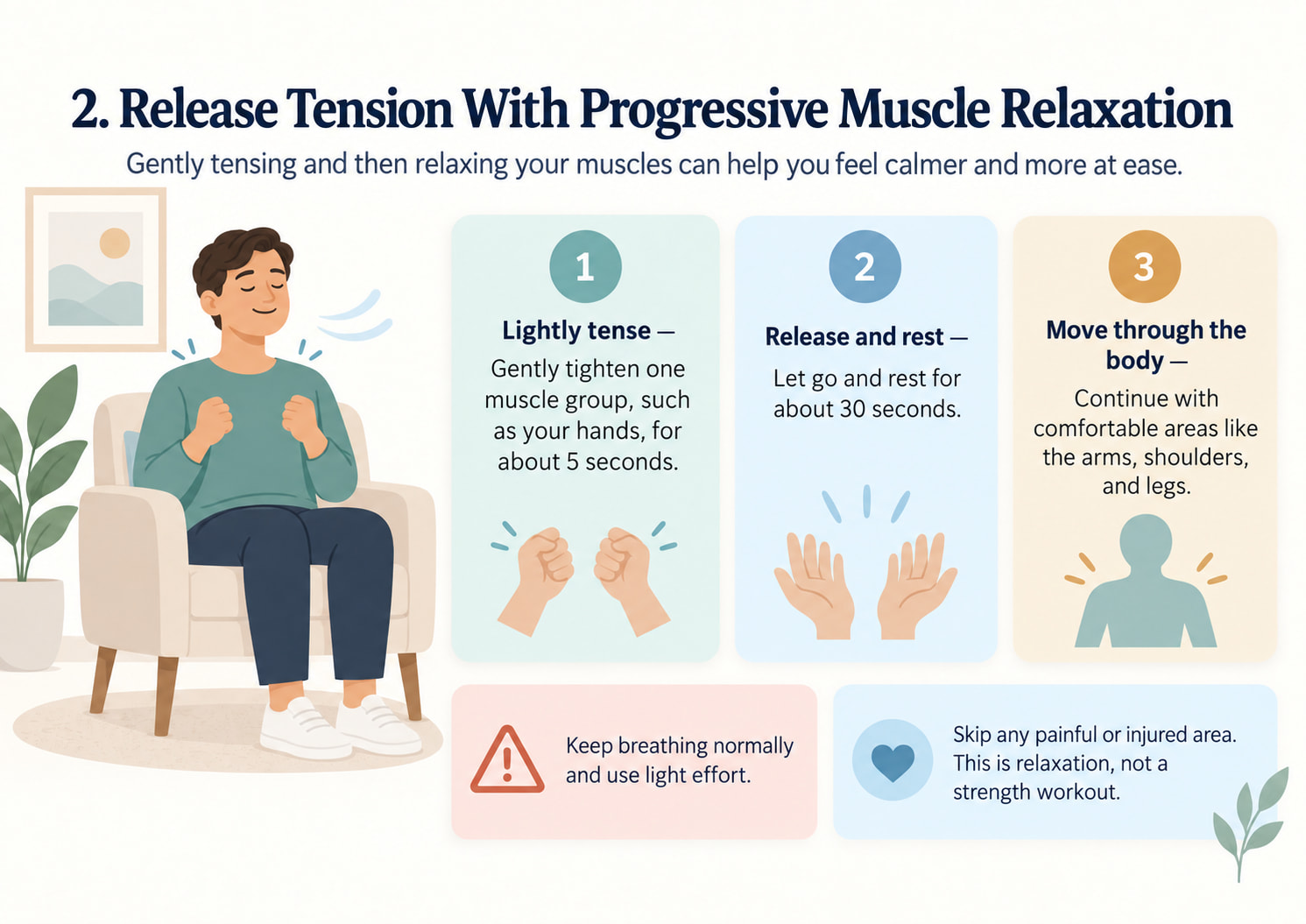
Progressive muscle relaxation involves gently tightening and then releasing different muscle groups. The aim is to notice the contrast between tension and relaxation.
For a simple practice, lightly tense your hands for about five seconds, then release and rest for roughly 30 seconds. Continue through comfortable muscle groups, such as your arms, shoulders, and legs. Notice how each area feels after you let go.
Keep breathing normally, use light effort, and skip any painful or injured area. This is a relaxation exercise, not a strength workout.
3. Try Sensory Grounding
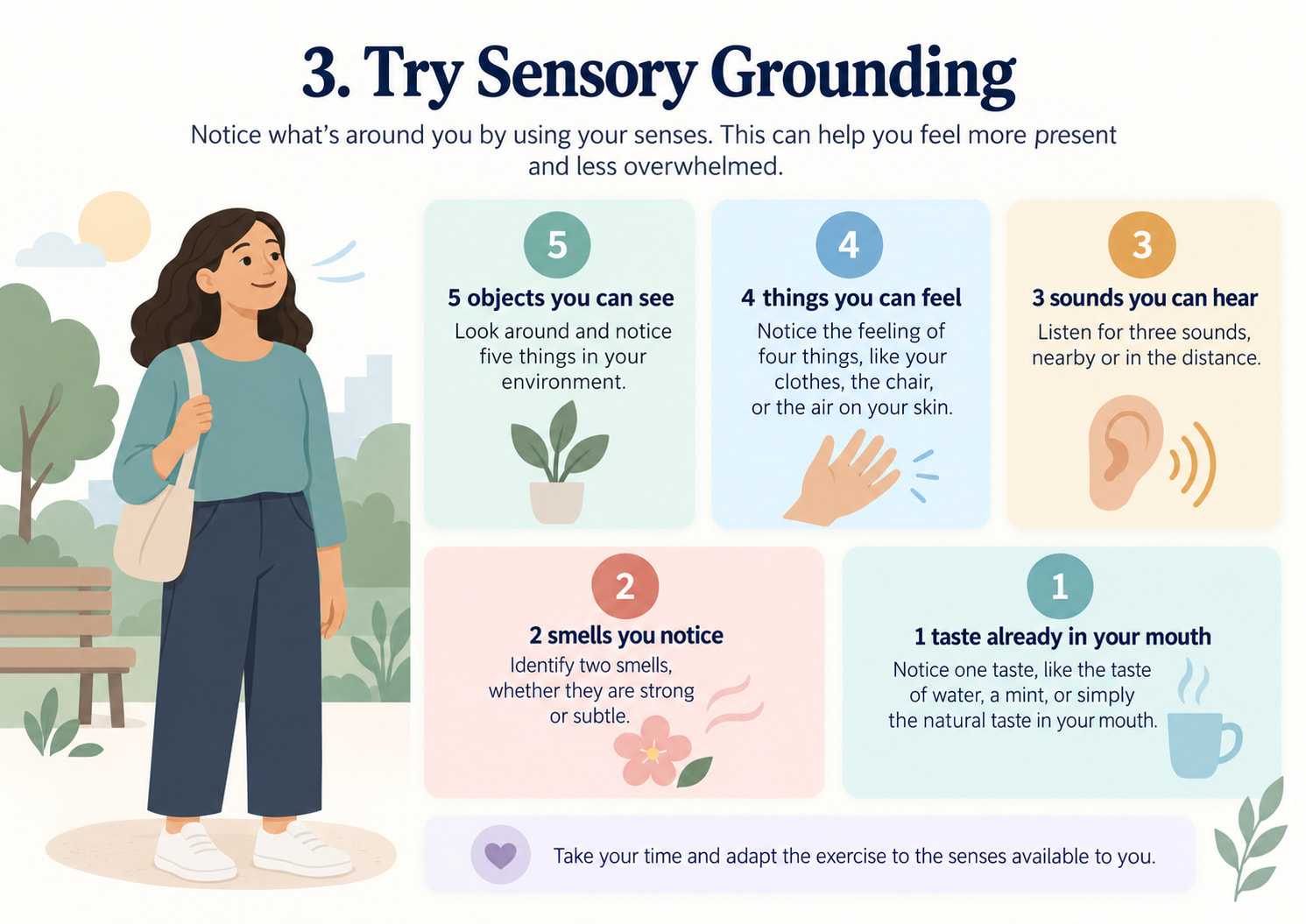
Sensory grounding directs your attention toward your surroundings. One commonly used approach is the 5-4-3-2-1 exercise:
- Name five objects within sight.
- Notice four things you can feel, such as your sleeve or the chair beneath you.
- Listen for three separate sounds.
- Identify two smells.
- Notice one taste already in your mouth.
Take your time rather than rushing through the numbers. Adapt the exercise to the senses available to you; there is no need to force a smell or taste.
Use it as an attention exercise, not a test you must complete perfectly.
4. Take a Short Mindfulness Break
Mindfulness means noticing the present moment without judging what you experience. You are not trying to remove every thought.
For a brief practice, choose something to notice, such as a sound nearby. When your attention moves to a worry or a task, acknowledge that it wandered and gently return to the sound. You can keep your eyes open.
According to NCCIH’s evidence review, mindfulness approaches may help with stress-related symptoms, but research quality and results vary. A brief exercise is also different from completing a structured mindfulness-based stress reduction program.
5. Use Guided Imagery
Guided imagery involves picturing a scene you associate with calmness. Unlike sensory grounding, which focuses on your actual surroundings, imagery uses an imagined experience.
Choose a setting that feels comfortable, such as a shaded porch or a quiet reading room. Imagine a few details: the light, nearby sounds, or the feeling of sitting somewhere supported. Stay with the scene for a few unhurried moments.
There is no need to create a vivid mental picture. When imagining a scene feels difficult or unpleasant, choose an exercise based on sounds or objects around you instead.
6. Move Your Body in a Way You Enjoy
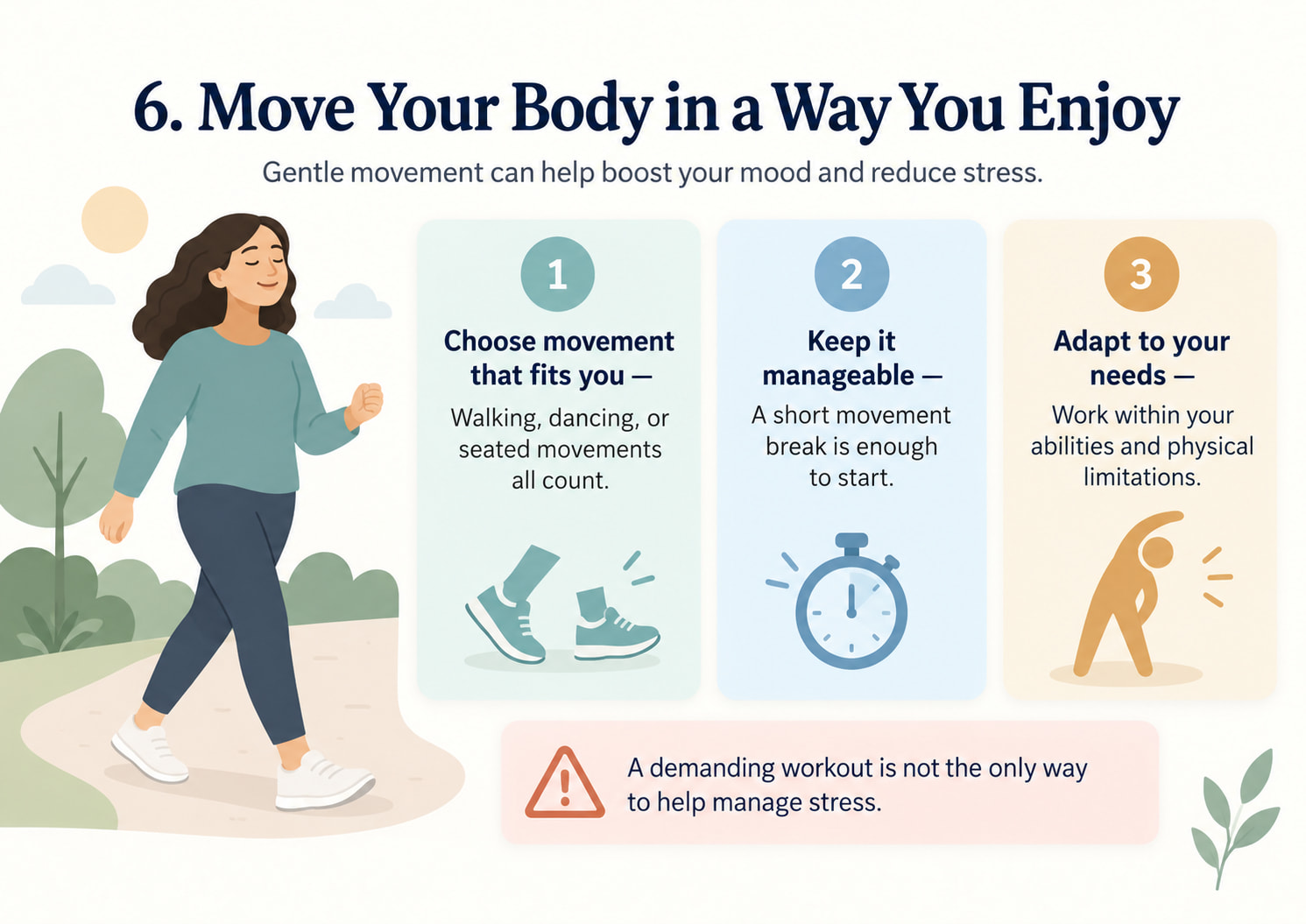
Regular physical activity may help you manage stress. A demanding workout is not the only option.
Choose movement that fits your abilities and circumstances. That might mean walking around the block, dancing to a favorite song, or doing comfortable seated movements.
For example, try taking a brief movement break between tasks rather than adding another demanding commitment to an already crowded day. Start with an amount that feels manageable and adapt it to any physical limitations.
7. Make Time for a Calming Activity
Enjoyable activities can be a useful part of stress management. The activity does not have to be complicated or productive.
Pick something you enjoy: listen to a song without checking messages, read a few pages, draw, or spend time on a low-pressure hobby.
Make the plan specific enough to use. “I’ll read for a few minutes after dinner” is easier to act on than “I should relax more.”
Keep this time free from performance goals. You do not need to improve a skill, finish a project, or share the result.
8. Break Stressful Tasks Into Smaller Steps
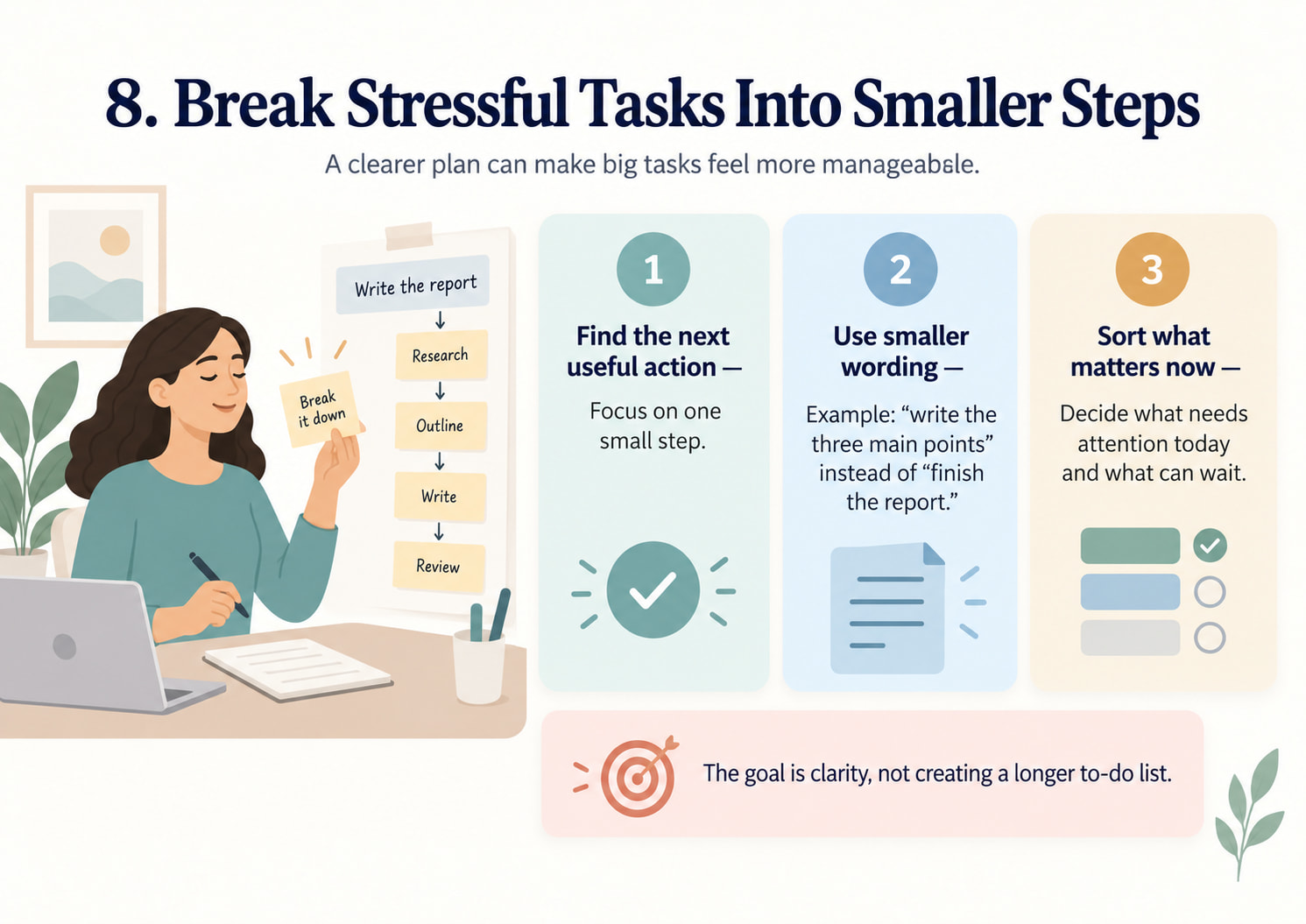
Breaking large tasks into manageable parts can make them feel less overwhelming.
Start by identifying the next useful action—not everything the task will eventually require.
For example, replace “finish the report” with “write the three main points.” Replace “organize the entire house” with “clear one small surface.”
Then decide what needs attention today, what can wait, and where someone else’s input is necessary. The goal is to make the next step clear, not to create a longer to-do list.
9. Set Boundaries and Take Digital Breaks
Setting boundaries may involve declining a new task when you are already overloaded.
Try a specific sentence: “I’m at capacity today. Which task should take priority?” Adjust the boundary to what is realistic and safe in your situation.
For digital stress, consider muting nonessential notifications or choosing a limited time to check news.
A break does not require ignoring your responsibilities. Decide when you will return to necessary messages.
10. Talk With Someone You Trust
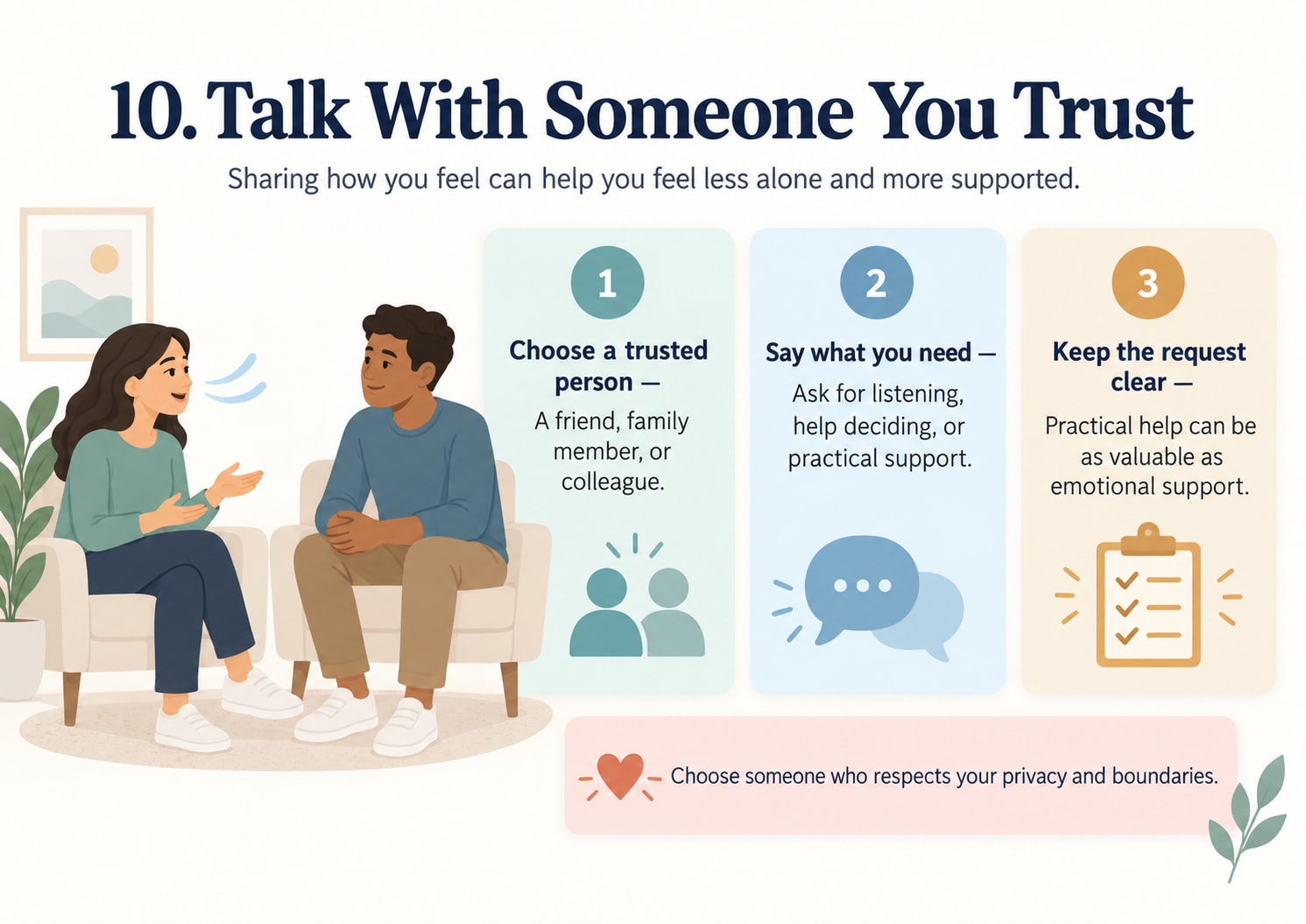
Talking with a trusted friend, family member, or colleague is another option when you are struggling with stress.
Be clear about the kind of support you need. You might say, “Could you listen for a few minutes without offering solutions?” Or ask, “Could you help me decide what to do first?”
Choose someone who respects your privacy and boundaries. For a practical problem, make the request equally practical—for example, asking someone to share a responsibility rather than simply saying that you feel overwhelmed.
11. Build a Consistent Sleep Routine
Adequate sleep supports emotional well-being. CDC sleep guidance recommends that adults get at least seven hours of sleep per night, with recommended amounts varying by age.
Begin with a consistent bedtime and wake-up time. Keep your bedroom comfortable and quiet, and give yourself a period before bed without electronic devices. CDC guidance also recommends avoiding caffeine in the afternoon or evening and alcohol close to bedtime.
Treat these habits as support, not another demand to sleep perfectly. Persistent trouble sleeping deserves a conversation with a healthcare professional rather than repeatedly adding more bedtime rules.
12. Notice How Caffeine and Alcohol Affect You
Some people find that reducing caffeine or alcohol helps them feel better. Pay attention to how each affects your mood, sleep, and overall well-being.
For a few days, note what you drink, when you drink it, and how you feel afterward. As a practical experiment, consider replacing one later-day caffeinated drink with a caffeine-free option.
Alcohol requires an important safety distinction: when someone is physically dependent on alcohol, stopping suddenly can be dangerous. NHS guidance on alcohol-use disorder recommends getting medical guidance before stopping if you may be dependent or experience withdrawal symptoms.
How to Choose a Stress Reduction Technique
Choose according to what you need and what feels comfortable—not which technique sounds most impressive. These are starting ideas, not predictions about what will work best.
| What you are looking for | An option to consider |
|---|---|
| A way to practice releasing physical tension | Progressive muscle relaxation |
| Something to focus on outside your thoughts | Sensory grounding |
| A clearer response to an overwhelming task | One smaller step or a practical boundary |
| Help carrying an emotional or practical burden | A conversation with someone you trust |
Pay attention to your response. NCCIH notes that relaxation exercises can occasionally increase anxiety or bring up intrusive thoughts, particularly for some people with trauma histories. Stop an exercise that makes you feel worse. Consider professional guidance when this happens repeatedly.
How to Build a Simple Stress-Reduction Routine
Choose one practice and connect it with something you already do.
For example: “After I brush my teeth, I’ll practice gentle breathing.” Pair that with one practical habit, such as deciding tomorrow’s first priority before ending your workday.
Afterward, ask yourself whether the approach felt comfortable and useful. You might also note whether you need rest, practical assistance, or a different technique.
Regular practice matters, but avoid turning relaxation into another source of pressure. These techniques are skills that may become easier with practice, and it is reasonable to try another approach when one does not suit you.
When to Seek Help for Stress
Speak with a healthcare professional when stress interferes with daily life or becomes difficult to manage.
According to NIMH guidance, reviewed in April 2026, severe or distressing symptoms lasting two weeks or longer warrant professional help. Examples include difficulty sleeping, loss of interest, trouble concentrating, or difficulty completing usual activities. You do not need to wait two weeks when symptoms are severe or your functioning is already affected.
Self-help should not replace necessary professional care or become a reason to postpone it.
In the United States: Call or text 988 for mental-health crisis support, including thoughts of suicide. Call 911 in a life-threatening emergency.
Frequently Asked Questions
What is the best stress reduction technique?
There is no single option that suits everyone. Responses to stress and coping preferences vary. Start with a technique that feels comfortable, then consider whether the situation also calls for practical help or changes to your responsibilities.
How can I reduce stress when I only have a few minutes?
Try a brief sensory-grounding exercise or gentle, unforced breathing. Use the time available without demanding immediate relief. Regular practice can make relaxation techniques more familiar over time.
Can I reduce stress without meditation?
Yes. Stress-management options also include physical activity, enjoyable activities, social connection, task planning, and breaking large responsibilities into smaller steps. Meditation is one option—not a requirement.
How long do stress reduction techniques take to work?
There is no universal timeline. Brief exercises may be useful in the moment, while developing a familiar relaxation skill takes practice. Do not judge an approach solely by whether you feel completely calm after one attempt.
What should I do if relaxation exercises make me feel worse?
Stop rather than pushing through distress. Choose a different activity that feels comfortable, and speak with a healthcare professional if exercises repeatedly increase anxiety or bring up upsetting experiences. Relaxation is not equally comfortable for everyone.
The Bottom Line
Stress reduction techniques are options, not another checklist you must complete. Choose one manageable practice, try it without forcing a result, and notice what feels useful.
Also ask what would make the situation itself more manageable: a clearer boundary, a smaller next step, or support from someone else. Start with one practical action today, and seek help when stress is becoming too much to handle alone.
This content is for informational purposes only and not medical advice.
References
- Centers for Disease Control and Prevention: Managing Stress.
- World Health Organization: Stress: Questions and Answers.
- National Health Service: Breathing Exercises for Stress.
- Balban MY, et al.: Brief Structured Respiration Practices Enhance Mood and Reduce Physiological Arousal. Cell Reports Medicine.
- Mayo Clinic: Relaxation Techniques: Try These Steps to Lower Stress.
- University of Rochester Medical Center: 5-4-3-2-1 Coping Technique for Anxiety.
- National Center for Complementary and Integrative Health: Meditation and Mindfulness: Effectiveness and Safety.
- National Health Service: Dealing With Stress.
- Centers for Disease Control and Prevention: About Sleep.
- National Health Service: Alcohol-Use Disorder.