
Breathing exercises for anxiety can help calm your nervous system, reduce physical tension, and bring your mind back to the present within minutes. By slowing your breath—especially your exhale—you signal safety to your body, which may ease anxious sensations like a racing heart, shallow breathing, or restlessness.
Understanding how to use breathing exercises matters because anxiety often shows up physically first. The good news is that your breath is always available, free, and easy to practice anywhere. In this guide, you’ll learn 11 of the best breathing exercises for anxiety, how to do them safely, and how to fit them into daily life using evidence-based guidance from trusted health organizations.
What Are Breathing Exercises for Anxiety?
Breathing exercises for anxiety are structured breathing patterns designed to slow your breathing rate, deepen each breath, and improve the balance between inhalation and exhalation. These changes may help shift your body from a stressed “fight-or-flight” state toward a calmer “rest-and-digest” state.
Most anxiety-focused breathing exercises emphasize:
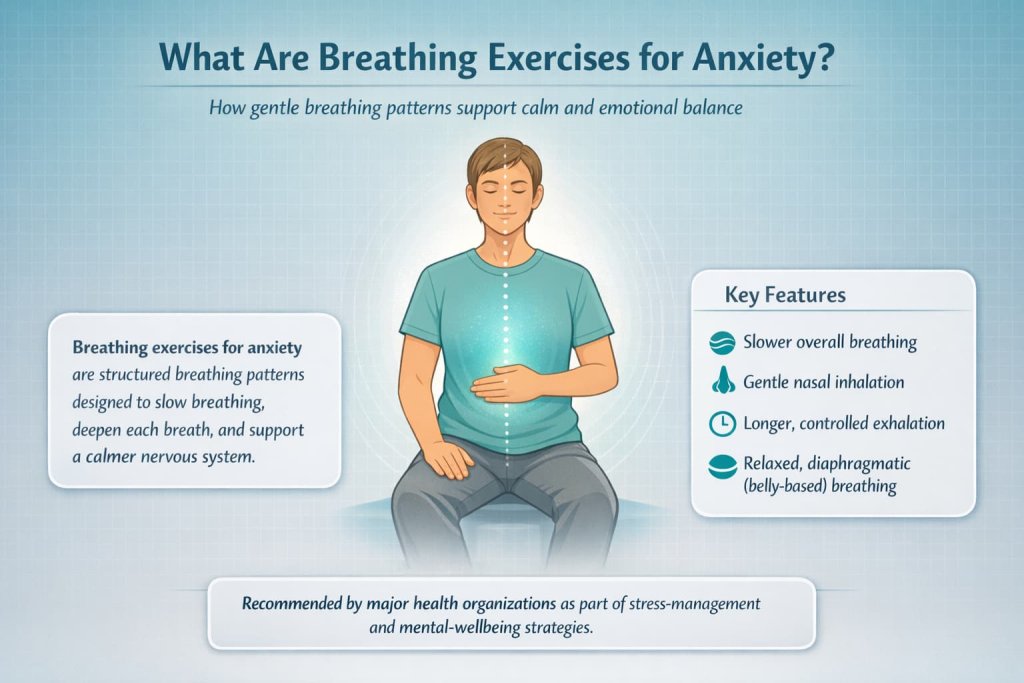
- Slower overall breathing
- Gentle nasal inhalation
- Longer or more controlled exhalation
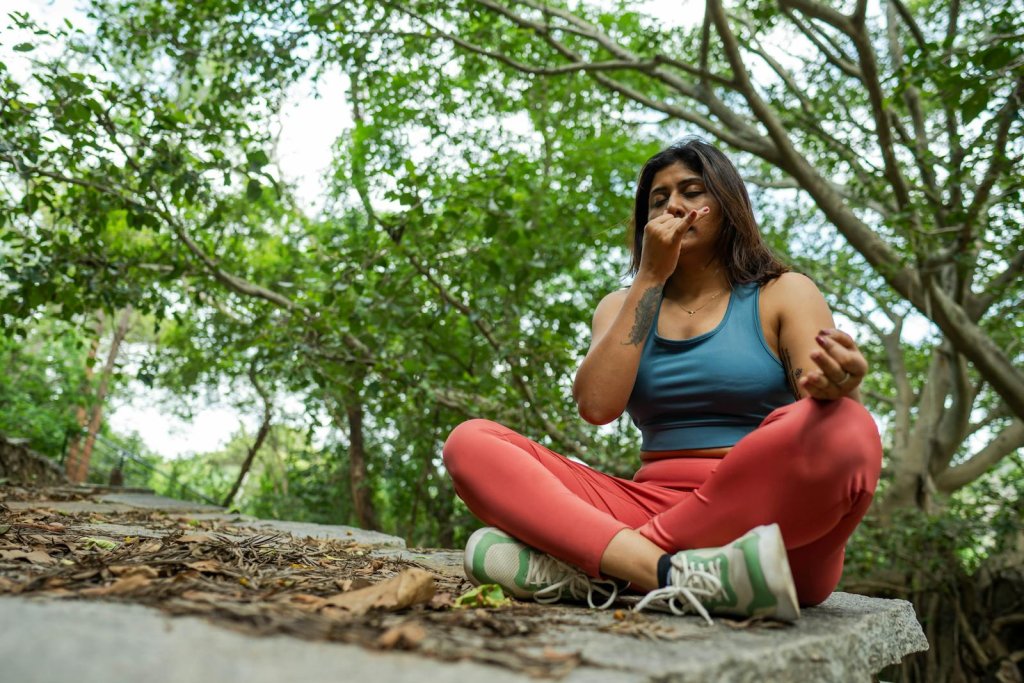
- Relaxed, diaphragmatic (belly-based) breathing
Organizations like the NHS and the NIH recommend breathing techniques as part of broader stress-management and mental-wellbeing strategies.
11 Best Breathing Exercises for Anxiety
These 11 breathing exercises are designed to help calm anxiety by slowing your breath, easing physical tension, and improving nervous system balance. Each technique is simple, gentle, and can be practiced anywhere to support relaxation in minutes.
1. Diaphragmatic (Belly) Breathing
This foundational technique focuses on breathing deeply into the abdomen instead of shallow chest breathing, which is common during anxiety.
How to do it
- Sit or lie in a comfortable position with your spine supported
- Place one hand on your belly and one on your chest
- Inhale slowly through your nose, feeling your belly rise while your chest stays relatively still
- Exhale gently through your mouth or nose, allowing the belly to fall
- Keep your shoulders relaxed and your breathing smooth and unforced
Why it works
Diaphragmatic breathing encourages slower, deeper breaths that reduce overactivation of the stress response. By shifting breathing away from the chest, it may help lower physical tension and reduce the rapid, shallow breathing patterns often associated with anxiety.
2. Extended Exhale Breathing
This method places emphasis on making the exhale longer than the inhale.
How to do it
- Inhale through your nose for about 4 seconds
- Exhale slowly for 6–8 seconds through your nose or mouth
- Pause briefly after the exhale if it feels comfortable
- Repeat the pattern for several minutes
Why it works
Longer exhalations may stimulate calming nervous-system pathways and help slow heart rate. This shift toward extended exhalation can make the body feel safer and more settled during anxious moments.
3. Box Breathing
A structured, rhythmic breathing pattern commonly used in stress-management settings.
How to do it
- Inhale slowly for 4 seconds
- Hold the breath gently for 4 seconds
- Exhale for 4 seconds
- Hold again for 4 seconds before the next inhale
Why it works
The steady rhythm provides a predictable pattern that anchors attention and slows breathing. This can help interrupt racing thoughts and bring a sense of control during heightened stress or anxiety.
4. 4-7-8 Breathing
A counted breathing pattern often used to promote relaxation.
How to do it
- Inhale through your nose for 4 seconds
- Hold your breath gently for 7 seconds
- Exhale slowly through your mouth for 8 seconds
- Repeat for 3–4 cycles
Why it works
The extended exhale phase may encourage physical relaxation and mental slowing. For beginners, shortening the counts can help prevent discomfort while still providing calming effects.
5. Paced Breathing
Breathing at a consistent, slow rate rather than counting seconds precisely.
How to do it
- Aim for about 5–6 breaths per minute
- Inhale and exhale evenly, without pauses
- Keep your posture relaxed and upright
- Use a timer or breathing app if helpful
Why it works
A slower breathing pace is linked to improved emotional regulation and reduced anxiety. Paced breathing helps steady the nervous system without requiring complex counting or breath holds.
6. Cyclic Sighing
A technique that combines a double inhale with a long, complete exhale.
How to do it
- Inhale through your nose
- Take a short second “sip” of air at the top of the inhale
- Exhale slowly and fully through your mouth
- Pause briefly, then repeat
Why it works
This pattern emphasizes a full exhale, which may help release tension and quickly reduce physiological arousal. Many people find it especially helpful during acute stress.
7. Resonant (Coherent) Breathing
Breathing at a smooth, balanced rhythm that feels comfortable.
How to do it
- Inhale for about 6 seconds
- Exhale for about 6 seconds
- Keep breaths gentle, continuous, and unforced
- Maintain this rhythm for several minutes
Why it works
Balanced breathing rhythms may help stabilize heart-rate variability, which is associated with better stress resilience and emotional balance.
8. Alternate Nostril Breathing (Gentle Version)
A slow, mindful nasal breathing technique adapted for relaxation.
How to do it
- Close one nostril gently with a finger
- Inhale through the open nostril
- Switch nostrils and exhale slowly
- Continue alternating sides at a relaxed pace
Why it works
The deliberate, alternating pattern encourages focus and mindfulness, which can help shift attention away from anxious thoughts.
9. Counting Breaths
A simple breathing exercise that combines breath awareness with mental focus.
How to do it
- Inhale naturally
- Exhale and silently count “one”
- Continue counting each exhale up to five
- Restart at one and repeat
Why it works
Counting provides a gentle mental task that keeps the mind engaged while breathing naturally slows, helping reduce mental chatter linked to anxiety.
10. Humming Exhale Breathing
Breathing with a soft hum during the exhale phase.
How to do it
- Inhale slowly through your nose
- Exhale while humming softly
- Keep the hum relaxed and comfortable
- Continue for several minutes
Why it works
Humming naturally lengthens the exhale and creates gentle vibration, which may enhance relaxation and promote a calming sensory experience.
11. Gentle Nasal Breathing
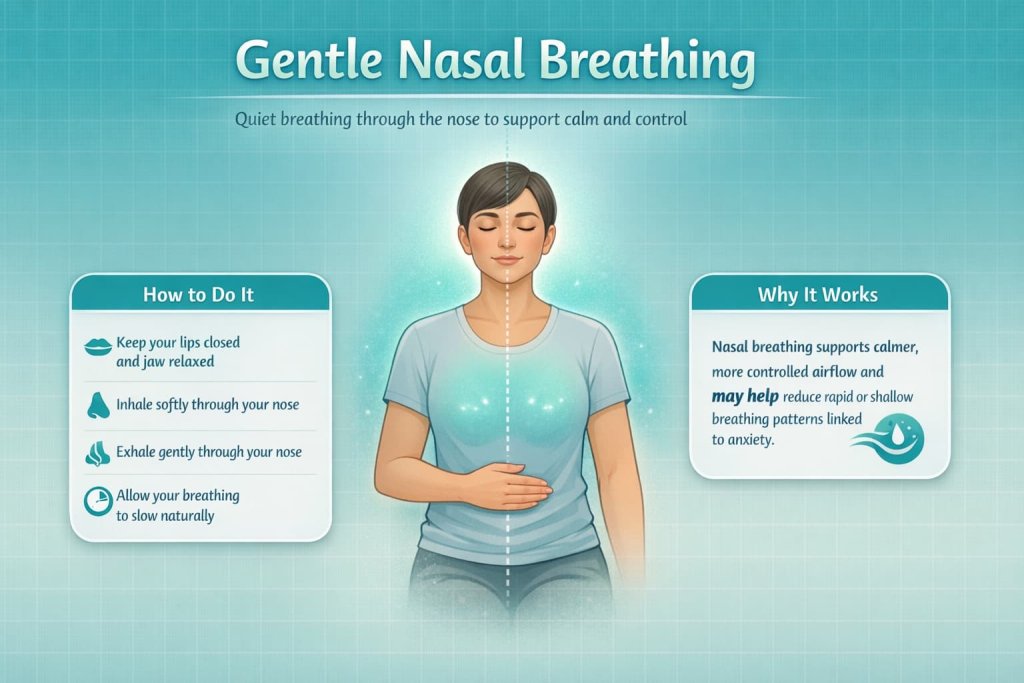
Quiet, relaxed breathing through the nose only.
How to do it
- Keep your lips closed and jaw relaxed
- Inhale softly through your nose
- Exhale gently through your nose
- Allow the breath to slow naturally
Why it works
Nasal breathing encourages calmer, more controlled airflow and may help prevent rapid, anxious breathing patterns from developing.
How Often Should You Practice Breathing Exercises for Anxiety?
Most guidelines suggest:
- 5–10 minutes per session
- Once or twice daily
- Additional short sessions during stressful moments
Consistency matters more than intensity. Even brief daily practice may support better emotional regulation over time.
How Breathing Exercises Help Reduce Anxiety
Breathing influences your nervous system directly. When breathing becomes slow and controlled:
- Heart rate may decrease
- Muscle tension may ease
- Stress hormones may decline
- Attention shifts away from anxious thoughts
Research summarized by the Cleveland Clinic shows that slow breathing techniques may support relaxation and emotional regulation when practiced consistently.
Importantly, breathing exercises are not a cure for anxiety disorders, but they can be a helpful self-management tool alongside therapy, lifestyle changes, and medical care when appropriate.
Who Can Benefit From Breathing Exercises for Anxiety
Breathing exercises for anxiety may be helpful for a wide range of people, particularly those experiencing stress-related or situational anxiety symptoms. These techniques are simple, low-cost, and can be practiced without equipment.
People who may benefit include:
- Individuals who feel occasional anxiety, nervousness, or overwhelm
- Those experiencing physical anxiety symptoms such as rapid breathing, muscle tension, or restlessness
- People managing work-related stress or performance anxiety
- Individuals looking for non-pharmacological self-regulation tools to support overall mental well-being
- Those already engaged in therapy or lifestyle-based stress management who want an additional supportive practice
Breathing exercises are not a treatment for anxiety disorders, but they may help support calm and emotional regulation when used consistently and appropriately.
Common Mistakes to Avoid When Doing Breathing Exercises
Breathing exercises are generally safe, but certain mistakes can reduce their effectiveness or cause discomfort—especially for beginners.
Common mistakes to avoid include:
- Forcing deep breaths, which can increase tension instead of relaxation
- Holding the breath too long, particularly during counted patterns like 4-7-8 breathing
- Breathing too fast, which may worsen anxious sensations
- Over-focusing on “perfect” technique rather than staying relaxed
- Ignoring dizziness or discomfort instead of returning to normal breathing
- Only using breathing exercises during panic, rather than practicing regularly
To get the most benefit, keep breathing gentle, comfortable, and consistent. Short, calm practice sessions done regularly are more helpful than intense or strained breathing attempts.
Safety Considerations and Who Should Be Careful
- Avoid forcing breaths or holding your breath if it causes discomfort
- If you feel dizzy, lightheaded, or short of breath, stop and return to normal breathing
- People with respiratory conditions should consult a healthcare professional before starting new breathing practices
Frequently Asked Questions
Do breathing exercises really help anxiety?
Breathing exercises may help reduce short-term anxiety symptoms and support relaxation, especially when practiced regularly.
How fast do breathing exercises work?
Some people feel calmer within minutes, while others notice benefits over days or weeks of consistent practice.
Can I do breathing exercises during a panic attack?
Gentle, slow breathing may help some people during intense anxiety, but experiences vary.
Are breathing exercises safe to do every day?
Yes, when done gently and without strain.
Is there a “best” breathing exercise for anxiety?
Different techniques work better for different people; exhale-focused methods often feel calming for beginners.
Can breathing exercises replace therapy or medication?
No. They are a supportive tool, not a replacement for professional care.
Conclusion
Breathing exercises for anxiety offer a simple, accessible way to support calm and emotional balance—anytime, anywhere. By practicing slow, gentle breathing regularly, you may find it easier to manage anxious moments and reconnect with a sense of control. Start with one or two techniques, keep sessions short, and focus on consistency rather than perfection.
If anxiety significantly affects your daily life, consider reaching out to a qualified healthcare or mental-health professional for personalized guidance.
References
- NCCIH (NIH) – Relaxation Techniques: What You Need To Know
- Cleveland Clinic – Diaphragmatic Breathing: Exercises & Benefits
- Cleveland Clinic – How Box Breathing Can Help You Destress
- Balban et al. (2023) – Brief structured respiration practices enhance mood and reduce physiological arousal (PubMed)
- Bentley et al. (2023) – Breathing Practices for Stress and Anxiety Reduction (Systematic Review, PMC)
- Luo et al. (2025) – The effect of slow breathing in regulating anxiety (Scientific Reports)