
A PB and J sandwich contains about 360–510 calories in the label-based examples below. These examples use two bread slices, 2 tablespoons of peanut butter, and 1–2 tablespoons of jelly. Smaller portions can bring the total lower, while larger slices or extra spreads can increase it.
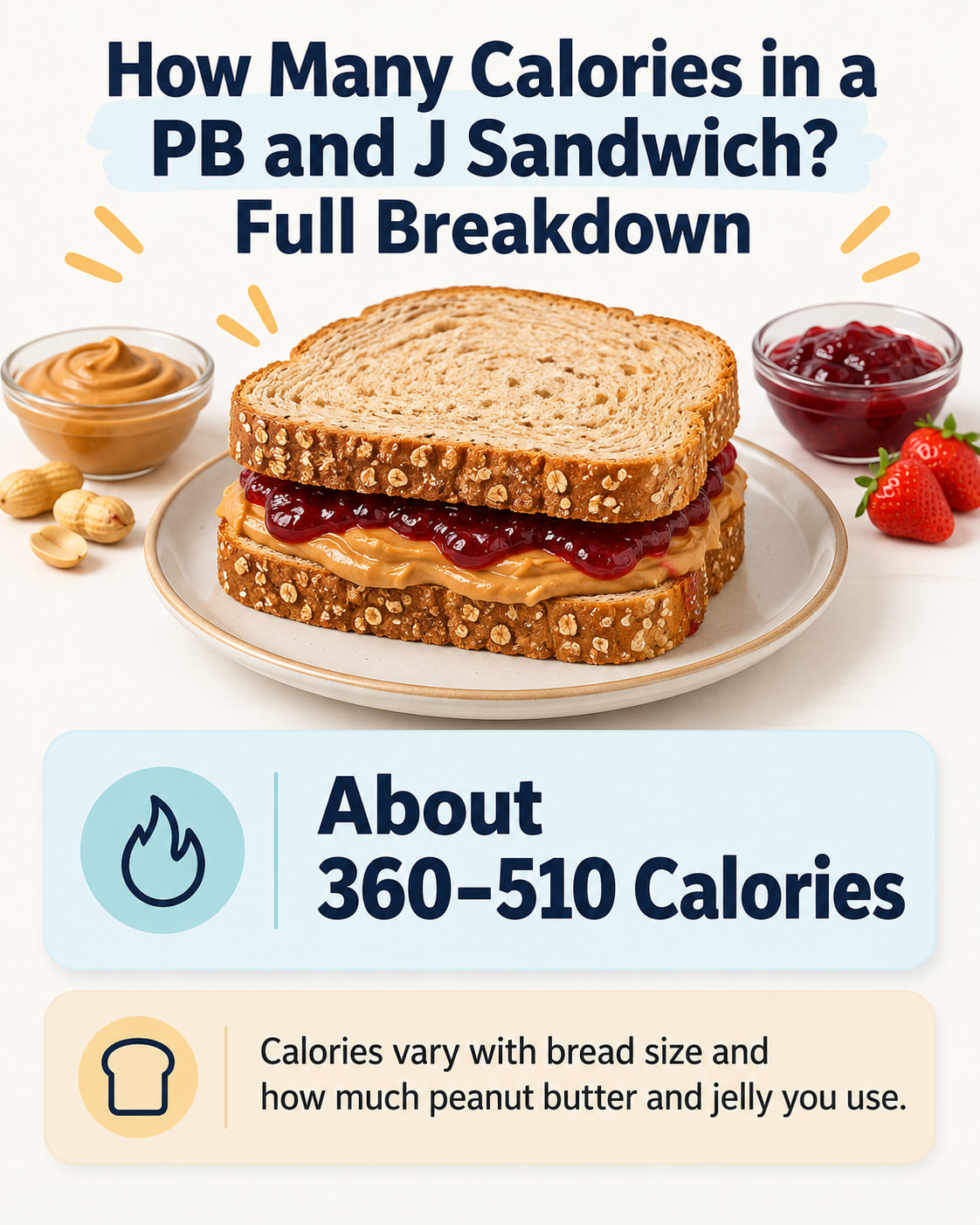
There is no single calorie count for every homemade PB&J. The most useful estimate comes from checking your bread, measuring your spreads, and adding the three amounts together.
How Many Calories in a PB and J Sandwich?
The following examples show how bread size and spread portions change the total. They use Dave’s Killer Bread 21 Whole Grains and Seeds, either thin-sliced or regular sliced, Jif Creamy Peanut Butter, and Smucker’s Concord Grape Jelly.
| Bread portion | Peanut butter | Jelly | Estimated sandwich calories |
|---|---|---|---|
| 2 thin slices: 120 calories | 1 tablespoon: 95 calories | 1 tablespoon: 50 calories | 265 |
| 2 thin slices: 120 calories | 2 tablespoons: 190 calories | 1 tablespoon: 50 calories | 360 |
| 2 thin slices: 120 calories | 2 tablespoons: 190 calories | 2 tablespoons: 100 calories | 410 |
| 2 regular slices: 220 calories | 2 tablespoons: 190 calories | 1 tablespoon: 50 calories | 460 |
| 2 regular slices: 220 calories | 2 tablespoons: 190 calories | 2 tablespoons: 100 calories | 510 |
These totals are calculated from the manufacturers’ nutrition labels. The one-tablespoon peanut butter value is half the labeled two-tablespoon serving. They are examples, not minimum or maximum calorie limits for a PB&J.
These numbers cover the sandwich only. Count milk, chips, fruit, or other sides separately when estimating the entire meal.
PB and J Sandwich Calories by Ingredient
Bread: Check Slice Size, Not Just Bread Type
The Dave’s Killer Bread thin-sliced nutrition information lists 60 calories per 28-gram slice. Its regular-sliced version lists 110 calories per 45-gram slice. Two slices therefore contribute 120 or 220 calories, respectively.
In this comparison, choosing the larger slices adds 100 calories before you spread anything on them. Both products are whole-grain breads, so the word “whole-grain” alone does not tell you the calorie count.
Whether you use white, wheat, or multigrain bread, check the serving size and the number of slices it includes. Do not automatically double a bread label that already lists a two-slice serving.
Peanut Butter: Measure the Amount You Actually Use
According to Jif’s Creamy Peanut Butter nutrition label, 2 tablespoons, or 33 grams, provide 190 calories. Half that amount—approximately 16.5 grams—provides about 95 calories.
A heaped spoonful is not a reliable substitute for a measured tablespoon. For a more consistent estimate, use measuring spoons or weigh the peanut butter, then compare that amount with your jar’s serving size.
The gram weight matters when comparing products. Use the weight printed on your own label rather than assuming every peanut butter has the same serving weight.
Jelly: One Extra Tablespoon Changes the Total
The Smucker’s Concord Grape Jelly label lists 50 calories per tablespoon, or 20 grams. Using two tablespoons instead of one adds another 50 calories.
These values apply to that specific jelly. For strawberry jam, preserves, reduced-sugar spreads, or another brand, use the product’s own label.
PB and J Sandwich Nutrition Facts
Calories tell only part of the story. The table below compares the two bread options with the same filling: 2 tablespoons of Jif Creamy Peanut Butter and 1 tablespoon of Smucker’s Concord Grape Jelly.
| Nutrient | With 2 thin slices | With 2 regular slices |
|---|---|---|
| Calories | 360 | 460 |
| Protein | 13 g | 19 g |
| Total carbohydrates | 49 g | 65 g |
| Total fat | 18 g | 19 g |
| Saturated fat | 3.5 g | 3.5 g |
| Dietary fiber | 8 g | 10 g |
| Total sugars | 21 g | 23 g |
| Added sugars | 17 g | 19 g |
| Sodium | 355 mg | 485 mg |
These are calculated estimates from the ingredient labels, not measurements of a prepared sandwich. They apply to the specific recipes above.
The larger-bread version has more calories, but it also provides more protein and fiber. That is why choosing a sandwich based only on the lowest calorie number can overlook other nutritional differences.
Also, added sugars are already included in total sugars. Do not add those two rows together. The FDA’s Nutrition Facts guidance identifies fiber as a nutrient to get more of, while encouraging attention to added sugars, sodium, and saturated fat.
Allergy reminder: People with a peanut allergy should avoid peanut-containing sandwiches. Follow the FDA’s food-allergy guidance and check ingredient and allergen statements on every product you use.
How to Calculate Calories in Your PB and J Sandwich
Use this formula:
Sandwich calories = bread calories + peanut butter calories + jelly calories + any extras
The FDA’s serving-size guidance explains that calories and nutrients on a label apply to the stated serving. That serving is not a recommendation for how much you should eat.
1. Check Each Label’s Serving Size
Look at both the household measurement and the gram weight. Confirm whether the bread label covers one slice or two, and whether the spread label covers one tablespoon or two.
2. Adjust for Your Actual Portion
When weighing an ingredient, use:
Calories used = grams used ÷ labeled serving grams × calories per serving
For example, 40 grams of the Jif peanut butter used above would provide:
40 ÷ 33 × 190 = about 230 calories
That is approximately 40 calories more than its labeled two-tablespoon serving.
3. Add Everything Together
Add the adjusted values for the bread, peanut butter, and jelly. Include anything else you add, such as honey, banana slices, or butter used for grilling.
For food tracking, saving your own recipe can make future estimates simpler than repeatedly choosing a generic “PB&J sandwich” entry.
How to Make a Lower-Calorie PB and J Sandwich
Start with a portion change you will still enjoy. You do not have to reduce every ingredient at once.
Compare bread portions. In the examples above, switching from two regular slices to two thin slices reduces the total by 100 calories without changing the filling.
Use a measured layer of jelly. Reducing the example jelly from two tablespoons to one saves 50 calories. Spread it evenly so the smaller amount reaches more of the bread.
Adjust peanut butter deliberately. Using one tablespoon instead of two saves approximately 95 calories with the example product. However, it also halves the peanut butter’s contribution of protein and other nutrients.
Treat these as options, not rules. Consider the sandwich’s nutrition and the rest of your meal rather than assuming that fewer calories always makes it the better choice.
Frequently Asked Questions
How Many Calories Are in Half a PB and J Sandwich?
Half a sandwich contains approximately half its total calories, assuming the filling is distributed evenly. Half of the 360-calorie example is 180 calories, while half of the 460-calorie example is 230 calories.
How Many Calories Are in a Peanut Butter Sandwich Without Jelly?
Using the ingredients above, two thin bread slices with 2 tablespoons of peanut butter provide 310 calories. The same peanut butter portion on two regular slices provides 410 calories. Removing one tablespoon of the example jelly subtracts 50 calories.
How Many Calories Are in an Uncrustables PB&J?
The manufacturer lists 210 calories in one 58-gram Uncrustables Peanut Butter & Grape Jelly Sandwich. That value applies to this specific product and serving size, not every packaged PB&J or homemade sandwich. Check your package for the most current information.
Is a Whole-Wheat PB and J Sandwich Lower in Calories?
Not automatically. Check the actual bread label rather than assuming whole-wheat bread has fewer calories. Even the two whole-grain bread options used here differ substantially: 60 versus 110 calories per slice. Slice size and the amount used affect the total.
Does Natural or Reduced-Fat Peanut Butter Have Fewer Calories?
Not necessarily. Jif Creamy Peanut Butter, Natural Creamy Peanut Butter Spread, and Reduced Fat Creamy Peanut Butter Spread each list 190 calories per two-tablespoon serving. Their serving weights and nutrient profiles differ, but these particular swaps do not reduce calories per two tablespoons.
Can a PB and J Sandwich Fit Into a Weight-Loss Eating Plan?
It can fit into an eating pattern that meets your energy and nutrient needs. A single sandwich does not determine weight change; overall calorie intake and energy use matter. Your calorie needs also vary with factors such as age, body size, and activity level.
The Bottom Line
A useful PB&J calorie estimate starts with your ingredients and your portions, not one universal number. Use the examples above as a guide, then check your bread and spread labels.
The next time you make a sandwich, measure the filling once and add the three ingredient totals. Save that recipe so you have a practical estimate for the sandwich you actually enjoy.
References
- Dave’s Killer Bread: 21 Whole Grains and Seeds Thin-Sliced and 21 Whole Grains and Seeds, Regular Sliced.
- Jif: Creamy Peanut Butter, Natural Creamy Peanut Butter Spread, and Reduced Fat Creamy Peanut Butter Spread.
- Smucker’s: Concord Grape Jelly Nutrition Information.
- Uncrustables: Peanut Butter & Grape Jelly Sandwich Nutrition Information.
- U.S. Food and Drug Administration: How to Understand and Use the Nutrition Facts Label and Food Allergies: What You Need to Know.
This content is for informational purposes only and not medical advice.