
Heating pad rash often refers to erythema ab igne, a netlike discoloration caused by repeated heat exposure. The main step is to stop heating the affected skin and get persistent or changing areas checked.
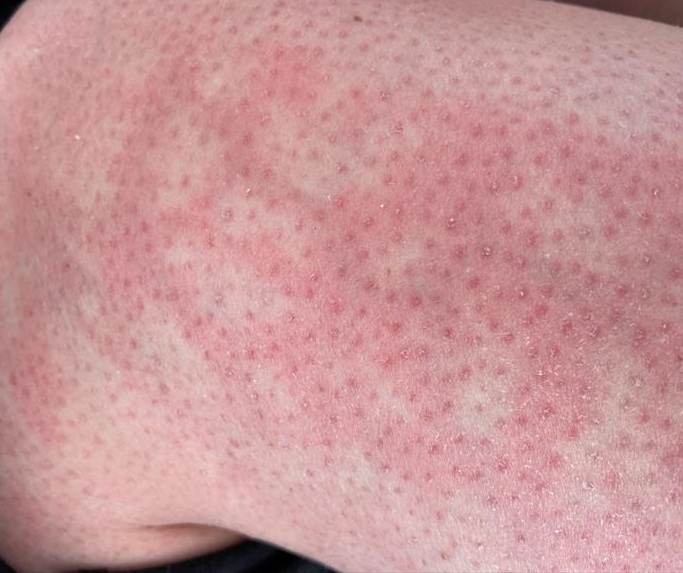
Also called toasted skin syndrome, this condition can develop even when the warmth feels comfortable. Recognizing it early matters because some discoloration becomes permanent. Knowing how it differs from a burn or another rash can help you decide what to do next.
What Is Heating Pad Rash?
Erythema ab igne is a skin reaction to repeated or prolonged heat exposure that does not produce an obvious thermal burn. It often appears where someone regularly places a heating pad for back pain or abdominal discomfort.
The pattern may start as temporary redness and become more noticeable with continued exposure. Some people first discover it in a mirror because the area barely itches or hurts.
The term “heating pad rash” describes a situation, rather than confirming a diagnosis. Heat, sweating, or contact with an irritating material can produce different skin problems.
What Does Heating Pad Rash Look Like?
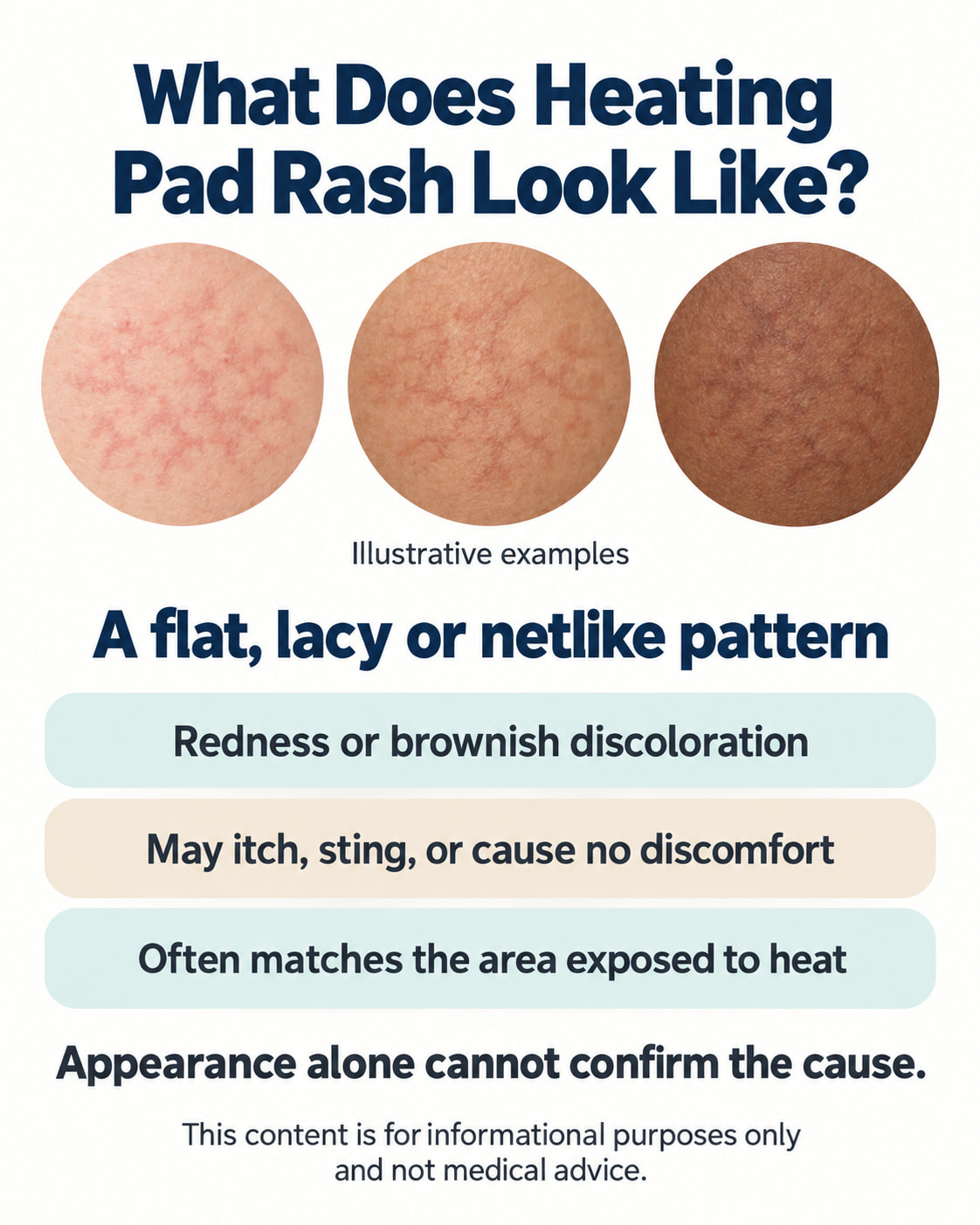
The most recognizable feature is a flat pattern resembling lace or a loose fishing net. Possible changes include:
- Redness or brownish discoloration in the area exposed to warmth.
- A pattern that becomes persistent after repeated use.
- Mild itching, stinging, or burning—or no discomfort.
- Thinner or scaly skin in more established cases.
The Australasian College of Dermatologists’ guidance, updated in August 2024, notes that the location and shape often reflect the heat source. Marks may appear on the lower back, abdomen, shins, or thighs.
Blisters, open skin, and substantial pain need medical attention. Do not assume they are ordinary features of a harmless rash.
What Causes Heating Pad Rash?
Repeated warmth can gradually affect the skin and its small blood vessels. The exact process is not fully understood, but continued exposure can leave lasting pigment changes.
Heating pads are only one possible source. Similar changes can follow repeated exposure to hot water bottles, space heaters, heated seats, or warm laptops resting against the body.
A common pattern is using heat on the same area day after day for ongoing pain. This is also a reason to discuss the underlying pain with a healthcare professional.
People with reduced skin sensation need particular caution because they may not recognize excessive warmth. Comfortable heat is not proof that an exposure is safe.
Heating Pad Rash vs. Heat Rash, Dermatitis, and Burns
These conditions can overlap in appearance. The following clues help explain the differences, but they cannot confirm a diagnosis at home.
| Condition | Common clues |
|---|---|
| Erythema ab igne | Persistent netlike discoloration after repeated localized heat exposure; sometimes little discomfort. |
| Heat rash, or prickly heat | Small raised spots with an itchy or prickly feeling, associated with sweating and blocked sweat ducts. |
| Contact dermatitis | Itchy, dry, cracked, or blistered skin after contact with an irritant or allergen. |
| Thermal burn | Heat injury that may involve pain, blistering, peeling, or deeper skin damage. |
The NHS describes prickly heat and contact dermatitis as separate conditions with different causes. A clinician can also consider other causes of mottled skin, especially when there is no clear history of heat exposure.
Heating Pad Rash Treatment: What May Help?
Stop Applying Heat to the Affected Area
Removing the heat source is the central management step. Cleveland Clinic’s guidance on toasted skin syndrome, updated February, 2026, emphasizes stopping the exposure early to help prevent additional damage.
Turning the pad down while continuing to warm the same patch is not a reliable solution. Replacing it with a hot water bottle or another heating device can continue the exposure.
If heat has become part of your daily pain routine, ask your healthcare professional about other options and whether the pain needs further evaluation.
Get the Diagnosis Confirmed
A clinician will usually examine the skin and ask where, how often, and how long you use heat. Typical cases often do not require testing.
A skin biopsy—a small sample examined in a laboratory—may be appropriate if the diagnosis is uncertain or there are suspicious changes. Having discoloration does not automatically mean you need a biopsy.
Discuss Persistent Discoloration With a Dermatologist
For marks that remain bothersome after heat exposure stops, a dermatologist may consider prescription options such as tretinoin or selected laser procedures. These approaches may improve appearance, but results vary.
There is no single cream that is appropriate for every rash after heating-pad use. Avoid choosing steroid or skin-lightening products before the cause is clear.
If You Suspect a Fresh Burn
A recent heat injury with blistering or damaged skin needs a different approach from longstanding discoloration.
The NHS burn first-aid guidance, reviewed March, 2026, recommends cooling the area under cool running water for 20 minutes as soon as possible. Avoid applying creams, oils, or butter to a fresh burn, and do not burst blisters. Seek urgent advice if you are unsure how serious it is.
How Long Does Heating Pad Rash Last?
The timeline depends on how established the skin changes are and whether heat exposure stops.
DermNet explains that mild redness may settle over several months. Darker pigmentation can persist for years, while severe changes involving skin thinning may remain permanent.
That means there is no dependable “gone in a week” timeline. A rash that remains visible deserves assessment rather than months of guessing about its cause.
Once a clinician confirms the diagnosis, photographs taken in similar lighting can provide a useful record to bring to follow-up appointments.
When to Get Help for Heating Pad Rash
Arrange a Medical Appointment
Contact a healthcare professional if:
- The rash or discoloration persists after you stop using heat.
- You are unsure what caused it.
- You rely on a heating pad frequently for ongoing pain.
Have a Growing Lump or Persistent Sore Checked Promptly
New thickening or rough areas also deserve prompt review. Rare skin cancers have been reported within longstanding erythema ab igne, but this does not mean every patch will become cancerous.
The Primary Care Dermatology Society’s clinical guidance recommends urgent referral for enlarging lesions or persistent ulceration within an affected area. Do not wait for a growing lump or an open sore to fade with the surrounding pigmentation.
Seek Urgent Care for Significant Symptoms
The American Academy of Dermatology identifies rapidly spreading rash, fever, painful skin, blistering, and open sores as reasons for medical attention. Pus, increasing swelling or warmth, and an unpleasant smell may indicate infection.
Large or deep burns require emergency assessment. Get emergency help immediately if a rash occurs with trouble breathing or swallowing, or swelling of the lips or eyes.
These symptoms should not be dismissed as routine toasted skin syndrome.
How to Reduce the Risk of Heating Pad Rash
If heat is appropriate for your situation and the skin is healthy, use precautions every time:
- Follow the device instructions. Check its placement, temperature, and time limits.
- Use gentle warmth. A hotter setting is not automatically more helpful.
- Use the recommended cover or protective barrier. Avoid direct contact with bare skin.
- Keep sessions brief and check your skin regularly. Stop when skin changes or discomfort appear.
- Stay awake during use. Never sleep with a heating pad.
- Ask before using heat over numb skin or areas with poor circulation. Seek individual advice if a condition affects your ability to feel heat.
Mayo Clinic’s guidance on heat for pain suggests applications of up to 20 minutes. This is general advice for certain pain situations, not a guarantee that every device or person can safely use heat for that long.
A low setting, timer, or cloth barrier does not make prolonged exposure risk-free. If you already have heating pad rash, stop applying heat to that area.
Frequently Asked Questions
Can a Heating Pad Cause a Rash on a Low Setting?
Yes. Repeated low-level warmth can cause erythema ab igne even without an obvious burn. Duration and repeated exposure to the same area matter.
Is Heating Pad Rash Contagious?
Erythema ab igne is not contagious because it results from heat exposure. However, a rash with an uncertain cause should not automatically be labeled heating pad rash.
Does Heating Pad Rash Always Itch?
No. Some people notice mild itching or burning, while others only see discoloration. Lack of discomfort does not rule out skin damage.
Can I Keep Using a Heating Pad if I Put a Towel Under It?
A towel does not make continued heating of an affected patch advisable. Stop heat exposure there and discuss other pain-management options if needed.
Will Hydrocortisone Cream Remove the Marks?
Hydrocortisone should not be assumed to remove heat-related pigmentation. It may be relevant to a different diagnosis, such as dermatitis, so ask a clinician or pharmacist before using it on an unexplained rash.
Can Heating Pad Rash Be Permanent?
Yes, particularly when exposure continues and skin changes become established. Mild cases may fade after heat stops, but complete clearance cannot be promised.
Conclusion
Heating pad rash is a reason to pause heat use and check your skin. Early changes may improve, while persistent discoloration or new lumps and sores need professional assessment. If you depend on heat for daily comfort, arrange a visit to discuss both the skin changes and the underlying pain.
This content is for informational purposes only and not medical advice.
References
- Australasian College of Dermatologists. Erythema Ab Igne.
- Cleveland Clinic. Toasted Skin Syndrome.
- DermNet. Erythema Ab Igne.
- StatPearls, NCBI Bookshelf. Erythema Ab Igne.
- NHS. Heat Rash (Prickly Heat) and Contact Dermatitis.
- NHS. Burns and Scalds.
- Primary Care Dermatology Society. Erythema Ab Igne.
- American Academy of Dermatology. Signs Your Rash Needs Medical Attention.
- Gloucestershire Hospitals NHS Foundation Trust. Ice and Heat Guidance.
- Mayo Clinic. Using Heat and Cold for Pain.