
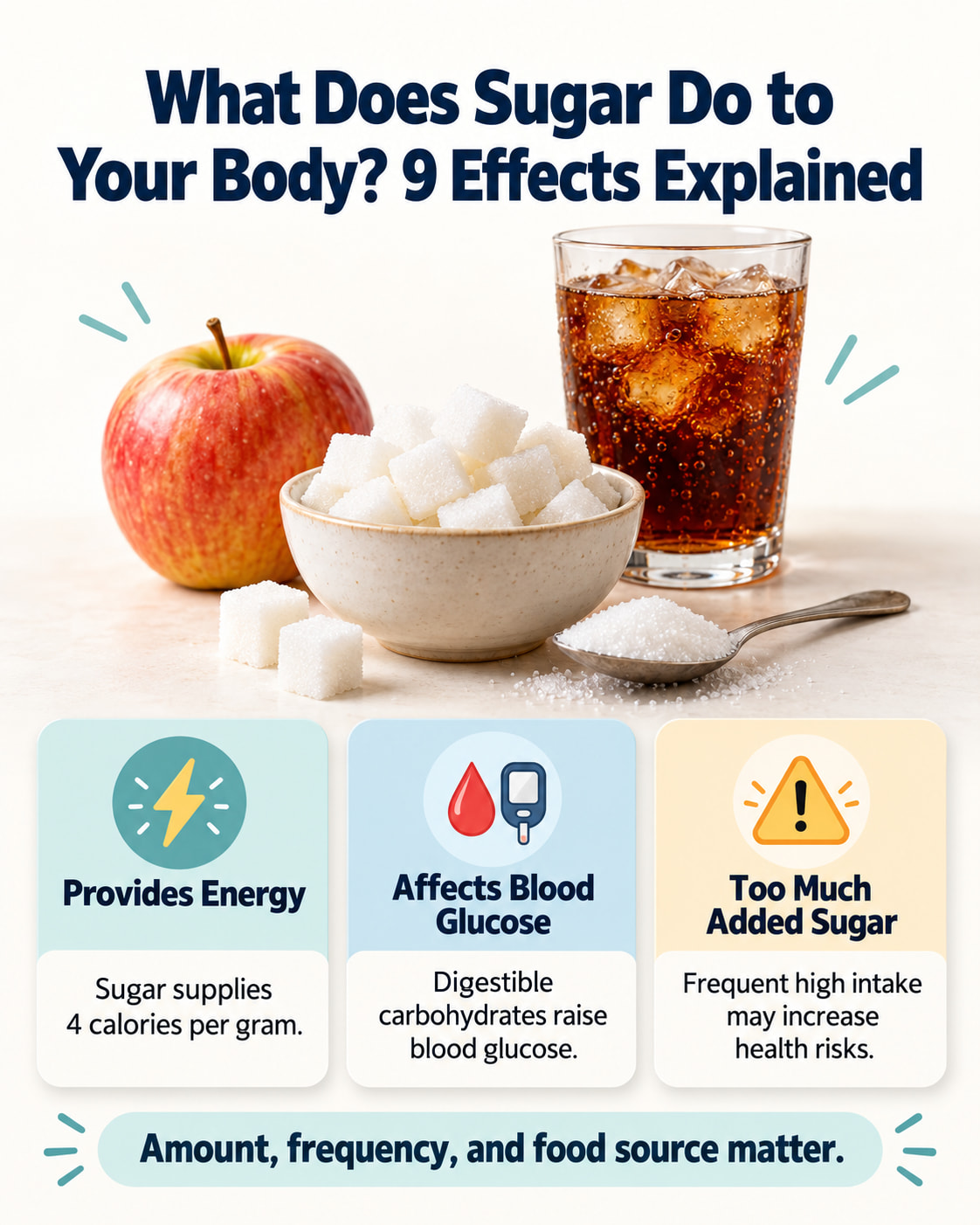
Sugar supplies energy and affects blood glucose, while regularly consuming too much added sugar can contribute to tooth decay, weight gain, and other health risks. The answer to “what does sugar do to your body?” also depends on how much you consume and the foods or drinks it comes from.
A whole orange and a sweetened drink both contain sugar, but they offer different nutritional packages. Understanding those differences can help you make useful changes without unnecessarily avoiding nutritious foods.
The main priorities are straightforward: recognize added sugars, pay attention to sugary drinks, and consider your overall eating pattern.
Natural Sugar, Added Sugar, and Free Sugar: What’s the Difference?
“Sugar” describes several carbohydrates, including glucose, fructose, and lactose. Nutrition labels and health recommendations group them differently.
| Term | What it means | Examples |
|---|---|---|
| Naturally occurring sugars | Sugars already present in foods | Sugar in whole fruit, vegetables, and plain milk |
| Added sugars | Sugars added during processing or preparation, plus sweeteners packaged for table use | Sugar in soda, sweetened yogurt, honey added to tea |
| Free sugars | Added sugars plus sugars naturally present in honey, syrups, fruit juices, and juice concentrates | Table sugar, honey, and sugar in 100% fruit juice |
| Total sugars | Naturally occurring sugars and added sugars combined | The total sugar amount on a Nutrition Facts label |
The FDA uses “added sugars” on US food labels, while the World Health Organization uses the broader category of “free sugars.” This means that 100% fruit juice can contain no added sugar while still containing free sugars.
The whole food matters. Fruit provides fiber, while plain milk and yogurt supply protein and other nutrients. Their sugar content alone does not describe their nutritional value.
What Does Sugar Do to Your Body? 9 Effects Explained
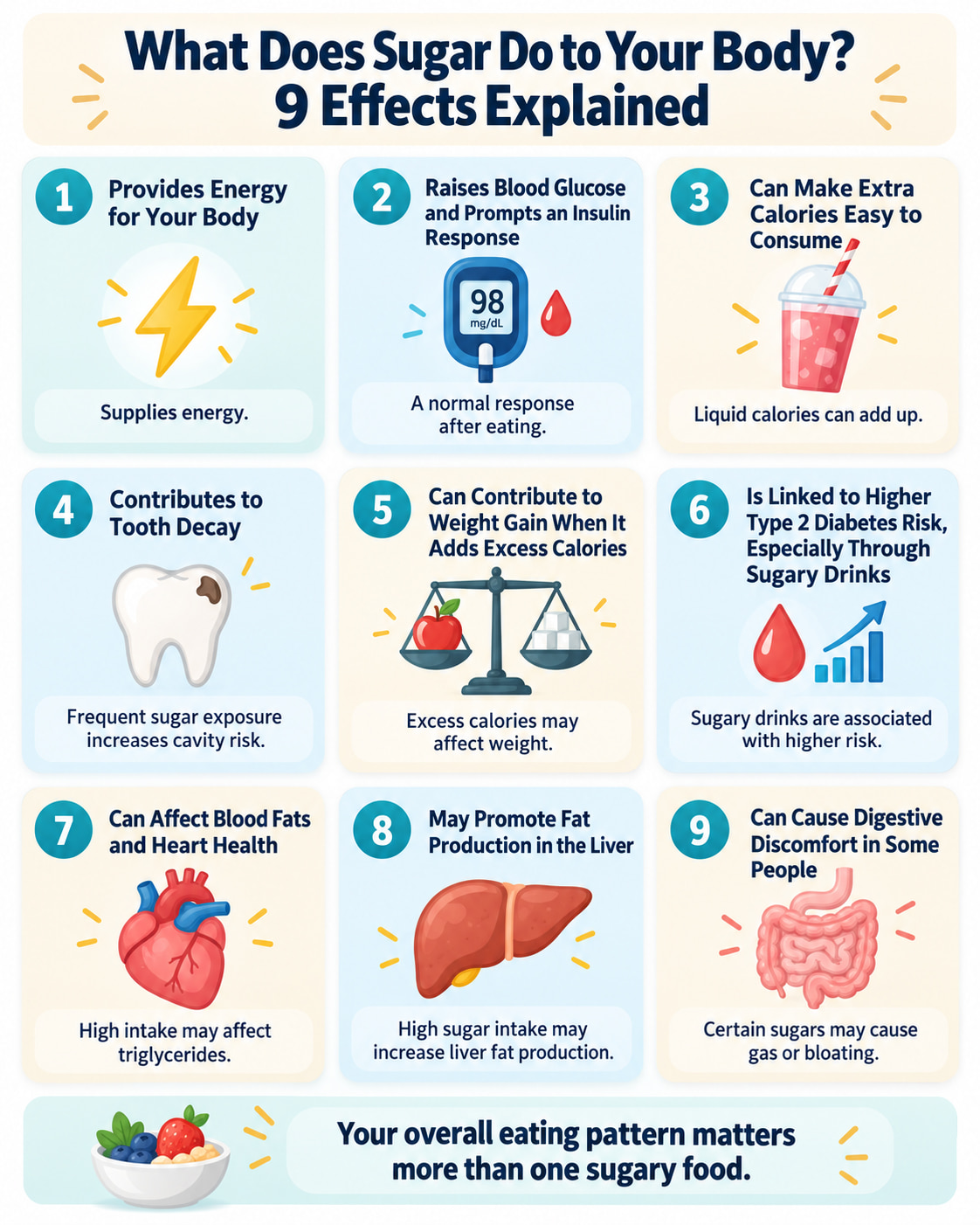
Some effects happen as your body digests food. Others involve patterns of high intake over time or individual difficulties absorbing particular sugars.
1. Provides Energy for Your Body
Sugars provide about 4 calories per gram. Glucose is an important fuel for your cells, including those in your brain and muscles.
Your body obtains glucose from food and can also make it when needed. You do not need added sugar to meet that need. Foods such as fruit, beans, whole grains, and dairy can provide carbohydrates alongside other nutrients.
For example, 10 grams of sugar supplies approximately 40 calories. That tells you how much energy the sugar provides, but it does not tell you how filling or nutritious the food will be.
2. Raises Blood Glucose and Prompts an Insulin Response
After you eat digestible carbohydrates, blood glucose generally rises. Your pancreas releases insulin, which helps glucose enter cells for use as energy.
This is a normal process. The size and timing of the response depend on factors such as the amount eaten, the type of carbohydrate, the food’s structure, and how your body regulates glucose.
A whole apple requires chewing and contains fiber. A sugary drink delivers carbohydrate in a different form and is easy to consume quickly. That is one reason food choices matter beyond the sugar number alone.
A normal rise after eating does not, by itself, mean that you have diabetes.
3. Can Make Extra Calories Easy to Consume
Sugary drinks can add calories without leading you to eat an equivalent amount less afterward.
In a small crossover study involving 15 adults, participants adjusted their food intake more effectively after consuming extra carbohydrate as a solid food than after drinking an equal-calorie amount of soda. Reported hunger did not change, so the study does not show that sugar always makes people hungrier.
The practical issue is easy to recognize: a sweetened drink can accompany the lunch you already planned to eat. Its calories may be added to the meal without replacing any food.
4. Contributes to Tooth Decay
Bacteria in dental plaque use sugars to produce acids. Over time, those acids can damage teeth and contribute to cavities.
The World Health Organization identifies free sugars as a major risk factor for tooth decay. Fluoride exposure and oral hygiene also influence risk.
This makes sugary beverages, candy, and other sources of free sugar relevant to dental health even when body weight remains stable. Reducing free-sugar intake and brushing with fluoride toothpaste address different parts of the problem.
5. Can Contribute to Weight Gain When It Adds Excess Calories
Sugar can contribute to weight gain when it regularly helps push energy intake above what your body uses.
Sugary drinks, sweetened coffees, desserts, and snack foods can make that easier. Added sugars also use part of your calorie intake without necessarily supplying much protein, fiber, or essential nutrients.
Research supports this concern. An 18-month randomized trial involving 641 children found that replacing a daily sugar-containing drink with a noncaloric drink reduced weight and body-fat gain.
However, reducing sugar does not guarantee weight loss. The result also depends on your total intake, activity, and what replaces the sugary foods or drinks.
6. Is Linked to Higher Type 2 Diabetes Risk, Especially Through Sugary Drinks
Regular sugary-drink consumption is associated with a higher risk of type 2 diabetes in adults.
A USDA evidence review published in 2024 concluded that sugar-sweetened beverage consumption may be associated with higher risk in adults and older adults. The evidence was graded as moderate.
That does not mean eating a dessert directly causes diabetes. Type 2 diabetes develops through multiple factors, including insulin resistance, genetics, body weight, and other health influences.
The useful takeaway is to pay attention to a regular sugary-drink habit while considering your overall health and eating pattern.
7. Can Affect Blood Fats and Heart Health
High sugar intake can contribute to elevated triglycerides, a type of fat circulating in the blood. High triglyceride levels can increase the risk of heart disease and stroke.
Research has also linked frequent sugary-drink consumption with less favorable triglyceride and HDL cholesterol levels. These observational findings show an association, rather than proving that an individual drink caused the changes.
The American Heart Association’s 2026 dietary guidance recommends minimizing added sugars as part of a broader eating pattern that includes vegetables, fruit, whole grains, suitable protein sources, and unsaturated fats.
8. May Promote Fat Production in the Liver
The liver helps process sugars, including fructose. Regularly consuming large amounts of certain sugars can influence how much new fat the liver produces.
In a randomized trial published in 2021, 94 healthy men were assigned to drinks containing 80 grams of fructose, sucrose, or glucose daily, or to a control group, for seven weeks. Fructose- and sucrose-sweetened drinks increased the measured production of new fatty acids by the liver.
The study measured fat production; it did not establish that participants developed fatty liver disease.
NIDDK’s dietary guidance for fatty liver disease also advises avoiding foods and drinks containing large amounts of simple sugars, especially fructose. The same guidance includes most fruits among suitable food choices, so it should not be interpreted as a reason to eliminate whole fruit.
9. Can Cause Digestive Discomfort in Some People
Some people have difficulty absorbing particular sugars. When those sugars reach the large intestine, they can contribute to gas and other digestive symptoms.
Examples include:
- Lactose intolerance: Difficulty digesting the natural sugar in milk.
- Difficulty absorbing fructose: Digestive symptoms after certain fructose-containing foods or drinks.
Symptoms may include bloating, abdominal discomfort, gas, or diarrhea. The amount consumed and individual tolerance both matter.
If symptoms repeatedly follow a particular food, note the food, portion, and timing. Discuss persistent symptoms with a healthcare professional before cutting out several food groups.
How Much Added Sugar Is Too Much?
Different organizations use different definitions and recommendations. Understanding the category is essential when comparing the numbers.
The 2025–2030 Dietary Guidelines for Americans advise limiting added sugars and avoiding sugar-sweetened beverages. Their per-meal guidance differs from the daily figures commonly used elsewhere.
| Guidance or reference | Amount | What it applies to |
|---|---|---|
| US Dietary Guidelines | No more than 10 grams in one meal | Added sugars; this is a per-meal statement, not a daily allowance. |
| American Heart Association | About 25 grams daily for most women and 36 grams for most men | Added sugars. |
| World Health Organization | Below 10% of daily calories, ideally below 5% | Free sugars; at 2,000 calories, this means under 50 grams, ideally under 25 grams. |
| FDA Nutrition Facts label | 50 grams as the Daily Value for a 2,000-calorie diet | A labeling reference for added sugars, not a personal intake target. |
The American Heart Association’s daily limits, WHO recommendations, and FDA label value have different purposes. None represents an amount of sugar your body needs you to consume.
These figures also do not set a single limit for total sugars from every food. Naturally occurring sugars in whole fruit and plain milk are not counted as added sugars.
How to Reduce Added Sugar in Everyday Meals and Drinks
Start with changes you can repeat consistently.
Begin With Your Usual Drinks
Review the drinks you have most often, including sweetened coffee, tea, soda, fruit drinks, and energy drinks.
Practical options include:
- Ordering coffee or tea with fewer pumps of syrup.
- Choosing unsweetened tea or coffee more often.
- Replacing a regular soda with water or unsweetened sparkling water.
- Choosing whole fruit more often than drinking juice.
You can change one regular drink first rather than reorganizing your entire diet at once.
Read the Added Sugars Line
On a Nutrition Facts label, check:
- Serving size.
- Added sugars per serving.
- How many servings you actually consume.
Added sugars are already included in total sugars. For example, a label showing 12 grams of total sugars, including 8 grams of added sugars, contains 12 grams altogether.
The FDA also considers 5% Daily Value or less a low amount of added sugars per serving and 20% or more a high amount.
Choose Plain Versions and Add Flavor Yourself
Simple swaps can reduce added sugar while keeping meals enjoyable.
| If you often choose… | Try… |
|---|---|
| Heavily sweetened yogurt | Plain yogurt with berries or chopped fruit |
| Sweetened instant oatmeal | Plain oats with fruit and cinnamon |
| A large flavored coffee | A smaller drink or fewer syrup pumps |
| Sweetened breakfast cereal | A lower-added-sugar option with a similar serving size |
Compare products you already buy. There is no need to find a perfect option before making a useful improvement.
When to Talk With a Healthcare Professional
Seek medical advice if you notice persistent increased thirst, frequent urination, blurred vision, or unexplained weight loss. These can be symptoms of diabetes and should not be dismissed as simply having eaten too many sweets.
Also discuss digestive symptoms that persist, change suddenly, interfere with daily life, or occur with abdominal pain, diarrhea, or unintended weight loss.
Frequently Asked Questions
Does Your Body Need Sugar?
Your body uses glucose for energy, but you do not need added sugar to supply it. Glucose can come from carbohydrate-containing foods, and your body can also make it when needed.
Is Sugar in Fruit Different From Added Sugar?
Some of the sugar molecules are the same. The difference is the food they come in. Whole fruit provides fiber, water, and nutrients, while a sugary drink may deliver substantial sugar without the same nutritional benefits.
Can Eating Too Much Sugar Cause Diabetes?
Sugar alone does not explain diabetes. Regular sugary-drink consumption is associated with a higher risk of type 2 diabetes, but genetics, insulin resistance, body weight, and other factors also contribute. One dessert does not determine your risk.
Why Do I Feel Tired After Eating Sweets?
Responses vary, and tiredness after eating has several possible explanations. A 2019 review of 31 studies involving 1,259 participants found no consistent mood benefit from carbohydrate consumption and reported greater fatigue and lower alertness within the first hour compared with placebo. This does not establish a predictable “sugar crash” for everyone.
Is Honey Healthier Than White Sugar?
Honey still contributes free sugars and counts toward added-sugar intake when used as a sweetener. Choosing it for flavor is reasonable, but switching from white sugar to honey does not remove the need to consider the amount used.
What Happens When You Reduce Added Sugar?
The result depends on your starting intake and what you eat or drink instead. Replacing sugary drinks with water can reduce calorie and free-sugar intake. Weight changes are less predictable if those calories are replaced elsewhere. Focus on sustainable habits rather than expecting a specific result within a fixed number of days.
Conclusion
Sugar has a normal role in providing energy, while frequent high intake—particularly through sugary drinks—can create problems for dental and metabolic health.
Start with one practical step: check the added sugars in your most common drink or snack, then choose a lower-sugar option you enjoy. Small, repeatable changes can make your overall eating pattern easier to maintain.
This content is for informational purposes only and not medical advice.
References
- NIDDK — What Is Diabetes?
- FDA — Added Sugars on the Nutrition Facts Label
- American Heart Association — Added Sugars
- World Health Organization — Sugars and Dental Caries
- Liquid Versus Solid Carbohydrate: Effects on Food Intake and Body Weight
- A Trial of Sugar-Free or Sugar-Sweetened Beverages and Body Weight in Children
- USDA — Sugar-Sweetened Beverages and Risk of Type 2 Diabetes
- NHLBI — High Blood Triglycerides
- American Heart Association — Sugary Drinks and Blood-Fat Levels