
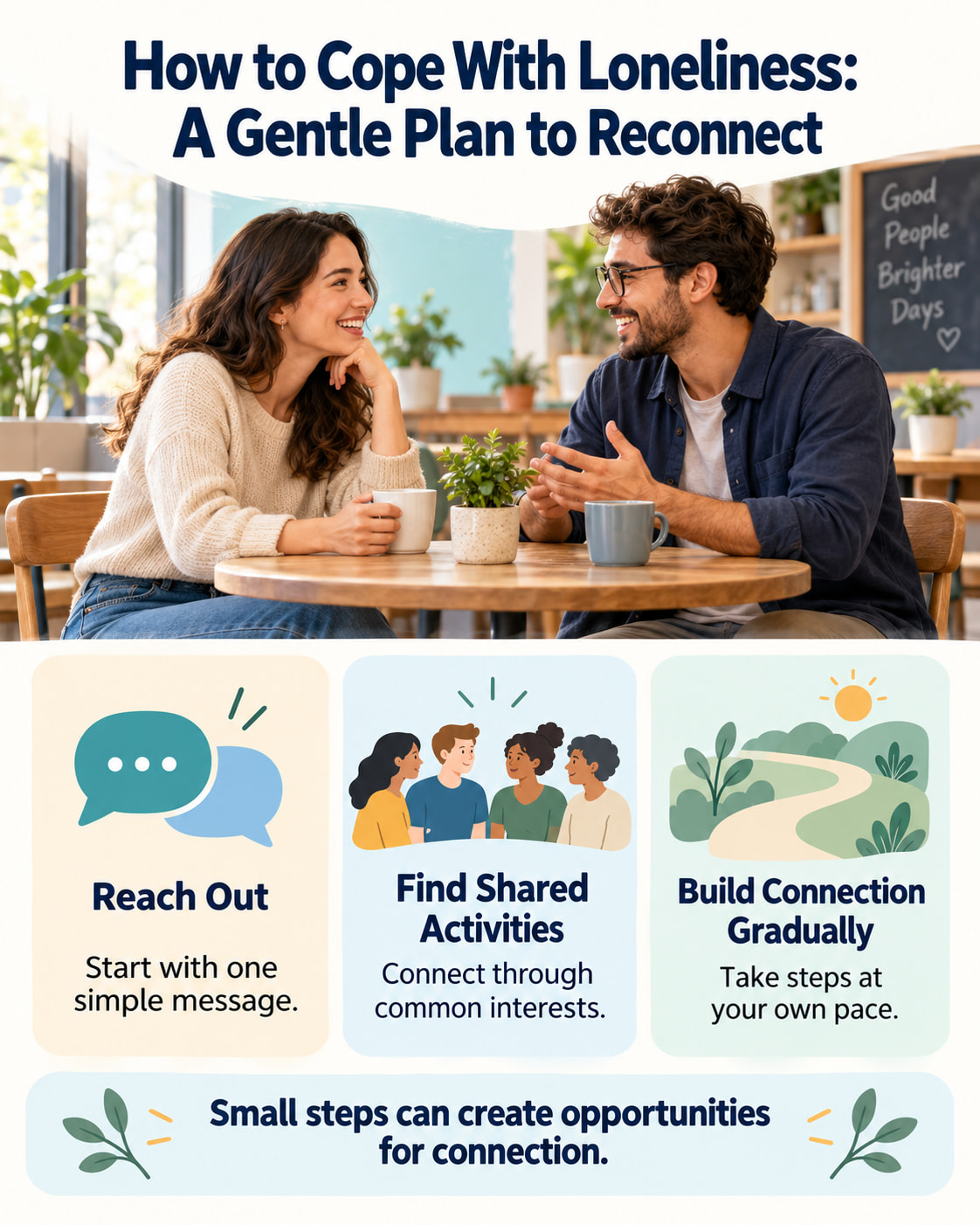
If you are wondering how to cope with loneliness, start with one manageable step toward supportive connection, build on what feels helpful, and seek extra support when loneliness is affecting your well-being.
That first step might be a short message, a shared activity, or a conversation with a counselor. Choose something that fits your energy, circumstances, and comfort level.
The aim is to make room for relationships where you feel heard and welcome. The following steps offer a flexible place to begin.
What Does Loneliness Feel Like?
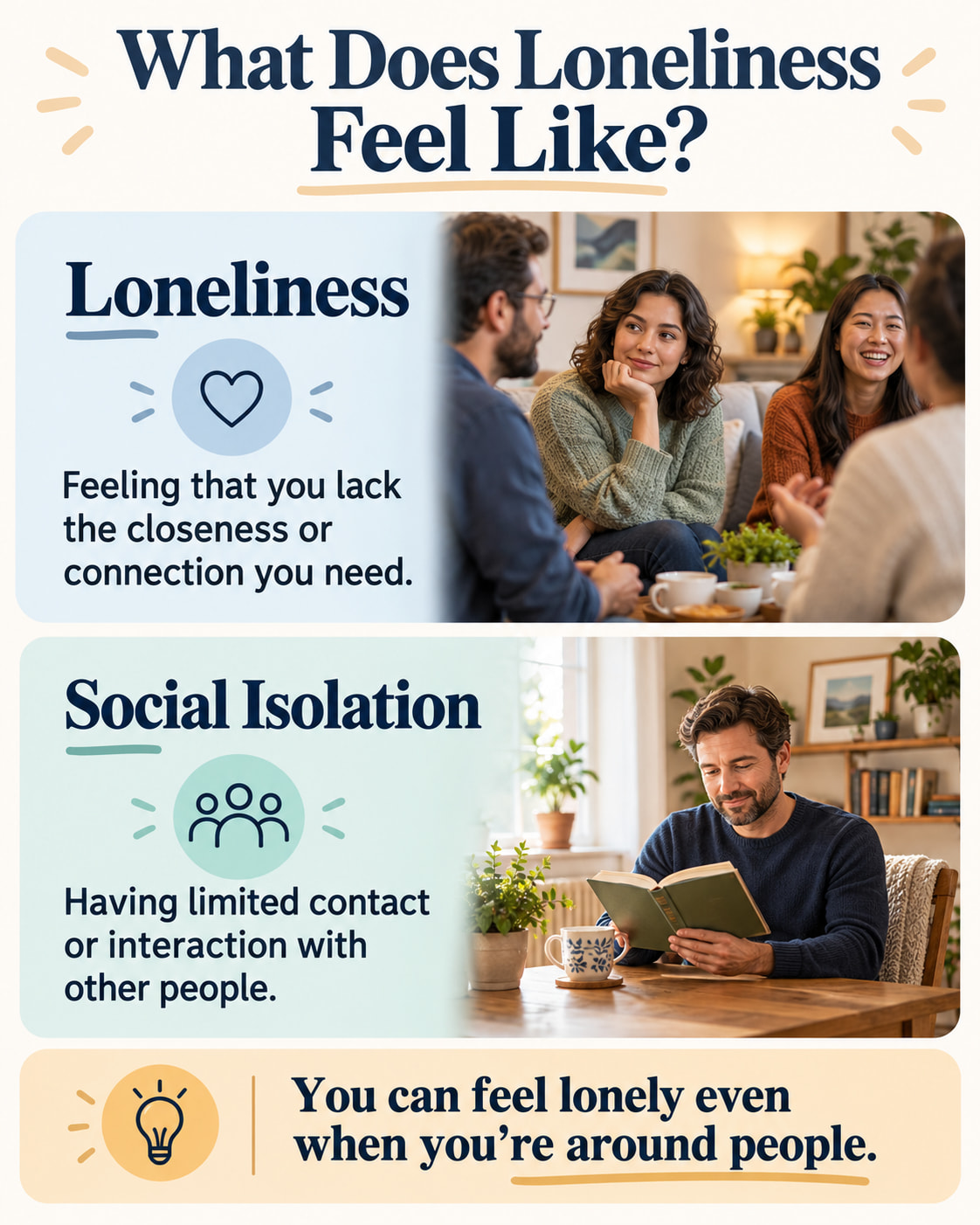
Loneliness is the distress you feel when your relationships do not provide the connection you want or need. You might miss everyday company, a close confidant, or a community where you belong.
Social isolation describes having limited contact with other people. Loneliness describes how connected you feel. You can experience it while living alone, surrounded by coworkers, or spending time with a partner.
In its June 2025 report, the World Health Organization estimated that one in six people worldwide experiences loneliness. The experience spans different ages and life circumstances.
Try describing what feels absent: “I miss having someone to talk to after work” gives you a more specific starting point than judging yourself for feeling lonely.
Why You Might Be Feeling Lonely
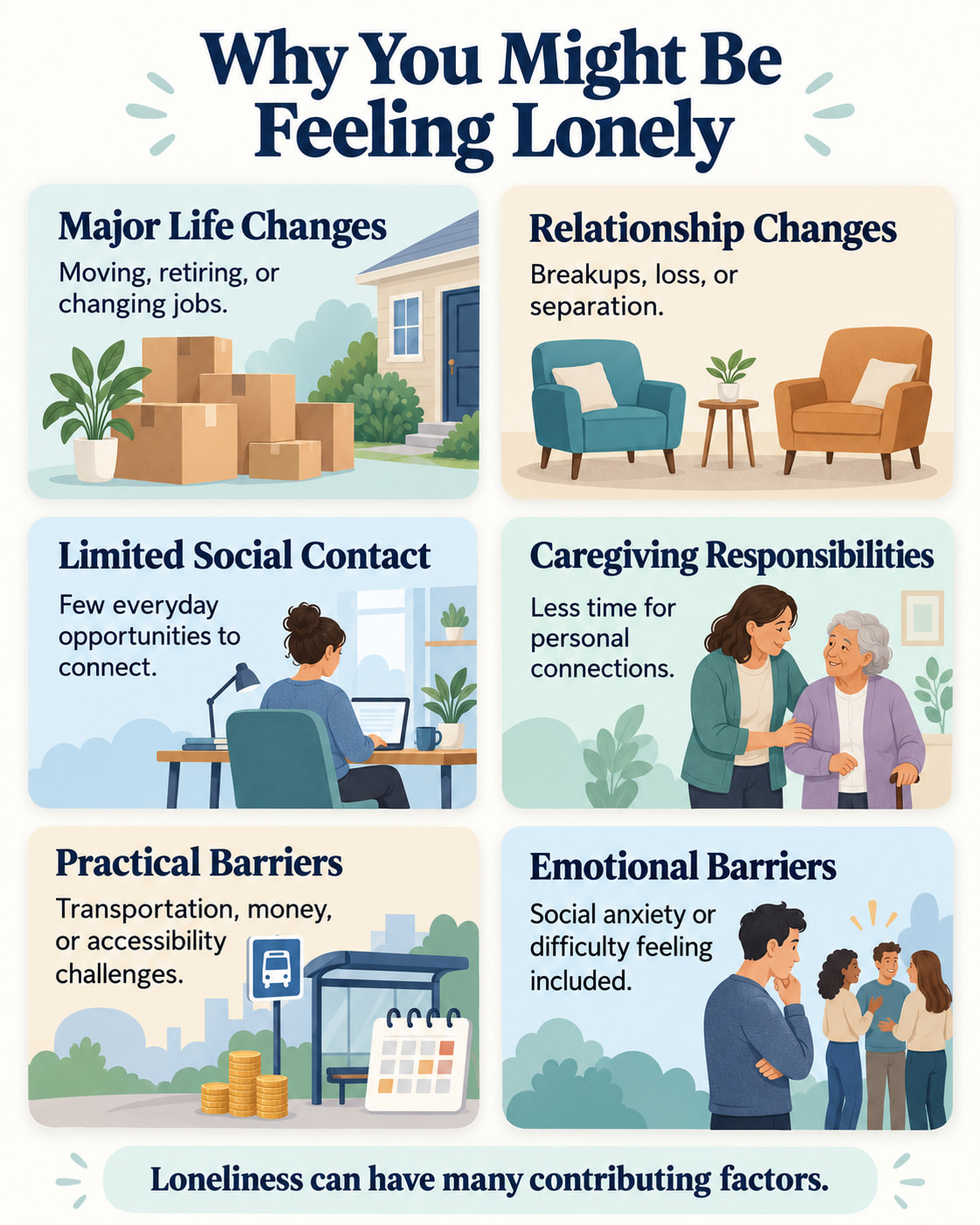
Loneliness can develop when your circumstances change or when existing relationships do not meet your needs. Common contributors include:
- Moving, changing jobs, or retiring.
- Bereavement, a breakup, or separation from loved ones.
- Living or working alone.
- Caregiving responsibilities or adjusting to parenthood.
- Illness, disability, financial pressure, or limited transportation.
- Social anxiety, exclusion, or difficulty finding people who understand your experiences.
There may be several factors involved. Consider both your emotional needs and practical barriers. If getting to an activity is difficult, an accessible location or telephone option may be a useful first step.
How to Cope With Loneliness: Start With Small Steps
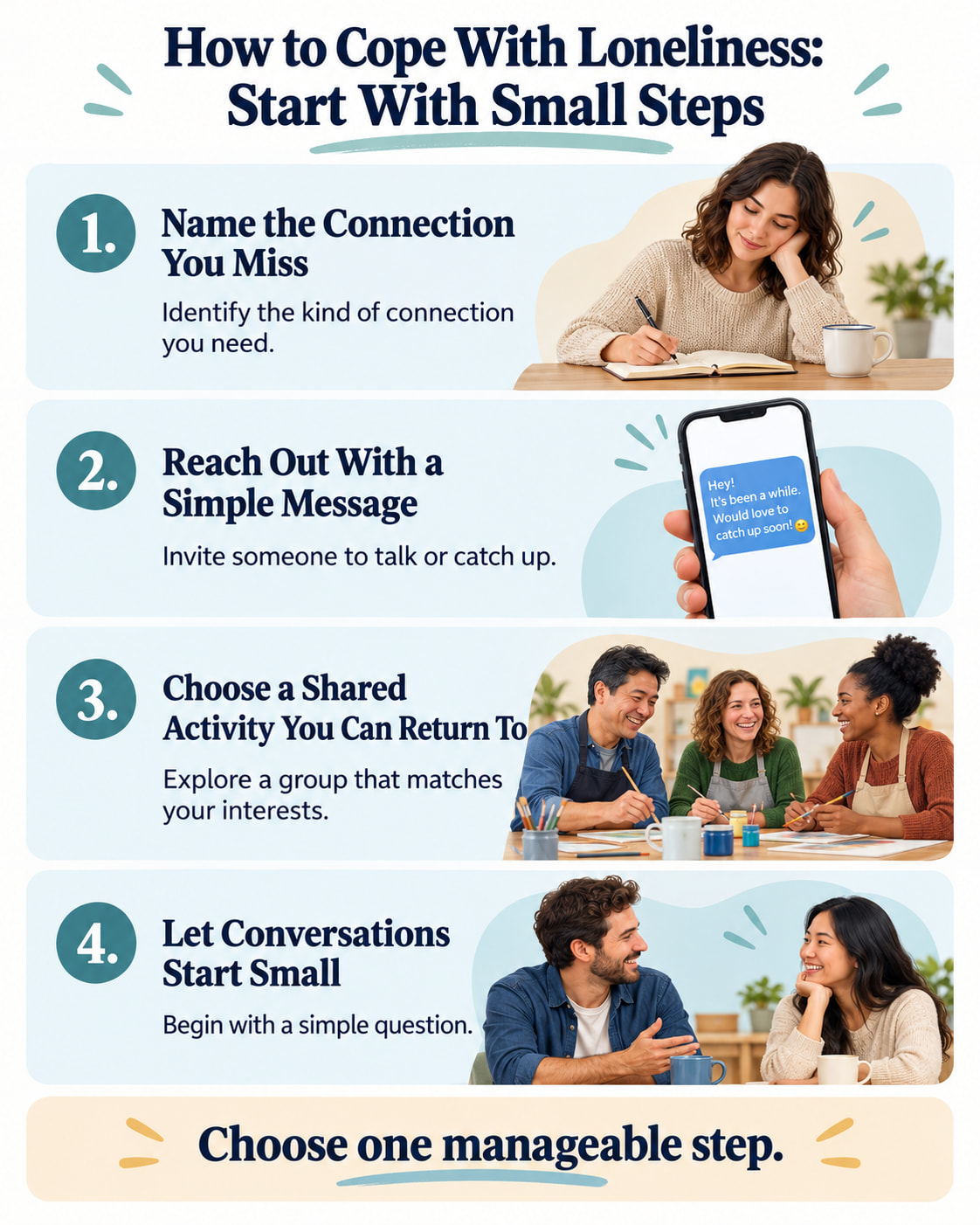
Choose one or two ideas that seem possible today. You can adjust the pace as you learn what suits you.
1. Name the Connection You Miss
Ask yourself: “What would feeling more connected look like for me?”
You might want someone to share ordinary moments with, a deeper friendship, or people who share an interest or life experience.
Try completing this sentence:
“I feel most lonely when ______, and I wish I had ______.”
For example: “I feel most lonely on weekends, and I wish I had someone to do something simple with.”
That answer can guide your next action. You could invite an acquaintance for a walk or look for a weekend activity with a shared focus.
2. Reach Out With a Simple Message
If there is someone respectful you would like to contact, keep the invitation clear and manageable. You do not have to explain everything at once.
For example:
“I was thinking about you. Would you have time for a short call this week?”
Or:
“I’m going for a walk Saturday morning. Would you like to join me?”
If you want to be more open, you could say:
“I’ve been feeling disconnected lately. I’d appreciate a chance to catch up.”
Choose wording that sounds like you. If you have no suitable person to contact, start with an organized group or support service; the section below offers options.
3. Choose a Shared Activity You Can Return To
An activity gives you something to talk about and an opportunity to see people again. Possibilities include a library book group, beginner class, community garden, accessible walking group, or volunteer role.
NHS guidance on loneliness recommends activities based on your interests and suggests asking to observe first if you feel nervous.
Before joining, consider whether the cost, location, schedule, and pace work for you. You might ask the organizer:
“Do people usually come on their own, and what happens at a first session?”
Give yourself permission to try another setting if a group feels unwelcoming or unsuitable.
4. Let Conversations Start Small
You can begin with the activity or setting you already share:
- “Have you been coming to this group for long?”
- “What did you think of today’s session?”
- “Do you have any tips for someone just starting?”
Listen to the answer and share a little about yourself if you feel comfortable. A brief exchange is enough for a first attempt.
When a conversation feels comfortable, you could ask whether the person plans to attend again. Let familiarity develop at a pace that works for both of you.
5. Make Room for Closer Conversations
If you already know people but still feel disconnected, consider whether there is someone you would like to spend more attentive time with.
The CDC’s guidance on social connection emphasizes supportive, meaningful relationships and making time to maintain them.
You might suggest a conversation without phones, ask a thoughtful follow-up question, or share something a little more personal with someone you trust.
For example:
“We’ve both been busy. Could we set aside some time to catch up properly?”
Notice whether you feel listened to and whether interest flows both ways. You can choose how much to share and maintain boundaries around relationships that repeatedly leave you feeling dismissed or unsafe.
6. Use Online Spaces to Connect Intentionally
Messaging, video calls, and groups around shared interests can provide opportunities for contact. NHS Every Mind Matters includes both online and in-person groups among its suggestions for managing loneliness.
Consider scheduling a conversation or contributing to a discussion you enjoy. Afterward, ask yourself whether the interaction felt supportive.
If a particular feed leaves you comparing your life with other people’s highlights, consider limiting that feed and choosing a different activity. You can keep the online connections you value while changing habits that leave you feeling worse.
7. Check Unhelpful Assumptions
After a delayed reply or awkward conversation, you might catch yourself thinking, “Nobody wants to hear from me.”
Pause and separate what happened from what you are assuming:
- What you know: The person has not replied.
- What remains uncertain: Why they have not replied.
- A next step: Give them time, follow up when appropriate, or direct your attention elsewhere.
You do not have to force a positive explanation. Leave room for uncertainty while paying attention to patterns of respect and reciprocity.
NIMH includes identifying and questioning unhelpful thoughts among its mental health self-care suggestions. If these thoughts feel persistent or overwhelming, consider discussing them with a mental health professional.
8. Care for Yourself Between Moments of Connection
NIMH recommends regular meals, physical activity, sleep, and enjoyable activities as ways to support mental well-being.
For a difficult evening, choose something manageable: prepare a simple meal, take a comfortable walk, listen to music, or spend time on a hobby.
If evenings are especially hard, consider arranging a conversation earlier in the day or putting something you enjoy on your evening schedule. These activities can support you while you continue looking for the companionship or understanding you need.
A Gentle Plan to Reconnect
Use this as a flexible planning aid. The timing is an example, and you can repeat or adjust any step.
| When | One possible action | A smaller option |
|---|---|---|
| Today | Identify the kind of connection you miss. | Write one sentence about when loneliness feels strongest. |
| When you feel ready | Contact someone or ask about a group. | Draft the message before sending it. |
| This week | Try an activity that interests you. | Ask an organizer what to expect. |
| Over the next few weeks | Return to a welcoming activity or arrange another conversation. | Choose the next manageable opportunity. |
| As you continue | Review what feels supportive and what needs to change. | Ask, “Did I feel heard or a little more connected?” |
Notice the steps you take as well as how you feel. Sending a message or attending a session can be worthwhile even if it does not immediately lead to friendship.
What If You Have No One to Reach Out To?
Begin somewhere that offers a reason to interact. You do not need an existing social circle to ask about a library program, community center activity, volunteer opportunity, or facilitated peer support group.
A useful opening question is:
“I’d like to meet people, but I would be coming on my own. Is there a group that welcomes newcomers?”
Let practical needs guide your search. Ask about free sessions, accessibility, language options, telephone participation, or shorter activities if those would make joining possible.
If finding a starting point feels overwhelming, a primary care provider or mental health professional can help you discuss the barriers and explore available support.
When to Seek Professional Support
Consider professional support when loneliness is persistent, distressing, disrupting daily life, or accompanied by anxiety or low mood. You can ask for help even if you are unsure what you need.
The National Institute of Mental Health advises seeking professional help for severe symptoms lasting two weeks or more, including:
- Persistent sadness, hopelessness, or worthlessness.
- Losing interest in activities you usually enjoy.
- Changes in sleep or appetite.
- Trouble concentrating or making decisions.
- Difficulty completing everyday responsibilities.
This two-week guidance concerns mental health symptoms. It is not a requirement to wait before asking for help. Contact a health care provider sooner if symptoms worsen or you are struggling to cope.
You can begin by explaining how long you have felt disconnected, how it affects your day, and what you have already tried.
If You Need Immediate Support
If you have thoughts of suicide or urges to hurt yourself, seek immediate help. In the United States, call or text 988, or use the 988 Suicide & Crisis Lifeline. It provides free, confidential support 24 hours a day for suicidal crisis or emotional distress.
Call 911 for a life-threatening emergency in the United States. Outside the United States, contact your local emergency number or crisis service.
Frequently Asked Questions
Why Do I Feel Lonely Even When I Am Around People?
Being around others does not always provide the understanding or closeness you need. Consider whether you can speak openly, feel included, and receive support in your relationships. Identifying what feels missing can help you decide which connection to deepen or where to look for a better fit.
What Can I Do When I Feel Lonely at Night?
Choose one manageable activity for the next part of the evening, such as reading, preparing for bed, or contacting someone who is available. If this happens regularly, consider planning a call or shared activity ahead of time. Seek support if the distress becomes difficult to manage.
Can I Live Alone Without Feeling Lonely?
Yes. Living alone and feeling lonely are different experiences. Consider what mix of visits, conversations, shared activities, and time by yourself feels satisfying. Your living arrangement does not determine how connected you must feel.
Does Feeling Lonely Mean I Have Depression?
Loneliness alone does not establish a depression diagnosis. Depression involves a broader pattern of symptoms that can affect mood, interest, energy, sleep, and daily functioning. The two can occur together. If you are concerned about persistent changes, speak with a health care provider.
Can Online Friendships Help With Loneliness?
Online friendships can offer companionship and opportunities to share interests. Consider whether the relationship feels respectful, supportive, and reciprocal. Your needs may be met through a combination of online, telephone, and in-person contact, depending on your circumstances.
How Long Does It Take to Feel Less Lonely?
There is no fixed timeline. Some conversations may bring comfort quickly, while finding belonging or developing closer relationships can take longer. Adjust your approach based on what feels supportive, and seek help if loneliness remains distressing despite your efforts.
Conclusion
Learning how to cope with loneliness begins with understanding the connection you need and choosing a manageable next step.
Pick one action: send a message, ask about an activity, or tell a professional how you have been feeling. Build from there at a pace that fits your life.
This content is for informational purposes only and not medical advice.