
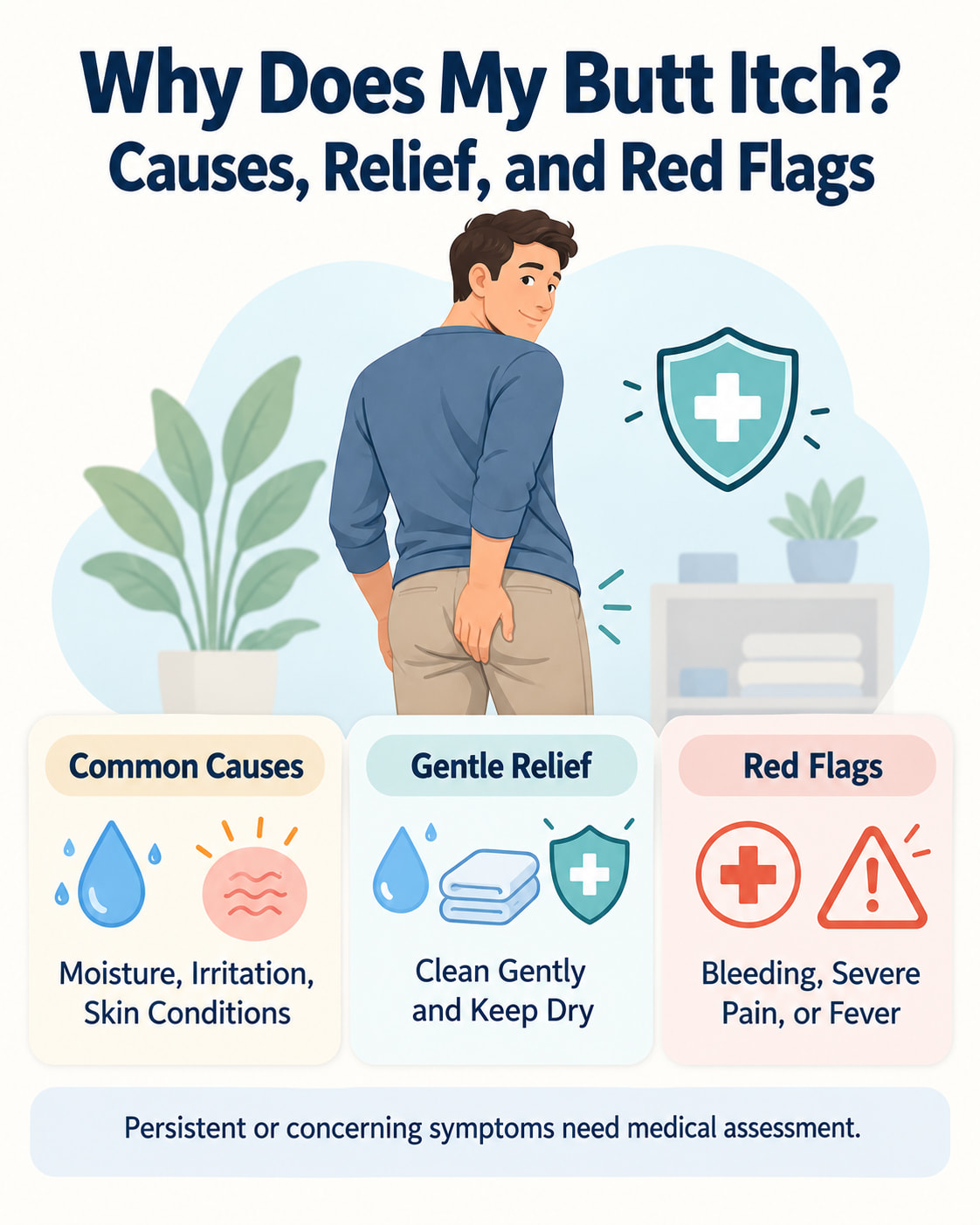
An itchy butt often comes from moisture, stool residue, excessive wiping, or irritating skin products. Hemorrhoids, skin conditions, and infections can also cause itching. If you are wondering, “Why does my butt itch?” the location, timing, and other symptoms can help guide your next steps.
Mayo Clinic lists irritation, infections, and skin conditions among the common causes of anal itching. Gentle skin care may help, but itching that persists, becomes severe, or occurs with bleeding or other changes deserves medical attention.
What Is Anal Itching (Pruritus Ani)?
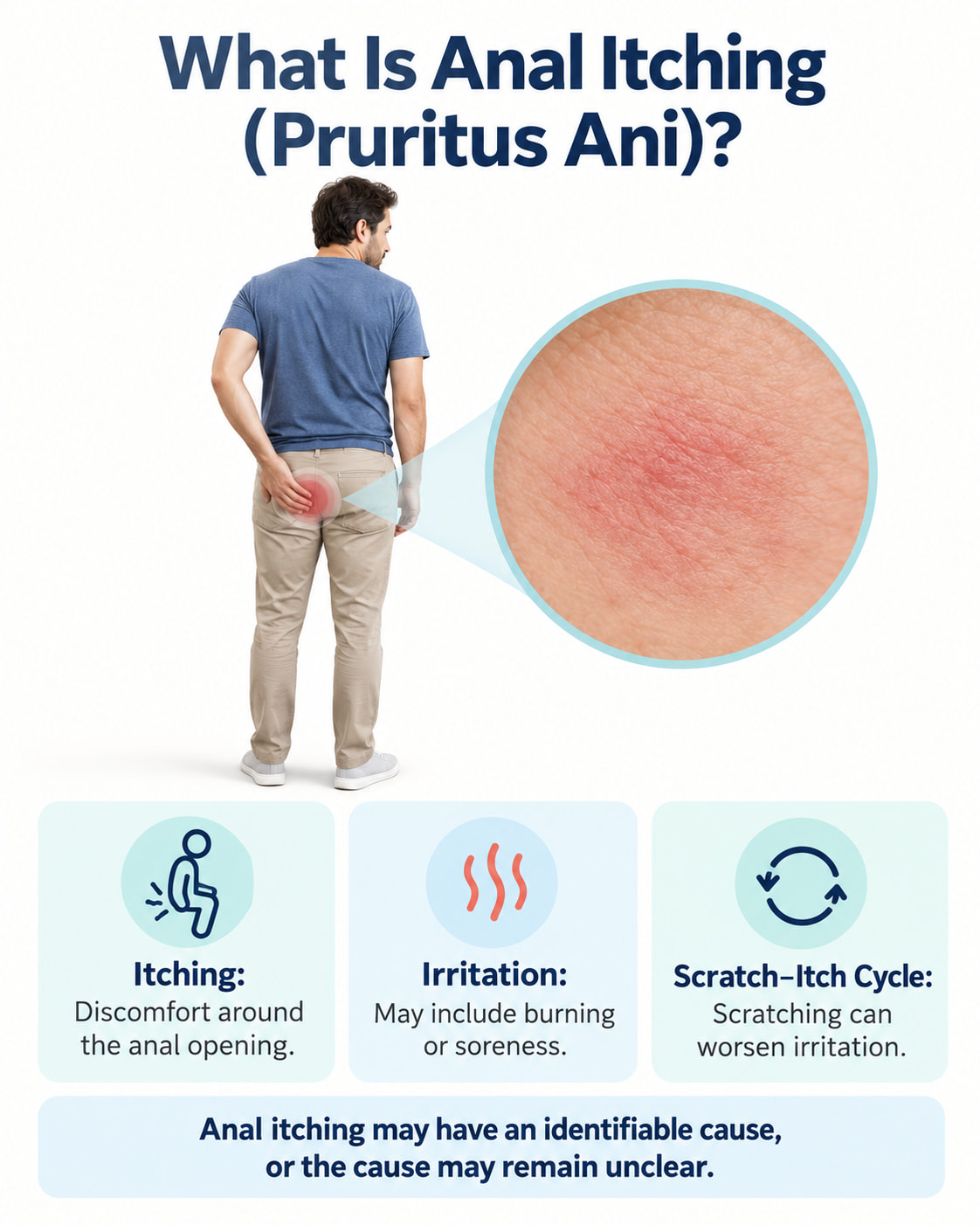
Anal itching, also called pruritus ani, affects the skin at or around the anus—the opening where stool leaves your body. It may come with burning, soreness, or irritated skin. Sometimes an examination identifies a cause; other times, the cause remains unclear.
Scratching may briefly feel satisfying, but it can damage the skin and lead to more itching. Breaking that cycle is part of getting comfortable again.
This article focuses on itching around the anal opening. If your itch mainly affects the outer buttocks, describe that location to your clinician, especially if you have a visible rash.
Why Does My Butt Itch? Common Causes
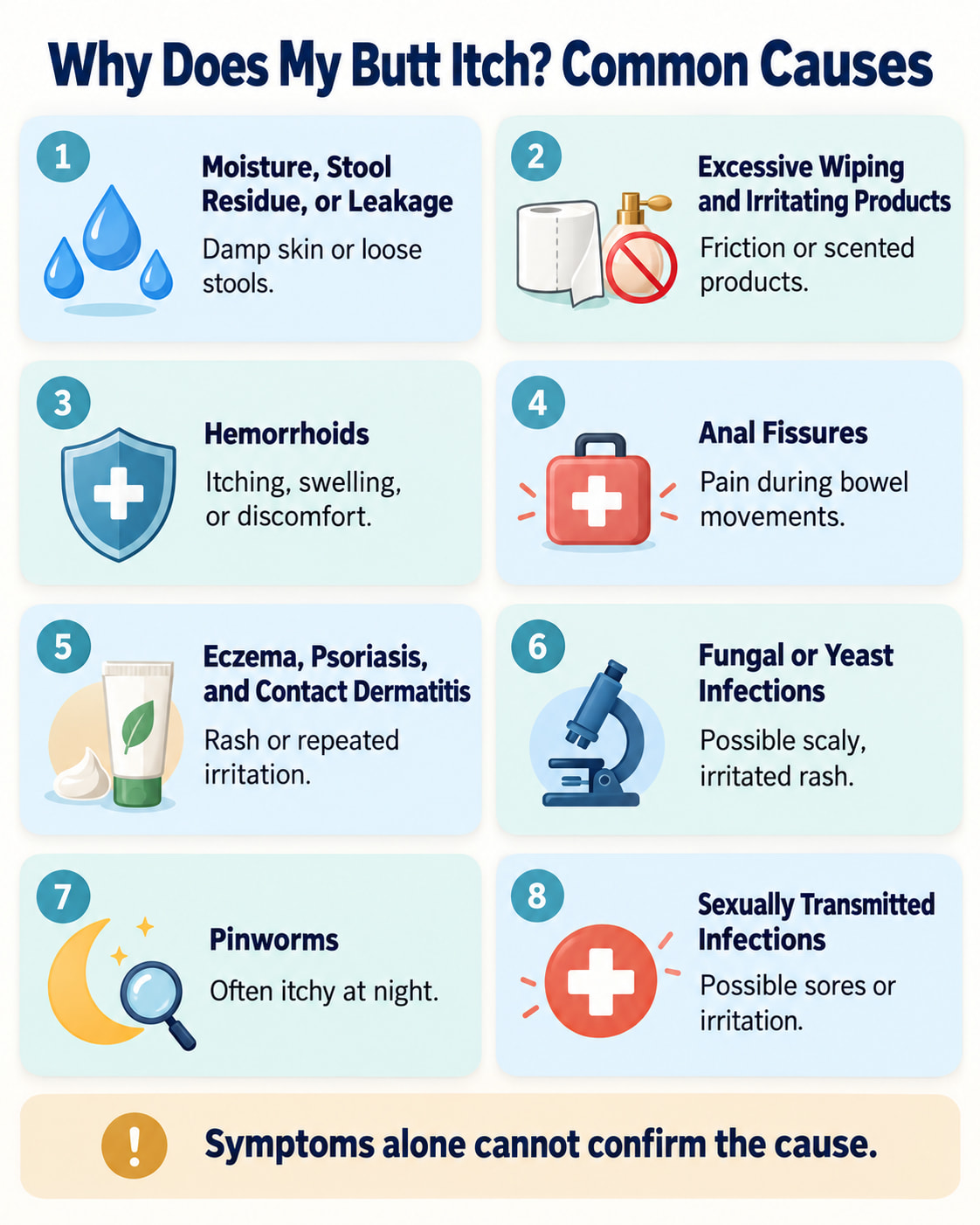
Several conditions can produce similar symptoms. The clues below can help you describe the problem, but they cannot confirm a diagnosis.
1. Moisture, Stool Residue, or Leakage
Sweat, mucus, and small amounts of stool can irritate the delicate skin around the anus. Loose stools or bowel leakage may keep that skin damp.
You might notice itching after a bowel movement, during hot weather, or when you have been sweating. Repeated contact with moisture can contribute even when you clean regularly.
2. Excessive Wiping and Irritating Products
Repeated wiping and scrubbing can irritate your skin. Scented soaps and lotions may also cause problems.
If itching started after switching products, that change is worth mentioning. Trying to scrub away the discomfort can make it worse. Gentle cleaning is usually a better starting point.
3. Hemorrhoids
Hemorrhoids are swollen veins in the anus or lower rectum. External hemorrhoids can cause itching, discomfort, swelling, and bleeding.
However, rectal bleeding should not automatically be blamed on hemorrhoids. Other conditions can cause similar symptoms, so new or unexplained bleeding needs assessment.
4. Anal Fissures
An anal fissure is a small tear in the lining of the anal opening. It can contribute to irritation, although sharp pain during a bowel movement is a more characteristic symptom.
Burning afterward and bright red blood on toilet paper may also occur. These symptoms overlap with other problems, making an examination useful when pain or bleeding accompanies the itch.
5. Eczema, Psoriasis, and Contact Dermatitis
Skin conditions can affect the anal area just as they affect other parts of your body.
Contact dermatitis develops when something irritates your skin or triggers an allergic reaction. Eczema and psoriasis are other possibilities. A rash elsewhere, recurring skin irritation, or symptoms after using a product can provide useful clues.
6. Fungal or Yeast Infections
Fungal infections can cause itching around the anus. For example, jock itch may spread from the groin toward the anal area and produce a scaly, irritated rash.
Because several conditions can look similar, itching alone is not enough to identify a fungal infection. A clinician may examine the skin and, when needed, collect a sample.
7. Pinworms
Pinworms are small intestinal parasites that can cause anal itching, particularly at night.
They occur most often in children, but adults can get them, including household members and caregivers. Infection spreads when someone accidentally swallows microscopic eggs transferred from hands or contaminated objects. Having an itchy anus does not automatically mean you have worms.
8. Sexually Transmitted Infections
Some sexually transmitted infections, or STIs, can affect the anal area and cause irritation, sores, or swelling.
If you have had a possible exposure or notice new sores or discharge, contact a clinician or sexual health clinic. The appearance of the skin or the presence of itching cannot reliably identify which infection, if any, is involved.
Why Does My Butt Itch at Night?
Pinworms can cause nighttime itching when female worms deposit eggs around the anus during sleep. But anal itching from other causes can also become worse at bedtime.
Nighttime itching does not confirm pinworms. Persistent symptoms deserve an assessment rather than repeated attempts to guess the cause.
How to Ease an Itchy Butt
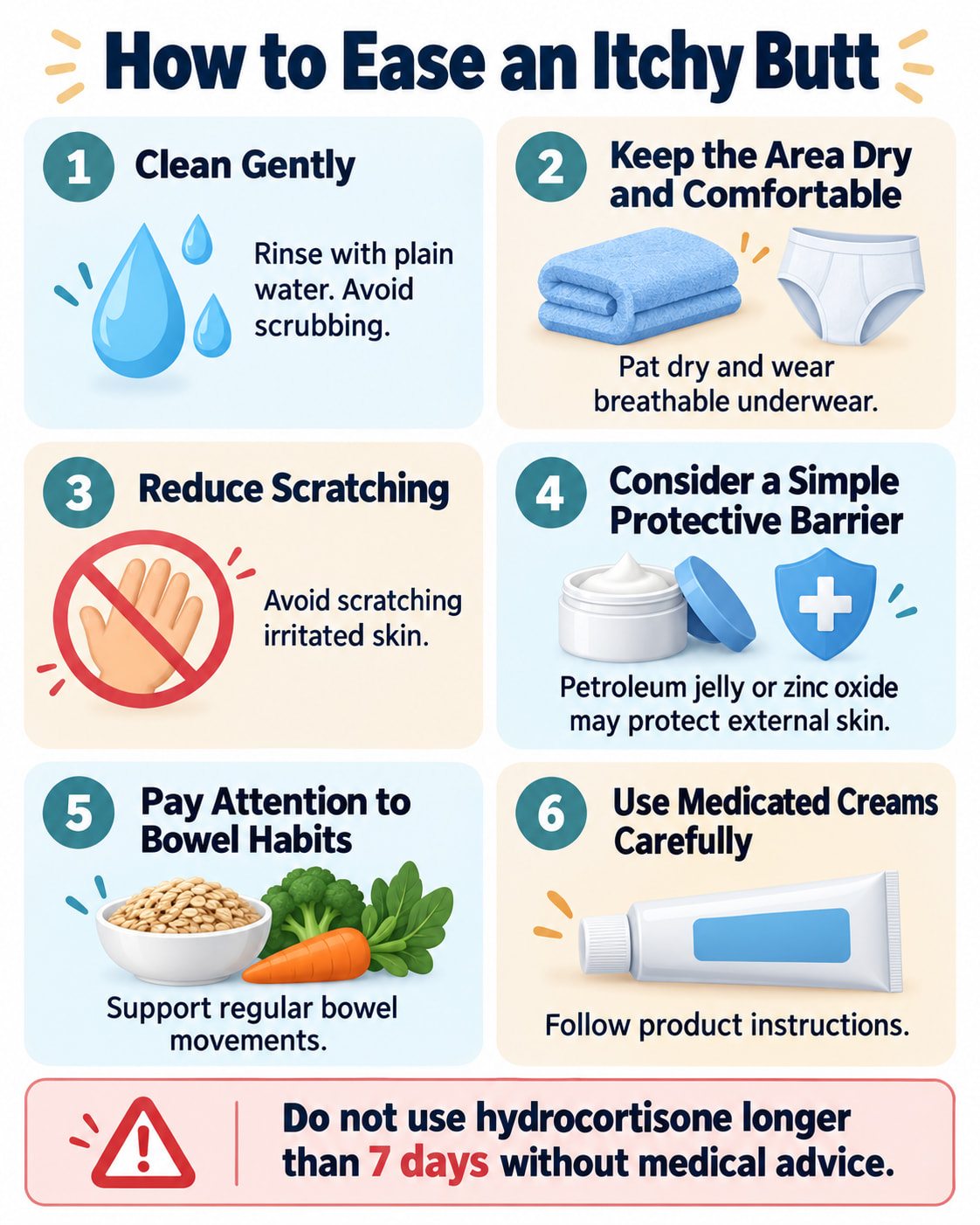
For mild itching without concerning symptoms, the first goal is to reduce irritation and keep the skin clean and dry. Mayo Clinic recommends gentle cleansing and skin protection as part of self-care.
Clean Gently
Rinse the area with plain water after a bowel movement when practical. A squeeze bottle or gentle shower rinse can make this easier.
Avoid scrubbing. If you use toilet paper, use it gently, and avoid repeated wiping in an effort to make the area feel perfectly clean. Skip scented soaps, deodorants, and fragranced products near the anus.
Keep the Area Dry and Comfortable
Pat dry with a soft towel instead of rubbing. Wear loose cotton underwear and avoid clothing that traps heat and moisture.
After exercise or heavy sweating, changing into dry underwear is a practical way to reduce prolonged dampness.
Reduce Scratching
A moist, room-temperature compress may provide temporary comfort. Keep your fingernails short.
If you scratch during sleep, cotton gloves may help limit skin damage. Scratching can prolong irritation even when the original trigger is improving.
Consider a Simple Protective Barrier
A thin layer of plain petroleum jelly or zinc oxide ointment may help protect irritated external skin from moisture.
These products do not address every possible cause. Persistent itching, a spreading rash, sores, or discharge should be assessed rather than repeatedly covered with different creams.
Pay Attention to Bowel Habits
Fiber-containing foods, such as vegetables, fruit, and whole grains, can support regular bowel movements. Avoid straining.
If you have ongoing diarrhea or stool leakage, discuss it with a clinician. Managing the source of repeated moisture may be necessary for the skin to settle.
Notice Individual Food and Drink Triggers
Some people find that coffee, alcohol, or spicy foods aggravate their symptoms. That does not mean everyone needs to avoid them.
The American Society of Colon and Rectal Surgeons notes that definitive studies have not established particular foods as universal causes. If you notice a consistent connection, consider reducing one suspected trigger at a time and tracking whether symptoms change.
Use Medicated Creams Carefully
Ask a pharmacist whether an over-the-counter product intended for external anal itching is appropriate. Follow its label.
A US hydrocortisone label advises stopping and contacting a clinician if symptoms worsen, last longer than seven days, or clear and return within a few days. It also says not to insert the external-use ointment into the rectum and to seek prompt advice if rectal bleeding occurs.
Do not continue hydrocortisone beyond seven days without medical advice. For anal itching in a child younger than 12, this label directs caregivers to ask a doctor.
Prolonged steroid use can thin the skin, and hydrocortisone can worsen an existing infection. If you have unexplained sores, discharge, or suspected infection, seek advice before choosing a steroid cream.
When to See a Doctor for Anal Itching
Arrange an appointment if itching is severe, keeps returning, or does not improve with gentle care. Also seek assessment for:
- A new rash, lump, sore, or unusual skin change.
- Bleeding or discharge.
- Stool leakage.
- A change in your usual bowel habits.
- Persistent pain or an area that appears infected.
MedlinePlus recommends contacting a clinician if self-care has not helped within two to three weeks. Concerning symptoms should be assessed sooner; that timeframe is not a reason to delay care.
Red Flags That Need Faster Care
NHS guidance on anal pain distinguishes urgent symptoms from emergencies:
| Symptoms | What to do |
|---|---|
| Severe anal pain with fever or chills | Seek urgent medical assessment. |
| Black or dark red stool | Seek urgent medical assessment. |
| Heavy or nonstop rectal bleeding, or large blood clots | Seek emergency care. |
Constant throbbing pain with pus or fever can occur with an anal abscess or fistula. These symptoms need assessment rather than continued use of anti-itch products.
Bleeding accompanied by dizziness, lightheadedness, or faintness also warrants emergency care.
Could Anal Itching Be Cancer?
Anal cancer is uncommon, but possible symptoms include itching, bleeding, pain, a growth, and changes in bowel habits.
These symptoms can overlap with more common conditions. Have persistent unexplained symptoms or a new lump, sore, or bleeding checked instead of assuming the cause.
How Doctors Find the Cause of Anal Itching
A clinician may ask about your symptoms and cleaning habits, examine the skin, and sometimes perform a rectal examination. If the cause remains unclear or symptoms persist, a dermatology referral may be appropriate.
Come prepared to describe when the itching occurs, any bowel changes, and the products or medicines you use.
When pinworms are suspected, the CDC describes a tape test for pinworm eggs. A clinician may ask you to collect samples on three consecutive mornings before washing or using the bathroom. The samples are examined under a microscope.
Frequently Asked Questions
Why Does My Butt Itch Even When It Is Clean?
Cleaning does not prevent every cause of itching. Excessive wiping, harsh products, skin conditions, and moisture can still cause irritation. If you are already washing frequently, simplify your routine rather than scrubbing harder.
Why Does My Butt Itch After I Poop?
Stool residue, loose stools, moisture, or repeated wiping may irritate the area. Gently rinse and pat dry. If you also have pain, bleeding, leakage, or persistent symptoms, arrange an assessment.
Does Anal Itching Always Mean Pinworms?
No. Pinworms are one possibility, especially with nighttime itching in children or household contacts. Many noninfectious conditions can cause the same symptom, so testing may be needed when pinworms are suspected.
Can Hemorrhoids Cause Anal Itching?
Yes. External hemorrhoids can cause itching and irritation, sometimes with swelling or discomfort. Itching by itself cannot confirm hemorrhoids, and unexplained bleeding should be checked.
Is Petroleum Jelly Good for an Itchy Butt?
A thin layer may help protect irritated external skin from moisture. It does not address an infection or other underlying condition, so persistent symptoms still need evaluation.
How Long Does Anal Itching Last?
There is no single timeline because the cause matters. Contact a clinician if symptoms persist or recur despite gentle care. Seek help sooner for bleeding, severe pain, fever, discharge, or a new lump, and follow the separate seven-day limit for unsupervised hydrocortisone use.
Conclusion
An itchy butt can have several explanations, and effective relief starts with reducing irritation and identifying the cause. Begin with gentle cleaning, careful drying, comfortable underwear, and fewer irritating products.
If symptoms keep returning, do not improve, or come with bleeding, pain, or skin changes, arrange a medical appointment. A clear description of your symptoms can help a clinician work out the next step.
This content is for informational purposes only and not medical advice.
References
- Mayo Clinic: Anal itching—symptoms and causes
- Mayo Clinic: Anal itching—diagnosis and self-care
- Cleveland Clinic: Anal itching—overview
- American Society of Colon and Rectal Surgeons: Pruritus ani—patient guide
- MedlinePlus: Anal itching—self-care
- American Society of Colon and Rectal Surgeons: Pruritus ani—expanded information