
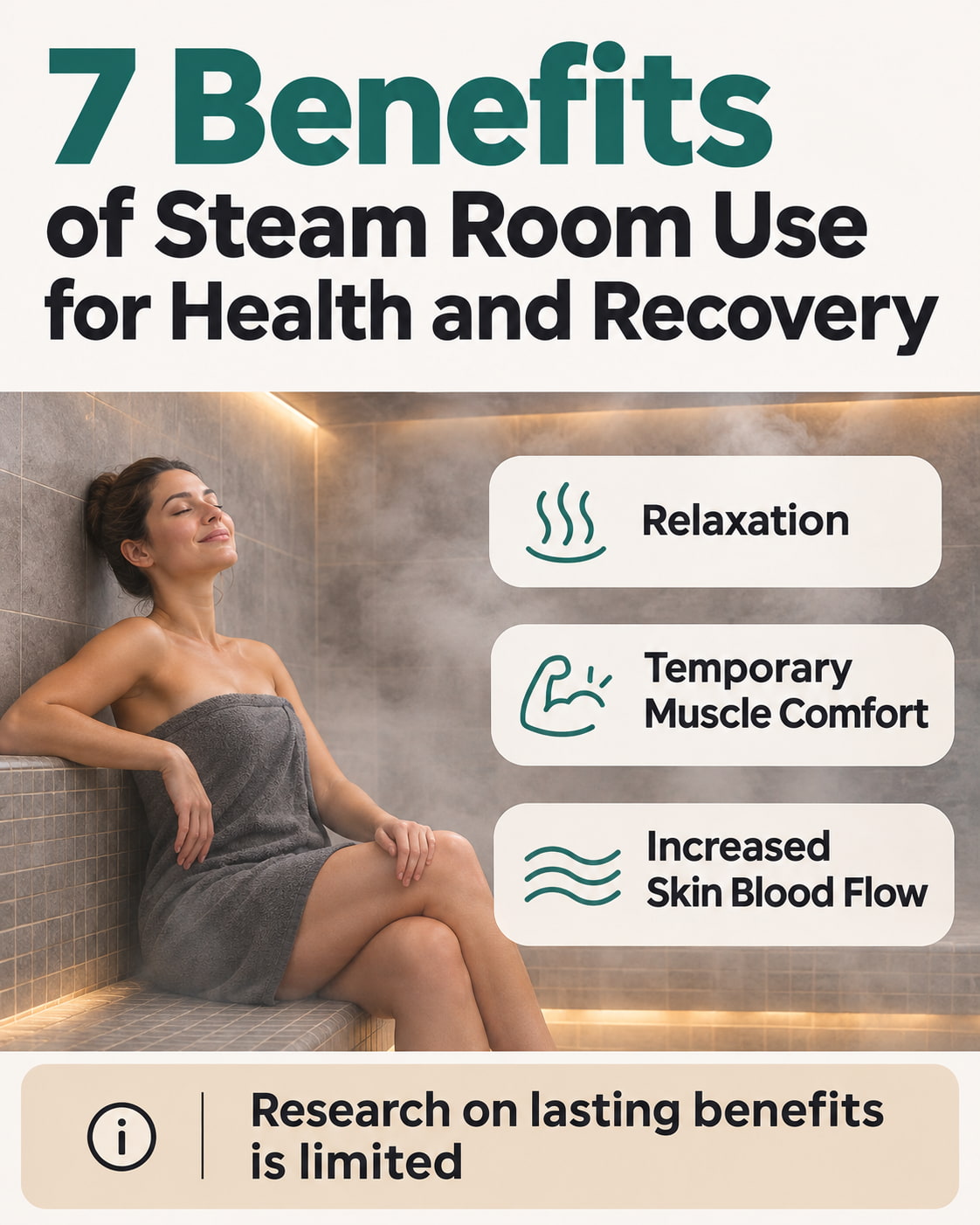
The potential benefits of steam room use include relaxation, temporary comfort for tired muscles and stiff joints, and increased blood flow near the skin. Evidence for lasting health improvements or faster workout recovery remains limited.
A steam room can be an optional part of your wellness routine if you enjoy humid heat and can use it safely. However, many popular claims come from research on dry saunas, hot baths, or heat packs. Those findings do not automatically apply to a short visit to your gym’s steam room.
Here is what the seven potential benefits mean, where the evidence falls short, and how to approach steam-room use safely.
What Is a Steam Room?
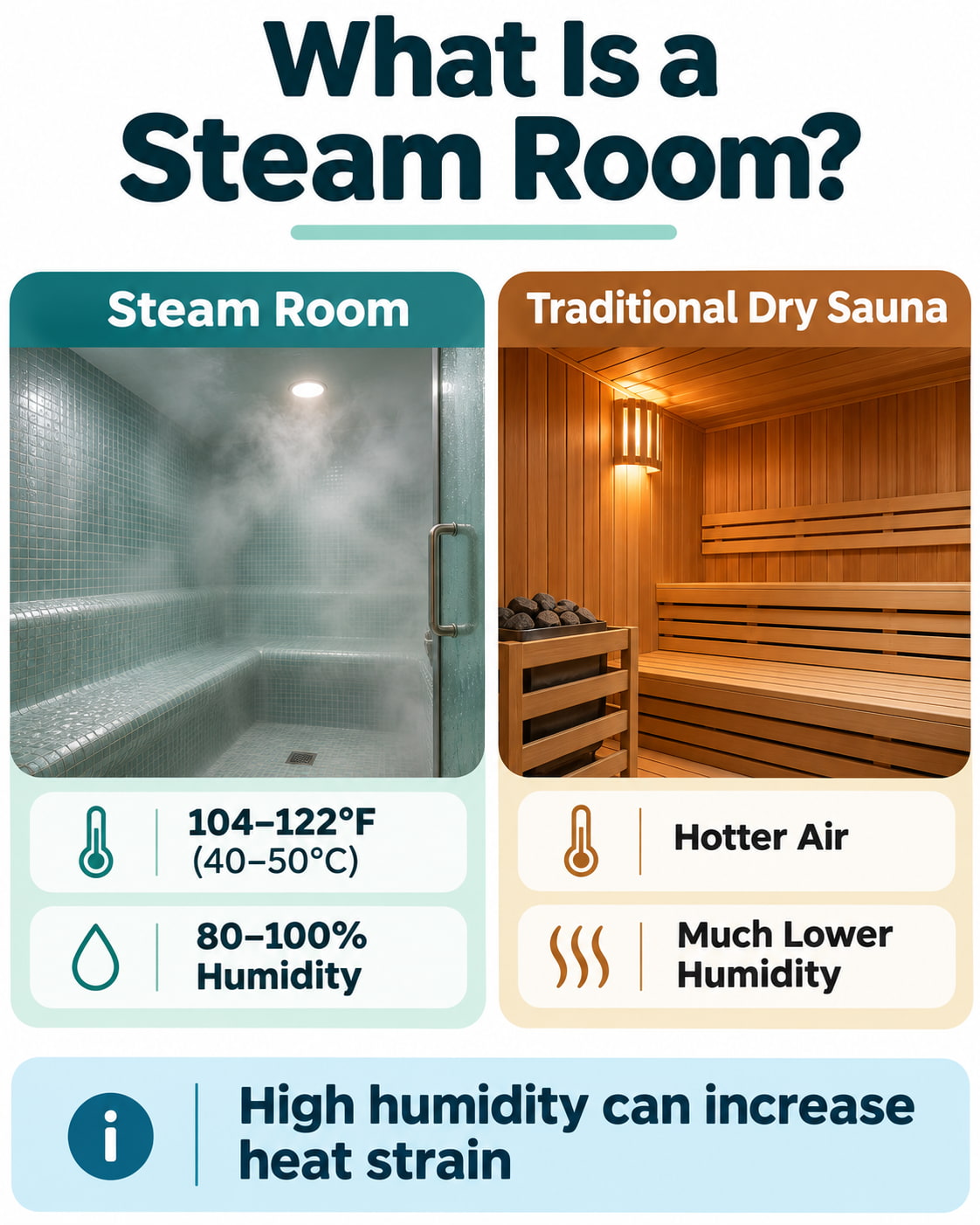
A steam room is an enclosed space filled with warm, humid air. Facility guidance commonly describes temperatures around 104–122°F (40–50°C) and humidity of 80–100%, although conditions vary.
The main difference between a steam room and a traditional sauna is the amount of moisture in the air.
| Feature | Steam room | Traditional dry sauna |
|---|---|---|
| Heat | Warm air with steam | Hotter air with much less moisture |
| Humidity | Often 80–100% | Often around 10–20% |
| Common interior | Tile, glass, or other moisture-resistant surfaces | Wood |
| Research limitation | Relatively little direct research | More research, but findings cannot automatically be transferred to steam rooms |
A lower room temperature does not necessarily mean less strain on your body. High humidity slows sweat evaporation, making it harder to release heat.
7 Potential Benefits of Steam Room Use
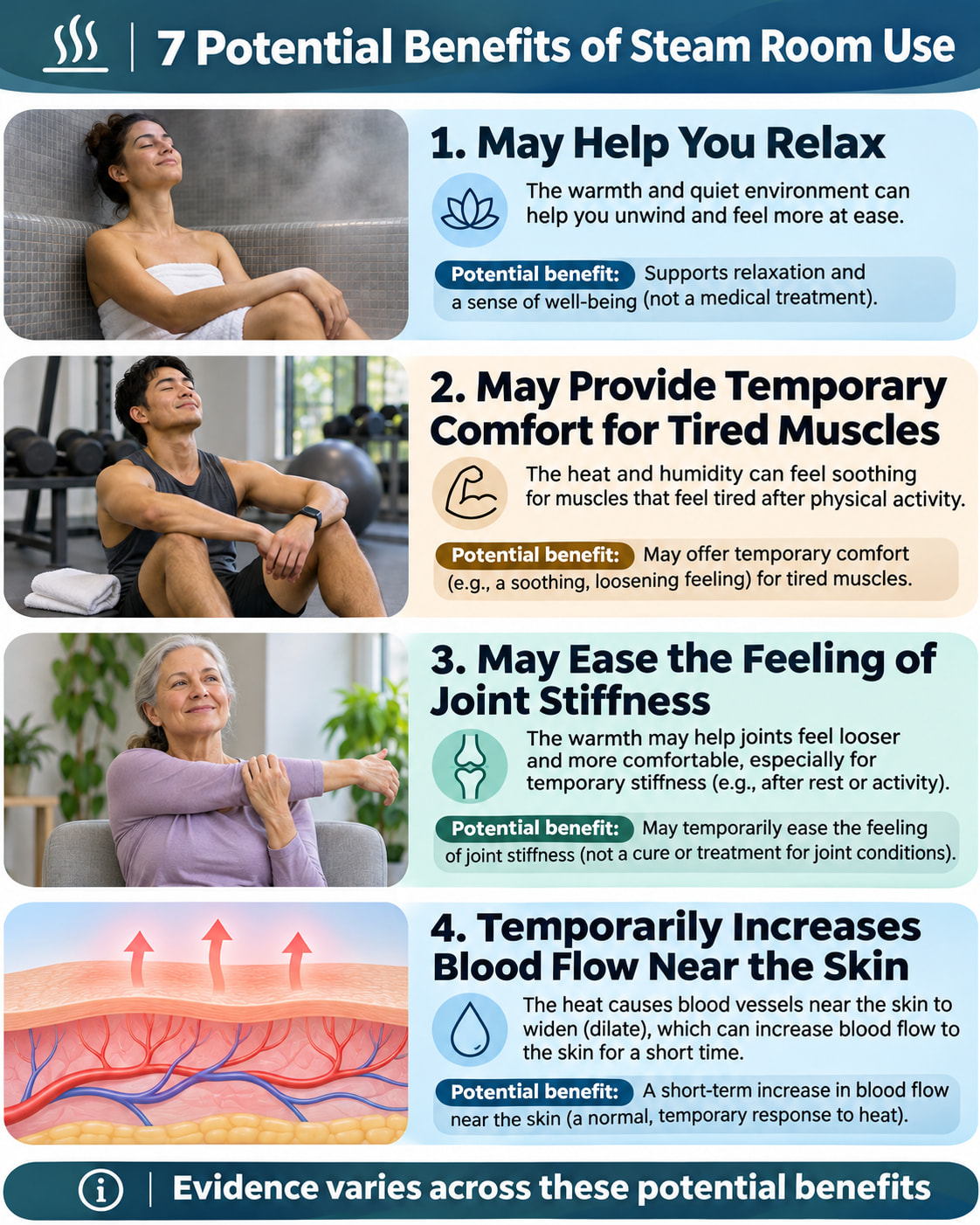
These benefits range from personal comfort to short-term physiological changes. They are not equally well established, and some remain uncertain.
1. May Help You Relax
A comfortable steam session may help you unwind. Warmth, quiet surroundings, and a break from everyday demands can make the experience pleasant.
A 2026 review from Canada’s National Collaborating Centre for Environmental Health describes relaxation as a commonly reported experience associated with heat bathing. However, that does not establish a specific effect on stress hormones or a mental health condition.
Treat relaxation as a personal response. If humid heat feels uncomfortable, there is no reason to force yourself to stay.
2. May Provide Temporary Comfort for Tired Muscles
Warmth may make tired or sore muscles feel more comfortable after activity. The evidence needs careful interpretation, though.
A 2013 study involving 100 adults found benefits from moist and dry heat after an exercise task. However, researchers applied heat packs for hours, rather than having participants sit briefly in a steam room.
This supports the possibility of heat-related comfort, but it does not establish that an ordinary steam-room visit reduces next-day soreness or speeds muscle repair.
Feeling more comfortable is a reasonable expectation; guaranteed faster recovery is not. Steam-room use should remain optional within your recovery routine.
3. May Ease the Feeling of Joint Stiffness
Heat can help some people feel less stiff. Arthritis Foundation guidance describes heating pads, warm baths, and other heat applications as options that may ease joint stiffness.
A steam room may provide a similar feeling of warmth and temporary comfort. This is an inference from general heat guidance, rather than a firmly established steam-room benefit.
If your joints feel easier to move afterward, keep movement comfortable. That sensation does not show that a joint injury has recovered or that an underlying condition has improved.
4. Temporarily Increases Blood Flow Near the Skin
Your body changes circulation when exposed to heat. More blood moves toward the skin as part of the effort to release warmth.
In a 2012 study, 10 men completed a localized muscle-fatigue task followed by a hot bath, shower, mist sauna, or no bathing. Researchers found higher skin blood flow and oxygenated hemoglobin measurements with mist bathing than with showering or no bathing.
The study used a specialized mist sauna, and the strongest muscle electrical recovery result favored hot-water immersion.
For readers, the useful distinction is that a temporary circulation change does not establish lasting cardiovascular protection or improved athletic performance.
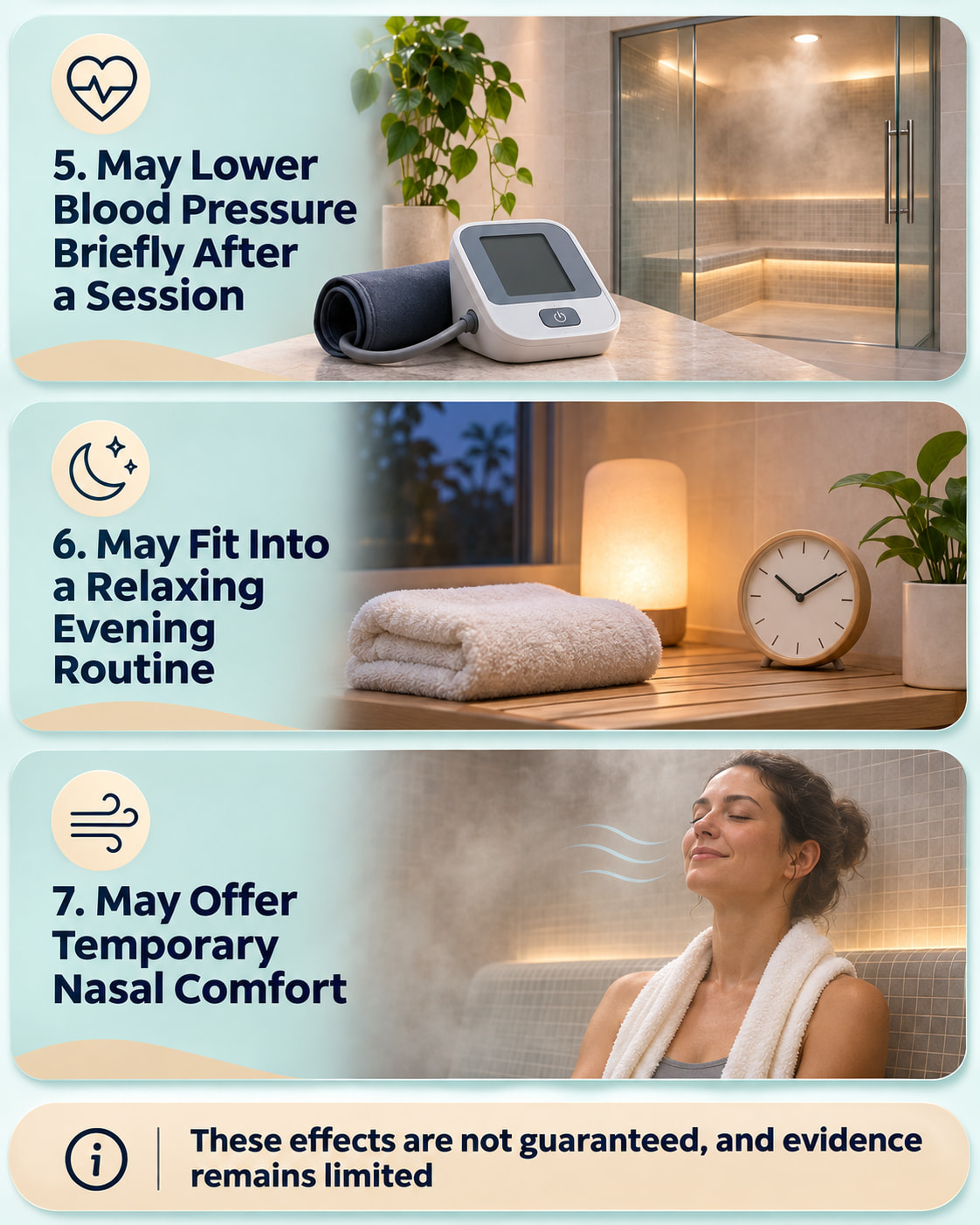
5. May Lower Blood Pressure Briefly After a Session
A 2021 randomized trial involving 80 healthy volunteers compared steam bathing followed by a shower with showering alone.
Systolic blood pressure—the top number—initially increased after steam exposure, then decreased during recovery. The paper describes steam bathing with the head outside the enclosure, so its findings may not fully apply to a communal steam room.
These short-term changes do not establish lasting blood-pressure control. A drop may also be undesirable for someone prone to low blood pressure or fainting.
Do not use steam-room sessions to manage hypertension or change a prescribed care plan.
6. May Fit Into a Relaxing Evening Routine
Some people enjoy the calming experience of warm bathing before bed. Steam-specific sleep research is much less certain.
A 2012 mist-sauna study involved only eight participants. Compared with normal bathing, mist bathing did not significantly improve the time it took to fall asleep or sleep efficiency.
Researchers observed a difference in one sleep-related brain-wave measure, and participants reported feeling more refreshed the next morning. Those findings are preliminary.
You may find a session relaxing, but it should not be presented as a proven way to improve sleep.
7. May Offer Temporary Nasal Comfort
Warm, humid air may feel soothing to some people with a stuffy nose. Reliable congestion relief has not been established.
NHS guidance published in November 2025 states that strong evidence is lacking for steam inhalation to relieve colds or blocked noses. Any relief experienced is temporary and does not shorten recovery.
That guidance concerns inhalation rather than whole-room exposure, so it cannot establish a steam-room benefit either.
High humidity can also trigger asthma symptoms in some people. If steam makes breathing harder, leave immediately.
Do Steam Rooms Help With Weight Loss, Detoxification, or Skin Health?
Some widely advertised benefits go beyond what the evidence supports.
Weight Loss Is Usually Temporary Fluid Loss
An immediate drop on the scale after sweating mainly reflects fluid loss and generally reverses with rehydration. Steam rooms should not be used as a fat-loss method.
Detoxification Claims Are Not Established
Sweating is not proof that a session has removed a harmful amount of toxins. The National Center for Complementary and Integrative Health describes major limitations in evidence behind commercial detox approaches, including programs that use saunas.
There is no evidence-based reason to stay longer to “sweat out” more toxins.
Skin Benefits Are Uncertain
A small micro-mist study measured short-term cheek moisture, but it did not establish lasting skin-health benefits from ordinary steam rooms. Claims about acne clearance, collagen improvement, or deep cleansing go beyond those findings.
Heat can also aggravate some skin concerns. The American Academy of Dermatology identifies overheating as a possible rosacea trigger. If steam leaves your skin irritated or persistently flushed, avoid further exposure.
How to Use a Steam Room Safely
Start With a Short Session
Follow the facility’s posted rules and leave as soon as you feel uncomfortable.
Cleveland Clinic guidance suggests beginners may start with about five minutes. This is general sauna guidance, not a validated steam-room duration or a guarantee of safety.
Your health, recent exercise, room conditions, and heat tolerance all affect how you respond. There is no established weekly schedule that guarantees benefits.
Cool Down After Exercise and Stay Hydrated
Allow your body to cool down after a workout before entering. Public steam-room guidance specifically advises waiting until body temperature returns toward normal.
Drink water before and after use, avoid alcohol, and skip the session if you already feel overheated or unwell.
For more on workout timing, see our guide to using a steam room before or after exercise.
Remember That Humidity Adds Heat Strain
In July 2026, the University of Jyväskylä reported research involving 50 healthy adults in different Finnish sauna conditions. Higher humidity contributed to greater increases in heart rate and core temperature.
Although the setting differed from a typical steam room, it reinforces why the temperature reading alone cannot tell you how demanding a session will feel.
Leave Promptly if You Feel Unwell
Stop the session if you develop:
- Dizziness or lightheadedness.
- Headache, nausea, or unusual weakness.
- Breathing difficulty.
- A feeling that you cannot comfortably tolerate the heat.
Move to a cooler place and get help if symptoms are significant, persist, or worsen. Confusion, collapse, or loss of consciousness requires emergency assistance, as described in the CDC’s heat illness guidance.
Use Shared Facilities Carefully
Choose a well-maintained facility, follow its hygiene rules, and take care on wet floors. Avoid public steam rooms while you have a contagious illness or an infectious skin condition.
Steam-room heat does not replace proper cleaning, and shared surfaces can still pose hygiene risks.
Who Should Avoid Steam Rooms or Ask a Clinician First?
Ask your clinician first if you have heart disease, significant blood-pressure problems, or impaired heat tolerance. Avoid use after a recent heart attack or stroke unless your care team has cleared it.
Other situations need particular attention:
- Pregnancy: NHS guidance highlights limited safety research and concerns about overheating, dehydration, and fainting. Discuss heat exposure with your pregnancy-care clinician.
- Asthma or heat-sensitive breathing symptoms: High humidity can be a trigger, so do not assume steam will improve breathing.
- Medicines that affect heat tolerance: Some medicines alter sweating, hydration, or blood pressure. CDC guidance identifies diuretics, anticholinergic medicines, and some psychiatric medications among those that can increase heat-related risks. Ask your clinician or pharmacist; do not change medication on your own.
Children and older adults are also more vulnerable to heat illness. General advice for healthy adults should not automatically be applied to them.
Frequently Asked Questions
How Long Should You Stay in a Steam Room?
Follow posted limits and leave sooner if uncomfortable. Around five minutes is a cautious starting reference from general sauna guidance, but no duration is safe for everyone.
Is It Okay to Use a Steam Room Every Day?
Research has not established an ideal daily or weekly schedule for ordinary steam rooms. More frequent or longer sessions are not automatically more beneficial. Base use on your health, tolerance, and any individual medical advice.
Should You Use a Steam Room Before or After a Workout?
If you use one after exercise, cool down and rehydrate first. Avoid entering while already overheated. Do not assume that adding heat before exercise will improve performance or replace your usual warmup.
Can a Steam Room Help Sore Muscles?
Warmth may provide temporary comfort. However, studies of heat packs and small mist-sauna experiments do not prove that ordinary steam rooms speed muscle repair or prevent next-day soreness.
Does a Steam Room Help You Lose Belly Fat?
Steam rooms are not established as a way to reduce belly fat. Immediate weight changes after sweating mainly reflect fluid loss.
Is a Steam Room Better Than a Sauna?
Neither is clearly better overall. Steam rooms provide humid heat; traditional saunas are hotter and drier. Your comfort and health circumstances should guide your choice.
Should You Use a Steam Room When You Have a Cold?
Avoid shared steam rooms while you are contagious. Steam is not proven to shorten a cold, and any soothing sensation may be temporary. Do not use bowls of boiling water for steam inhalation because of scald risks.
Conclusion
The most realistic benefits of steam room use are relaxation and possible temporary physical comfort. Research on recovery, blood pressure, sleep, and nasal symptoms remains limited.
If you enjoy steam and it is appropriate for your health, start with a brief session, follow the facility’s rules, and pay attention to how you feel. Ask your clinician or pharmacist first if a health condition or medicine could affect your heat tolerance.
This content is for informational purposes only and not medical advice.
References
- National Collaborating Centre for Environmental Health. Sauna health risks and safety review.
- Calderdale Council. Steam-room operating and safety guidance.
- Petrofsky and colleagues. Moist and dry heat for postexercise soreness.
- Lee and colleagues. Bathing methods and localized muscle-fatigue recovery.
- Arthritis Foundation. Heat and joint-stiffness guidance.
- Advances in Integrative Medicine. Steam bathing and cardiovascular measurements.
- Yoshida and colleagues. Mist-sauna bathing and sleep.
- NHS Royal Devon. Steam inhalation evidence and safety.