
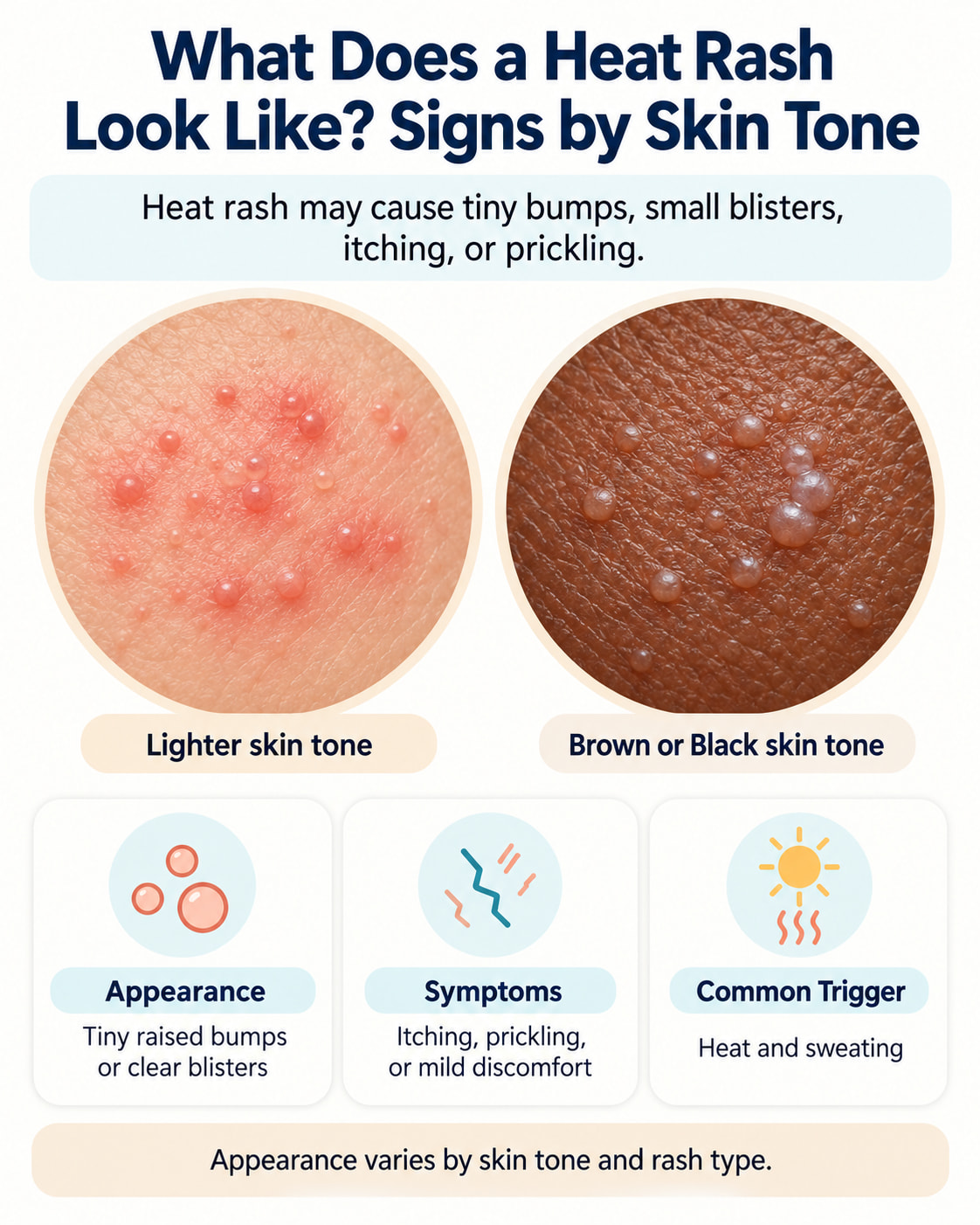
Heat rash usually looks like clusters of tiny raised bumps or small blisters. It may appear red on lighter skin and gray, white, or less noticeable on brown or Black skin. The rash can feel itchy or prickly, although some forms cause little discomfort.
If you are wondering what a heat rash looks like, consider its texture, location, and timing alongside its color. Several skin conditions can look similar, so these details provide clues rather than a definite diagnosis.
What Does a Heat Rash Look Like on Different Skin Tones?
The NHS description of heat rash explains that redness can be harder to see on brown or Black skin. Its appearance also varies with the type of heat rash.
| Skin tone | What you may notice |
|---|---|
| Lighter skin | Tiny red bumps, sometimes with redness around them. Some spots may contain fluid. |
| Brown or Black skin | Small raised bumps that may look gray or white. The color change may be subtle or difficult to see. |
These are possible appearances, not rules for everyone with a particular skin tone. A rash does not have to look bright red to be uncomfortable or inflamed.
For a useful description, note when the bumps appeared, whether they itch or sting, and whether they developed after sweating. Also note whether they sit beneath clothing or in a skin fold. Share these details with a clinician if the cause is unclear.
Different Types of Heat Rash
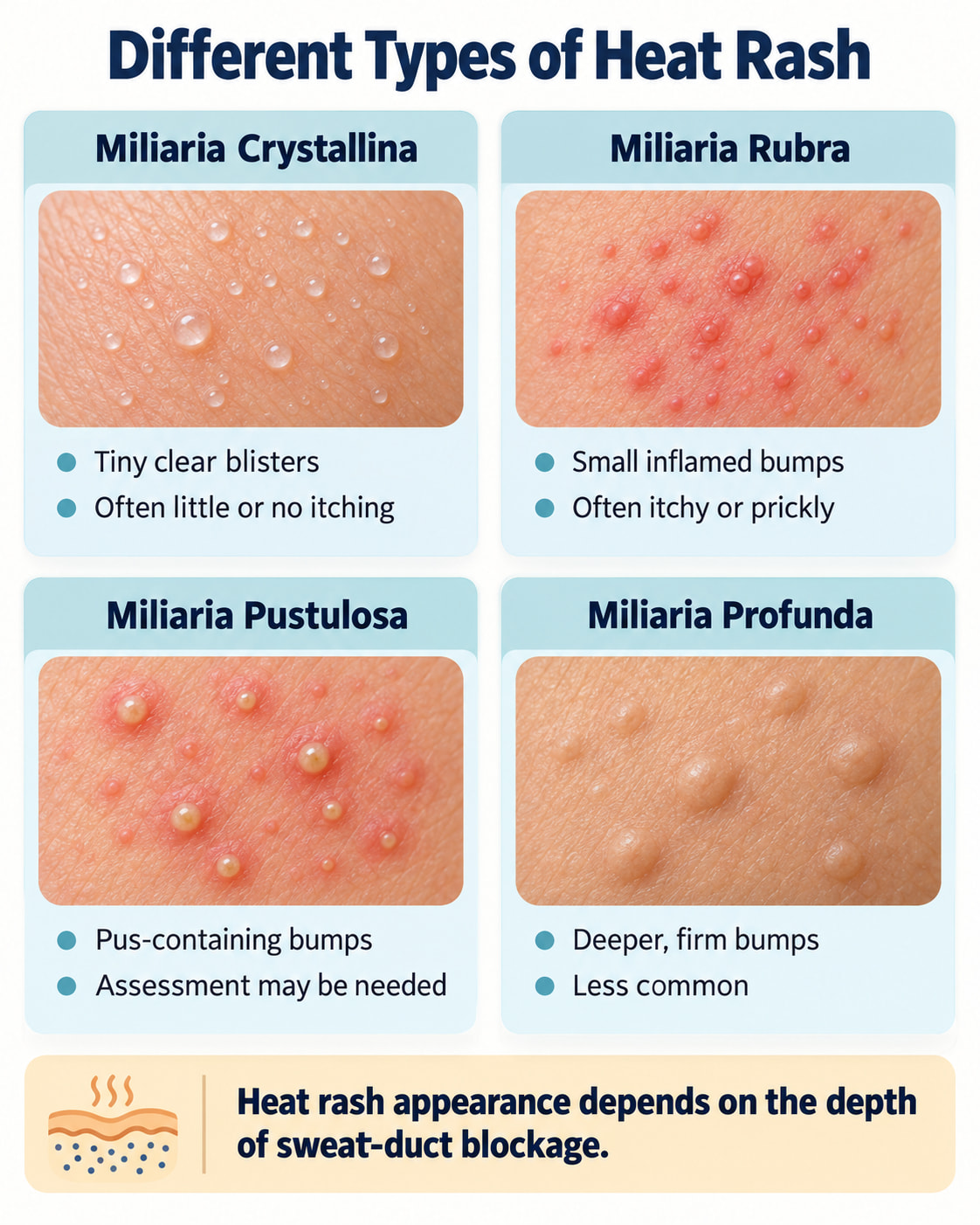
Heat rash is also called miliaria. It develops when sweat ducts become blocked or inflamed and sweat becomes trapped beneath the skin.
The depth of the blockage affects what you see. DermNet’s overview of miliaria describes three main types, plus a pustular variant.
| Type | Typical appearance | Key detail |
|---|---|---|
| Miliaria crystallina | Tiny, clear blisters that resemble water droplets and break easily | Often causes little or no itching |
| Miliaria rubra | Small inflamed bumps or bumps containing tiny blisters; color varies with skin tone | Often itchy, prickly, or uncomfortable |
| Miliaria pustulosa | Pus-containing bumps associated with the rubra form | Needs assessment if infection is suspected |
| Miliaria profunda | Deeper, firm bumps that may resemble the surrounding skin color | Symptoms vary; this form is uncommon |
The clear blisters of crystallina are often about 1–2 millimeters across. Rubra bumps are commonly about 2–4 millimeters across. Size alone cannot identify the cause of a rash.
Pus, increasing tenderness, or worsening swelling should prompt medical advice, even if the rash started after sweating.
Where Does Heat Rash Usually Appear?
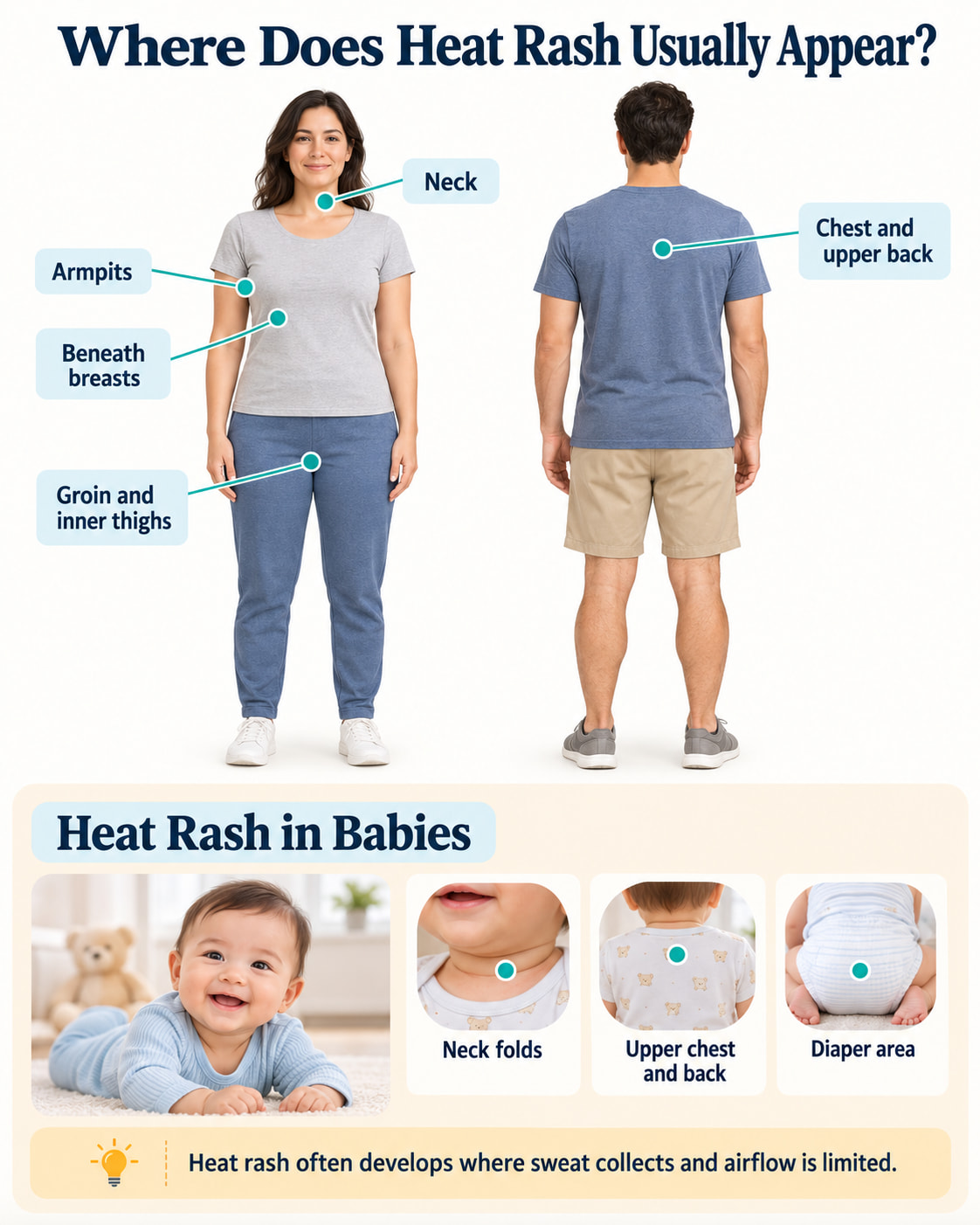
Heat rash often develops where sweat, limited airflow, and clothing friction occur together. Common areas include:
- The neck, chest, and upper back.
- The armpits and elbow creases.
- Beneath the breasts.
- The groin and inner thighs.
- Other areas covered by close-fitting clothing.
Babies may develop bumps around the hairline, neck folds, upper chest, back, or diaper area. Itching can make a baby fussy or unusually wriggly.
Common Triggers
Hot, humid weather and physical activity can contribute to heat rash. It can also develop during illness or prolonged bed rest, particularly when fever and bedding increase sweating.
Babies are more susceptible because their sweat ducts are still developing. Extra clothing layers and heavy wrapping can further limit airflow.
A recent workout or hot day is useful context, but it does not prove that a rash is heat rash.
What Can Be Mistaken for Heat Rash?
Several conditions cause itchy bumps, including some that also appear after sweating.
| Condition | Clues that may help distinguish it |
|---|---|
| Hives | Smooth, raised spots or patches that appear suddenly and may merge. An individual hive usually disappears within 24 hours, although new ones can appear. |
| Sweat-triggered hives, or cholinergic urticaria | Tiny itchy or burning bumps that begin within minutes of a sweating trigger. They typically fade within about 90 minutes after the triggering activity stops. |
| Folliculitis | Pimples centered around hair follicles. They may contain pus, become tender, or form crusts. |
| Contact dermatitis | An itchy rash associated with an irritant or allergen. Dryness, cracking, swelling, blisters, or oozing may occur. |
Timing can be useful. Bumps that repeatedly appear during exercise and disappear soon afterward may suggest sweat-triggered hives. Hives can be tiny, so they are not always distinguishable by size.
A clinician considers the overall pattern, symptoms, and history. A photograph or a history of sweating alone cannot reliably identify every rash.
What May Help Mild Heat Rash?
For mild heat rash, cooling the skin and reducing further sweating are the main priorities.
- Move somewhere cooler. Take a break from strenuous activity and use an air-conditioned space when available.
- Rinse gently. Cool or lukewarm water can remove sweat. Pat the skin dry without scrubbing.
- Reduce friction. Choose clean, loose clothing that allows airflow over the affected area.
- Use a cool, damp cloth. This may ease the prickly feeling.
- Avoid scratching. Scratching can break the skin and increase the chance of infection.
Heavy, greasy creams or ointments may further obstruct sweat ducts. Ask a pharmacist or clinician before using medicated products, especially on a baby or child.
To reduce repeat episodes, plan activity for cooler periods and take cooling breaks. For babies, avoid unnecessary layers and overbundling.
When to Seek Medical Help
Arrange an assessment if the rash is not improving after a few days, keeps returning, or is difficult to identify. Seek advice sooner if symptoms are worsening.
Signs That Need Prompt Attention
The American Academy of Dermatology’s rash guidance recommends medical attention for concerning symptoms such as:
- Fever or feeling unwell with a rash.
- Rapid spread or significant pain.
- Pus, yellow crusts, increasing warmth, or swelling.
- Raw skin or worsening blistering.
- A rash involving the eyes or mouth.
Small, clear blisters can occur with heat rash, but worsening blistering with pain or illness needs assessment.
For children, the American Academy of Pediatrics advises contacting a clinician for fever, reduced eating or activity, tenderness, or pus. It also recommends advice if the rash worsens over 24 hours or has not cleared after three days of home care.
Heat Illness and Other Emergencies
A rash after heat exposure may occur alongside more serious overheating. Headache, nausea, dizziness, weakness, and heavy sweating can indicate heat exhaustion. Move to a cooler place and seek prompt medical assessment.
Call 911 for confusion, slurred speech, seizures, or loss of consciousness after heat exposure. These may be signs of heat stroke. Begin cooling the person while emergency help is on the way.
The CDC’s heat-illness guidance notes that heat stroke can occur with either hot, dry skin or heavy sweating. Do not wait for sweating to stop.
Difficulty breathing or swallowing, or sudden swelling involving the lips, mouth, or throat, also requires emergency care.
Frequently Asked Questions
How Long Does Heat Rash Usually Last?
Mild heat rash often settles within a few days once the skin stays cool and dry. Ongoing sweating can make it harder to settle. Get medical advice if it is not improving after a few days or worsens sooner.
Does Heat Rash Always Itch?
No. The common prickly form, miliaria rubra, often itches. Miliaria crystallina produces tiny clear blisters that may cause no itching or pain. A lack of itching does not identify the rash by itself.
Is Heat Rash Contagious?
No. Heat rash develops because of blocked or inflamed sweat ducts and cannot pass from one person to another. However, a different rash that resembles it may have another cause.
Can Heat Rash Develop Indoors?
Yes. It can occur when you become overheated and sweat indoors. Heavy bedding, too many clothing layers, or limited airflow can contribute, particularly in babies or someone confined to bed.
Why Does Heat Rash Keep Coming Back?
Repeated exposure to heat, sweating, or clothing that limits airflow can contribute to recurring episodes. Cooling breaks and lighter clothing may help. If it keeps returning despite these changes, a clinician can check whether another condition is responsible.
Can Heat Rash Leave Dark or Light Marks?
Inflammation can leave temporary darker or lighter areas, particularly on brown or Black skin. Mayo Clinic notes that these pigment changes may take weeks or months to fade. The bumps and the remaining color changes may settle at different rates.
Conclusion
Recognizing heat rash means looking at the bumps, how they feel, where they appear, and what happened before they developed. Color is one part of that picture.
If the rash is mild and follows sweating, start by cooling down and reducing friction. Contact a clinician if it persists, worsens, or comes with other symptoms.
This content is for informational purposes only and not medical advice.
References
- NHS: Heat Rash
- Cleveland Clinic: Heat Rash
- DermNet: Miliaria
- Mayo Clinic: Heat Rash Symptoms and Causes
- American Academy of Dermatology: Hives Signs and Symptoms
- DermNet: Cholinergic Urticaria
- Mayo Clinic: Folliculitis Symptoms and Causes
- American Academy of Dermatology: Contact Dermatitis Signs and Symptoms