
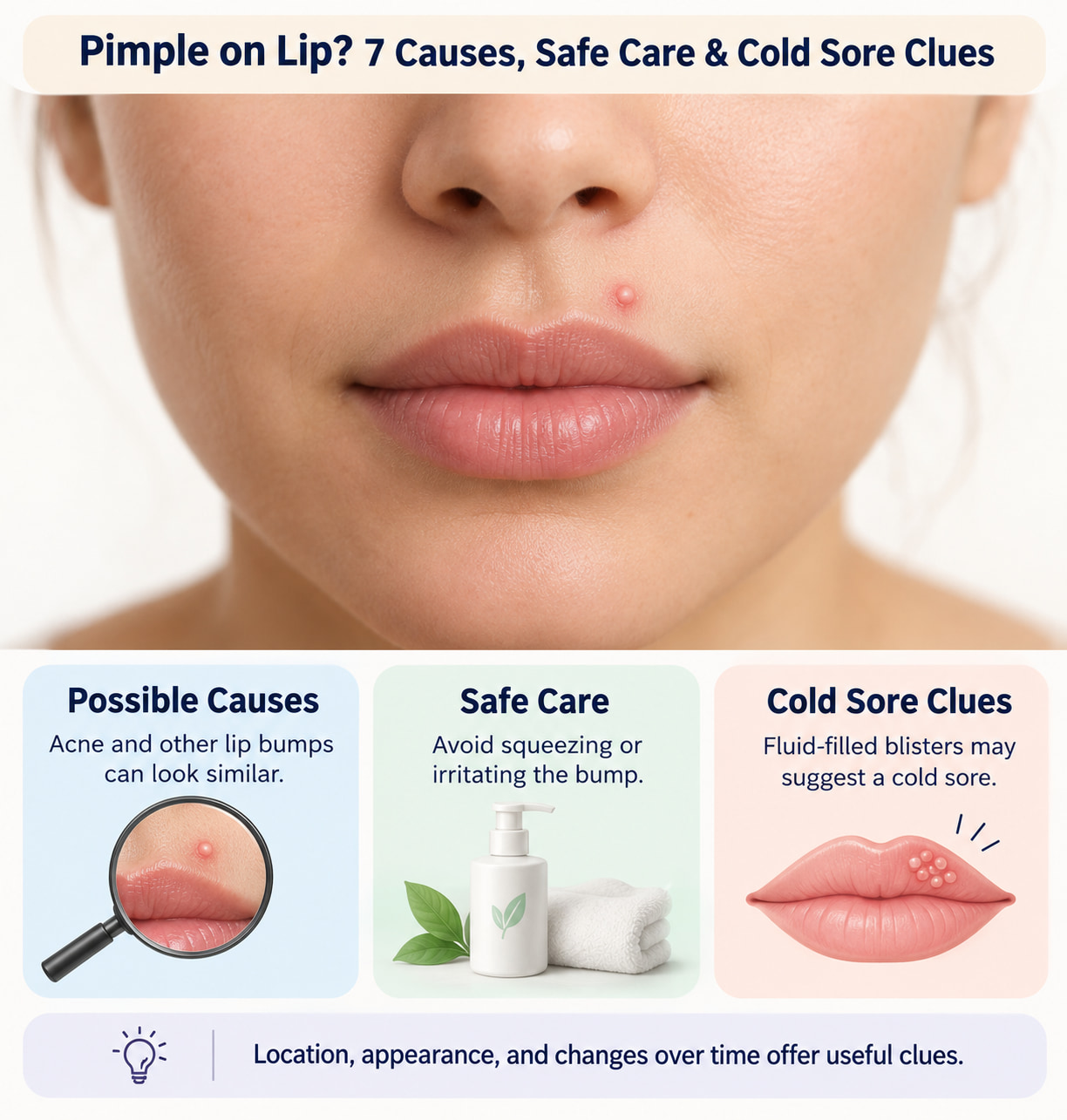
A pimple on your lip may be acne on the surrounding skin, but a bump on the lip surface or inside your mouth can have another explanation. Cold sores, irritation, and several harmless types of bumps can look similar at first.
The most useful clues are the bump’s exact location, whether it contains fluid, and how it changes. Pain alone does not tell you what it is. Before reaching for an acne product, check where the bump sits and avoid squeezing it.
Can You Get a Pimple on Your Lip?
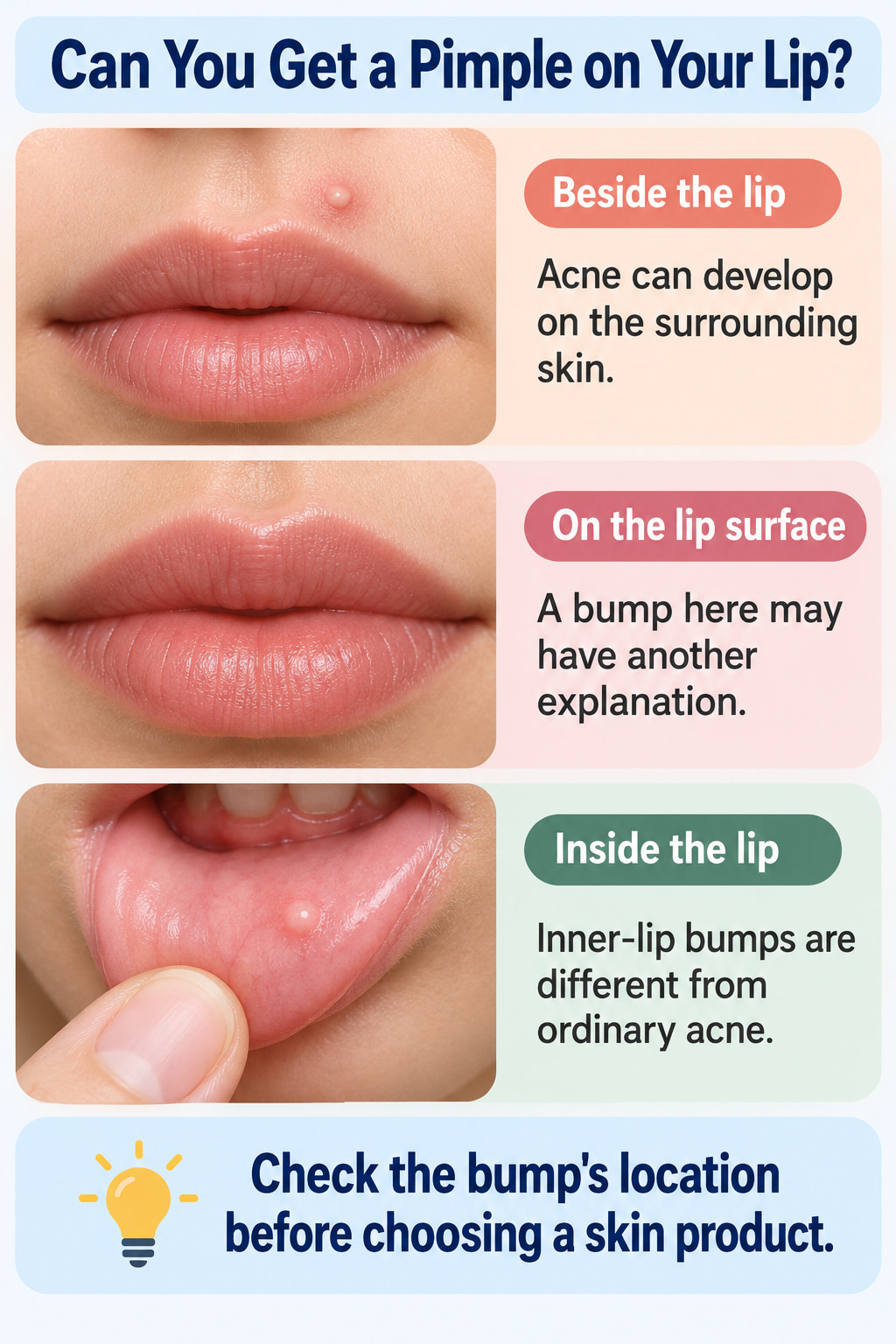
You can get acne on the skin above, below, or immediately beside your lips. This skin contains hair follicles that can become blocked and inflamed.
As Cleveland Clinic explains, an ordinary lip-area pimple develops on the surrounding skin rather than the colored lip surface. The moist lining inside your mouth is also different from acne-prone facial skin.
When looking at a bump, first identify whether it is:
- Beside the lip: On the skin above or below the lip line.
- On the lip surface: On the colored part of the lip.
- Inside the lip: On the moist lining facing your teeth.
That distinction matters because products intended for facial acne may irritate lip tissue or be unsuitable inside the mouth.
Pimple or Cold Sore? Key Clues to Know
Pimples and cold sores can both be uncomfortable. Their usual patterns offer clues, but appearance alone may not identify the cause.
| Clue | More typical of a pimple | More typical of a cold sore |
|---|---|---|
| Location | Skin beside the lip | Lip surface or nearby skin |
| Appearance | Raised bump, sometimes with a whitehead or blackhead | One or more small, fluid-filled blisters |
| Early feeling | Local tenderness | Tingling, itching, or burning may come first |
| Changes over time | Bump gradually settles | Blister may open, ooze, and crust |
| Contagiousness | Acne is not contagious | The virus causing cold sores can spread |
A single blister can be a cold sore. Likewise, a lack of tingling does not prove that a bump is acne. If you are unsure, a clinician can examine it and sometimes take a swab.
The World Health Organization also notes that herpes simplex virus can spread when skin looks normal, although the risk is greatest when active sores are present.
7 Possible Causes of a Bump on or Near Your Lip
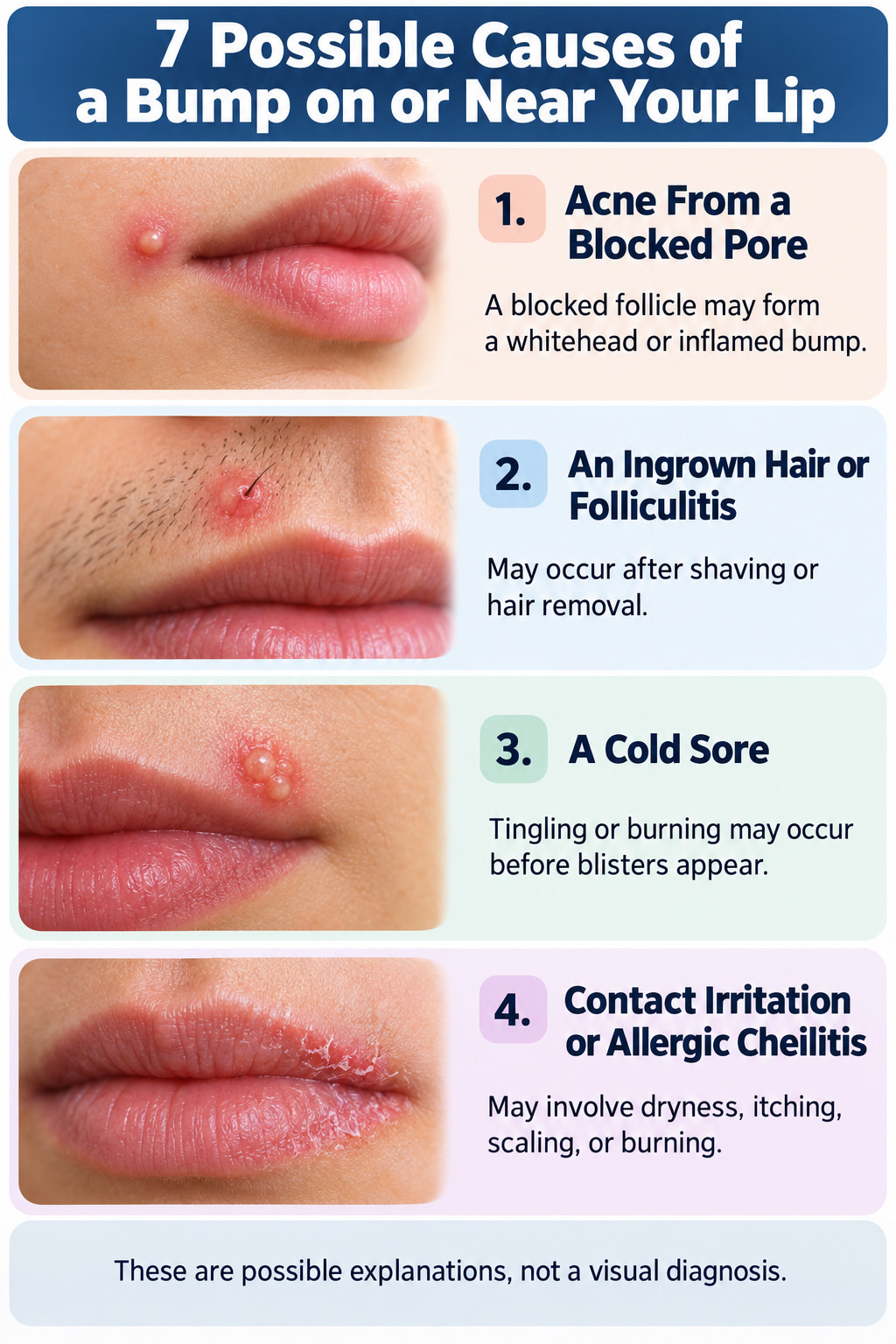
These possibilities include acne and other conditions that people may mistake for a pimple.
1. Acne From a Blocked Pore
A blocked hair follicle on the surrounding skin can produce a whitehead, blackhead, or inflamed pimple. The bump may feel tender, especially when you touch it or move your mouth.
Some cosmetics can contribute to nearby breakouts. The American Academy of Dermatology notes that lipstick or lip balm may be involved when small acne bumps develop around the lips.
If breakouts seem linked to a product, consider switching to one labeled noncomedogenic, meaning it is formulated to avoid clogging pores. Scrubbing harder is unlikely to help and can add irritation.
2. An Ingrown Hair or Folliculitis
A bump after shaving or removing facial hair may involve a hair follicle. An ingrown hair grows back into the skin and causes inflammation. Folliculitis is inflammation of a follicle and can involve infection.
These bumps may itch, feel sore, or have a small pus-filled center. Sometimes a hair is visible within the bump.
They occur on hair-bearing skin, not inside the mouth. Avoid digging for a trapped hair or repeatedly shaving over an irritated area. Persistent or spreading bumps deserve an assessment.
3. A Cold Sore
Cold sores are caused by herpes simplex virus, most often HSV-1. They may begin with tingling or burning before one or more blisters appear. The blisters can then break open and form a crust.
The virus remains in the body after the initial infection and can reactivate, which explains why cold sores may return. A recurrent sore near the same location is a useful detail to mention to a clinician.
Acne products are not a substitute for cold-sore care. A pharmacist or clinician can help you choose an appropriate option, particularly when symptoms have just started.
4. Contact Irritation or Allergic Cheilitis
Cheilitis means inflammation of the lips. Lip cosmetics, toothpaste, flavorings, fragrances, or other substances can sometimes irritate the area or trigger an allergic reaction.
This often produces dryness, scaling, cracking, itching, or burning rather than a single whitehead. You might notice a patch of irritated skin or several small changes along the lip edge.
If a nonessential lip or cosmetic product seems to trigger symptoms, stop using it. Repeated reactions may need a dermatologist’s assessment; identifying an allergy can require patch testing.
5. Perioral Dermatitis
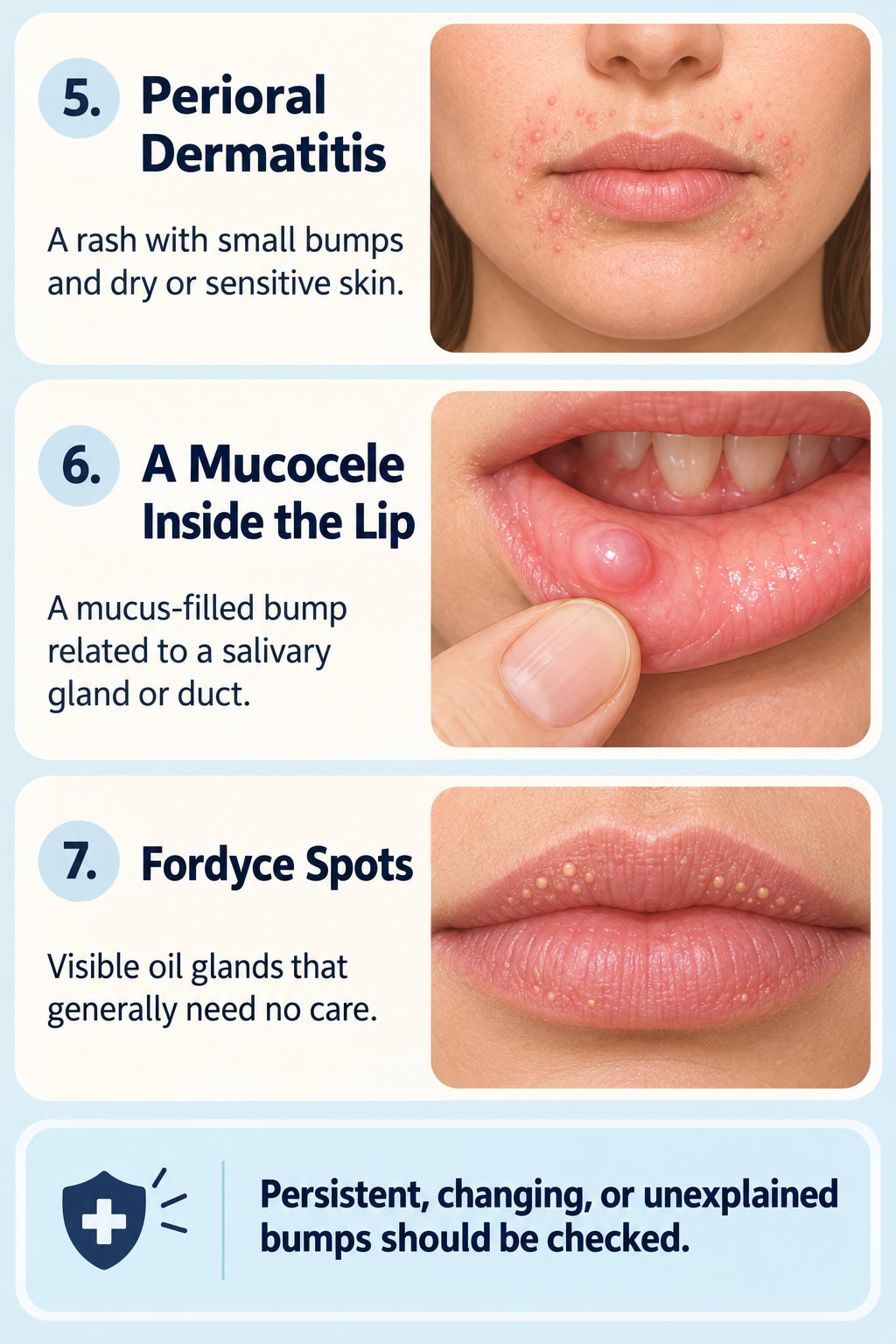
Perioral dermatitis causes a rash of small acne-like bumps around the mouth. The surrounding skin may be dry, flaky, tight, or sensitive. A narrow strip directly beside the lip is often unaffected.
Its exact cause is not fully understood. Skin care products and corticosteroid exposure can be associated with it.
The American Academy of Dermatology cautions that hydrocortisone and other steroid creams can worsen this condition. If you already use a prescribed steroid, contact the prescriber before changing it.
6. A Mucocele Inside the Lip
A smooth, rounded swelling inside the lower lip may be a mucocele—a mucus-filled bump related to a small salivary gland or duct.
It often follows lip biting or another minor injury. The bump may look clear, bluish, or similar in color to the surrounding tissue, and it is often painless.
Many mucoceles settle on their own. Avoid puncturing or squeezing one. A dentist or clinician should check a bump that persists, keeps returning, or interferes with eating or speaking.
7. Fordyce Spots
Small whitish or yellowish dots on the lip border can be Fordyce spots. These are visible oil glands and a normal variation, rather than acne or an infection.
They often occur in groups and may become more noticeable when the skin is stretched. They are not contagious and generally do not need any care.
A new or changing white bump should not automatically be labeled a Fordyce spot. Have it checked if it becomes painful, grows, bleeds, or remains unexplained.
Safe Care for a Pimple Near Your Lip
Start With Gentle Skin Care
For a likely acne bump on the surrounding skin, wash gently with a mild cleanser and lukewarm water. Avoid scrubbing, picking, and repeatedly touching the spot.
A clean, warm, damp washcloth may help a deep acne bump. Keep it comfortably warm and use a clean cloth each time. This is supportive care; it does not identify the bump or guarantee rapid clearance.
Keep Acne Products Away From Lip Tissue
Benzoyl peroxide and salicylic acid are ingredients used for acne, but the location matters:
- Benzoyl peroxide: DailyMed labeling warns against contact with the lips, mouth, and mucous membranes.
- Salicylic acid: MedlinePlus guidance says to keep it out of the mouth and avoid applying it to broken, irritated, or infected skin.
Follow the individual product label. If a bump sits so close to the lip that you cannot avoid contact, ask a pharmacist or clinician before applying an acne product. Do the same if you are unsure whether it is acne.
More product is not necessarily more helpful. Combining several irritating products can make the area sore and harder to assess.
Use Cold-Sore Precautions When Appropriate
If a cold sore is possible, NHS guidance advises avoiding kissing and oral sex until it has completely healed. Wash your hands after touching the area, and avoid sharing lip products or objects that have contacted saliva. Do not kiss a newborn while you have an active cold sore.
Cold-sore medicines may work best when started at the earliest symptoms. Ask a pharmacist or clinician about suitable options, especially if sores are frequent, unusually painful, or slow to improve.
What to Avoid Putting on a Lip Bump
- Toothpaste: Its abrasive ingredients, flavorings, and other components can irritate skin. It is not an acne remedy.
- Unprescribed hydrocortisone: Do not start a steroid cream for an unexplained rash around your mouth.
- Acne acids on an open blister or sore: Broken skin needs a different approach from intact, acne-prone skin.
- Multiple spot products at once: Layering products can increase irritation.
Also avoid squeezing, piercing, or repeatedly peeling the surface. These actions can worsen inflammation and increase the chance of infection, discoloration, or scarring.
When to See a Doctor or Dentist
Get Urgent Help for Worsening Symptoms
Seek prompt medical care for:
- Eye pain, worsening eye redness, or changes in vision, particularly with a suspected cold sore.
- Skin that becomes increasingly hot, painful, or swollen, especially if the redness spreads or you feel unwell.
A red eye with light sensitivity needs emergency assessment. Trouble breathing or swelling of the tongue or throat also requires emergency help, including if it begins after using a skin product.
If you have eczema or a weakened immune system, contact a clinician promptly about a suspected cold sore.
Arrange an Appointment for a Persistent or Uncertain Bump
A suspected cold sore should be assessed if it has not started healing within 10 days or lasts longer than two weeks.
For an unexplained lip or mouth change, NIDCR guidance recommends seeing a dentist or doctor when a sore, lump, irritation, or thickened patch lasts more than two weeks.
Book an appointment sooner if the bump grows, repeatedly returns, bleeds without an obvious explanation, or interferes with eating or speaking. You do not need to wait for a time threshold when symptoms are worsening.
Frequently Asked Questions
Can You Get an Acne Pimple Directly on Your Lip?
Ordinary acne develops in hair follicles on the surrounding skin. A bump on the colored lip surface or moist inner lining needs a different explanation, so do not assume that routine facial acne care applies there.
How Can You Tell a Cold Sore From a Pimple?
Fluid-filled blisters and preceding tingling suggest a cold sore; a whitehead or blackhead on nearby skin suggests acne. These are clues, not confirmation. A single bump or lack of tingling cannot settle the question.
What Could a White Bump on Your Lip Be?
A whitehead on nearby skin, a Fordyce spot, or another type of bump may look white. Location and changes over time matter more than color alone. Seek an assessment for a new, persistent, or changing spot.
What Causes a Bump Inside the Lower Lip?
A mucocele is one possibility, particularly after lip biting. A painful shallow sore may instead be a mouth ulcer. An inside-mouth location does not rule out every infection, so persistent or unusual changes should be examined.
Should You Pop a Pimple Near Your Lip?
No. Squeezing can increase inflammation and the risk of infection, dark marks, and scarring. It can also damage a bump that is not acne. Leave it alone and seek help if it is worsening or persistent.
Can You Use Benzoyl Peroxide or Salicylic Acid Near Your Lips?
Only on suitable external skin, following the product’s directions and warnings. Keep acne products off the colored lip surface and out of the mouth. Ask a pharmacist if the location makes accidental contact difficult to avoid.
When Should a Lip Bump Be Checked?
Have an unexplained bump checked if it persists beyond two weeks, grows, bleeds, or repeatedly returns. Seek help earlier for significant worsening, eye symptoms, or spreading hot, painful swelling.
Conclusion
The location of a lip bump is a useful starting point: acne can affect nearby skin, while the lip surface and inner mouth have other common explanations. Keep care gentle, avoid squeezing, and check product warnings before applying anything near your mouth. If you cannot tell what the bump is, or it is persistent or worsening, arrange a clinician or dentist assessment.
This content is for informational purposes only and not medical advice.
References
- Cleveland Clinic. Cold Sore vs. Lip Pimple: What’s the Difference?
- American Academy of Dermatology. I Have Acne! Is It Okay to Wear Makeup?
- DermNet. Folliculitis Barbae
- NHS. Cold Sores
- World Health Organization. Herpes Simplex Virus
- DermNet. Allergic Contact Cheilitis and Periorificial Dermatitis
- Cleveland Clinic. Oral Mucocele