
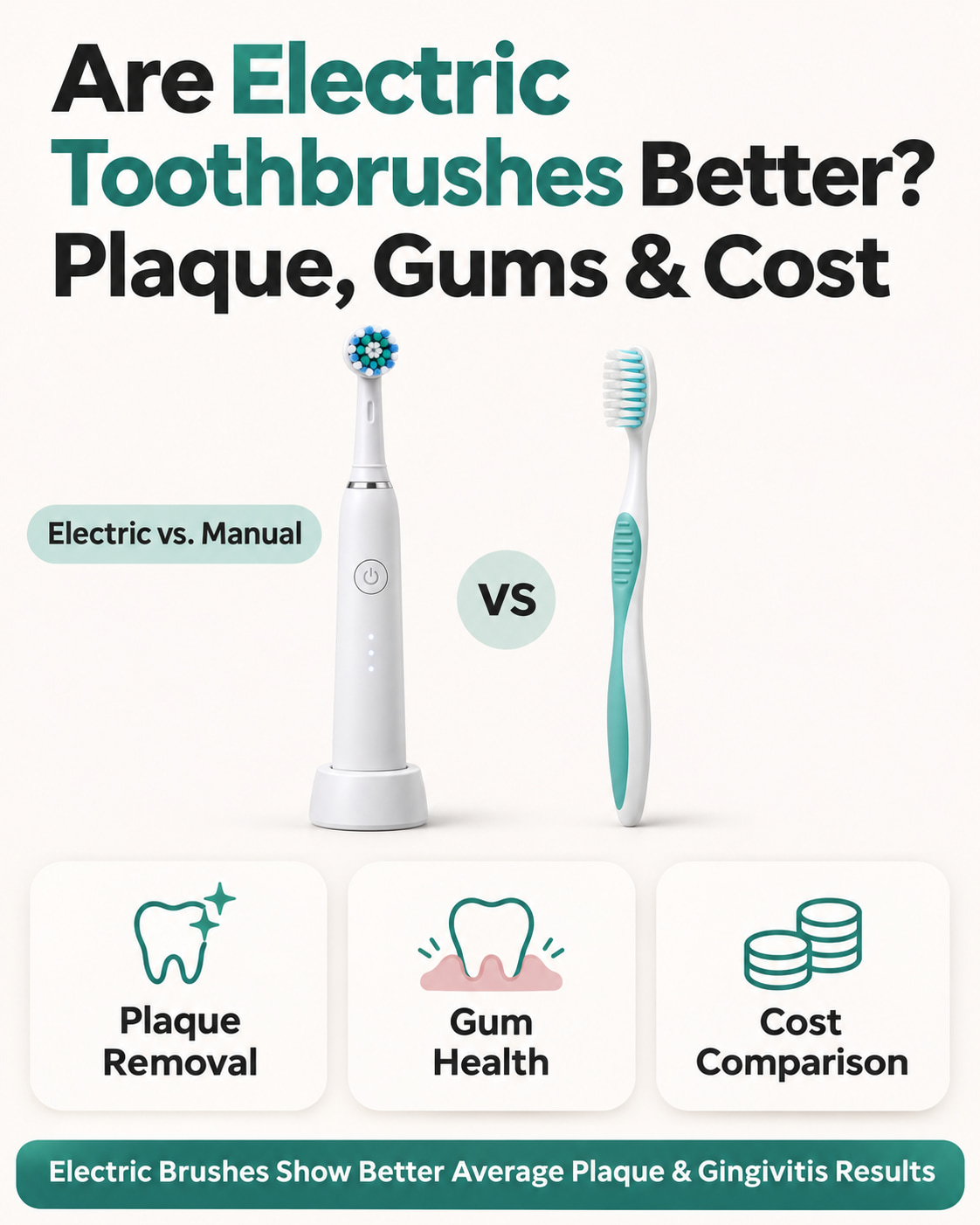
Electric toothbrushes generally reduce plaque and gingivitis more than manual brushes, although both can clean effectively. For anyone asking “are electric toothbrushes better,” the practical decision also involves comfort, brushing habits, and replacement-head costs.
An electric brush may make thorough brushing easier, especially if you struggle with hand movements or keeping track of time. A manual brush remains a useful, affordable option. The goal is to choose a brush you can use comfortably and maintain consistently.
Are Electric Toothbrushes Better Than Manual Toothbrushes?
The American Dental Association’s toothbrush guidance, updated in August 2026, says either type can work effectively.
An electric brush supplies powered bristle movement, while you guide it around your mouth. With a manual brush, you provide the brushing motion yourself. Both require you to reach every tooth surface.
| Consideration | Electric toothbrush | Manual toothbrush |
|---|---|---|
| Plaque and gingivitis | Better average results in research | Can provide effective cleaning |
| Ease of use | May help people with limited hand movement | Requires controlled brushing movements |
| Timing | Many models include a timer | You can use a separate timer |
| Pressure feedback | Available on some models | You monitor pressure yourself |
| Ongoing expense | Replacement heads, plus eventual handle replacement | Replacement toothbrushes |
| Power supply | Charging or batteries, depending on the model | No power supply needed |
The average research advantage gives you a reason to consider electric brushing. Your comfort, technique, and budget still matter.
Are Electric Toothbrushes Better for Plaque Removal?
Plaque is a sticky film containing bacteria that builds up on teeth. Regular brushing helps remove it before it accumulates.
A Cochrane review, published in 2014, included 56 studies involving 5,068 participants. It found these average differences between powered and manual brushes:
| Outcome | After 1–3 months | After more than 3 months |
|---|---|---|
| Plaque scores | About 11% lower with powered brushes | About 21% lower |
| Gingivitis scores | About 6% lower with powered brushes | About 11% lower |
The evidence was rated moderate quality.
These percentages describe differences in research scores. They do not mean 21% fewer cavities or an 11% lower chance of developing gum disease. The review also used “long term” to mean more than three months, so these figures do not describe lifetime results.
Electric brushing can improve average cleaning results, but those measurements cannot tell you exactly how much benefit you personally will get.
Are Electric Toothbrushes Better for Your Gums?
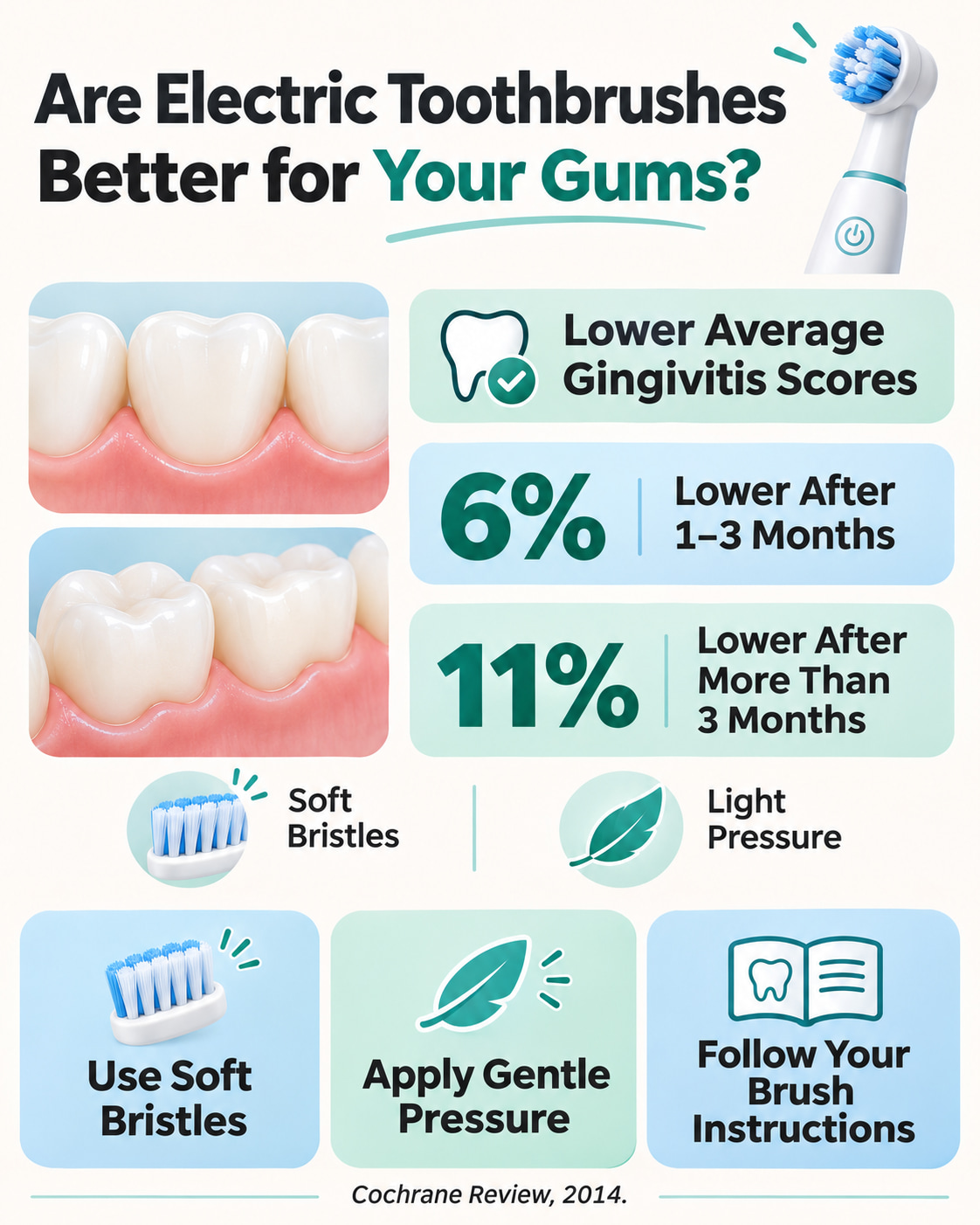
Electric toothbrushes may help reduce gingivitis, the gum inflammation commonly associated with plaque buildup.
An October 2026 systematic review examined oral hygiene approaches in adults with gingivitis. It included 21 trials comparing powered and manual brush devices and found better plaque and gum-bleeding outcomes with powered brushes.
The authors also emphasized consistent self-care and clear brushing instruction. Switching brushes does not remove the need to clean carefully or have ongoing gum symptoms assessed.
Can Electric Toothbrushes Cause Gum Recession?
Gum recession means the gum margin has moved away from its previous position, exposing more of the tooth or root. It is a different issue from gum inflammation.
A May 2026 systematic review included 10 randomized studies. It found no clear difference in gum-recession progression between powered and manual brushes at six or 12 months. However, the certainty of the evidence was very low.
That finding does not prove either type is incapable of causing injury. Use soft bristles and gentle pressure, and follow the brush instructions. A pressure sensor provides feedback when you press too hard; it cannot guarantee protection against recession.
Does Better Plaque Removal Mean Fewer Cavities?
Better plaque scores do not automatically establish that switching brushes will prevent more cavities.
The UK’s Delivering Better Oral Health guidance, updated in September 2025, recognizes the plaque and gingivitis benefits of powered brushes but does not establish their superiority for cavity prevention. Fluoride toothpaste remains a central part of daily care.
Electric vs. Manual Toothbrush Cost
The purchase price is only part of the comparison. Check the price and availability of compatible replacement heads before buying an electric brush.
The examples below come from official US manufacturer listings checked on November, 2026. Prices are in US dollars and exclude tax and any shipping charges. Promotions and availability can change.
Upfront Purchase Prices
| Product example | Listed price |
|---|---|
| Preserve manual toothbrush, single | $3.98 |
| Oral-B Pro 500 rechargeable electric toothbrush | $29.99 sale; $39.99 regular |
| Oral-B Pro 1000 Gum Care rechargeable electric toothbrush | $49.99 |
| quip Ultra Lite Sonic Electric Toothbrush, Air | $65.00 |
These examples show different purchase costs; they are not a complete market price range.
Replacement Costs Add Up
For an ongoing cost comparison, assume you use four new brushes or heads per year, replacing them every three months.
| Replacement option | Package price | Value of four brushes or heads used per year |
|---|---|---|
| Preserve manual toothbrush | $3.98 each | $15.92 |
| Oral-B Daily Clean heads | $39.99 for eight | About $20.00 |
| Oral-B CrossAction X-Filament heads | $24.99 for two | $49.98 |
The electric-head figures exclude the initial handle. The annual column represents the value of supplies used; buying the Daily Clean eight-pack still requires $39.99 upfront.
Both listed Oral-B refill options fit the Pro models above. They do not fit Oral-B iO or sonic models.
First-year example: The $49.99 Pro 1000 Gum Care package includes two heads. Adding a $24.99 CrossAction two-pack brings the total to $74.98, before tax and shipping, and supplies four heads altogether.
For your own comparison, add the handle price to the refills you will need, accounting for any heads already included. Check compatibility before comparing prices.
Who May Benefit Most From an Electric Toothbrush?
A powered brush may be particularly useful if you have limited hand movement or need help from a caregiver. The ADA identifies these as situations where powered brushing can make oral care more manageable.
Features can also address specific habits:
- You tend to finish too quickly: A two-minute timer can help you track brushing duration.
- You spend most of your time in one area: Thirty-second pacing prompts can remind you to move around the mouth.
- You press too firmly: Pressure feedback can alert you to ease up.
Choose features that address a problem you actually have. If a manual brush feels comfortable and your dental professional confirms that you are cleaning effectively, you may have little reason to change.
What to Look for in an Electric Toothbrush
Focus on everyday usability:
- Soft bristles and a comfortable head size: You should be able to reach back teeth without struggling.
- An easy-to-hold handle: Consider weight, grip, and how easily you can press the controls.
- A two-minute timer: Helpful for keeping track of brushing time.
- Pressure feedback: Useful if you tend to press too hard.
- Affordable replacement heads: Check both compatibility and price.
- Convenient charging or battery arrangements: Choose a setup you can maintain.
- The ADA Seal of Acceptance: Indicates that the product has met the ADA’s relevant safety and effectiveness requirements.
A higher price alone does not establish better long-term oral health. Consider whether you will actually use extras such as app tracking or additional cleaning modes.
Sonic or Oscillating-Rotating?
Both types have supportive evidence. The October 2026 review found favorable results for oscillating-rotating and high-frequency sonic brushes in adults with gingivitis.
That does not establish one universally best model. Compare comfort, head size, features, and refill costs, and follow the instructions for the brush you choose.
How to Use an Electric Toothbrush Properly
A powered head still needs careful positioning. Use this routine as a starting point:
- Brush twice daily for two minutes with fluoride toothpaste. Cover the whole mouth instead of concentrating on the front teeth.
- Use gentle pressure. Keep the bristles in contact with the teeth without forceful scrubbing.
- Clean the outer, inner, and chewing surfaces. Give the gumline and back teeth attention.
- Follow your model’s movement instructions. Oral-B round-head guidance recommends moving slowly from tooth to tooth. Philips Sonicare guidance uses slow movement with a small back-and-forth motion.
- Clean between your teeth daily. Use floss or another suitable interdental tool.
- Replace worn heads. General guidance is every three to four months, or sooner when bristles fray; follow any shorter interval specified for your product.
Ask your dentist or hygienist to demonstrate technique if you are unsure how to position the brush or clean an awkward area.
When to See a Dentist
A different toothbrush may support your routine, but ongoing symptoms need assessment. The National Institute of Dental and Craniofacial Research lists gum-disease symptoms that include:
- Red, swollen, tender, or easily bleeding gums.
- Gums pulling away from teeth.
- Loose or sensitive teeth.
- Pain when chewing.
- Persistent bad breath.
Arrange a dental appointment if you notice these changes. Avoid assuming repeated bleeding is simply an adjustment to a new brush.
Brushing also cannot remove hardened tartar. Tartar requires professional cleaning, even when you use an electric toothbrush regularly.
Frequently Asked Questions
Do Dentists Recommend Electric Toothbrushes?
The ADA recognizes both manual and powered toothbrushes as effective options. A dentist may suggest an electric brush if it helps you clean more thoroughly or makes brushing easier with limited hand movement.
Can an Electric Toothbrush Damage Your Gums?
Either type requires gentle use. Research has not established a clear difference in gum-recession progression, but the evidence is uncertain. Choose soft bristles, avoid forceful scrubbing, and have persistent bleeding, pain, or recession checked.
Are Electric Toothbrushes Better for Sensitive Teeth?
Some models offer gentler settings and pressure feedback, which may feel more comfortable. Those features do not identify the cause of sensitivity. If sensitivity persists or worsens, ask a dentist for an assessment.
Is a Sonic or Oscillating Toothbrush Better?
Both can support effective cleaning. Research findings depend on the devices, participants, and outcomes studied. Choose a comfortable brush with practical features and affordable refills rather than assuming one technology always works best for everyone.
Is a Cheap Electric Toothbrush Worth Buying?
It can be worth considering if it helps you brush comfortably and consistently. Check the timer, bristles, replacement-head costs, and any pressure feedback you need. Price alone does not tell you how well a particular brush will suit you.
Do You Still Need to Floss With an Electric Toothbrush?
Yes, you still need daily cleaning between your teeth. An electric brush does not replace floss or another appropriate interdental tool. Your dentist or hygienist can help you choose an option that fits the spaces between your teeth.
How Often Should You Replace an Electric Toothbrush Head?
Usually every three to four months, or sooner if the bristles become worn or frayed. Follow your manufacturer’s instructions; the Oral-B refill products discussed here recommend replacement every three months.
Conclusion
Electric toothbrushes offer an average advantage for plaque and gingivitis, and useful features may make brushing easier. A manual brush can still be an effective, affordable choice.
Choose the option you can use comfortably twice a day, compare ongoing replacement costs, and ask your dentist or hygienist to check your technique at your next visit.
This content is for informational purposes only and not medical advice.
References
- American Dental Association: Toothbrushes; Home Oral Care; and Brushing Your Teeth.
- Cochrane: Powered versus manual toothbrushing for oral health.
- Suvan and colleagues: Systematic review of gingivitis management and oral hygiene devices.
- Molina and colleagues: Influence of Manual and Powered Toothbrushes on Gingival Lesions.
- UK government: Delivering Better Oral Health: Oral Hygiene.
- NIDCR: Periodontal Gum Disease.