
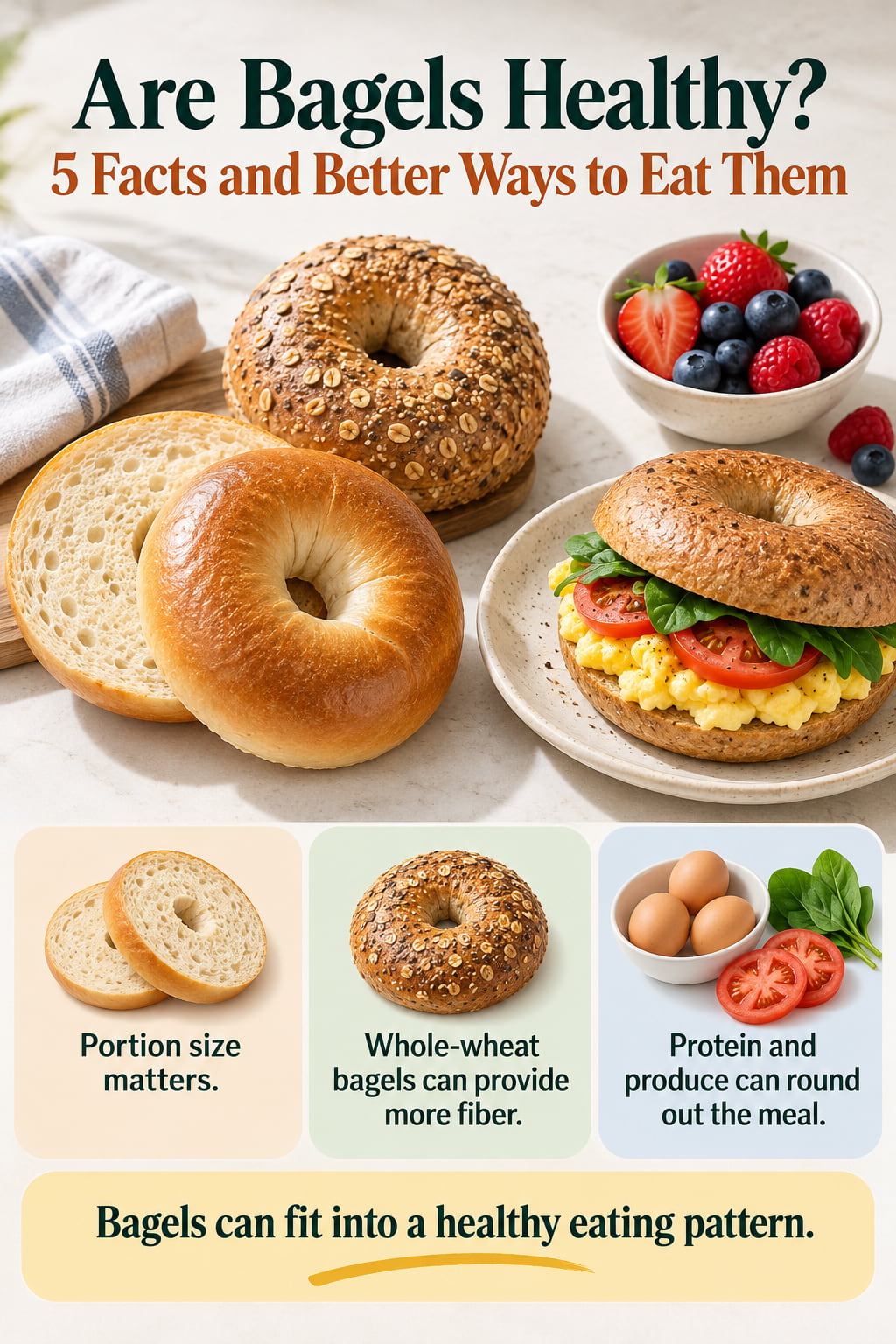
Yes, bagels can fit into a healthy eating pattern. Their nutritional value depends on the ingredients, portion size, toppings, and the rest of your diet. Whole-wheat options can provide more fiber, while adding a protein food and some produce can help round out the meal.
If you are wondering whether bagels are healthy, start with the label. Bagels vary in size and recipe, so a small packaged bagel and a large bakery bagel may provide different amounts of food. A few practical choices can help you enjoy them in a way that fits your needs.
Bagel Nutrition at a Glance
The table below compares two H-E-B products with the same serving weight. Values come from the company’s plain bagel label and 100% whole-wheat bagel label, checked on October, 2026.
These figures describe one bagel without toppings. They are product examples, not averages for all plain or whole-wheat bagels.
| Nutrient | H-E-B Plain Bagel | H-E-B 100% Whole Wheat Bagel |
|---|---|---|
| Serving size | 1 bagel, 94 g | 1 bagel, 94 g |
| Calories | 250 | 250 |
| Total carbohydrate | 51 g | 46 g |
| Dietary fiber | 2 g | 6 g |
| Protein | 9 g | 11 g |
| Total fat | 1.5 g | 2 g |
| Sodium | 490 mg | 440 mg |
| Added sugars | 5 g | 6 g |
The whole-wheat example contains more fiber and slightly more protein, but both bagels have the same number of calories. This is why checking several parts of the label gives you a better picture than focusing on one number.
Are Bagels Healthy? 5 Facts to Know
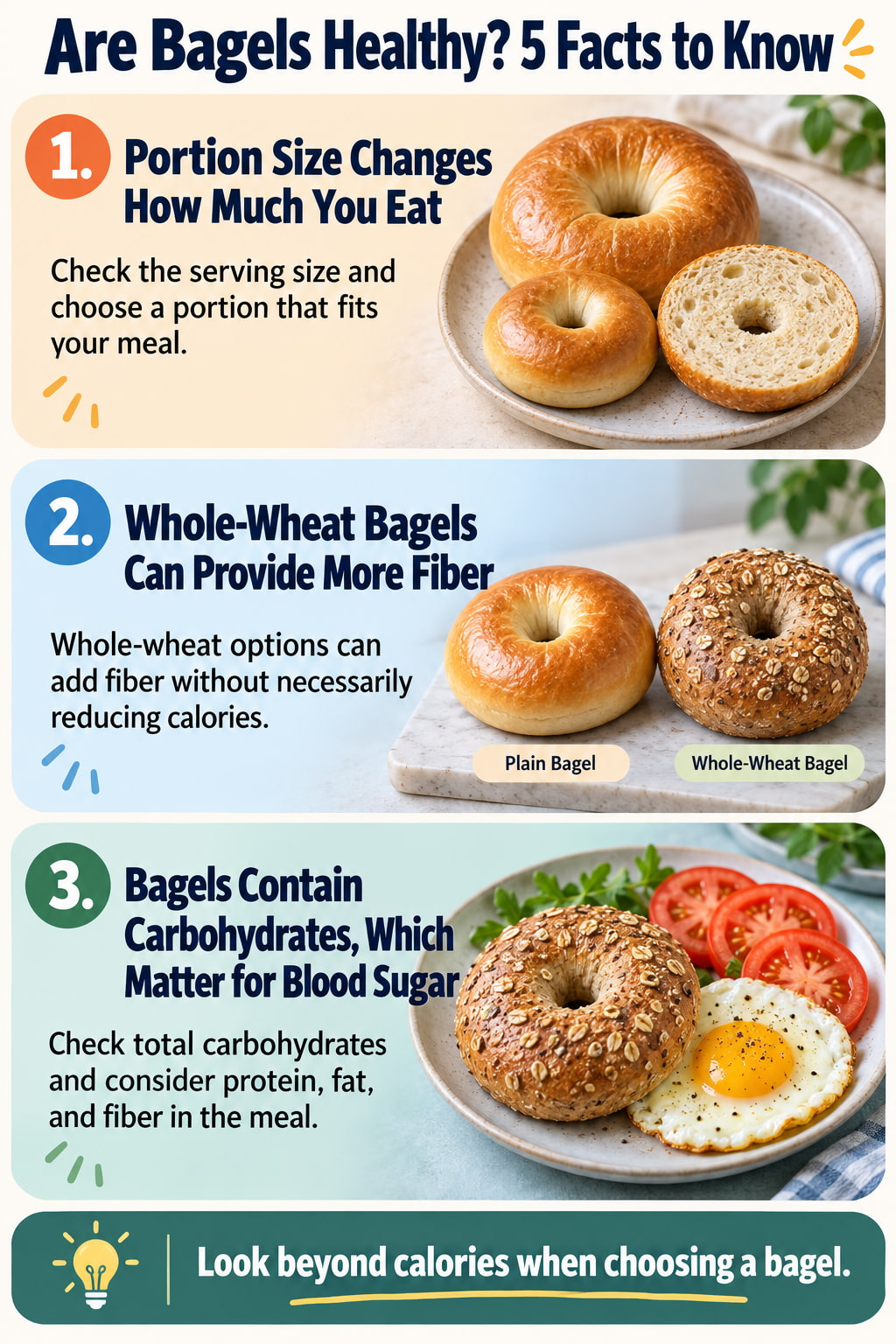
1. Portion Size Changes How Much You Eat
A bagel’s size matters because the calories and nutrients on its label apply to a specific amount of food.
Check whether the serving is one whole bagel, half a bagel, or multiple mini bagels. If you eat a different amount, the nutrition numbers need to reflect that portion.
The FDA explains that a labeled serving size reflects what people typically eat. It is not a recommendation for how much every person should have.
Choose a portion that works with your appetite, activity level, and the other foods in your meal. A smaller bagel or an open-faced half can be useful when you want a smaller portion. A whole bagel may also fit your needs.
2. Whole-Wheat Bagels Can Provide More Fiber
In the comparison above, the whole-wheat bagel has 6 grams of fiber, compared with 2 grams in the plain version. That difference comes without a difference in calories.
When shopping, look for whole wheat flour near the beginning of the ingredient list, ideally as the first ingredient. Wording such as “100% whole wheat” can also help you identify an option to examine more closely.
Brown color, seeds on top, and the word “multigrain” do not establish that a bagel is made primarily from whole grains. Check the ingredients and compare the fiber amounts.
Whole-grain content and calorie content answer different questions. A whole-wheat bagel may improve the fiber content of your meal without reducing its calories.
3. Bagels Contain Carbohydrates, Which Matter for Blood Sugar
The two bagels in the table provide 46–51 grams of total carbohydrate per bagel. Carbohydrates can be part of a healthy eating pattern, including for people with diabetes.
According to CDC meal-planning guidance, eating carbohydrate foods alongside foods containing protein, fat, or fiber slows how quickly blood sugar rises.
For example, you could pair a bagel with an egg or have plain yogurt alongside it. Those additions change the meal’s composition, but they do not remove the bagel’s carbohydrate.
If you manage diabetes, use your individual carbohydrate plan when deciding on a portion. Your clinician or registered dietitian can help you work out an appropriate amount. There is no single bagel portion that suits everyone.
4. Sodium and Added Sugars Vary by Recipe
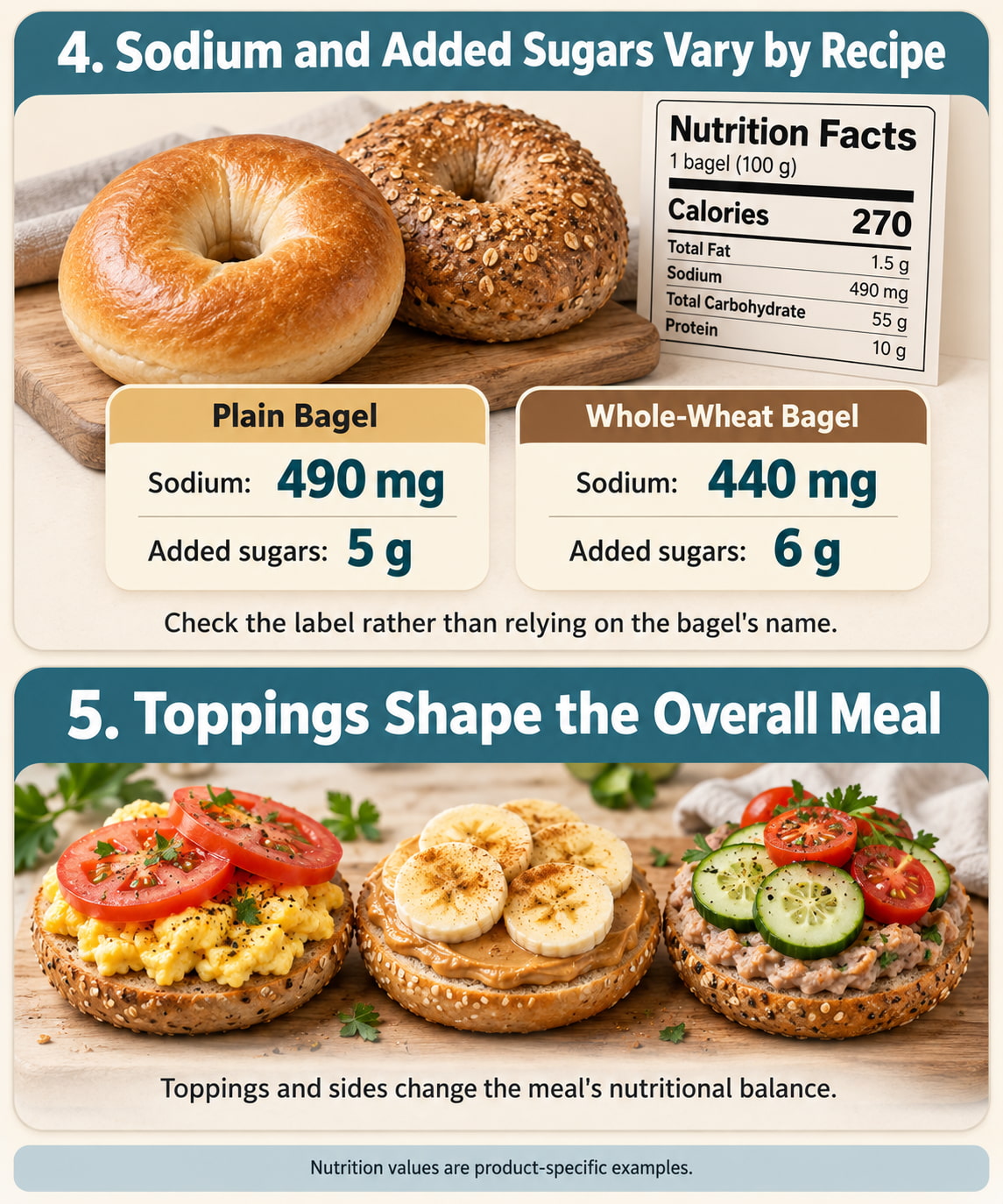
A bagel can contribute sodium and added sugar even when it does not taste especially salty or sweet.
The plain bagel in the table provides 490 milligrams of sodium, listed as 21% of the Daily Value. The whole-wheat version provides 440 milligrams. The whole-wheat product also has slightly more added sugar in this particular comparison.
The FDA’s Nutrition Facts guide considers 5% Daily Value or less low and 20% or more high for a nutrient per serving.
Compare sodium and added sugars alongside fiber, ingredients, and portion size. Whole-wheat wording does not automatically mean a bagel is low in sodium or added sugar.
Also, added sugar and total carbohydrate are different label entries. A bagel can have relatively little added sugar while still providing substantial carbohydrate.
5. Toppings Shape the Overall Meal
What you put on a bagel—and what you serve beside it—changes the meal’s nutritional balance.
Eggs, plain Greek yogurt, beans, and nut butter are examples of foods that can add protein. Fruit and vegetables add variety and can contribute fiber. The amounts depend on the food and portion you use.
If you enjoy cream cheese, consider how it fits with the rest of your breakfast. You could add an egg on the side or serve the bagel with plain yogurt and fruit when you want a more varied meal.
Spreads, sauces, and fillings also contribute their own calories and nutrients. Check their labels when you need to track sodium, added sugar, or carbohydrate.
Better Ways to Eat Bagels
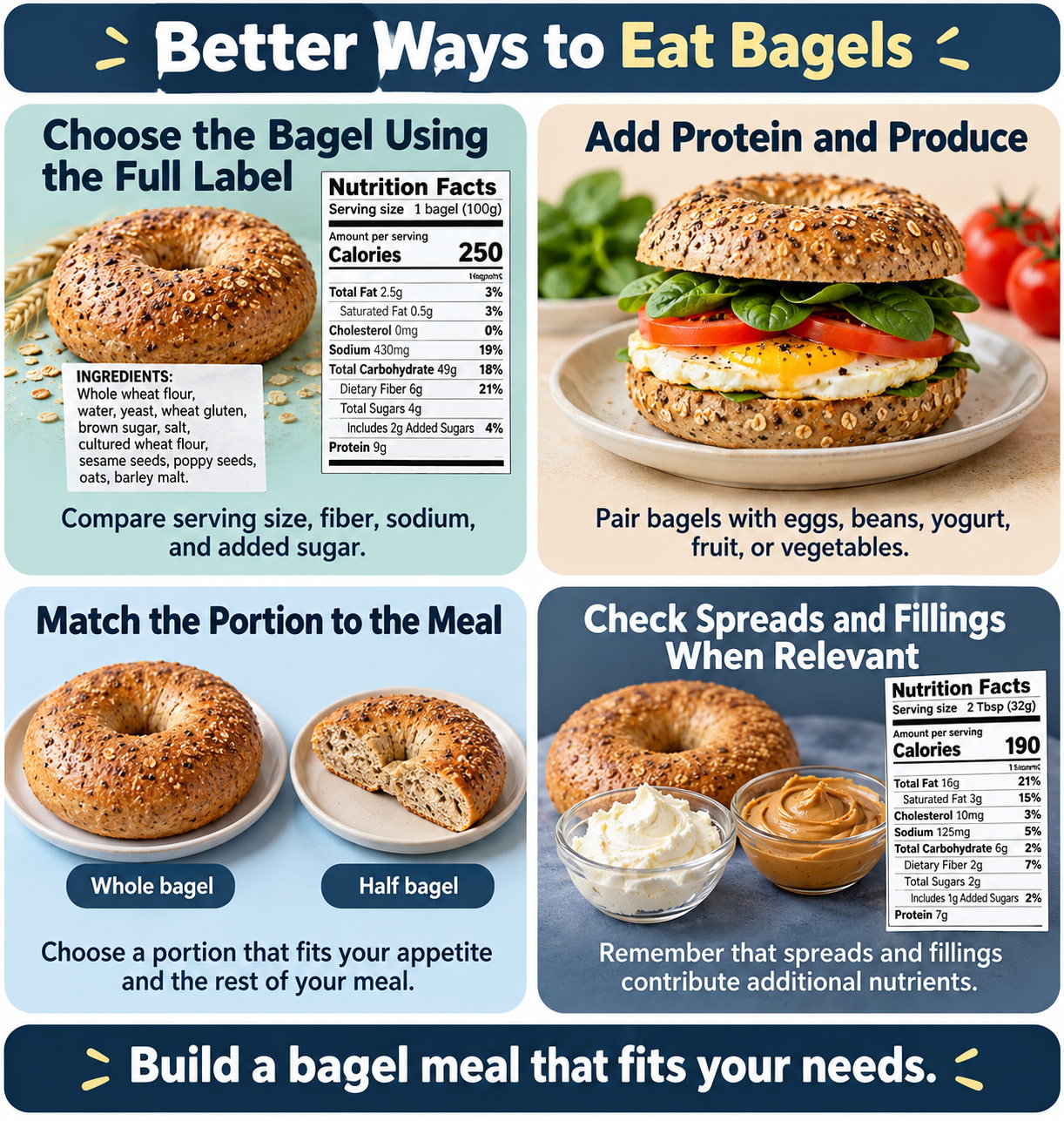
Choose the Bagel Using the Full Label
Start with the serving size, then compare ingredients, fiber, sodium, and added sugar.
If you want more whole grains, look for whole wheat flour as the first ingredient. If you prefer a plain bagel, you can still include other fiber-containing foods, such as fruit, vegetables, or beans, in the meal.
Compare similar serving weights where possible. A smaller product can show lower numbers simply because the serving contains less food.
Add Protein and Produce
Use the bagel as one part of the meal. These combinations offer simple ways to include other food groups:
| Meal idea | How to put it together |
|---|---|
| Egg and tomato bagel | Add a cooked egg, sliced tomato, and spinach to a whole-wheat bagel. |
| Peanut butter and fruit bagel | Spread peanut butter on a bagel and add banana slices or serve fruit alongside it. |
| Bean and vegetable bagel | Top an open-faced bagel with mashed beans, cucumber, and tomato. |
| Bagel with a yogurt side | Enjoy your preferred spread and serve plain Greek yogurt and berries alongside it. |
Adjust the portions to your appetite and needs. These are meal ideas, rather than prescribed portions or guaranteed blood sugar strategies.
Match the Portion to the Meal
Think about what else you are eating.
If you are having a substantial side dish, a smaller bagel or half a bagel may be enough. If the bagel sandwich is your main meal, a whole bagel with fillings may work better for you.
You can split a bagel before serving and keep the remaining half for another meal. This gives you flexibility without making a smaller portion a requirement.
Check Spreads and Fillings When Relevant
A topping’s name does not tell you its exact nutritional value. Compare the label and the amount you actually use.
If sodium is a concern, consider the total from the bagel, cheese, meats, sauces, and seasonings. If you are monitoring added sugars, check flavored spreads as well as the bagel itself.
You can also add flavor with sliced vegetables, herbs, or a preferred seasoning, adjusting these choices to your needs.
Frequently Asked Questions
Are Bagels Healthy to Eat Every Day?
A bagel can fit into a daily eating pattern. Consider its portion, ingredients, and what you eat with it. Include a variety of foods across the day so breakfast contributes to a broader mix of nutrients.
There is no universal weekly bagel limit that applies to everyone.
Are Whole-Wheat Bagels Healthier Than Plain Bagels?
Whole-wheat bagels can be a useful choice when you want more whole grains and fiber. Compare the actual products, because fiber, sodium, added sugars, and serving sizes vary.
Whole wheat does not automatically mean fewer calories, as the equal-weight examples above show.
Can You Eat Bagels While Trying to Lose Weight?
Yes, bagels can fit into a weight-management eating plan. Overall intake and eating habits matter more than whether you include one particular food.
Consider the portion and toppings, and choose a meal pattern you can maintain. A whole-wheat bagel does not guarantee weight loss.
Are Bagels Healthier Than Bread?
It depends on the products and portions. Comparing one bagel with one slice of bread may mean comparing different amounts of food.
For a more useful comparison, look at similar weights, whole-grain ingredients, fiber, sodium, and added sugars. Neither food is automatically the better choice.
Is a Bagel With Cream Cheese a Balanced Breakfast?
It can be part of a balanced breakfast. Consider adding a protein food and some produce, such as an egg and tomato or plain yogurt and fruit.
The amount and type of cream cheese also affect the meal’s nutrition, so check the label if you are tracking particular nutrients.
Can People With Diabetes Eat Bagels?
Bagels may fit into an individual diabetes meal plan. Check total carbohydrate and serving size, and account for other carbohydrate-containing foods in the meal.
Pairing foods can change how quickly blood sugar rises, but it does not cancel the carbohydrates. Follow the plan developed with your health care team.
Are Gluten-Free Bagels Healthier?
Gluten-free bagels are not automatically more nutritious. Some packaged gluten-free foods contain more fat or sugar than comparable products, according to NIDDK guidance.
People with celiac disease need to avoid gluten and prevent cross-contact. Regular whole-wheat bagels contain gluten, so they are not a suitable substitute for a gluten-free bagel.
Conclusion
Bagels can be part of a healthy eating pattern. Compare serving sizes, look for whole-grain options when you want more fiber, and consider how toppings and sides complete the meal.
The next time you choose a bagel, check its label and add a protein food or some produce that you enjoy. Small, practical choices can make the meal work better for your needs.
This content is for informational purposes only and not medical advice.