
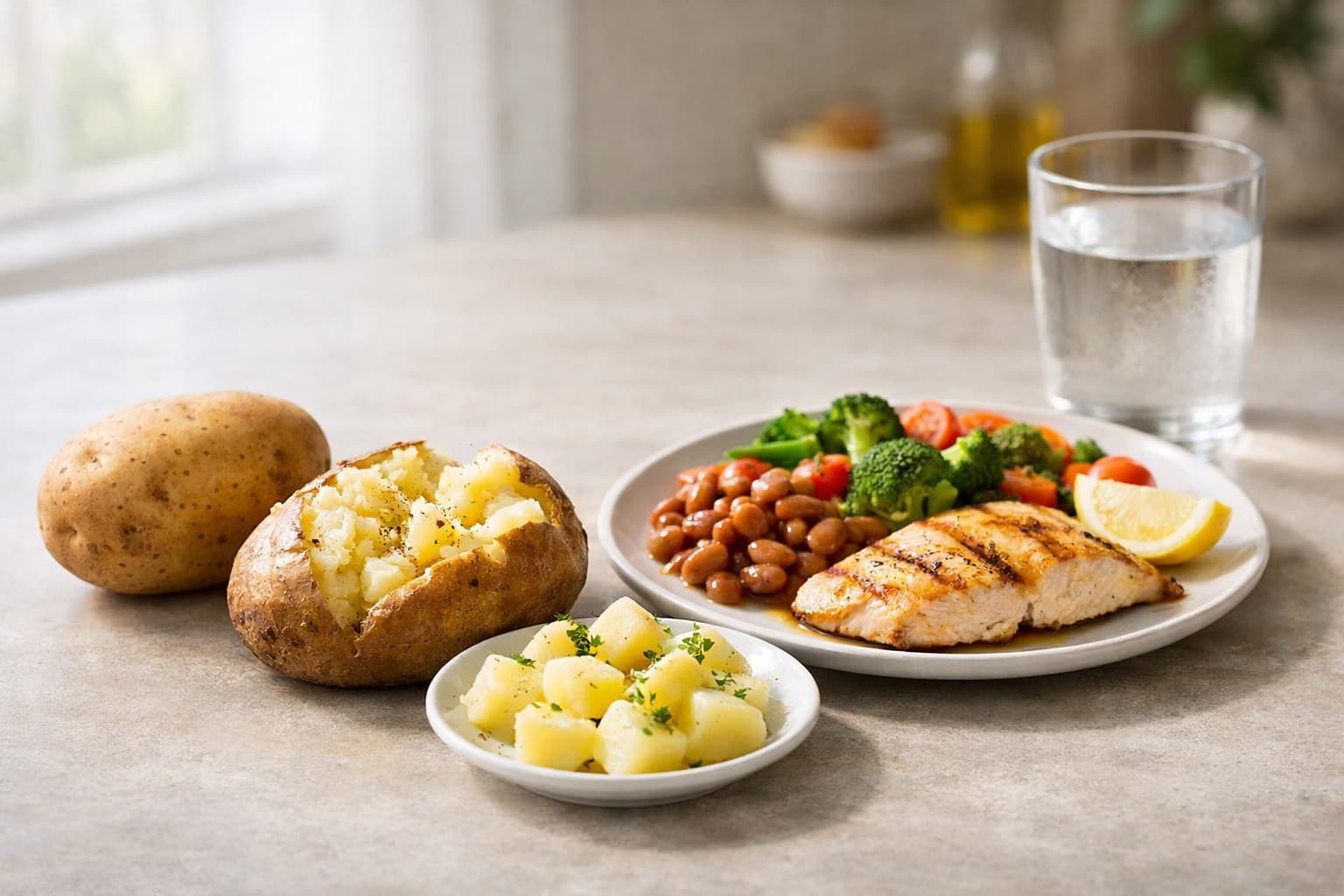
Yes, potatoes can be healthy. Plain potatoes are nutrient-dense starchy vegetables that provide carbohydrate for energy along with fiber, vitamin C, vitamin B6, and potassium. They are healthiest when baked, boiled, steamed, or microwaved and less healthy when they are deep-fried or covered with large amounts of butter, cheese, sour cream, bacon, or salty sauces.
That matters because potatoes are often judged by the company they keep. A plain baked potato is very different from fries, chips, or a loaded restaurant side dish. According to USDA SNAP-Ed, one medium potato provides about 147 calories, 34 grams of carbohydrate, 5 grams of fiber, 4 grams of protein, and vitamin C. And USDA MyPlate places potatoes in the vegetable group as part of the starchy vegetables subgroup.
Potato Nutrition Facts
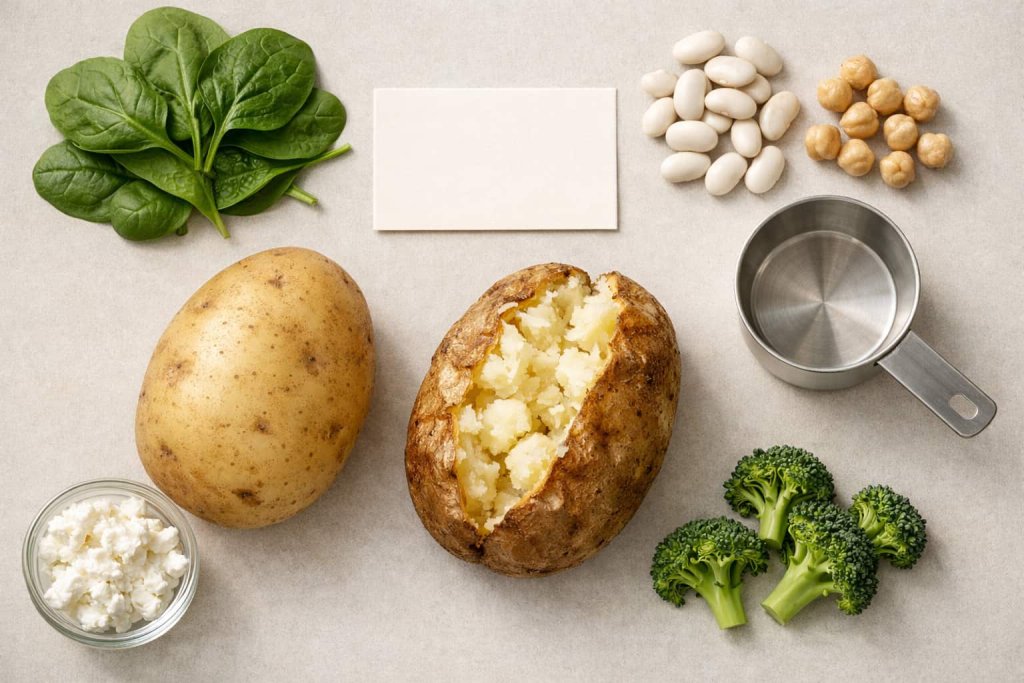
A medium plain potato offers a useful mix of nutrients for relatively modest calories. It is naturally fat-free, cholesterol-free, and low in sodium before toppings are added. It also provides fiber, vitamin C, and some protein.
Potatoes are also a meaningful source of potassium. The NIH Office of Dietary Supplements notes that potatoes are among the top potassium sources in U.S. diets. Potassium helps support normal muscle, nerve, and heart function.
What Makes Potatoes Nutritious?
A plain potato gives you more than just starch. It provides carbohydrate for energy, plus fiber and important micronutrients that many people overlook.
Potatoes provide potassium
Potassium is one of the strongest nutrition points in favor of potatoes. NIH notes that many adults do not get enough potassium from food, so potatoes can help fill that gap.
Potatoes contain vitamin C and vitamin B6
Potatoes provide vitamin C and vitamin B6, both of which support normal body functions. Vitamin C helps with collagen formation and iron absorption, while vitamin B6 plays a role in metabolism.
Potatoes can add fiber, especially with the skin
Keeping the skin on helps improve the fiber content. That can make potatoes more filling and more balanced than many refined side dishes.
Are Potatoes Healthy or Unhealthy Overall?
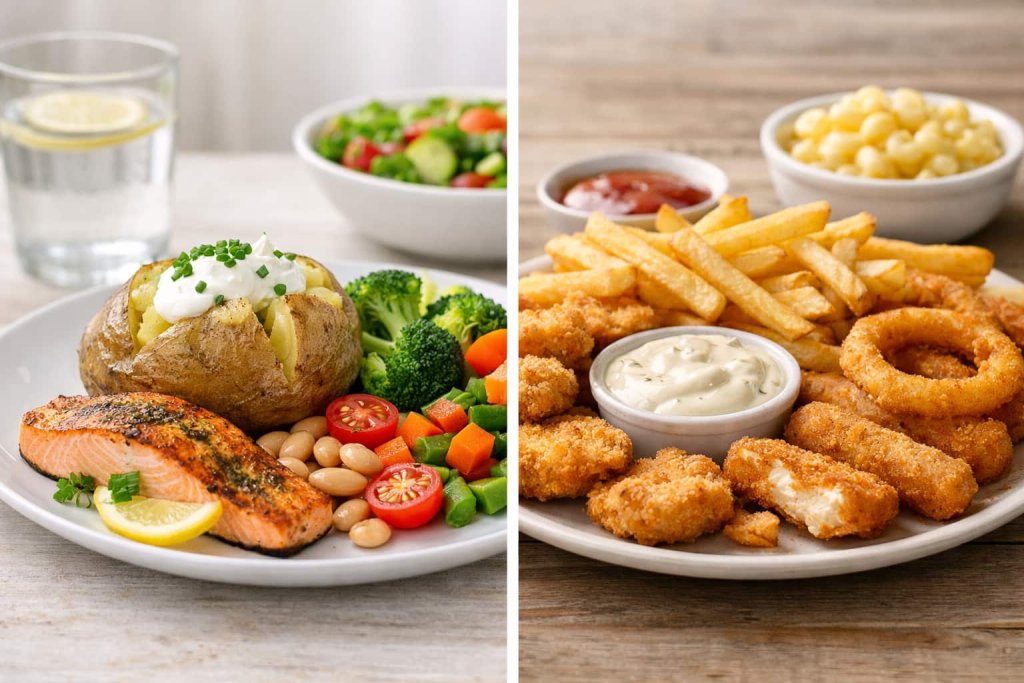
Potatoes are healthy overall when they are prepared simply and eaten as part of a balanced meal. The biggest issue is usually not the potato itself. It is the cooking method, portion size, and what gets added on top.
For example, a baked potato with beans, plain yogurt, and vegetables is very different from fries with a burger and soda. Boiled potatoes with olive oil and herbs are also very different from potato chips or loaded potato skins. In other words, potatoes are best judged in the context of the full meal.
Benefits of Potatoes
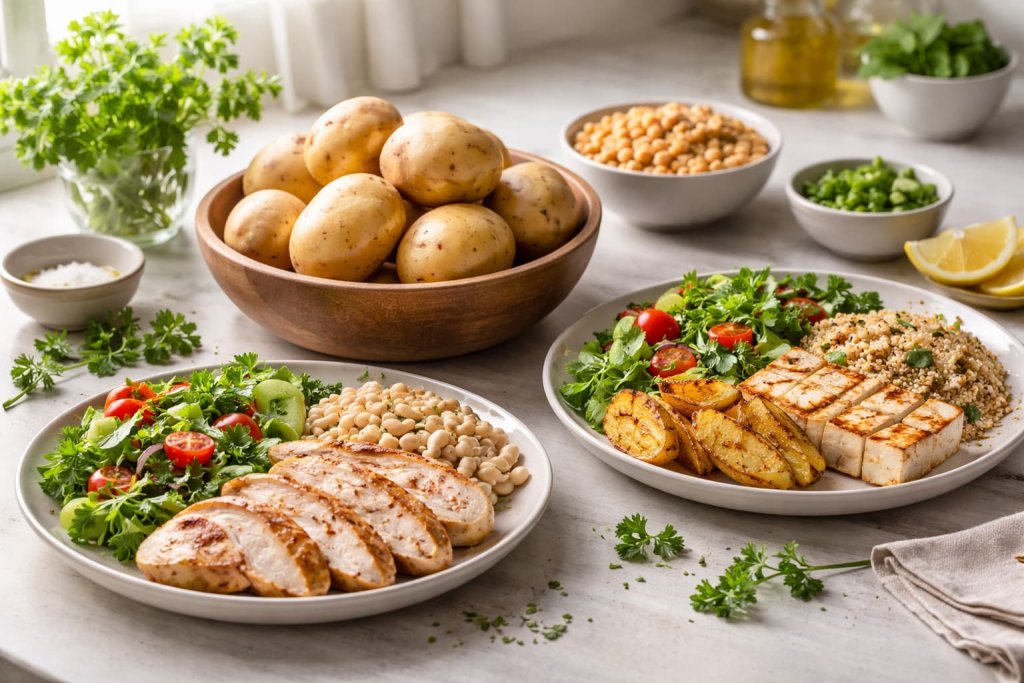
Potatoes can support energy needs
Potatoes are rich in carbohydrate, which is the body’s main source of energy. That makes them practical for active people, growing teens, and anyone who wants an affordable, filling carbohydrate source.
Potatoes can fit a heart-healthy eating pattern
A plain potato is naturally low in fat, contains no cholesterol, and starts very low in sodium before toppings are added. Its potassium content can also support a heart-smart eating pattern.
Potatoes can be filling
Because potatoes contain water, starch, and some fiber, they can be satisfying. That can help when they replace more heavily processed sides instead of being added to an already large meal.
Potatoes are affordable and versatile
Potatoes are widely available, easy to cook, and flexible enough for many meal styles. That matters because healthy eating has to be realistic and affordable to be sustainable.
Are Potatoes Bad for Blood Sugar?
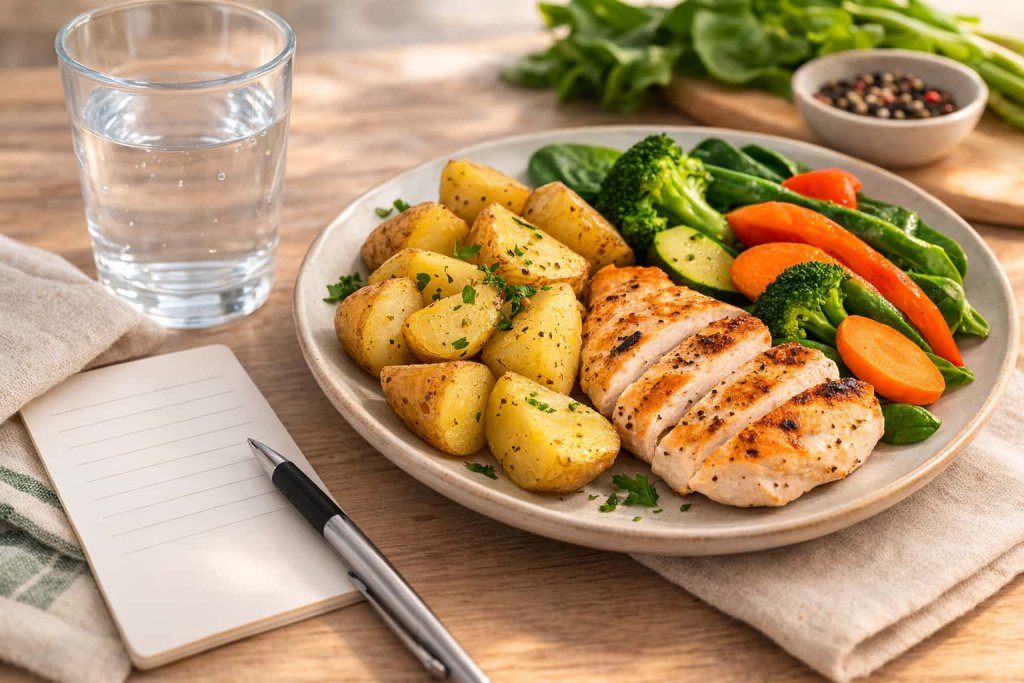
Potatoes are not automatically bad for blood sugar, but they are a carbohydrate-rich food, so portion size and meal balance matter. The American Diabetes Association recommends a plate method that fills half the plate with non-starchy vegetables, one-quarter with lean protein, and one-quarter with quality carbohydrate foods such as starchy vegetables. Potatoes can fit into that framework.
A very large portion is more likely to raise blood sugar than a modest one. Potatoes also tend to work better when they are eaten with protein, healthy fats, and non-starchy vegetables than when they are eaten alone. Fries, heavily buttered mashed potatoes, and fast-food potato meals are different from a simple baked or boiled potato.
If you have diabetes, potatoes may still fit your meal plan. The key is the portion, the cooking method, and the rest of the plate.
Cooked and cooled potatoes may act a little differently
When potatoes are cooked and then cooled, some of their starch turns into resistant starch. That does not make potatoes a low-carb food, but it may slightly change how they affect fullness and blood sugar compared with freshly cooked hot potatoes. In real life, that means foods like chilled boiled potatoes in a simple potato salad may work differently than a large serving of hot mashed potatoes. Portion size still matters, and the rest of the meal still matters most.
Are Potatoes Good for Weight Loss?
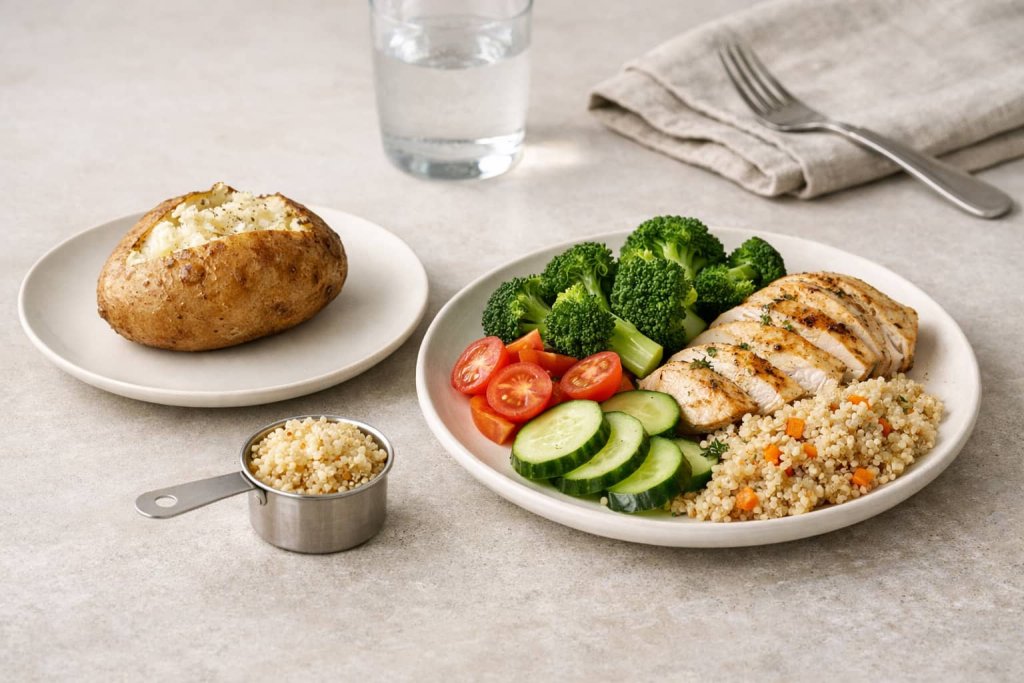
Potatoes can fit a weight-loss diet, but they are not automatically a weight-loss food. They work best when they replace ultra-processed sides rather than being added to an already high-calorie meal.
A plain potato can be filling for relatively modest calories, while fries, chips, and loaded potato dishes can push calories much higher. A smarter approach is to choose baked, boiled, microwaved, or roasted potatoes instead of fried versions, keep portions realistic, and pair potatoes with protein and vegetables. Toppings like salsa, beans, plain yogurt, herbs, or a small amount of olive oil usually work better than heavy cheese sauces or large amounts of butter.
How Much Potato Is a Reasonable Portion?
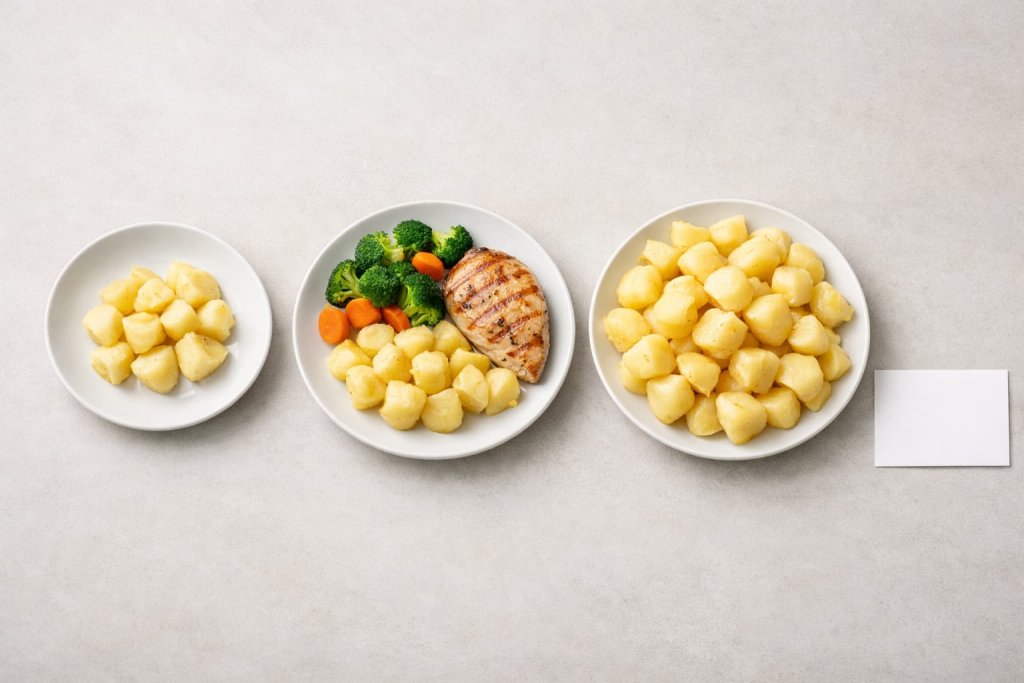
A reasonable portion depends on your energy needs and the rest of the meal, but for many adults, about 1 medium potato or roughly 1 cup of cooked potato is a practical starting point. That works best when the rest of the plate includes lean protein and plenty of non-starchy vegetables.
A portion can easily become oversized when potatoes are turned into fries, chips, or large restaurant sides. A helpful rule is to think of potatoes as the starchy part of the plate, not the entire meal.
The Healthiest Ways to Cook Potatoes

The healthiest methods usually use little added fat and avoid the drawbacks of deep frying.
Best options include:
- Baked
- Boiled
- Steamed
- Microwaved
- Roasted with a light amount of oil
Less healthy options include:
- Deep-fried fries
- Potato chips
- Hash browns cooked in a lot of oil
- Loaded potato skins with heavy cheese, bacon, and sour cream
The FDA notes that acrylamide can form during high-temperature cooking, especially frying. Boiling and steaming do not typically form acrylamide, and microwaving whole potatoes with skin on is also a lower-acrylamide option.
Risks and Downsides to Know
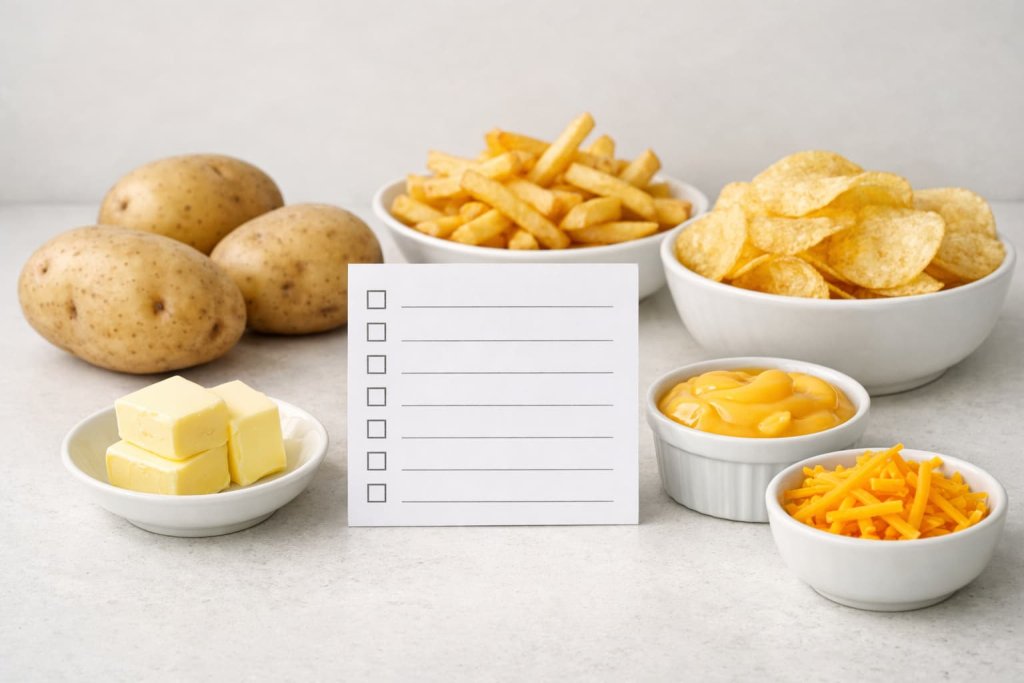
Potatoes are nutritious, but a few downsides are worth knowing. For most people, the downsides come from processing, frying, oversized portions, or certain medical conditions rather than from plain potatoes themselves.
Fried potatoes can be much less healthy
Frying can raise calories and fat quickly, and many restaurant and packaged potato foods can also be high in sodium. The overall health picture changes fast once potatoes are turned into fries, chips, or heavily processed snack foods.
Heavy toppings can change the nutrition fast
A plain potato is one thing. A large loaded potato with butter, cheese, bacon, and sour cream can become much higher in calories, saturated fat, and sodium.
Packaged potato foods can also be very different from plain potatoes. Potato chips, flavored instant mashed potatoes, and many frozen potato products may be much higher in sodium, added fat, or extra ingredients than a plain baked or boiled potato. Checking the Nutrition Facts label can help you spot those differences quickly.
Potatoes are high in potassium
That is a benefit for many people, but it may be a concern for some people with chronic kidney disease. The National Kidney Foundation explains that some people with CKD need to monitor potassium based on lab results and medical advice.
Green or heavily sprouted potatoes are not a good idea
USDA Ask USDA advises not eating the green parts of potatoes. Green potatoes can contain more glycoalkaloids, and heavily green potatoes can be harmful if eaten in large amounts. If a potato has small green areas, trim them away generously. If it is heavily green or bitter, it is better to discard it.
Who Should Be More Careful With Potatoes?
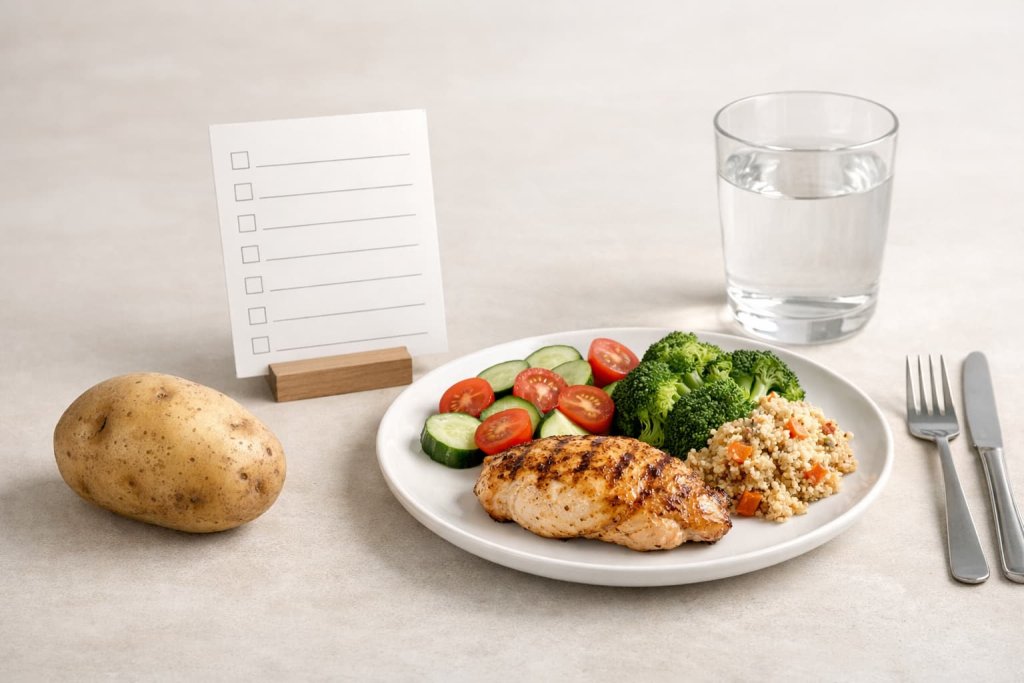
Potatoes may need more planning if you:
- have diabetes or prediabetes
- have chronic kidney disease
- need to limit sodium because of blood pressure or heart concerns
- often eat potatoes mostly as fries, chips, or heavily processed foods
That does not always mean avoiding potatoes. It usually means being more careful about portion size, preparation, and toppings.
White Potatoes vs. Sweet Potatoes
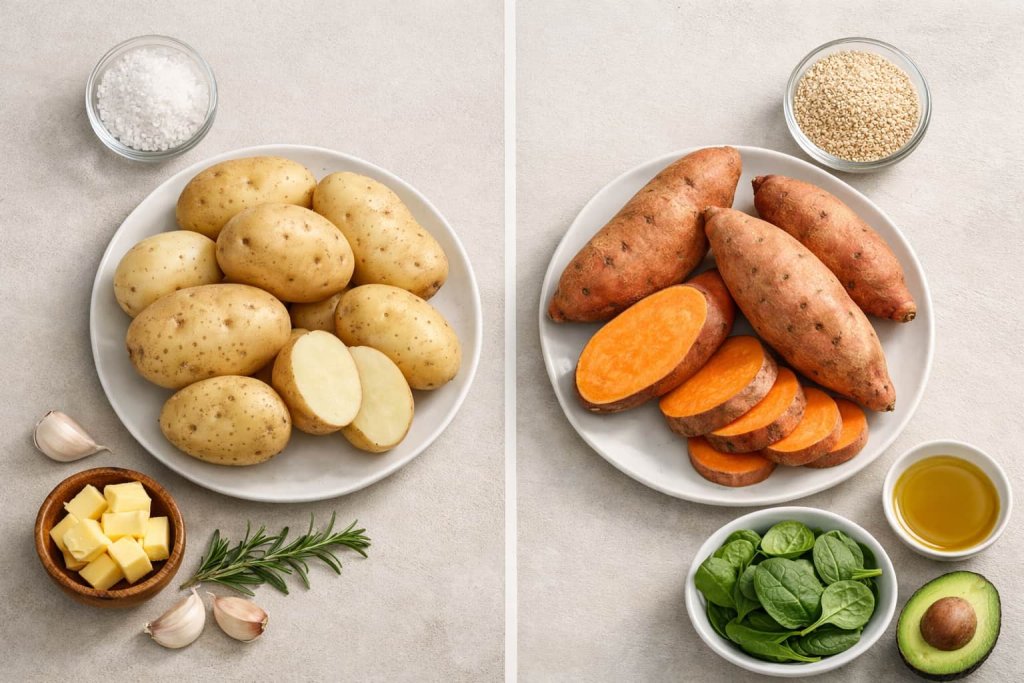
Both can be healthy, but they are not identical. White potatoes stand out for potassium and vitamin C, while sweet potatoes are especially known for vitamin A. One is not automatically good and the other bad. The better choice depends more on your overall meal, portion size, and cooking method.
Common Myths About Potatoes
One of the biggest myths is that potatoes are automatically unhealthy just because they are high in carbohydrate. That is too simplistic. Potatoes are a starchy vegetable, and plain potatoes provide useful nutrients along with carbohydrate.
Another common myth is that sweet potatoes are always healthy and white potatoes are always unhealthy. In reality, both can fit a healthy eating pattern. The better choice depends more on portion size, cooking method, and toppings than on the color alone.
How to Make Potatoes Healthier
Leave the skin on when possible, bake or boil instead of fry, keep portions reasonable, and pair potatoes with lean protein and non-starchy vegetables. Lighter toppings such as beans, salsa, plain yogurt, herbs, or a small amount of olive oil can keep a potato meal balanced without burying it in saturated fat or sodium.
The FDA also recommends storing raw potatoes outside the refrigerator in a cool, dark place because refrigeration can increase acrylamide formation during later high-heat cooking.
A Simple Balanced Meal With Potatoes
A healthy potato-based meal could be:
- one medium baked potato
- grilled fish, chicken, tofu, or beans
- a large serving of broccoli, salad, green beans, or another non-starchy vegetable
- a small amount of olive oil, plain yogurt, or salsa for flavor
This kind of plate is very different from making potatoes the whole meal.
Are Potatoes Healthy for You?
For most people, yes. Potatoes can absolutely be part of a healthy diet. They provide useful nutrients, count as a starchy vegetable, and can be satisfying and affordable. The main thing to watch is how they are cooked and what you add to them.
FAQs
Are potatoes healthier than rice?
It depends on the type of rice, the portion, and the rest of the meal. Potatoes offer potassium and vitamin C, while some whole grains offer more fiber. Both can fit a healthy diet when portions and overall meal quality are reasonable.
Are potato skins good for you?
Yes. Eating the skin can add fiber and some nutrients. Wash potatoes well and trim away any green areas or sprouts before cooking.
Can people with diabetes eat potatoes?
Yes, many people with diabetes can eat potatoes in controlled portions as part of a balanced plate with protein and non-starchy vegetables.
Are mashed potatoes healthy?
They can be, but it depends on what is added. Mashed potatoes made with large amounts of butter, cream, and salt are much less balanced than simpler versions made with modest ingredients.
Are baked potatoes healthy?
Yes. A baked potato can be a healthy choice, especially when eaten with the skin and topped lightly.
Should you avoid potatoes for weight loss?
No. Potatoes do not need to be avoided for weight loss. Cooking method, portion size, and toppings matter much more than the food name alone.
Should raw potatoes be stored in the refrigerator?
No. Raw potatoes should be stored in a cool, dark place outside the refrigerator.
Conclusion
Potatoes are healthier than their reputation suggests. A plain potato is a nutrient-dense starchy vegetable, not junk food. The healthiest approach is to keep the cooking method simple, keep portions realistic, and build a balanced plate around it. When you do that, potatoes can be a practical, satisfying part of a healthy diet.