
The main benefits of zinc for men are supporting normal immune function, wound healing, taste and smell, protein and DNA synthesis, and normal testosterone and sperm production.
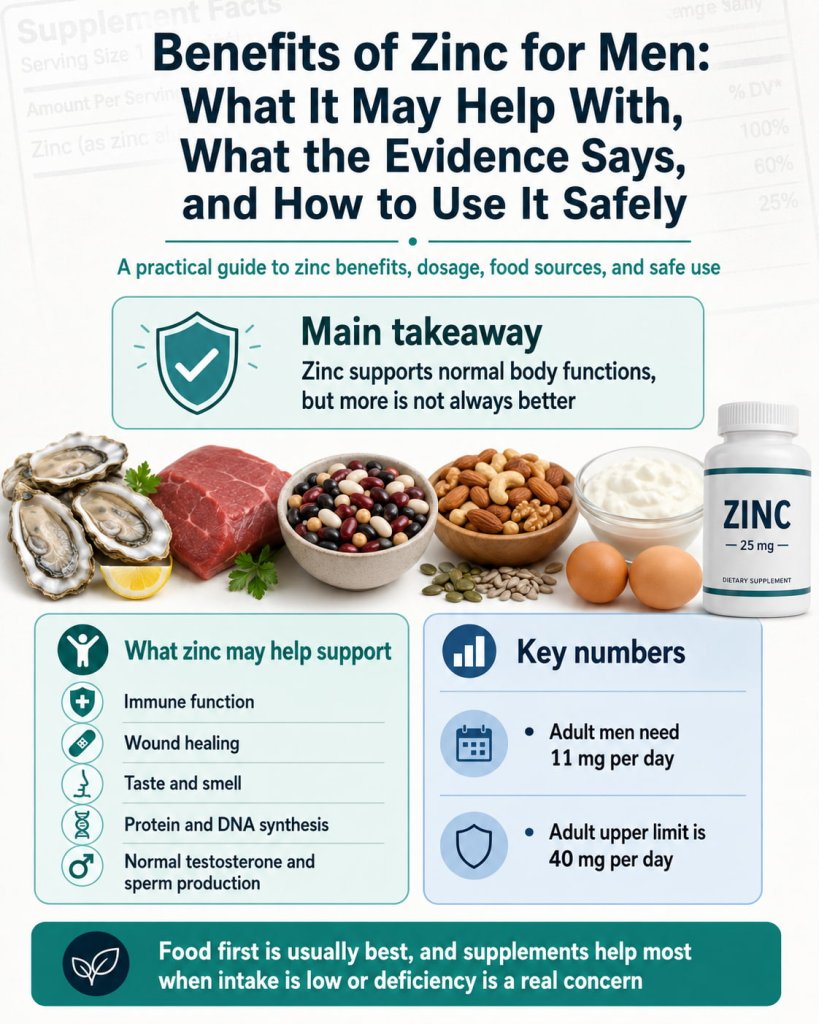
That matters because zinc is an essential mineral, not a performance shortcut. For most men, the real goal is getting enough zinc consistently, not taking more than you need. According to the NIH Office of Dietary Supplements, men age 19 and older need 11 mg per day, and the adult upper limit is 40 mg per day from food and supplements combined.
Why zinc matters for men’s health
Zinc is involved in hundreds of enzyme-driven processes in the body. It helps with immune function, wound healing, cell signaling, and protein and DNA synthesis. It also plays a role in taste and smell. For men, zinc gets extra attention because the body also needs it for normal testosterone production and sperm production.
That does not mean zinc is a magic testosterone booster. The best-supported message is simpler: zinc helps maintain normal body function, and men who do not get enough may notice more benefit from improving intake than men who already meet their needs.
Evidence-backed benefits of zinc for men
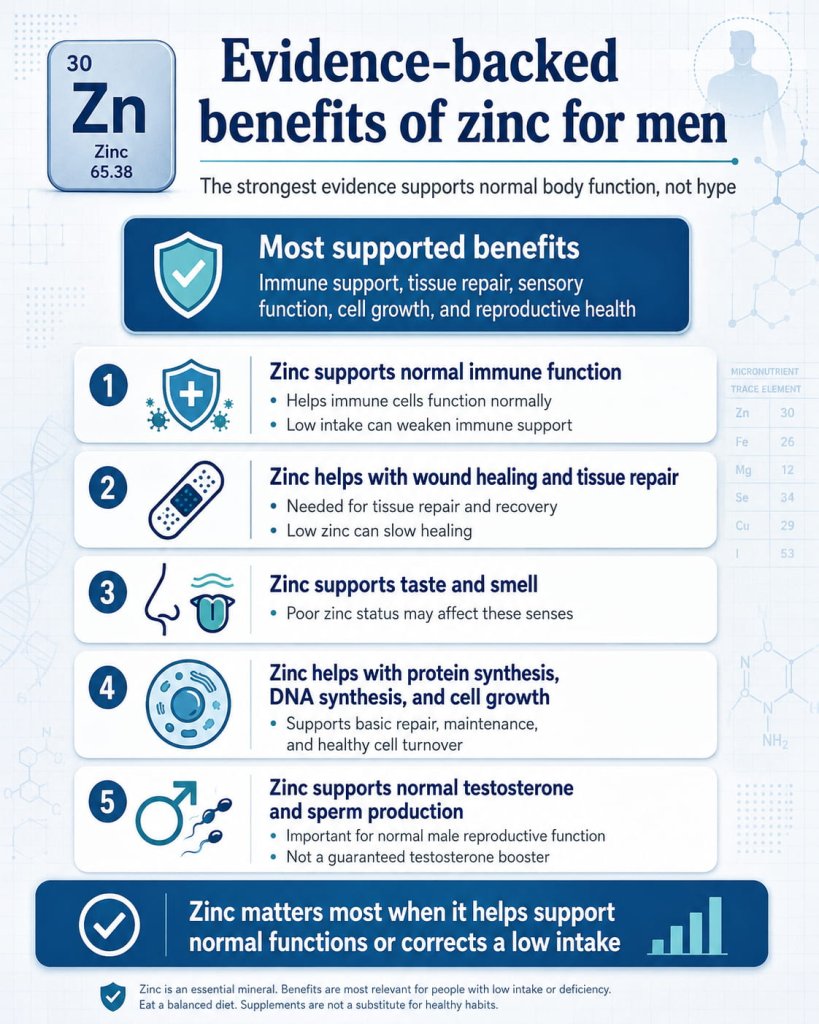
Zinc supports normal immune function
Zinc helps the immune system work normally, which is one reason it is often included in cold products and multivitamins. If zinc intake is low, immune function can suffer. This is one of the most established zinc benefits overall, and it applies to men just as much as anyone else.
Zinc helps with wound healing and tissue repair
Zinc is needed for wound healing, tissue repair, and cell division. That makes it important after everyday cuts and scrapes and during general recovery. Slow wound healing is also one of the better-known signs of zinc deficiency.
Zinc supports taste and smell
Zinc is involved in the sense of taste, and low zinc levels can interfere with both taste and smell. If someone has poor zinc status, correcting that may help normal function return. But zinc is not a general cure for taste or smell problems caused by every condition.
Zinc helps with protein synthesis, DNA synthesis, and cell growth
One reason zinc is so important is that it supports protein and DNA synthesis and many aspects of cellular metabolism. In practical terms, that means zinc is part of the body’s basic maintenance system. It supports normal growth, repair, and healthy cell turnover.
Zinc supports normal testosterone and sperm production
This is the part many men care about most. A review from Harvard Health notes that the body needs zinc for the production of hormones such as testosterone and for sperm production. That makes zinc important for normal male reproductive function.
But the evidence is more careful than supplement marketing makes it sound. Zinc supports normal reproductive health, especially when intake is low or deficiency is present. It does not automatically mean extra zinc will raise testosterone or improve fertility in men who already get enough.
Does zinc help with colds?
Zinc is sometimes useful here, but the claim needs context. The National Center for Complementary and Integrative Health says oral zinc lozenges may reduce how long a common cold lasts when started within 24 hours and used for less than 2 weeks. The NIH fact sheet also says the evidence is mixed overall, with the best support for shortening duration rather than preventing colds or clearly reducing severity.
That means zinc may help a little with a cold, but it is not a guaranteed fix and it should not be the main reason most men take zinc every day.
How much zinc do men need?
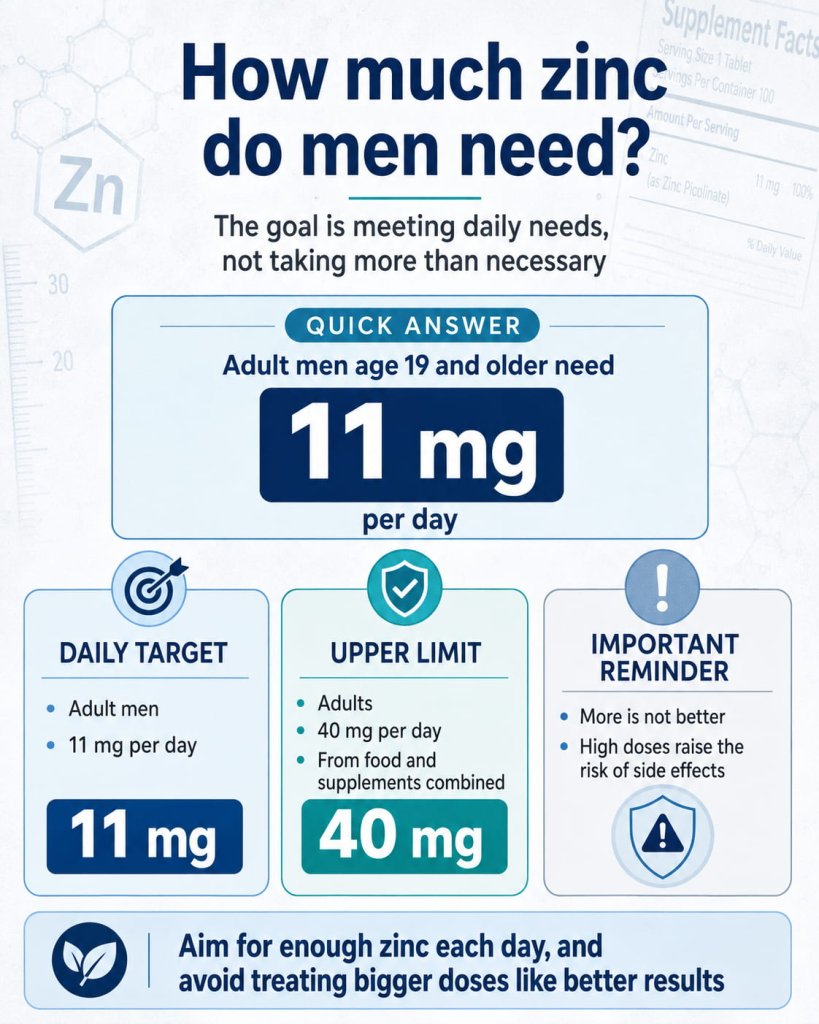
Adult men age 19 and older need 11 mg of zinc per day. The adult upper limit is 40 mg per day unless a clinician is using a different dose for a specific medical reason. Going above that regularly is where side effects and longer-term problems become more likely.
A simple way to think about it:
- Daily target for adult men: 11 mg
- Upper limit for adults: 40 mg per day
- More is not better if you already meet your needs
These intake levels come from NIH guidance.
Do most men need a zinc supplement?
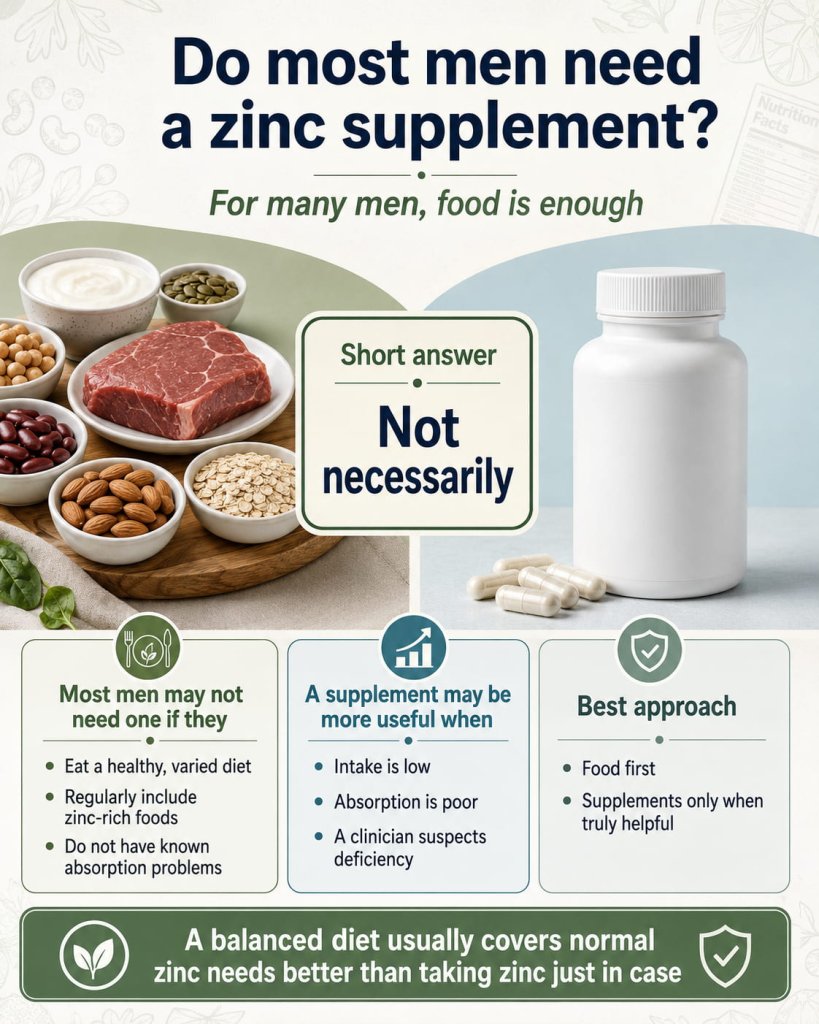
Not necessarily. Most men who eat a healthy, varied diet can meet their zinc needs through food. A supplement may be more useful when intake is low, absorption is poor, or a clinician suspects deficiency. That is why a food-first approach usually makes more sense than taking zinc just in case. Mayo Clinic makes the same general point: for most people, a balanced diet covers normal needs.
Best food sources of zinc
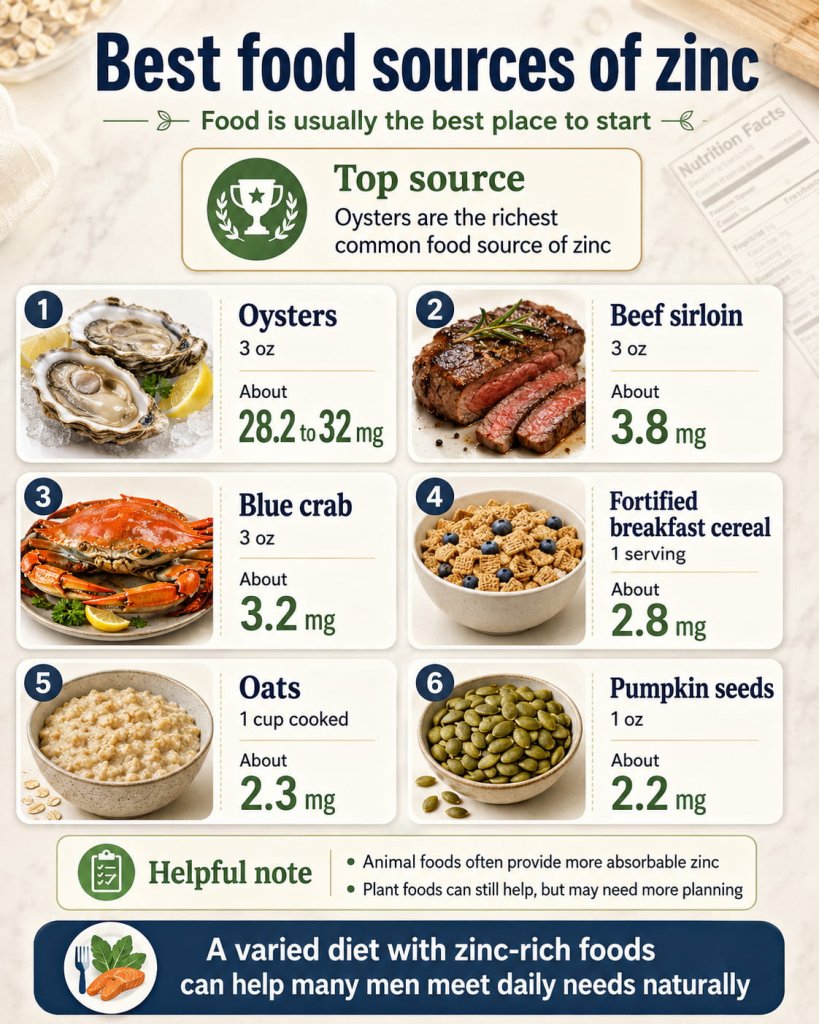
Food is usually the best starting point. Oysters are by far the richest common food source of zinc. Beef, crab, fortified breakfast cereals, oats, pumpkin seeds, pork, eggs, dairy foods, beans, nuts, and whole grains can also contribute.
A few useful examples per serving:
- Oysters, 3 ounces: about 28.2 to 32 mg
- Beef sirloin, 3 ounces: about 3.8 mg
- Blue crab, 3 ounces: about 3.2 mg
- Fortified breakfast cereal, 1 serving: about 2.8 mg
- Oats, 1 cup cooked: about 2.3 mg
- Pumpkin seeds, 1 ounce: about 2.2 mg
The NIH also notes that zinc from animal foods is usually absorbed better than zinc from beans, nuts, and whole grains because plant foods contain phytates, which reduce absorption.
Men who follow vegetarian or vegan diets may need to be more intentional. The NIH Office of Dietary Supplements notes that phytates in beans, grains, nuts, and seeds can reduce zinc absorption. Practical ways to help include using soaked beans or grains, choosing canned or pre-cooked legumes when helpful, including fermented foods, and paying attention to fortified foods. If intake still seems low, a clinician may suggest a supplement.
Who may benefit most from zinc supplements?
Supplements are usually most helpful when there is low intake, poor absorption, or a true deficiency. Men who may need closer attention to zinc status include those with inflammatory bowel disease, celiac disease, a history of bariatric surgery, alcohol use disorder, or diets that are fully vegetarian or vegan. Some medications, including thiazide diuretics, can also lower zinc status over time.
Possible signs of low zinc include:
- Frequent infections
- Slow wound healing
- Poor appetite
- Loss of hair
- Reduced taste or smell
- Skin sores
- Hypogonadism in males
Still, these signs do not prove that zinc is low. The NIH Office of Dietary Supplements notes that zinc status is not always easy to assess, because serum or plasma zinc has important limitations and does not always reflect intake well. In practice, clinicians usually look at symptoms, diet, medical history, and risk factors together instead of relying on one sign alone.
As MedlinePlus explains, deficiency symptoms can overlap with other issues, which is another reason self-diagnosing is not a great idea.
Does zinc increase testosterone or male fertility?
This is where a lot of articles overpromise. Zinc is important for normal testosterone and sperm production, but that is not the same as saying zinc supplements reliably boost testosterone or improve fertility in every man.
The strongest caution comes from a large JAMA randomized clinical trial. In 2,370 couples undergoing infertility treatment, folic acid plus zinc in men did not significantly improve semen quality or live birth rates compared with placebo. Gastrointestinal side effects were also more common in the supplement group.
The practical takeaway is that zinc is essential for normal male reproductive health, but using high-dose zinc as a fertility shortcut is not supported by strong evidence. Men with suspected low zinc, restricted diets, digestive disorders, or symptoms of deficiency are the group most likely to benefit from medical evaluation and targeted correction.
Zinc side effects and safety
Too much zinc can cause nausea, vomiting, headache, dizziness, gastric distress, loss of appetite, abdominal cramps, and diarrhea. With higher intakes over weeks, zinc can interfere with copper absorption, reduce immune function, and lower HDL cholesterol.
One safety point is especially important: do not use intranasal zinc products. Both NCCIH and other major medical sources warn that zinc used in the nose has been linked to severe and potentially permanent loss of smell.
Zinc interactions men should know about
Zinc can interact with some common medications. It may interfere with the absorption of quinolone antibiotics, tetracycline antibiotics, and penicillamine if taken at the same time. Thiazide diuretics can also increase zinc loss in urine and lower serum zinc levels.
If you use one of those medicines regularly, it is smart to ask a clinician or pharmacist before starting a supplement.
How to choose and use a zinc supplement safely
If you decide to use a zinc supplement, keep it simple:
- Check how much elemental zinc is in each dose
- Stay within the adult upper limit unless your clinician tells you otherwise
- Follow the product label
- Be extra careful if you take antibiotics, penicillamine, or diuretics
- Use supplements to fill a real gap, not as a replacement for a balanced diet
Timing matters too. The NIH Office of Dietary Supplements advises taking zinc supplements at least 2 hours before or 4 to 6 hours after quinolone or tetracycline antibiotics. Zinc and penicillamine should be taken at least 1 hour apart. Taking a zinc supplement at the same time as a high-dose iron supplement may also reduce zinc absorption.
The NIH fact sheet notes that labels list elemental zinc, and common forms include zinc gluconate, zinc acetate, and zinc sulfate.
FAQ about the benefits of zinc for men
Is zinc good for men every day?
Yes, zinc is an essential nutrient men need every day. The goal is meeting daily needs consistently, usually through food, rather than taking large doses.
Does zinc boost testosterone?
Zinc supports normal testosterone production, but evidence does not show that taking extra zinc will reliably boost testosterone in men who already have enough.
Can zinc improve sperm count or fertility?
Zinc is important for normal sperm production, but high-quality clinical evidence does not support zinc supplements as a reliable fertility treatment for all men.
What is the best zinc source for men?
Oysters are the richest common food source. Beef, crab, fortified cereals, pumpkin seeds, eggs, dairy foods, beans, and nuts also help. Animal foods usually provide more absorbable zinc than high-phytate plant foods.
Conclusion
The real benefits of zinc for men are important, but they are often misunderstood. Zinc helps support immune function, wound healing, taste and smell, normal cell processes, and male reproductive function. That makes it a key mineral for everyday health. But the best results come from correcting low intake or deficiency, not from assuming that higher doses will improve testosterone, fertility, or performance.
A food-first approach is usually the smartest move. If you think your intake is low, you have digestive issues, follow a restrictive diet, or have symptoms that could fit zinc deficiency, talk with a qualified clinician before relying on supplements.
This content is for informational purposes only and not medical advice.
References
- NIH Office of Dietary Supplements — Zinc – Health Professional Fact Sheet
- Harvard Health — Zinc: What it does for the body, and the best food sources
- MedlinePlus — Zinc in diet
- National Center for Complementary and Integrative Health — The Common Cold and Complementary Health Approaches: What the Science Says
- JAMA Network — Effect of Folic Acid and Zinc Supplementation in Men on Semen Quality and Live Birth Among Couples Undergoing Infertility Treatment: A Randomized Clinical Trial
- Mayo Clinic — Zinc