
Keto diet results usually look like a fast drop on the scale in week 1 (mostly water), followed by slower, steadier fat loss over the next several weeks if you maintain a calorie deficit. Understanding the difference between water weight vs fat loss helps you set realistic expectations, avoid common mistakes, and track progress more accurately.
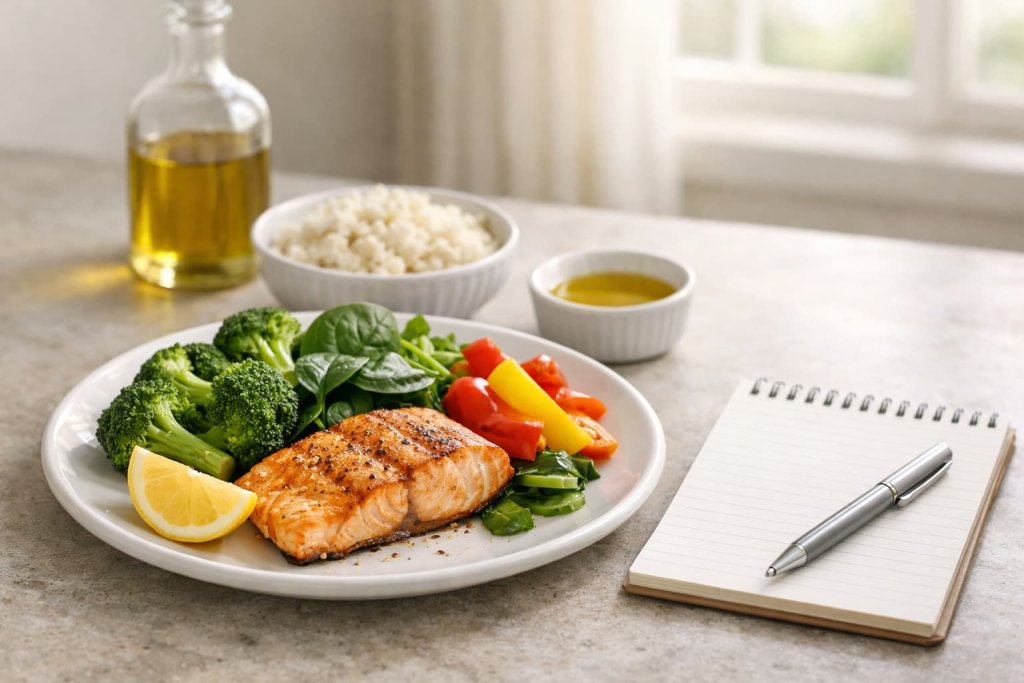
This guide breaks down what typically happens week by week, why the scale changes, and how to tell whether your “results” are mostly water, fat, or normal day-to-day fluctuation.
Keto diet results: why the scale drops fast at first (fat vs water)
When you cut carbs sharply, your body uses less glycogen (stored carbohydrate). Glycogen is stored with water—at least about 3 grams of water per 1 gram of glycogen—so a glycogen drop often comes with a noticeable water drop on the scale. According to the National Library of Medicine, this glycogen-water relationship is a well-established reason people see quick early weight changes.
Low-carb eating can also increase fluid and sodium losses early on. A review in American Heart Association notes early low-carb weight loss may be partly due to a diuretic effect (sodium and water loss).
What this means for you:
- Week 1 weight loss is often mostly water, not pure fat loss.
- Weeks 2–4 often shift toward more true fat loss if your overall calories stay lower than what you burn.
- The scale can still bounce daily due to hydration, sodium, stress, and sleep.
Quick definition: what “keto” usually means
Most ketogenic diets keep carbs very low so the body produces more ketones. In practice, this often means roughly 20–50 grams of net carbs per day (varies by person), with meals built around protein, non-starchy vegetables, and added fats as needed for satiety. Your exact carb threshold can differ based on body size, activity, and insulin sensitivity—so it’s more useful to track outcomes (energy, hunger, trend weight, measurements) than to chase a perfect number.
Keto diet results timeline: week-by-week (fat vs water)

Use this as a realistic pattern, not a promise. Your timeline can differ based on starting weight, calorie intake, training, sleep, stress, and medical factors.
Reality check: water loss can dwarf fat loss early
Body fat loss requires an energy deficit over time. Because 1 pound of body fat stores roughly 3,500 calories, it’s unlikely that a large week-1 scale drop is mostly fat for most people. Early keto changes are often dominated by glycogen + water shifts, so use weekly averages and measurements to judge fat-loss progress.
Week 1 (Days 1–7): fast scale change, mostly water
Typical changes:
- Scale: often drops quickly (water + glycogen changes).
- How you feel: some people feel tired, headachy, or “off” as they transition.
One reason: “keto flu” symptoms can happen as your body adapts. The Cleveland Clinic describes possible short-term side effects of ketosis, including fatigue, headache, and stomach upset.
Week 1 tip: hydration and electrolytes matter
If you feel unusually tired, lightheaded, headachy, or crampy, it may help to:
- Drink water consistently through the day
- Include electrolyte-containing foods (broth, olives/pickles, leafy greens, yogurt if it fits your plan)
- Avoid extreme over-restriction of salt unless your clinician told you to
If you have high blood pressure, kidney disease, heart conditions, or take diuretics, get personalized guidance before changing sodium or supplements.
How to interpret results:
- A big drop this week doesn’t automatically mean big fat loss.
- If you feel run down, hydration and electrolytes may matter (more on that below).
Week 2: water loss slows, fat loss starts to show more
Typical changes:
- Scale: often slows compared to week 1.
- Body: many people feel more stable energy and appetite (varies).
How to interpret results:
- If your scale drops more slowly now, that can be completely normal.
- This is often where people quit because they expect week-1 speed forever.
Week 3: “real” progress becomes easier to judge
Typical changes:
- Scale: steadier trend (still with daily ups/downs).
- Measurements: waist/hip measurements may change even if the scale stalls.
How to interpret results:
- This is a good time to focus on weekly averages instead of daily weigh-ins.
Week 4: the timeline becomes “fat-loss speed,” not “water-loss speed”
Typical changes:
- Scale: you may see a plateau, then a drop, then another plateau.
- Performance: workouts may feel better if you’re eating enough protein and not underfueling.
How to interpret results:
- Plateau doesn’t always mean failure—it may reflect water shifts, stress, sodium changes, or muscle soreness.
Weeks 5–8: adherence and sustainability drive results
Typical changes:
- Scale trend: mostly reflects fat loss + normal water variability.
- Health markers: can improve for some people, but lipid responses vary.
Important note: LDL (“bad”) cholesterol can increase for some people on keto depending on fat choices and individual response. Harvard Health Publishing discusses this risk and why fat quality matters.
Quick table: keto diet results by week (fat vs water)
| Week | What’s most likely happening | What “success” looks like |
|---|---|---|
| Week 1 | Glycogen and water drop; sodium/water shifts | Scale moves fast; focus on hydration and consistency |
| Week 2 | Water loss slows; fat loss begins to matter more | Smaller losses; energy may stabilize |
| Week 3 | More fat-loss signal; fewer dramatic drops | Weekly average trends downward; waist may shrink |
| Week 4 | Normal plateaus and drops; body recomposition possible | Consistent habits; better progress tracking |
| Weeks 5–8 | Mostly fat-loss trend + day-to-day water changes | Sustainable routine; steady results over time |
How much fat loss is realistic on keto?
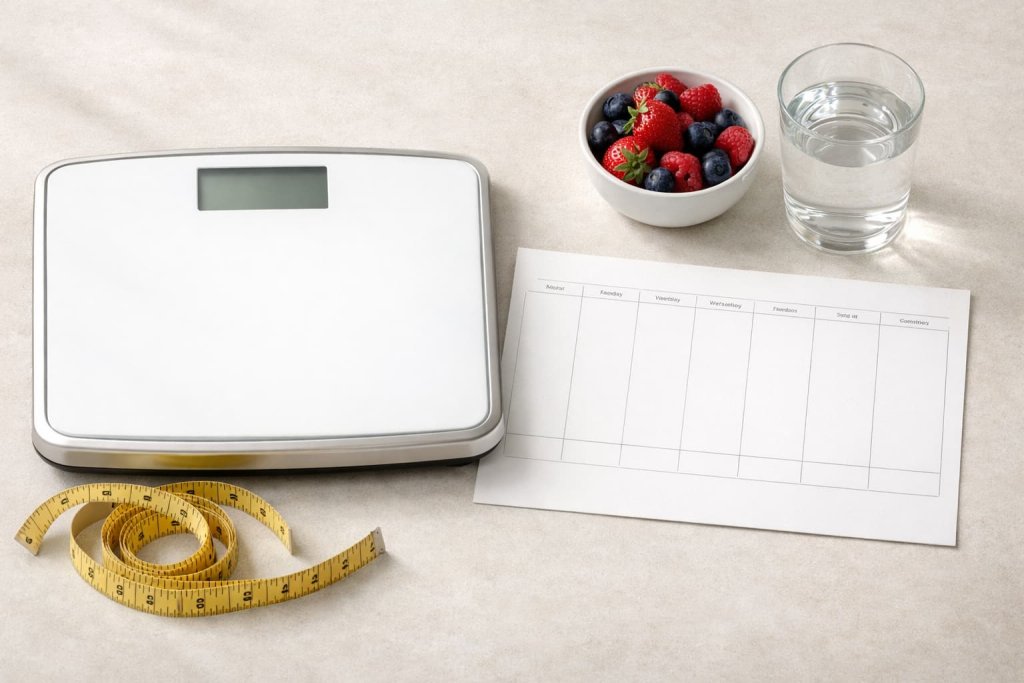
Keto can help some people reduce appetite and simplify food choices, but fat loss still depends on a calorie deficit.
For a safe, sustainable pace, the Centers for Disease Control and Prevention notes that people who lose weight gradually—about 1 to 2 pounds per week—are more likely to keep it off. Some weeks may be slower, and that can still be progress.
How to tell if your keto diet results are fat loss (not just water)

Use a few signals together:
Track weekly averages, not daily weigh-ins
- Weigh daily if you want, but compare weekly averages (7-day average).
- Water swings can hide fat loss on any single day.
Measure your waist (and one more spot)
- Waist + hip (or waist + thigh) once per week.
- Measurements often change even when the scale stalls.
Watch clothing fit and progress photos
- Same outfit, same lighting, every 2–4 weeks.
Check consistency markers
- If carbs/sodium vary widely day to day, the scale will too.
- Big salty meals can spike water retention even if you’re “doing keto right.”
How to measure ketosis (and why it’s optional)
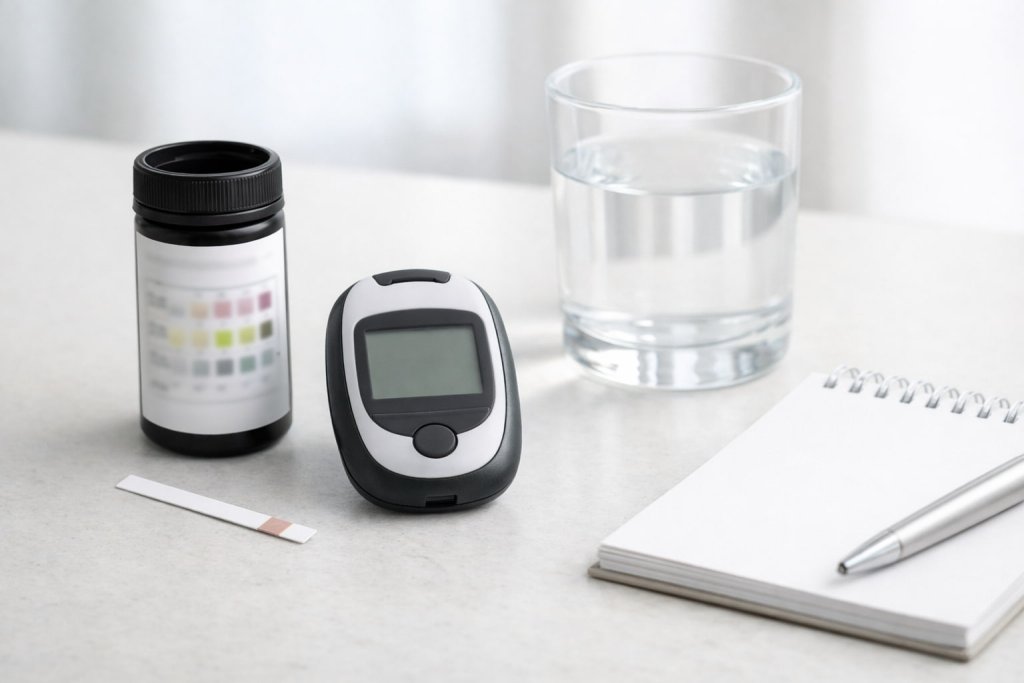
Some people use urine strips, breath meters, or blood ketone meters. These can confirm ketones are present, but they don’t guarantee fat loss. If tracking ketones makes you obsessive or stressed, you can skip it and focus on outcomes: weekly average weight, waist measurement, appetite, and energy.
What to eat for better keto diet results (without turning it into a “fat bomb” diet)
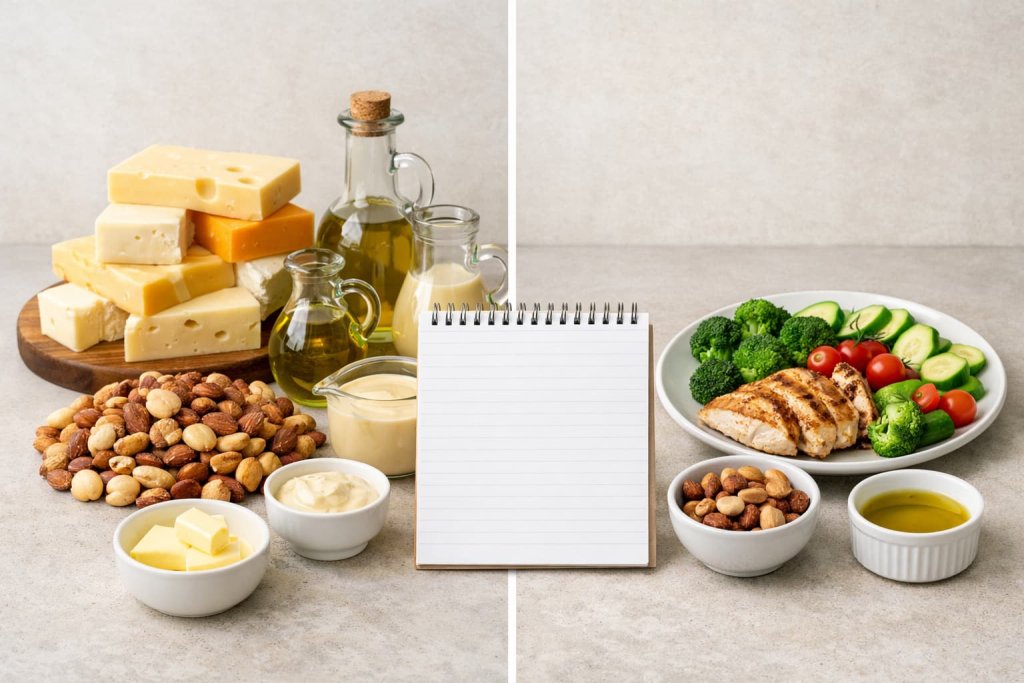
Keto works best for many people when it’s built around protein, fiber, and unsaturated fats, not just “more fat.”
A practical keto plate:
- Protein: eggs, fish, poultry, tofu/tempeh, lean meats
- Non-starchy vegetables: leafy greens, broccoli, peppers, cucumbers, zucchini
- Fats: olive oil, avocado, nuts/seeds (portion-aware)
- Carbs: keep low enough for your plan, but don’t eliminate vegetables
A helpful macro guardrail: prioritize protein first
Many stalls happen when keto turns into “extra fat on everything.” A practical approach is:
- Protein at each meal (helps fullness and supports lean mass)
- Vegetables daily (fiber and micronutrients)
- Add fats to satisfaction, not automatically
If you’re unsure where to start, aim for 25–35 grams of protein per meal for most adults, then adjust based on body size, activity, and appetite.
Also, keep saturated fat reasonable. The Dietary Guidelines for Americans recommend limiting saturated fat to less than 10% of calories starting at age 2 (a helpful guardrail for keto, too).
Common mistakes that ruin keto diet results
Mistake 1: assuming ketosis guarantees fat loss
Ketosis is a metabolic state, not a fat-loss guarantee. You can be in ketosis and still not lose fat if calories are too high.
Mistake 2: eating “keto treats” daily
Keto bars, cookies, and “keto desserts” can make it easy to overeat and may stall progress.
Mistake 3: under-eating protein
Low protein can hurt fullness and make it harder to preserve lean mass during weight loss.
Mistake 4: ignoring sleep and stress
Poor sleep and high stress can increase cravings and water retention, making results look worse than they are.
Mistake 5: dramatic electrolyte neglect
Early low-carb water loss can shift electrolytes and make you feel awful, which can lead to quitting.
Mistake 6: letting fiber and digestion fall apart
Constipation is common when vegetables, fiber, and fluids drop. To support digestion:
- Increase non-starchy vegetables and consider chia/flax if they fit your plan
- Drink enough water
- Include magnesium-rich foods (leafy greens, nuts/seeds)
- Move daily (even walking helps)
If constipation is persistent or severe, check with a clinician.
If results stall: quick troubleshooting checklist
Before changing everything, check these for 7–14 days:
- Are you eating keto-friendly foods but too many calories (nuts, cheese, oils, keto treats add up)?
- Are carbs creeping up via sauces, drinks, “keto” snacks, or restaurant meals?
- Is protein too low (leading to more snacking)?
- Has sleep been poor or stress high (water retention + cravings)?
- Has sodium intake swung wildly (big water shifts)?
- Are you relying on the scale instead of weekly averages + waist?
If you tighten one or two levers consistently, plateaus often resolve.
Safety box: who keto is best for (and who should be careful)
Keto may be a structured option for some adults, but it’s not ideal for everyone.
Be extra careful (and consider clinician guidance) if you:
- Have diabetes and take glucose-lowering medications
- Use an SGLT2 inhibitor (higher ketoacidosis risk concerns)
- Have kidney disease, history of kidney stones, heart rhythm issues, or are pregnant/breastfeeding
- Have a history of disordered eating or find strict rules triggering
The American Diabetes Association highlights ketoacidosis risk considerations associated with SGLT inhibition—this is a key group that should not “wing it” with keto.
Monitoring tip (especially if you have medical risk factors):
If you’re staying on keto beyond a few weeks, consider discussing basic monitoring with your clinician—often lipids (including LDL), kidney function, and blood pressure, plus diabetes medication adjustments if applicable. Keto can affect people differently, and monitoring helps personalize the approach.
Note for teens:
Keto is usually not recommended for teens unless it’s medically supervised for a specific clinical reason. Teens are still growing and have different nutrition needs, so strict diets can backfire without professional guidance.
People Also Ask about keto diet results
How long does it take to see results on keto?
Many people see scale changes in the first week, but much of that is water. More reliable fat-loss trends often show up across weeks 2–4, depending on calorie intake and consistency.
Why did I lose 5–10 pounds in the first week?
A rapid first-week drop is often glycogen + water loss plus sodium/water shifts, not 5–10 pounds of body fat.
Why did my weight loss stall in week 3 or 4?
Plateaus are common due to water retention, sodium swings, stress, constipation, or simply a smaller calorie deficit. Use weekly averages and waist measurements to judge progress.
Do you lose belly fat first on keto?
Spot reduction isn’t reliable. Many people notice waist changes early, but where fat comes off first is mostly genetic.
Is it normal to feel tired in the first week?
Yes, some people experience short-term symptoms as they adapt. Cleveland Clinic describes “keto flu” as a possible early effect of ketosis.
FAQ: keto diet results (Week-by-Week Timeline)
1) How much weight will I lose on keto in 30 days?
It varies. Many people see a larger drop in week 1 (mostly water), then a slower fat-loss pace. A 30-day outcome depends on your calorie deficit, adherence, activity, and sleep.
2) Will keto help me lose fat without exercise?
You can lose fat without exercise if you’re in a calorie deficit, but resistance training and daily movement help preserve muscle and improve long-term results.
3) What if I’m not losing weight but my clothes fit better?
That can be real progress. Measurements and fit can improve even when water retention hides fat loss on the scale.
4) Can keto raise cholesterol?
It can for some people, especially if the diet is high in saturated fat. Harvard Health Publishing notes LDL cholesterol may increase on keto in some individuals.
5) Do “keto strips” prove I’m burning fat?
Not necessarily. Ketone readings show ketones present, but fat loss still depends on overall energy balance and consistency.
6) What’s the best way to track keto results?
Combine weekly weight averages, waist measurement, progress photos, and performance markers (energy, hunger, workouts).
Conclusion
Keto diet results usually start with water weight loss in week 1, then shift to steadier fat loss across weeks 2–8 if you keep your nutrition consistent and maintain a calorie deficit. Track progress with weekly averages and measurements, focus on protein and vegetables, and keep fat quality heart-smart.
If you want, share your goal (fat loss, energy, blood sugar support) and I’ll help you turn this timeline into a simple weekly plan you can actually stick to.
This content is for informational purposes only and not medical advice.
Sources/References
- National Library of Medicine — Fundamentals of glycogen metabolism for coaches and athletes
- American Heart Association — Dietary Protein and Weight Reduction
- Cleveland Clinic — Ketosis: Definition, Benefits & Side Effects
- Dietary Guidelines for Americans — Dietary Guidelines for Americans
- Centers for Disease Control and Prevention — Steps for Losing Weight
- American Diabetes Association — Summary of Revisions: Standards of Care in Diabetes