
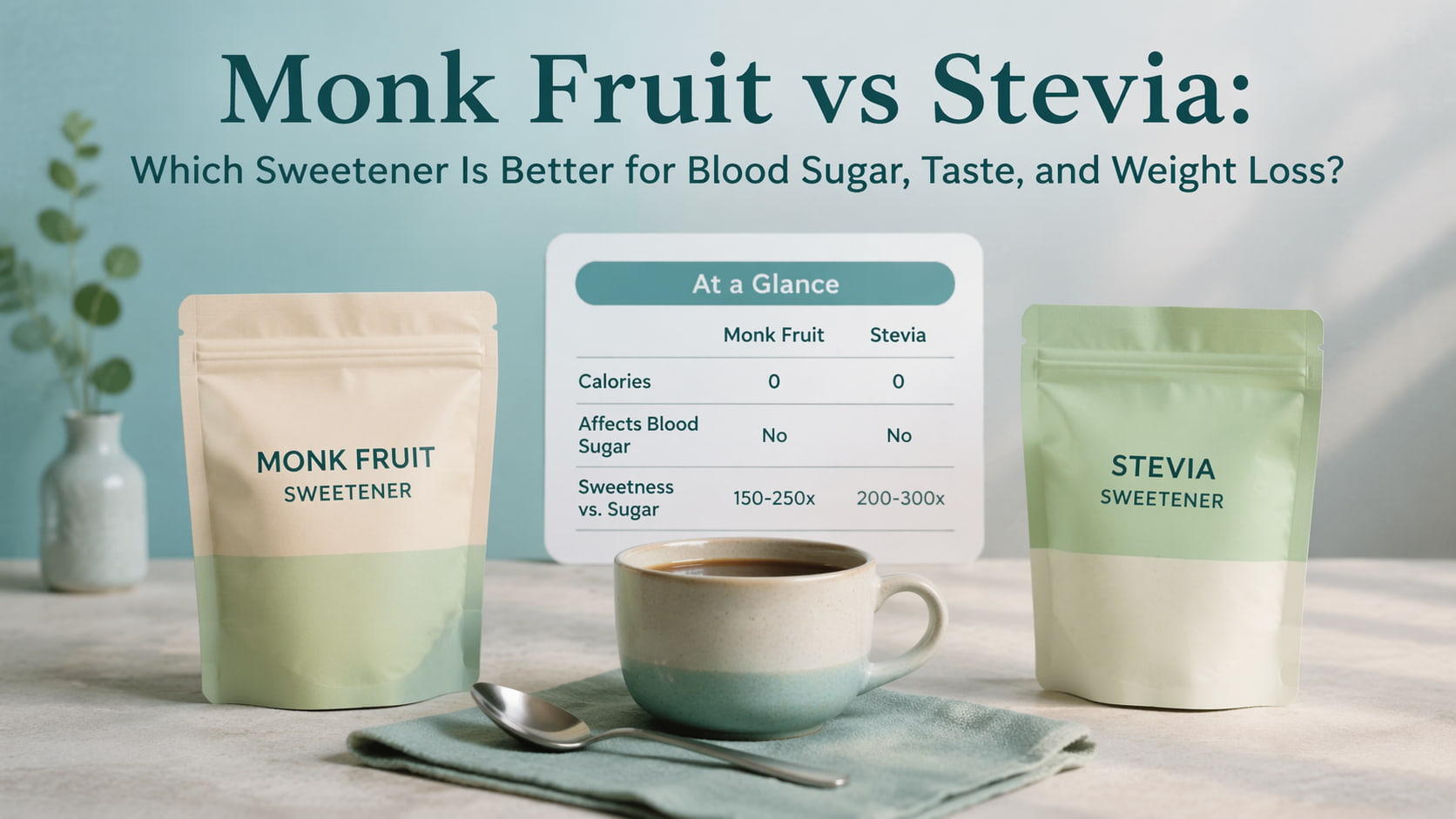
For most people, monk fruit vs stevia is not a question of which one is universally healthier. The better choice usually depends on the specific product, how it tastes to you, and whether you want a sweetener for blood sugar management, cutting back on sugar, or everyday use in drinks and recipes.
Both sweeteners can help reduce added sugar, and both are much sweeter than table sugar. But they are not identical. In the U.S., FDA treats high-purity stevia extracts and monk fruit extracts differently in some important ways, and health guidance from WHO, Mayo Clinic, and NHS adds useful context on blood sugar, weight loss expectations, and label reading.
Monk Fruit vs Stevia at a Glance
Monk fruit sweetener comes from Siraitia grosvenorii and gets its sweetness from mogrosides. Stevia sweeteners come from Stevia rebaudiana and their sweetness comes from steviol glycosides.
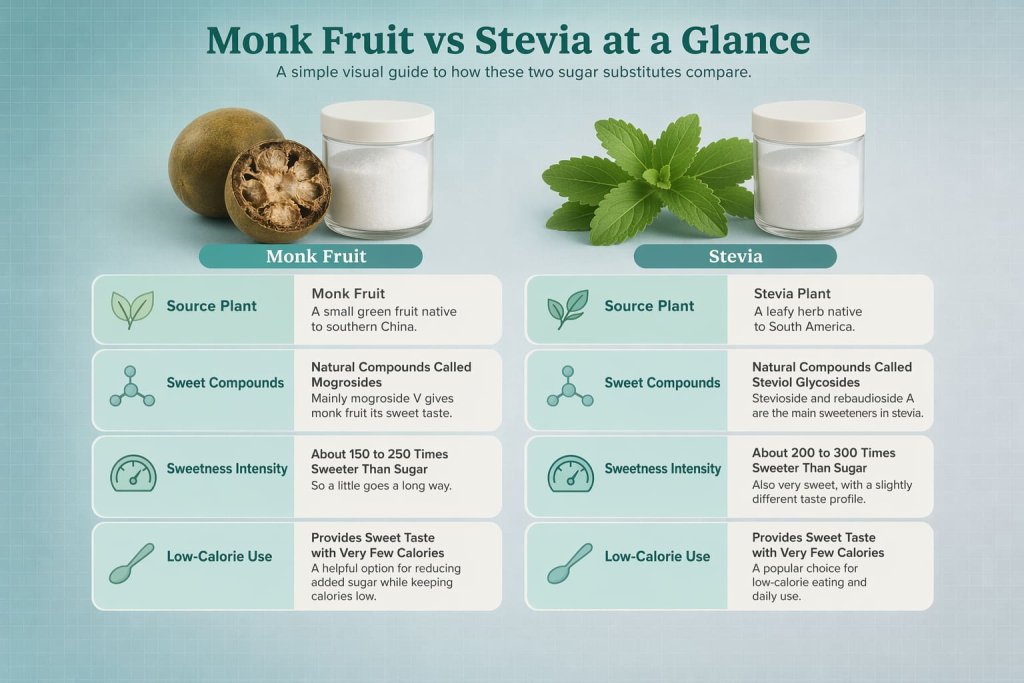
FDA says steviol glycosides are about 200 to 400 times sweeter than sugar, while monk fruit extract is about 100 to 250 times sweeter than sugar. Both are used in very small amounts and generally contribute few or no calories.
The most important practical difference is this: in the U.S., FDA has not questioned GRAS conclusions for high-purity steviol glycosides and for monk fruit extract, but whole-leaf stevia and crude stevia extracts are not permitted for use as sweeteners. That means “stevia” on a package does not always mean the same thing in a regulatory or ingredient-quality sense.
Monk Fruit vs Stevia for Blood Sugar
If you are comparing monk fruit vs stevia for diabetes or blood sugar awareness, the main takeaway is simple: the sweeteners themselves generally do not raise blood sugar, but the finished product still matters.
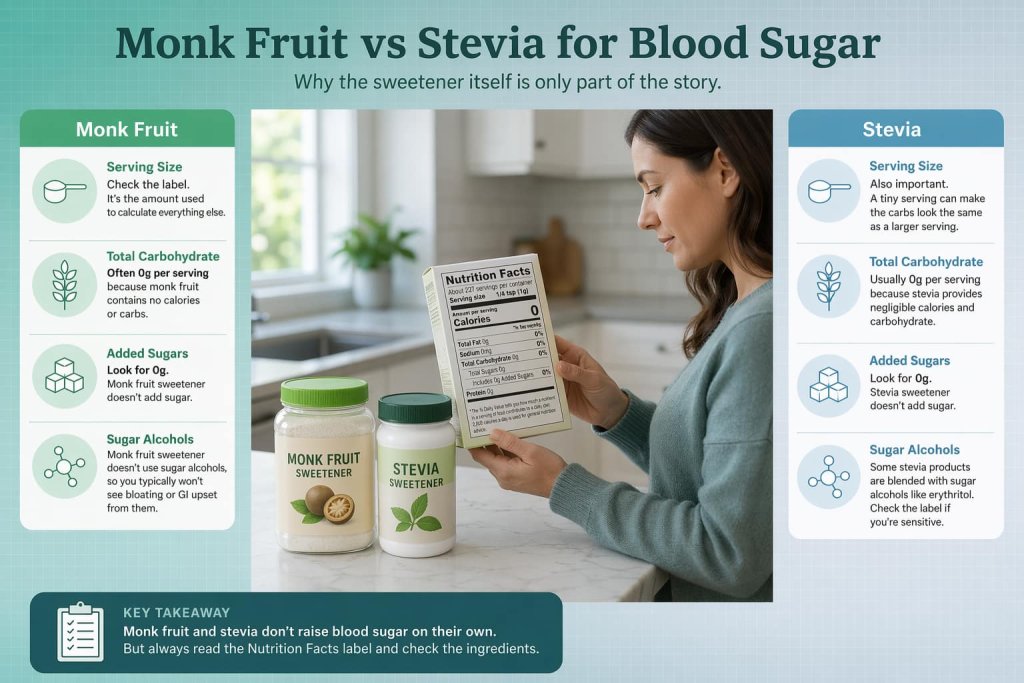
Mayo Clinic notes that artificial sweeteners do not affect blood sugar, while also warning that foods and drinks made with them may contain other ingredients that do. FDA similarly says sweeteners generally will not raise blood sugar levels.
That is why label reading matters more than marketing words like “natural,” “keto,” or “no sugar added.” A monk fruit or stevia product may be part of a lower-sugar routine, but the overall carbohydrate content, serving size, and added ingredients still determine how a finished food or drink fits into your day.
NHS makes the same broader point: lower- and no-calorie sweeteners can help reduce sugar intake, but they do not automatically make a product healthy.
What to Check on the Label
When comparing monk fruit vs stevia products for blood sugar, check the Nutrition Facts panel before the front-of-package claim. The American Diabetes Association recommends focusing on total carbohydrate on the label, and it notes that terms such as “sugar-free,” “reduced sugar,” and “no sugar added” do not necessarily mean a food is carbohydrate-free or lower in carbs than the original version.
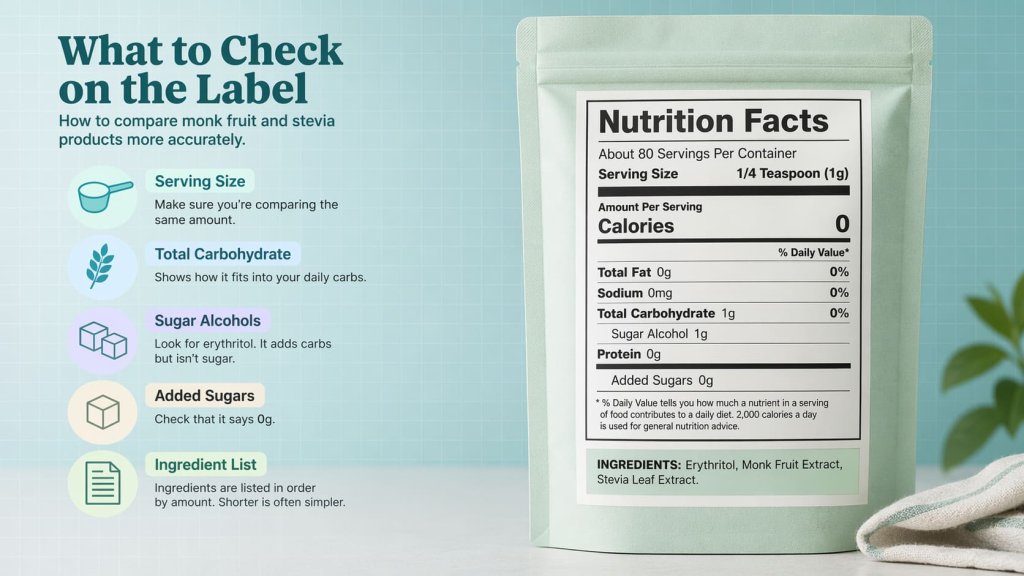
The ADA also says “net carbs” is not defined by the FDA and may not predict blood sugar response accurately, especially when sugar alcohols are involved. In practice, serving size, total carbohydrate, sugar alcohols, and added sugars tell you more than the sweetener name alone.
Monk Fruit vs Stevia for Weight Loss
Monk fruit and stevia may help with weight loss indirectly if they replace sugar in foods and drinks you would otherwise consume regularly. Mayo Clinic says sugar substitutes may help some people manage weight in the short term because they often have few or no calories.
But neither sweetener should be presented as a proven long-term fat-loss tool. WHO recommends against using non-sugar sweeteners to control body weight because the available evidence does not show a long-term benefit in reducing body fat. WHO also says this recommendation is conditional and does not apply to people with pre-existing diabetes.
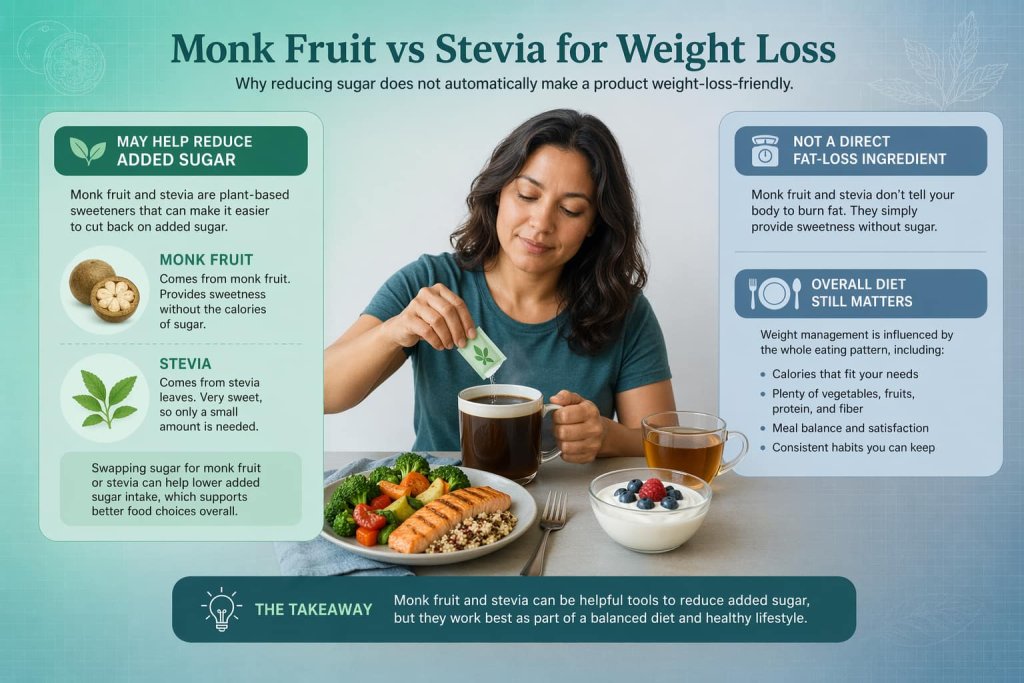
So if your main goal is fat loss, the better framing is this: monk fruit and stevia may support a lower-sugar eating pattern, but neither one replaces the basics of an overall balanced diet. That is also consistent with NHS guidance that sweeteners can be useful, but they do not automatically turn processed foods into healthy foods.
It is also important not to confuse sugar-free with calorie-free. The American Diabetes Association notes that foods made with sugar substitutes can still contain calories, and many processed products made with sweeteners do not offer the same nutritional value as whole foods. In other words, monk fruit or stevia may lower sugar in a product, but they do not cancel out the rest of the food.
Monk Fruit vs Stevia Safety
For most healthy adults, both monk fruit sweetener and high-purity stevia sweeteners are considered acceptable to use in moderation. FDA says it has not questioned GRAS conclusions for monk fruit extract and high-purity steviol glycosides under their intended conditions of use. Mayo Clinic also notes that sugar substitutes are generally safe in limited amounts for healthy people.
Stevia has one extra advantage if you want a clearly stated intake benchmark: a public acceptable daily intake. JECFA lists an ADI of 0 to 4 mg per kilogram of body weight per day for steviol glycosides, and FDA references the same steviol-equivalent ADI framework.
FDA also notes that an ADI has not been specified for monk fruit. That does not mean monk fruit is unsafe. It simply means stevia has a more clearly published intake benchmark in major regulatory sources.
Digestive Side Effects and Tolerance
A realistic monk fruit vs stevia comparison should include digestion. Mayo Clinic says sugar alcohols, stevia, and luo han guo can cause bloating, gas, and diarrhea in some people. That is not universal, but it is common enough to matter, especially if you use these products multiple times a day.
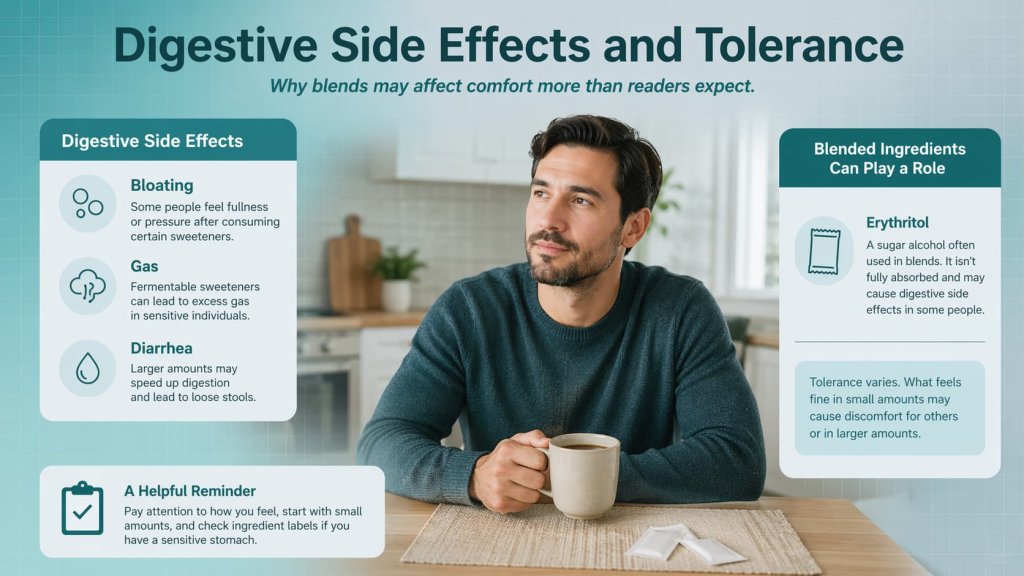
This is where blends matter. Some retail monk fruit products contain erythritol or other added sweeteners, and some stevia products are also mixed with other ingredients. Cleveland Clinic specifically notes that many monk fruit products combine monk fruit extract with other sweeteners and that some contain erythritol, which can cause bloating or stomach upset in some people.
Taste, Coffee, and Baking
Taste is personal, so there is no universal winner in monk fruit vs stevia. What matters most in everyday use is the finished product, not just the plant source.
Cleveland Clinic notes that stevia products vary, that ingredients matter, and that stevia is not a 1:1 substitute for sugar in recipes. The same source says monk fruit products also vary and may not be a cup-for-cup equivalent to sugar, so package directions matter.
Why So Many Monk Fruit and Stevia Products Are Blended
One reason monk fruit and stevia products can behave so differently in recipes is that the sweetener itself is intensely sweet and used in very small amounts. The American Diabetes Association explains that sugar alcohols are often added because they provide sweetness, bulk, and texture and help foods stay moist. That is why some granulated products measure more like sugar, while purer extracts may work better in drops or tiny amounts. It is also why two products with the same front label can bake, dissolve, and digest very differently.
In practical terms, that means both sweeteners can work in coffee, tea, yogurt, and some baking, but neither one should be chosen on the front label alone. If you bake often, the best product is usually the one whose package gives clear conversion guidance and whose ingredient list matches what you actually want to use.
Which Is Better: Monk Fruit or Stevia?
- For blood sugar support, it is basically a tie if you choose a product with a simple ingredient list and watch the finished food, not just the sweetener name.
- For strict regulatory clarity, stevia has an edge because high-purity steviol glycosides have a clearly published ADI, while monk fruit does not have a specified ADI in the same way.
- For avoiding ingredient surprises, both require label checking, but monk fruit products are especially worth checking because many are blended with erythritol or other sweeteners.
- For weight loss, neither is “better” in any dramatic sense. Both are tools for reducing sugar, not direct fat-loss ingredients.
Who May Prefer Monk Fruit
Monk fruit may make more sense for readers who want a plant-derived sweetener and prefer a product marketed around monk fruit extract rather than stevia extracts. It can also fit well for people looking to replace sugar in drinks or recipes while keeping calories very low. But the ingredient list still matters, because many monk fruit products are blends rather than pure extract.
Who May Prefer Stevia
Stevia may be the better fit for readers who want a sweetener with a more clearly defined regulatory framework in public health sources. FDA’s distinction between high-purity steviol glycosides and raw or crude stevia is also useful for shoppers who want to know exactly which form is considered acceptable for use as a sweetener in the U.S.
Who Should Be Careful Before Using Either
You may want to be more cautious with monk fruit or stevia if:
- you are sensitive to bloating, gas, or diarrhea
- you use sweeteners many times a day
- you are buying packets or granulated products without checking the ingredient list
- you are choosing a product for a child under age 2
- you assume “natural” means the product is pure or automatically healthy
Mayo Clinic says adults should not give sugar substitutes to children under 2, and it also notes that people with bowel disease may find that sugar substitutes worsen symptoms. Mayo Clinic and NHS both stress moderation and overall diet quality.
How to Choose the Right Product
When deciding between monk fruit vs stevia, use this quick filter:
- Check the ingredient list first.
- Look at the serving size, not just the front of the package.
- Decide whether you want it mainly for drinks, baking, or both.
- Start with a small amount and see how your stomach responds.
- Do not assume a sugar-free product is automatically a healthy one.
That approach matches the most consistent advice across FDA, Mayo Clinic, NHS, and Cleveland Clinic: use these sweeteners as tools, not as health halos.
FAQs
Is Monk Fruit Healthier Than Stevia?
Not necessarily. For most people, neither one is clearly healthier across the board. The better choice depends on the ingredient list, your digestive tolerance, your taste preference, and how you plan to use it.
Does Monk Fruit or Stevia Raise Blood Sugar?
The sweeteners themselves generally do not, but the finished product might. Added ingredients in a drink mix, packet, dessert, or baking blend can still affect blood sugar.
Is Stevia Safer Than Monk Fruit?
Both are generally accepted for use in moderation, but stevia has a more clearly published intake benchmark in major regulatory sources. That is a difference in safety framework, not proof that monk fruit is unsafe.
Conclusion
Monk fruit vs stevia is not really a battle of “good” versus “bad.” Both can help you cut back on added sugar, both generally do not raise blood sugar on their own, and both can fit into a balanced eating pattern. The smarter choice is usually the one with the cleaner ingredient list, the better taste for you, and the best fit for how you actually eat.
If you are choosing between the two today, start by reading the label before the headline on the package. That one habit will help you more than chasing whichever sweetener sounds healthier.
References
- Mayo Clinic — Artificial sweeteners and other sugar substitutes
- WHO/JECFA — Steviol glycosides
- Cleveland Clinic — Stevia: What Is It and Is It Healthy?
- Cleveland Clinic — Is Monk Fruit a Healthy Sweetener?