
Stevia and erythritol are two of the most widely used sugar alternatives, and both may help reduce added sugar intake without raising blood glucose. Understanding their nutritional properties, safety profiles, and differences is essential if you’re looking for a low-calorie substitute that supports your overall wellness goals.
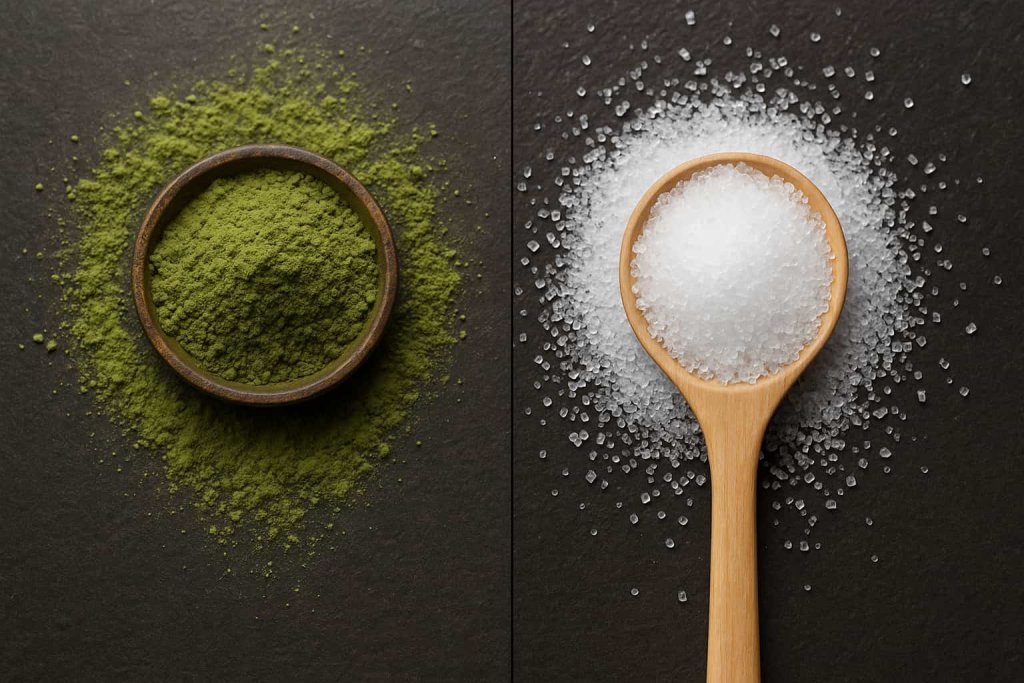
Both sweeteners offer unique benefits and limitations. Stevia is a high-intensity plant-derived sweetener, while erythritol is a sugar alcohol commonly used for bulk and texture in recipes. This guide gives you a clear, research-backed overview so you can choose the option that fits your health needs.
For ingredient safety and regulations, you can refer to authoritative sources such as the U.S. Food and Drug Administration, the European Food Safety Authority, and the World Health Organization.
What Is Stevia?
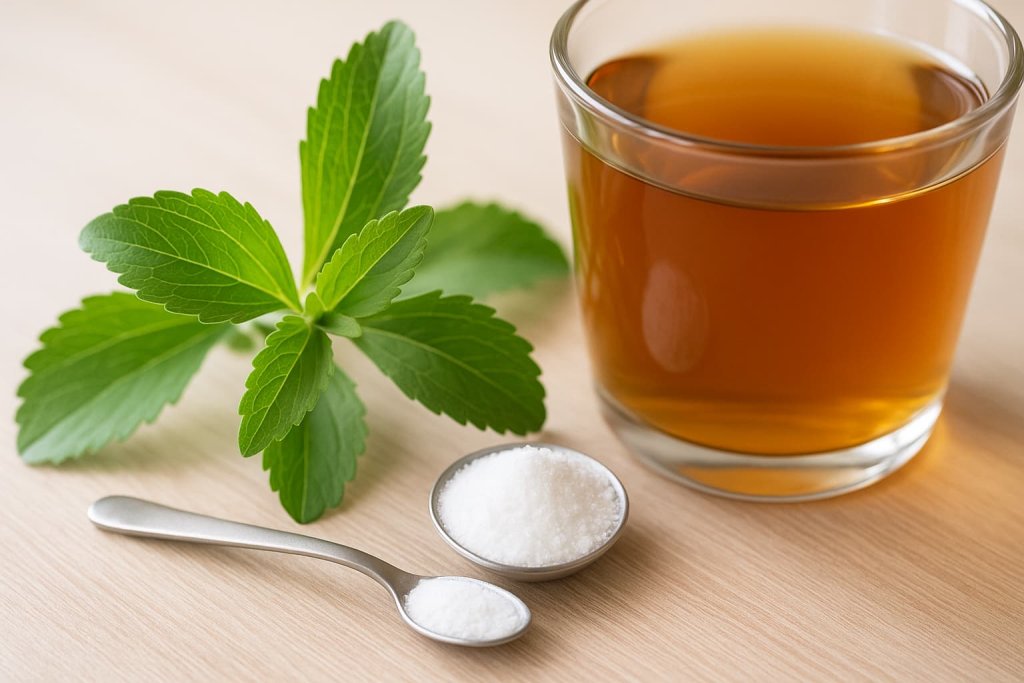
Stevia refers to high-purity steviol glycosides extracted from Stevia rebaudiana leaves. These compounds are 200–300 times sweeter than sugar, meaning only a very small amount is needed to sweeten foods or beverages.
Stevia is considered safe when meeting purity standards of at least 95 percent steviol glycosides. The FDA has issued no-objection letters for multiple high-purity extracts.
Authoritative reference:
How Stevia Works in the Body
Stevia has zero calories, and because the body does not metabolize most steviol glycosides for energy, they do not raise blood sugar. After ingestion, gut bacteria convert steviol glycosides to steviol, which the liver processes before excretion.
Common Uses
- Sweetening tea and coffee
- Low-calorie beverages
- Yogurt and fruit mixes
- Baking blends (often paired with erythritol for bulk)
What Is Erythritol?
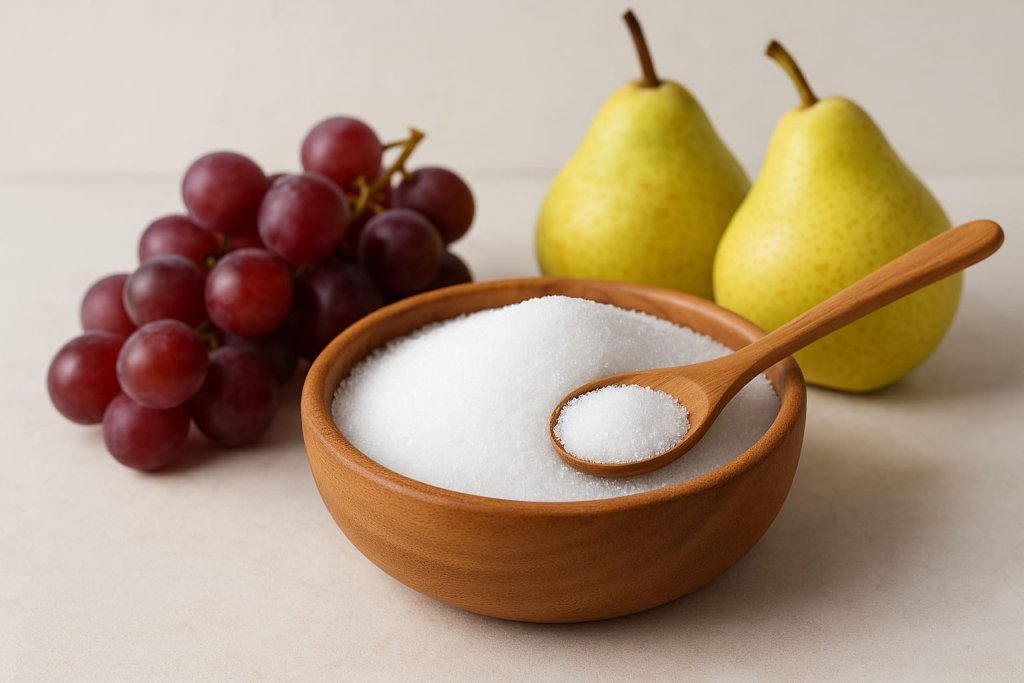
Erythritol is a sugar alcohol (polyol) naturally found in small amounts in fruits such as grapes and pears. Commercial erythritol is typically produced through fermentation.
It provides about 0.2 calories per gram, which is near-zero compared with sugar’s 4 calories per gram. Erythritol is also 60–80 percent as sweet as sugar, and unlike many sugar alcohols, it is mostly absorbed in the small intestine and excreted unchanged.
Authoritative reference:
How Erythritol Works in the Body
Because the body does not metabolize most erythritol, it has no measurable impact on blood glucose or insulin. Its clean sweetness and sugar-like texture make it popular in baking and ketogenic recipes.
Nutrition Comparison of Stevia vs Erythritol
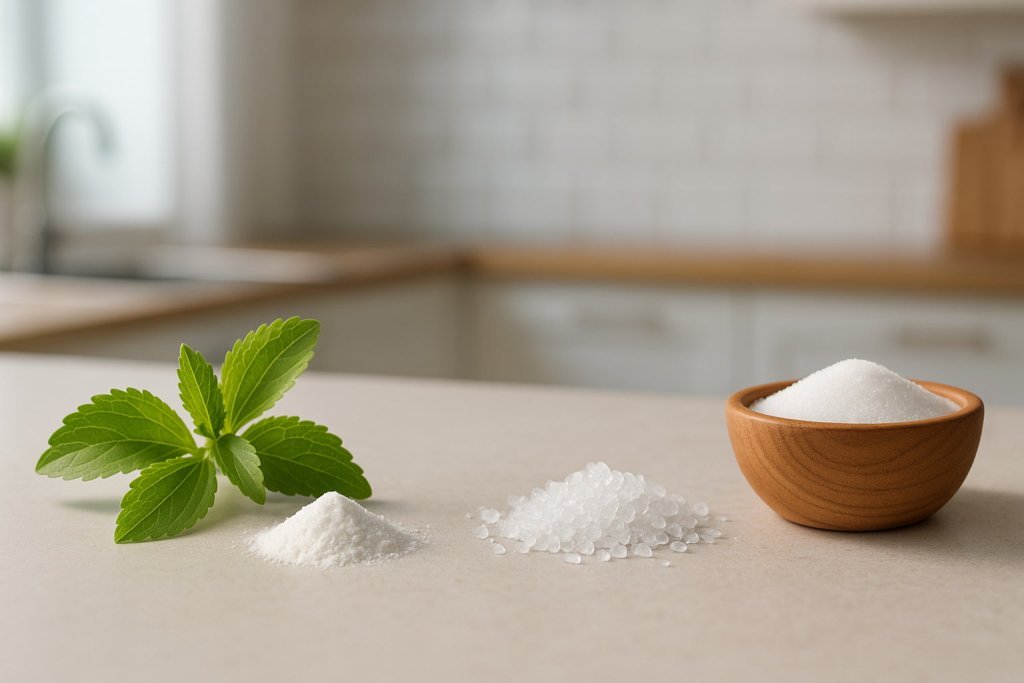
Understanding the nutrition profile of stevia and erythritol is essential if you want to reduce added sugar without compromising taste or wellness goals. While both sweeteners are low in calories and do not raise blood sugar, they differ significantly in sweetness intensity, structure, and how they behave in recipes. Below is a detailed, science-based comparison.
Calories and Carbohydrates
Stevia
Stevia provides functionally zero calories because only a very small amount of purified steviol glycosides is needed to achieve sweetness. Even though trace calories may appear on some labels, the quantity used per serving is so small that it contributes minimal energy intake. This makes stevia a useful option for people looking to reduce added sugar while maintaining a sweet flavor profile.
Stevia contains no digestible carbohydrates, and therefore does not contribute to carbohydrate counts in meal planning—helpful for individuals monitoring carbohydrate intake for wellness or glycemic control.
For more information on non-nutritive sweeteners, see the FDA’s overview of high-intensity sweeteners:
Erythritol
Erythritol is considered low-calorie, offering about 0.2 kcal per gram, which is roughly 95 percent fewer calories than table sugar. Its calories are so low because the body absorbs erythritol but does not metabolize it for energy. Instead, it is excreted unchanged in urine.
Although erythritol is technically classified as a carbohydrate (a sugar alcohol), it does not contribute meaningful net carbs because it does not impact blood glucose or insulin in typical dietary amounts.
The FDA’s GRAS notice confirms the safety and metabolic profile of erythritol:
Glycemic Index
Stevia
Stevia has a glycemic index (GI) of 0, which means it does not raise blood glucose or insulin levels in healthy individuals. Because steviol glycosides are not converted into glucose during metabolism, stevia may support dietary strategies aimed at reducing added sugars or maintaining stable blood sugar levels.
The American Diabetes Association notes that non-nutritive sweeteners like stevia can be used as part of a broader approach to lowering overall added sugar intake when incorporated into balanced nutrition patterns. Their official guidance on sugar substitutes provides an evidence-based overview of how these sweeteners fit into diabetes-friendly eating plans:
Erythritol
Like stevia, erythritol also has a glycemic index of 0 and has shown no measurable effect on blood glucose or insulin in human studies. Because the body absorbs erythritol but does not metabolize it for energy, it bypasses pathways that typically influence post-meal glucose changes. This makes erythritol a common choice in low-carbohydrate or low-glycemic recipes.
Both sweeteners can support reduced sugar intake, but they should be used within an overall nutrition plan that prioritizes whole foods, balanced meals, and long-term dietary habits.
Sweetness Level
Stevia
Stevia is 200 to 300 times sweeter than sugar, making it one of the highest-intensity sweeteners available for everyday use. Because it’s so potent, manufacturers typically dilute it with carriers such as inulin, erythritol, or dextrose to make it easier to measure and blend.
Despite its high sweetness, some people notice a slight bitterness or licorice-like aftertaste, especially in lower-purity extracts. High-purity steviol glycosides (such as Rebaudioside A or Rebaudioside M) often provide a cleaner, smoother flavor.
Erythritol
Erythritol is 60 to 80 percent as sweet as sugar, which gives it a more familiar, subtle sweetness. It is commonly used in 1:1 sugar replacement blends because it provides volume, crunch, and mouthfeel, characteristics that stevia alone cannot replicate.
Erythritol also produces a cooling sensation on the tongue—typical of sugar alcohols—which some people enjoy and others may find noticeable in cold foods or beverages.
For regulatory background on these sweeteners’ intensity and use limits, the European Food Safety Authority provides additional detailed assessments:
Taste and Cooking Performance
Stevia
Stevia’s sweetness is strong but may have a bitter or licorice-like aftertaste, depending on the brand and the ratio of steviol glycosides. It is not ideal for achieving sugar-like texture unless combined with a bulking agent.
Erythritol
Erythritol offers a clean sweetness with a cooling sensation on the tongue. It provides substantial volume and structure, making it useful for baking, frosting, and low-sugar desserts.
Safety Profile and Regulatory Status
Stevia Safety and Acceptable Daily Intake
Regulators including the Joint FAO/WHO Expert Committee on Food Additives (JECFA) and the European Food Safety Authority (EFSA) have established an Acceptable Daily Intake (ADI) of 0–4 mg/kg body weight per day, expressed as steviol equivalents.
Reference:
Human studies at these intake levels show no major safety concerns for the general population.
Erythritol Safety and Digestive Tolerance
Erythritol is GRAS in the U.S. and approved globally. It is generally well tolerated at moderate intakes.
However, consuming very large amounts may cause digestive discomfort, including bloating or loose stools, particularly above 0.5 g per kg of body weight.
Recent Research on Erythritol and Heart Health
Recent studies have reported associations between higher circulating erythritol levels and certain cardiovascular risk markers, particularly in people who already have elevated cardiometabolic risk. These findings are not proof of cause and effect, but they highlight the importance of moderation until more long-term data become available.
The World Health Organization advises that non-sugar sweeteners, including erythritol, should not be used as a primary strategy for weight control because long-term health effects remain uncertain. Their official guideline can be reviewed here:
Erythritol remains permitted by global regulators, but individuals with heart-related concerns may benefit from a cautious, balanced approach.
Stevia vs Erythritol: Side-by-Side Health & Wellness Impact
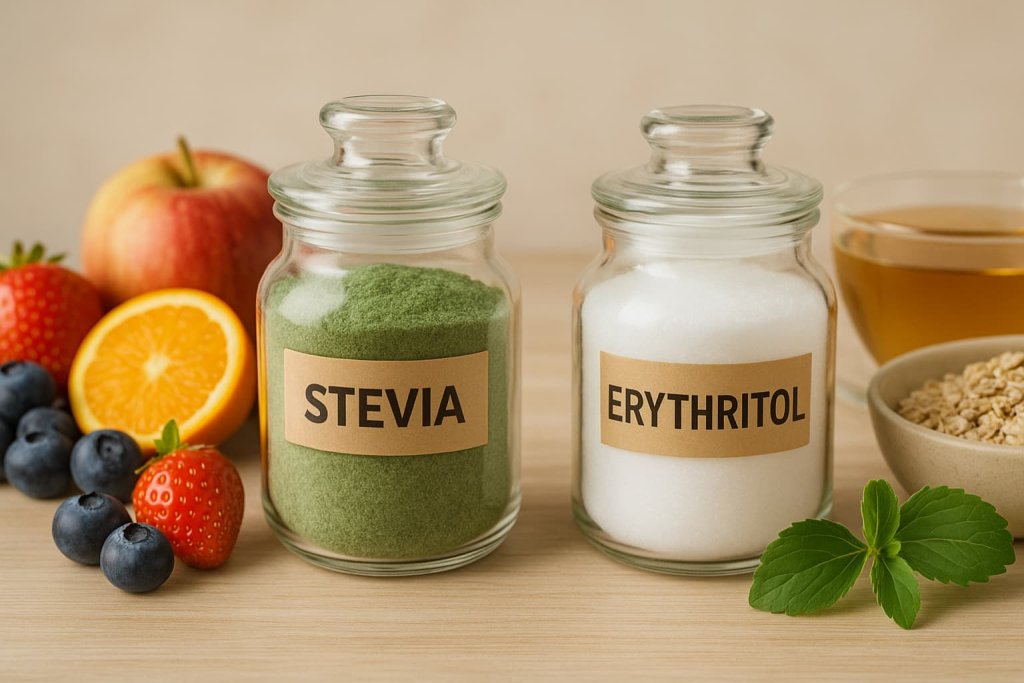
Choosing between stevia and erythritol depends on how each sweetener fits into your overall nutrition, blood sugar management, digestive comfort, and long-term wellness goals. Below is a clear, research-based comparison to help guide your decision.
Blood Sugar and Insulin Response
Both sweeteners have a glycemic index of zero, meaning they do not raise blood glucose in healthy individuals or in people with diabetes.
- Stevia: Pure steviol glycosides do not affect blood sugar and may support healthy glucose control according to several controlled studies, though research is not conclusive for treatment.
- Erythritol: Absorbed but not metabolized for energy, so it has no measurable impact on blood glucose or insulin levels.
Weight and Calorie Considerations
Both stevia and erythritol may help reduce overall added sugar intake, which supports weight-management efforts.
However, the World Health Organization advises not relying on non-sugar sweeteners as a primary weight-loss tool and instead recommends reducing overall dietary sweetness for long-term health.
- Stevia: Essentially zero calories.
- Erythritol: Very low calorie (~0.2 kcal/g) and still significantly lower in energy than sugar.
Digestive Tolerance
- Stevia: Usually well tolerated at typical intake levels. Mild bloating or fullness may occur for some individuals, especially with multi-ingredient stevia blends.
- Erythritol: More likely to cause digestive symptoms such as gas, bloating, or loose stools at higher intakes, especially above 0.5 g/kg body weight. It is still better tolerated than many other sugar alcohols (e.g., sorbitol, xylitol).
Cardiovascular Considerations (Erythritol)
Recent studies have explored links between high blood erythritol levels and certain cardiovascular risks in people with existing cardiometabolic concerns. These findings are associative, not proven to be cause-and-effect, and regulators such as the FDA and EFSA continue to permit erythritol’s use.
Stevia has not shown similar cardiovascular signals in current human data when used within the accepted daily intake.
Overall Wellness Perspective
If your priority is:
- Zero calorie intake with high sweetness intensity: Stevia is often the better fit.
- Sugar-like texture for baking or recipes requiring bulk: Erythritol is typically more practical.
- Digestive comfort: Stevia may be gentler for those sensitive to sugar alcohols.
- Heart-related caution: Some individuals may prefer stevia until more evidence clarifies erythritol’s long-term cardiovascular profile.
Both sweeteners can play a role in reducing added sugar intake and supporting healthier dietary patterns when used in moderation and combined with a balanced eating approach.
Which Is Better for Blood Sugar Control?
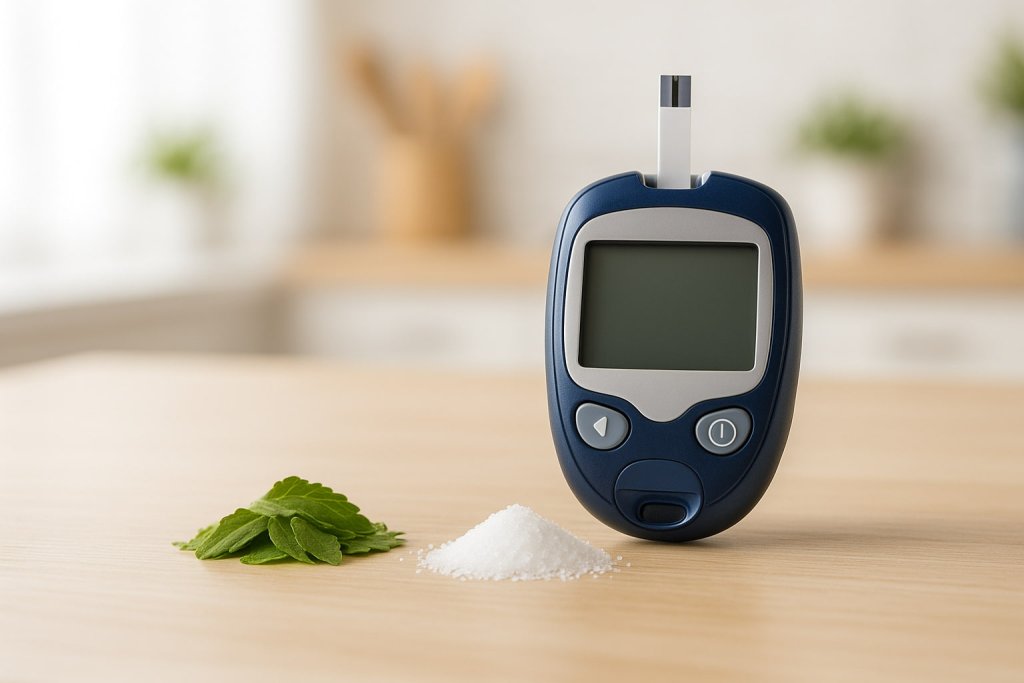
Both stevia and erythritol have a glycemic index of 0, meaning they do not raise blood glucose or insulin levels in healthy individuals. This makes them useful options for people who want to reduce added sugar while maintaining sweetness in foods or beverages.
For individuals with diabetes or insulin resistance, non-nutritive sweeteners like stevia and erythritol may help lower overall added sugar intake when used as part of a balanced eating pattern. The American Diabetes Association explains how these sweeteners fit into diabetes-friendly meal planning in its official guidance on sugar substitutes:
Although these sweeteners may support better blood sugar management, they are most effective when combined with broader dietary habits such as eating whole foods, balancing carbohydrates, and reducing overall sweetness over time.
Stevia vs Erythritol for Weight Management
Neither sweetener provides significant calories, but the WHO recommends not relying on non-sugar sweeteners as the primary strategy for weight control, highlighting limited long-term evidence for weight reduction.
A sustainable approach includes:
- Reducing overall sweetness in the diet
- Increasing whole foods
- Balancing caloric intake
Digestive Effects and Sensitivities
Stevia
Most people tolerate stevia well. Some may experience mild sensations of fullness or bloating, especially with multi-ingredient blends.
Erythritol
Erythritol is better tolerated than many other sugar alcohols but may cause:
- Gas
- Bloating
- Loose stools
especially when consumed in high amounts.
Practical Tips for Choosing the Right Sweetener
Use Stevia If You Want:
- A zero-calorie sweetener with high sweetness intensity
- A plant-derived option
- A sweetener with strong global regulatory support
Use Erythritol If You Want:
- A sugar-like texture for baking and cooking
- A low-calorie sweetener that adds bulk
- A subtle flavor closer to sugar
Read Ingredient Labels Carefully
Many products labeled “stevia” or “monk fruit” actually contain erythritol as the main ingredient. Always check for additives such as dextrose or maltodextrin if blood sugar management is a goal.
Frequently Asked Questions (FAQs)
Is stevia better than erythritol for health?
Stevia has a strong safety record and established ADI guidance. Erythritol is also widely recognized as safe, but emerging research suggests moderation may be a prudent choice for individuals with cardiovascular concerns.
Which sweetener tastes more like sugar?
Erythritol offers a more sugar-like texture and mouthfeel, whereas stevia is much sweeter and may have a bitter aftertaste.
Can people with diabetes use stevia or erythritol?
Yes, both have minimal effects on blood sugar. Always follow guidance from a healthcare professional for personalized recommendations.
Is erythritol safe for daily use?
Erythritol is generally safe in moderate amounts. High intake may cause digestive discomfort, and those with heart disease may wish to exercise caution until more research is available.
Are stevia products always sugar-free?
No. Many stevia products include added sugars or fillers. Look for high-purity stevia without additives if you want a zero-calorie option.
Conclusion
Stevia and erythritol are popular low-calorie sugar alternatives that support reduced sugar intake and may help people maintain healthier dietary patterns. Stevia is highly concentrated, plant-derived, and supported by strong global safety reviews. Erythritol offers a sugar-like texture and mild flavor but may require moderation, especially for people with cardiovascular risk factors.
Choosing between them depends on your goals, taste preferences, digestive tolerance, and dietary priorities. For many people, using both in different situations works best.
This content is for informational purposes only and not medical advice.