
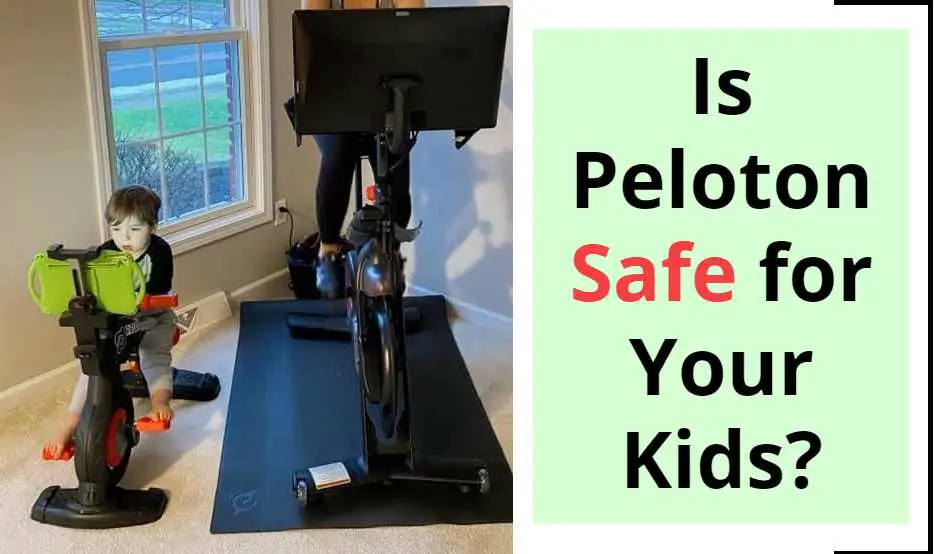
Short answer: Peloton is not designed for young children. Peloton’s official rules allow certain teens to use specific machines only if they meet minimum age requirements, while younger children should be kept away from the equipment at all times. This guide breaks down Peloton’s age rules, the real-world risks (especially with treadmills), and the safest setup steps for families.
Peloton’s Official Age Requirements (What’s Allowed)
Minimum ages to use Peloton equipment
- Peloton Bike / Bike+: 14+ (teen use should still be supervised)
- Peloton Tread / Tread+: 16+ (strict safety controls recommended)
These age thresholds appear in Peloton’s safety guidance and terms. For the most current language, review Peloton’s official resources:
Peloton Safety guidance
and
Peloton Terms of Service.
Peloton account age (membership)
Peloton’s Terms state you must be at least 13 to become a member, and if a user is under 18, a parent/legal guardian is responsible for their activity on the service. See the “Age Requirement” section in
Peloton Terms of Service.
Is Peloton Safe for Kids Under 13?
No—kids under 13 should not use Peloton equipment. Peloton repeatedly emphasizes keeping children below the equipment-use age away from the machines. This isn’t just a “rules” issue—it’s about reducing injury risk from moving parts and accidental startup.
Why younger kids shouldn’t be near Peloton equipment
- Moving parts: pedals, flywheels, belts, and rollers can catch fingers, hair, or loose clothing.
- Accidental start risk: powered machines can begin moving if accessed by a child.
- Treadmill hazard is higher: treadmills require stronger access control than bikes.
Peloton’s own safety page is clear about keeping children away from the Tread/Tread+: see
Peloton Safety guidance.
Why Parents Should Be Extra Careful With Peloton Treadmills
Peloton treadmills (especially the Tread+) have been the center of major safety scrutiny because children can access the machine and be put at risk if safety steps aren’t followed.
CPSC warnings and recall history (U.S.)
The U.S. Consumer Product Safety Commission (CPSC) published a recall notice and safety guidance regarding the Peloton Tread+ after reports of children and objects being pulled under the rear of the treadmill. Parents can read the official CPSC notice here:
CPSC recall notice for Peloton Tread+ (2021).
Peloton also maintains its own recall/safety information page for the Tread+:
Peloton Tread+ recall information.
Peloton Bike Safety for Teens (Ages 14–15)
If your teen is 14–15, the Peloton Bike/Bike+ may be appropriate only with correct setup, instruction, and supervision. The goal is to reduce fall risk, reduce joint strain, and prevent unsafe riding behaviors.
Make the bike safer for a teen
- Fit first: set saddle height, saddle fore/aft, and handlebar height correctly.
- Start easy: choose beginner rides and low-to-moderate resistance.
- Teach clip-in safety (if using cycling shoes): practice clipping in/out while holding the handlebars and standing still.
- Supervise early sessions: especially the first 1–2 weeks while habits form.
Avoid these higher-risk situations
- Standing climbs before the rider is confident and stable
- Max-resistance “grind” efforts
- Sprinting out of the saddle
- Riding when distracted or fatigued
Peloton Tread Safety for Teens (16+ Only)
Peloton’s guidance is stricter for treadmills. If your teen is 16+ and you allow use, treat treadmill access like a “controlled” activity—lock it when not in use and supervise sessions.
Non-negotiable treadmill safety steps
- Use Tread Lock: enable passcode protection so the treadmill cannot be started casually by a child. See
Peloton’s Tread Lock support page. - Safety Key routine: remove and store the safety key out of reach when not exercising (especially for Tread+).
- Clear zone: keep the area around and behind the treadmill clear—no toys, balls, pets, or small objects.
- Adult present: teens should not run unsupervised, particularly during higher-speed workouts.
Peloton’s general safety guidance for treadmills is published here:
Peloton Safety guidance.
Important: Recent Bike+ Safety Recall Parents Should Know
Even if kids are not using the bike, families should keep up with recall notices because equipment defects can raise injury risk for any user in the home.
The CPSC issued a recall for certain Peloton Original Series Bike+ models due to a seat post assembly issue that can pose a fall/injury hazard. Read the official notice:
CPSC recall: Peloton Original Series Bike+ (Recall Date: Nov 6, 2025).
Peloton’s official support page with model/serial guidance and free replacement details:
Peloton Bike+ seat post recall & replacement info.
Quick Safety Checklist for Homes With Kids
- Block access: keep the workout area behind a door/gate when possible.
- Lock the treadmill: enable
Tread Lock
every time the Tread/Tread+ is idle. - Remove safety key: store it out of reach after every treadmill session.
- Unplug when possible: especially if children are very young and access control is difficult.
- Supervise teen workouts: particularly running and higher-intensity sessions.
- Check recall status: review CPSC + Peloton recall pages if you own Bike+ or Tread+.
FAQs
Can a child use Peloton if the screen is “off”?
No. Turning off classes does not remove the mechanical risks. Peloton’s equipment age requirements and safety rules still apply.
Does Peloton have workouts made for kids?
Peloton’s platform is generally designed for teens and adults. For families, it’s safer to focus on age-appropriate activities for younger kids that don’t involve powered fitness machines.
Is Peloton Bike safer than Peloton Tread for a teen?
In most homes, the bike tends to be easier to control for access (no moving belt). Treadmills require strict locking and key management. Peloton publishes treadmill-specific safety guidance here:
Peloton Safety guidance.
What’s the single most important treadmill safety step?
Lock it when not in use. Use
Tread Lock
and keep the safety key stored out of reach.
Should teens with knee pain use Peloton?
If a teen has persistent knee pain, it’s safer to talk with a qualified clinician or sports professional before starting a structured training routine. Proper bike fit and low-impact programming may help reduce strain, but pain should not be ignored.
How do I check if my Bike+ is part of the seat post recall?
Use Peloton’s official recall support page to identify affected models and request a replacement:
Peloton Bike+ seat post recall & replacement info,
and cross-check the official CPSC recall notice:
CPSC recall page.
Conclusion
Peloton can be appropriate for teens who meet Peloton’s minimum age requirements—14+ for Bike/Bike+ and 16+ for Tread/Tread+—but it is not safe for young children. The safest approach is to keep kids away from the equipment, lock treadmill access, store the safety key out of reach, and supervise teen workouts, especially on treadmills.