
For most seniors, the diagnostic blood sugar numbers for normal, prediabetes, and diabetes are the same as they are for other nonpregnant adults. What often changes with age is the treatment target range after diabetes is diagnosed, because older adults may need more individualized goals to reduce the risk of low blood sugar, falls, confusion, and medication-related complications.
If you are searching for a blood sugar chart for seniors, it helps to separate two different questions: “What numbers diagnose diabetes?” and “What numbers are usually considered safe treatment targets for an older adult who already has diabetes?” Those are not the same thing, and mixing them up is where many online charts become misleading. The topic matters because the CDC estimates that 31.3 million U.S. adults age 65 and older, or 52.1%, had prediabetes in 2023.
Blood Sugar Chart for Seniors: Normal, Prediabetes, and Diabetes
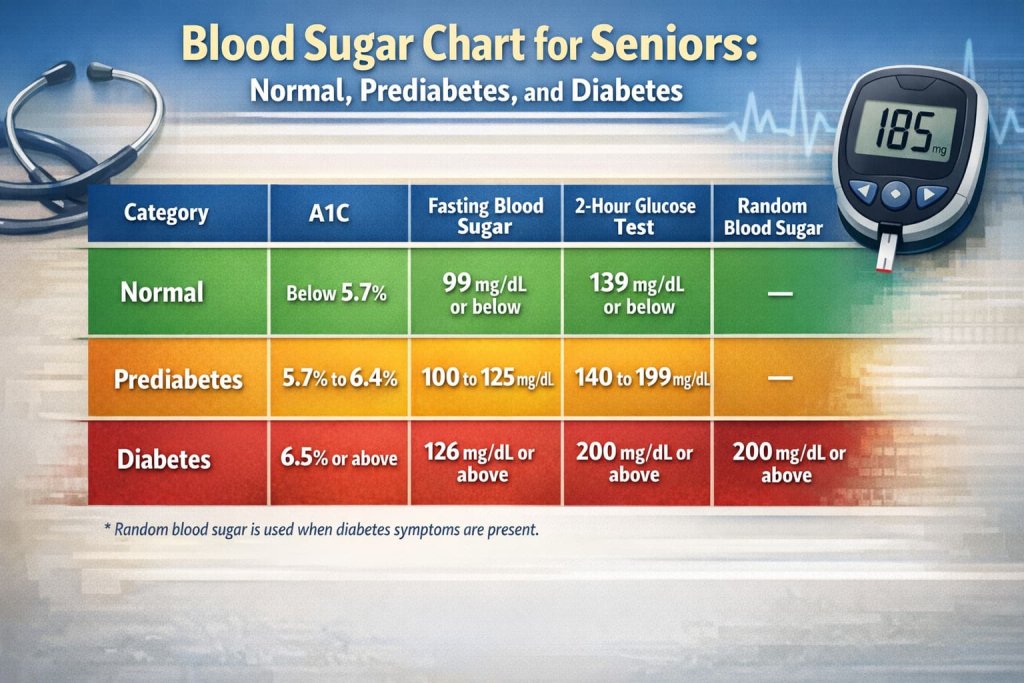
The main diagnosis chart below is based on NIDDK. These are the standard cutoffs used for adults who are not pregnant, including older adults.
| Result | A1C | Fasting blood sugar | 2-hour glucose tolerance test | Random blood sugar* |
|---|---|---|---|---|
| Normal | Below 5.7% | 99 mg/dL or below | 139 mg/dL or below | — |
| Prediabetes | 5.7% to 6.4% | 100 to 125 mg/dL | 140 to 199 mg/dL | — |
| Diabetes | 6.5% or above | 126 mg/dL or above | 200 mg/dL or above | 200 mg/dL or above |
*Random blood sugar is used when diabetes symptoms are present.
A few details matter here. A fasting test usually means at least 8 hours with no food or drink except sips of water. The oral glucose tolerance test also requires fasting first, then another blood draw 2 hours after glucose intake. NIDDK also notes that home blood glucose meters do not diagnose diabetes, and clinicians often use a second test to confirm the diagnosis unless the situation is clear.
What Is a Normal Blood Sugar for a Senior?
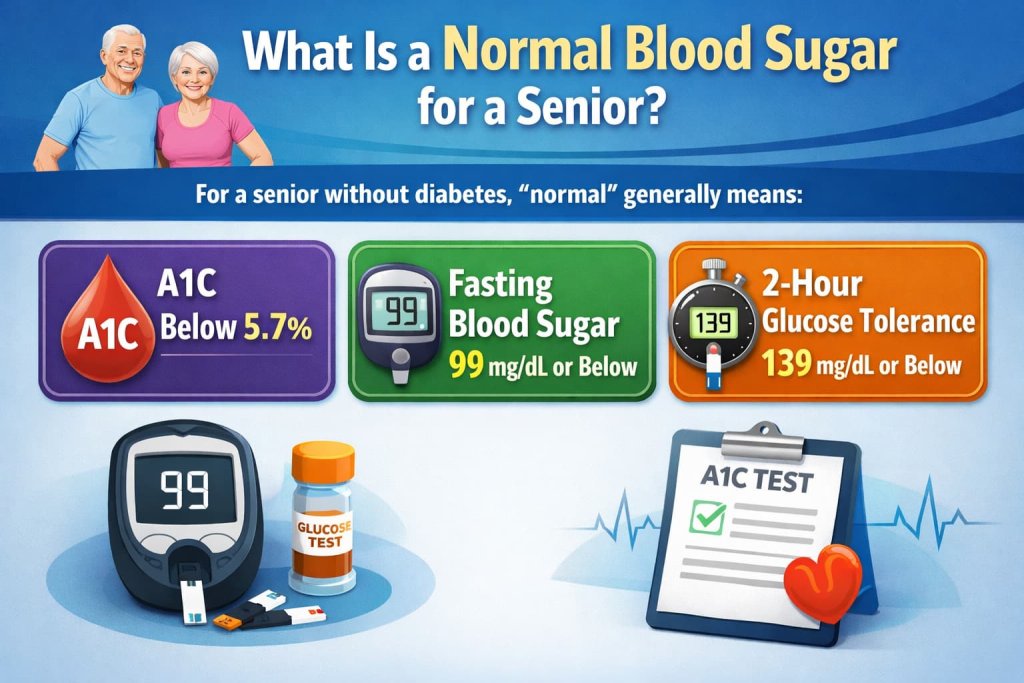
For a senior without diabetes, “normal” generally means:
- A1C below 5.7%
- Fasting blood sugar 99 mg/dL or below
- 2-hour glucose tolerance result 139 mg/dL or below
That is why age alone does not create a separate diagnostic “normal blood sugar range” for seniors. The more important difference is what happens after diagnosis, when treatment goals may be adjusted based on overall health, daily function, cognition, and risk of hypoglycemia.
A quick note about A1C in seniors
An A1C test shows your average blood sugar over roughly the past 3 months, so it is helpful for the big picture but it does not show day-to-day swings or sudden highs and lows. According to NIDDK’s A1C test guidance, A1C can also be less reliable in some people, including those with recent blood loss, transfusion, hemodialysis, kidney failure, iron-deficiency anemia, or certain hemoglobin variants. If an A1C result does not match home glucose readings or symptoms, a clinician may rely more on fasting plasma glucose, an oral glucose tolerance test, or repeated glucose monitoring to make decisions.
Safe Blood Sugar Target Ranges for Seniors With Diabetes
For many adults with diabetes, the American Diabetes Association says common targets are:
- Before meals: 80 to 130 mg/dL
- 1 to 2 hours after starting a meal: less than 180 mg/dL
But in older adults, the ADA’s 2026 Older Adults Standards of Care recommend individualized goals based on health status. A practical summary looks like this:
| Older adult group | A1C goal | Before meals | Bedtime |
|---|---|---|---|
| Healthy, independent, few chronic illnesses | <7.0% to 7.5% | 80 to 130 mg/dL | 80 to 180 mg/dL |
| Complex/intermediate health | <8.0% | 90 to 150 mg/dL | 100 to 180 mg/dL |
| Very complex or poor health | Avoid relying too much on A1C alone | 100 to 180 mg/dL | 110 to 200 mg/dL |
These are general target ranges, not universal rules. A clinician may set looser or tighter goals depending on insulin use, kidney disease, heart disease, cognitive impairment, a history of severe lows, or whether the person lives independently or needs significant daily support. The central aim in older adults is not simply “the lowest number possible.” It is balancing glucose control with safety and quality of life.
Why Senior Blood Sugar Targets Are Often Different
Older adults are more likely to have multiple medical conditions, more medications, and a higher risk of low blood sugar. NIDDK notes that low blood glucose is more likely in people who take insulin or certain diabetes medicines, are age 65 or older, or have problems such as kidney disease, heart disease, or cognitive impairment.
That is why a healthy, active 68-year-old may have a different target than a frail 86-year-old with memory problems or recurrent lows. The safest goal is the one that helps avoid both symptomatic hyperglycemia and dangerous hypoglycemia.
Low Blood Sugar Safety for Seniors
Low blood sugar can be especially risky for older adults because it may cause dizziness, falls, confusion, blurred thinking, or loss of consciousness. NIDDK’s hypoglycemia guidance says symptoms can include shakiness, hunger, tiredness, headache, confusion, trouble seeing or speaking clearly, and in severe cases, seizure or passing out.
Safety box: numbers to know
- Below 70 mg/dL: low blood sugar that should be treated
- Below 54 mg/dL: more serious low blood sugar needing immediate action
A practical response to a low reading
According to MedlinePlus, if your blood sugar is below 70 mg/dL, a common self-care approach is to take about 15 grams of fast-acting carbohydrate, wait 15 minutes, and recheck your blood sugar. Examples include glucose tablets, 4 ounces of fruit juice, regular soda, or a tablespoon of sugar, honey, or syrup.
If lows are happening repeatedly, especially overnight or around meals, it is worth discussing medication timing and dose with a healthcare professional rather than only treating each episode one by one. Recurrent low blood sugar is a strong reason to review your target range.
When a Home Glucose Reading Should Get Your Attention
A single home reading does not diagnose diabetes, but it can still be useful. In general:
- A fasting result in the 100 to 125 mg/dL range fits prediabetes
- A fasting result of 126 mg/dL or higher fits the diabetes range
- A random reading of 200 mg/dL or higher matters most when diabetes symptoms are also present
- A reading below 70 mg/dL is low and should not be ignored
If you keep seeing readings outside your goal range, the next step is not to guess. It is to bring the pattern, the timing, and your medication list to your clinician so they can decide whether you need lab testing, medication changes, or a new target plan.
When high blood sugar may be urgent
Very high blood sugar deserves extra attention in seniors, especially during illness. The CDC’s diabetes treatment guidance says that if you are sick and your blood sugar is 240 mg/dL or higher, you should check for ketones with an over-the-counter ketone test kit and call your doctor if your ketones are high. The American Diabetes Association’s hyperglycemia guidance also advises checking urine ketones when blood glucose is above 240 mg/dL and avoiding exercise if ketones are present.
Get urgent medical help right away if very high blood sugar comes with trouble breathing, repeated vomiting, fruity-smelling breath, confusion, or trouble staying awake. These can be warning signs of diabetic ketoacidosis or another serious diabetes emergency.
Symptoms Seniors Should Not Ignore
The National Institute on Aging says diabetes symptoms in older adults can include:
- Feeling unusually tired
- Increased hunger or thirst
- Losing weight without trying
- Urinating often
- Numbness or tingling in the hands or feet
- Blurred vision
- Skin infections
- Slower healing from cuts and bruises
Type 2 diabetes can develop slowly, and some older adults have few obvious symptoms at first. That is one reason a blood sugar chart is helpful, but symptoms and lab confirmation still matter.
Who Should Be More Careful With Tight Blood Sugar Goals?
Tighter goals are not always better. Extra caution is often needed for seniors who:
- use insulin or medicines that can cause lows
- have had previous hypoglycemia
- have kidney disease, heart disease, or cognitive impairment
- are frail, have limited mobility, or need help with daily activities
A useful option for seniors with frequent lows
For some older adults, especially those who use insulin or have trouble noticing low blood sugar symptoms, a continuous glucose monitor (CGM) may improve safety. NIDDK’s CGM guide explains that a CGM tracks glucose throughout the day and night, shows trends, and may include alerts for low or high readings. The ADA’s older-adult standards also recommend CGM for older adults with type 1 diabetes and for older adults with type 2 diabetes who use insulin. This can be especially helpful for seniors who live alone, have nighttime lows, or need caregivers to spot patterns more quickly.
In these situations, a slightly higher glucose target may be safer than pushing hard for near-normal numbers. That approach is consistent with ADA older-adult guidance, which emphasizes preventing hypoglycemia and symptomatic hyperglycemia rather than chasing one standard target for everyone.
FAQ
Do seniors have a different normal blood sugar range?
Not for diagnosis. Seniors generally use the same cutoffs as other nonpregnant adults for normal, prediabetes, and diabetes. What may differ is the treatment target range after diabetes is diagnosed.
Is a fasting blood sugar of 110 normal for a senior?
No. A fasting blood sugar of 110 mg/dL falls in the prediabetes range, not the normal range.
What should blood sugar be 2 hours after eating in a senior with diabetes?
For many adults with diabetes, a common ADA target is less than 180 mg/dL about 1 to 2 hours after the start of a meal, but an older adult’s personal goal may be different.
What blood sugar level is dangerously low for an older adult?
A blood sugar below 70 mg/dL is low and should be treated. A level below 54 mg/dL is a more serious low that needs immediate action.
Can a home glucose meter diagnose diabetes?
No. Home meters are useful for monitoring, but NIDDK says they cannot diagnose diabetes. Diagnosis should be confirmed with proper lab testing.
The Bottom Line
A good blood sugar chart for seniors should do two jobs clearly: show the standard diagnostic numbers for normal, prediabetes, and diabetes, and then separate those from the safe treatment targets used in older adults who already have diabetes. For most seniors, diagnosis uses the same cutoffs as other adults, but treatment goals may be adjusted to reduce hypoglycemia risk and fit the person’s overall health.
If you or a family member keeps seeing high or low readings, or the current target feels hard to reach safely, it is worth reviewing the plan with a clinician. The safest diabetes goal is the one that protects health without creating avoidable lows.
This content is for informational purposes only and not medical advice.
Sources/References
- CDC — National Diabetes Statistics Report
- NIDDK — Diabetes Tests & Diagnosis
- NIDDK — The A1C Test & Diabetes
- American Diabetes Association — Check Your Blood Glucose
- American Diabetes Association / Diabetes Care — 13. Older Adults: Standards of Care in Diabetes—2026
- NIDDK — Low Blood Glucose (Hypoglycemia)
- MedlinePlus — Low Blood Sugar – Self-Care
- CDC — Managing Diabetes
- American Diabetes Association — Hyperglycemia (High Blood Glucose)
- National Institute on Aging — Diabetes in Older People
- NIDDK — Continuous Glucose Monitoring