
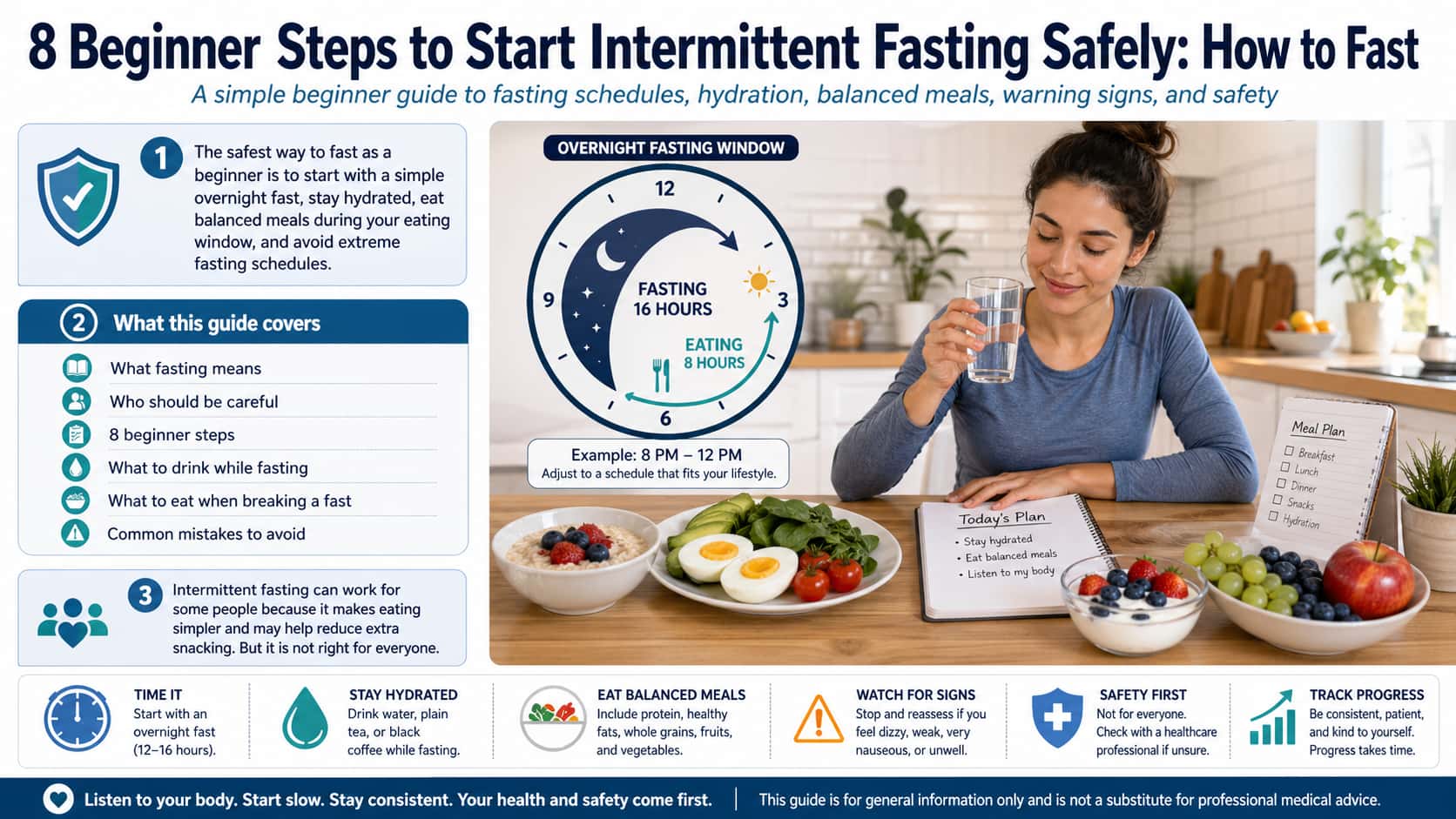
The safest way to fast as a beginner is to start with a simple overnight fast, stay hydrated, eat balanced meals during your eating window, and avoid extreme fasting schedules. If you are learning how to fast, think of it as a gradual eating schedule—not a crash diet, punishment, or reason to skip nutrition.
Intermittent fasting can work for some people because it makes eating simpler and may help reduce extra snacking. But it is not right for everyone. The goal is to build a routine that supports energy, digestion, sleep, workouts, blood sugar, and long-term health.
What Does “How to Fast” Mean?
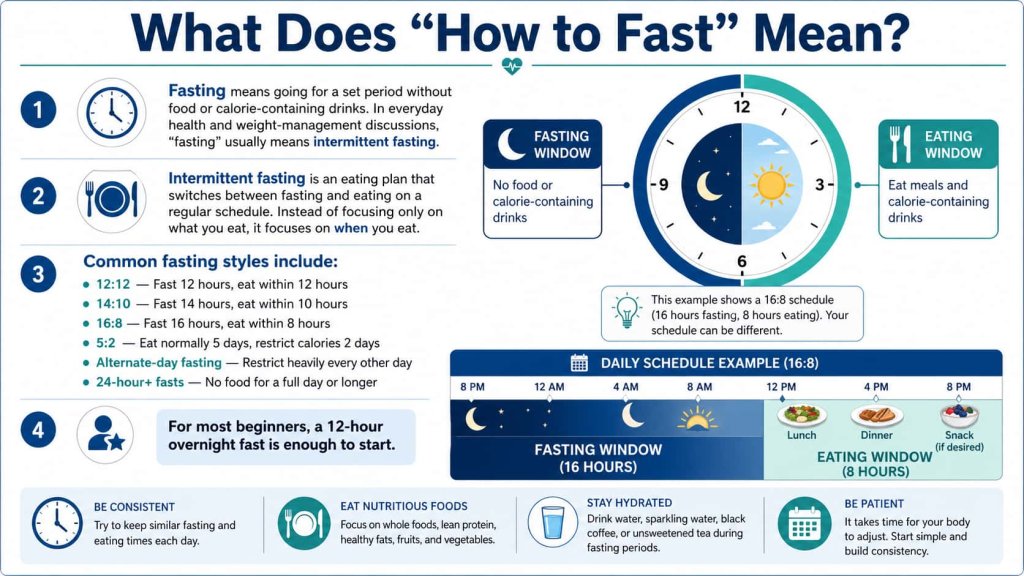
Fasting means going for a set period without food or calorie-containing drinks. In everyday health and weight-management discussions, “fasting” usually means intermittent fasting.
Johns Hopkins Medicine defines intermittent fasting as an eating plan that switches between fasting and eating on a regular schedule. Instead of focusing only on what you eat, it focuses on when you eat.
Common fasting styles include:
| Fasting Method | What It Looks Like | Beginner-Friendly? |
|---|---|---|
| 12:12 | Fast 12 hours, eat within 12 hours | Yes |
| 14:10 | Fast 14 hours, eat within 10 hours | Usually |
| 16:8 | Fast 16 hours, eat within 8 hours | Maybe, after practice |
| 5:2 | Eat normally 5 days, restrict calories 2 days | More advanced |
| Alternate-day fasting | Restrict heavily every other day | Not ideal for beginners |
| 24-hour+ fasts | No food for a full day or longer | Medical guidance recommended |
For most beginners, a 12-hour overnight fast is enough to start.
Is Fasting Safe for Beginners?
Intermittent fasting can be safe for many healthy adults, but it is not automatically safe for everyone. It depends on your age, health history, medications, activity level, eating behavior, and how restrictive the fasting plan is.
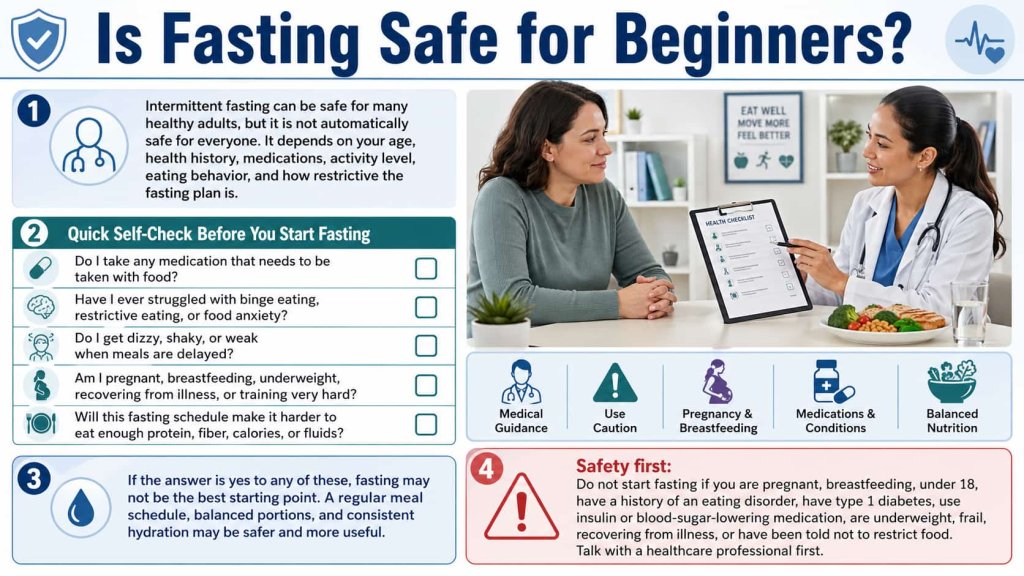
Mayo Clinic notes that intermittent fasting is not a healthy pattern for some people, including those who are pregnant or breastfeeding, people with eating disorders, and people at high risk of bone loss and falls. People with diabetes or other medical conditions should be especially careful because fasting can affect blood sugar and medication timing.
Quick Self-Check Before You Start Fasting
Before trying intermittent fasting, ask yourself:
- Do I take any medication that needs to be taken with food?
- Have I ever struggled with binge eating, restrictive eating, or food anxiety?
- Do I get dizzy, shaky, or weak when meals are delayed?
- Am I pregnant, breastfeeding, underweight, recovering from illness, or training very hard?
- Will this fasting schedule make it harder to eat enough protein, fiber, calories, or fluids?
If the answer is yes to any of these, fasting may not be the best starting point. A regular meal schedule, balanced portions, and consistent hydration may be safer and more useful.
Safety first: Do not start fasting if you are pregnant, breastfeeding, under 18, have a history of an eating disorder, have type 1 diabetes, use insulin or blood-sugar-lowering medication, are underweight, frail, recovering from illness, or have been told not to restrict food. Talk with a healthcare professional first.
How to Fast Safely in 8 Beginner Steps
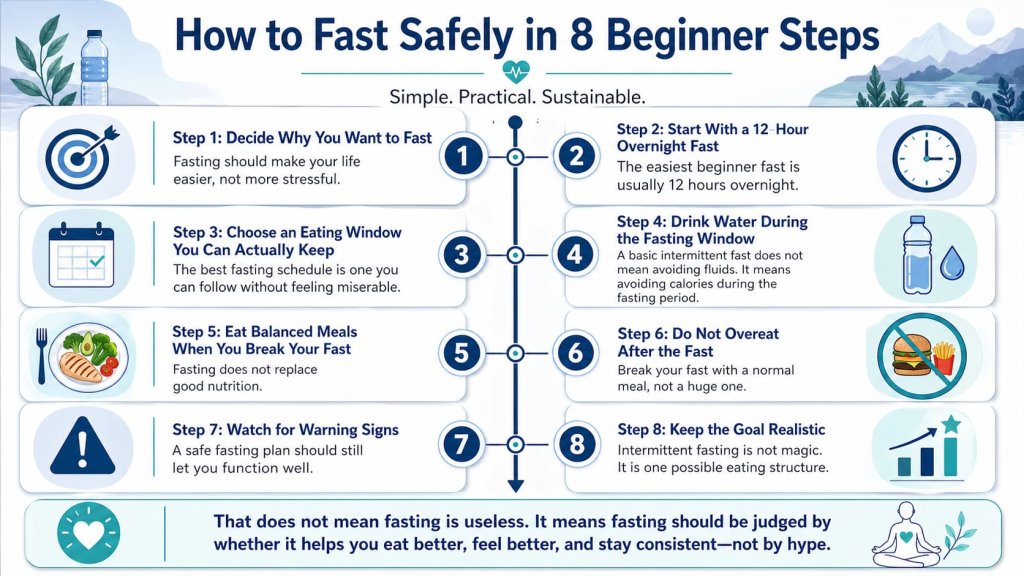
Step 1: Decide Why You Want to Fast
Before choosing a fasting schedule, get clear on your reason.
Good reasons may include:
- Reducing late-night snacking
- Creating a simpler eating routine
- Supporting weight management
- Improving meal structure
- Becoming more aware of hunger and fullness
Less helpful reasons include:
- Trying to lose weight as fast as possible
- “Making up” for overeating
- Copying someone else’s strict routine
- Skipping meals even when you feel weak, anxious, or unwell
Fasting should make your life easier, not more stressful. If it triggers guilt, binge eating, obsession with food, or fear of eating, it is not the right approach.
Step 2: Start With a 12-Hour Overnight Fast
The easiest beginner fast is usually 12 hours overnight.
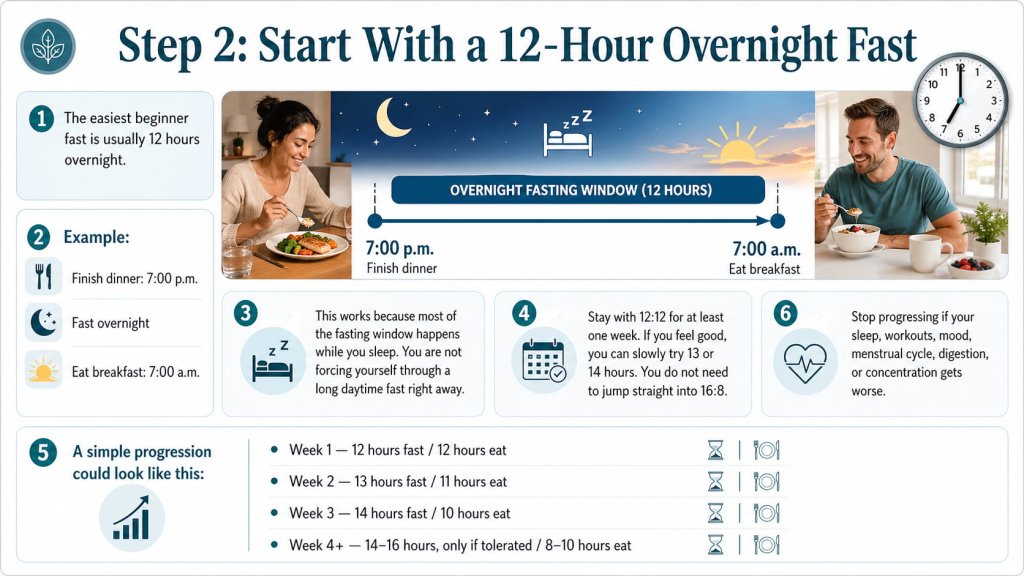
Example:
- Finish dinner: 7:00 p.m.
- Fast overnight
- Eat breakfast: 7:00 a.m.
This works because most of the fasting window happens while you sleep. You are not forcing yourself through a long daytime fast right away.
Stay with 12:12 for at least one week. If you feel good, you can slowly try 13 or 14 hours. You do not need to jump straight into 16:8.
A simple progression could look like this:
| Week | Fasting Window | Eating Window |
|---|---|---|
| Week 1 | 12 hours | 12 hours |
| Week 2 | 13 hours | 11 hours |
| Week 3 | 14 hours | 10 hours |
| Week 4+ | 14–16 hours, only if tolerated | 8–10 hours |
Stop progressing if your sleep, workouts, mood, menstrual cycle, digestion, or concentration gets worse.
Step 3: Choose an Eating Window You Can Actually Keep
The best fasting schedule is one you can follow without feeling miserable.
A common mistake is choosing an eating window that looks impressive but does not fit real life. For example, a noon-to-8 p.m. eating window may work well for someone who likes dinner with family. But it may be a poor fit for someone who trains early in the morning, takes morning medication with food, or feels shaky without breakfast.
Better beginner options include:
- 7 a.m. to 7 p.m. for a gentle 12-hour fast
- 8 a.m. to 6 p.m. for a 14-hour fast
- 9 a.m. to 7 p.m. for a 14-hour fast
- 10 a.m. to 6 p.m. for a more structured 16:8 approach
Avoid very short eating windows when starting. The American Heart Association reported preliminary research linking eating in less than an 8-hour window with higher cardiovascular death risk, especially in people with existing heart disease or cancer. The study was observational, so it does not prove fasting caused the risk, but it supports a cautious approach.
Step 4: Drink Water During the Fasting Window
A basic intermittent fast does not mean avoiding fluids. It means avoiding calories during the fasting period.
During most fasting windows, you can usually drink:
- Water
- Plain sparkling water
- Unsweetened tea
- Black coffee
The CDC says water helps prevent dehydration and supports normal body function. This matters because dehydration can contribute to unclear thinking, mood changes, overheating, constipation, and kidney stone risk.
Be careful with:
- Sugary coffee drinks
- Creamers
- Sweetened tea
- Juice
- Soda
- Alcohol
- “Zero-calorie” drinks that make cravings worse for you
If you take blood pressure medication, diuretics, diabetes medication, or follow a sodium- or potassium-restricted diet, ask a healthcare professional before using electrolyte powders or salt-heavy fasting drinks.
Avoid Dry Fasting
Dry fasting means avoiding both food and fluids. It is not a good beginner strategy and is not the same as standard intermittent fasting.
A safer intermittent fasting routine allows water and other non-calorie drinks such as plain tea or black coffee. Avoiding fluids can raise the risk of dehydration, headaches, constipation, dizziness, poor concentration, and feeling unwell.
If your goal is to learn how to fast safely, do not start with dry fasting. Start with a simple overnight food fast and keep drinking water.
Step 5: Eat Balanced Meals When You Break Your Fast
Fasting does not replace good nutrition. What you eat during your eating window still matters.
The Dietary Guidelines for Americans, 2025–2030 emphasize whole, nutrient-dense foods such as protein foods, dairy, vegetables, fruits, healthy fats, and whole grains, while reducing highly processed foods, refined carbohydrates, added sugars, excess sodium, and unhealthy fats.
A balanced meal after fasting should usually include:
- Protein: eggs, chicken, fish, Greek yogurt, tofu, beans, lentils, lean meat, or cottage cheese
- Fiber-rich carbohydrates: oats, brown rice, potatoes, beans, fruit, or whole grains
- Healthy fats: avocado, olive oil, nuts, seeds, or fatty fish
- Colorful plants: vegetables, berries, leafy greens, peppers, tomatoes, or fruit
- Fluids: water or another unsweetened drink
Example first meal:
- Scrambled eggs or tofu
- Whole-grain toast or oats
- Fruit
- Water or unsweetened tea
Example lunch:
- Grilled chicken or chickpeas
- Brown rice or sweet potato
- Salad with olive oil dressing
- Greek yogurt or fruit
Step 6: Do Not Overeat After the Fast
One reason intermittent fasting may help some people manage weight is that it can reduce overall calorie intake. But it can also backfire if fasting makes you overly hungry and leads to overeating later.
The NIDDK notes that people often naturally eat less when they shorten their eating window, but the benefits may come from reduced energy intake rather than fasting itself.
To avoid rebound overeating:
- Break your fast with a normal meal, not a huge one.
- Eat slowly for the first 10 minutes.
- Include protein and fiber.
- Avoid starting with only sweets or refined carbs.
- Plan meals ahead so you are not grabbing random snacks.
- Do not use fasting as a reason to ignore hunger all day.
If you repeatedly binge after fasting, shorten the fasting window or stop fasting.
Match Fasting With Your Activity Level
Your fasting schedule should fit your workouts, job, and daily movement. If you exercise hard, do physical labor, walk a lot, or train early in the morning, you may need a shorter fast or a meal closer to your workout.
For light activity, such as walking or gentle stretching, many people do fine during a fasting window. For intense strength training, long cardio, sports, or physically demanding work, it is usually better to plan protein, carbohydrates, and fluids around the activity.
Good post-workout meal ideas include:
- Eggs, fruit, and whole-grain toast
- Greek yogurt with oats and berries
- Chicken, rice, and vegetables
- Tofu, potatoes, and salad
- Beans, avocado, and a whole-grain wrap
If fasting makes workouts feel weaker, increases dizziness, or slows recovery, shorten the fast or move your eating window earlier.
Step 7: Watch for Warning Signs
Mild hunger can happen when your schedule changes. Severe symptoms are different.
Stop fasting and eat something if you feel:
- Dizziness
- Shaking
- Confusion
- Faintness
- Nausea
- Severe headache
- Heart palpitations
- Weakness that does not improve with water
- Unusual anxiety or irritability
- Trouble concentrating enough to work or drive safely
For people with diabetes, warning signs can be more serious. The NIDDK guidance on fasting safely with diabetes explains that medication timing and hypoglycemia risk need medical planning, especially for people using insulin or sulfonylureas.
Do not push through symptoms to “prove discipline.” A safe fasting plan should still let you function well.
Step 8: Keep the Goal Realistic
Intermittent fasting is not magic. It is one possible eating structure.
The National Institutes of Health reported that people with metabolic syndrome who followed an 8- to 10-hour eating window had modest health benefits after three months, but longer-term studies are still needed.
A 2026 Cochrane review analyzed 22 randomized clinical trials with 1,995 adults and found that intermittent fasting did not appear to produce a meaningful weight-loss advantage compared with standard dietary advice.
That does not mean fasting is useless. It means fasting should be judged by whether it helps you eat better, feel better, and stay consistent—not by hype.
How to Know If Your Fasting Plan Is Working
A good fasting routine should make your eating pattern simpler, not more stressful.
Signs your fasting plan may be working include:
- You feel steady energy during the day.
- You are drinking enough water.
- You are not bingeing after the fast.
- Your meals still include protein, fiber, and nutrient-rich foods.
- Your sleep is not getting worse.
- Your workouts and daily tasks still feel manageable.
- You feel less drawn to late-night snacking.
- Your weight, waist size, blood sugar, or other health goals improve gradually.
Signs your plan may be too strict include constant food thoughts, irritability, poor sleep, dizziness, overeating at night, missed periods, weaker workouts, or feeling anxious about eating. If these happen, shorten the fasting window or stop fasting.
What Can You Have While Fasting?
For a simple beginner fast, the safest rule is: no calories during the fasting window.
Usually okay:
- Plain water
- Plain sparkling water
- Black coffee
- Unsweetened tea
Usually breaks a fast:
Some people use fasting for weight management, while others use it for blood sugar or metabolic goals. The stricter your goal, the more carefully you need to define what “fasting” means. For beginners, do not overcomplicate it. Start with water, black coffee, or unsweetened tea.
What Should You Eat Before Starting a Fast?
Your last meal before a fast should help you stay full without feeling stuffed.
A good pre-fast meal may include:
- Protein
- Fiber-rich carbs
- Vegetables or fruit
- Healthy fats
- Water
Example:
- Salmon, chicken, beans, or tofu
- Roasted vegetables
- Brown rice, potatoes, or whole-grain bread
- Olive oil, avocado, nuts, or seeds
- Water
Avoid making your last meal mostly sweets, chips, fast food, or alcohol. These may leave you hungry sooner and make the next fasting window harder.
What Is the Best Fasting Schedule for Beginners?
The best beginner fasting schedule is usually 12:12 or 14:10.
Try this simple plan:
| Day | Plan |
|---|---|
| Monday | 12-hour overnight fast |
| Tuesday | 12-hour overnight fast |
| Wednesday | 12-hour overnight fast |
| Thursday | 13-hour overnight fast |
| Friday | 13-hour overnight fast |
| Saturday | Flexible schedule |
| Sunday | 12-hour overnight fast |
After one or two weeks, you can decide whether to stay there or move toward 14:10. Many people do not need 16:8 to get structure and reduce late-night snacking.
Who Should Be Careful With Fasting?
Fasting may not be appropriate for:
- Children and teens
- Pregnant people
- Breastfeeding people
- People with a history of eating disorders
- People with type 1 diabetes
- People using insulin or blood-sugar-lowering medication
- People who are underweight
- People with frailty or high fall risk
- People recovering from surgery, illness, or injury
- People with active cancer or serious heart disease
- Athletes with high fueling needs
- Anyone who feels worse when skipping meals
If you take prescription medication with food, ask your clinician before changing meal timing.
Common Beginner Fasting Mistakes
Starting Too Strict
Going from eating all day to a 16- or 18-hour fast can feel harsh. Start with 12 hours first.
Treating One Early Meal as Failure
Breaking your fast earlier than planned does not mean you failed. It usually means your body needed food, your schedule changed, or your fasting window was too long for that day.
Do not “make up for it” by skipping more food later. Just eat a balanced meal and return to your normal routine at the next meal. Consistency matters more than perfection.
Not Drinking Enough
Some people accidentally drink less when they stop snacking. Keep water nearby.
Eating Too Little Protein
Low-protein meals can make fasting harder and may leave you hungry sooner.
Eating Too Much Ultra-Processed Food
Fasting does not cancel out poor food quality. You still need nutrient-dense meals.
Ignoring Sleep
Late caffeine, late heavy meals, and hunger at bedtime can all affect sleep. Adjust your eating window if sleep gets worse.
Exercising Hard While Under-Fueled
Easy walks are usually fine for many people. Intense workouts may require food before or after training.
FAQ: How to Fast Safely
How long should a beginner fast?
Most beginners should start with a 12-hour overnight fast. If that feels easy and your energy is stable, you can slowly try 13 or 14 hours.
Is 16:8 fasting good for beginners?
It can be too aggressive for some beginners. Try 12:12 or 14:10 first. Move to 16:8 only if it fits your schedule and does not cause dizziness, overeating, poor sleep, or low energy.
Can I drink coffee while fasting?
Plain black coffee is commonly used during intermittent fasting. Avoid sugar, cream, milk, and sweetened coffee drinks if you want to keep the fasting window calorie-free.
Does fasting help you lose weight?
It may help some people lose weight by reducing snacking and total calorie intake. However, research does not show that intermittent fasting is clearly superior to other balanced calorie-reduction methods.
What is the safest way to break a fast?
Break your fast with a normal balanced meal. Include protein, fiber-rich carbohydrates, healthy fats, and water. Avoid turning the first meal into a binge.
Should I fast every day?
Not necessarily. Some people do well with a consistent daily overnight fast. Others do better fasting only a few days per week. Consistency matters, but your plan should still support your health, schedule, and quality of life.
Conclusion
Learning how to fast safely starts with moderation. Begin with a 12-hour overnight fast, drink water, eat balanced meals, and avoid extreme schedules. Intermittent fasting can be a useful structure for some people, but it is not required for good health and it is not safe for everyone.
Start small, pay attention to your body, and choose a fasting routine that supports your real life—not one that makes eating feel stressful.
This content is for informational purposes only and not medical advice. If you have a medical condition, take medication, are pregnant or breastfeeding, have a history of disordered eating, or feel unwell while fasting, talk with a qualified healthcare professional.
References
- Johns Hopkins Medicine — Intermittent Fasting: What Is It, And How Does It Work?
- NIDDK — What Can You Tell Your Patients About Intermittent Fasting and Type 2 Diabetes?
- NIDDK — Fasting Safely with Diabetes
- Mayo Clinic — Intermittent Fasting: What Are the Benefits?
- CDC — About Water and Healthier Drinks
- Dietary Guidelines for Americans — 2025–2030 Guidelines
- NIH Research Matters — Time-Restricted Eating for Metabolic Syndrome
- American Heart Association — 8-Hour Time-Restricted Eating Linked to Higher Cardiovascular Death Risk
- Cochrane — Evidence Behind Intermittent Fasting for Weight Loss Fails to Match Hype