
Lemon water for weight loss can be helpful, but not because it burns fat. Its real value is much simpler: it can help with weight loss if it replaces sugary drinks and makes it easier for you to drink more water consistently. That matters because long-term weight loss comes from a calorie deficit, not from any single “fat-burning” drink. CDC guidance on water and healthier drinks and CDC guidance on physical activity and weight both point back to the same foundation: lower-calorie choices, regular movement, and habits you can stick with.
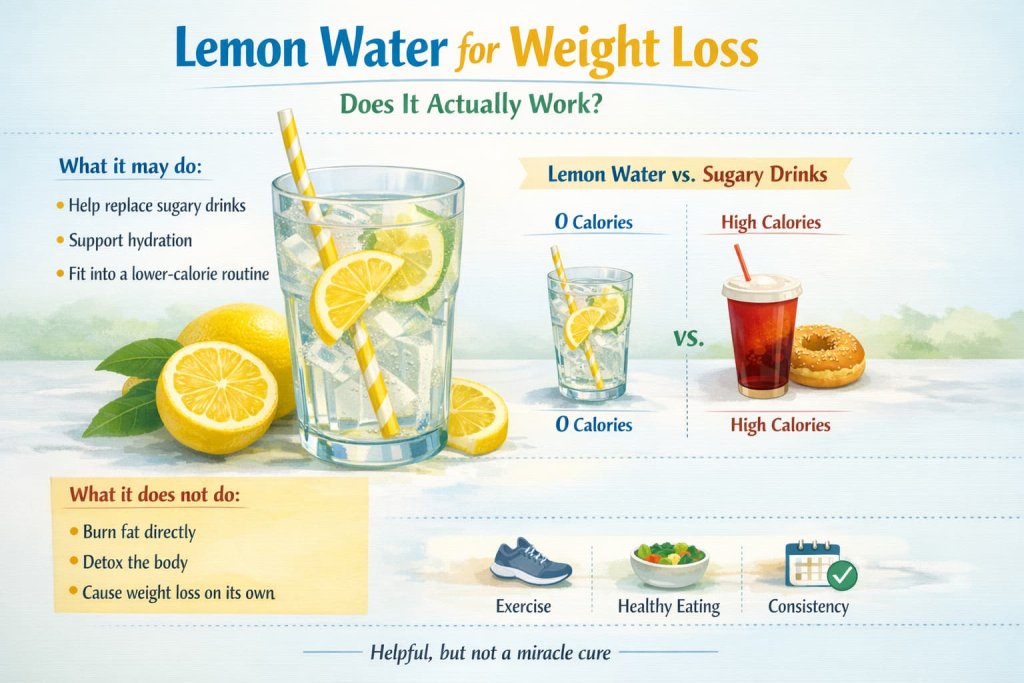
Many people like lemon water because it tastes fresher than plain water and feels like a healthy ritual. That can be genuinely useful. But the evidence does not show that lemon water has a special ability to melt body fat, “detox” your body, or speed up metabolism in a meaningful way. Getting that distinction right makes the advice more practical and much more accurate. NCCIH’s overview of detoxes and cleanses makes that clear.
Does lemon water help with weight loss?
Lemon water may support weight loss indirectly, not directly. Plain water has no calories, and CDC notes that replacing sugary drinks with water can reduce calorie intake. CDC also specifically suggests adding slices of lemon to water for flavor, which makes lemon water a useful swap for soda, juice drinks, sweet tea, or other high-calorie beverages. CDC’s Rethink Your Drink page is one of the clearest official sources on this.
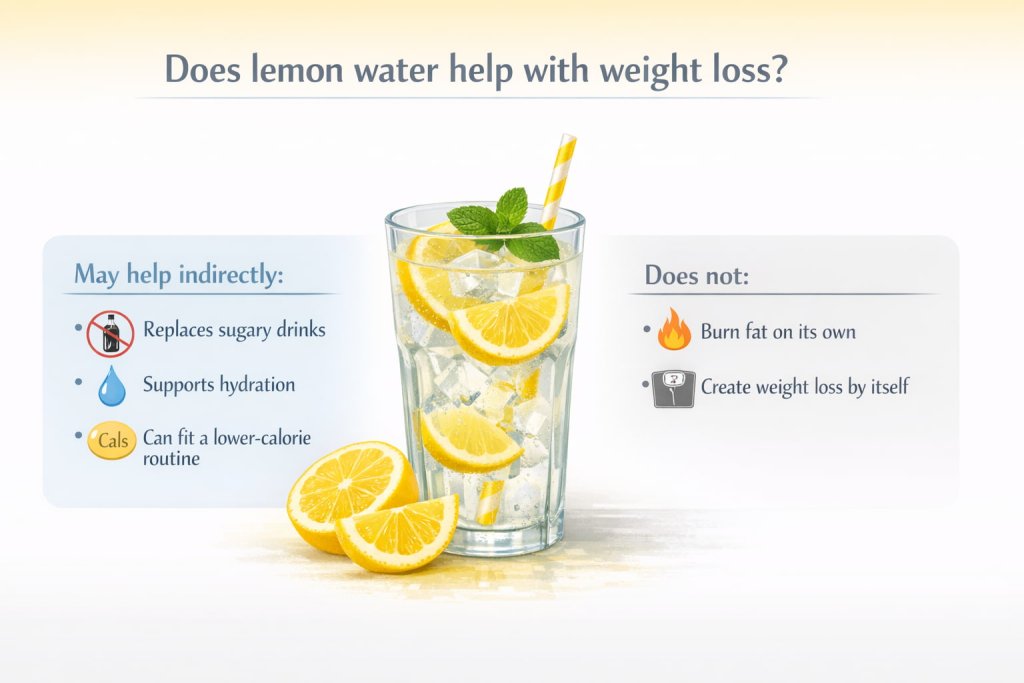
What it does not do is create weight loss on its own. A 2024 systematic review on water intake and adiposity found that higher water intake may not significantly affect adiposity in overweight or obese adults by itself. In other words, simply drinking more water is not a magic shortcut. Lemon water becomes useful when it helps change your overall eating and drinking pattern in a lower-calorie direction.
Why lemon water can still be a smart habit
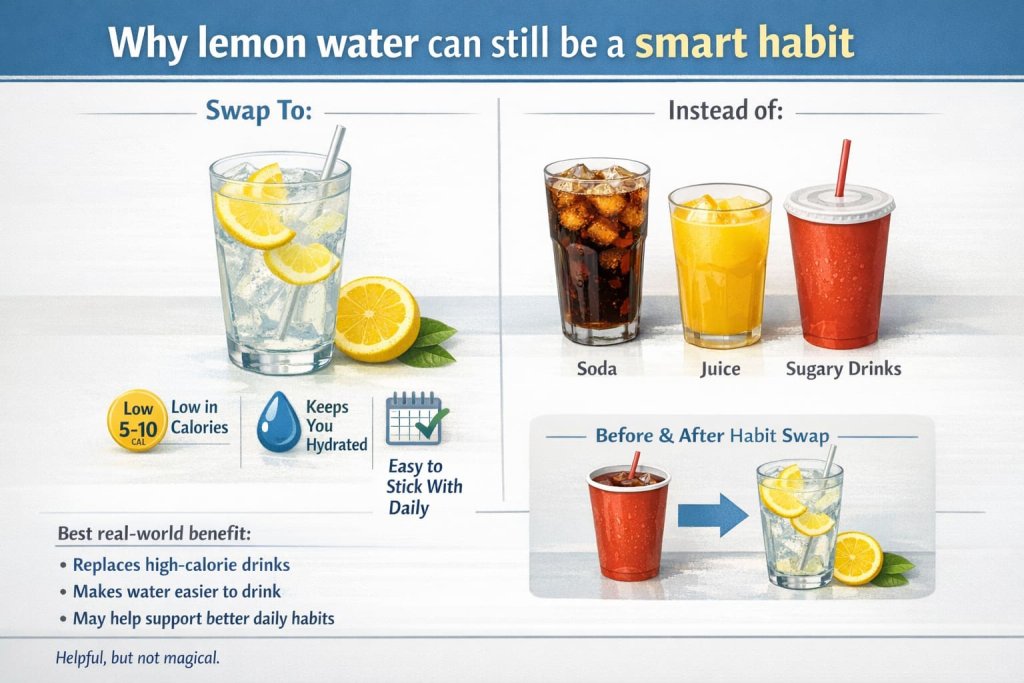
1. It can replace high-calorie drinks
This is the biggest real-world benefit. If lemon water replaces regular soda, sweetened iced tea, juice drinks, energy drinks, or sugary coffee drinks, your daily calorie intake can drop without changing your meals much. That is exactly the kind of simple swap that supports weight loss over time. NIDDK’s diabetes prevention guidance also advises drinking water instead of sweetened beverages as part of a reduced-calorie plan.
For example, swapping one daily sugar-sweetened beverage for unsweetened lemon water can meaningfully reduce calorie intake over time. The exact impact depends on what you are replacing, but the principle is simple: replacing a drink with calories with a drink that has few or no calories is often more useful for weight loss than trying to change everything at once.
2. It can make hydration easier
Some people simply drink more water when it has flavor. If lemon water helps you stay hydrated, that can be a useful habit even though hydration alone is not a weight-loss strategy. CDC notes that water helps with normal temperature regulation, joint cushioning, and removing waste through urination, perspiration, and bowel movements. Feeling better hydrated can also make it easier to stay active and stick to healthier routines.
3. It may help some people manage appetite around meals
The evidence here is about water, not lemon. Some studies on premeal water intake have found lower energy intake or slightly greater weight loss in certain groups, especially middle-aged and older adults, but the evidence is not strong enough to turn this into a guaranteed rule for everyone. The safest takeaway is that a glass of water before meals may help some people eat a little less, but lemon is not the active ingredient. A PubMed review on premeal water intake and weight-related outcomes is useful background here.
What lemon water cannot do
Lemon water is often marketed as a fat-burning or detox drink. That goes beyond the evidence.
According to NCCIH’s overview of detoxes and cleanses, there is no compelling research supporting detox diets for weight management or for eliminating toxins from the body. Your body already has built-in systems for that, especially the liver and kidneys. So while lemon water can be part of a healthy routine, it is not a detox treatment and it is not a shortcut around calorie balance.
The same goes for “boosting metabolism.” Reliable weight-loss guidance from CDC and NIDDK centers on eating fewer calories than you take in, moving more, and building sustainable habits. Lemon water may fit into that plan, but it does not replace it.
What actually helps with weight loss
If you want results, lemon water works best as part of a broader routine. The most reliable drivers of weight loss are:
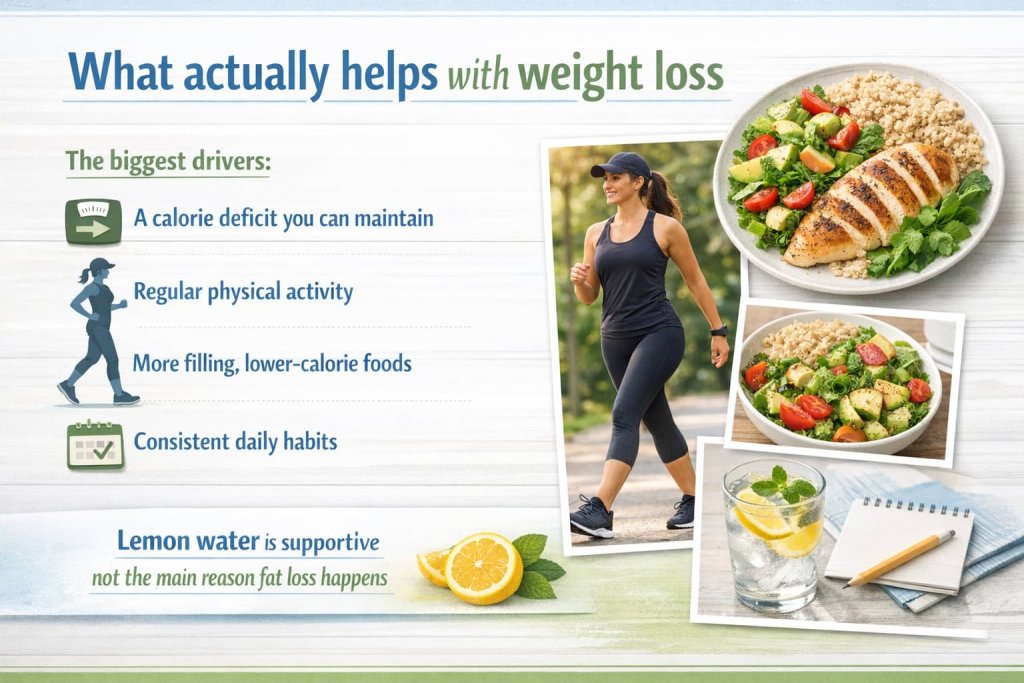
- replacing high-calorie drinks and foods with lower-calorie options
- eating in a calorie deficit you can maintain
- getting regular physical activity
- choosing filling foods such as vegetables, fruit, beans, lean protein, and other high-fiber or high-protein options
- staying consistent long enough for small daily habits to add up
This is why lemon water can be useful without being powerful on its own. It may support the routine, but it is not the reason fat loss happens.
Is lemon water good for you?
It can be. Lemon water is a simple, low-sugar drink, and lemon juice does provide vitamin C. The NIH Office of Dietary Supplements vitamin C fact sheet lists the recommended amount of vitamin C for most adults as 90 mg per day for men and 75 mg per day for women. USDA vitamin C food data show that 1 cup of raw lemon juice contains 94.4 mg of vitamin C, but a typical glass of lemon water uses far less than a full cup of juice. That means lemon water can add a little nutrition and a lot of flavor, but it is usually only a modest source of vitamin C unless you use a large amount of juice.
That means lemon water can add a little nutrition and a lot of flavor, but it should not be treated like a vitamin supplement or a medical treatment. Whole fruits, vegetables, and an overall balanced eating pattern still matter much more.
Lemon juice also contains citrate, which is sometimes discussed in relation to certain kidney stone prevention strategies. That does not make lemon water a weight-loss treatment, and it is not a substitute for medical care. But for some readers, it is helpful to know that lemon water may have practical uses beyond flavor and hydration. If you have a history of kidney stones, personalized advice from a clinician is the safer approach.
Best way to use lemon water for weight loss
The best use of lemon water is simple: treat it as a tool, not a cure.
A practical approach looks like this:
- drink lemon water in place of sugary beverages
- keep it unsweetened
- use it to support regular hydration during the day
- pair it with meals built around lower-calorie, nutrient-dense foods
- combine it with regular physical activity
That last point matters most. CDC states that weight loss happens when physical activity increases calorie use and you also reduce the calories you eat. Most weight loss comes from lowering calorie intake, while regular activity is especially important for keeping weight off.
A realistic expectation also helps. NIDDK’s treatment guidance for overweight and obesity says that losing about 5% of body weight over 6 months can be a reasonable initial goal for some adults. For planning, NIDDK’s Body Weight Planner can help estimate calorie and activity targets in a more grounded way than social media advice.
How to make lemon water for weight loss
Keep it simple. Squeeze a small amount of fresh lemon juice into a glass or bottle of plain water and leave it unsweetened. You can use cold or warm water based on preference.
A practical formula is:
- 8 to 16 ounces of water
- a squeeze of fresh lemon or 1 to 2 lemon slices
- no added sugar, syrup, or high-calorie mix-ins
If plain lemon water tastes too sharp, dilute it more rather than sweetening it. The goal is to create a drink you will actually use in place of higher-calorie options.
Common mistakes that make lemon water less helpful
Adding sugar, honey, or syrup
This is the biggest one. Once you start sweetening lemon water heavily, you remove much of the benefit. A lightly flavored water is very different from a homemade lemonade with added sugar. If your goal is weight loss, unsweetened is the better option.
The same caution applies to bottled lemon drinks or flavored lemon beverages. Some contain added sugars or other calories, so check the label rather than assuming they work the same way as homemade unsweetened lemon water.
Expecting it to work without other changes
Lemon water cannot compensate for frequent overeating, large portions, or a very sedentary lifestyle. NIDDK is direct on this point: to lose weight, you must burn more calories than you take in through food and beverages.
Sipping acidic drinks all day long
Small amounts are fine for many people, but constant exposure to acidic drinks can be hard on teeth. That matters more when lemon water becomes an all-day habit.
Who should be careful with lemon water?
People with acid reflux or GERD
NIDDK notes that acidic foods such as citrus fruits can trigger symptoms or make them worse in some people with GERD. If lemon water causes heartburn, throat irritation, or reflux symptoms, it may not be a good daily choice for you. NIDDK’s GERD diet guidance is the best official reference here.
People concerned about dental erosion
The American Dental Association advice on dental erosion recommends reducing exposure to acidic beverages, rinsing with water after acidic drinks, and not brushing immediately afterward. The ADA also notes that drinking through a straw can reduce how much the acid bathes the teeth. This matters most if you drink lemon water often.
Safety box
Use lemon water with a few practical precautions:
- keep it unsweetened if weight loss is the goal
- rinse your mouth with plain water after drinking it
- avoid brushing your teeth right away after acidic drinks
- cut back or stop if it worsens reflux or stomach irritation
Warm lemon water vs. cold lemon water
There is no strong evidence that warm lemon water causes more weight loss than cold lemon water. Choose the version you are more likely to drink consistently. The temperature is mostly about preference, comfort, and habit, not a meaningful metabolic advantage. Based on the current evidence, the main benefit still comes from choosing a low-calorie drink and maintaining habits that help create a calorie deficit.
How much lemon water should you drink for weight loss?
There is no evidence-based “fat-loss dose” of lemon water. A reasonable approach is to use it as a replacement drink once or twice a day, especially at times when you would otherwise reach for a sugary beverage. Some people also like a glass before meals because plain water before meals may help with appetite in certain situations, but that should be seen as optional, not essential.
FAQ
Does lemon water burn belly fat?
No. There is no strong evidence that lemon water specifically burns belly fat. Fat loss happens when you consistently maintain a calorie deficit.
Can I drink lemon water every day?
Many people can, but daily lemon water is not ideal for everyone. If you have reflux symptoms or are concerned about enamel erosion, you may need to limit it or use the dental precautions above.
Is lemon water better than plain water?
Not necessarily. For weight loss, plain water and lemon water both work best when they replace higher-calorie drinks. Lemon water can be more appealing for some people, which may help them drink water more consistently.
Should I add honey to lemon water for weight loss?
Usually no. Honey adds calories, so it can work against a weight-loss goal if you use it regularly or in large amounts. Unsweetened lemon water is the better fit.
Bottom line
Lemon water for weight loss is best understood as a supportive habit, not a special treatment. It is not a fat burner, it does not detox your body, and it will not cause meaningful weight loss by itself. But it can still be useful when it helps you replace sugary drinks, stay hydrated, and stick to a lower-calorie routine.
That is what makes lemon water worth considering: it is simple, inexpensive, and easy to build into daily life. Use it as one small part of a bigger plan built on calorie awareness, better food choices, and regular movement. That is where real progress comes from.
References
- Centers for Disease Control and Prevention — Physical Activity and Your Weight and Health
- National Institute of Diabetes and Digestive and Kidney Diseases — Some Myths about Nutrition & Physical Activity
- National Center for Complementary and Integrative Health — “Detoxes” and “Cleanses”: What You Need To Know
- National Institutes of Health Office of Dietary Supplements — Vitamin C Fact Sheet for Consumers
- U.S. Department of Agriculture — Vitamin C, Total Ascorbic Acid Food Data
- American Dental Association — Dental Erosion
- PubMed — Water Intake and Adiposity Outcomes among Overweight and Obese Individuals: A Systematic Review
- PubMed — Water Consumption Increases Weight Loss During a Hypocaloric Diet Intervention in Middle-Aged and Older Adults