
Chair stretching exercises can help improve flexibility, ease everyday stiffness, and make movement feel more comfortable, especially if standing exercise is difficult or you spend a lot of time sitting. They matter because flexibility supports daily movement, posture, and general activity, and official guidance from the National Institute on Aging, NHS, and American Heart Association supports gentle stretching as part of a healthy routine.
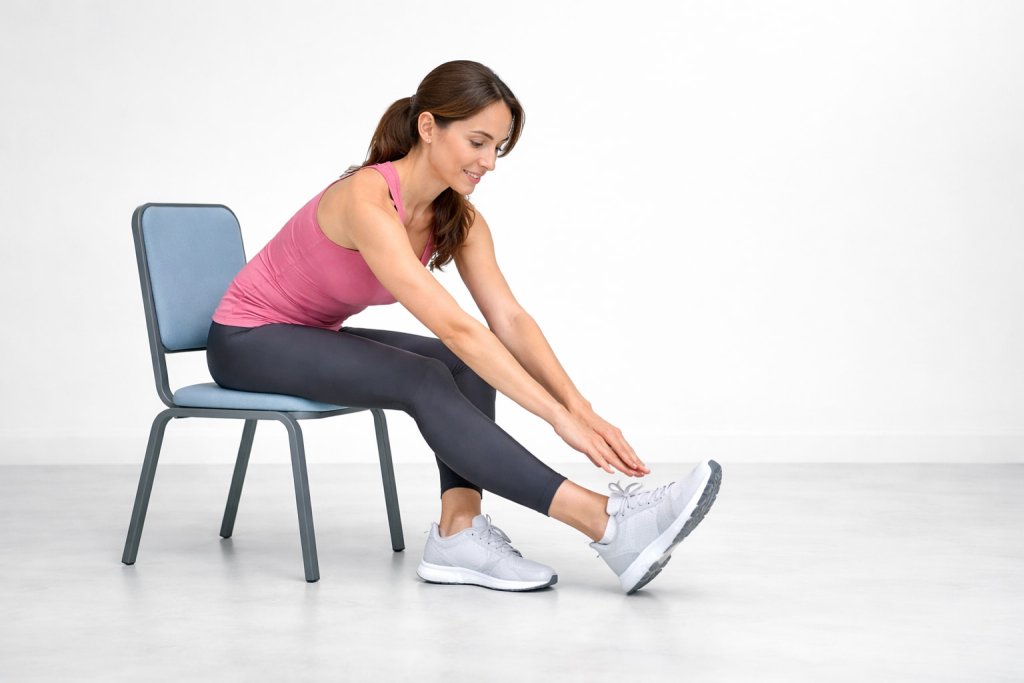
Chair stretches are especially useful for seniors, beginners, desk workers, and anyone who wants a lower-impact way to move more often. The best routine is simple: use a sturdy chair, move slowly, breathe normally, and stop if a stretch causes sharp or worsening pain.
What Are Chair Stretching Exercises?
Chair stretching exercises are seated flexibility movements done with the support of a stable chair. They are designed to help you gently move the neck, shoulders, chest, back, hips, legs, and ankles through comfortable ranges of motion.
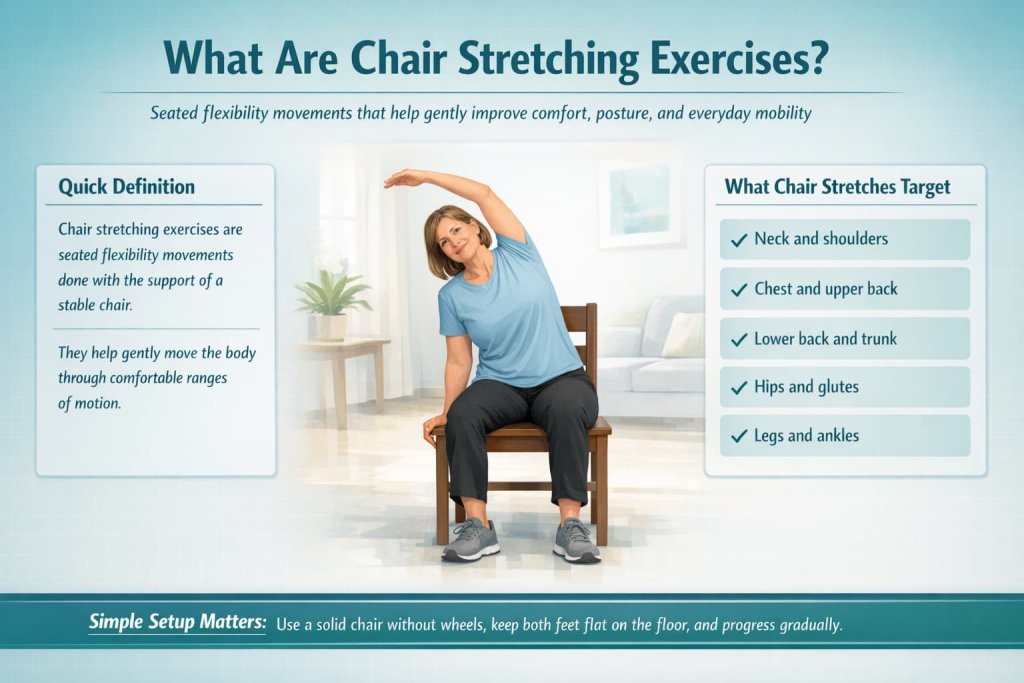
NHS sitting-exercise guidance specifically recommends a solid, stable chair without wheels, feet flat on the floor, and gradual progression over time.
Benefits of Chair Stretching Exercises
Chair stretching exercises are not just for taking it easy. They can be a practical way to stay mobile and active.
Regular chair stretching exercises may help you:
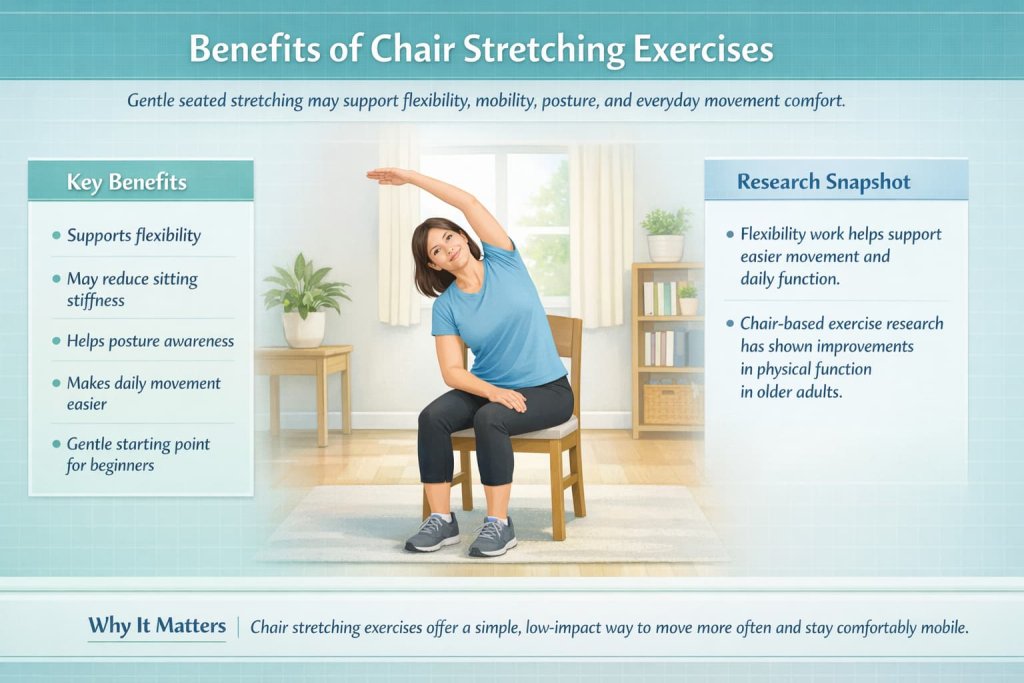
- improve flexibility and everyday range of motion
- reduce stiffness from prolonged sitting
- support posture and body awareness
- make daily movements feel easier
- provide a gentle starting point for older adults and beginners
The National Institute on Aging says stretching helps maintain and improve flexibility, while the American Heart Association notes that flexibility work can help the body move and bend more easily. A 2021 systematic review available through PMC also found that chair-based exercise programs improved upper- and lower-extremity function in older adults.
Before You Start Chair Stretching Exercises
A few setup details make chair stretching exercises safer and more effective.
Use these basics before you begin:
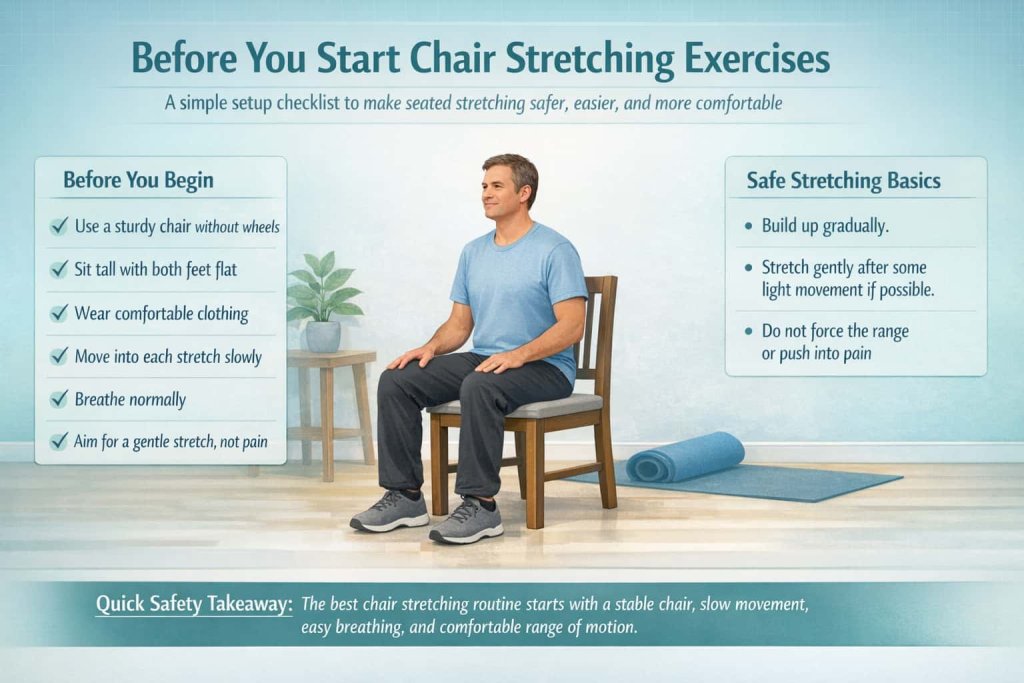
- choose a sturdy chair without wheels if possible
- sit tall with both feet flat on the floor
- wear comfortable clothing
- move into each stretch slowly
- breathe normally and avoid holding your breath
- aim for a gentle stretch, not pain
The NHS says to build up slowly, and the National Institute on Aging advises stretching when muscles are warmed up and not stretching so far that it hurts.
10 Best Chair Stretching Exercises
These 10 chair stretching exercises are simple, gentle, and beginner-friendly ways to reduce stiffness and move more comfortably. They can help support flexibility, posture, and everyday mobility with a stable chair and just a few minutes a day.
1. Seated Neck Rotation
How to do it:
- Sit upright near the front or middle of the chair.
- Keep your shoulders relaxed and facing forward.
- Slowly turn your head to the left until you feel a gentle stretch.
- Return to center.
- Slowly turn your head to the right.
- Repeat for controlled reps on both sides.
Why it works: This stretch helps gently loosen the neck after long periods of sitting, screen time, or poor desk posture. NHS-based seated exercise resources commonly include neck rotations as a simple seated mobility drill.
Muscles worked: Neck muscles, including the muscles that help rotate and support the head and upper cervical spine.
Trainer Tip: Keep the motion slow and small. Do not force the range or tilt your chin upward.
2. Seated Shoulder Rolls
How to do it:
- Sit tall with your arms relaxed by your sides.
- Lift your shoulders upward.
- Roll them back in a smooth circle.
- Lower them down.
- Repeat, then reverse direction if comfortable.
Why it works: Shoulder rolls are a simple way to break up stiffness in the upper traps and shoulders, especially after desk work. They also help restore gentle shoulder-blade movement. This is a practical seated mobility choice even when space is limited, and NHS sitting exercises include similar chair-based movement patterns.
Muscles worked: Upper trapezius, levator scapulae, deltoids, and muscles around the shoulder blades.
Trainer Tip: Make the circles smooth, not rushed. Think loosen, not shrug hard.
3. Seated Chest Stretch
How to do it:
- Sit upright in your chair.
- Reach your arms out to the sides or place your hands lightly behind you if comfortable.
- Gently open your chest and draw your shoulders back.
- Hold briefly, then relax.
- Repeat with easy, controlled reps.
Why it works: Sitting for long periods often leaves the chest feeling tight and the shoulders rounded forward. A seated chest stretch helps open the front of the upper body and can support better posture habits. North Bristol NHS Trust includes a seated chest stretch in chair-based routines.
Muscles worked: Pectorals, front shoulders, and tissues across the front of the chest.
Trainer Tip: Lift through the chest gently. Do not crank the low back into a hard arch.
4. Seated Upper-Body Twist
How to do it:
- Sit tall with your feet flat on the floor.
- Cross your arms over your chest or place your hands lightly on your shoulders.
- Keep your hips facing forward.
- Slowly rotate your upper body to one side.
- Return to center and repeat on the other side.
Why it works: This movement encourages gentle thoracic mobility, which can help counter stiffness from long sitting periods. Chair exercise materials from North Bristol NHS Trust commonly use seated twists to promote controlled trunk movement.
Muscles worked: Upper back muscles, obliques, and muscles that help rotate and stabilize the spine.
Trainer Tip: Rotate through your upper back, not by yanking with your arms.
5. Seated Side Bend
How to do it:
- Sit upright with both feet grounded.
- Let one hand rest on the chair.
- Reach the opposite arm up overhead.
- Gently lean to the side without collapsing forward.
- Return to center and switch sides.
Why it works: A seated side bend stretches the side body and can help relieve the compressed feeling many people get after prolonged sitting. It is also a practical way to add trunk mobility without needing to stand, and NHS flexibility guidance supports this kind of gentle side-bending mobility work.
Muscles worked: Obliques, lats, intercostal muscles, and tissues along the side of the trunk.
Trainer Tip: Think length first, then lean. Do not fold forward.
6. Seated Hamstring Stretch
How to do it:
- Sit near the front edge of the chair.
- Extend one leg out in front with the heel on the floor.
- Keep your back long and chest lifted.
- Hinge forward slightly from the hips until you feel a gentle stretch behind the thigh.
- Return slowly and switch sides.
Why it works: Hamstrings often feel tight after lots of sitting. A seated hamstring stretch is a simple way to improve comfort at the back of the thigh without getting on the floor. Mayo Clinic includes hamstring stretching as part of general flexibility work.
Muscles worked: Hamstrings and calf tissues depending on ankle position.
Trainer Tip: Hinge from the hips. Avoid rounding your whole back to reach farther.
7. Seated Figure-4 Stretch
How to do it:
- Sit tall with both feet on the floor.
- Cross one ankle over the opposite knee if comfortable.
- Keep your back straight.
- Lean forward slightly from the hips until you feel a gentle stretch in the hip or glute.
- Return and switch sides.
Why it works: This stretch targets the outer hip and glute area, which often gets stiff with long sitting. It can be especially useful for people who feel tightness in the hips after desk work or inactivity. Avera highlights the seated figure-4 stretch as a practical option for the hips and glutes.
Muscles worked: Glutes, deep hip rotators, and tissues around the outer hip.
Trainer Tip: If crossing the ankle over the knee feels too intense, keep the leg lower or skip this one.
8. Seated Knee-to-Chest Stretch
How to do it:
- Sit tall in the chair.
- Lift one knee toward your chest using your hands if needed.
- Keep your posture upright.
- Hold briefly in a comfortable position.
- Lower the leg and repeat on the other side.
Why it works: This chair stretch gently moves the hips and lower body through flexion and can help break up stiffness from inactivity. University Hospitals Sussex NHS Foundation Trust includes this pattern as a gentle lower-body mobility drill in seated exercise guidance.
Muscles worked: Hip flexors, glutes, and lower back tissues depending on posture and range.
Trainer Tip: Stay tall instead of curling deeply over the leg.
9. Seated Calf and Ankle Stretch
How to do it:
- Sit with one foot slightly in front of you.
- Straighten the leg as comfortable.
- Pull your toes gently toward you, then point them away.
- You can also make slow ankle circles.
- Repeat on both sides.
Why it works: Ankles and calves can become stiff when you sit for long periods. Gentle seated ankle motion helps maintain mobility and may make walking feel smoother. Oxford University Hospitals guidance includes ankle and lower-leg movement as part of chair-based mobility support.
Muscles worked: Calves, shin muscles, and small stabilizers around the ankle joint.
Trainer Tip: Keep the movement controlled. This is a mobility drill, not a speed exercise.
10. Seated Forward Reach
How to do it:
- Sit tall with your feet flat.
- Reach both hands forward.
- Gently round through the upper back only as comfortable, or hinge forward slightly depending on the version you prefer.
- Pause for a light stretch.
- Return slowly to upright.
Why it works: This stretch can help relieve tension through the upper back and shoulders after prolonged sitting. It also gives you a simple seated reset when you feel stiff and compressed. NHS flexibility exercises support gentle upper-back and trunk mobility work like this.
Muscles worked: Upper back, rear shoulders, and tissues around the shoulder blades.
Trainer Tip: Keep it gentle. This should feel like a light release, not a forced fold.
Who May Benefit Most From Chair Stretching Exercises?
Chair stretching exercises can be especially useful for:
- older adults
- people who sit for long periods
- beginners returning to exercise
- people who want low-impact movement breaks
- those who need a more supported alternative to standing stretches
This does not mean seated stretching is only for seniors. It can fit almost any routine as a warm-up, cooldown, or quick mobility break during the day. CDC activity guidance also makes it clear that adults and older adults benefit from regular movement, with stretching fitting best as part of a broader weekly routine that also includes aerobic, strength, and balance work.
How Often Should You Do Chair Stretching Exercises?
For most people, chair stretching exercises can be done several times per week, and short daily movement breaks may be helpful if you sit for long periods. The NHS suggests doing sitting exercises at least twice a week, and the American Heart Association notes that stretching two to three times weekly is encouraged, with daily stretching often even better for flexibility.
A practical routine looks like this:
- 5 to 10 minutes once or twice a day
- 1 to 2 sets of each stretch
- slow, comfortable breathing
- no bouncing or forcing
Common Mistakes to Avoid
Even gentle chair stretching exercises can become less helpful if done carelessly.
Avoid these common mistakes:
- using a rolling or unstable chair
- pushing into pain
- holding your breath
- bouncing during stretches
- rushing through the movements
- slumping heavily instead of sitting tall
Both the National Institute on Aging and the NHS emphasize slow, comfortable stretching and avoiding painful end ranges.
Who Should Be Careful Before Starting Chair Stretching Exercises?
Chair stretching exercises are usually low impact, but some people should get guidance first.
Use extra caution if you have:
- recent surgery
- severe joint pain
- a recent fall or major balance problem
- severe osteoporosis
- worsening back, hip, or neck pain
- numbness, tingling, or pain that shoots into the arm or leg
This is a conservative safety recommendation based on official exercise guidance from the National Institute on Aging, which encourages gradual progression, pain-free movement, and appropriate medical advice when symptoms are significant or unusual.
Do Chair Stretching Exercises Really Help With Stiffness?
Yes, they often can, especially when stiffness is linked to inactivity, desk time, reduced mobility, or mild postural tension. They are less likely to solve every problem on their own when pain is being driven by injury, nerve irritation, or a more complex medical issue. That is why the best use of chair stretching exercises is as part of a broader movement routine, not as a cure-all.
Frequently Asked Questions
Are chair stretching exercises good for seniors?
Yes. Chair stretching exercises are a practical option for many older adults because they are supported, low impact, and easy to modify. Research published in PMC found benefits for physical function in older adults using chair-based exercise programs.
Can I do chair stretching exercises every day?
Many people can. Daily gentle stretching may be appropriate, especially if you sit a lot, as long as the movements stay comfortable and do not worsen symptoms. The American Heart Association notes that daily stretching can be helpful for flexibility.
How long should I hold each chair stretch?
A brief comfortable hold is often enough for beginner chair routines. Exact hold time can vary by program, so focus first on smooth, controlled movement and a gentle stretch feeling rather than forcing a long hold. This is a practical coaching recommendation based on general flexibility guidance from the National Institute on Aging.
Are chair stretching exercises helpful for desk workers?
Yes. They can be a useful movement break for the neck, shoulders, chest, hips, and hamstrings, especially after long periods of sitting. The American Heart Association supports flexibility work as part of healthy movement habits.
Can chair stretching exercises improve posture?
They can support better posture by helping reduce stiffness in commonly tight areas like the chest, upper back, and hips. They work best when combined with regular movement and basic strengthening. The National Institute on Aging supports stretching as part of a broader healthy activity routine.
What kind of chair should I use?
Use a solid, stable chair without wheels when possible. Your feet should be able to rest flat on the floor, as recommended by the NHS.
When should I stop and get medical advice?
Stop and get medical advice if stretching causes sharp pain, worsening symptoms, dizziness, or pain that radiates into an arm or leg. The National Institute on Aging advises avoiding painful stretching and progressing gradually.
Conclusion
Chair stretching exercises are one of the simplest ways to add gentle movement to your day. They can help relieve stiffness, support mobility, and make daily movement feel easier without needing much space or equipment. Start with a few easy stretches, stay consistent, and keep every rep slow and comfortable. If you are creating a daily routine, chair stretching exercises are a practical place to begin.