
Hip flexor exercises help strengthen and mobilize the muscles that lift your knees, stabilize your pelvis, and support smooth walking, running, and daily movement. These include the iliopsoas, rectus femoris, sartorius, and deep stabilizers around the hip.
Keeping hip flexors strong and mobile is important because tight or weak hip flexors may contribute to movement restrictions, poor posture, and increased strain on surrounding muscles. Strengthening and stretching this area may support better hip mobility, reduce stiffness, and improve functional performance.
Why Hip Flexor Exercises Matter
Recent research highlights the importance of hip flexor strength and mobility:
- Hip strengthening, when combined with core and glute work, may reduce low-back discomfort and improve function.
- EMG mapping studies show how different hip flexor exercises produce varying activation levels, helping develop targeted progressions.
- Hip flexor stretching can improve hip extension range of motion, supporting posture and performance.
- Combining hip flexor flexibility and strengthening may help improve gait, mobility, and daily movement.
These exercises are not medical treatment but may support hip function, mobility, and comfort when performed consistently.
12 Best Hip Flexor Exercises for Strength & Mobility
Strengthen and mobilize the muscles that lift your knees, stabilize your pelvis, and support smooth, efficient movement. These hip flexor exercises improve control, flexibility, and lower-body function using simple, safe, and beginner-friendly techniques.
1. Standing High-Knee March
Why it works:
This exercise strengthens the hip flexors while improving balance, pelvic stability, and core control. It mimics functional movement patterns like walking and climbing stairs.
How to do it:
- Stand tall with your feet hip-width apart.
- Brace your core and lift one knee toward hip height.
- Lower slowly with control.
- Alternate legs in a slow, marching rhythm.
Trainer Tip:
Keep your torso tall and avoid leaning backward to ensure the hip flexors do the work, not momentum.
2. Supine March
Why it works:
Supine marching builds deep hip flexor activation while protecting the lower back. It reinforces pelvic stability and teaches proper core engagement.
How to do it:
- Lie on your back with knees bent.
- Brace your core and keep your pelvis level.
- Lift one foot a few inches, lower slowly, and switch sides.
- Maintain a quiet, controlled trunk throughout.
Trainer Tip:
If your pelvis rocks, reduce the height of the lift for cleaner movement.
3. Straight-Leg Raise
Why it works:
This move isolates the hip flexors and strengthens them under a long lever, building foundational strength for walking, running, and stair climbing.
How to do it:
- Lie on your back with one knee bent, one leg straight.
- Tighten your core and lift the straight leg to about 45 degrees.
- Pause, then lower slowly without letting it drop.
Trainer Tip:
Press your lower back gently into the floor to prevent arching during the lift.
4. Seated Hip Flexor Lift
Why it works:
A low-impact strengthening exercise ideal for beginners or anyone with limited mobility. It improves knee lift strength used in gait and balance.
How to do it:
- Sit tall on a sturdy chair.
- Lift one knee upward without leaning back.
- Hold briefly, lower, and switch sides.
Trainer Tip:
Sit forward on the chair edge to maximize hip flexor engagement.
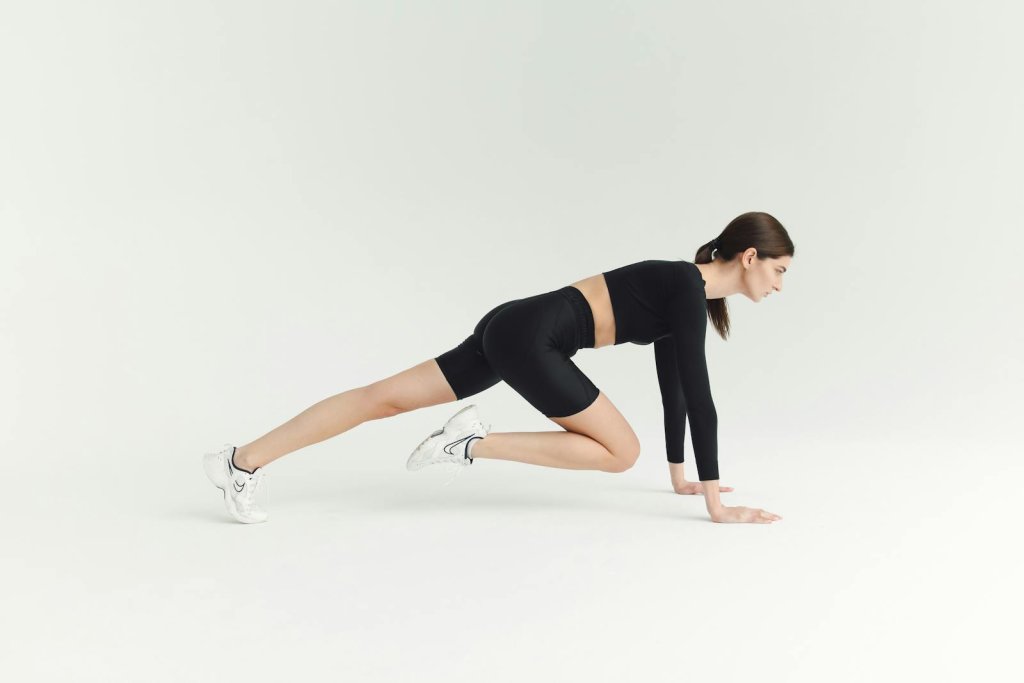
5. Mountain Climber (Slow Control)
Why it works:
Slow mountain climbers teach controlled hip flexion while strengthening the core, shoulders, and pelvic stabilizers.
How to do it:
- Start in a plank position.
- Bring one knee toward your chest with slow control.
- Pause, return to plank, and switch legs.
Trainer Tip:
Move slowly; speed reduces hip flexor activation and turns the exercise into a cardio drill.
6. Bridge With March
Why it works:
Combines hip flexor activation with glute strengthening, improving pelvic stability during leg lifting and walking.
How to do it:
- Lie on your back with knees bent.
- Lift your hips into a bridge position.
- Lift one knee toward your chest without dropping your pelvis.
- Alternate sides.
Trainer Tip:
If your hips drop, reduce the knee-lift height or practice a standard bridge first.
7. Bulgarian Split Squat
Why it works:
This single-leg move strengthens the hip flexors of the back leg while targeting major lower-body muscles. It enhances balance and hip stability.
How to do it:
- Place your back foot on a bench or step.
- Lower into a lunge on the front leg.
- Keep hips level and torso tall.
- Push through the front foot to rise back up.
Trainer Tip:
Slightly lean forward from the hips to reduce strain on the lower back.
8. Walking Lunge
Why it works:
Promotes dynamic hip mobility and strengthens the hip flexors through controlled extension, supporting stride efficiency.
How to do it:
- Step forward into a lunge.
- Push off and step forward with the opposite leg.
- Continue walking while maintaining upright posture.
Trainer Tip:
Take medium-length steps to avoid overstretching the hip flexors.
9. Dynamic Leg Swings
Why it works:
Warms up the hip flexors and prepares them for more demanding movements. Improves fluidity and range of motion.
How to do it:
- Hold onto a wall for balance.
- Swing one leg forward and backward in a controlled motion.
- Keep your spine tall and avoid twisting your hips.
Trainer Tip:
Start with small swings and gradually increase the range.
10. Half-Kneeling Hip Flexor Stretch
Why it works:
Lengthens tight hip flexors and helps restore hip extension—important for posture and walking mechanics.
How to do it:
- Kneel with one foot forward.
- Gently shift forward while keeping your core tight.
- Hold the stretch without arching your lower back.
Trainer Tip:
Tuck your pelvis slightly (posterior tilt) to deepen the stretch safely.
11. Couch Stretch
Why it works:
Provides a deeper hip flexor stretch, especially for those with very tight quads and hip flexors from sitting.
How to do it:
- Place your back foot on a wall or couch.
- Kneel with your other leg forward.
- Slowly lift your torso upright until you feel a stretch.
Trainer Tip:
Don’t force your chest upright; go only as far as you can while keeping your ribs down.
12. Knee-to-Chest Stretch (Supine)
Why it works:
Gently stretches the lower back and hip region, supporting mobility and reducing stiffness.
How to do it:
- Lie on your back.
- Pull one knee toward your chest.
- Hold comfortably, then switch sides.
Trainer Tip:
Keep the opposite leg straight to increase stretch intensity, or bend it for lower-back comfort.
How Often Should You Do Hip Flexor Exercises?
Follow general ACSM-style resistance and flexibility guidelines:
Strength Training
- 2–3 days per week
- 1–3 sets per exercise
- 8–12 reps for strength
- 12–15 reps for endurance or lighter band work
- 24–48 hours of rest between strength sessions
These recommendations align with ACSM’s general resistance training framework for adults.
Stretching & Mobility
- 2–3 days/week minimum
- Daily stretching is most effective for improving hip extension
- Hold each stretch 15–60 seconds, repeat 2–4 times
- Aim for 60 seconds total time per side
Supported by ACSM-aligned flexibility guidelines and hip flexibility research.
Who Should Be Careful With Hip Flexor Exercises?
Most people can perform hip flexor exercises safely, but some should use extra caution to avoid irritation or flare-ups. Stop any movement that causes sharp, sudden, or worsening pain.
Use caution if you have:
- Recent hip surgery or hip replacement — follow your surgeon or PT’s guidelines.
- Sharp hip, groin, or lower-back pain — avoid deep flexion or stretching until evaluated.
- Hip impingement (FAI) or labral tears — deep hip flexion may aggravate symptoms.
- Nerve irritation (femoral nerve tension) — avoid long, deep stretches.
- Lower-back conditions triggered by hip flexion — start with core-stability movements.
- Balance limitations — use a wall/chair for support or choose seated variations.
- Long periods of inactivity (especially older adults) — begin with gentle, low-range exercises.
Safety Tips
- Move slowly and avoid forcing any stretch.
- Stop if you experience sharp or sudden pain.
- Individuals with recent hip surgery or acute injury should consult a physical therapist.
- For persistent hip or low-back discomfort, professional evaluation is recommended.
Frequently Asked Questions (FAQ)
1. Are hip flexor exercises good for lower back pain?
They may help support hip mobility and reduce strain on surrounding muscles, but they are not a treatment for back pain.
2. Can I train hip flexors every day?
Strengthening should be done 2–3 days/week, but gentle stretching can be done daily.
3. What causes tight hip flexors?
Prolonged sitting, lack of movement, and muscle imbalances may contribute.
4. How long does it take to improve hip mobility?
Many people notice changes in 4–8 weeks with consistent stretching and strengthening.
5. Should beginners start with stretching or strengthening?
Start with gentle mobility first, then add strengthening 2–3 days per week.
6. Can hip flexor exercises improve posture?
They may support better hip extension and pelvic control, which affects posture.
7. Do hip flexor exercises help runners?
Yes—strong hip flexors support stride efficiency, knee lift, and running mechanics.
Conclusion
Strengthening and mobilizing your hip flexors is a simple, effective way to support smoother movement, better posture, and improved lower-body function. When combined with core and glute training, hip flexor exercises may help enhance stability, walking mechanics, and overall comfort during daily activities.
Start with gentle, controlled movements, focus on proper form, and progress gradually based on your comfort level. Consistency is key—performing these exercises regularly can create meaningful improvements in strength and mobility over time.
References
- Hip Strengthening & Low Back Pain (Systematic Review)
Ceballos-Laita L, et al. The effectiveness of hip interventions in patients with low-back pain: a systematic review and meta-analysis. - Hip Flexor Muscle Activation in Common Exercises
Juan J, et al. Hip Flexor Muscle Activation During Common Rehabilitation and Strengthening Exercises: A Systematic Review. - Hip Flexor Stretching & Performance (Systematic Review + Meta-analysis)
Konrad A, et al. The Influence of Stretching the Hip Flexor Muscles on Performance Parameters: A Systematic Review with Meta-Analysis. - Supervised Hip Flexor Stretching & Gait in Older Adults
Watt JR, et al. Effect of a supervised hip flexor stretching program on gait in elderly adults. - Hip Flexor Stretching & Glute Function
Ehresman BA, et al. Improved Hip Flexibility and Gluteal Function Following a Daily Lunge-and-Reach Stretching Intervention. - Current Concepts in Muscle Stretching (General Guidelines)
Page P. Current concepts in muscle stretching for exercise and rehabilitation. - Static vs Dynamic Stretching & Performance
Behm DG, Chaouachi A. A review of the acute effects of static and dynamic stretching on performance. - Practical Flexibility Guidance for Adults
Harvard Health Publishing. The ideal stretching routine.