
Coordination exercises improve how well your brain and muscles work together, which can quickly boost balance, agility, and overall body control when practiced consistently. They matter because better coordination can make daily movements (walking, stairs, quick direction changes) feel steadier and more confident—and they’re also a key part of balance-focused activity recommendations in major health guidelines like the CDC Physical Activity Guidelines for Older Adults.
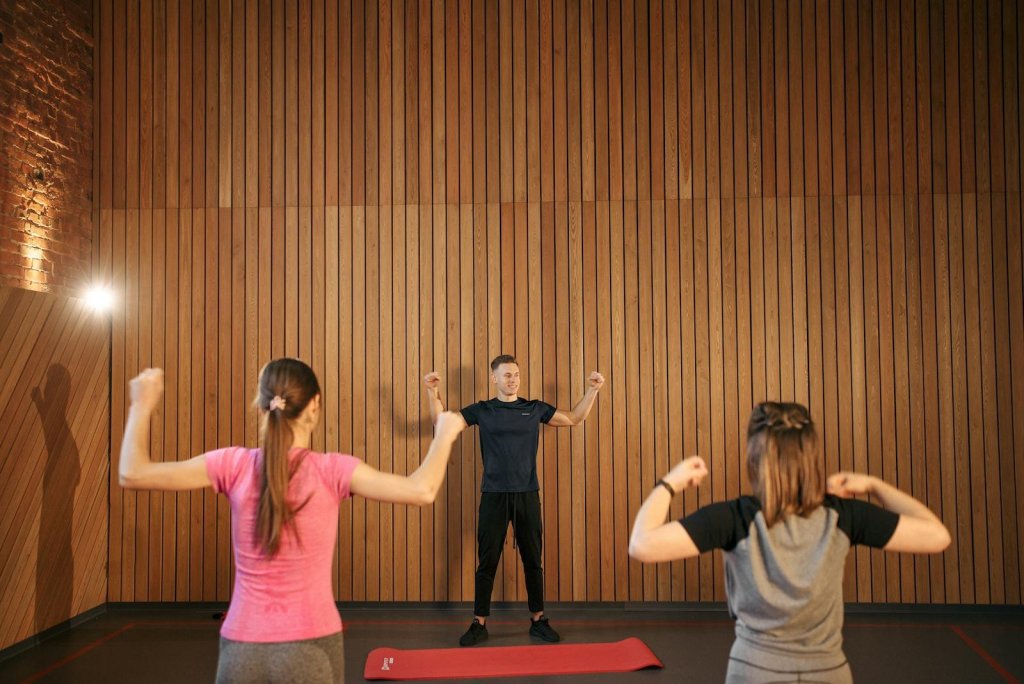
In this guide, you’ll learn what coordination exercises are, how to do them safely, and a practical list of 11 drills you can use at home (with beginner-friendly options and progressions).
What Are Coordination Exercises
Coordination exercises are movement drills that train timing, rhythm, accuracy, and body awareness (often called proprioception). Instead of only building strength, they teach your nervous system to:
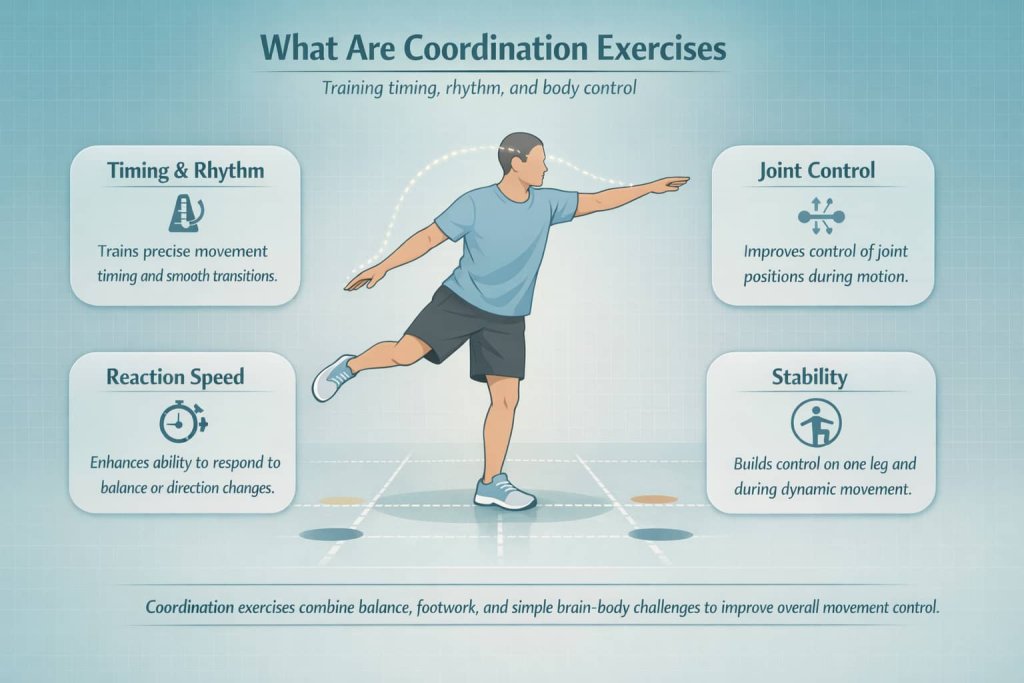
- Control joint positions while moving
- Switch directions smoothly
- React faster to changes (speed, cues, balance shifts)
- Stay stable on one leg or on the move
They often combine balance, footwork, and simple “brain + body” challenges (like counting, clapping patterns, or catching and tossing).
Benefits of Coordination Exercises for Balance and Agility
Coordination training may help you:
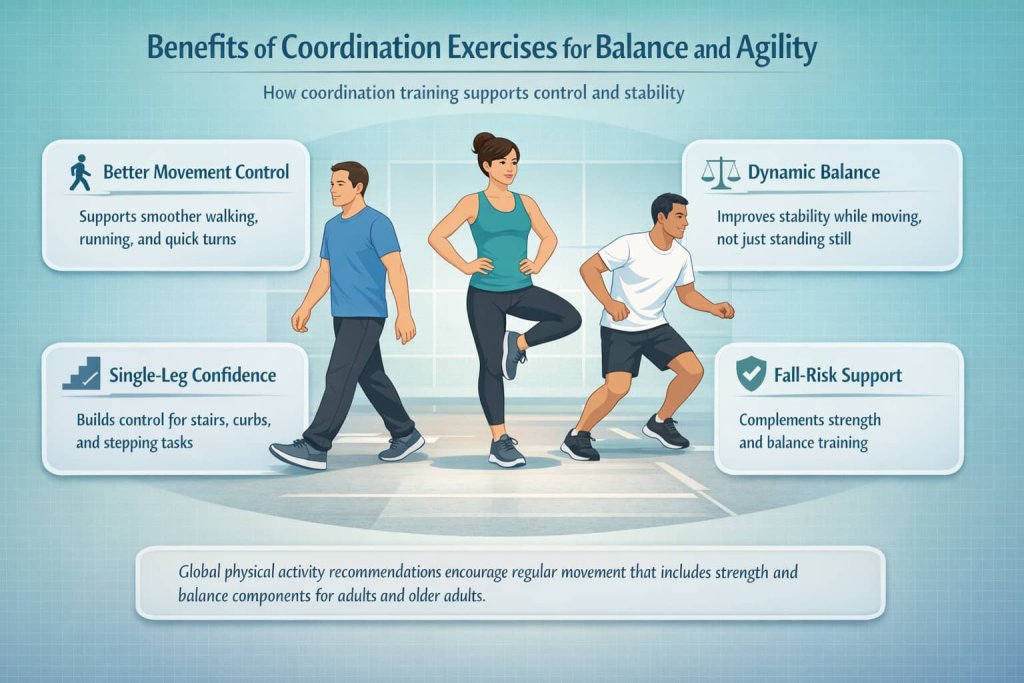
- Move with better control during walking, running, sports, and quick turns
- Improve dynamic balance (staying steady while moving)
- Build confidence with single-leg tasks (stairs, curbs, stepping over objects)
- Support fall-risk reduction when combined with strength and balance work, which is emphasized in older-adult physical activity guidance and fall-prevention resources from the CDC
Global movement recommendations from the World Health Organization also emphasize regular physical activity that includes strength and balance-focused components for adults and older adults.
11 Best Coordination Exercises
Improve balance, agility, and body control with these 11 coordination exercises designed to train your brain and muscles to work together more efficiently. Each move builds timing, stability, and reaction skills to help you move smoother and more confidently in daily life or sports.
1) March and Opposite Arm Swing
How to do it:
- Stand tall and brace your core gently.
- March in place, lifting one knee to hip height (or lower if needed).
- Swing the opposite arm forward like a natural walk.
- Keep the movement smooth and steady for 30–60 seconds.
- Rest, then repeat 2–3 rounds.
Why it works: Cross-body marching builds rhythm and trains left-right timing, which carries over to walking and running mechanics by reinforcing natural gait patterns.
Muscles worked: Hip flexors, glutes, calves, core stabilizers, and upper back/shoulders all contribute to maintaining posture and coordinated limb movement.
Trainer Tip: Add a light tempo (count 1–2–1–2) before increasing speed to keep the pattern controlled.
2) Heel-to-Toe Walk (Tandem Walk)
How to do it:
- Stand near a wall or counter for safety.
- Walk forward placing your heel directly in front of the opposite toes.
- Take 8–12 slow, controlled steps.
- Turn carefully and repeat for 2–3 passes.
Why it works: A narrow base of support challenges balance and forces your body to control side-to-side sway with precision.
Muscles worked: Ankles and foot stabilizers, glutes, and deep core muscles work together to maintain alignment.
Trainer Tip: Once stable, keep your eyes forward instead of looking down to further challenge balance.
3) Single-Leg Balance With Reach
How to do it:
- Stand on one leg near a support surface.
- Lightly brace your core and keep your chest tall.
- Reach one hand forward, then to the side, then across your body.
- Perform 5–8 controlled reaches in each direction per leg.
Why it works: Reaching while balancing trains real-life stability and improves your ability to control shifting body weight.
Muscles worked: Glute medius, glutes, ankle stabilizers, and core muscles maintain single-leg control.
Trainer Tip: If you lose balance, reset your posture before continuing instead of rushing through reps.
4) Clock Taps (Foot Placement Drill)
How to do it:
- Imagine a clock on the floor around your standing foot.
- Balance on one leg and lightly tap the other foot to 12, 3, 6, and 9 o’clock.
- Keep taps light with minimal weight transfer.
- Complete 2 rounds per leg.
Why it works: Clock taps improve directional control and teach precise stepping patterns.
Muscles worked: Hips, quads, hamstrings, calves, and core muscles coordinate to stabilize and move efficiently.
Trainer Tip: Progress by adding diagonal positions like 1, 5, 7, and 11 o’clock.
5) Lateral Step-Over (Line or Towel)
How to do it:
- Place a towel or tape line on the floor.
- Step sideways over the line, then step back.
- Maintain level hips and controlled foot placement.
- Perform 20–40 total steps.
Why it works: Side-to-side movement enhances hip stability and improves change-of-direction coordination.
Muscles worked: Glute medius, glutes, quads, and calves stabilize and propel lateral movement.
Trainer Tip: Think “quick and quiet” to encourage light, controlled steps.
6) Grapevine (Carioca) Step
How to do it:
- Step to the side.
- Cross the trailing foot behind your lead foot.
- Step to the side again.
- Cross the trailing foot in front.
- Continue for 10–20 feet and repeat 2–3 times.
Why it works: Crossing patterns challenge coordination, timing, and trunk control through rotational movement.
Muscles worked: Hips, glutes, calves, and core muscles assist with lateral and rotational stability.
Trainer Tip: Keep your shoulders facing forward to isolate coordination in the hips and legs.
7) Quick Feet In-and-Out (Tape Boxes)
How to do it:
- Create a small box with tape or use a floor tile as a guide.
- Step both feet into the box quickly.
- Step both feet out quickly.
- Continue for 15–25 seconds.
- Repeat for 3–5 rounds.
Why it works: Rapid foot placement improves agility mechanics and reactive coordination.
Muscles worked: Calves, quads, glutes, and core muscles contribute to quick stabilization and repositioning.
Trainer Tip: Focus on clean foot placement before increasing speed.
8) Forward-Backward Line Hops
How to do it:
- Stand with feet together over a line.
- Hop forward softly, then backward over the line.
- Keep movements small and controlled.
- Continue for 10–20 seconds and complete 3–4 rounds.
Why it works: Small hops train elastic coordination and quick stabilization upon landing.
Muscles worked: Calves, ankle stabilizers, quads, and glutes absorb and control impact.
Trainer Tip: If needed, replace hops with fast step taps for a lower-impact option.
9) Single-Leg Catch and Toss
How to do it:
- Stand on one leg near a wall.
- Toss a small ball against the wall.
- Catch the ball while maintaining balance.
- Perform 10–20 catches per leg.
Why it works: Combining upper-body reaction with lower-body balance improves whole-body coordination.
Muscles worked: Glutes, ankle stabilizers, core, and shoulder muscles coordinate to maintain control.
Trainer Tip: Toss slightly to the side to increase difficulty gradually.
10) Reaction Drop Catch
How to do it:
- Have a partner drop a ball and catch it after one bounce, or bounce it yourself and catch it.
- Perform 6–12 repetitions.
- Complete 2–3 rounds.
Why it works: Reaction timing and hand-eye coordination improve responsiveness and movement readiness.
Muscles worked: Forearms, shoulders, core, and lower-body stabilizers assist with quick adjustments.
Trainer Tip: Move your feet to adjust instead of bending excessively at the waist.
11) Tai Chi Weight Shifts
How to do it:
- Stand with feet shoulder-width apart.
- Slowly shift weight to one foot while keeping your torso upright.
- Return to center.
- Shift to the opposite side.
- Continue for 60–90 seconds.
Why it works: Slow, controlled weight shifts improve balance and body awareness. A 2023 systematic review available through PubMed Central reports that Tai Chi practice may support balance improvement and fall prevention in older adults.
Muscles worked: Glutes, hips, ankles, and deep core stabilizers control gradual weight transfer.
Trainer Tip: Move slower than you think to maximize balance control and coordination benefits.
How to Program Coordination Exercises for Faster Results
Consistency beats intensity for coordination because it’s a skill.
- Frequency: 3–5 days per week works well for most people.
- Duration: 8–15 minutes is enough if you stay focused.
- Order: Do coordination after a warm-up, before heavy strength work.
- Progression: Add one challenge at a time (speed, smaller base of support, reaction cue, eyes tracking, or a simple cognitive task).
For older adults, balance-focused activity is specifically encouraged alongside aerobic and strengthening work in public-health guidance from the CDC.
Sample Weekly Coordination Plan
Keep sessions short (10–15 minutes) and focus on clean movement first.
3 Days Per Week (Balance + Control)
- March and Opposite Arm Swing – 2 rounds (45 seconds)
- Heel-to-Toe Walk – 2 passes
- Clock Taps – 2 rounds per leg
- Tai Chi Weight Shifts – 60 seconds
1–2 Optional Agility Days
- Grapevine Step – 2–3 trips
- Quick Feet In-and-Out – 3 rounds (20 seconds)
- Forward-Backward Line Hops (or step taps) – 3 rounds
- Reaction Drop Catch – 2 rounds
Simple Progression
- Week 1: Focus on smooth control.
- Week 2: Add 5–10 seconds per drill.
- Week 3+: Increase speed or complexity gradually.
Regular weekly movement that includes strength and balance components is supported by recommendations from the World Health Organization, and coordination training fits naturally into those goals.
Safety Guidelines Before You Start
Use these simple checks to keep coordination training safe and effective:
- Choose a clear, non-slip space (no rugs, cords, clutter).
- Start near a wall, counter, or sturdy chair for support.
- Wear stable shoes (or go barefoot if you’re on a safe surface and it feels better).
- Keep reps clean and controlled before adding speed.
- Stop if you feel sharp pain, dizziness, or numbness.
Who Should Do Coordination Exercises?
Coordination exercises are suitable for most adults because they improve balance, reaction time, and overall movement control. They are especially helpful for:
- Older adults looking to maintain balance and reduce fall risk, as balance-focused activity is recommended in the CDC Physical Activity Guidelines for Older Adults.
- Athletes who need quicker direction changes and better agility.
- Beginners building foundational movement control before heavier training.
- Desk workers wanting to improve posture and stepping mechanics after long sitting.
- Adults returning to exercise who need gradual, low-impact movement practice.
If you have recent falls, dizziness, surgery, or neurological conditions, consult a healthcare professional before starting.
Common Mistakes
- Moving too fast before patterns feel smooth
- Looking down constantly
- Taking overly large steps
- Skipping strength training entirely
When to Seek Professional Guidance
Consult a qualified healthcare provider or movement specialist if you have recent falls, major balance changes, dizziness, numbness, or a recent surgery affecting mobility. Balance-focused activity is commonly encouraged for older adults in public-health recommendations from the CDC, but your plan should match your individual needs.
FAQs
How often should I do coordination exercises?
3–5 times per week works well because coordination improves with consistent practice.
Can coordination exercises improve balance quickly?
Many people notice improvements within weeks when practicing consistently and progressively.
Are they safe for older adults?
Yes, especially when started slowly and progressed gradually. Balance training is part of adult activity guidance from the World Health Organization.
Do I need equipment?
No. Most drills use bodyweight and simple household items.
What if I have joint sensitivity?
Use low-impact options, reduce speed, and prioritize control.
Conclusion
Coordination exercises are a practical way to improve balance, agility, and body control at home. Start with simple patterns, practice regularly, and build complexity gradually. Small, consistent sessions can make everyday movement feel smoother and more confident.
References
- Physical Activity Guidelines for Americans, 2nd edition (Health.gov PDF)
- WHO 2020 Guidelines Summary Article (PubMed Central)
- Tai Chi for Fall Prevention and Balance Improvement in Older Adults (Systematic Review, 2023, PubMed Central)
- Effects of Speed, Agility, and Quickness Training on Athletic Performance (Systematic Review, 2025, PubMed Central)
- British Journal of Sports Medicine: WHO 2020 Physical Activity Guidelines Article