
If you’re looking for the most effective confidence building exercises, here’s the short answer: confidence grows through consistent, small actions that strengthen your mindset, challenge fear safely, and reinforce your strengths. These exercises help you develop practical skills, reframe self-doubt, and build real inner trust—not just temporary motivation.
Understanding confidence matters because it influences your decisions, relationships, performance, and overall life satisfaction. The right daily practices may help you think more clearly, act more boldly, and respond to challenges with greater resilience. In this guide, you’ll find 25 research-supported confidence-building exercises, grouped into mindset work, behavior practice, journaling, social confidence skills, and self-compassion strategies.
What Are Confidence-Building Exercises?
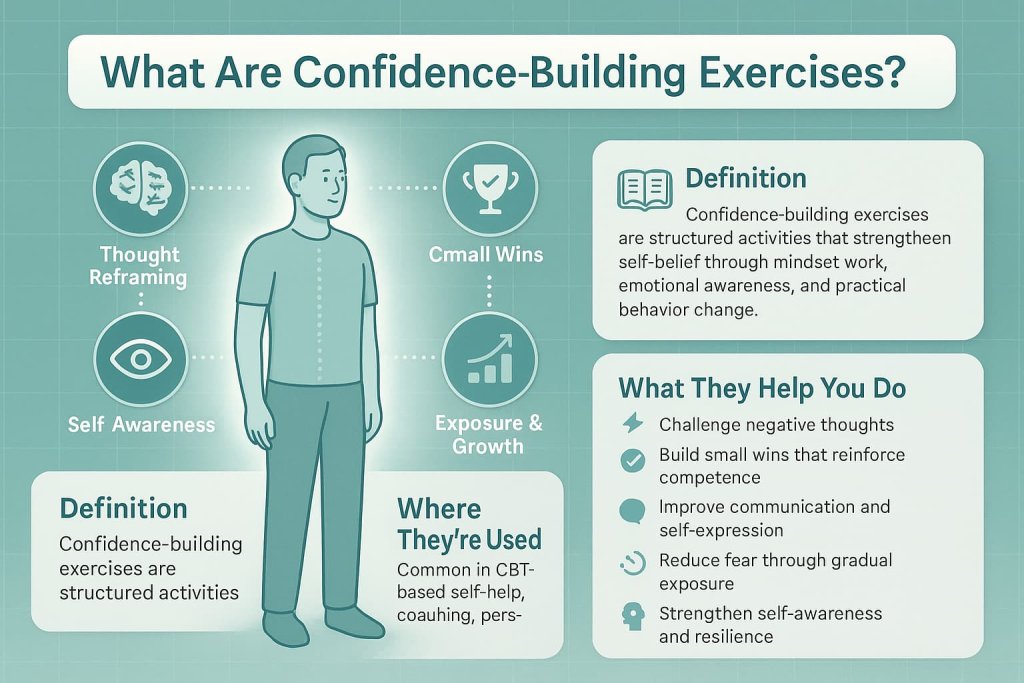
Confidence-building exercises are structured activities designed to help you strengthen self-belief through mindset shifts, emotional awareness, and practical behavioral change. These exercises may help you:
- Challenge negative thoughts
- Build small wins that reinforce competence
- Improve communication and self-expression
- Reduce fear through gradual exposure
- Strengthen self-awareness and resilience
They are widely used in CBT-based self-help programs, personal growth practices, coaching, and mental wellness routines.
The Science Behind Confidence (Short & Clear)

Research shows that confidence grows from three major factors:
- Self-efficacy — belief in your ability to handle tasks (Bandura’s research).
- Cognitive reframing — changing unhelpful thoughts into balanced ones (CBT-based techniques).
- Behavioral activation — taking small, meaningful actions that build proof of capability.
These principles guide all the exercises below.
25 Best Confidence-Building Exercises
These confidence-building exercises are simple, practical, and designed to help you strengthen your mindset one step at a time. Each activity focuses on small, achievable actions that gradually reshape how you think, feel, and respond to challenges.
1. Catch–Challenge–Change Thought Exercise
Why it works:
This CBT-based exercise helps you interrupt automatic negative thoughts and replace them with more balanced, realistic statements. Over time, it may reduce self-doubt and build clearer thinking.
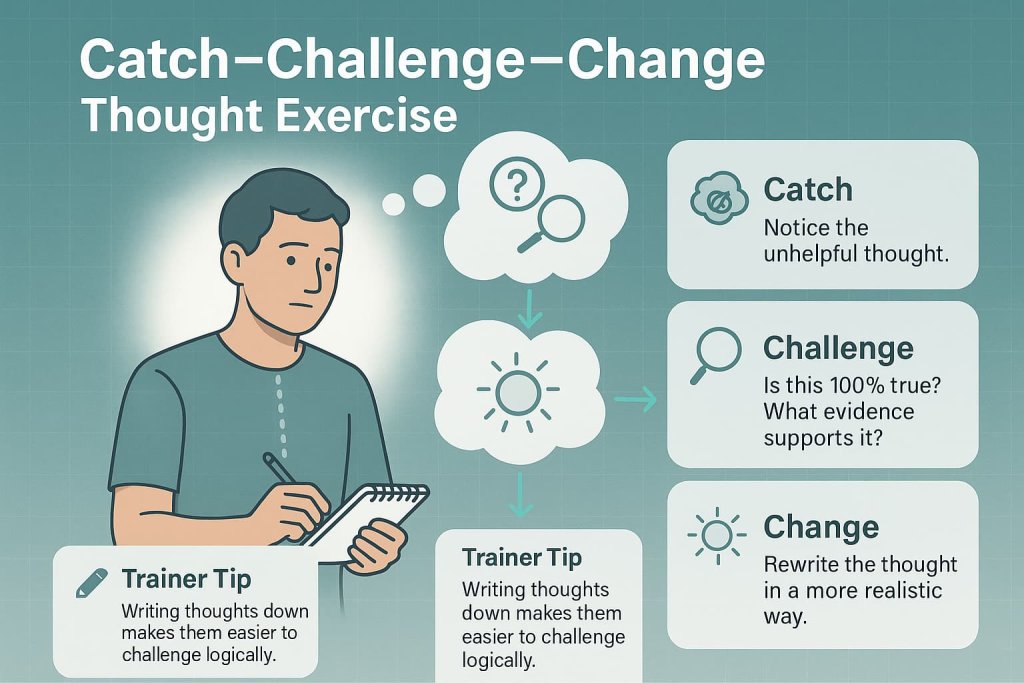
How to do it:
- Catch the negative thought (e.g., “I always fail”).
- Challenge it by asking: “Is this 100% true?”
- Change it to a more balanced version: “I’ve succeeded in many situations before.”
Tip:
Write the thought down. Seeing it on paper makes it easier to challenge logically.
2. Evidence-For / Evidence-Against Worksheet
Why it works:
This reduces exaggerated thinking by forcing your brain to look at facts instead of assumptions, helping build rational confidence.
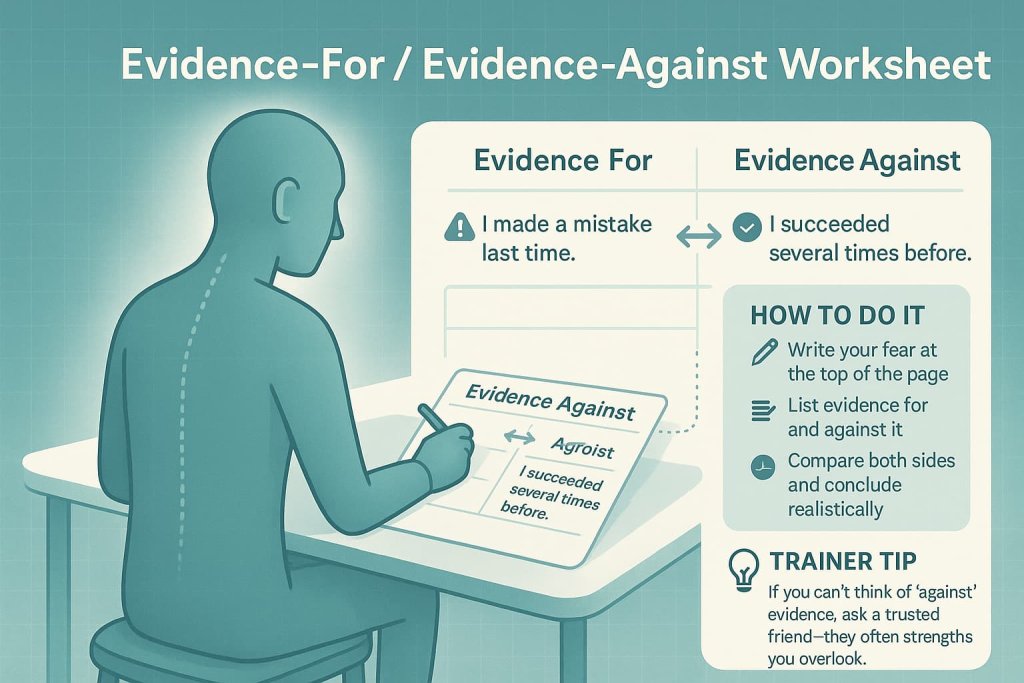
How to do it:
- Write your fear or doubt at the top of a page.
- List evidence for and against it.
- Compare both sides and form a more realistic conclusion.
Tip:
If you struggle to find “against” evidence, ask a trusted friend—they often see strengths you miss.
3. Daily “Small Brave Action”
Why it works:
Confidence grows through small successes. Micro-actions build the belief: “I can do hard things.”
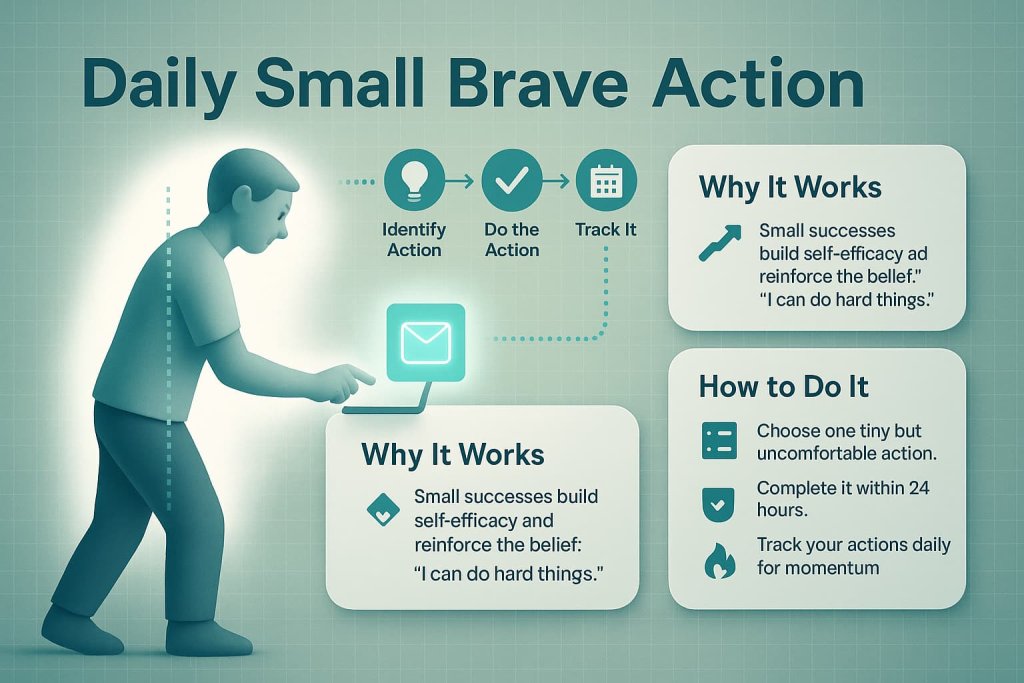
How to do it:
- Pick one tiny but uncomfortable action (email, question, request).
- Complete it within 24 hours.
- Track your actions daily.
Tip:
Start with the smallest step possible—momentum matters more than intensity.
4. Strengths Inventory List
Why it works:
Being aware of your strengths helps reduce self-doubt and improves decision-making.
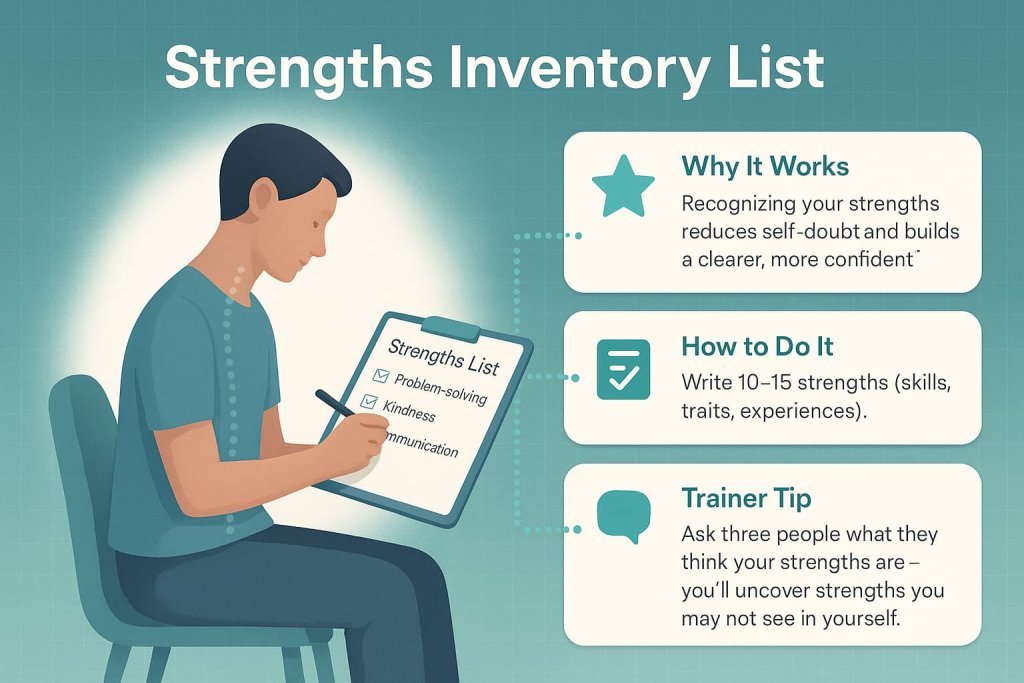
How to do it:
- Write 10–15 strengths (skills, traits, experiences).
- Keep the list visible and review it before challenges.
Tip:
Ask three people what they think your strengths are. You’ll discover strengths you didn’t realize you had.
5. Posture & Eye Contact Drill
Why it works:
Body language influences self-perception and how others respond to you. Small posture shifts may increase confidence.
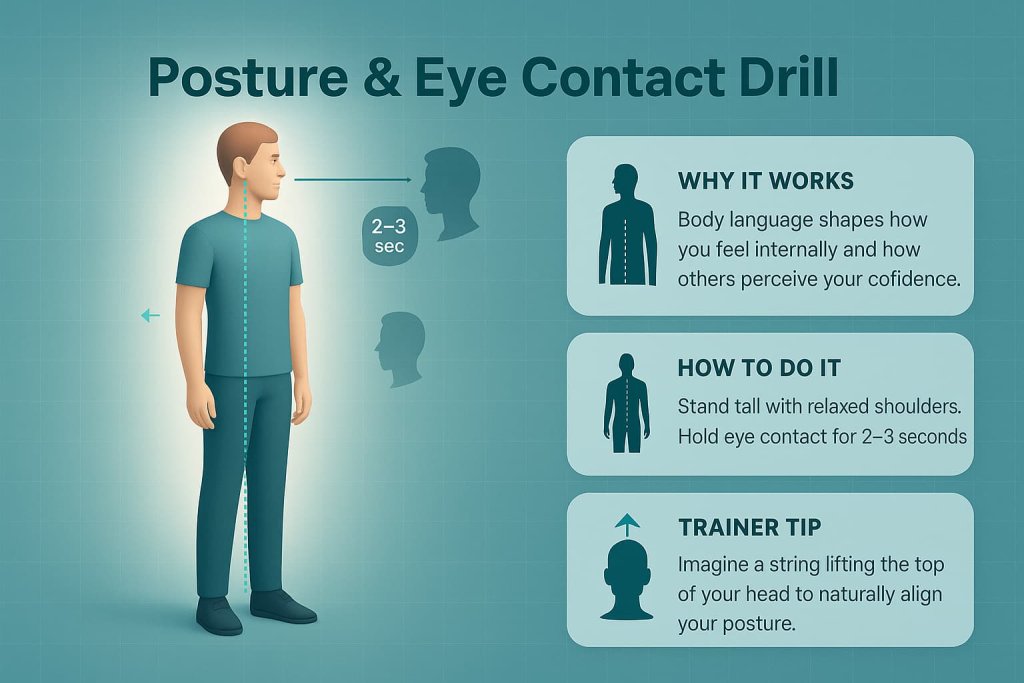
How to do it:
- Stand tall with relaxed shoulders.
- Hold eye contact for 2–3 seconds in conversations.
- Practice in short sessions throughout the day.
Tip:
Pretend a string is lifting the top of your head—this naturally aligns your posture.
6. Power Questions Reframe
Why it works:
Shifts your mind from anxiety-focused thinking to problem-solving, building mental clarity.
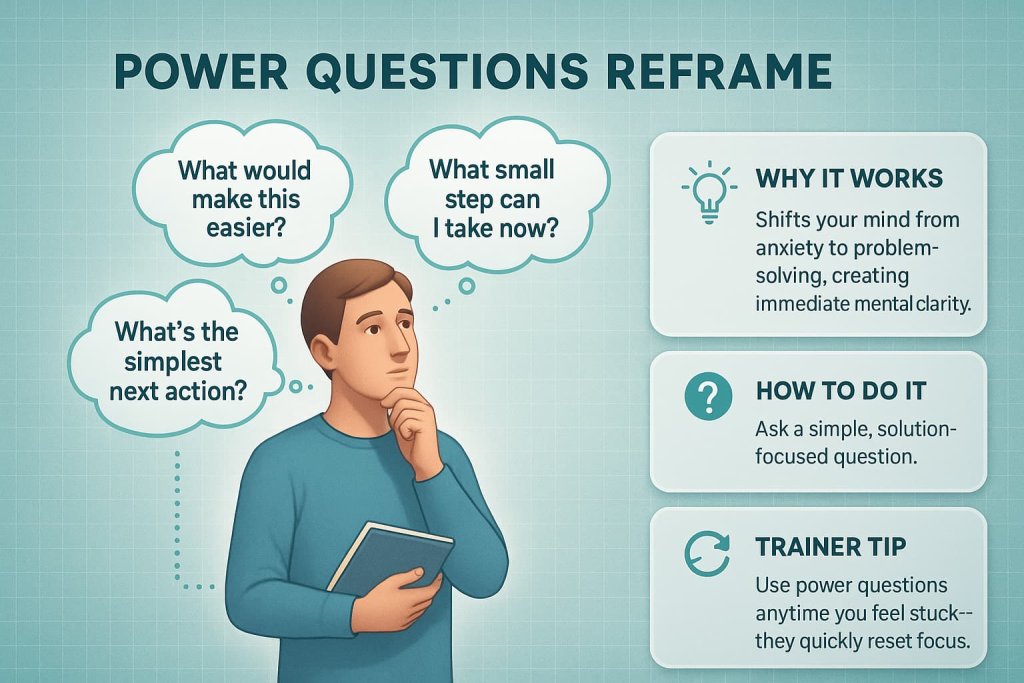
How to do it:
Ask questions like:
- “What would make this easier?”
- “What small step can I take now?”
Tip:
Use these questions anytime you feel stuck to quickly reset your focus.
7. Social Confidence Ladder
Why it works:
Gradual exposure helps reduce social fear and builds confidence through repeated wins.
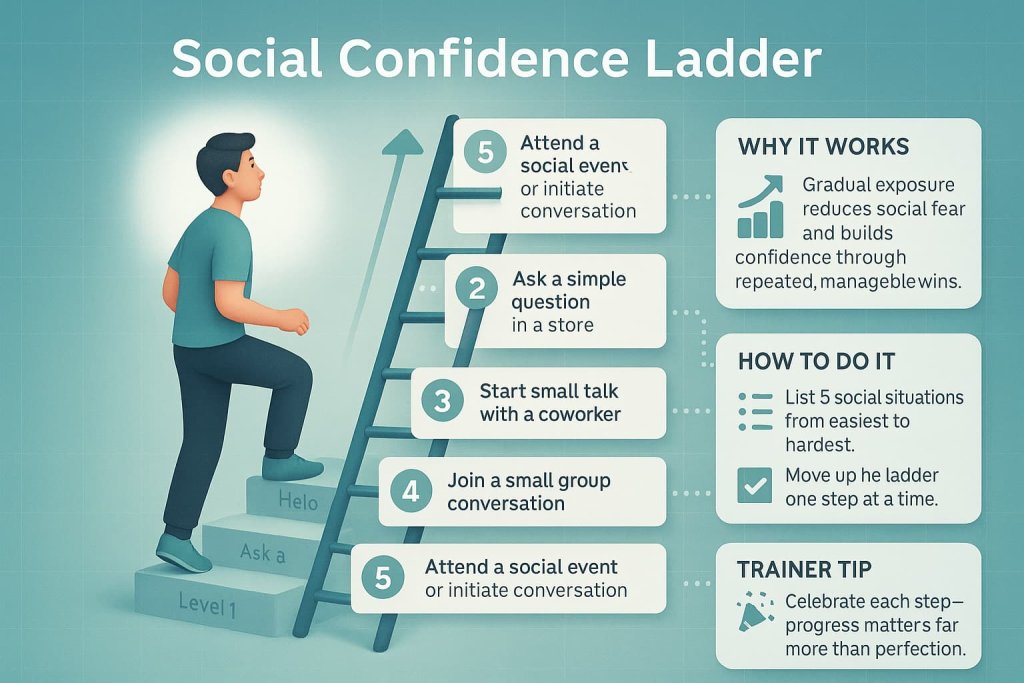
How to do it:
- List 5 social situations from easiest to hardest.
- Start with Level 1 and practice until comfortable.
- Move up one level at a time.
Tip:
Celebrate each step—progress is the goal, not perfection.
8. Assertive Communication Script
Why it works:
Assertiveness helps you express needs clearly without fear, improving relationships and self-respect.
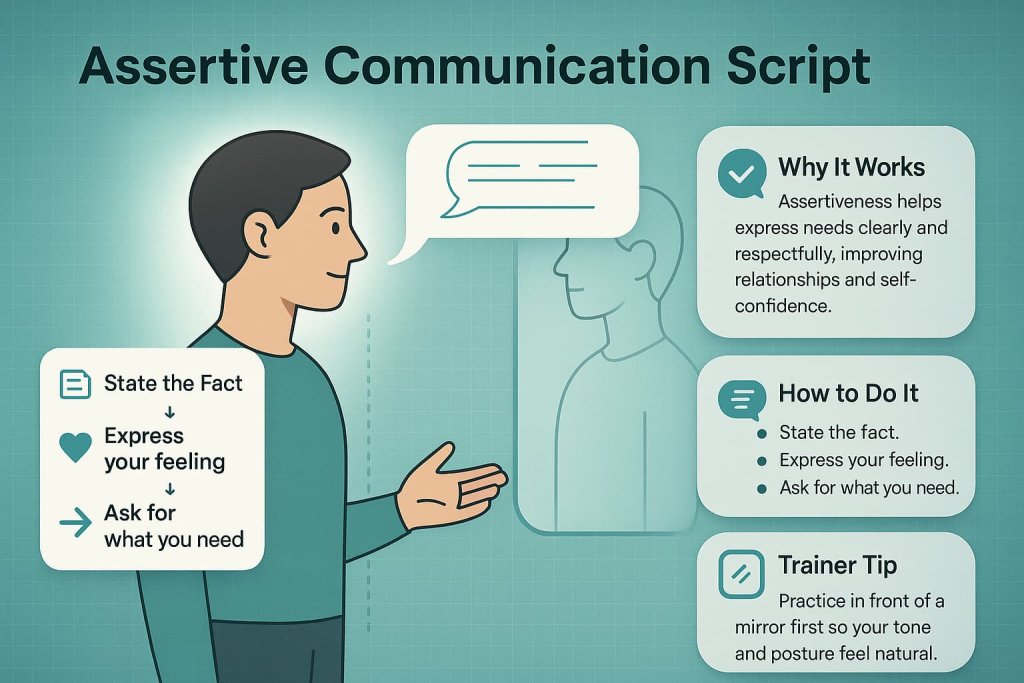
How to do it:
Use a 3-step script:
- State the fact
- Express your feeling
- Ask for what you need
Tip:
Practice in front of a mirror first so it feels natural during real conversations.
9. Wins Journal
Why it works:
Daily wins create proof of success, reducing negative self-talk and building confidence.
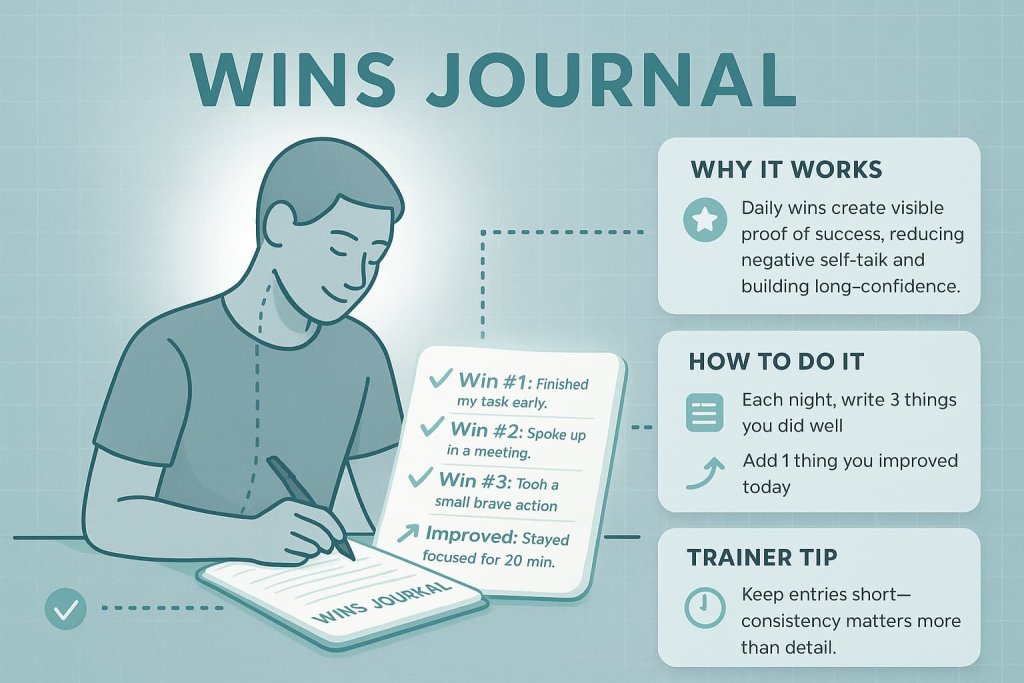
How to do it:
Every night, write:
- 3 things you did well
- 1 thing you improved
Tip:
Keep entries short—consistency matters more than detail.
10. Gratitude + Self-Acknowledgment Entry
Why it works:
Combines gratitude and self-recognition to shift focus from flaws to strengths.
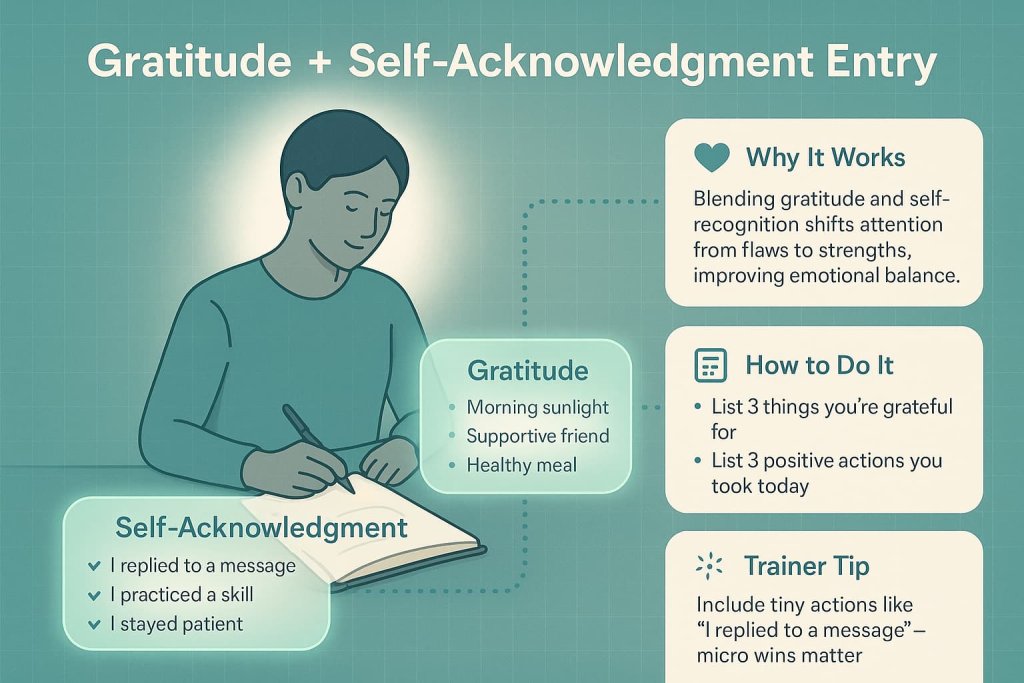
How to do it:
List:
- 3 things you’re grateful for
- 3 positive actions you took today
Tip:
Include small actions like “I replied to a message”—micro wins matter.
11. Voice Projection Practice
Why it works:
A confident voice makes you feel more certain internally and appear more assertive externally.
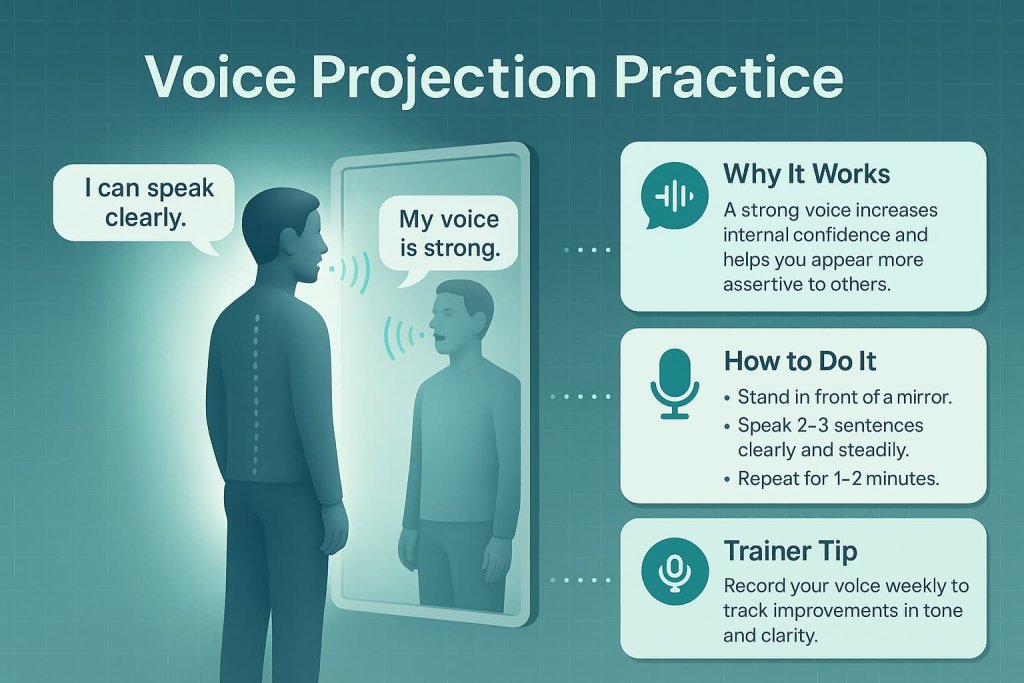
How to do it:
- Stand in front of a mirror.
- Speak 2–3 sentences clearly and steadily.
- Repeat for 1–2 minutes.
Tip:
Record your voice once per week to notice improvements.
12. Five-Minute Visualization
Why it works:
Mental rehearsal can help reduce fear and improve performance in real situations.
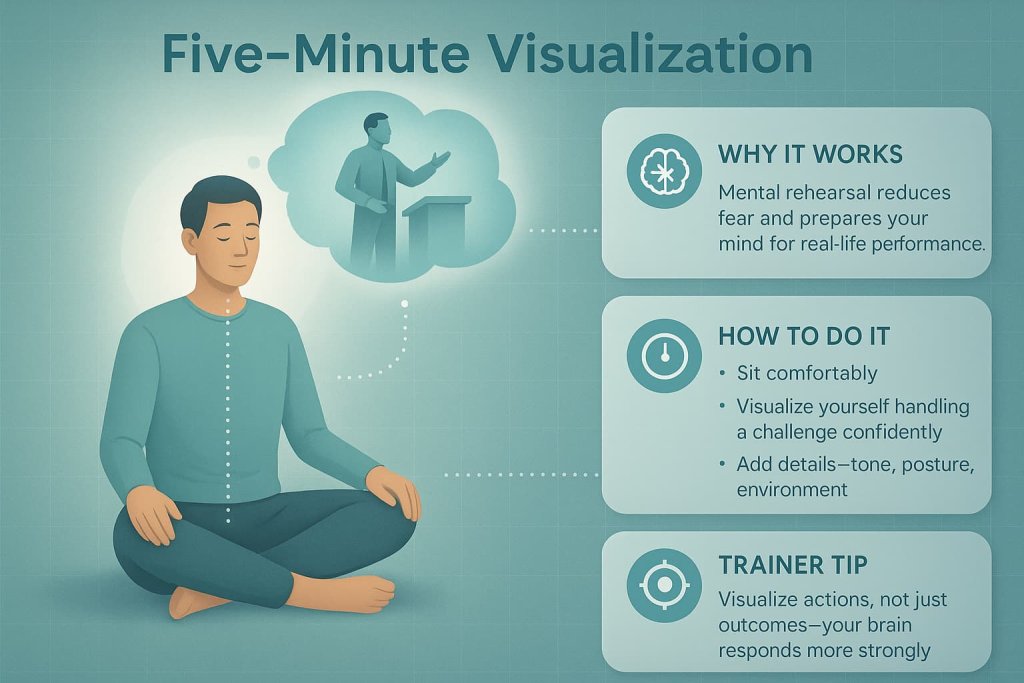
How to do it:
- Sit comfortably.
- Visualize yourself handling a challenge confidently.
- Add details—tone, posture, environment.
Tip:
Visualize actions, not just outcomes—your brain responds more strongly.
13. Two-Minute “Yes I Can” Breathwork
Why it works:
Combining breath control with grounding affirmations supports calmness and readiness.
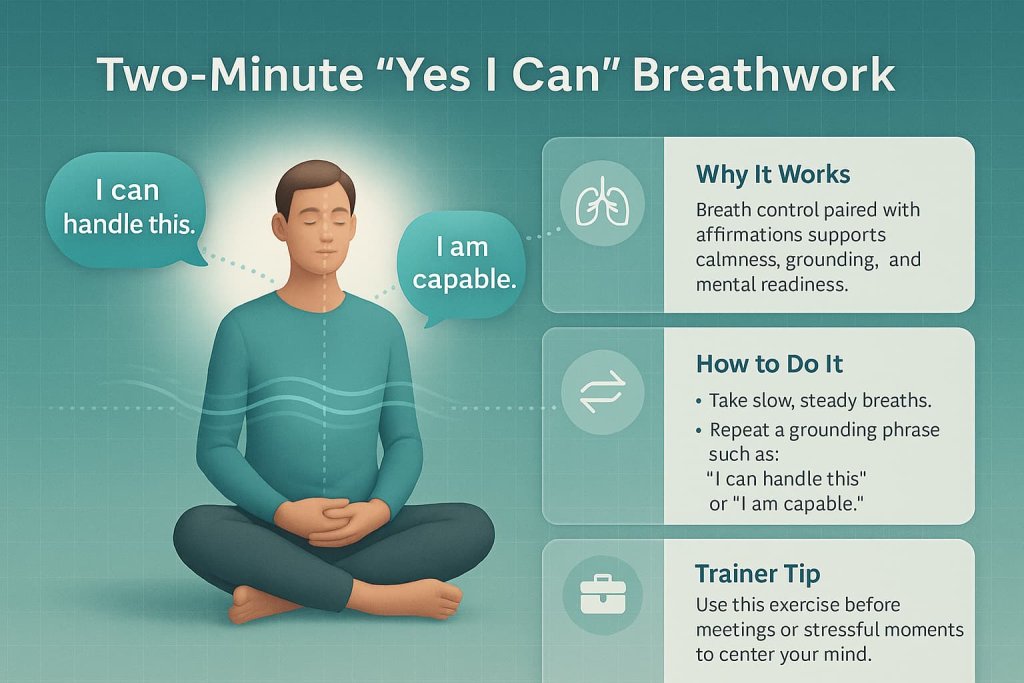
How to do it:
- Take slow breaths.
- Repeat: “I can handle this” or “I am capable.”
Tip:
Use before meetings or stressful moments.
14. Self-Compassion Letter
Why it works:
Shifts your inner dialogue from criticism to kindness, supporting emotional resilience.
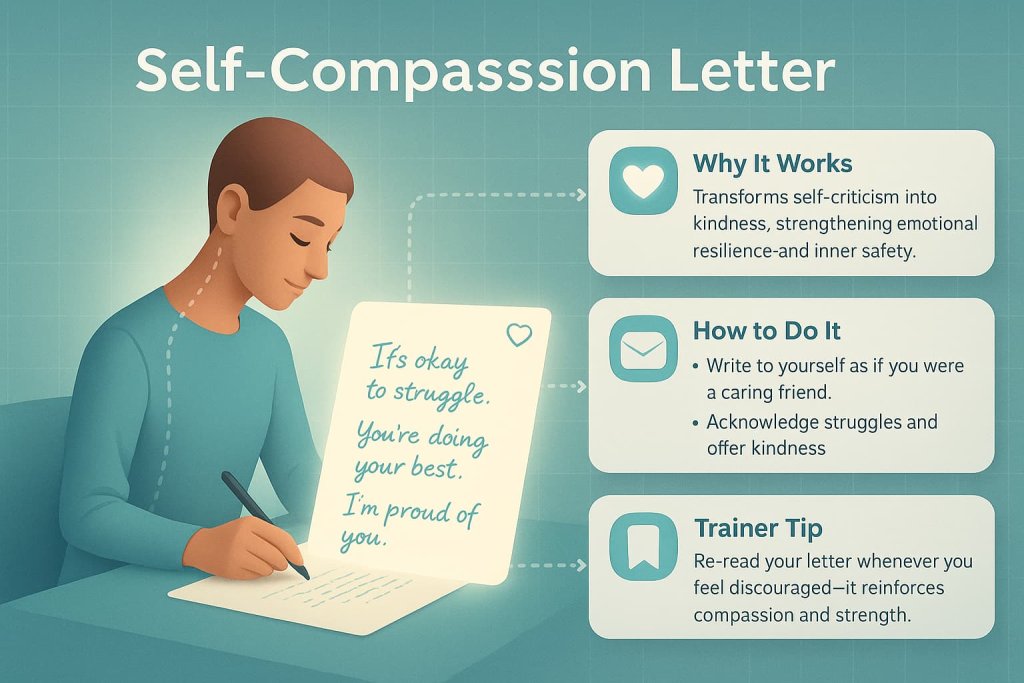
How to do it:
- Write to yourself as if you were a caring friend.
- Acknowledge struggles and offer kindness.
Tip:
Re-read this letter whenever you feel discouraged.
15. Value-Based Action Plan
Why it works:
Acting from values builds identity-based confidence—“I am the kind of person who ___.”
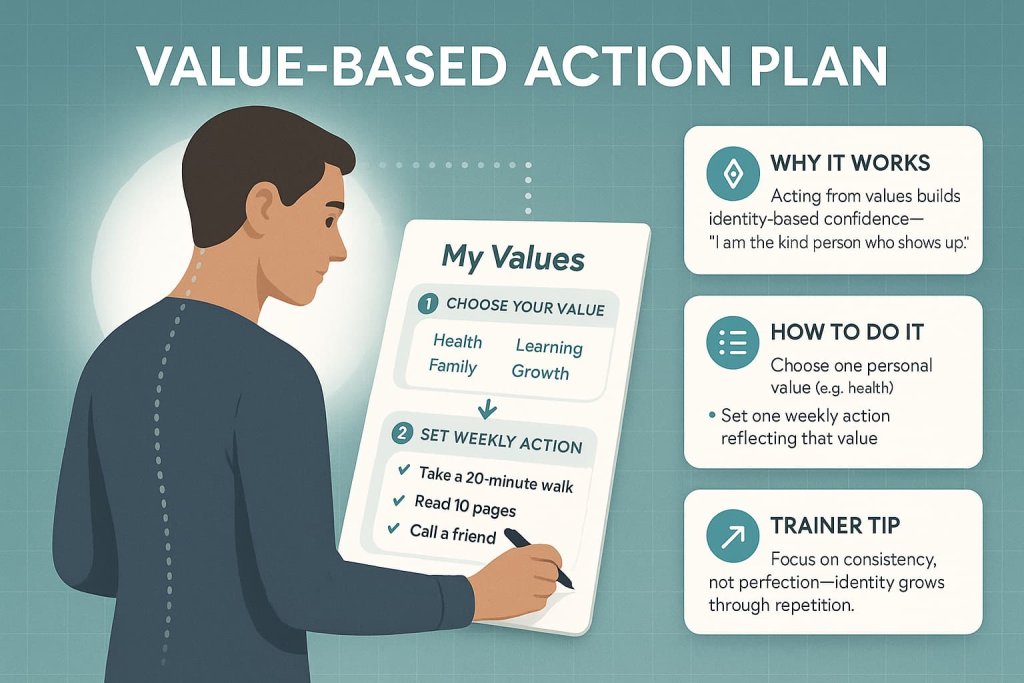
How to do it:
- Choose one personal value (e.g., health).
- Set one weekly action reflecting that value.
Tip:
Focus on consistency, not perfection.
16. Skill-Building Micro Goals
Why it works:
Small, achievable goals help you build belief in your ability to learn and improve.
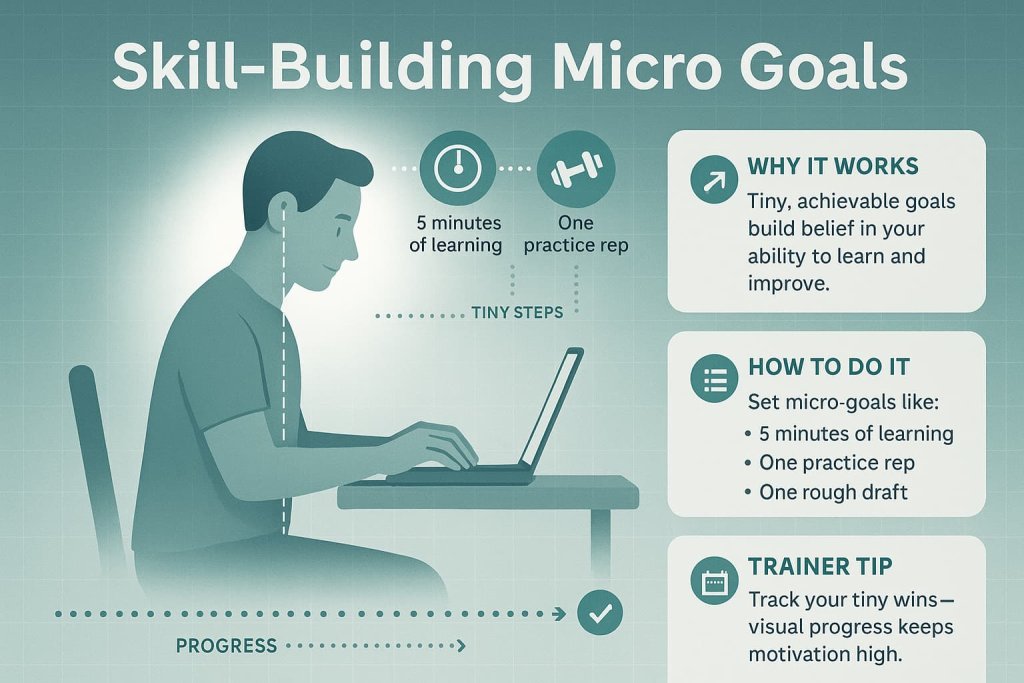
How to do it:
Set tiny goals such as:
- 5 minutes of learning
- One practice rep
- One rough draft
Tip:
Track your tiny wins to visually see your progress.
17. Mirror Confidence Exercise
Why it works:
Speaking kindly to yourself strengthens positive identity and reduces self-doubt.
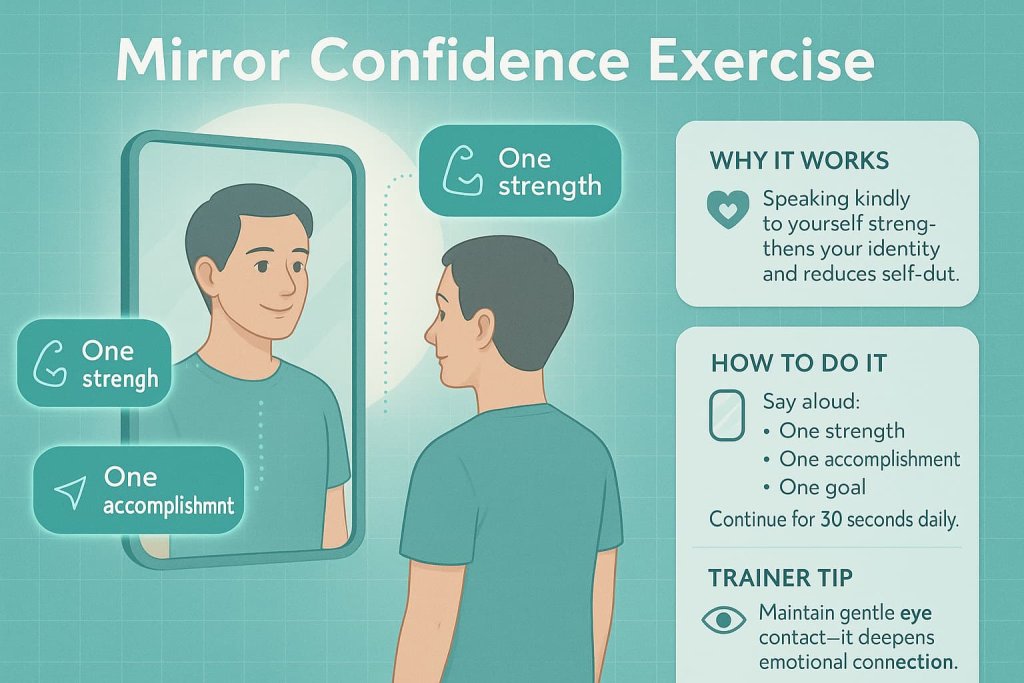
How to do it:
Say aloud:
- One strength
- One accomplishment
- One goal
Do this for 30 seconds daily.
Tip:
Maintain gentle eye contact with yourself—it builds emotional connection.
18. “Rewriting the Story” Exercise
Why it works:
Turning setbacks into learning experiences builds emotional resilience and personal power.
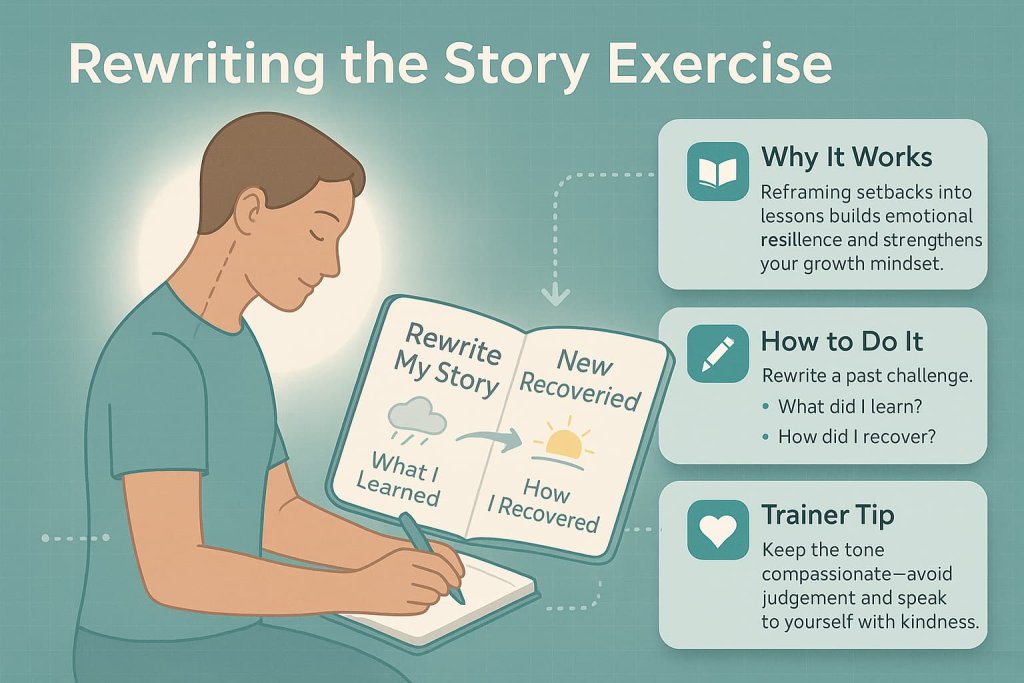
How to do it:
Rewrite a past challenge and answer:
- What did I learn?
- How did I recover?
Tip:
Keep the tone compassionate, not judgmental.
19. Positive Self-Talk Script
Why it works:
Creates a reliable inner script that overrides negative thinking patterns.
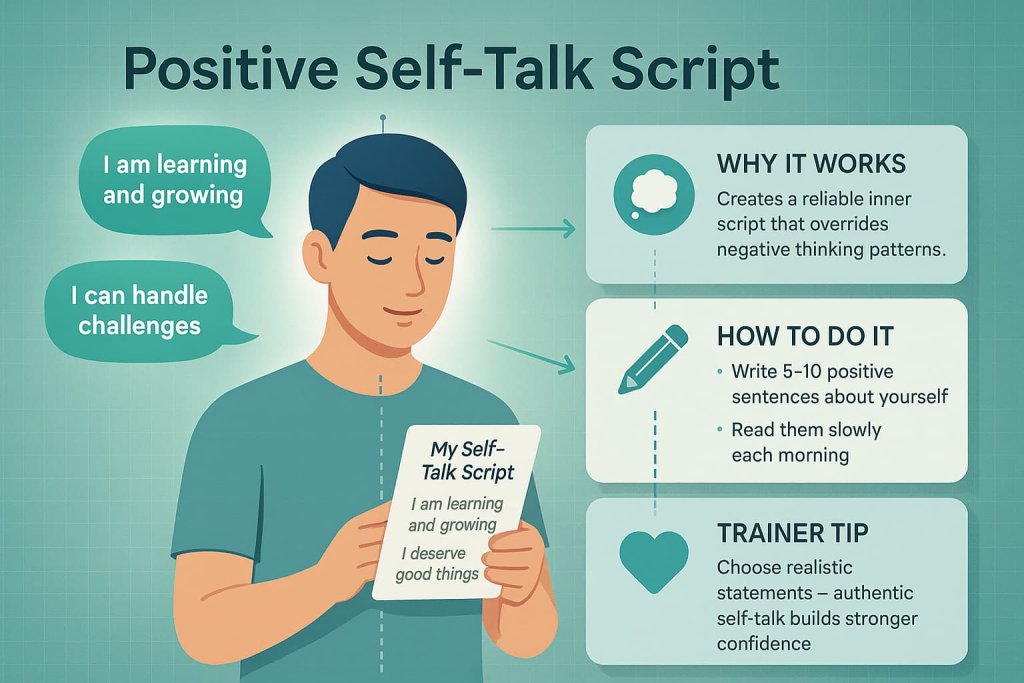
How to do it:
- Write 5–10 positive sentences about yourself.
- Practice reading them slowly each morning.
Tip:
Choose realistic statements—authenticity builds stronger confidence.
20. Goal Breakdown Method
Why it works:
Large goals feel overwhelming; breaking them down makes them achievable and confidence-boosting.
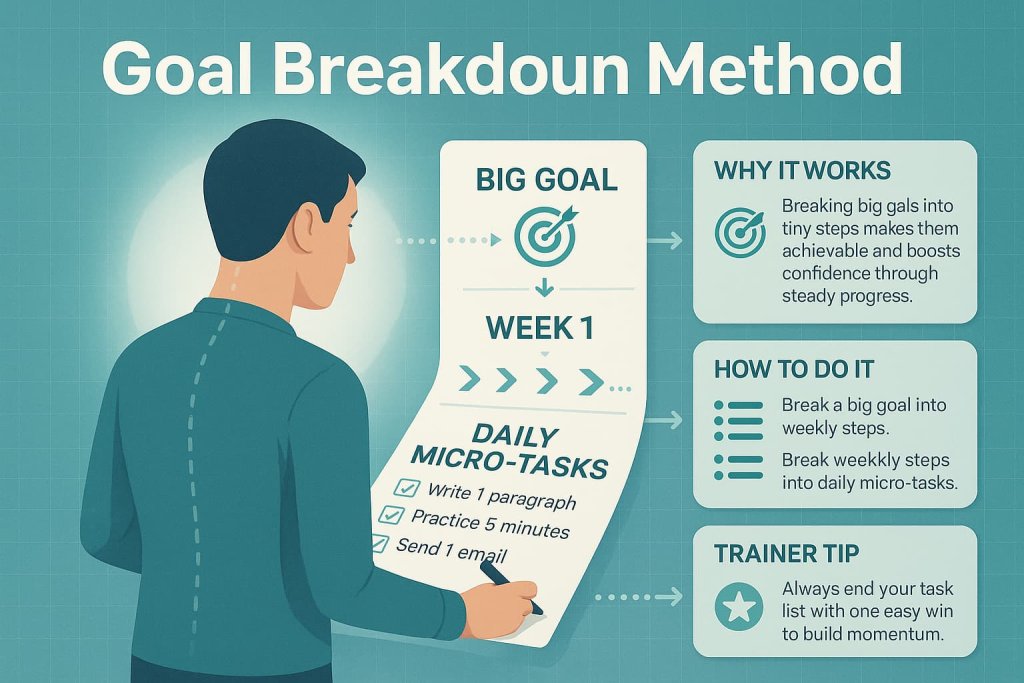
How to do it:
- Break a big goal into weekly steps.
- Break weekly steps into daily micro-tasks.
Tip:
Always end a task list with one easy win.
21. Role-Play Assertiveness
Why it works:
Practice reduces fear and makes real conversations easier.
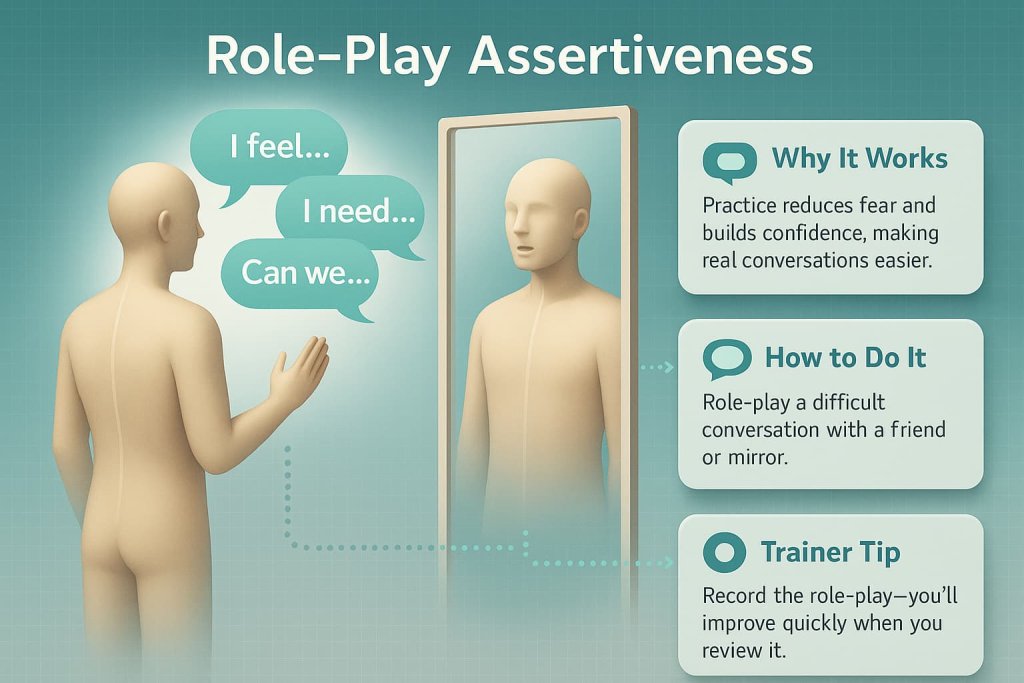
How to do it:
- Role-play a difficult conversation with a friend or mirror.
- Focus on calm tone and clear wording.
Tip:
Record the role-play—you’ll improve quickly when you review it.
22. Personal Achievement Timeline
Why it works:
Seeing your life accomplishments visually strengthens identity-based confidence.
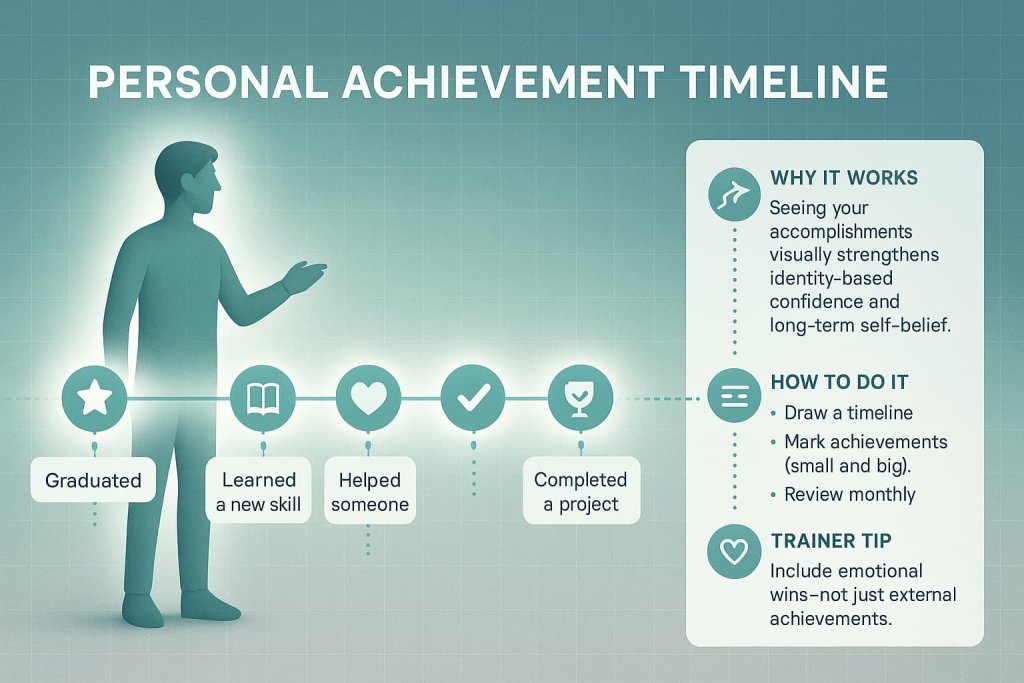
How to do it:
- Draw a timeline.
- Mark achievements (small and big).
- Review monthly.
Tip:
Include emotional wins—not just external achievements.
23. “What’s the Worst That Could Happen?” Drill
Why it works:
Reduces catastrophizing and increases rational thinking.
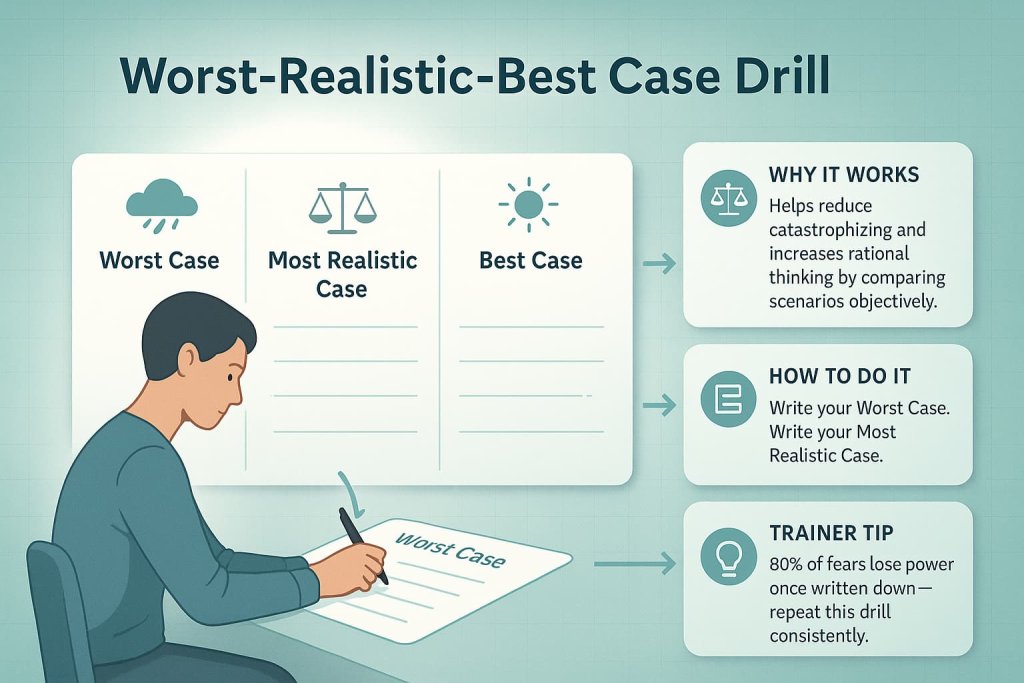
How to do it:
Write:
- Worst case
- Most realistic case
- Best case
Tip:
80% of fears lose power once written down—keep doing it consistently.
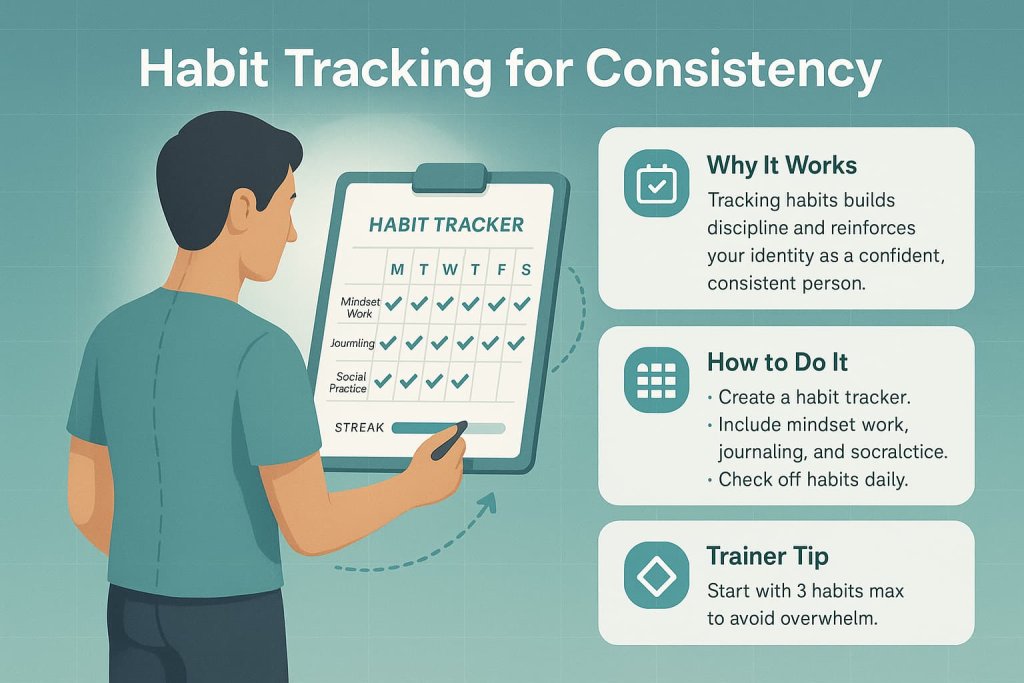
24. Habit Tracking for Consistency
Why it works:
Tracking habits builds discipline and reinforces your identity as a confident person.
How to do it:
- Create a habit tracker.
- Include mindset work, journaling, and social practice.
- Check off habits daily.
Tip:
Start with 3 habits max to avoid overwhelm.
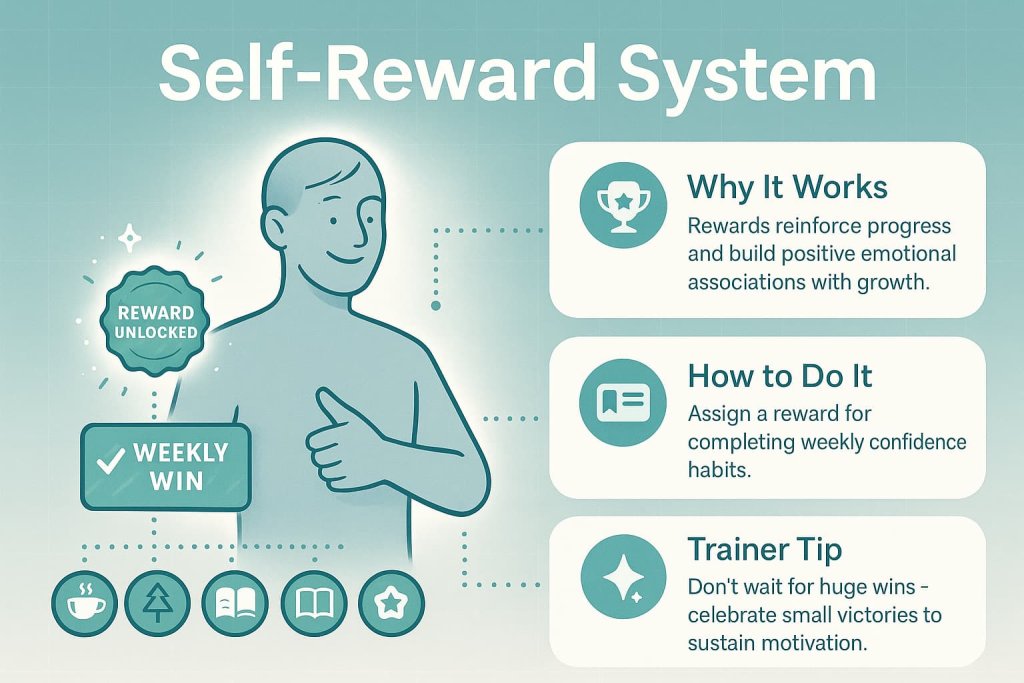
25. Self-Reward System
Why it works:
Rewards reinforce progress and create positive emotional associations with growth.
How to do it:
- Assign a reward for completing weekly confidence habits.
- Keep rewards simple and healthy.
Tip:
Don’t wait for huge wins—celebrate small victories to sustain momentum.
How Often Should You Do Confidence Exercises?
For most people:
- Daily: 1–2 confidence habits (mindset or journaling)
- Weekly: 1–2 social or behavioral challenges
- Monthly: review progress and update goals
Confidence grows gradually through repetition, not intensity.
How Confidence Improves Over Time
Confidence doesn’t appear all at once—it builds gradually through small, repeated wins. Each time you take action, challenge a negative thought, or follow through on a goal, your brain strengthens the belief that you are capable. This process is known as self-efficacy, a core principle in behavioral psychology.
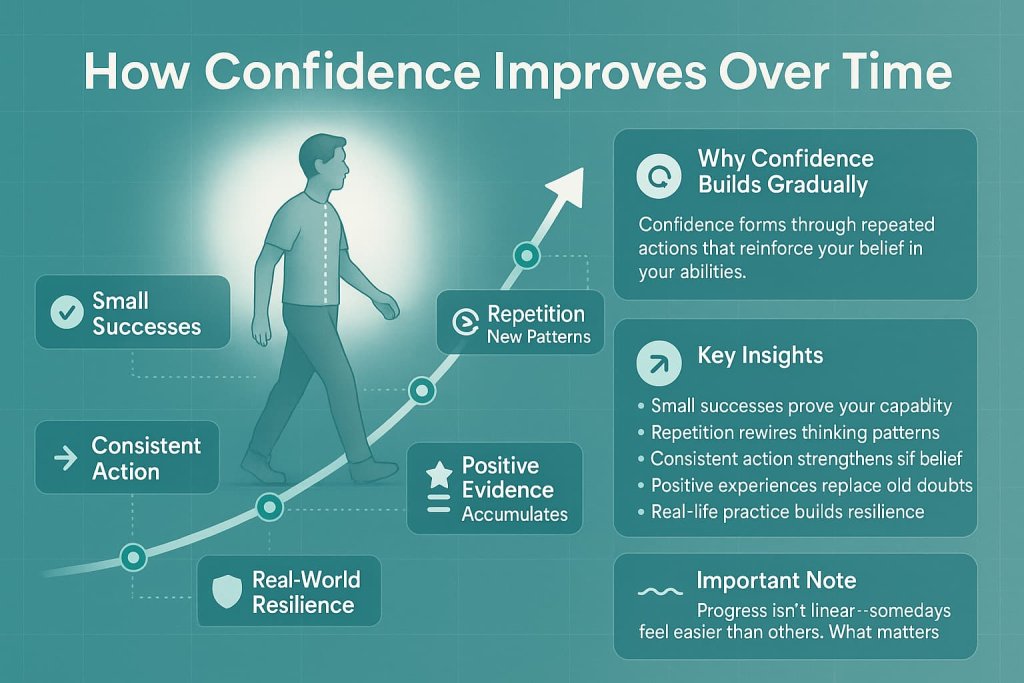
Here’s how confidence grows over time:
- Small successes create evidence of your ability
- Repetition builds new mental patterns that reduce self-doubt
- Consistent action teaches your brain: “I can handle challenges”
- Positive experiences accumulate and replace old limiting beliefs
- Real-world practice increases emotional strength and resilience
Growth is not linear. Some days feel easy, others feel uncertain—and that’s completely normal. What matters most is staying consistent with small, achievable actions that gradually reshape your mindset and build lifelong confidence.
How to Use These Exercises for Best Results
To get the most benefit from confidence-building exercises, approach them with structure, patience, and consistency. The goal isn’t perfection—it’s steady improvement. Use the guidelines below to maximize results:
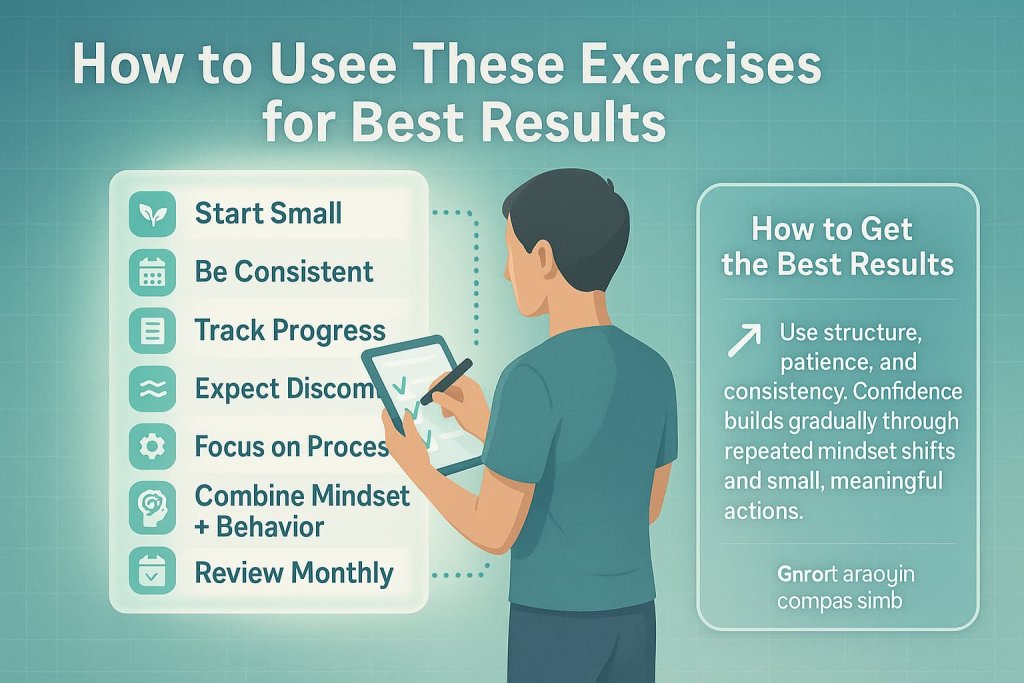
- Start small: Choose 2–3 exercises that feel doable and build momentum.
- Be consistent: Short daily practice is more effective than occasional long sessions.
- Track progress: Use a journal or habit tracker to record wins and improvements.
- Expect discomfort: Mild discomfort means growth is happening—don’t avoid it.
- Focus on process, not speed: Confidence strengthens slowly, like a muscle.
- Combine mindset and behavior: Thought work + action creates the strongest results.
- Review monthly: Assess what’s working, update goals, and celebrate progress.
By following these steps, you create a routine that gradually strengthens your emotional resilience, self-belief, and ability to handle challenges.
When to Seek Professional Help
Confidence-building exercises may be helpful for many people, but some situations require support from a licensed mental health professional. It’s important to reach out for help if:
- Low confidence is affecting your work, relationships, or daily functioning
- You struggle with persistent sadness, fear, shame, or self-criticism
- You avoid social situations or responsibilities because of anxiety
- You feel stuck despite trying multiple self-help strategies
- Confidence issues stem from trauma, bullying, or long-term emotional stress
- You’re experiencing symptoms of depression or social anxiety
A therapist or counselor can provide personalized strategies, structured CBT techniques, and supportive guidance tailored to your needs. Seeking help is not a sign of weakness—it’s a proactive step toward improving your well-being and building long-term confidence.
FAQ
1. Do confidence-building exercises really work?
They may help improve self-belief, communication, and resilience when practiced consistently.
2. How long does it take to build confidence?
Some people notice improvement within weeks, while others need several months of practice.
3. Are these exercises suitable for beginners?
Yes—each exercise can be done at your own pace.
4. Can these exercises help with social confidence?
Yes, especially the social confidence ladder, posture training, and micro social challenges.
5. Should I see a therapist for low confidence?
If low confidence is linked to anxiety, depression, trauma, or persistent distress, a licensed mental health professional can provide personalized support.
6. Can journaling really improve confidence?
Journaling may help reduce negative self-talk and increase self-awareness, which supports confidence growth.
7. Are these exercises safe for teens and adults?
Yes, but younger individuals may benefit from adult guidance.
Conclusion
Building confidence doesn’t require big, dramatic changes—it requires consistent small actions that strengthen your mindset, behaviors, and self-belief over time. These 25 confidence-building exercises give you a clear path to start feeling stronger, more capable, and more grounded every day.
Take one small step today. Start with one exercise—and build your confidence from there.