
Dumbbell hamstring exercises are one of the most effective ways to strengthen the back of your legs at home—even without machines. These movements target the hamstrings through hip-hinging and bridging patterns, helping you build strength, stability, and better movement capacity.
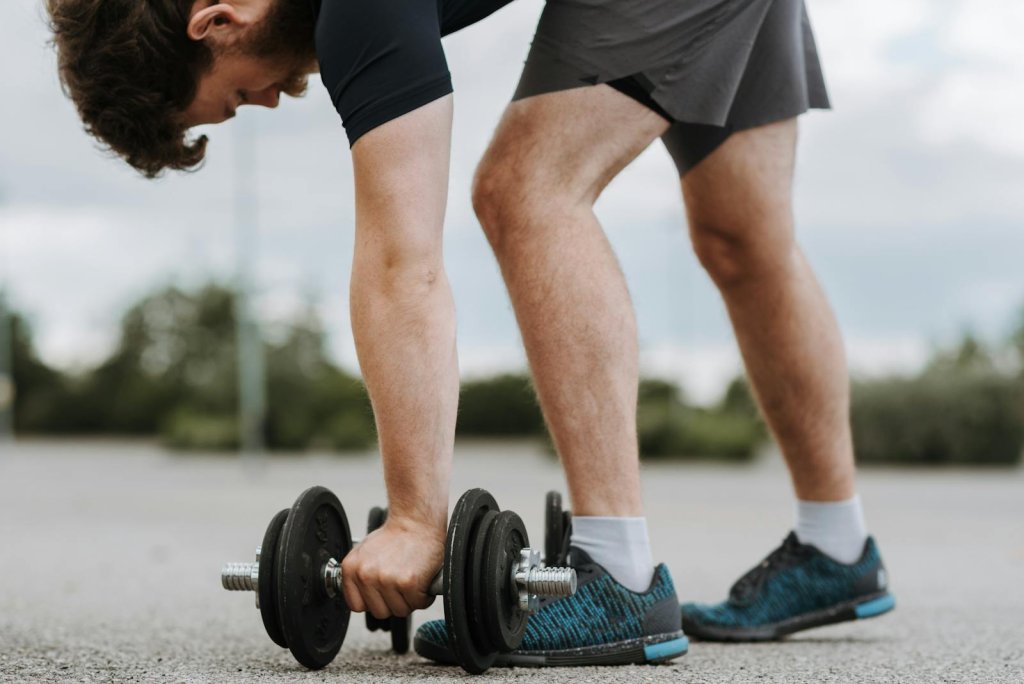
Understanding how to train your hamstrings matters because they support hip extension, protect knee stability, and help with daily movements like walking, lifting, and bending. The exercises below are simple, effective, and scientifically supported. They fit all levels, from beginners to advanced lifters.
Why Strengthening Your Hamstrings Matters
Your hamstrings play a major role in:
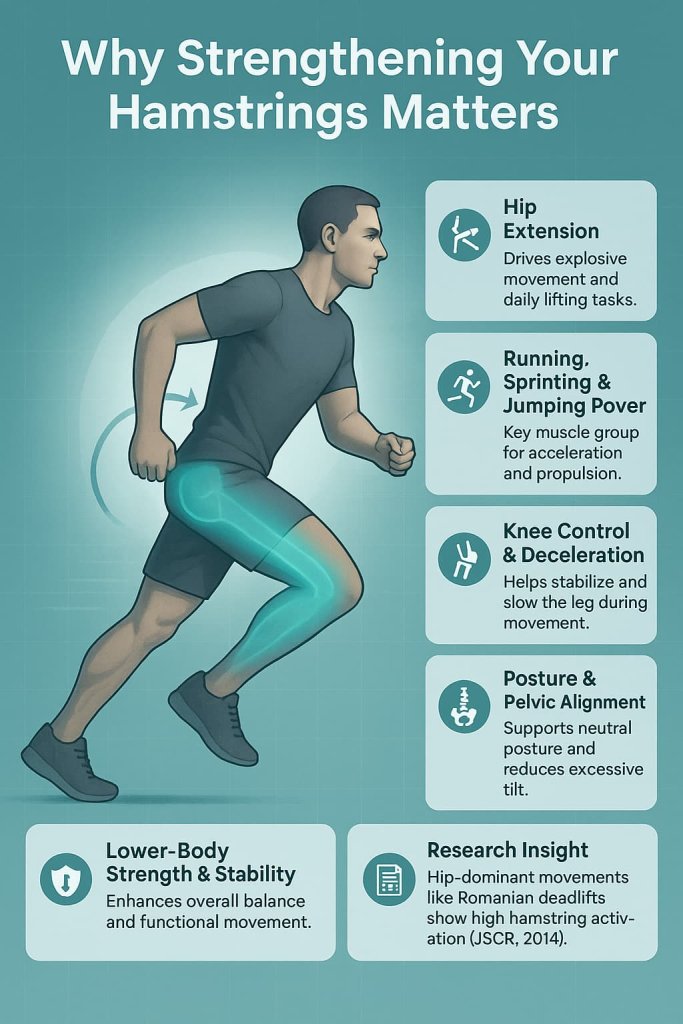
- Hip extension
- Running, sprinting, jumping
- Knee control and deceleration
- Posture and pelvic alignment
- Lower-body strength and stability
Research shows that hip-dominant movements like Romanian deadlifts produce high hamstring activation, supporting strength development and injury-resilience in adults (Journal of Strength & Conditioning Research, 2014).
12 Best Dumbbell Hamstring Exercises at Home
Strengthen your hamstrings at home with this simple, effective dumbbell routine designed to improve hip stability, posture, and lower-body strength. Each exercise is beginner-friendly, requires minimal equipment, and targets the entire posterior chain with safe, controlled movement.
1. Dumbbell Romanian Deadlift (RDL)
A foundational hip-hinge and the most effective dumbbell movement for hamstring strength.
Why it works:
The RDL places the hamstrings under a deep stretch while maintaining constant tension through the hip hinge. EMG studies consistently show high activation of the biceps femoris and semitendinosus, making this one of the best exercises for building posterior-chain strength at home.
Muscles worked:
Hamstrings, glutes, lower back, core stabilizers.
How to do it:
- Hold dumbbells at your sides with a strong grip.
- Keep knees slightly bent and hinge at the hips.
- Slide the dumbbells down your thighs until you feel a stretch in the hamstrings.
- Maintain a neutral spine throughout.
- Push through your heels and return to standing.
Trainer Tip:
Keep your shins almost vertical to maximize hamstring tension and reduce knee dominance.
2. Single-Leg Romanian Deadlift
A high-tension unilateral movement for balance and strength.
Why it works:
Single-leg RDLs increase hamstring loading by forcing one limb to control the entire hinge. They introduce a stability challenge that improves hip control and is highly beneficial for athletes and home exercisers.
Muscles worked:
Hamstrings (primary), glutes, hip stabilizers, core.
How to do it:
- Stand tall holding a dumbbell in one hand.
- Shift weight to the opposite leg.
- Hinge forward while lifting the free leg straight behind you.
- Lower the dumbbell toward your foot.
- Return to standing with control.
Trainer Tip:
Reach the dumbbell toward the midfoot—this keeps your hips square and prevents rotation.
3. Staggered-Stance RDL
A beginner-friendly bridge between two-leg and single-leg variations.
Why it works:
This stance shifts about 80–90% of the load to the front-leg hamstring while offering better balance than a true single-leg RDL. Perfect for building unilateral strength without wobbling.
Muscles worked:
Front-leg hamstrings, glutes, core stabilizers.
How to do it:
- Step one foot back just a few inches.
- Keep most of your weight on the front leg.
- Hinge down, lowering the dumbbells toward the floor.
- Push through the front heel to rise.
Trainer Tip:
Let the back foot act only as support—you should barely feel pressure on it.
4. Dumbbell Good Morning
A lighter but highly effective hip-hinge pattern.
Why it works:
By placing dumbbells at shoulder height, the leverage increases the demand on the hamstrings. This exercise reinforces spinal alignment and hip hinge mechanics with less load than an RDL.
Muscles worked:
Hamstrings, glutes, spinal erectors, posterior chain.
How to do it:
- Hold dumbbells at your shoulders.
- Keep a soft bend in your knees.
- Push hips back while keeping your chest lifted.
- Stop when you feel a strong stretch in the hamstrings.
- Return to standing with control.
Trainer Tip:
Use light weights—this variation gets challenging quickly due to leverage.
5. Dumbbell Hip Thrust
A glute-dominant movement with strong hamstring contribution.
Why it works:
Hip thrusts place the hamstrings under tension during hip extension, especially when your feet are positioned farther forward. This recruits both glutes and hamstrings more effectively than a standard bridge.
Muscles worked:
Glutes, hamstrings, core.
How to do it:
- Rest your upper back on a bench.
- Place a dumbbell across your hips.
- Drive your hips upward until your torso is parallel to the floor.
- Lower slowly and repeat.
Trainer Tip:
Move your feet slightly forward to increase hamstring recruitment.
6. Dumbbell Glute Bridge
A simple, floor-based alternative to the hip thrust.
Why it works:
The bridge strengthens the hamstrings and glutes without requiring a bench. Keeping the movement controlled increases posterior-chain activation and reduces strain on the lower back.
Muscles worked:
Hamstrings, glutes, core.
How to do it:
- Lie on your back with knees bent.
- Place a dumbbell on your hips.
- Lift your hips upward, squeezing at the top.
- Lower gently and repeat.
Trainer Tip:
Pause at the top for 1–2 seconds to increase muscle tension.
7. Dumbbell Hamstring Walkout
A challenging eccentric hamstring builder.
Why it works:
The walkout stresses the hamstrings during the lengthening phase, which is beneficial for strength development and resilience. It also trains your core and hips together.
Muscles worked:
Hamstrings (eccentric emphasis), calves, glutes, core.
How to do it:
- Start in a glute bridge with a dumbbell on your hips.
- Slowly walk your feet forward, lengthening your legs.
- Walk them back with control.
- Keep your hips lifted throughout.
Trainer Tip:
Move slowly; fast reps remove the eccentric loading effect.
8. Dumbbell Reverse Lunge
A lunge variation that naturally loads the hamstrings.
Why it works:
Stepping backward increases hip flexion and shifts emphasis to the hamstrings and glutes compared to forward lunges. Perfect for at-home leg development without machines.
Muscles worked:
Hamstrings, glutes, quads, stabilizers.
How to do it:
- Hold dumbbells at your sides.
- Step backward and lower into a lunge.
- Push through the front heel to return to standing.
Trainer Tip:
Lean your torso slightly forward to increase hamstring activation.
9. Bulgarian Split Squat (Hamstring-Biased)
One of the most effective single-leg strength builders.
Why it works:
By leaning the torso slightly forward and placing the front foot further out, the hamstrings and glutes take on more load. This version builds serious lower-body strength at home.
Muscles worked:
Hamstrings, glutes, core stabilizers.
How to do it:
- Elevate your rear foot on a bench or chair.
- Hold dumbbells by your sides.
- Lean slightly forward and lower your hips.
- Push through the front heel to rise.
Trainer Tip:
The farther your front foot is, the more hamstring-dominant the movement becomes.
10. Dumbbell Step-Up (High Box)
A simple but powerful posterior-chain builder.
Why it works:
Higher step-ups increase hip extension, making the hamstrings work harder to lift your body. This also boosts balance and stability.
Muscles worked:
Hamstrings, glutes, quads.
How to do it:
- Hold dumbbells.
- Step onto a box or bench that brings your thigh near parallel.
- Push through the heel to stand up.
- Step back down slowly.
Trainer Tip:
Choose a box height where your hip crease sits slightly below your knee for maximum hamstring involvement.
11. Single-Leg Dumbbell Hip Bridge
A powerful unilateral bridge variation.
Why it works:
Training one leg at a time increases hamstring engagement significantly, even with light weight. It also helps correct strength imbalances between legs.
Muscles worked:
Hamstrings (primary), glutes, core.
How to do it:
- Lie on your back.
- Place a dumbbell on your hips.
- Extend one leg straight.
- Bridge using the planted foot.
- Lower and repeat.
Trainer Tip:
Keep the working heel close to your glutes for stronger contraction.
12. Dumbbell Stiff-Leg Deadlift
A deep stretch-based hamstring movement.
Why it works:
Keeping the legs nearly straight maximizes hamstring stretch and loading. This makes it one of the best advanced dumbbell exercises for developing flexibility and strength simultaneously.
Muscles worked:
Hamstrings, glutes, lower back.
How to do it:
- Hold dumbbells with legs almost straight.
- Hinge forward with minimal knee bend.
- Lower until hamstrings stretch deeply.
- Rise while maintaining tension.
Trainer Tip:
Avoid going too heavy—focus on stretch, tension, and control.
Beginner, Intermediate & Advanced Variations
- Beginner: Glute bridge, staggered RDL, reverse lunge
- Intermediate: RDL, hip thrust, hamstring walkout
- Advanced: Stiff-leg deadlift, single-leg RDL, Bulgarian split squat
How Often Should You Train Hamstrings at Home?
General recommendations based on ACSM guidance:
- 2–3 days per week
- 2–3 sets per exercise
- 8–12 reps with slow, controlled tempo
- 1–2 minutes rest between sets
- Increase weight by 2–10% when the last reps feel easier
These ranges support strength, muscle development, and functional movement in most adults.
How to Warm Up Before Dumbbell Hamstring Exercises
Warming up prepares your hips, knees, and lower back for safe hamstring training. It improves blood flow and mobility, which may help reduce strain during hip-hinge movements.
Quick 2–3 Minute Warm-Up
- Leg Swings – 10 each side
- Bodyweight Hip Hinge – 8–10 slow reps
- Glute Bridge – 10–12 reps
- Standing Hamstring March – 20 seconds
- Ankle Rolls – 10 each direction
If any movement causes sharp pain, stop and reassess before exercising.
Common Mistakes to Avoid
- Rounding your back during hip hinges
- Using too much knee bend (turns exercise into quads)
- Going too heavy too soon
- Rushing through reps
- Using only one type of hamstring movement
A balanced routine combines hip-hinge, bridging, and single-leg patterns.
Who Should Avoid Certain Hamstring Exercises?
Most people can do dumbbell hamstring exercises safely, but some should modify or avoid them.
Avoid or adjust if you have:
- Acute lower-back pain
- Sciatica or nerve symptoms
- Recent knee or hip injury
- Hamstring strain
- Significant balance issues
- Difficulty maintaining proper form
Choose gentler alternatives—such as bridges or supported step-ups—until you can train safely. Consult a professional if you’re unsure.
FAQ
1. Can you build hamstrings with just dumbbells?
Yes. Hip-hinge variations like RDLs are among the most effective hamstring builders and can be done with dumbbells.
2. Are dumbbell RDLs enough for hamstrings?
They offer high activation, but combining RDLs with bridging and single-leg movements gives more complete development.
3. How long does it take to see results?
Most people notice strength and stability improvements in 4–6 weeks with consistent training.
4. Do dumbbell hamstring exercises help with running?
They may help support hip extension and stability needed for running performance.
5. What weight dumbbells should beginners start with?
Most adults begin with 5–15 lb per hand, progressing gradually as form improves.
6. Should you train hamstrings once or twice per week?
Training them 2–3 times weekly is ideal for most adults.
7. Is stiff-leg deadlift safe?
Yes, when done with light-to-moderate weight and proper form. Avoid rounding your back.
Conclusion
Dumbbell hamstring exercises make it easy to build strength, improve movement, and train your entire posterior chain at home. Choose 3–5 exercises from the list, train consistently, and increase weight gradually. Your legs, hips, and overall stability will feel stronger over time.
References
- Martín-Fuentes I, Oliva-Lozano JM, et al. (2020).
Electromyographic activity in deadlift exercise and its variants. PLOS One.
Focus: EMG comparison of deadlift variations with strong hamstring and posterior-chain activation. - Coratella G, Beato M (2022).
An Electromyographic Analysis of Romanian, Step, and Conventional Deadlifts. International Journal of Environmental Research and Public Health.
Focus: Confirms high hamstring activation in Romanian and step deadlifts—perfect support for your RDL content. - Wright GA, Delong TH, Gehlsen G (1999).
Electromyographic Activity of the Hamstrings During Leg Curl and Stiff-Leg Deadlift. Journal of Strength and Conditioning Research.
Focus: Classic EMG paper showing strong hamstring recruitment in stiff-leg deadlifts. - Otani R et al. (2025).
The Effect of Single Leg Romanian Deadlift on the Risk of Hamstring Strain Injuries in Track and Field Athletes: A Cohort Study. International Journal of Sports Physical Therapy.
Focus: Supports single-leg RDL as an effective eccentric hamstring exercise with potential injury-risk benefits. - Hu C et al. (2023).
Effects of Different Hamstring Eccentric Exercise Programs on Injury Risk: A Systematic Review and Meta-Analysis. International Journal of Environmental Research and Public Health.
Focus: Strong evidence base for eccentric hamstring exercises (like RDLs) in reducing injury risk. - Neto WK et al. (2019).
Barbell Hip Thrust, Muscular Activation and Performance: A Systematic Review. Journal of Sports Science and Medicine.
Focus: Shows hip thrusts and similar bridging exercises produce high hip extensor activation, supporting your hip thrust/glute bridge sections. - Garber CE et al. (2011).
American College of Sports Medicine position stand. Quantity and quality of exercise for developing and maintaining fitness in apparently healthy adults. Medicine & Science in Sports & Exercise.
Focus: Gold-standard resistance-training guidelines (frequency, sets, reps, progression) for your “how often” and training-structure H2s. - CDC (2023).
Physical Activity Guidelines for Adults.
Focus: Reinforces general strength-training frequency and YMYL-safe public health guidance.