
Easy exercises are simple, low-impact movements that help you stay active, build basic strength, and improve mobility without equipment or advanced skills. They are especially helpful if you’re a beginner, returning after a long break, or looking for safe ways to move more at home.
Understanding easy exercises matters because consistent, manageable activity is strongly linked with better long-term health, mobility, and independence.
What Are Easy Exercises?
Easy exercises are movements that require minimal coordination, place low stress on joints, and can be adjusted to match your current fitness level. They are typically:
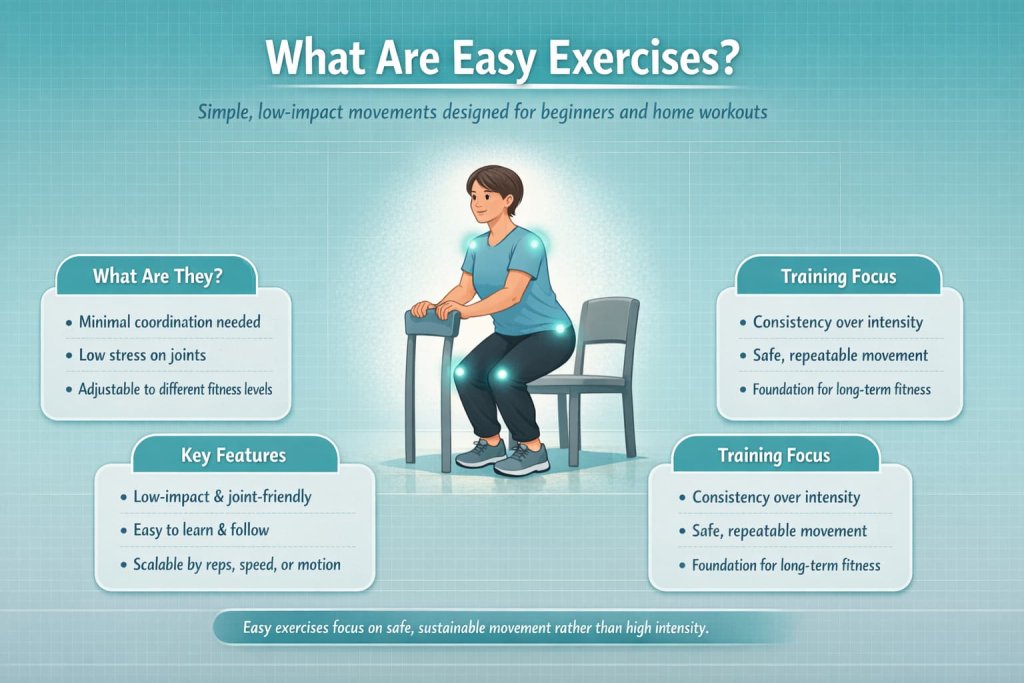
- Low-impact and joint-friendly
- Easy to learn with clear body positions
- Scalable by adjusting reps, speed, or range of motion
- Suitable for small spaces and home workouts
These exercises focus on building consistency first, not intensity.
12 Best Easy Exercises Anyone Can Do at Home
Below are beginner-friendly exercises that require no equipment and can be done safely at home.
1. Marching in Place
How to do it
- Stand tall with feet hip-width apart
- Lift one knee at a time in a slow, controlled rhythm
- Swing arms naturally for balance and coordination
Why it works
Marching in place gently increases heart rate while reinforcing natural walking mechanics. Because there is no jumping or impact, it is suitable for beginners and those easing back into regular movement.
Muscles worked
Hip flexors, quadriceps, calves, core
Trainer Tip
Start with low knee height and focus on posture. As confidence improves, increase duration rather than speed.
2. Chair Squat (Sit-to-Stand)
How to do it
- Stand in front of a chair with feet shoulder-width apart
- Lower yourself until lightly touching the seat
- Press through your heels to stand back up
Why it works
This exercise mirrors everyday movements like sitting and standing, making it highly functional. It helps build lower-body strength that supports independence and daily activities.
Muscles worked
Glutes, quadriceps, hamstrings
Trainer Tip
Keep your chest lifted and knees tracking forward. Use arm support if needed at first.
3. Wall Push-Ups
How to do it
- Place hands on a wall at chest height
- Bend elbows to bring chest toward the wall
- Push back to the starting position
Why it works
Wall push-ups strengthen the upper body while reducing load on the wrists and shoulders. This makes them ideal for beginners or anyone avoiding floor-based exercises.
Muscles worked
Chest, shoulders, triceps, core
Trainer Tip
Maintain a straight line from head to heels to engage your core.
4. Standing Side Leg Raises
How to do it
- Hold a chair or wall for balance
- Lift one leg out to the side
- Lower slowly and repeat before switching sides
Why it works
This movement strengthens the muscles that stabilize the hips, which play a key role in balance, walking efficiency, and joint alignment.
Muscles worked
Hip abductors, glutes
Trainer Tip
Move slowly and avoid leaning to the side—control matters more than height.
5. Heel Raises
How to do it
- Stand tall with feet hip-width apart
- Rise onto the balls of your feet
- Lower heels slowly back down
Why it works
Heel raises strengthen the lower legs and support ankle stability, which is essential for walking, balance, and stair climbing.
Muscles worked
Calves, ankles
Trainer Tip
Pause briefly at the top to increase muscle engagement.
6. Arm Circles
How to do it
- Extend arms out to the sides
- Make small, controlled circles forward and backward
Why it works
Arm circles promote shoulder mobility and circulation, helping prepare the upper body for daily tasks and other exercises.
Muscles worked
Shoulders, upper back
Trainer Tip
Focus on smooth, pain-free movement rather than large circles.
7. Seated Knee Extensions
How to do it
- Sit tall in a chair with feet flat on the floor
- Extend one leg until it is straight
- Lower slowly and switch sides
Why it works
This exercise strengthens the thighs while keeping pressure off the hips and spine, making it a safe option for beginners and those with joint sensitivity.
Muscles worked
Quadriceps
Trainer Tip
Avoid locking the knee at the top of the movement.
8. Wall Angels
How to do it
- Stand with your back against a wall
- Raise arms into a goalpost position
- Slide arms up and down slowly
Why it works
Wall angels support posture by encouraging proper shoulder alignment and upper-back engagement, which is especially helpful for people who sit often.
Muscles worked
Upper back, shoulders
Trainer Tip
Keep your lower back and ribs gently against the wall throughout.
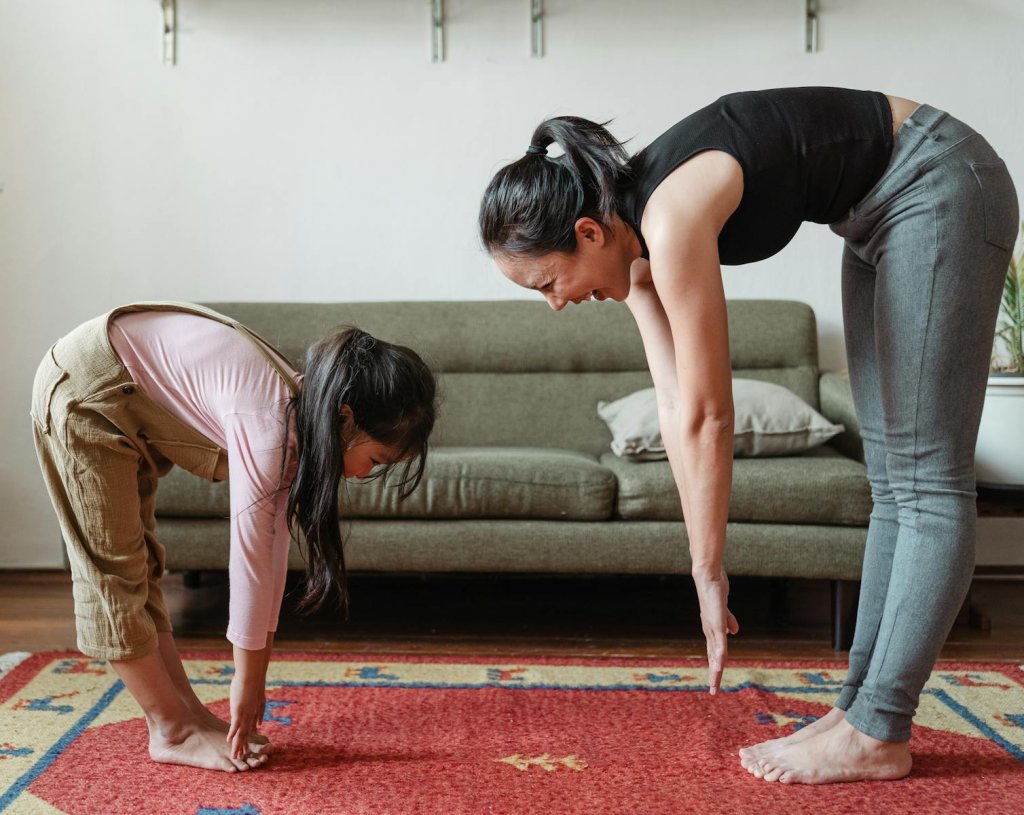
9. Standing Hamstring Stretch
How to do it
- Place one foot slightly forward
- Hinge at the hips with a flat back
- Feel a gentle stretch in the back of the leg
Why it works
This stretch maintains flexibility in the hamstrings, which helps reduce stiffness and supports smoother movement during walking and bending.
Muscles worked
Hamstrings
Trainer Tip
Stretch to mild tension only—never to discomfort.
10. Seated Torso Twists
How to do it
- Sit tall with feet flat on the floor
- Rotate gently from side to side
- Move slowly and with control
Why it works
Gentle torso twists encourage spinal mobility and improve body awareness without stressing the lower back.
Muscles worked
Core, obliques
Trainer Tip
Let the movement come from your upper body, not momentum.
11. Standing Balance Hold
How to do it
- Stand on one foot
- Hold for 10–30 seconds
- Switch sides
Why it works
Balance training helps improve coordination and stability, which may support confidence and reduce fall risk over time.
Muscles worked
Ankles, calves, core
Trainer Tip
Focus on a fixed point in front of you to stay steady.
12. Deep Breathing with Arm Raises
How to do it
- Inhale while raising arms overhead
- Exhale while lowering arms
- Move slowly and smoothly
Why it works
Combining breathing with gentle movement encourages relaxation, posture awareness, and coordination between breath and motion.
Muscles worked
Shoulders, upper back, diaphragm
Trainer Tip
Slow breathing is more important than arm height—stay relaxed.
Why Easy Exercises Matter for Beginners
Easy exercises may help support:
- Daily movement habits without overwhelm
- Muscle activation needed for everyday tasks
- Joint mobility and balance awareness
- Confidence to progress toward more challenging workouts
Public-health recommendations emphasize that some movement is better than none, and short, simple sessions can still contribute to weekly activity goals when done consistently.
How Often Should You Do Easy Exercises?
Guidelines from the World Health Organization and the American Heart Association suggest that adults aim for:
- At least 150 minutes of moderate physical activity per week
- Muscle-strengthening activities 2 or more days per week
Easy exercises can count toward both goals when performed regularly.
How to Start Easy Exercises Safely at Home
Starting easy exercises at home should feel comfortable, controlled, and confidence-building. The goal is not intensity, but consistency and proper movement quality.
To begin safely:
- Start with a short session (5–15 minutes) and gradually increase time
- Warm up with gentle movements such as marching in place or arm circles
- Use stable support (chair or wall) when balance is limited
- Move through a pain-free range of motion
- Breathe steadily and avoid holding your breath
- Stop exercising if you feel sharp pain, dizziness, or unusual discomfort
If you have a medical condition, recent injury, or ongoing pain, consider consulting a qualified healthcare professional before starting a new exercise routine.
Common Beginner Mistakes to Avoid
Avoiding common mistakes can help make easy exercises safer and more effective, especially in the early stages.
The most frequent beginner errors include:
- Doing too much too soon, leading to unnecessary soreness or fatigue
- Rushing through movements instead of using slow, controlled motion
- Ignoring posture and alignment
- Holding the breath during exercises
- Skipping rest days or recovery time
- Comparing progress to others instead of focusing on personal consistency
Staying patient and focusing on proper form will help you build a sustainable exercise habit over time.
Safety Guidelines for Easy Exercises
To keep your routine safe and effective:
- Start slow and progress gradually
- Use stable support when balance is limited
- Stop if you feel sharp pain, dizziness, or discomfort
- Consult a healthcare professional if you have medical conditions or concerns
Frequently Asked Questions About Easy Exercises
Are easy exercises effective for beginners?
Yes. When done consistently, easy exercises can support strength, mobility, and overall activity levels.
How long should a beginner workout last?
Even 10–20 minutes per session can be beneficial when performed regularly.
Do easy exercises help with weight management?
They may help support an active lifestyle, which plays a role in overall energy balance.
Can seniors do these easy exercises?
Many are suitable for older adults, especially when balance support is used.
Do I need equipment for easy exercises?
No. Most easy exercises rely on body weight and simple household items like a chair or wall.
How many days per week should I exercise?
Public-health guidance recommends moving most days of the week, with strength activities at least twice weekly.
Conclusion
Easy exercises remove common barriers to staying active. By choosing simple, low-impact movements you can perform at home, you create a routine that’s realistic, sustainable, and beginner-friendly. Start with a few exercises, stay consistent, and build confidence over time.
If you’re ready to begin, pick 3–5 easy exercises from this list and try them today.
References
- CDC – Adult Physical Activity Guidelines (Adults)
- CDC – Adding Physical Activity as an Adult (Practical Ways to Get Started)
- U.S. HHS – Physical Activity Guidelines for Americans (Official Resource Hub)
- Physical Activity Guidelines for Americans, 2nd Edition (Full PDF)
- National Institute on Aging – Three Types of Exercise (Strength, Balance, Endurance)
- Cochrane – Exercise for Preventing Falls in Older Adults Living in the Community