
Forearm exercises with dumbbells are strength moves that train your wrist flexors, wrist extensors, grip muscles, and forearm stabilizers using dumbbells. They can help you build better grip control, stronger wrists, and more balanced lower-arm strength for lifting, sports, and everyday tasks.
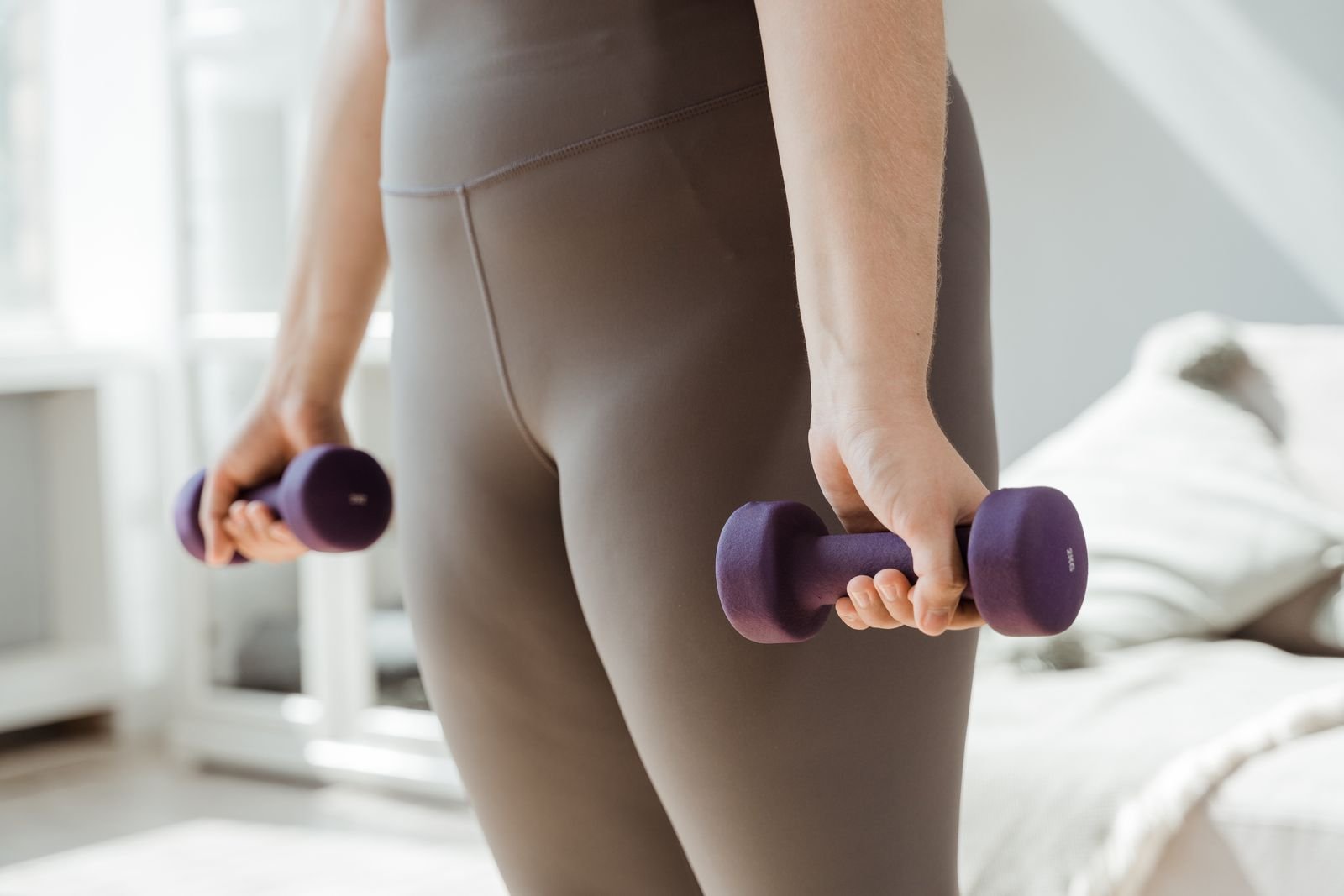
The forearm includes muscles that help bend, extend, rotate, and stabilize the wrist and hand. NCBI Bookshelf explains that the forearm muscles are commonly divided into anterior flexor and posterior extensor compartments, which is why a good forearm routine should include both palm-up and palm-down movements.
What Are Forearm Exercises With Dumbbells?
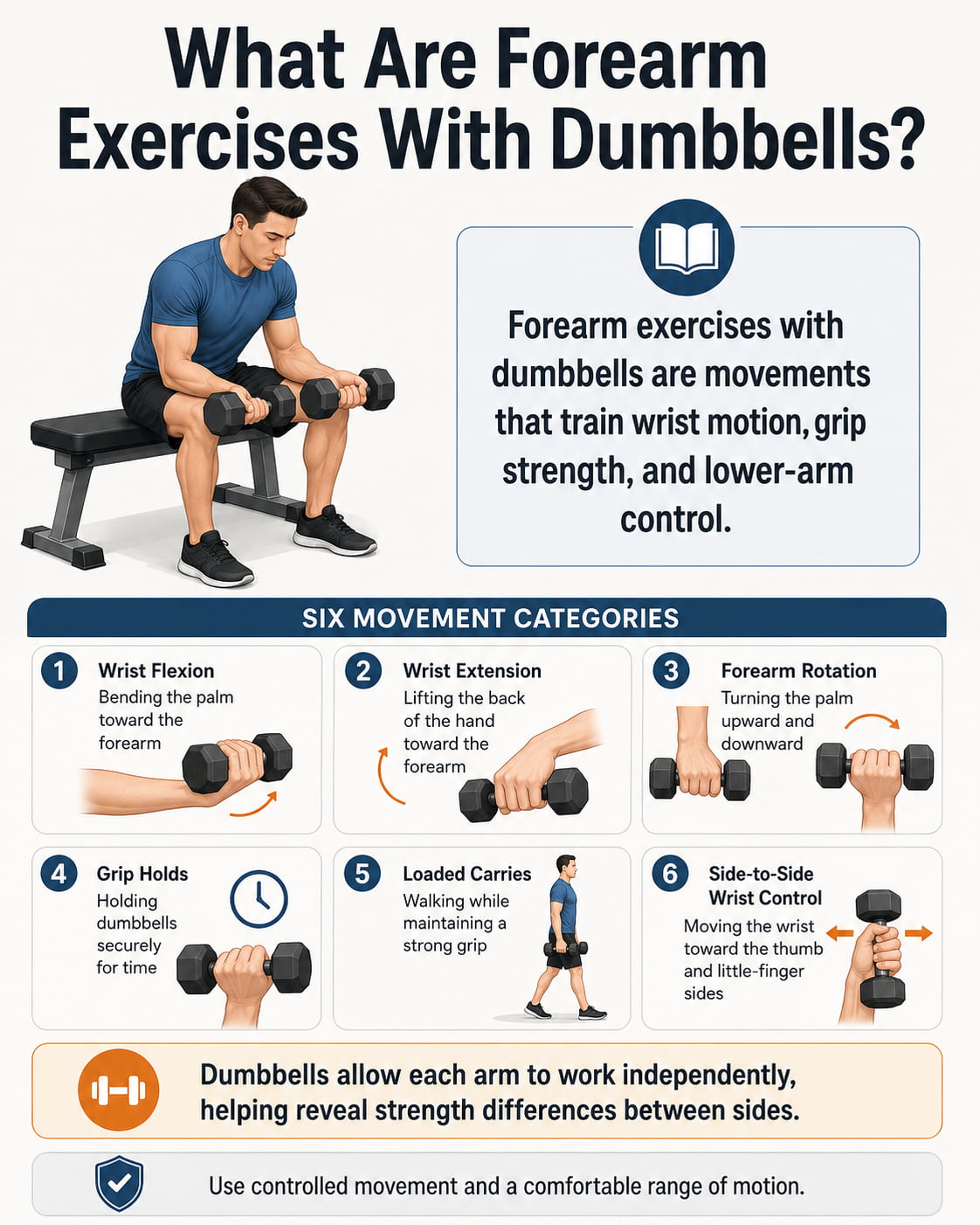
Forearm exercises with dumbbells are movements that use a dumbbell to train wrist motion, grip strength, and lower-arm control.
These exercises usually involve:
- Wrist flexion
- Wrist extension
- Forearm rotation
- Grip holds
- Loaded carries
- Wrist side-to-side control
Dumbbells are useful because they let each arm work independently. This can help you notice strength differences between sides and train with a natural range of motion.
Muscles Worked During Forearm Exercises With Dumbbells
Forearm exercises with dumbbells mainly train the muscles that move and stabilize your wrist, hand, and fingers.
The main muscle groups include:
- Wrist flexors: Help bend the wrist and support gripping.
- Wrist extensors: Help lift the back of the hand and stabilize the wrist.
- Brachioradialis: Helps with elbow flexion, especially during hammer and reverse curl movements.
- Pronators and supinators: Help rotate the forearm.
- Finger flexors: Help squeeze and hold the dumbbell.
A complete forearm routine should train more than one motion. Do not only do wrist curls. Add reverse wrist curls, grip holds, and rotation work for better balance.
Before You Start Forearm Exercises With Dumbbells
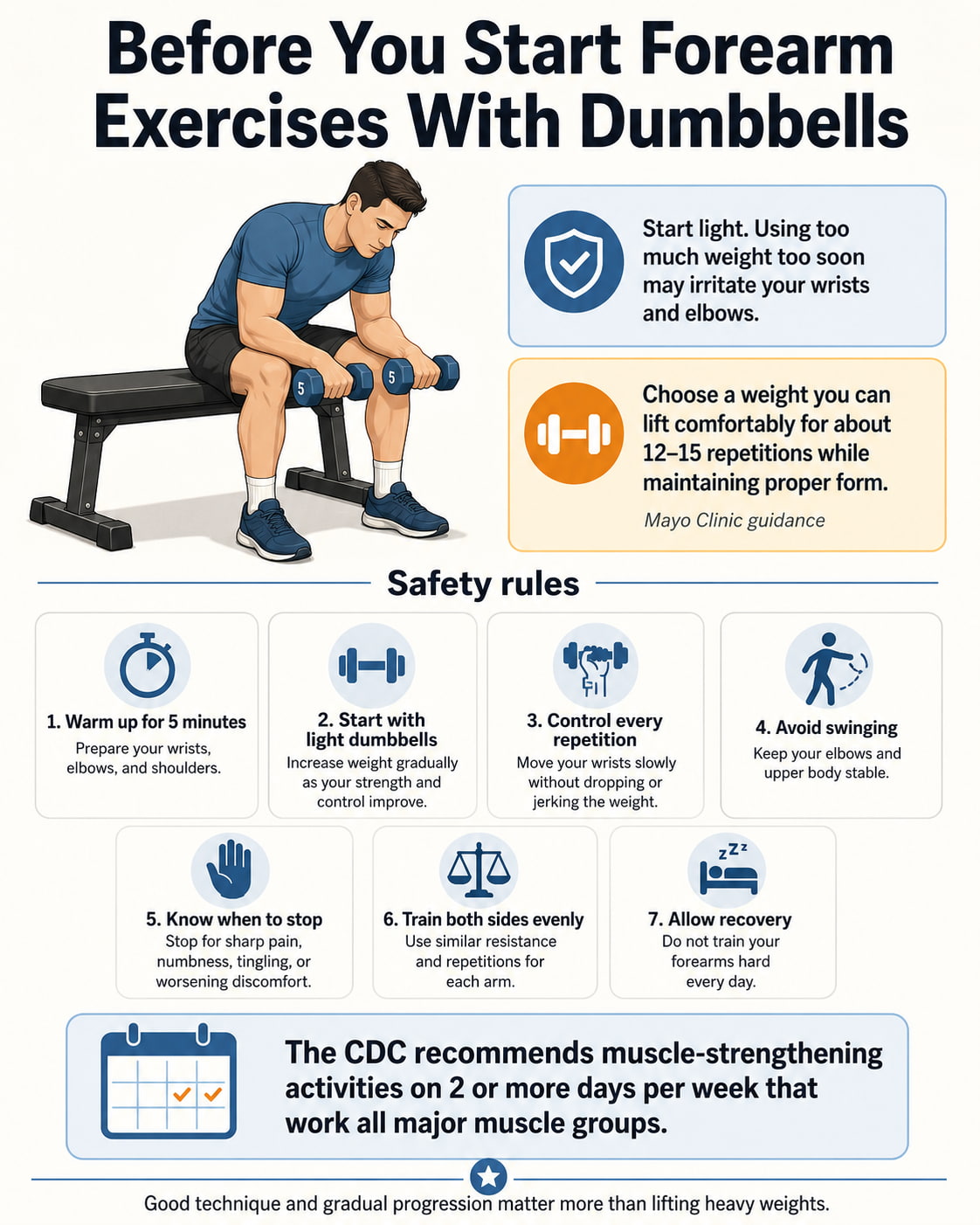
Start light. Your wrists and elbows can get irritated if you use too much weight too soon.
The Mayo Clinic recommends choosing a weight you can lift comfortably for about 12 to 15 repetitions while keeping proper form.
Use these safety rules:
- Warm up your wrists, elbows, and shoulders for 5 minutes.
- Start with light dumbbells.
- Keep your wrist motion controlled.
- Avoid swinging the weights.
- Stop if you feel sharp pain, numbness, tingling, or worsening discomfort.
- Train both sides evenly.
- Do not train forearms hard every day.
For general weekly activity, the CDC recommends muscle-strengthening activities on 2 or more days per week that work all major muscle groups.
8 Best Forearm Exercises With Dumbbells
These exercises target grip strength, wrist control, and lower-arm endurance. You do not need heavy weights. Good form matters more than load.
1. Dumbbell Wrist Curl
How to do it:
- Sit on a bench or chair.
- Hold a dumbbell in each hand with your palms facing up.
- Rest your forearms on your thighs or a bench.
- Let your wrists extend slightly downward.
- Curl your wrists upward without lifting your forearms.
- Squeeze briefly at the top.
- Lower the dumbbells slowly.
- Repeat with control.
Why it works:
The dumbbell wrist curl is one of the most direct forearm exercises with dumbbells because it targets the wrist flexors on the palm side of your forearm. It helps build wrist flexor strength, improves grip support, and can make it easier to hold dumbbells, barbells, or everyday objects with better control.
Muscles worked:
This exercise mainly works the wrist flexors and finger flexors. It also trains small stabilizing muscles around the wrist that help support controlled hand and wrist movement.
Trainer Tip:
Use a lighter dumbbell than you think you need. Wrist curls work best when the movement is smooth and controlled, not forced or rushed.
2. Dumbbell Reverse Wrist Curl
How to do it:
- Sit on a bench or chair.
- Hold a dumbbell in each hand with your palms facing down.
- Rest your forearms on your thighs or a bench.
- Let your wrists bend slightly downward.
- Lift the backs of your hands upward.
- Pause briefly at the top.
- Lower slowly with control.
- Repeat without swinging.
Why it works:
The dumbbell reverse wrist curl trains the top side of your forearm and helps strengthen the wrist extensors. It is important because many people train wrist flexion more than wrist extension, which can create an unbalanced forearm routine.
Muscles worked:
This exercise mainly targets the wrist extensors on the back side of the forearm. These muscles help lift the back of the hand and support wrist stability during gripping, curling, and lifting movements.
Trainer Tip:
If this exercise feels difficult, that is normal. The wrist extensors are often weaker than the wrist flexors, so start with very light dumbbells and progress slowly.
3. Dumbbell Hammer Curl
How to do it:
- Stand tall with a dumbbell in each hand.
- Keep your palms facing each other.
- Keep your elbows close to your sides.
- Curl the dumbbells upward without turning your wrists.
- Pause briefly near the top.
- Lower slowly until your arms are straight.
- Repeat with control.
Why it works:
The dumbbell hammer curl is usually known as an arm exercise, but it is also excellent for forearm training because of the neutral grip. This grip challenges the brachioradialis and grip-support muscles while still training the upper arm.
Muscles worked:
Hammer curls train the brachioradialis, brachialis, biceps, and grip-support muscles. They are especially useful for building stronger forearms and improving elbow-flexion strength.
Trainer Tip:
Think of your hands as hooks. Hold the dumbbells firmly, keep your wrists neutral, and do not let your shoulders or torso take over the movement.
4. Dumbbell Reverse Curl
How to do it:
- Stand tall with a dumbbell in each hand.
- Turn your palms so they face your thighs or slightly backward.
- Keep your wrists straight.
- Curl the dumbbells upward.
- Keep your elbows close to your body.
- Lower slowly.
- Repeat without swinging.
Why it works:
The dumbbell reverse curl uses a palms-down grip, which makes the movement more challenging for the forearms and wrist stabilizers. It is a strong choice for improving grip control and building the brachioradialis.
Muscles worked:
This exercise trains the brachioradialis, wrist extensors, brachialis, and biceps as secondary muscles. It also challenges your wrist position because you must keep the wrists straight throughout the curl.
Trainer Tip:
Use a slow lowering phase. That is where many lifters lose control, especially if the dumbbells are too heavy.
5. Dumbbell Farmer’s Carry
How to do it:
- Stand between two dumbbells.
- Pick them up with a strong, neutral grip.
- Stand tall with your shoulders down and back.
- Brace your core.
- Walk slowly with short, controlled steps.
- Keep the dumbbells at your sides.
- Stop before your grip fully fails.
- Set the dumbbells down with control.
Why it works:
The dumbbell farmer’s carry is one of the most practical forearm exercises with dumbbells because it trains grip endurance while your whole body stays stable. It carries over well to everyday tasks like holding bags, moving objects, and maintaining posture under load.
Muscles worked:
This exercise trains the forearms, hands, traps, shoulders, core, glutes, and legs. The forearms and grip muscles work hard to keep the dumbbells secure while the core and upper back help maintain posture.
Trainer Tip:
Do not chase the heaviest weight right away. A controlled carry with good posture is better than a sloppy heavy carry.
6. Dumbbell Wrist Rotation
How to do it:
- Sit or stand with one dumbbell in your hand.
- Bend your elbow to about 90 degrees.
- Keep your elbow close to your side.
- Hold the dumbbell with control.
- Slowly rotate your palm upward.
- Then slowly rotate your palm downward.
- Keep the motion smooth.
- Repeat on both sides.
Why it works:
Dumbbell wrist rotations train forearm rotation through pronation and supination, which are the movements used when turning your palm down or up. This helps improve forearm control, wrist awareness, and rotational strength.
Muscles worked:
This exercise trains the pronators, supinators, wrist stabilizers, and grip muscles. These muscles help control turning movements of the forearm and support smoother wrist positioning.
Trainer Tip:
Use a light dumbbell and move slowly. Hold one end of the dumbbell only if you want more rotational challenge and can control the movement safely.
7. Dumbbell Radial and Ulnar Deviation
How to do it:
- Hold one light dumbbell in one hand.
- Keep your arm by your side or support your forearm on a bench.
- Keep your wrist neutral.
- Move your wrist slightly toward the thumb side.
- Then move it slightly toward the pinky side.
- Keep the movement small and controlled.
- Repeat on both sides.
Why it works:
Dumbbell radial and ulnar deviation trains side-to-side wrist movement. It is often overlooked, but it helps build wrist control in directions that wrist curls and reverse wrist curls do not fully target.
Muscles worked:
This exercise trains the wrist flexors, wrist extensors, and side-to-side stabilizers of the wrist. These muscles help control small wrist movements and support better lower-arm stability.
Trainer Tip:
This is a control exercise, not a max-strength lift. Keep the range comfortable, use a very light dumbbell, and focus on smooth reps instead of heavy weight.
8. Dumbbell Static Grip Hold
How to do it:
- Stand tall with a dumbbell in each hand.
- Keep your palms facing your body.
- Hold the dumbbells at your sides.
- Brace your core.
- Keep your shoulders relaxed.
- Hold for the target time.
- Set the dumbbells down safely.
- Rest and repeat.
Why it works:
The dumbbell static grip hold is simple but effective because it trains your ability to hold weight for time. It is a good option for grip endurance, forearm stamina, and beginners who are not ready for farmer’s carries.
Muscles worked:
This exercise trains the finger flexors, wrist stabilizers, forearms, traps, and core. Your grip muscles work to keep the dumbbells secure while your posture muscles help you stay tall.
Trainer Tip:
Use this at the end of a workout. Your grip will already be warmed up, and it will not limit your bigger lifts earlier in the session.
Benefits of Forearm Exercises With Dumbbells
Forearm exercises are not just for appearance. Stronger forearms can support many upper-body exercises and daily activities that require holding, carrying, pulling, or gripping.
Key benefits include:
- Better grip strength for rows, deadlifts, pull-ups, and carries
- Stronger wrist control during pressing and curling exercises
- Improved forearm muscle endurance
- Better control when carrying bags, tools, or sports equipment
- More balanced training between the front and back of the forearms
A 2024 review in PubMed Central describes handgrip strength as a useful measure of muscle function and physical capability, especially in health and aging research. For a fitness article, the safest takeaway is simple: training grip strength may support better daily function and upper-body performance.
Best Forearm Exercises With Dumbbells by Goal
| Goal | Best exercises |
|---|---|
| Stronger grip | Farmer’s carry, static grip hold, hammer curl |
| Stronger wrists | Wrist curl, reverse wrist curl, radial and ulnar deviation |
| Better forearm balance | Wrist curl, reverse wrist curl, wrist rotation |
| Beginner-friendly routine | Wrist curl, reverse wrist curl, static grip hold |
| Sports and lifting support | Farmer’s carry, hammer curl, reverse curl, wrist rotation |
How Many Sets and Reps Should You Do?
For most people, forearm training works best with moderate reps, light-to-moderate weight, and controlled tempo.
A simple starting plan:
- Wrist curls: 2 to 3 sets of 12 to 15 reps
- Reverse wrist curls: 2 to 3 sets of 10 to 15 reps
- Hammer curls: 2 to 4 sets of 8 to 12 reps
- Farmer’s carries: 3 to 5 rounds of 20 to 40 seconds
- Static holds: 3 to 5 rounds of 20 to 45 seconds
Beginners can start with 2 exercises per workout. More experienced lifters can use 3 to 4 exercises, depending on recovery.
How Often Should You Train Forearms With Dumbbells?
Most people can train forearms 2 to 3 times per week.
A good weekly setup:
- Beginner: 2 days per week
- Intermediate: 2 to 3 days per week
- Advanced: 3 days per week, if recovery is good
Avoid doing hard grip work every day. Your forearms already help during rows, pull-ups, deadlifts, curls, and carries.
Beginner Dumbbell Forearm Workout
Use this simple routine if you are new to forearm training.
Workout A
- Dumbbell wrist curl: 2 sets of 12 to 15 reps
- Dumbbell reverse wrist curl: 2 sets of 10 to 15 reps
- Dumbbell static grip hold: 3 rounds of 20 to 30 seconds
Rest 45 to 90 seconds between sets.
Intermediate Dumbbell Forearm Workout
Use this routine if you already lift weights and want more grip strength.
Workout B
- Dumbbell hammer curl: 3 sets of 8 to 12 reps
- Dumbbell reverse curl: 3 sets of 8 to 12 reps
- Dumbbell farmer’s carry: 4 rounds of 20 to 40 seconds
- Dumbbell wrist rotation: 2 sets of 8 to 12 reps per side
Rest 60 to 120 seconds between harder sets.
Common Mistakes to Avoid
Forearm training looks simple, but small mistakes can irritate the wrists or elbows.
Avoid these common errors:
- Using too much weight too soon
- Training forearms hard every day
- Only doing wrist curls and skipping reverse wrist curls
- Letting the wrists collapse during curls
- Swinging the dumbbells
- Ignoring pain, numbness, or tingling
- Skipping warm-ups
- Holding your breath during carries or grip holds
The goal is controlled strength, not forcing the heaviest dumbbell possible.
Who Should Be Careful With Dumbbell Forearm Exercises?
Be careful or get professional guidance first if you have:
- Current wrist pain
- Elbow pain
- Carpal tunnel symptoms
- Numbness or tingling in the hand
- Recent wrist, hand, elbow, or shoulder injury
- Pain that gets worse during or after training
The American Academy of Orthopaedic Surgeons notes that therapeutic exercises for carpal tunnel syndrome may be part of a doctor-recommended plan along with other treatments or activity changes. This is different from general strength training, so do not use dumbbell forearm exercises as a substitute for medical care.
Best Tips for Better Results
Use these tips to make your forearm training safer and more effective:
- Start light and progress slowly.
- Train both wrist flexion and wrist extension.
- Keep your wrists controlled, not floppy.
- Use slow lowering on wrist curls and reverse wrist curls.
- Add carries for real grip strength.
- Stop before your grip completely fails.
- Give your forearms time to recover.
Small, consistent progress is better than overloading your wrists too quickly.
FAQs About Forearm Exercises With Dumbbells
Are dumbbells good for forearms?
Yes. Dumbbells are great for forearm training because they allow wrist curls, reverse wrist curls, hammer curls, carries, grip holds, and rotation exercises. They also let each arm work independently.
What is the best forearm exercise with dumbbells?
The best overall dumbbell forearm exercise is the farmer’s carry because it trains grip strength, forearm endurance, posture, and core stability at the same time. For direct wrist work, wrist curls and reverse wrist curls are the best starting pair.
Can I train forearms every day?
It is usually better not to train forearms hard every day. Your forearms already work during many pulling, curling, and carrying exercises. Most people do well with 2 to 3 focused sessions per week.
How heavy should dumbbells be for forearm exercises?
Use light to moderate dumbbells. Wrist curls, reverse wrist curls, rotations, and deviation exercises usually need lighter weights. Farmer’s carries and static holds can use heavier weights if your posture and grip stay controlled.
Do forearm exercises help grip strength?
Yes. Farmer’s carries, static grip holds, hammer curls, and reverse curls can help improve grip strength. Grip strength may also support better control during pulling exercises and daily carrying tasks.
Should I do forearm exercises before or after a workout?
Do most forearm exercises near the end of your workout. If you train grip too early, your hands and forearms may fatigue before bigger lifts like rows, pull-ups, or deadlifts.
Why do my wrists hurt during forearm exercises?
Wrist discomfort can happen from using too much weight, bending the wrists too far, moving too fast, or training too often. Stop the exercise if you feel sharp pain, numbness, tingling, or symptoms that worsen.
Conclusion
Forearm exercises with dumbbells are a simple way to build stronger wrists, better grip strength, and more controlled lower-arm movement. Start with wrist curls, reverse wrist curls, hammer curls, farmer’s carries, and static holds. Use light weights, controlled reps, and steady progression.
For the best results, train your forearms 2 to 3 times per week, balance palm-up and palm-down exercises, and stop if you feel sharp pain or unusual symptoms.
This content is for informational purposes only and not medical advice.
References
- American Council on Exercise: Wrist Curl Flexion
- American Council on Exercise: Wrist Curl Extension
- Mayo Clinic: Weight Training Do’s and Don’ts
- Mayo Clinic: Strength Training Basics
- CDC: Adult Physical Activity Guidelines
- NCBI Bookshelf: Anatomy, Shoulder and Upper Limb, Forearm Muscles
- PubMed Central: Hand Grip Strength as a Proposed New Vital Sign of Health
- American Academy of Orthopaedic Surgeons: Carpal Tunnel Syndrome Therapeutic Exercise Program