
Isotonic exercises are dynamic strength movements where your muscles shorten and lengthen against resistance, making them one of the most effective ways to build strength and muscle. They form the foundation of most strength-training programs because they closely mimic real-world movement, support muscle growth, and improve everyday function.
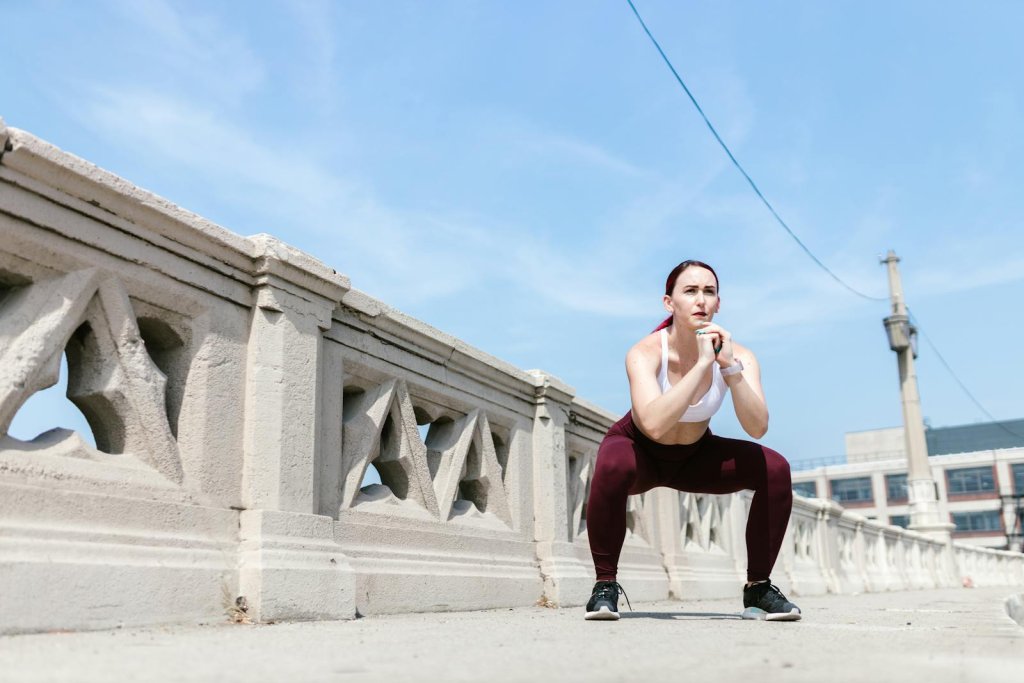
Understanding isotonic exercises matters because they are recommended by major health and fitness organizations, are adaptable for beginners to advanced lifters, and can be performed at home or in the gym with minimal equipment. Below is a clear, research-informed guide to the 10 best isotonic exercises, how they work, and how to use them safely.
What Are Isotonic Exercises?
Isotonic exercises involve muscle contractions where the muscle changes length while producing force. This includes:
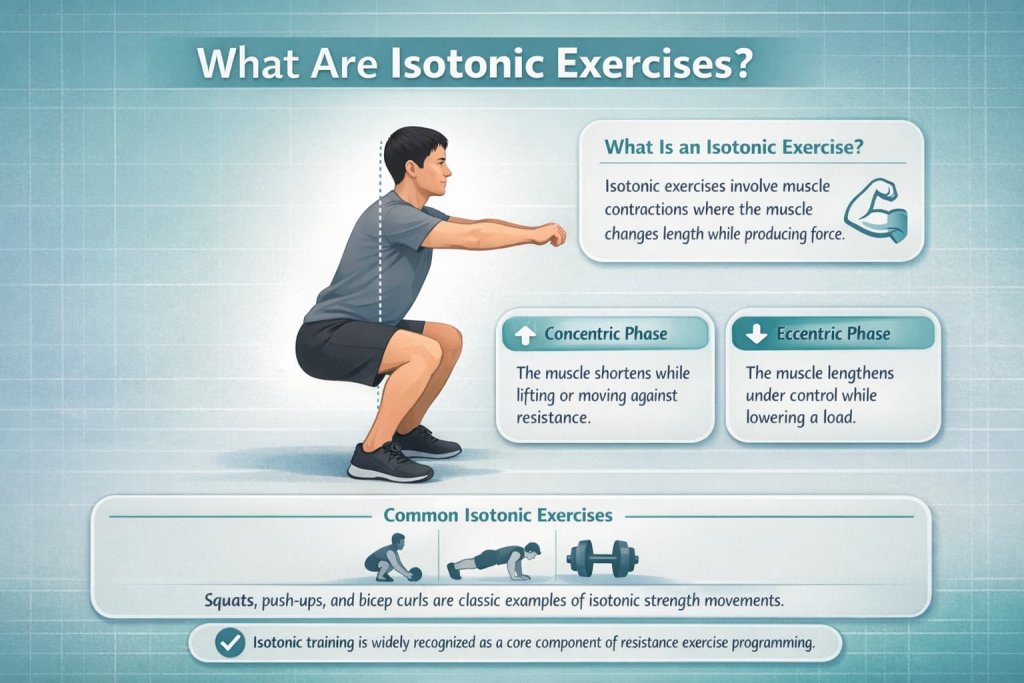
- Concentric phase – the muscle shortens (lifting phase)
- Eccentric phase – the muscle lengthens under control (lowering phase)
Classic examples include squats, push-ups, and bicep curls. While resistance may vary slightly through the range of motion, isotonic exercise is the standard term used for traditional strength movements performed dynamically.
Authoritative sources such as the American College of Sports Medicine and National Center for Biotechnology Information consistently describe isotonic training as a core component of resistance exercise programming.
Benefits of Isotonic Exercises
Regular isotonic training may help support:
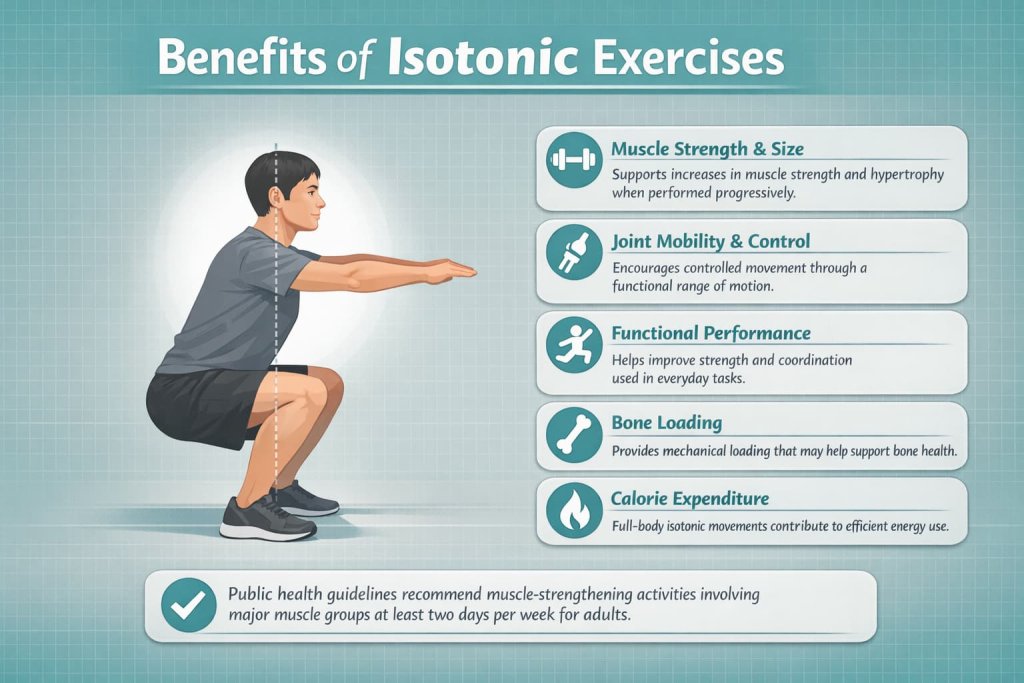
- Increased muscle strength and size
- Improved joint mobility and movement control
- Better functional performance in daily activities
- Enhanced bone loading compared to non-weight-bearing exercise
- Efficient calorie expenditure during full-body movements
Public health guidelines from the Centers for Disease Control and Prevention and the World Health Organization recommend muscle-strengthening activities involving major muscle groups at least two days per week for adults.
10 Best Isotonic Exercises
These exercises use controlled muscle shortening and lengthening to build strength and muscle through full ranges of motion. They are commonly used in strength training programs because they are effective, scalable, and functional for everyday movement.
1. Squat
Why it works:
The squat is a foundational isotonic movement that trains multiple large muscle groups at once. Because it involves coordinated hip, knee, and ankle movement, it closely mirrors everyday actions like sitting and standing. This makes it highly effective for building lower-body strength, supporting muscle growth, and improving functional movement efficiency.
Muscles worked:
Quadriceps, glutes, hamstrings, core stabilizers.
How to do it:
- Stand with feet about shoulder-width apart and toes slightly turned out
- Brace your core and lower your hips back and down as if sitting into a chair
- Keep your chest tall and weight distributed through your heels and mid-foot
- Push through your heels to return to a standing position
Trainer Tip:
Move slowly through the lowering phase to increase muscle control and avoid collapsing forward at the bottom.
2. Push-Up
Why it works:
Push-ups are a classic bodyweight isotonic exercise that develop upper-body pushing strength while also challenging core stability. Because the body moves as one unit, push-ups reinforce proper shoulder and trunk coordination.
Muscles worked:
Chest, shoulders, triceps, core muscles.
How to do it:
- Start in a plank position with hands directly under shoulders
- Keep your body in a straight line from head to heels
- Lower your chest toward the floor with elbows bending at a controlled pace
- Press back up until arms are fully extended
Trainer Tip:
If full push-ups are difficult, use knee or incline variations to maintain good form while building strength.
3. Lunges
Why it works:
Lunges train the legs one side at a time, which helps address strength imbalances and improves balance and coordination. The dynamic stepping motion places controlled load through the hips and knees, making lunges highly effective for functional lower-body strength.
Muscles worked:
Glutes, quadriceps, hamstrings.
How to do it:
- Step forward into a long stride
- Lower your back knee toward the floor while keeping your torso upright
- Push through the front heel to return to standing
- Alternate sides
Trainer Tip:
Focus on controlled movement rather than stride length to maintain knee alignment and balance.
4. Deadlift
Why it works:
The deadlift is a powerful hip-hinge exercise that emphasizes the posterior chain. It teaches proper bending mechanics while strengthening muscles that support posture and lifting tasks.
Muscles worked:
Glutes, hamstrings, lower back, core stabilizers.
How to do it:
- Stand with feet hip-width apart and weight close to your shins
- Hinge at the hips while keeping your spine neutral
- Lower the weight toward mid-shin level
- Drive your hips forward to stand tall
Trainer Tip:
Think “hips back, chest long” to avoid rounding the spine during the movement.
5. Bicep Curl
Why it works:
Bicep curls isolate the elbow flexors, allowing focused isotonic loading of the upper arm. They are simple to perform and easy to progress, making them suitable for all experience levels.
Muscles worked:
Biceps brachii, brachialis.
How to do it:
- Hold dumbbells at your sides with palms facing forward
- Curl the weights upward while keeping elbows close to your torso
- Pause briefly at the top
- Lower the weights slowly under control
Trainer Tip:
Slow, controlled lowering increases time under tension and improves muscle engagement.
6. Triceps Dip
Why it works:
Triceps dips load the arms through elbow extension using bodyweight resistance. They are effective for building upper-arm strength and supporting pressing movements.
Muscles worked:
Triceps, shoulders, chest (secondary involvement).
How to do it:
- Place hands on a sturdy bench or chair behind you
- Extend legs forward and lower hips by bending elbows
- Press through your palms to return to the start position
Trainer Tip:
Keep elbows pointing backward rather than flaring outward to reduce shoulder strain.
7. Bench Press
Why it works:
The bench press is a primary upper-body isotonic exercise for developing pushing strength. It allows progressive loading and supports muscle growth when performed with proper control.
Muscles worked:
Chest, shoulders, triceps.
How to do it:
- Lie on a bench with feet flat on the floor
- Lower the bar or dumbbells toward chest level
- Press the weight upward until arms are extended
- Maintain steady control throughout
Trainer Tip:
Avoid bouncing the weight off your chest—controlled reps are safer and more effective.
8. Row (Dumbbell or Barbell)
Why it works:
Rows strengthen the upper back and help balance pressing exercises. They promote better posture by reinforcing shoulder blade control and pulling strength.
Muscles worked:
Lats, rhomboids, biceps.
How to do it:
- Hinge forward with a neutral spine
- Pull the weight toward your torso
- Squeeze shoulder blades together at the top
- Lower slowly
Trainer Tip:
Keep your neck in line with your spine and avoid jerking the weight upward.
9. Shoulder Press
Why it works:
The shoulder press develops vertical pushing strength and challenges shoulder stability. It also engages the core to maintain upright posture during the movement.
Muscles worked:
Deltoids, triceps, upper chest.
How to do it:
- Hold weights at shoulder height
- Press upward until arms are fully extended
- Lower the weights under control
Trainer Tip:
Engage your core to prevent excessive lower-back arching during the press.
10. Step-Ups
Why it works:
Step-ups closely resemble everyday movements like climbing stairs. They train one leg at a time, which helps improve balance, coordination, and lower-body strength.
Muscles worked:
Glutes, quadriceps, hamstrings.
How to do it:
- Step onto a stable platform with one foot
- Drive through the lead heel to stand tall
- Step down under control and switch sides
Trainer Tip:
Choose a step height that allows smooth, controlled movement without pushing off the back leg excessively.
How Often Should You Do Isotonic Exercises?
According to guidelines from the CDC, WHO, and ACSM, most adults benefit from:
- Strength training 2–3 days per week
- Training all major muscle groups
- Allowing at least 48 hours of recovery for the same muscle group
Load, volume, and progression should be adjusted gradually based on experience and recovery.
Common Mistakes to Avoid With Isotonic Training
- Using resistance that is too heavy, which can compromise form
- Rushing through repetitions instead of using controlled movement
- Skipping warm-up sets before heavier exercises
- Training the same muscle groups on consecutive days without enough recovery
- Ignoring proper range of motion and movement alignment
Who Should Be Cautious or Modify Isotonic Exercises
- Beginners or those returning after a long break
- Individuals with joint discomfort or limited mobility
- People recovering from injury or recent surgery
- Older adults who may benefit from slower tempos and added support
- Anyone experiencing pain during movement
If you want, I can make this even more minimal, convert it into checklist style, or tailor it specifically for seniors, rehab-safe, or home workouts.
Common Questions About Isotonic Exercises
Are isotonic exercises good for beginners?
Yes. They are scalable, easy to learn, and widely used in beginner programs.
Do isotonic exercises build muscle?
They may help support muscle growth when performed with sufficient resistance and volume.
Are isotonic exercises better than isometric exercises?
They serve different purposes. Isotonic exercises improve dynamic strength, while isometric exercises focus on static muscle control.
Can isotonic exercises be done at home?
Yes. Many use bodyweight or simple equipment like dumbbells or resistance bands.
Are isotonic exercises safe?
They are generally safe when performed with proper technique and appropriate load selection.
How long should an isotonic workout last?
Most effective sessions range from 30–60 minutes, depending on intensity and rest.
Conclusion
Isotonic exercises are a practical, evidence-supported way to build strength and muscle through natural movement patterns. Whether you train at home or in the gym, incorporating these exercises consistently can help support long-term fitness and functional strength.
Next step: Choose 4–6 of the exercises above, perform them 2–3 times per week, and focus on controlled movement and gradual progression.
References
- ACSM Position Stand: Progression Models in Resistance Training for Healthy Adults (2009) – PubMed
- WHO Guidelines on Physical Activity and Sedentary Behaviour (2020) – PubMed Central
- CDC: Adult Physical Activity Guidelines (Strength training 2+ days/week)
- Physical Activity Guidelines for Americans, 2nd Edition (Full PDF) – health.gov
- NHS: Physical Activity Guidelines for Adults (19 to 64)
- StatPearls (NCBI Bookshelf): Physiology, Muscle Contraction (Isotonic, concentric, eccentric)
- Concentric and Eccentric: Muscle Contraction or Exercise? (Journal of Sports Science & Medicine, 2013) – PubMed Central
- Strength and Hypertrophy Adaptations Between Low- vs High-Load Resistance Training (Systematic Review & Meta-analysis, 2017) – PubMed